
Point Lonely DEW Line Station, Alaska
POW-1 watched the Beaufort Sea approach for the Point Barrow sector, then returned as a small unattended radar station in the North Warning System.
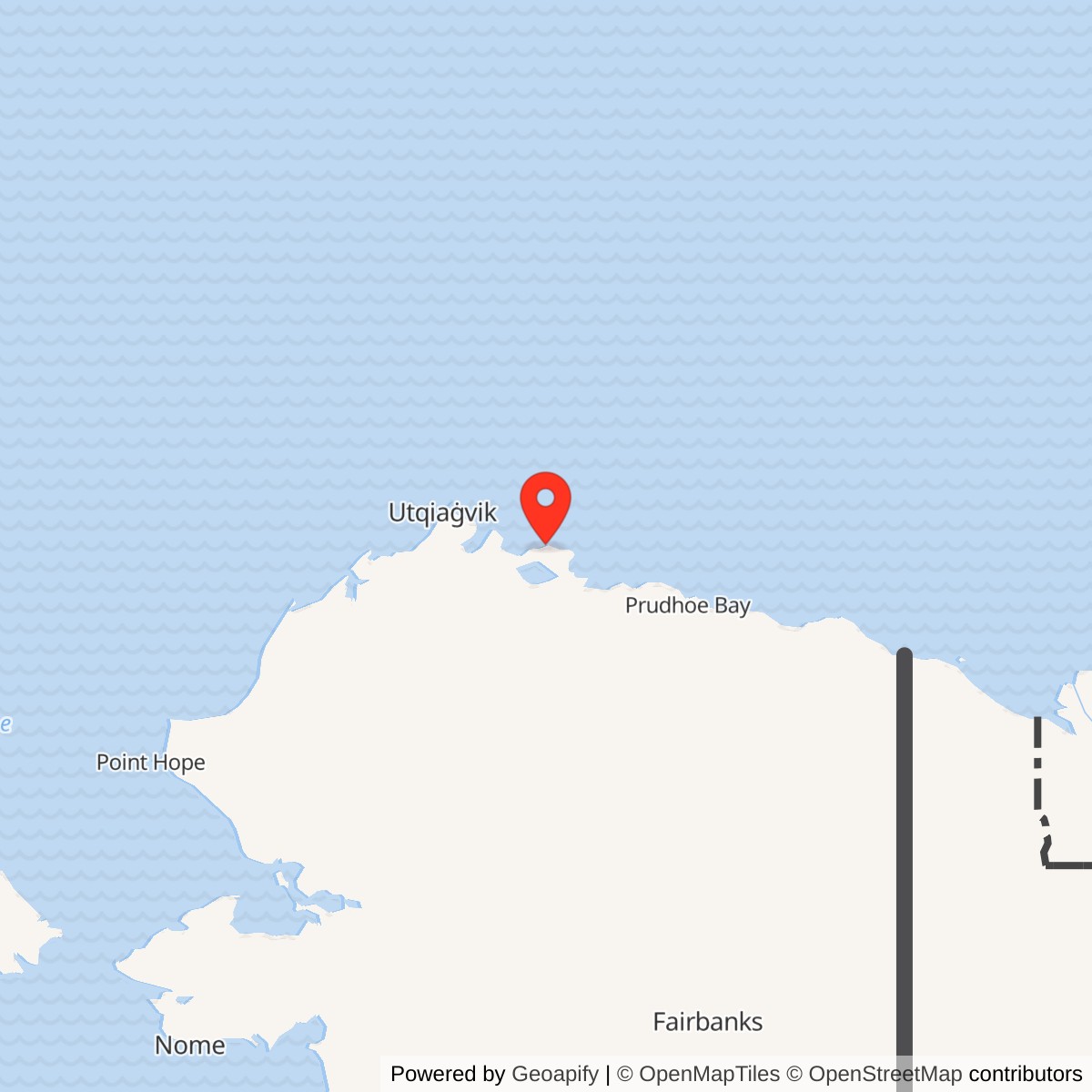
Longitude: -153.2397
Site Number: POW-1
Current Role: Former radar installation; Air Force demolition and restoration documented by BLM in 2014.
Point Lonely, also called Lonely, was the DEW Line's POW-1 auxiliary radar station on Alaska's Beaufort Sea coast. Its original search radar began service with the completed Arctic warning line in August 1957. After staffed DEW operations ended in 1990, the Air Force installed an unattended short-range radar for the North Warning System. Federal planning records place the end of all radar operations in 2005. [1] [3] [7]
- DEW Line designation
- POW-1, Point Barrow sector auxiliary station.
- Original equipment
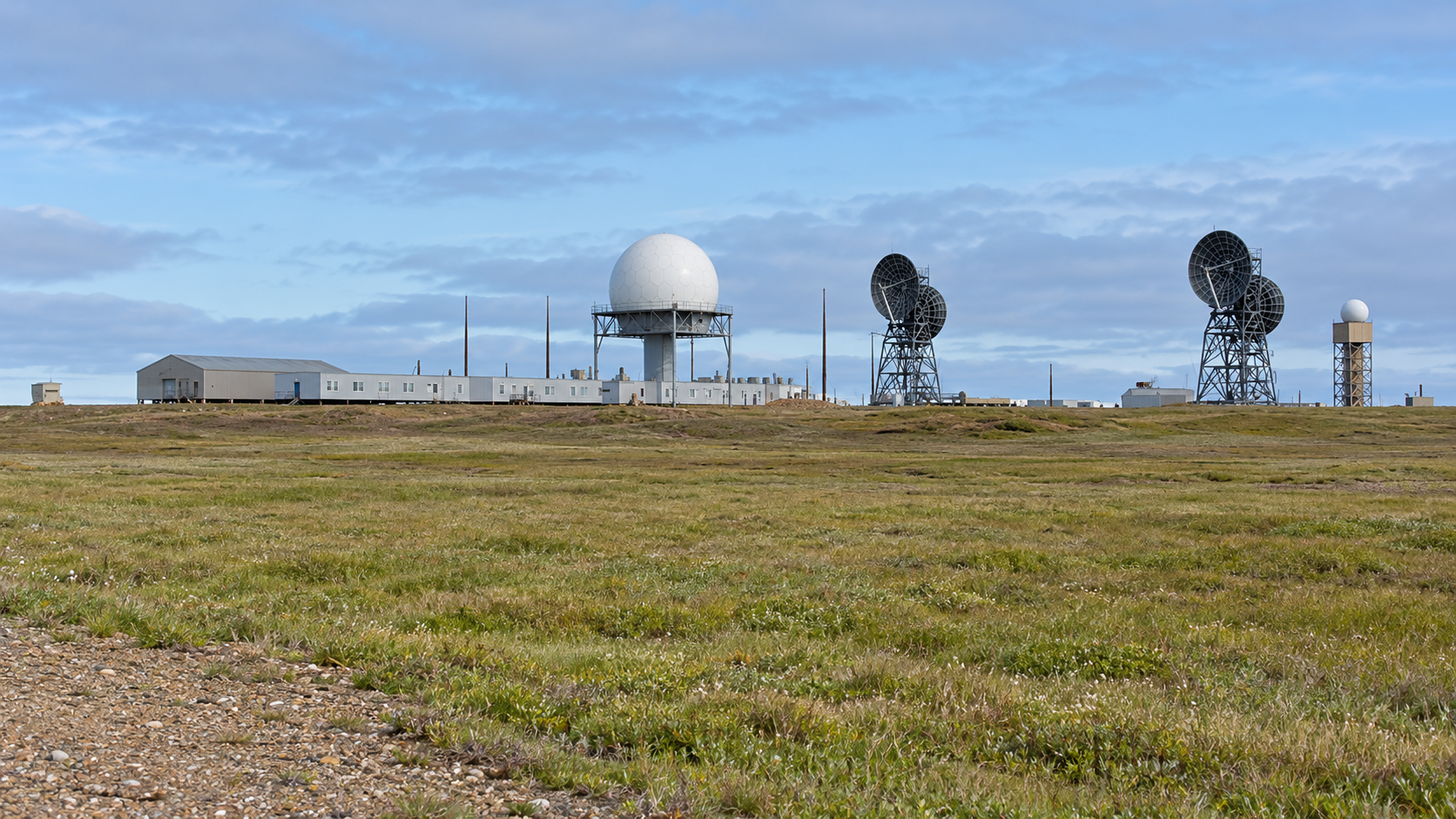
- AN/FPS-124 unattended short-range radar.
- DEW opening
- August 1957.
- Operation ended
- 2005, according to BLM's station inventory.
- Location
- Beaufort Sea coast between Point Barrow and Oliktok Point.
The Station and Its Buildings
The Air Force developed Point Lonely as an auxiliary station in the Point Barrow sector. Construction began in 1953. The site occupied 2,830 acres of federal land between Smith and Harrison bays on low, poorly drained coastal ground, with an airstrip a little more than 700 feet from the main building. Gravel roads linked the station to the runway, beach fuel tanks, storage areas, and a freshwater lake. [1] [8]
The station's core was its module train, a connected row of prefabricated rooms beneath the raised radar platform and radome. Construction photographs from March 1956 show the module train, the unfinished radome platform, and a garage beside the building. Later Point Lonely photographs also identify a vehicle maintenance building. As at other DEW auxiliaries, connected rooms housed radar work areas, power and heating equipment, quarters, and a kitchen and dining room. [1] [8] [9]
A hangar visible near the later short-range radar tower belonged to Husky Oil's exploration work in the Naval Petroleum Reserve. It served as storage during the 1990s radar project. [8]
Staffing and Daily Life
POW-1 was an Air Force warning station run day to day by civilian contractors. Accounts of DEW auxiliary staffing put a typical early crew at about 20 to 25 people, with radar technicians, a station chief, and workers responsible for engines, vehicles, food, and supplies. Under later reduced manning, auxiliary crews could number about 12 to 15. [1] [9] [11]
The radar watch ran around the clock. Operators watched for aircraft, technicians kept the radar and communications equipment working, and mechanics maintained generators, vehicles, roads, and the airstrip. The small crew lived beside its workplace, with shifts continuing through the dark winter as well as the summer supply season. [9] [10] [11]
Isolation shaped off-duty hours across the DEW Line. Mail and fresh food arrived by aircraft, with flights delayed by weather; bulk staples and heavy supplies came through the summer sealift. Stations had small necessity stores, books, games, and film projectors, and the dining room often doubled as the place for cards or movies. [10]
Supply and Isolation
Water was a daily engineering problem at Point Lonely. During the thaw, crews hauled it about two miles round trip from a freshwater lake and filled two electrically heated, 65,000-gallon rubber tanks near the module train. A lake about six miles away was the winter emergency source. Fuel storage and the gravel airstrip were likewise part of keeping the station operating between deliveries. [1] [8]
One construction-era incident shows the limits of that airstrip. In autumn 1956 a C-124 Globemaster mistook POW-1's radio beacon for Point Barrow's and landed on Lonely's 3,000-foot runway. The aircraft stopped safely but could not depart until an ice runway was prepared around February 1957. [10]
Radar and the Point Barrow Sector
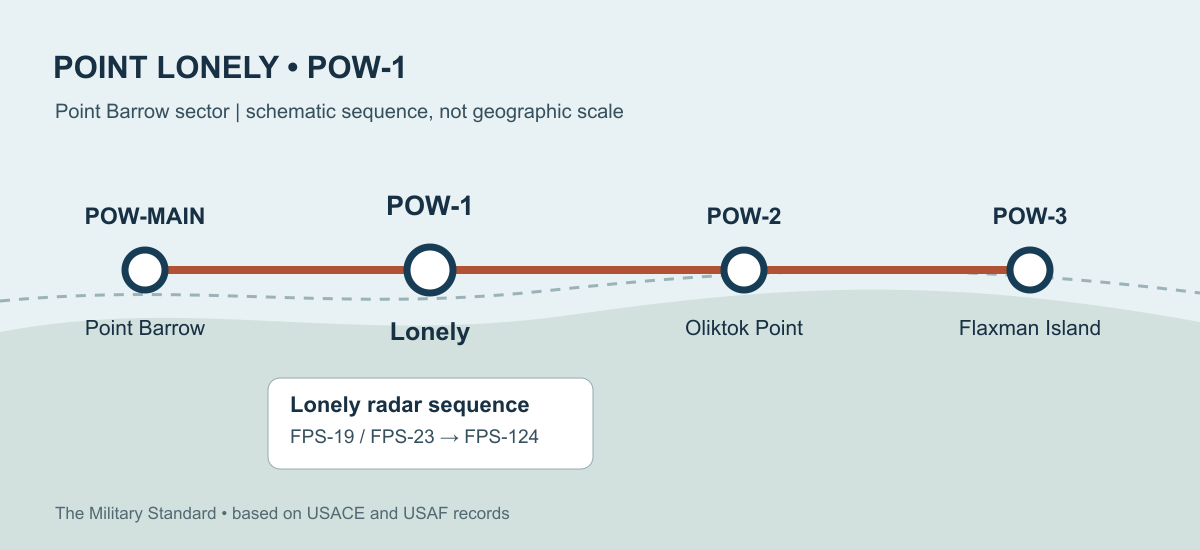
POW-1 was an auxiliary station between Point Barrow POW-Main to the west and Oliktok POW-2 to the east. The Corps station inventory lists an AN/FPS-19 search radar and an AN/FPS-23 low-altitude radar at Lonely. Its warning reports joined those from other sector stations to give air-defense controllers a wider view of aircraft approaching North America across the Arctic. [1] [6]
The main and auxiliary DEW stations used rotating search radar. Smaller intermediate stations filled gaps between them with Doppler radar fences. In July 1963 several Point Barrow-sector intermediate stations closed, while the auxiliary stations continued their warning role. Lonely remained part of this staffed Arctic radar network until DEW operations ended in 1990. [1] [6] [7]
North Warning System
The United States and Canada modernized the northern warning network in the late Cold War. Some former DEW sites received smaller radars that could operate with far fewer people on site. An Air Force site plan places an AN/FPS-124 short-range radar at Point Lonely in 1993; the Corps, writing in 1994, described activation as scheduled for that November. BLM's station inventory records the new radar site as established in 1994. Lonely thereby returned to the Arctic surveillance chain in a different form from its original staffed station. [1] [3] [6] [7]
The AN/FPS-124 installation served as a short-range station in the North Warning System. Its data complemented the long-range radars at Point Barrow and Oliktok, while regional control facilities handled the broader air picture. An airstrip remained important for maintenance access even after routine staffing fell away. [1] [3]
The Former Station
BLM's station inventory dates the end of all operations at Lonely to 2005. Its 2014 assessment calls the installation a former short-range radar site and describes an Air Force project to remove surviving radar and support structures. The work involved transport across the tundra, staging at the station, demolition, and removal of debris by barge. State records document subsequent cleanup at the former module train. [2] [4] [7]
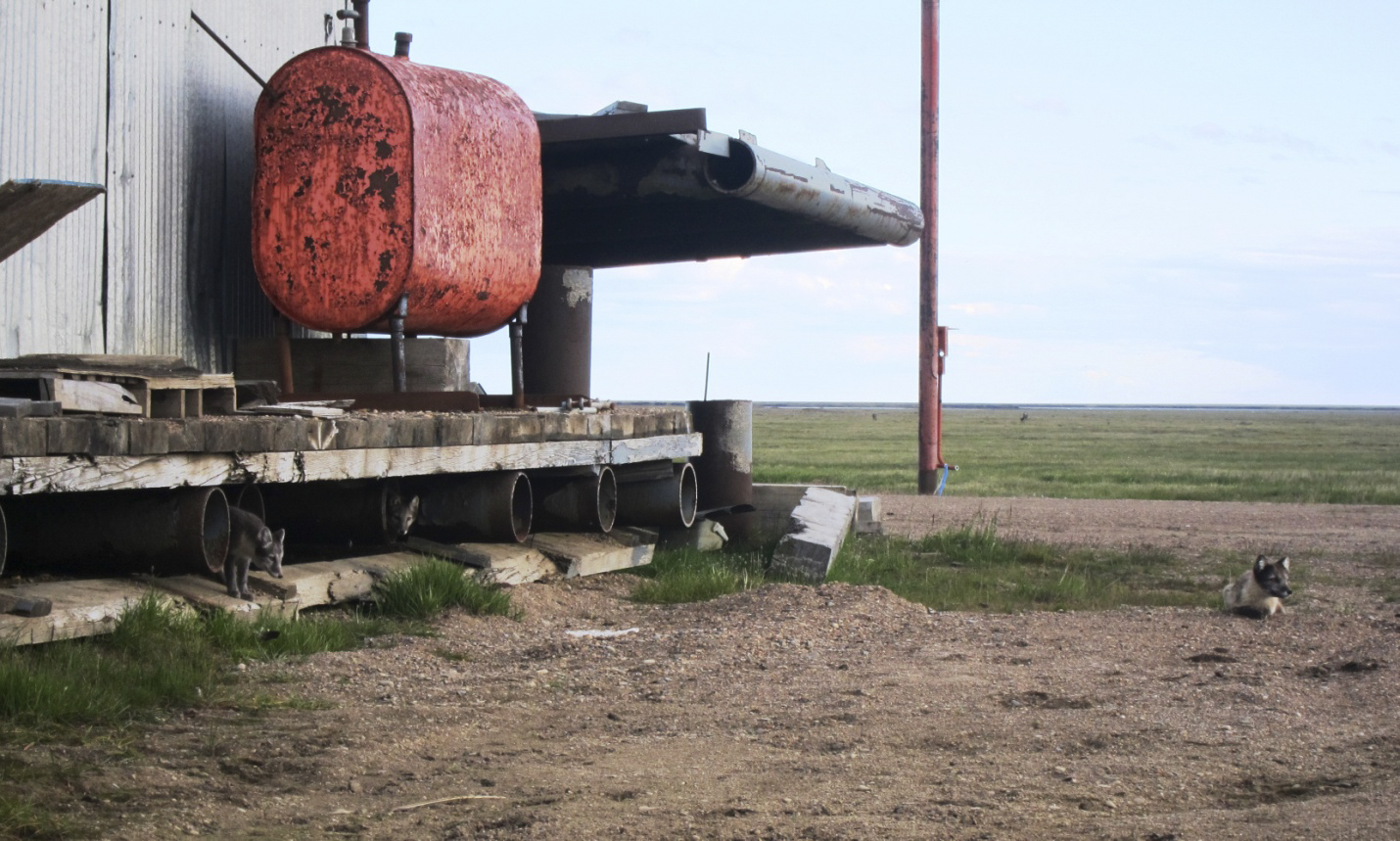
The former station remains a landmark in the history of Alaska's Arctic warning line. Its two radar generations show the change from large staffed DEW installations to compact North Warning System equipment on the same isolated coast. [1] [2] [3]
Chronology
- 1953: Construction begins on the Point Lonely auxiliary station. [1]
- Autumn 1956: A C-124 lands on POW-1's short runway and remains until a longer ice runway is prepared. [10]
- August 1957: POW-1 enters DEW Line service. [1]
- July 1963: Several intermediate stations in the Point Barrow sector close; the auxiliary network continues. [1]
- 1990: DEW Line operations at Lonely end. [7]
- 1993-1994: An unattended AN/FPS-124 short-range radar is installed and scheduled for activation at Point Lonely. [1] [3]
- 2005: BLM's station inventory records the end of all radar operations. [7]
- 2014: BLM documents the former radar station and the Air Force's demolition project. [2]
Related Sites
- AN/FPS-124 radar histories
Information sources (11)
- PDFU.S. Army Corps of Engineers, The Cold War in Alaska: A Management Plan for Cultural Resources, 1994, pp. 69, 132, 186-188, 207
Point Lonely construction, POW-1 identity, 1957 operation, radar complement, station setting, and planned 1994 conversion.
- PDFBureau of Land Management, Demolition and Removal of Radar Facility at Point Lonely, Alaska, 2014
Federal land status, 2014 former-radar designation, surviving structures, transport, and planned demolition.
- PDFU.S. Air Force, 611th Air Support Group Remote Sites Integrated Natural Resources Management Plan, 2013
North Warning System modernization and 1993 AN/FPS-124 installation at Point Lonely.
- WEBAlaska Department of Environmental Conservation, Lonely AFS Dewline, Module Train SS012, site report
Documentation of the modular station and later cleanup and demolition work.
- WEBU.S. Geological Survey, Arctic fox and pups use an abandoned Pt. Lonely Short Range Radar Site
Public-domain actual-site photograph and confirmation that the short-range radar site had been abandoned.
- PDFAlaska Office of History and Archaeology, The Coldest Front: Cold War Military Properties in Alaska
DEW Line auxiliary design and Point Lonely reactivation under the North Warning System.
- PDFBureau of Land Management, National Petroleum Reserve-Alaska Draft Integrated Activity Plan and Environmental Impact Statement, Vol. 1, table 3-14
Official chronology showing POW-1 DEW service ending in 1990, new radar established in 1994, and all operations ending in 2005.
- WEBDEWLineAdventures, Point Lonely POW-1 historical description and photograph gallery
Site-specific setting, water system, construction and later building photographs, and views used for the reconstruction. Original photographs retained for review only.
- WEBPaul Kelley, DEW Line veteran, A Brief Introduction
Firsthand account of auxiliary-station staffing, roles, runway and support facilities.
- WEBLynden T. Harris, DEWLine History
Contractor history of supply, mail, recreation, air travel, and the 1956 POW-1 C-124 landing.
- WEBFred Teeter Jr., DEW Line Personnel Politics & Then Some, 1976-77
Firsthand account of later auxiliary-station staffing and round-the-clock work.