
Thule Air Base - (renamed Pituffik Space Base in 2023) Greenland
From Blue Jay's Arctic airfield to continuous missile warning and satellite control, sustained by an airfield, a seasonal port and a multinational community.

Longitude: -68.703
- Names / codes
- Thule Air Base; Pituffik Space Base; BMEWS Site I; POGO
- Role
- Missile warning, missile defense, space awareness and satellite control
- Warning radar
- AN/FPS-132 UEWR; earlier AN/FPS-120 and AN/FPS-50 / AN/FPS-49 family
- Host
- 821st Space Base Group, Space Base Delta 1
- Operational tenants
- 12th Space Warning Squadron; 23rd Space Operations Squadron Detachment 1
- Air and sea access
- Approximately 10,000-foot runway, BGTL; deep-water seaport
- Operation
- Established March 1, 1951; active; renamed April 6, 2023
- Location
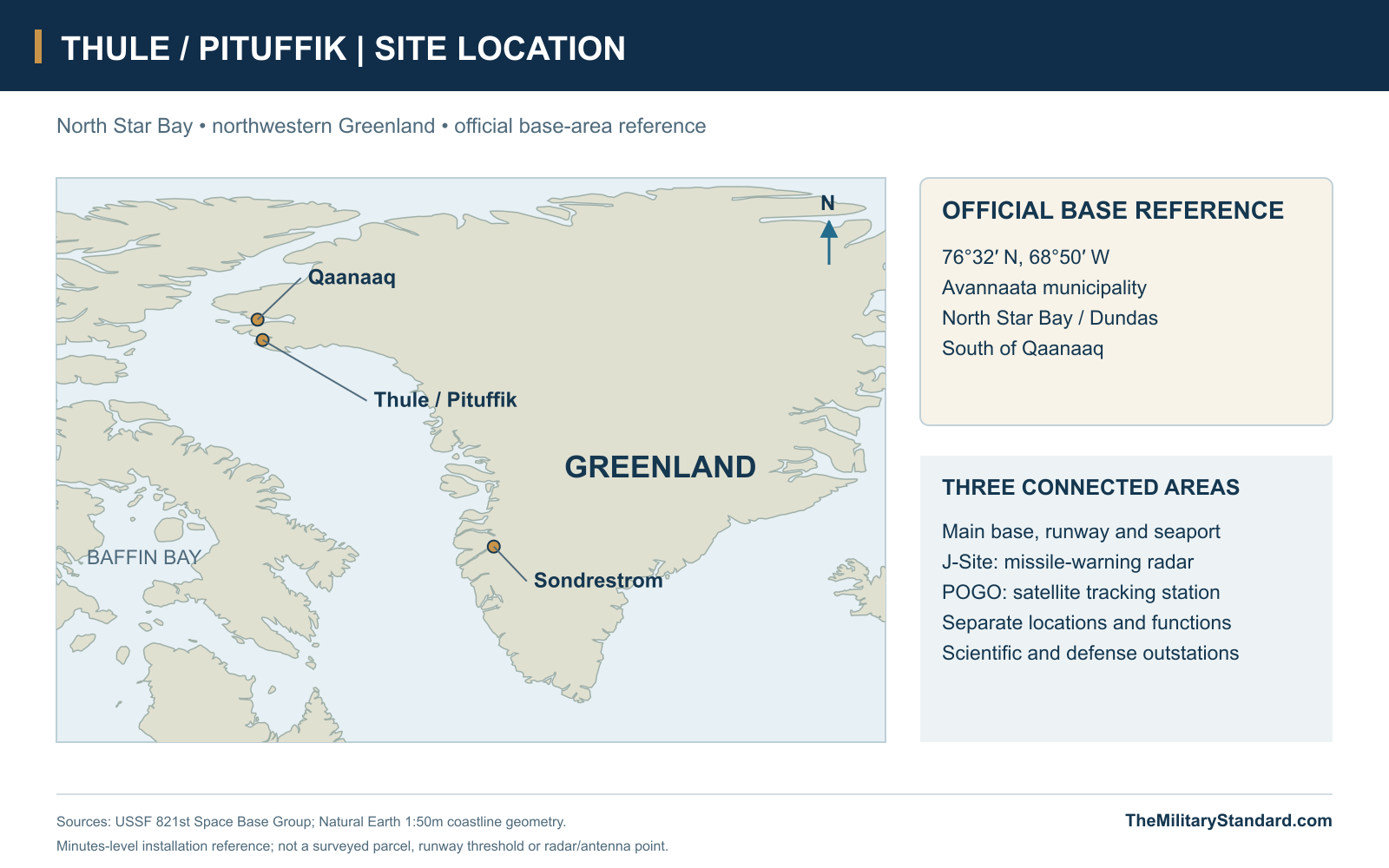
- North Star Bay, Avannaata municipality, northwestern Greenland
History
Thule Air Base grew from a small northern Greenland weather and radio outpost into an airfield, seaport and military community facing North Star Bay. Its Cold War purpose changed substantially: strategic aircraft staging and local air defense gave way to missile warning, space surveillance and satellite control. The installation remained active as these missions evolved, and on April 6, 2023 it became Pituffik Space Base. The Greenlandic name recognized the region that sustains the base as well as the people whose land and labor have shaped its history. Today the former bomber-support base belongs to the United States Space Force, with airfield and port operations still essential to the work inland. [1] [31]
From Weather Station to Operation Blue Jay
American activity in the area preceded the large air base. A wartime weather station was followed by a combined Danish-American radio and weather establishment in 1946 and a gravel landing strip in the Pituffik valley. This northern foothold offered a position on the polar approaches between North America and the Soviet Union, with a coastal opening through which heavy equipment could arrive by sea. The existing strip helped an air bridge serve the developing project, while North Star Bay made large-scale seasonal construction possible. The valley, mountains and adjoining ice sheet nevertheless imposed limits on roads, foundations and the period in which ships could unload. [1] [3]
The base recognizes March 1, 1951 as its establishment date. That administrative milestone preceded the great summer sealift and the completion of a heavy-aircraft field. The April 27 defense agreement between Denmark and the United States supplied the Cold War framework for defense areas in Greenland, retaining Danish sovereignty while granting the United States extensive operating and construction rights. The agreement entered into force on June 8. Blue Jay therefore combined a military establishment, diplomatic arrangements and a continuing engineering project; a single opening date cannot describe all of those stages. [2] [5] [8]
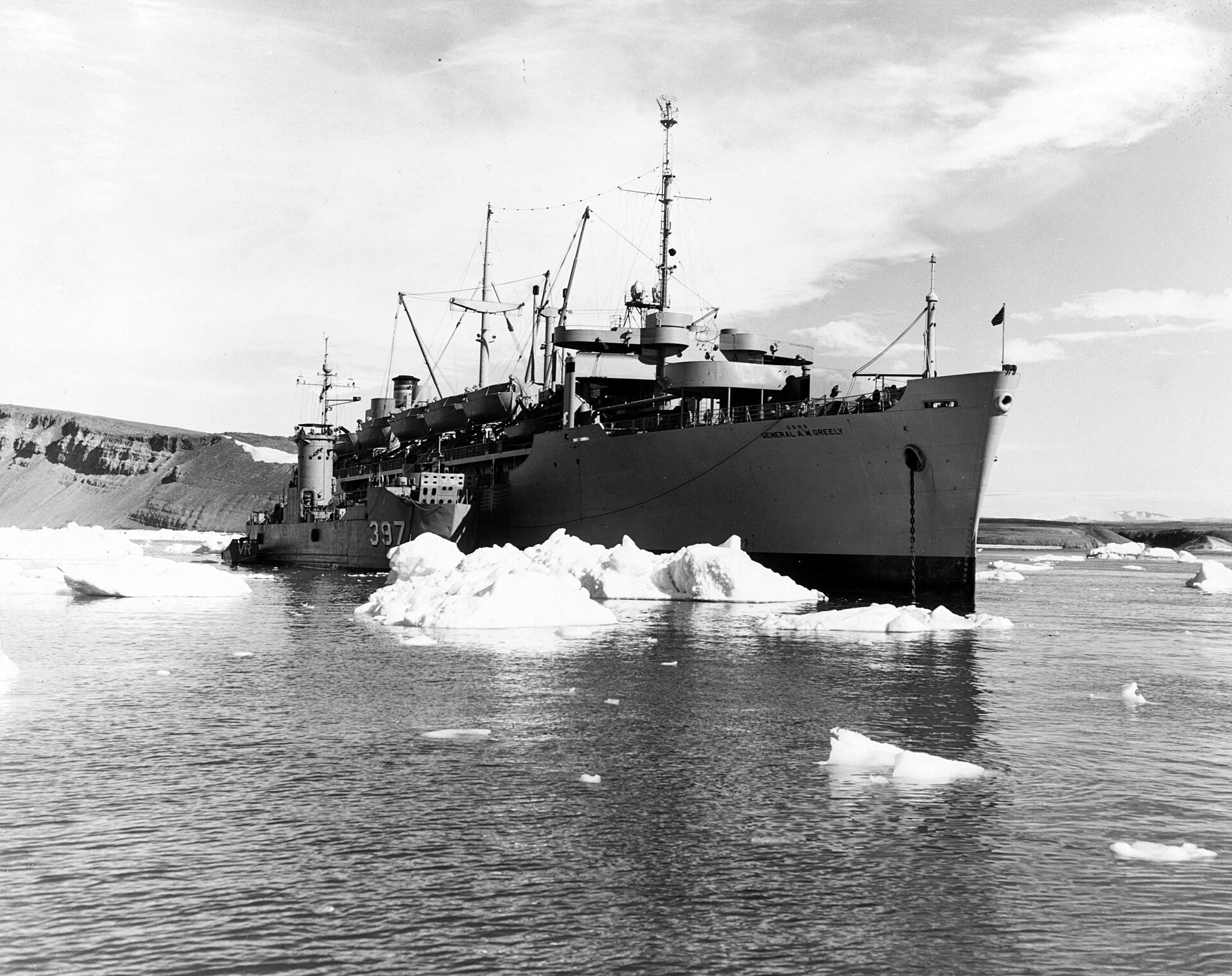
Army engineers reconnoitered the site in winter darkness during February 1951, developed plans in the spring and assembled ships, materials and labor for the short working season. The convoy reached Thule on July 9. Piers accelerated unloading, roads connected the working areas, and crews erected barracks, depots and fuel storage while building the runway. In mid-October the engineers turned over the airfield to the Air Force. The often-cited 104-day achievement refers to this rapid creation of an operational field; construction and expansion continued through the following summers. Naval transports and landing craft were as necessary to that result as the aircraft the base would receive. [2] [4] [36]
Building a Base on Permafrost
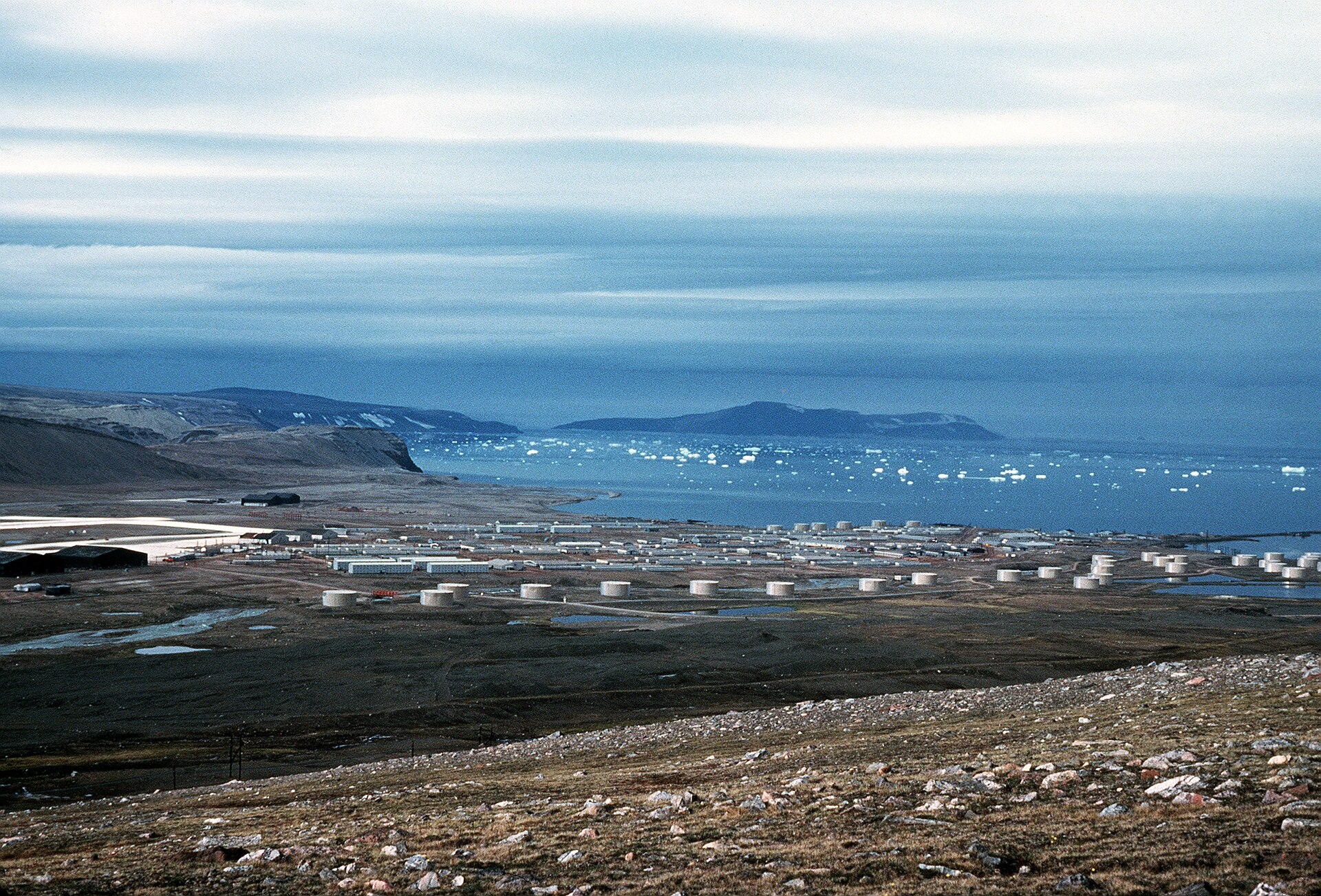
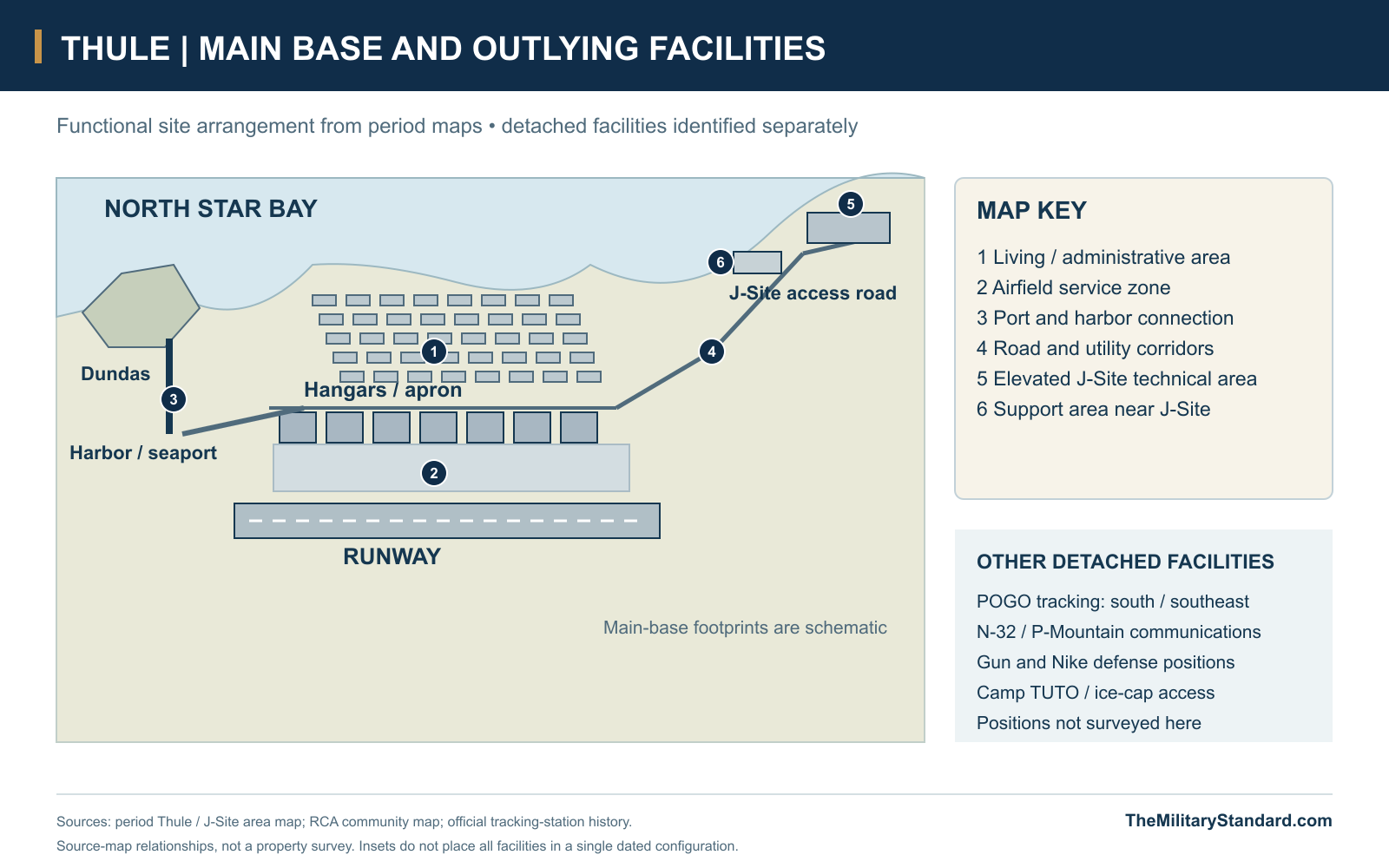
The permanent plant placed aircraft facilities beside the runway and grouped quarters, administration, dining, medical and recreation buildings into a service community. A 1996 heritage inventory counted about 230 surviving main-base structures, including 175 dating from 1951-1952 and 30 from 1953-1959; more than 80 buildings had been demolished in 1995. These figures describe the surveyed 1990s landscape rather than the original peak construction total. Hangars, warehouses, heating plants and workshops made the airfield a self-contained support base, while roads and utilities connected it to the harbor and outlying installations. [6] [22] [23]
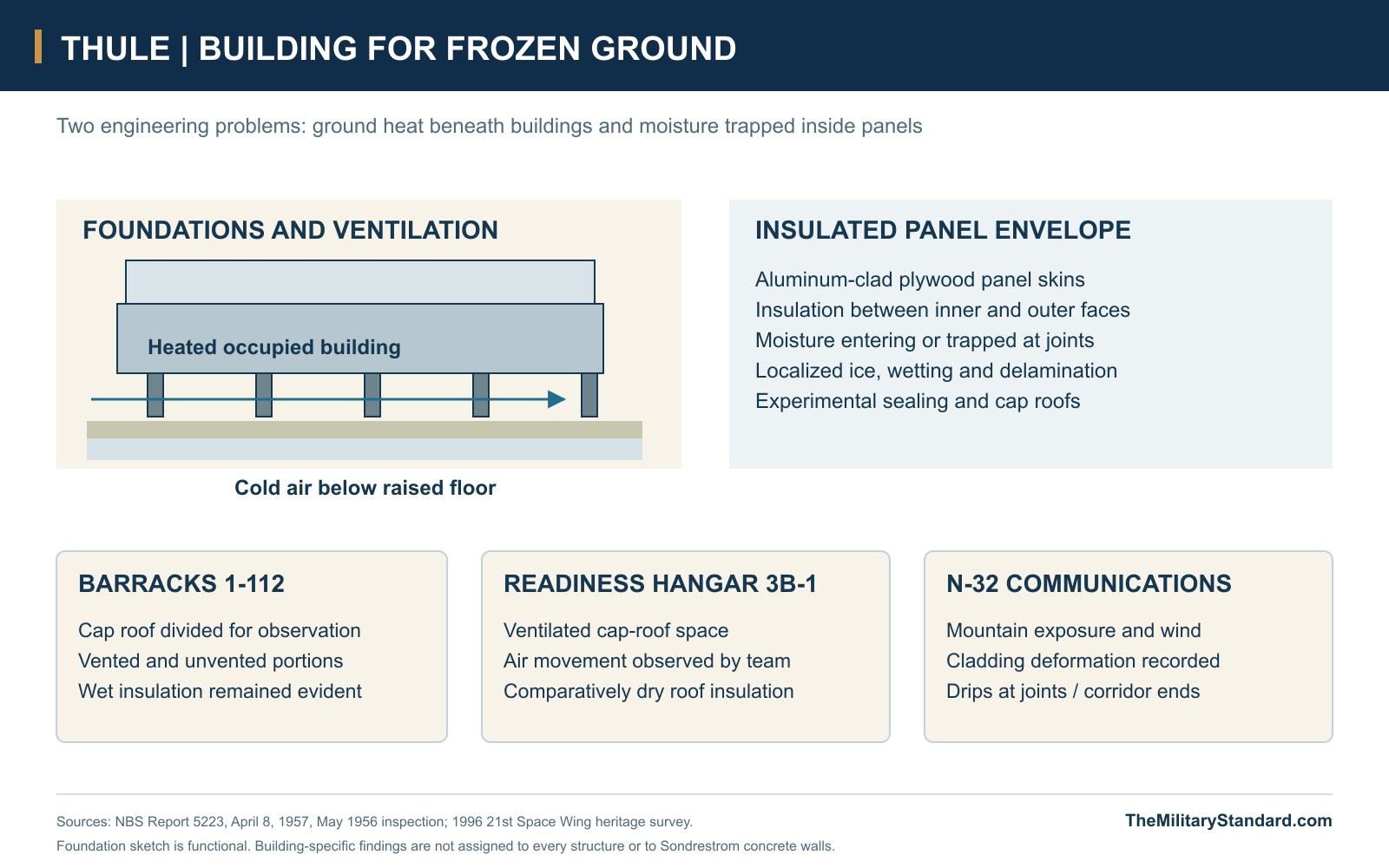
Maintaining frozen ground was fundamental to construction. Most smaller buildings stood above the surface so that air could circulate underneath, while large structures requiring ground-level floors used ventilated spaces to limit heat transfer. Prefabricated insulated panels accelerated erection, and central plants distributed heat to occupied buildings. The same insulated shell that conserved warmth could trap moisture when joints or skins failed. In May 1956 investigators examined barracks, a mess hall, a readiness hangar and the N-32 mountain communications center, finding localized wet insulation, ice, delamination and dripping. The base thus required continuing experiments in sealing, roofing and ventilation after its dramatic construction season. [6] [7]
Those inspections followed particular buildings rather than treating every Arctic structure alike. VIP barracks 1-112 had a new roof over exposed insulation, with ventilated and unventilated portions under observation. Readiness hangar 3B-1 had a ventilated cap roof whose insulation appeared in better condition than the other roofs examined. At N-32, stronger mountain exposure accompanied deformed cladding and water at some joints and corridor ends. These were practical maintenance problems in occupied military facilities: keeping rooms warm also required controlling where moisture accumulated and how the building dried. Decades later, dormitory renovations continued the effort through better envelopes, controls and connections to the base heating system. [7] [28]
Expansion and the Displacement of Uummannaq
The defense area occupied hunting country close to the Inughuit settlement of Uummannaq, then commonly called Thule. Growing restrictions on hunting and fishing and the base's effect on wildlife altered local livelihoods. In spring 1953 the United States sought an expanded area for antiaircraft defense on the Dundas Peninsula. Danish authorities informed the residents of the relocation decision on May 25, and within days 26 families comprising 116 people left over the sea ice. Most went to Qaanaaq more than 100 kilometers north, living in tents until replacement houses were ready in September. The expansion therefore changed a community as well as a military perimeter. [8]
The relocation left houses, a school, hospital, radio station, church and graveyard behind. It later became the subject of the Hingitaq 53 litigation and a long dispute over land, hunting rights and compensation. Danish judgments in 1999 and 2003 awarded compensation but rejected the requested right to return to the defense area. The European Court of Human Rights declared the subsequent application inadmissible in January 2006, distinguishing the 1953 events from later proceedings within its temporal jurisdiction. The cultural connection persisted despite the displacement: a 2025 base visit brought elders back to their birthplace and relatives' resting places after more than seven decades. [8] [33]
Strategic Aircraft and the Defense of Thule
The early base supported strategic aircraft operating across the Arctic, with fuel, servicing and a long runway close to the polar route. Strategic Air Command took over in 1957, and the 4083d organizations supported its forward activity. Contemporary history abstracts describe the April 1958 replacement of the 100th Air Refueling Squadron rotation by the 509th and preparations for the growing missile-warning installation. Tanker rotations required maintenance, ramp handling, fuel storage, transport and crew accommodations through the winter. The airfield served changing visiting forces rather than deriving its entire identity from a single permanently assigned bomber squadron. [6] [11]
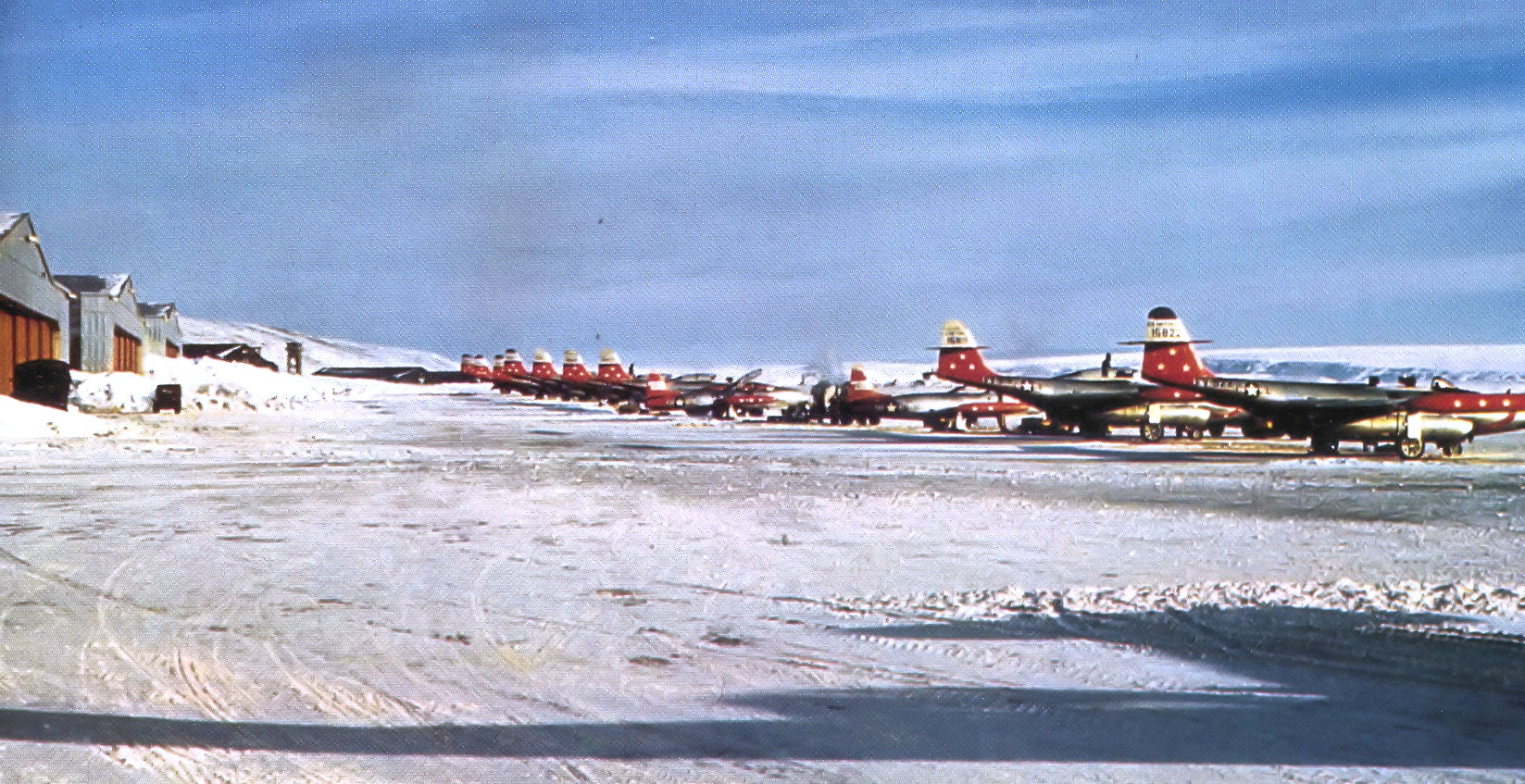
Fighter interception protected this strategically important installation. The 318th Fighter-Interceptor Squadron brought F-94 operations during the early buildup; the 74th followed with F-89 aircraft. Its official Thule station assignment ran from August 20, 1954 to June 25, 1958, and a 1955 photograph shows its Scorpions lined up beside the snowy flight line. The 327th Fighter-Interceptor Squadron then moved to Thule with F-102s in 1958. Flying in this environment demanded all-weather interception equipment, dependable warning and control, suitable hangars and a maintenance organization able to keep aircraft ready far from normal supply bases. [9] [10] [11] [39]
Ground defenses arrived alongside the fighters. The 549th Antiaircraft Artillery Gun Battalion and supporting radar, signal and ordnance personnel deployed in 1953, with the main body arriving in August. Four Nike-Hercules batteries subsequently extended the defended area beyond the main cantonment. The missile sites, fire-control equipment and Army support areas formed a separate ring of facilities around the air base, and nuclear warheads were associated with the Hercules deployment during the Cold War. The four batteries ceased operation in mid-1965 as the defense posture contracted. Their concrete remains and abandoned positions belong to an earlier local air-defense mission than the radar's later missile-warning work. [3] [9] [12]
J-Site and the First Missile-Warning System
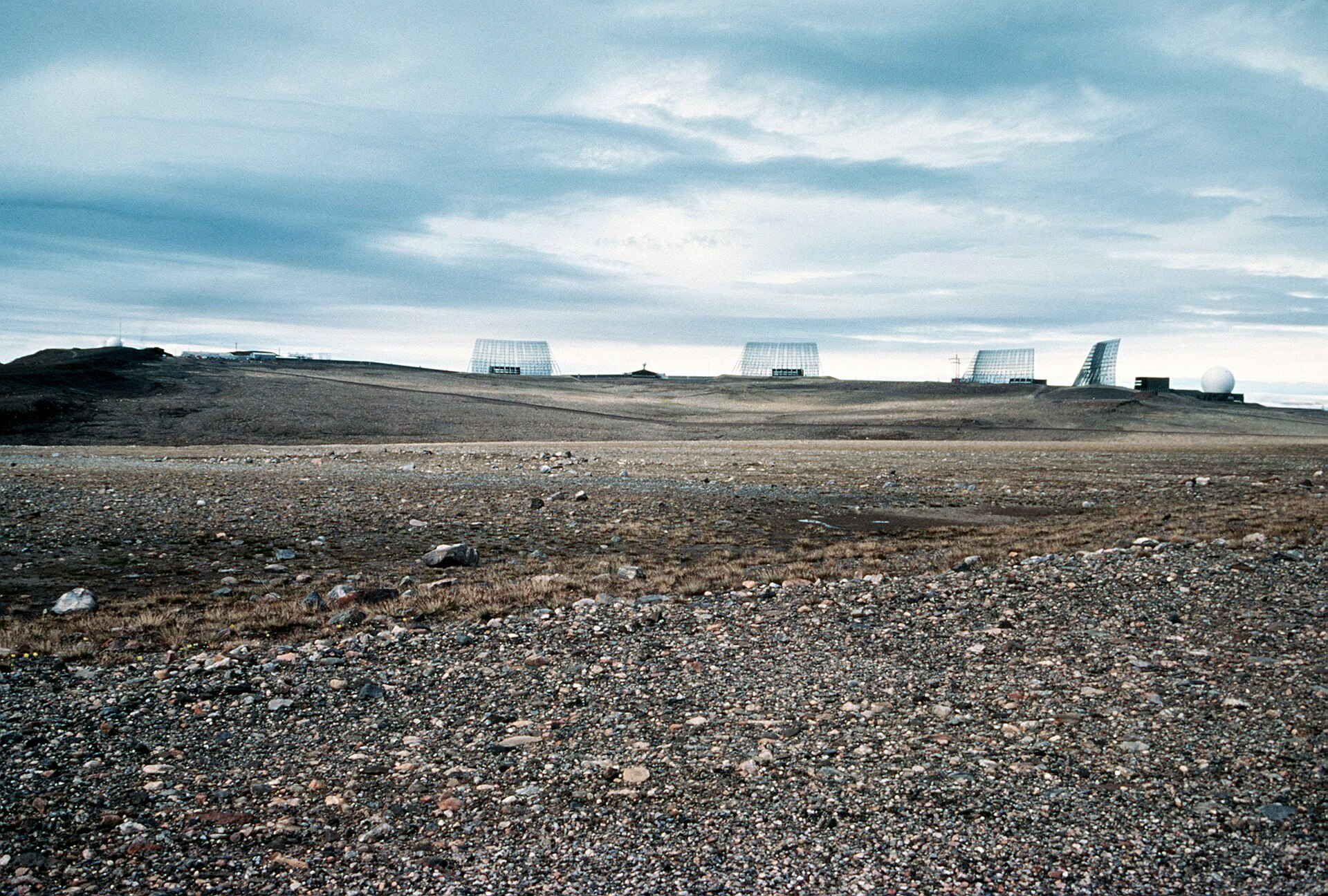
The Soviet ballistic-missile threat gave Thule a new purpose. BMEWS Site I was built at J-Site, on elevated ground northeast of the main base, connected by a demanding road and supported by its own technical plant. Its four AN/FPS-50 detection antennas used enormous fixed reflecting screens to establish fan-shaped radar coverage. A dish tracking radar supplemented the detection system as the installation developed. These instruments looked for ballistic targets on northern trajectories and sent information rearward for attack assessment. Keeping the technical site supplied and connected to the main community became part of the base's daily routine. [13] [14] [15] [23]
Thule attained an initial operational capability on September 30, 1960, together with a manual capability at NORAD's central computer and display facility. Further completion and operational milestones followed, explaining why later summaries often associate BMEWS with 1961. On October 5, moon echoes produced an apparent missile indication during the system's early service. No impact points were predicted, and NORAD and SAC treated the event as false; improved filtering followed. The episode showed the importance of interpreting sensor returns within an assessment process rather than simply equating an electronic indication with a confirmed attack. [13] [14]
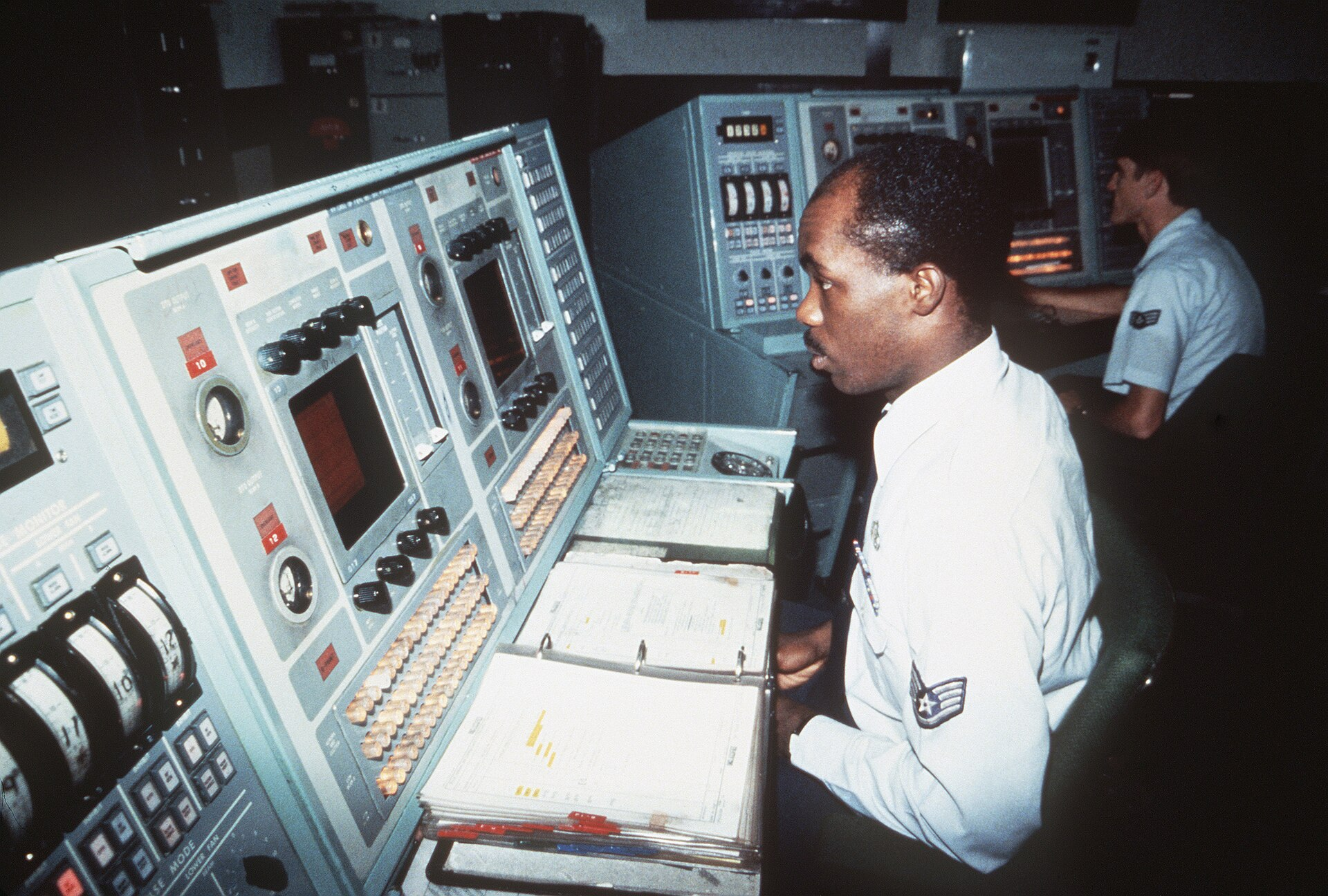
BMEWS operations depended on technicians, operators and communications personnel as well as the visible antennas. RCA Service Company's 1965 handbook described a contractor workforce living on the main base and traveling by scheduled transport to the technical site. Meals there accommodated working shifts, and a cafeteria reduced the need for every employee to return to the main dining hall during the day. A dated October 1984 photograph shows Air Force personnel at the tactical operations consoles, while another records all four detection screens and the tracker dome. These views preserve the final years of the original radar landscape before its replacement. [20] [37] [40]
Satellite Tracking at POGO
A second space-related installation developed separately from J-Site's warning radar. The Thule Tracking Station was designated Operating Location 5 of the 6594th Test Wing on October 15, 1961 and became operational on March 30, 1962. Initially classified, it grew from a van-mounted antenna into a permanent remote station serving satellite programs. Its position at high latitude provided repeated opportunities to contact polar-orbiting spacecraft. Operators received telemetry, measured and maintained tracking, and relayed commands for United States and allied government satellites. These contacts supported spacecraft operations rather than detecting a hostile missile launch. [18]
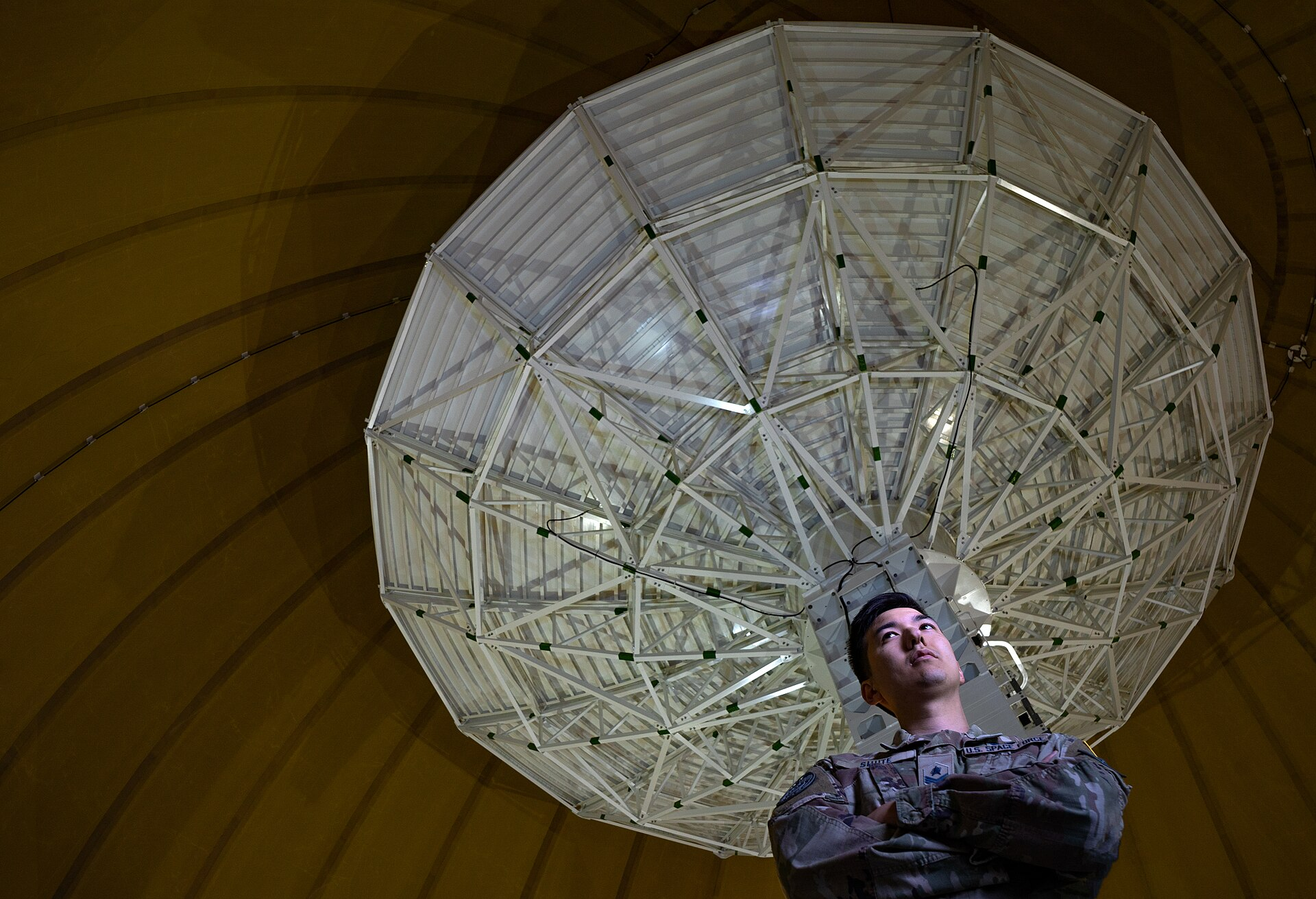
The tracking station later came under the 22nd Space Operations Squadron in 1997 and was realigned as Detachment 1 of the 23rd Space Operations Squadron on October 1, 2010. The Space Force's July 2020 organization placed it within Delta 6, while the missile-warning squadron belonged to Delta 4. Known by the call sign POGO, the station uses antennas protected by radomes, including an inflated enclosure described in its 2023 mission account. Contract personnel and military oversight sustain round-the-clock contacts. The shared base provides power, transport, communications and living support to two different operational organizations. [18] [19] [31]
Work, Weather and Community Life
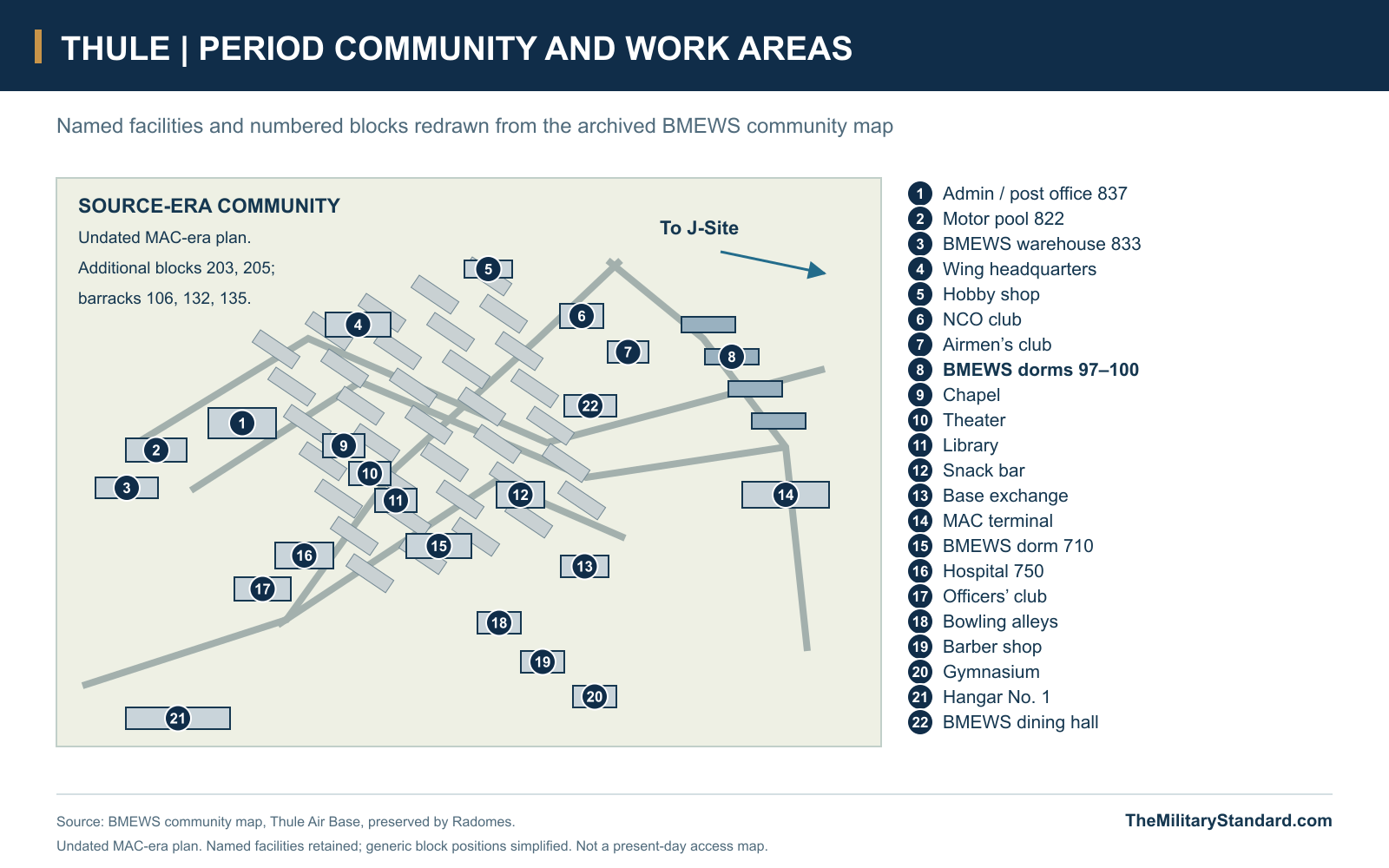
Service at Thule combined technical shifts with the constraints of a remote, unaccompanied posting. The RCA handbook offered most contractor employees two-person rooms, furnished quarters, laundry facilities and lounges, with meals and housing provided under the employment arrangements. Medical staff handled ordinary cases and the Air Force hospital received serious illness or injury. Shuttle buses connected the working and living areas, while dedicated transport ran to J-Site. These provisions supported a community in which a delayed aircraft or a severe storm could prolong a stay and interrupt ordinary routines. The facilities were part of maintaining the workforce needed for continuous warning operations. [20]
Weather restrictions could rapidly reshape that routine. The 1965 handbook described three progressively restrictive phases, from securing equipment and limiting movement to sheltering except for specifically authorized essential duties. Work at the technical site required issued Arctic clothing during the winter season, and emergency vehicles and utility services remained important when normal activities stopped. Recreation provided a counterweight to the isolation: a gym, 500-seat theater, clubs, library, hobby shops and organized sports offered places to meet beyond the workplace. Employees also supported the Polar Views newspaper and local radio. Shared facilities helped sustain people through darkness, cold and separation from home. [20] [21]
Civilian labor was central to the base's survival. Tradespeople maintained heat, water, power, buildings and vehicles, while contractors supported the technical missions and food services. The base community included American, Danish and Greenlandic personnel, with Canadians participating in warning operations. Contemporary community events have brought neighboring Greenlandic residents onto the base for food, crafts and dogsled activities. In the 2026 commander's account, personnel used the same dining facility, gym and community center, and leaders welcomed new arrivals on the flight line even in winter. Maintaining those daily relationships remained part of sustaining the installation's operations. [17] [28] [33]

The 1968 B-52 Accident and Crested Ice
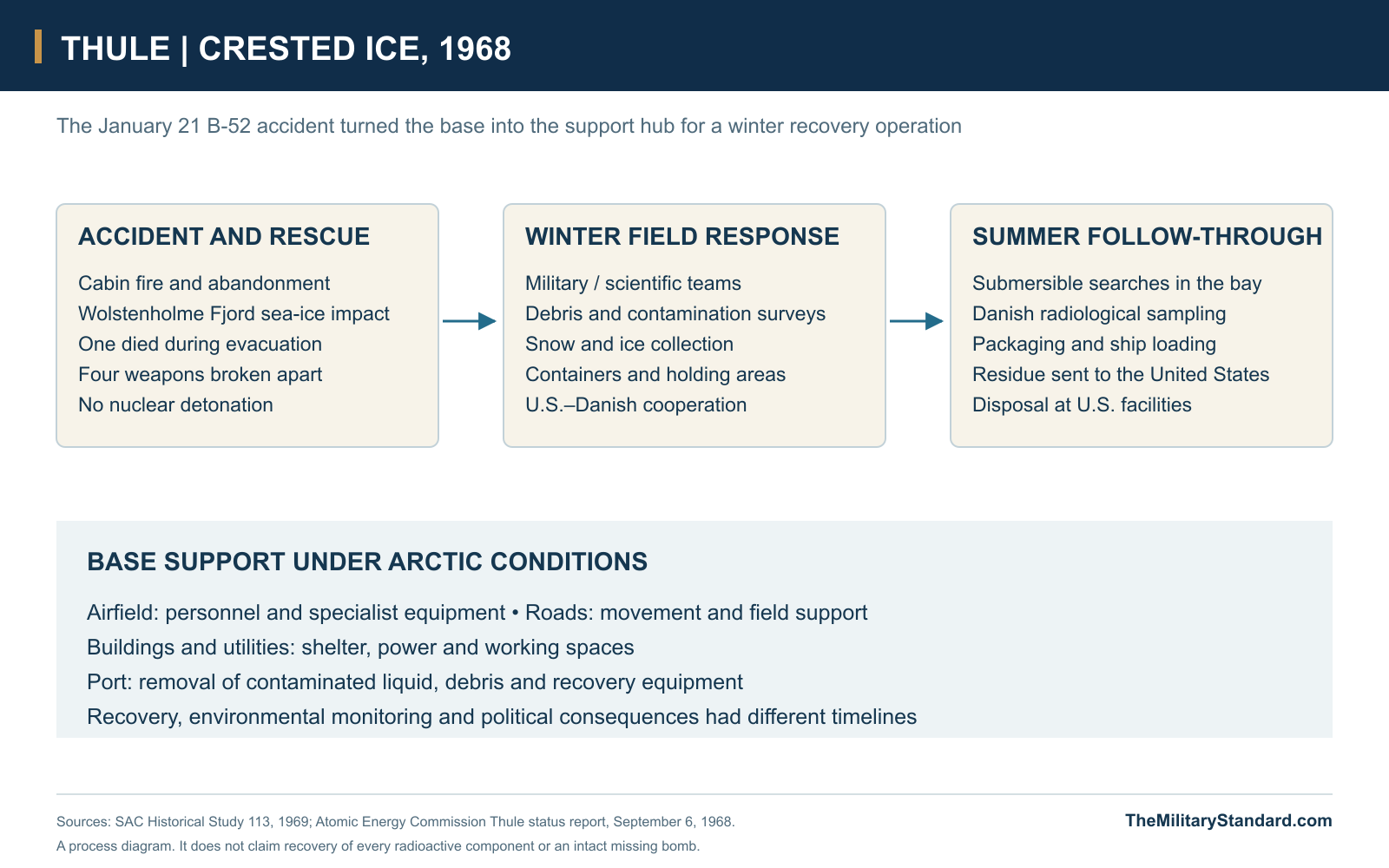
On January 21, 1968 a B-52 of the 528th Bomb Squadron, 380th Strategic Aerospace Wing, suffered a cabin fire while monitoring the Thule warning site. The investigation traced the fire to cushions exposed to hot air from a heating duct. The aircraft attempted to reach Thule before the crew abandoned it. One of seven men died while leaving the aircraft; the unmanned bomber crashed on the sea ice of Wolstenholme Fjord, off North Star Bay. The four carried weapons were broken apart, and their conventional explosives dispersed radioactive material; no nuclear detonation occurred. The accident brought the risks of airborne nuclear alert into the base's immediate surroundings and into U.S.-Danish relations. Thule became the support center for a demanding recovery operation conducted during Arctic winter rather than simply an emergency landing destination. [24] [41]
The base's 4683d group, under Air Defense Command, organized the first response. Helicopters of Detachment 18, 54th Air Rescue and Recovery Squadron, flew nine sorties in the next 19 hours, with additional sorties by other base aircraft. Vehicles, including the taxi fleet, joined the search on the ground. The survivors needed rapid recovery in extreme cold, followed by treatment and transport. These actions drew on an ordinary support establishment suddenly operating in an extraordinary emergency, before the much larger contamination-recovery force and its field camp were assembled. [24] [41]
Project Crested Ice mobilized military specialists, scientists, equipment and transport to locate wreckage, recover contaminated snow and ice and prepare material for removal. Work continued beyond the initial surface cleanup into underwater searches and summer shipping. The Atomic Energy Commission's September 1968 status report describes the termination of the submersible search, Danish radiological sampling and the loading of contaminated liquid and debris onto ships bound for the United States. Disposal planning involved Savannah River and other U.S. facilities. The response required the base's roads, storage, port and logistics plant, while the political and health consequences of the event extended well beyond the immediate recovery period. [24] [25]
Consolidation and the Phased-Array Radar
The end of the local missile-defense deployment and the decline of the strategic-aircraft staging role reduced the base population and left surplus facilities. Warning and satellite control remained, supported by a smaller cantonment and continuing demolition and renovation. The 1996 survey's record of more than 80 buildings removed in 1995 captures one stage of that contraction. Organizational changes accompanied the physical changes: Air Force Space Command assumed control on May 1, 1983, and the warning organization became the 12th Space Warning Squadron in 1992. The 821st Air Base Group was established in June 2002 to manage base operations separately from the operational tenant mission. [2] [6] [17]
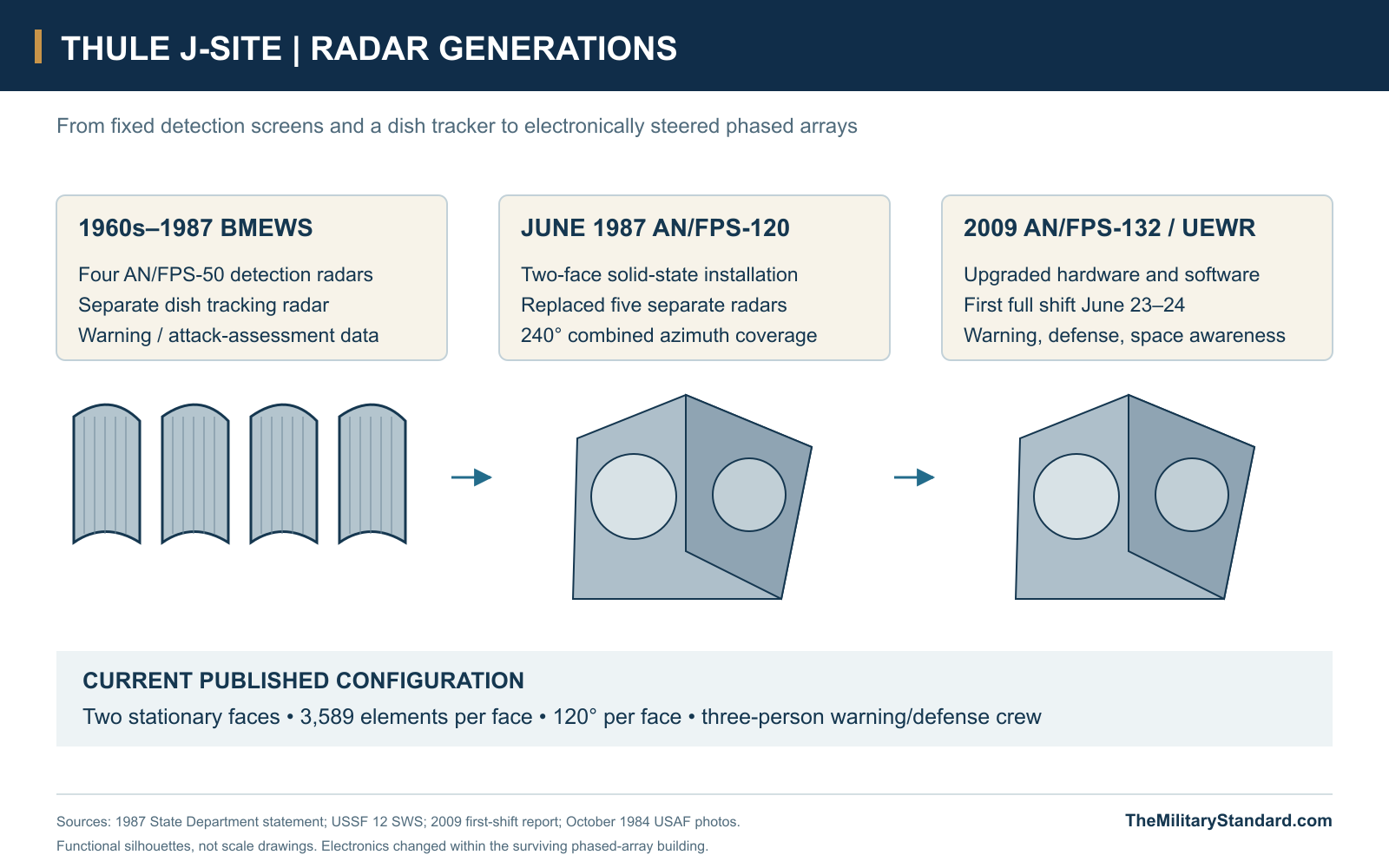
In June 1987 a two-face solid-state phased-array radar replaced the original four detection radars and separate dish tracker. Electronically steered beams increased flexibility and removed the need to use the earlier combination of large fixed detection screens and a moving tracking antenna. The initial phased-array installation was the AN/FPS-120 configuration; later hardware and software changes created the AN/FPS-132 Upgraded Early Warning Radar baseline. The first complete shift using the 2009 upgraded software ran from the night of June 23 into June 24, followed by a trial period. Exterior continuity of the radar building therefore conceals substantial changes in its computing and mission capabilities. [15] [16] [17]
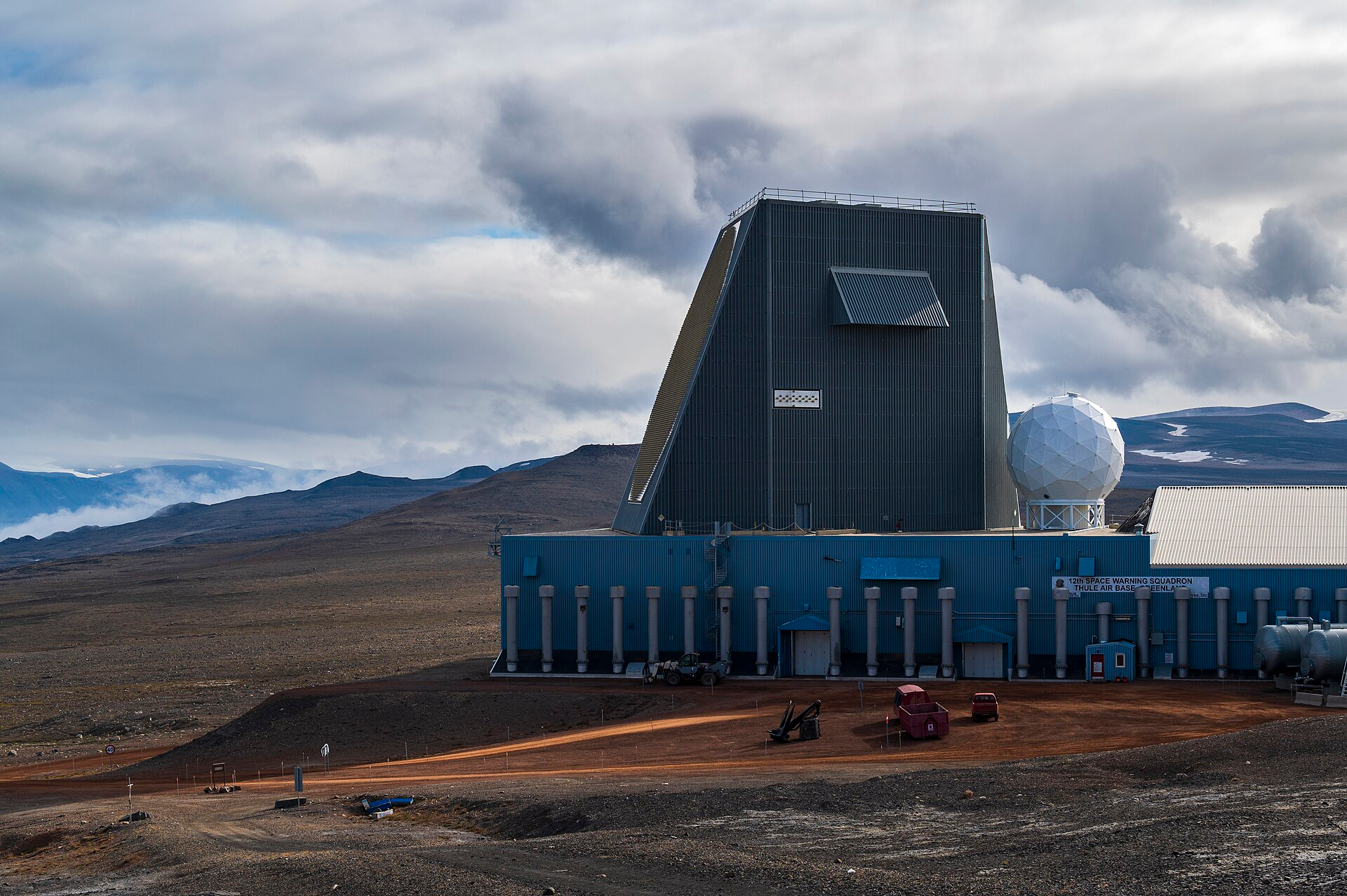
The modern warning squadron performs missile warning, missile defense and space domain awareness. Its published equipment description identifies two stationary array faces, each with 3,589 antenna elements and a 120-degree azimuth field, giving 240 degrees of combined coverage. A three-person crew executes the warning and missile-defense tasks, supported by military and contractor personnel maintaining continuous operation. The radar sends launch and trajectory assessment through the warning architecture and supplies observations of orbiting objects. Accurate missile-defense tracking and space-object data extend the work beyond the original mission of giving strategic forces notice of an incoming attack. [17]
Airlift, Sealift and Scientific Work
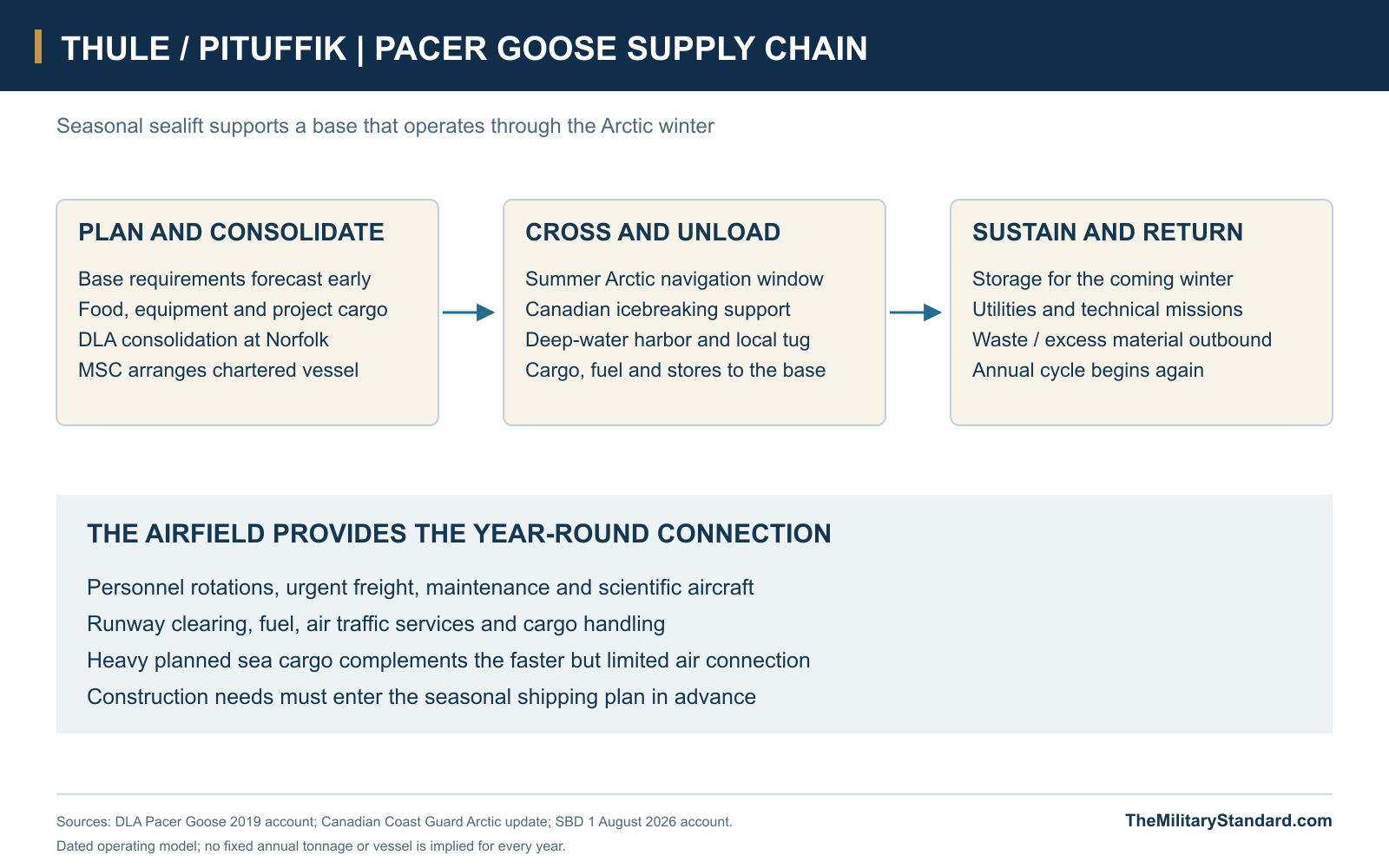
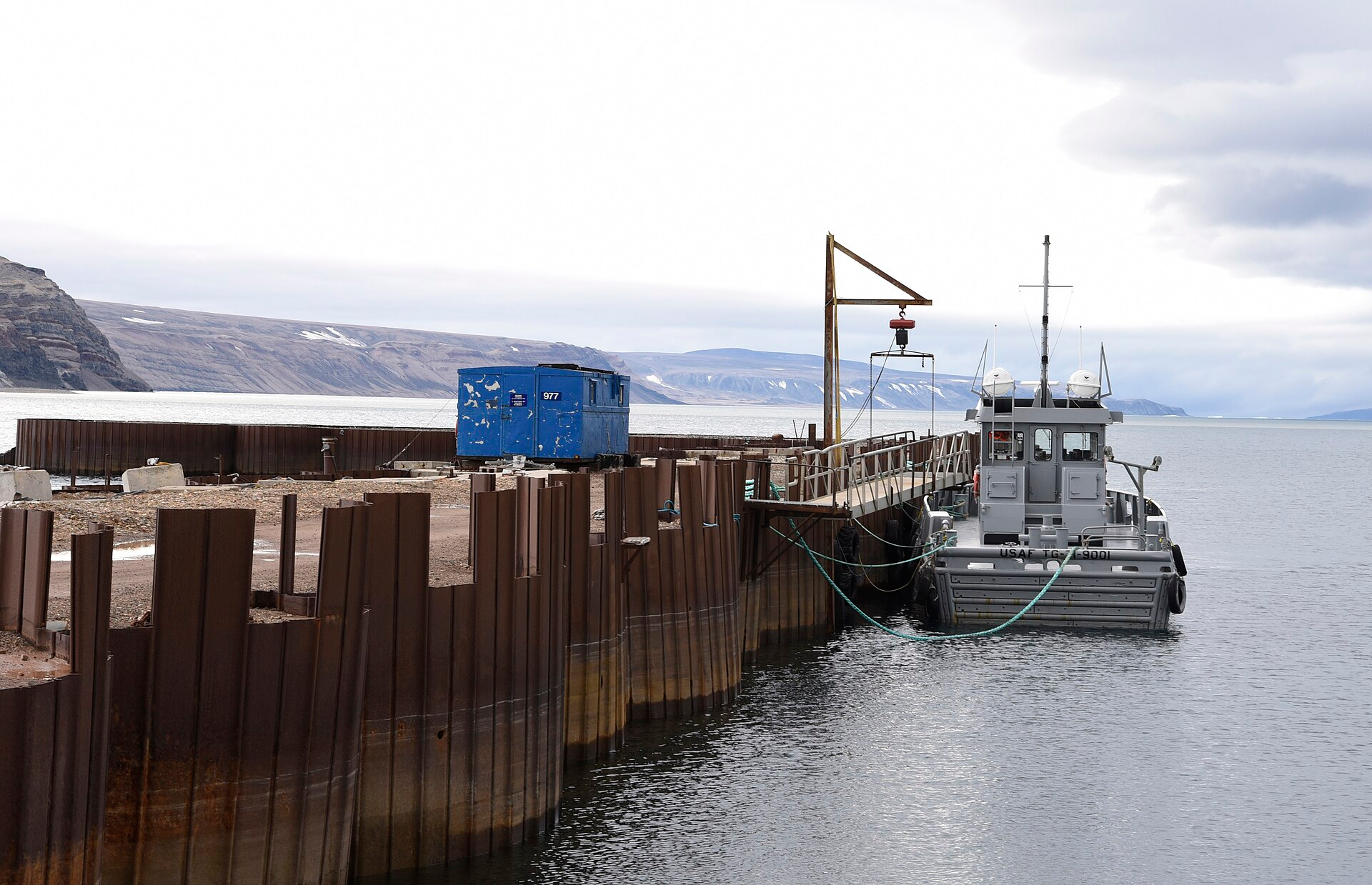
Even as the main operational instruments moved toward space missions, the runway and port remained indispensable. Heavy annual deliveries arrive through Pacer Goose during the summer navigation window. Military Sealift Command arranges a chartered vessel, DLA Distribution consolidates and loads cargo at Norfolk, and supply planners coordinate food and other requirements well ahead of departure. Long-storage frozen food, canned goods and dry provisions replenish the base, while the return movement removes waste and surplus material. Canadian Coast Guard icebreakers help ships through the northern route; CCGS Captain Molly Kool supported the 2019 mission. Failure to meet the seasonal window could affect the following winter's operations. [26] [27]
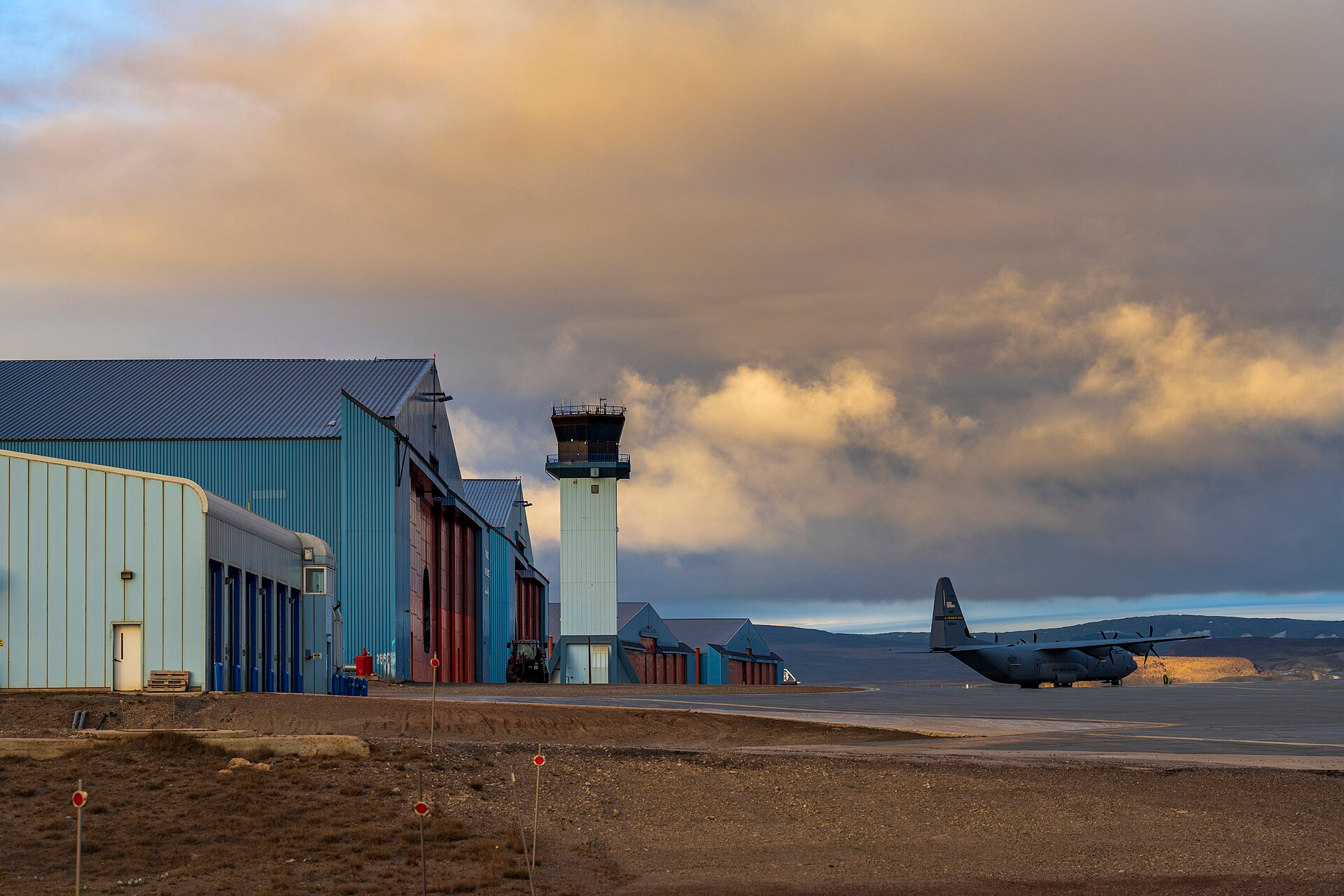
The airfield provides the year-round connection for personnel, urgent freight, maintenance support and scientific aircraft. Snow clearing, air traffic services, fuel and cargo handling keep this lifeline usable when the harbor is iced in. In 2022 an official flight-line account described support for more than 3,000 U.S. and international flights annually, a dated measure of activity rather than an enduring traffic guarantee. Modernization of dormitories and utilities serves both the resident force and those passing through. Annual sealift planning must also include future construction materials, so projects and everyday consumption compete for carefully planned ship space. [1] [28] [33] [38]
Thule also became a base for field science. NASA's Operation IceBridge used it as a major hub from 2009 for aircraft measuring Greenland's ice sheet and Arctic sea ice. Aircraft teams depended on military airfield services and weather windows while collecting data for a civilian research program. The Greenland Telescope added a different scientific instrument: it began scientific observing in 2018 and participates in very-long-baseline astronomical work. Its dish and research role are distinct from the warning radar and POGO antennas. Together these projects show how the same port, runway, utilities and accommodations could support scientific work alongside the military tenants. [29] [30]
Pituffik Space Base and the Continuing Partnership
Greenland's political role in the defense arrangements became more explicit in later agreements. The August 2004 Igaliku agreement included the Greenland Home Rule Government in an amendment to the 1951 framework and set out consultation and environmental cooperation. This accompanied the evolution toward a missile-defense-capable radar. The Space Force era brought further organizational changes: the 821st group became the 821st Space Base Group on May 23, 2022, and the installation received the Pituffik name in April 2023. The new name reflected the region's Greenlandic identity while the airfield, port, warning and satellite-control missions continued. [2] [31] [32]
The 75th-anniversary ceremony on August 12, 2026 brought together American, Danish, Greenlandic and Canadian representatives at an active installation. A further agreement signed on September 22 provided for modernization and expansion at Pituffik and contemplated additional defense areas elsewhere in Greenland under agreed implementation arrangements. Its text retained consultation provisions and specified an entry-into-force procedure tied to the necessary parliamentary processes and diplomatic notification. Those provisions describe an evolving framework rather than proof that new facilities had already been built. Pituffik's continuing story remains one of adapting a long-established Arctic base to new missions within a shared defense relationship. [2] [34]

Chronology
- 1946 A combined Danish-American radio and weather station was established in the Thule area. [1]
- March 1, 1951 Official base establishment date recognized in the 75th-anniversary history. [2]
- April 27 / June 8, 1951 The defense agreement was signed and later entered into force. [5] [8]
- July 9, 1951 The Blue Jay convoy reached Thule; summer construction followed. [4]
- Mid-October 1951 Army engineers turned the airfield over to the Air Force; construction continued afterward. [4]
- May 1953 Residents of Uummannaq were evicted for defense-area expansion and most moved to Qaanaaq. [8]
- August 1953 The main body of the Army antiaircraft deployment arrived. [9]
- August 20, 1954-June 25, 1958 Official Thule station assignment of the 74th Fighter-Interceptor Squadron. [10]
- May 1956 NBS inspection examined moisture failures and experimental roof work in Thule buildings. [7]
- 1957 Strategic Air Command assumed control of the base. [6]
- 1958 F-102 operations and BMEWS construction preparations marked further changes in the base mission. [11]
- September 30, 1960 Thule BMEWS and NORAD achieved an initial operational capability. [13] [14]
- October 5, 1960 Moon echoes produced a false missile indication during early BMEWS service. [13]
- October 15, 1961 / March 30, 1962 The satellite tracking station was designated and subsequently became operational. [18]
- Mid-1965 The four Thule Nike-Hercules batteries ceased operation. [12]
- January 21, 1968 A B-52 carrying four nuclear weapons crashed on Wolstenholme Fjord sea ice off North Star Bay; Crested Ice recovery followed. [24] [25]
- May 1, 1983 The base transferred to Air Force Space Command. [2]
- June 1987 A two-face phased-array radar replaced the original BMEWS detection screens and tracker. [15]
- 1992 The warning unit became the 12th Space Warning Squadron. [17]
- 1995 More than 80 main-base buildings were demolished, as recorded in the 1996 heritage survey. [6]
- June 2002 The 821st Air Base Group was established for installation support. [2]
- August 6, 2004 The Igaliku agreement amended and supplemented the defense framework. [32]
- June 23-24, 2009 The first complete shift with upgraded early-warning software took place. [16]
- October 1, 2010 The tracking station realigned as 23rd Space Operations Squadron Detachment 1. [18]
- July 24, 2020 The warning squadron joined Delta 4; the tracking detachment belonged to Delta 6 in the Space Force structure. [17] [18]
- May 23, 2022 The host group became the 821st Space Base Group. [2]
- April 6, 2023 Thule Air Base was renamed Pituffik Space Base. [31]
- August 12, 2026 The base celebrated its 75th anniversary with international partners. [2]
- September 22, 2026 A new agreement was signed with provisions for Pituffik modernization and expansion and a specified entry-into-force procedure. [34]
Related Sites

Information sources (41)
- WEBUnited States Space Force, 821st Space Base Group fact sheet
Official installation reference at 76 degrees 32 minutes north, 68 degrees 50 minutes west; host mission, runway, seaport and base-support responsibilities.
- WEBAmber Mullins, Space Base Delta 1, Pituffik Space Base Celebrates 75th Anniversary, August 14, 2026
March 1, 1951 establishment; Blue Jay, May 1983 Space Command transfer, June 2002 host group and May 2022 redesignation; August 2026 anniversary.
- PDFJens Fog Jensen, Inge Bisgaard and Jens Heinrich, Anlaeg fra Den Kolde Krig i Groenland, Field Report 34, 2013, pages 10-12
Wartime weather station, postwar landing strip, construction, gun and missile defenses, ice-cap outstations and the base landscape.
- PDFU.S. Army Corps of Engineers, Building for Peace, Building the Base at Thule, page 63
Winter reconnaissance, convoy arrival July 9, 1951, piers, roads, fuel storage, barracks and mid-October airfield turnover.
- WEBAgreement concerning the Defense of Greenland, April 27, 1951, Avalon Project reproduction
Defense-area arrangements, Danish sovereignty and American construction and operating rights under the North Atlantic Treaty framework.
- WEBJohn F. Hoffecker, Mandy Whorton and Casey R. Buechler, Cold War Historic Properties of the 21st Space Wing, 1996 workshop paper, pages 5-8
1990s Thule building inventory, permafrost foundations, insulated panels, heat distribution, hangars and BMEWS heritage assessment.
- PDFF. J. Powell and colleagues, National Bureau of Standards Report 5223, Vapor Barrier Investigation, April 8, 1957
1956 inspection of Thule barracks, mess hall 43-1, readiness hangar 3B-1 and N-32 communications buildings; panel moisture and experimental roof repairs.
- WEBEuropean Court of Human Rights, Hingitaq 53 and Others v. Denmark, application 18584/04, decision January 12, 2006, Reports 2006-I, pages 345-370
May 1953 eviction, 26 families and 116 people, Qaanaaq housing, hunting restrictions, Danish compensation proceedings and the later admissibility decision.
- WEBU.S. Air Force, US Air Defense in the Northeast 1940-1957, preserved by the Communications and Electronics Museum
1953 Army antiaircraft deployment, 549th AAA Gun Battalion and supporting units, 318th and 74th fighter operations and northeastern radar defense.
- WEBAir Force Historical Research Agency, 74 Fighter Squadron lineage
Thule station assignment August 20, 1954-June 25, 1958 and distinction from later squadron assignments.
- PDFAir Force Historical Research Agency, declassified Thule history catalog abstracts, preserved by Fredsakademiet
4083d Strategic Wing tanker rotations, 327th Fighter-Interceptor Squadron movement, maintenance and readiness issues in 1958.
- PDFNORAD/CONAD, Historical Review of North American Aerospace Defense 1946-1970
Four Thule Nike-Hercules batteries and their removal from operation in mid-1965.
- PDFL. Wainstein and colleagues, Institute for Defense Analyses, The Evolution of U.S. Strategic Command and Control and Warning 1945-1972, Part 2
September 30, 1960 Thule BMEWS initial capability, October 5 moon-echo incident, NORAD reporting and the development of warning arrangements.
- PDFNORAD/CONAD, Command History July-December 1960
Initial manual capability at the NORAD computer/display facility on September 30, 1960 and approval of the Thule tracking radar.
- PDFU.S. Department of State, declassified BMEWS modernization statement
Replacement of four fixed fan detection radars and one dish tracker at Thule by a two-face phased array in June 1987.
- WEB1st Lt. Lisa Meiman, Peterson unit improves missile defense capability, July 7, 2009
First complete upgraded-software shift June 23-24, 2009, trial period and distinction from the 1987 radar baseline.
- WEBUnited States Space Force, 12th Space Warning Squadron fact sheet
AN/FPS-132, two faces, 3,589 elements per face, 240-degree combined coverage, three-person warning crew and July 2020 Delta 4 assignment.
- WEBUnited States Space Force, 23rd Space Operations Squadron Detachment 1 fact sheet
Tracking-station establishment October 15, 1961, operation March 30, 1962, 1997 and 2010 reorganizations and satellite telemetry/tracking/command mission.
- WEBSenior Airman Kaitlin Castillo, Minute Mission - 23 SOPS Det. 1, April 5, 2023
Inflated radome, antenna operation and continuous satellite-support work at the tracking station.
- WEBRCA Service Company, Personal Handbook for Site I Personnel, fourth edition June 1965, Living at Site
Contractor quarters, dining, medical services, shuttle buses, J-Site work transport, storm phases, mail and personal communications.
- WEBRCA Service Company, Personal Handbook for Site I Personnel, fourth edition June 1965, Personnel Services and Facilities
500-seat theater, gym, clubs, library, hobby shop, Polar Views newspaper, AM/FM broadcasting and period recreation arrangements.
- WEBBMEWS community map, Thule Air Base, preserved by Radomes
Undated period layout with BMEWS dormitories and warehouse, terminal, hospital, administration, dining and community buildings.
- WEBThule area map showing road to J-Site, preserved by Radomes
Main base, North Star Bay, Dundas, support area, J-Site, road, power and transmission-line relationships.
- WEBU.S. Strategic Air Command, History and Research Division, Project Crested Ice: The Thule Nuclear Accident, Historical Study 113, April 23, 1969
January 21, 1968 B-52 accident and military recovery operation; declassified original preserved by the National Security Archive.
- WEBU.S. Atomic Energy Commission, Thule status report, September 6, 1968
Underwater search termination, contaminated-liquid and debris shipping, U.S.-Danish monitoring and Savannah River disposal arrangements.
- WEBAlexandria Brimage-Gray, Defense Logistics Agency, Subsistence, DLA Distribution support Pacer Goose mission, August 20, 2019
Norfolk loading, Military Sealift Command chartering, food supply, summer delivery and removal of waste.
- WEBCanadian Coast Guard, 2019 Arctic Operations Nearing Mid-Season, August 2019
CCGS Captain Molly Kool icebreaking support to the annual Thule resupply mission.
- WEBJoAnne Castagna, U.S. Army Corps of Engineers New York District, People: Top priority on top of the world, August 2, 2023
Dormitory renovation, base consolidation, energy improvements and continuing district-heating infrastructure.
- WEBNASA Scientific Visualization Studio, Operation IceBridge - Thule, Greenland Landscape, December 9, 2019
Base use as a major IceBridge hub from 2009, airfield and northern Greenland scientific operations.
- WEBGreenland Telescope collaboration, The Greenland Telescope: Construction, Commissioning, and Operations in Pituffik, 2023
Civil scientific telescope construction, 2018 observing and distinction from military warning and satellite-control radars.
- WEBConnie Dillon and Steve Brady, United States Space Force, Thule Air Base Gets New Name, April 6, 2023
Renaming ceremony, Greenlandic name and separate Delta 4 warning and Delta 6 satellite-control functions.
- WEBAgreement signed at Igaliku, August 6, 2004, Danish official publication
Amendment of the 1951 framework, inclusion of Greenland Home Rule, consultation and environmental cooperation.
- WEBAbigail Behan, Space Base Delta 1, A Year at the Top of the World: Leading Pituffik Space Base, August 12, 2026
Contemporary logistics planning, shared community facilities, multinational personnel and 2025 elders visit.
- WEBUnited States, Kingdom of Denmark and Greenland, agreement signed September 22, 2026, White House publication
Provisions for Pituffik modernization/expansion, agreed implementation, respect for Greenlandic life and entry-into-force condition.
- WEBNatural Earth, 1:50 million Admin 0 countries
Public-domain coastline geometry used for the separate geographic location diagram.
- WEBU.S. Navy Naval History and Heritage Command, photograph NH 97108
USNS General A. W. Greely and LSM-397 amid ice at Thule during Blue Jay, July 19, 1951.
- WEBU.S. Department of Defense, MSGT Glen D. Plummer, Thule photographs October 24, 1984
Dated main-base panorama, four AN/FPS-50 antennas and tactical operations room; original government photographs preserved by Wikimedia Commons.
- WEBSpace Base Delta 1, Thule Air Base: Space Superiority from the Top of the World, photographs August 2022
Dated radar, flight-line, tracking-station, power and seaport visual evidence with individual credits in the image register.
- WEBU.S. Air Force, 74th Fighter-Interceptor Squadron photograph, 1955
F-89 aircraft on the Thule flight line during the squadron station assignment.
- WEBRCA Service Company, Personal Handbook for Site I Personnel, fourth edition June 1965, foreword
Identity, edition and purpose of the contemporary contractor handbook.
- WEBU.S. Air Force Nuclear Safety, January-March 1970, Volume 65 Part II, Project Crested Ice special edition
Original unclassified accident and recovery account, aircraft fire, rescue, field camp, logistics and contamination removal.