Myrtle Beach Air Force Base, South Carolina

Longitude: -78.9283
Origin of current name: Named after a city in South Carolina
Date current name was assigned to base: 13 Jan 1948
Previous Names: Myrtle Beach Municipal Airport (under Air Corps administration), Jun 1940; Myrtle Beach General Bombing and Gunnery Range, 24 Mar 1942; Myrtle Beach Army Air Field, 8 Nov 1943; Myrtle Beach Municipal Airport, 1 Nov 1947.
Construction Began: Spring 1940
Changes in Capability: Capability: Gunnery and bombardment training 1940-1945; two bombing ranges and three gunnery ranges completed 24 Mar 1942; perimeter, taxiway net, parking hardstands, runway reinforcements, and billets completed spring 1943; inactive Nov 1947-Jun 1954; aircraft control and warning site, including radar facility, established Sep 1956; major rehabilitation and expansion for jet operations fall 1956; 800-unit Capehart housing project completed fall 1959; 50-bed hospital completed mid-1961; F-100 operations began spring 1963; flying operations temporarily declined with assignment of several squadrons to SEA, 1966-1967; major maintenance facility projects marked start of A-7D flying operations Jan-Jun 1971; interim agreement for joint civilian-military aviation signed 27 Mar 1975, initiated 19 Jul 1975; facilities readied for conversion to A-10s 1977; A-10 flight simulator completed Feb 1982.
Major Changes in Status: Inactivated, returned to City of Myrtle Beach, 1 Nov 1947; USAF assumed jurisdiction, 1 Jun 1954; activated, 1 Apr 1956; Myrtle Beach City Council annexed base, 20 Apr 1977, in agreement with U.S. Government.
Myrtle Beach was established as a resort around the turn of the century. At that time, residents of the more developed inland areas of Horry County began to travel to the area to enjoy the beach. Development of the area was slow and initially occurred mostly along the ocean.
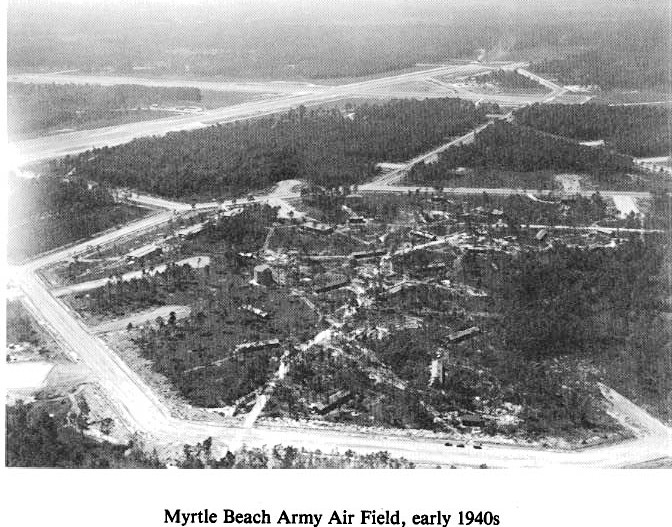
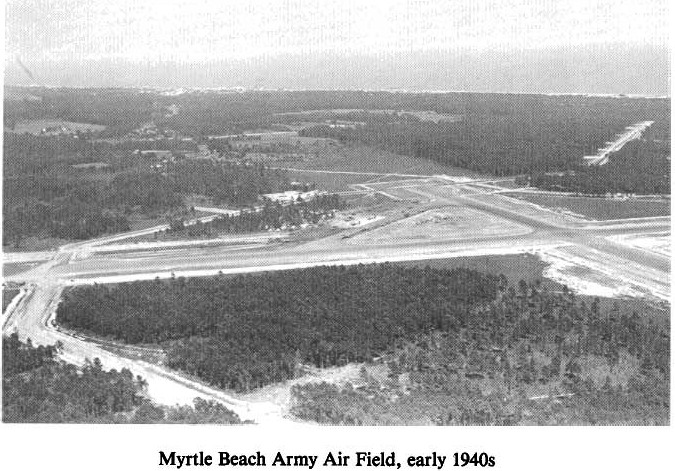
In 1939 a municipal airport was established on the land presently known as the base. In 1940 the site became a defense facility, and the War Department acquired the airfield under agreement with the Town of Myrtle Beach. The Army Air Corps used the base for practicing gunnery missions in the area. With the beginning of World War II, the airport became the Myrtle Beach General Bombing and Gunnery Range. By 1943 the Myrtle Beach Army Air Field consisted of approximately 5,000 acres of owned and leased land. During the war, the base provided combat training for thousands of air crew members. By late 1945, as war activity decreased, the base was used for recruitment and support for special activities such as Civil Air Patrol, National Guard, and military academy encampments. By that time, more than 114 buildings had been built. All taxiways and fueling areas were laid out on a dispersal pattern, or spread in a random manner, to minimize any direct hits on parked aircraft. In 1947 the base was closed and the property given to the City of Myrtle Beach, with runways and towers being turned over to the City for use as a municipal airport.
From 1947 to 1954, the City leased portions of the base. Businesses that rented property included the Aerovox Corporation (now AVX), a manufacturer of capacitors; the Boston Braves baseball team, who used the land for training purposes; Piedmont Airlines; and a turkey farm.
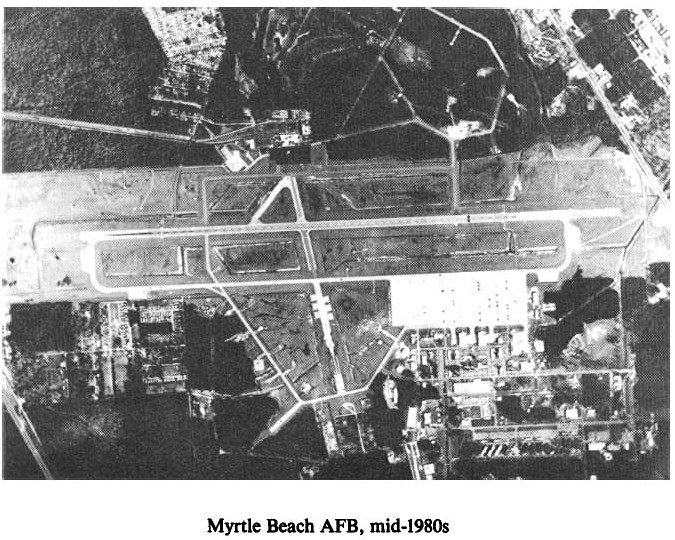
In 1954, the City donated land to the Air Force for construction of a new base, and much of the existing facility was demolished to make way for a modern Air Force base. Operations began in 1955 when the 727th Aircraft Control and Warning Squadron arrived. The 4434th Air Base Squadron was established as the housekeeping unit, and then replaced by the 342nd Fighter-Day Wing. The base was home to the 455th Fighter Day Group, the 354th Tactical Fighter Wing, and the 113th Tactical Fighter Wing, among others. The 354th Tactical Fighter Wing, activated in 1958 from the 354th Fighter-Day Wing operated at MBAFB until its deactivation in 1993. Its mission was to maintain the capability to deploy worldwide and to provide close air support in all types of combat operations, included the training of pilots in tactical operations and training of maintenance personnel.
In 1975, the Horry County Jetport facility began operation as a civilian airport on the northeastern side of the base, beginning the joint civilian/military use of the airfield. The land on which the air base lies was annexed by the City of Myrtle Beach in 1977.
According to the standard practice in the Air Force and at other industrial settings at the time, the Myrtle Beach AFB began undergoing environmental assessment and remediation in 1981. With the announcement in October, 1991 that the base would close in 1993, the emphasis of the base's environmental program changed to include the considerations of the goals of property transfer and reuse for civilian purposes.
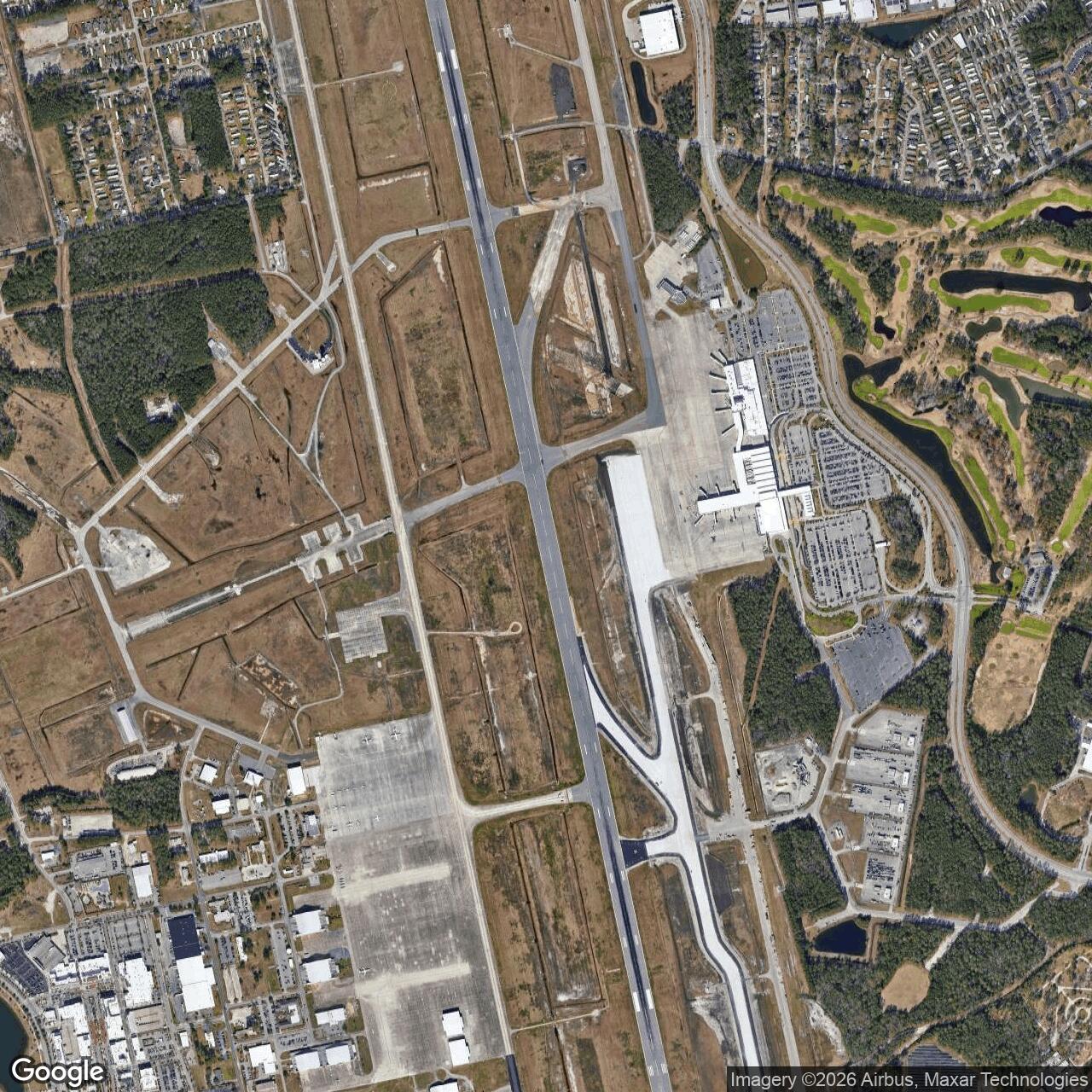
Military ownership of former Myrtle Beach Air Force Base ended October 1, 2010 when the Air Force transferred the final 2.4 acres of the former base to Horry County with a formal ceremony commemorating the transfer held on October 27, 2010 at the Base Recreation Center. The former base consisted of 3,937 acres and has been transferred to the Myrtle Beach Air Force Base Redevelopment Authority, Horry County, the State of South Carolina, the City of Myrtle Beach, and several other organizations. Redevelopment includes an International Airport, The Market Common urban village, residential development and other commercial facilities. Tenants include the American Red Cross, Horry-Georgetown Technical College and Allied Healthcare.