Kelly Air Force Base, San Antonio Texas
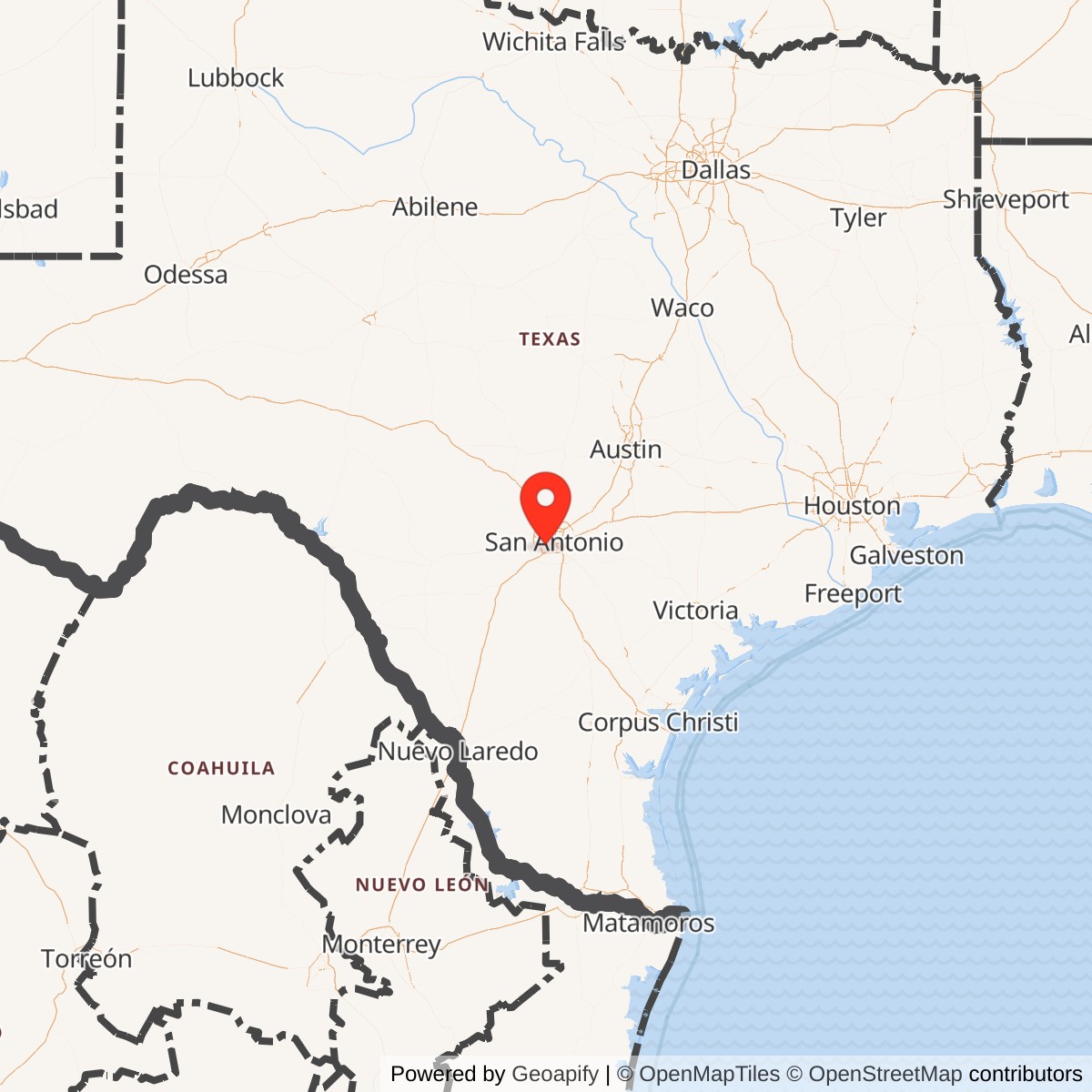
Longitude: -98.58083
Origin of current name: Named in honor of London-born 2d Lt George Maurice Kelly (1878-1911). Naturalized a citizen of the United States in 1902, Lieutenant Kelly became the US Army's first pilot casualty. On 10 May 1911 he banked his Curtis Type IV sharply to avoid plowing into an infantry encampment and crashed near the present site of Fort Sam Houston, TX.
Date current name was assigned to base: 29 Jan 1948
Previous Names: Aviation Camp (aka Remount Station) at Fort Sam Houston, Feb 1917; Camp Kelly, 11 Jun 1917; Kelly Field, 30 Jul 1917
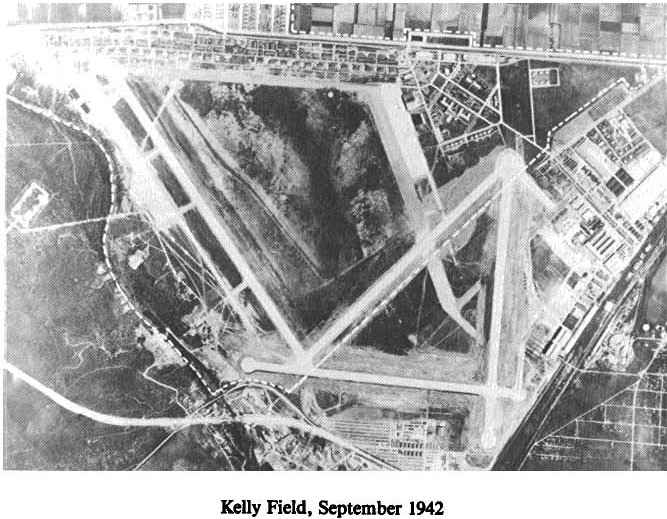
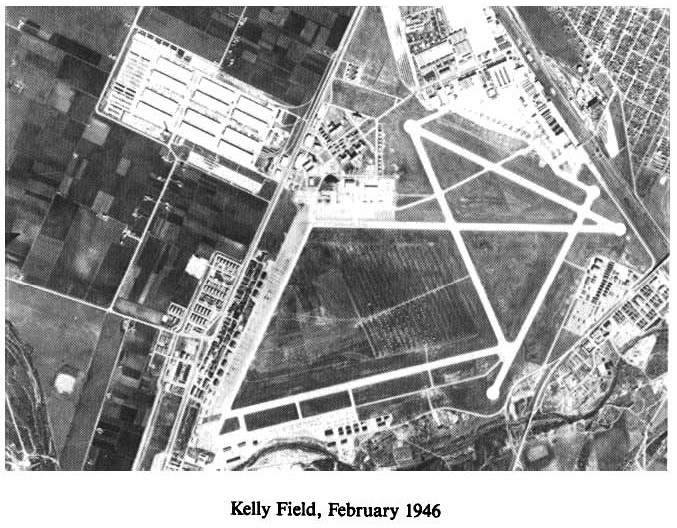
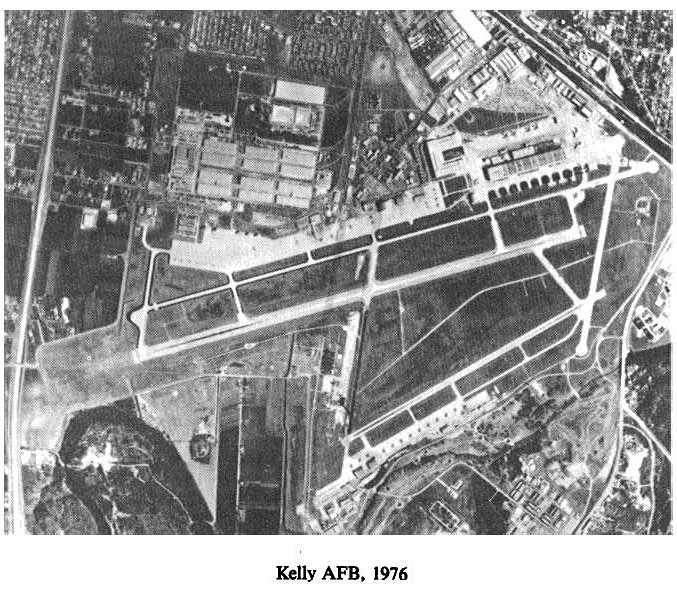
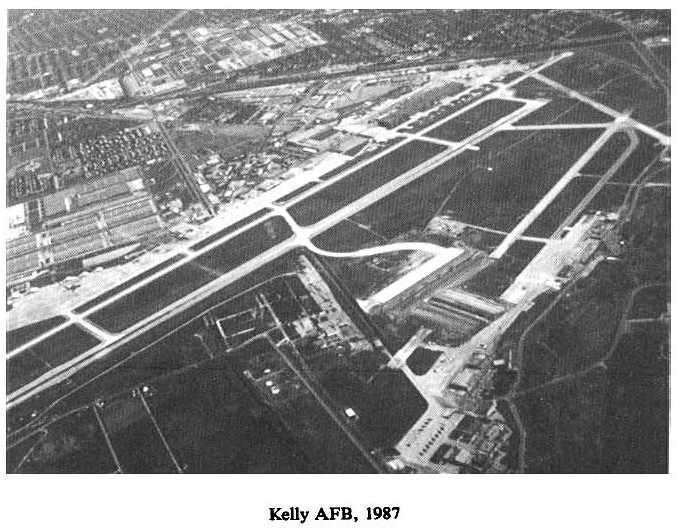
Changes in Capability: Signal Corps supply office established Jun 1917; Repair and Airplane Divisions operational Dec 1917; pilot training interrupted between Mar 1920 and early 1921 when the base served as airplane mechanics school; advanced phase of pursuit and bomber training transferred to Kelly late 1921; observation school established mid-1922; first concrete runway completed mid-1925; Kelly Bombing Range, 1 million acres 1931 (acquired)-1941 (disposed and later redesignated as Lackland AFB); Headquarters, Air Corps Advanced Flying School established 1 Jul 1931; officer and NCO homes and billets completed mid-1940; new gunnery school established 9 Jul 1941, necessitated major addition of housing, messing, and training facilities; Air Corps Replacement Training Center activated as part of Advanced Flying Training School 22 Aug 1941; Air Corps Reception Station opened Nov 1941, merged with Air Corps Classification Center (established Apr 1942) to form San Antonio Aviation Cadet Center 4 Jul 1942; four runways (5,518; 5,908; 6,834; and 7,343 feet) and taxiways completed 1943; an additional 5,350-foot runway was in use 1945; new 100-bed (later expanded to 260) hospital opened Apr 1943; roads, railroad facilities, and utilities for San Antonio ASC (later, SAAMA) completed 31 Aug 1943; major air logistics center 1943-; base increased to 3,360 acres with absorption of Normoyle Ordnance Depot (and redesignated East Kelly) 25 May 1945; completion of facilities for HQ USAFSS which moved from Brooks AFB and became Kelly's largest tenant organization in Jul 1953; an additional 256 acres with 154 buildings absorbed when San Antonio General Depot (subsequently redesignated San Antonio AFS) at Fort Sam Houston acquired from USA 1 Jul 1955; new 11,550-foot runway opened 16 Mar 1956; 592 Wherry housing units accepted 1 Mar 1960; 100-foot control tower completed 2 Jan 1970; AF Village housing project, NW of San Antonio, TX, occupied 1 Nov 1970; teleproduction facility dedicated 25 Jan 1972; aircraft radome overhaul facility completed Apr 1974; aircraft engine inspection and repair shop completed 4 May 1974; logistics materials processing facility completed 15 Jun 1974; weapons system components plating shop completed 30 Jun 1975; precision measuring equipment laboratory completed 21 Oct 1975; engine fuel system control overhaul facility completed 17 Nov 1975; logistics materials storage facilities constructed 1977, 1980; engine fuels accessory repair and test shop completed 13 May 1980.
Major Changes in Status: Announced as a permanent military post, 30 Sep 1922
Official Base Website: www.jbsa.mil
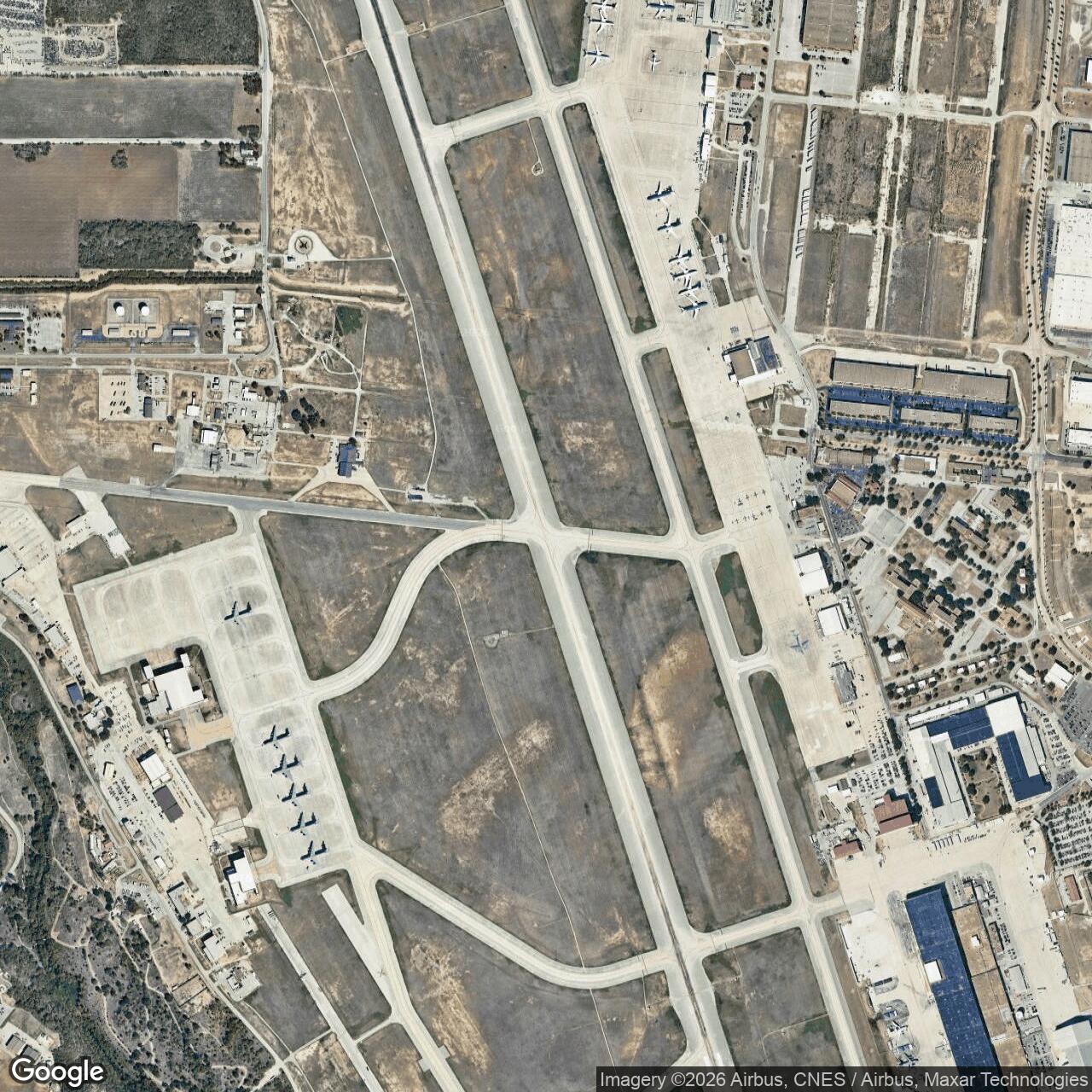
The Air Force Base was closed in 2001 as part of the 1995 Base Realignment and Closure (BRAC) process. The runway and some military functions became Kelly Field Annex supporting Air Force Reserve C-5 aircraft, and Texas Air National Guard F-16s.
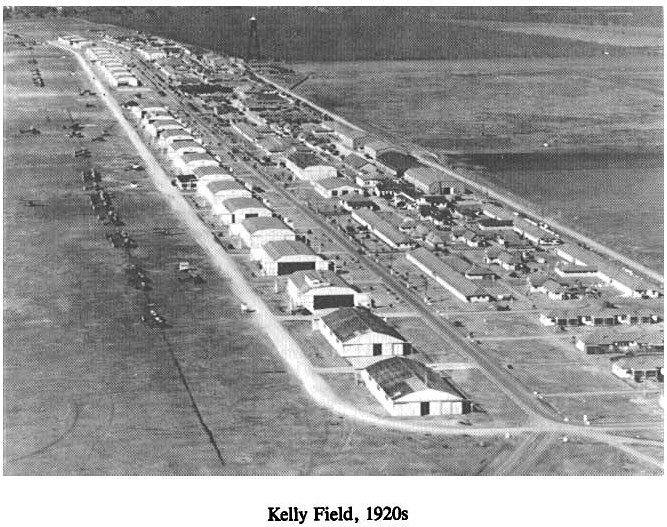
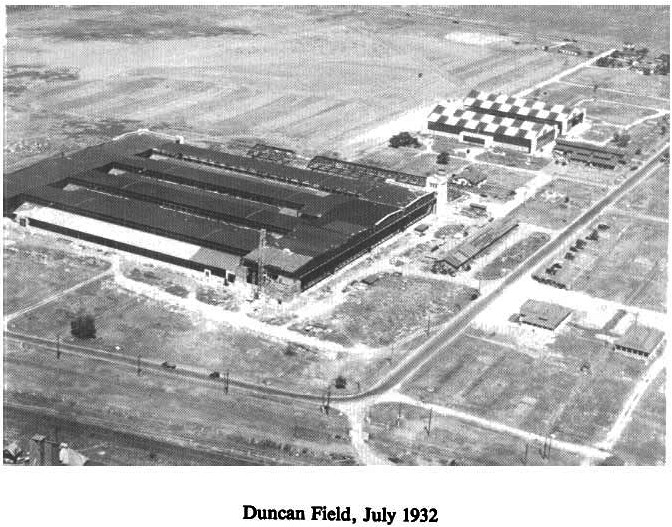
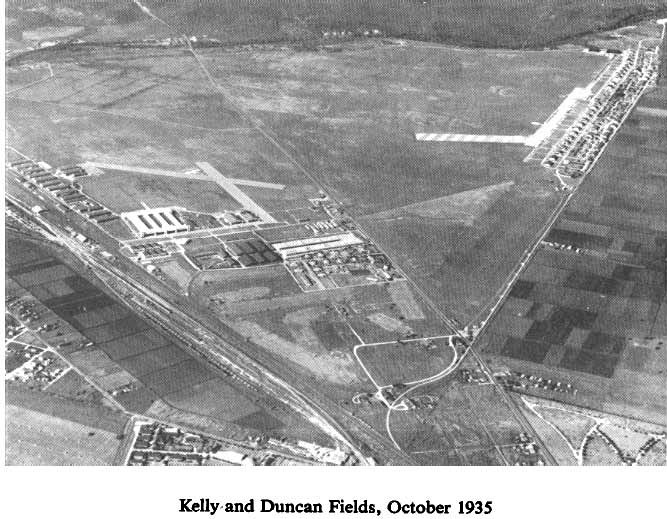
Kelly Air Force Base, in San Antonio, Texas, has been a vital center for American military aviation throughout its history. As World War I raged in Europe, the United States began to build up and expand its military aviation forces. In his search for a new army aviation training site, Maj. Benjamin Foulois found 700 acres of flat farmland with a water supply near the Missouri-Pacific rail line, then seven miles south of San Antonio. Aviation operations began here on April 5, 1917, the day before the United States declared war on Germany. Kelly Field, named for George Edward Maurice Kelly, the first military pilot killed in an airplane crash at nearby Fort Sam Houston in 1911, was one of 14 schools in the country conducting primary flight training during World War I. The school trained aviators, mechanics and support personnel for war duty. After additional land was acquired, the field was divided into Kelly Number 1 (later renamed Duncan Field) and Kelly Number 2. The Air Service Advanced Flying School, which headquartered at Kelly Number 2, trained pilots including Charles Lindbergh, Curtis LeMay and numerous future Air Force chiefs of staff. By the end of World War I, more than 250,000 men had passed through the facility. After World War I, rapid demobilization followed, and primary training at Kelly was discontinued. In 1922 the U.S. Air Corps decided to consolidate its flight training at two fields, Kelly Field and Brooks Field, named the Air Corps Training Center. Later, in 1931, all primary training was consolidated at the newly completed Randolph Field, to the north of San Antonio, Texas.
During World War II, Kelly saw a tremendous increase in its civilian and military workforce, including women, who were known as "Kelly Katies." Kelly Field continued to serve an important role in the war effort after it was consolidated into the San Antonio Air Depot in January 1943. By 1943, it had become the largest maintenance and supply facility in the country. At that time supply depot activities became the primary mission of the base and flight training activities were transferred elsewhere. After the Air Force was established as an independent military service in 1947, the field became known as Kelly Air Force Base. Personnel at Kelly were significantly involved with air transport and maintenance during the Korean conflict, the Cold War, Desert Shield and Desert Storm. Once the largest employer in San Antonio, Kelly Air Force Base was realigned in 2001 in response to peacetime defense spending priorities. Part of the base has been converted into an industrial center for both commercial and military businesses and the rest has been combined with neighboring Lackland Air Force Base.