Laughlin Air Force Base, Del Rio Texas
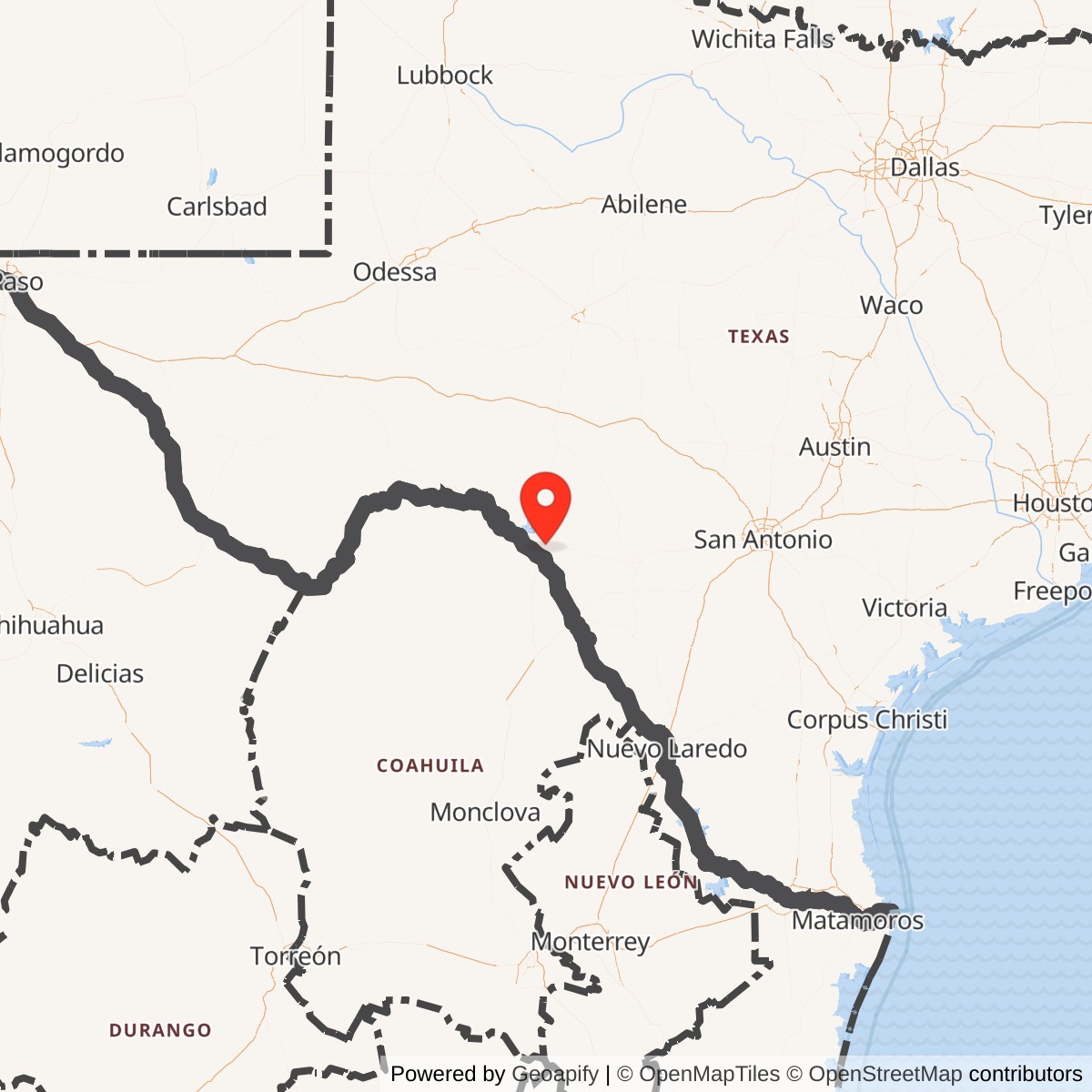
Longitude: -100.7780
Date current name was assigned to base: 1 May 1952
Previous Names: Laughlin Army Air Field, 3 Mar 1943; Laughlin Field, 11 Nov 1943; Laughlin Air Force Auxiliary Field, 13 Jan 1948
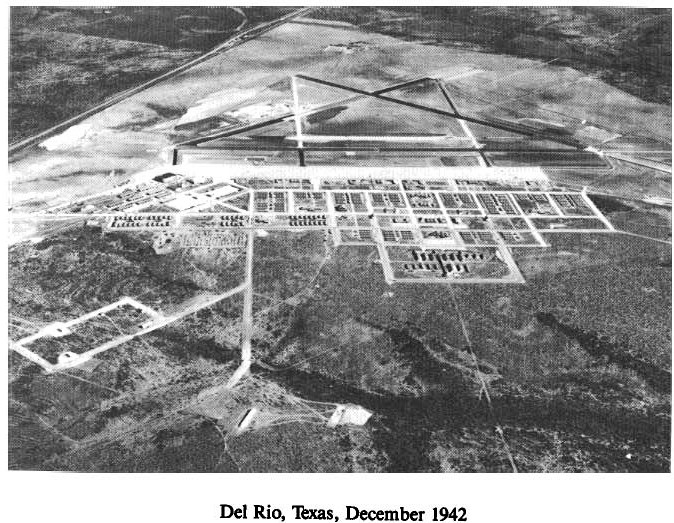
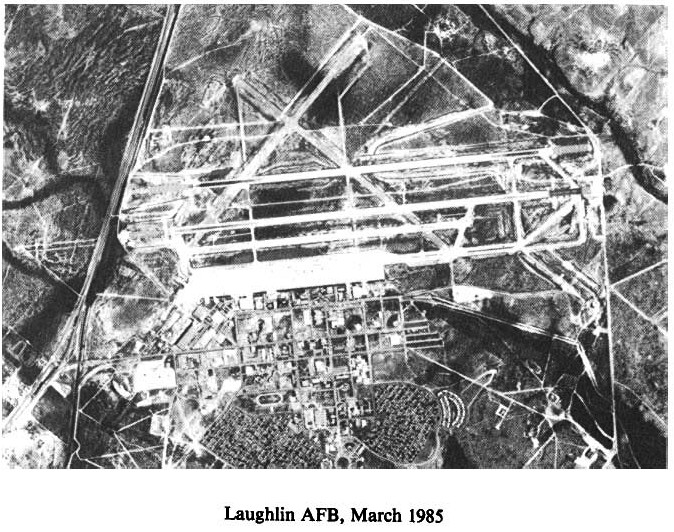
Changes in Capability: Base mission changed from advanced flying to bombardier training in Sep 1942, and to transition B-26 training in Dec 1942; temporary hangars, billets, and utilities constructed by Sep 1946; rehabilitation project, readying base for F-84 training, including shops, billets, and storage facilities completed Jun-Dec 1952; four runways and other concrete surfaces reconditioned, and two hangars added preparatory to T-33 training, 1954; new hospital opened Jan 1955; facilities converted for RB-57 and U-2 operations when base transferred to SAC, 1 Apr 1957; 500-unit Capehart housing project completed Dec 1959; new runway opened at Eagle Pass Auxiliary Fld Oct 1962; USAF's only permanent runway supervisory unit (RSU) opened 12 Feb 1964; new hospital dedicated 1 Dec 1977; instrument flight simulator completed late 1978.
Major Changes in Status: Inactivated and placed on temporary inactive status, 30 Sep 1945; surplus, 17 Oct 1946; transferred to Army Corps of Engineers, 21 Dec 1946; transferred to WAA, 1 Apr 1947; activated, 1 May 1952.
Official Base Website: laughlin.af.mil
Laughlin AFB started, like many Air Force facilities, as a training base in World War II, and was called as Laughlin Army Air Field. The base was named for a local pilot, Jack T. Laughlin, killed in action in a B-17 over the Makassar Strait in what is today Indonesia. Laughlin mainly trained pilots and crews for the B-26 Marauder, a difficult to fly, fast, well armed, medium range medium weight bomber with a bad handling reputation. Despite its reputation, only two Marauders, of roughly five thousand, were lost in combat in US service. In the remaining two years of the war Laughlin was regraded from Air Base to Field, and again to Auxiliary Field, and closed at the end of the war.
The base reopened in 1952, in a period of increasing international tensions, to train pilots with the new F-80 Shooting Star and F-84 Thunderjet, mainly in the T-33 training jet. Five years later, Laughlin was transferred to Strategic Air Command, and gained the 4080 Strategic Reconnaissance Wing, which provided high-altitude reconnaissance using the RB-57D Canberra and the more famous U-2. The U-2 that provided photographs of Soviet missiles in Cuba was headquartered at Laughlin, as was later U-2 pilot Major Rudolf Anderson, the first recipient of the Air Force Cross.
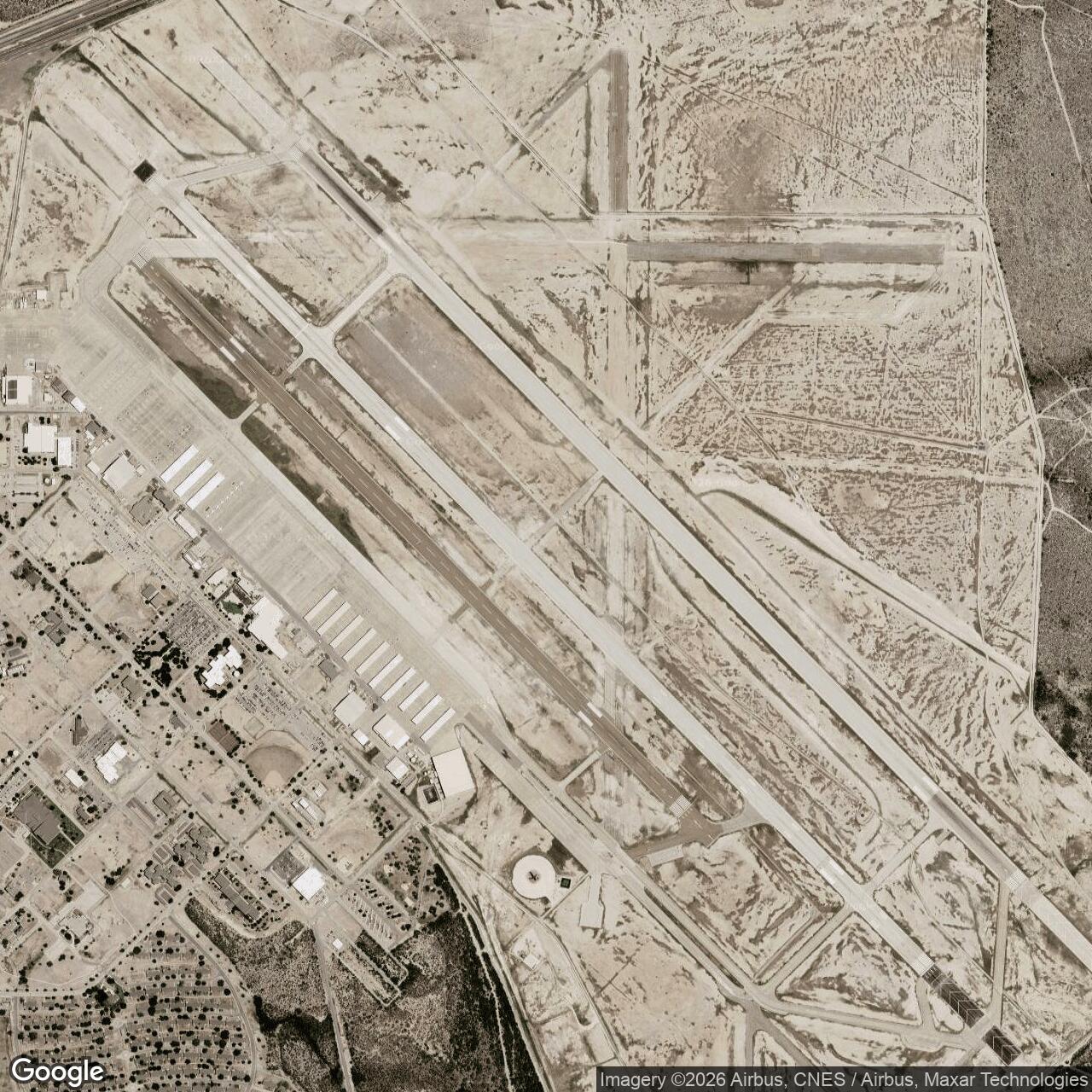
The 47th Flying Training Wing develops Combat Ready Airmen, Leaders and Pilots in support of Air Force and Combatant Command requirements by conducting effective, safe and disciplined Flying Training operations and Mission Assurance activities. The 47th Flying Training Wing has been active at Laughlin Air Force Base since September 1, 1972. In the fifty-plus years that it has been operating at Laughlin, the 47th Flying Training Wing has trained more than 15,000 pilots for the United States and its allies.
At Laughlin, the wing supported the Accelerated Co-Pilot Enrichment Program at numerous locations from 1976 to 1986, and began Specialized Undergraduate Pilot Training (SUPT) in November 1993. The wing added airlifter-tanker track pilot training in 1994.
The wing's mission since 1972 has been to train pilots for the United States Air Force, Air Force Reserve, Air National Guard and allied nation air forces. Today the wing utilizes the T-6A Texan II and T-38C Talon aircraft to perform this mission, while striving, every day, to build combat-ready Airmen, leaders, and pilots.