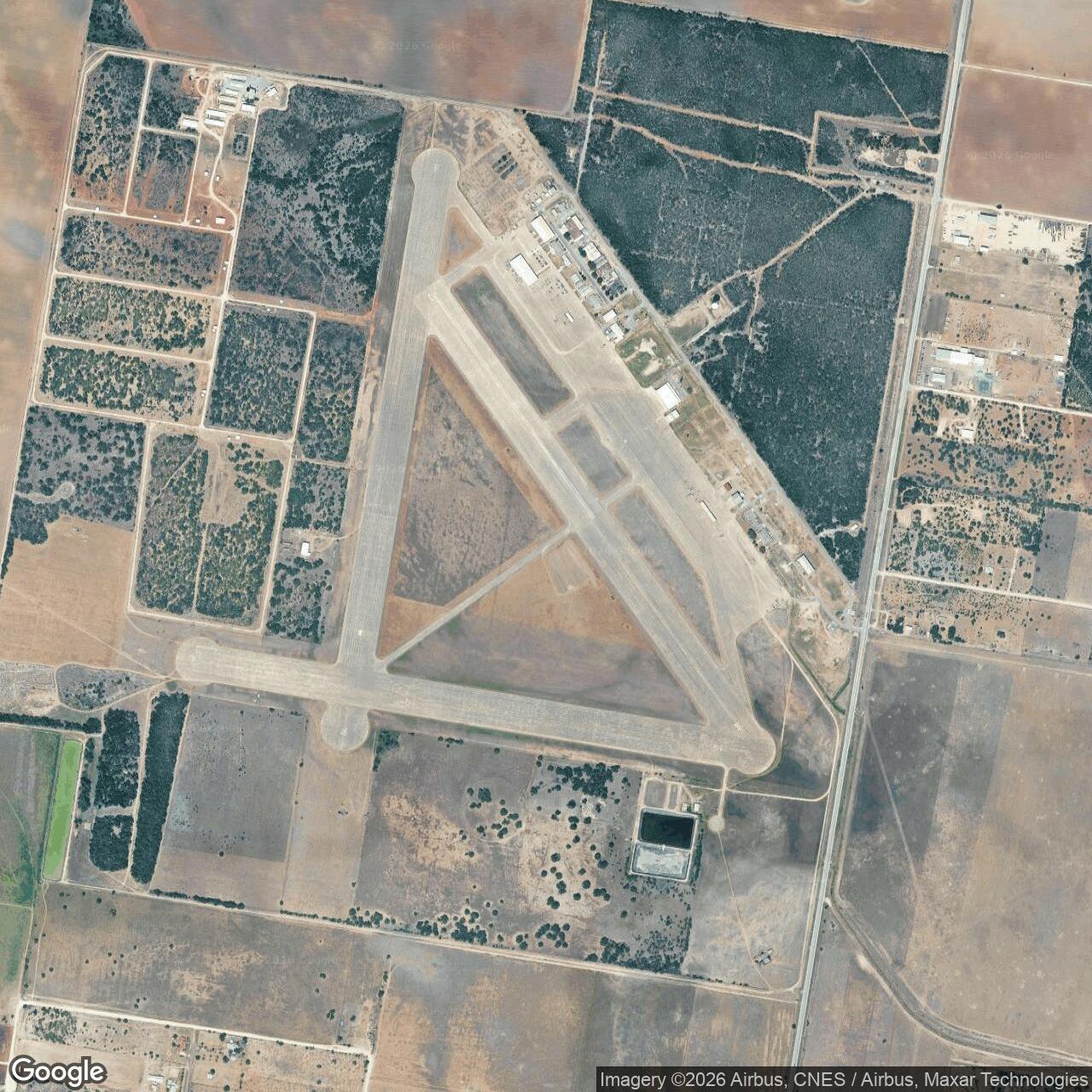
Moore Air Force Base, Texas
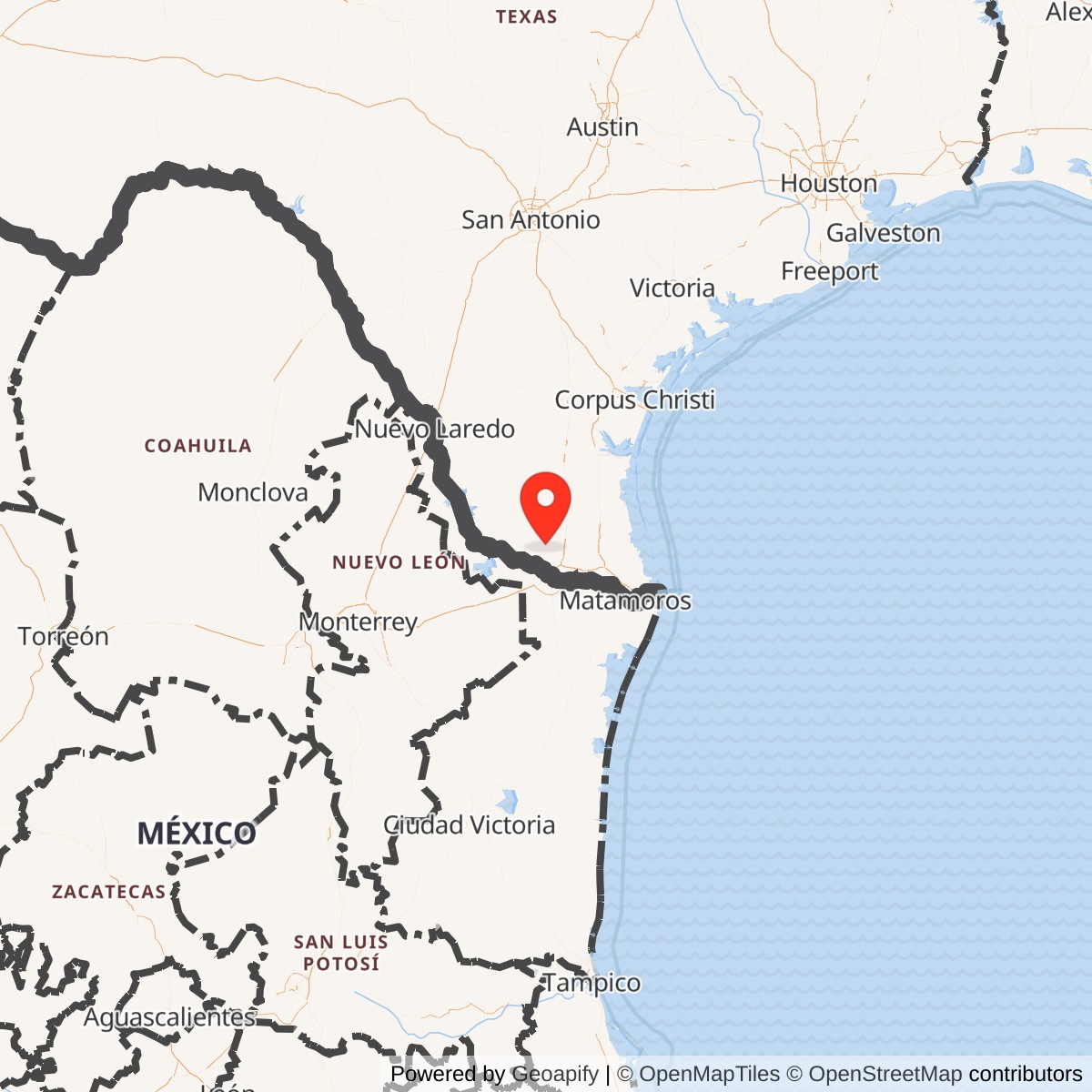
Longitude: -98.336560
Moore Field, established in September 1941 as an Army Air Forces installation fourteen miles northwest of Mission, Texas, played a vital role in the United States' wartime mobilization by serving as an advanced flight training school for single-engine pilots. From its activation through the end of World War II, the base focused on primary and advanced single-engine pilot training, graduating approximately 6,000 aviators between 1941 and 1945 to meet the urgent demand for skilled pilots in the European and Pacific theaters. This effort was part of a broader network of over 20 Army Air Forces training fields across Texas, which collectively produced tens of thousands of pilots through a standardized program emphasizing flight proficiency, navigation, formation flying, and combat maneuvers under the Central Flying Training Command.
The base's operations peaked during the war, with military personnel and civilians in support roles maintaining the intensive training schedule. Training utilized a range of aircraft suited to advanced single-engine instruction, including the BT-13 Valiant for basic aerobatics and instrumentation, the PT-19 Fairchild for initial solo flights, the AT-6 Texan for tactical maneuvers, and pursuit types like the P-36 Hawk and P-43 Lancer for transition to fighter operations.
As the war drew to a close, the final cadet class graduated in April 1945, marking the culmination of Moore Field's contributions to pilot production. The base officially closed on October 31, 1945, following the cessation of hostilities and the demobilization of training activities, though its legacy endured as one of Texas's essential nodes in the national pilot training infrastructure that helped secure Allied air superiority.
Following the end of World War II, Moore Field continued to function as a pilot training facility until its official closure on October 31, 1945, after which it entered a period of relative inactivity as military operations wound down.
In 1947, the Texas Legislature authorized the State Board of Control to acquire and convert portions of the surplus Moore Field property into a tuberculosis sanatorium, appropriating $550,000 for the fiscal year ending August 31, 1948, to secure title and establish the facility. Known as the Weaver H. Baker Memorial Sanatorium, it was established on the site to treat tuberculosis patients, drawing on the former military buildings and admitting patients under state regulations similar to those at the existing Sanatorium, Texas facility. By 1952, the sanatorium housed approximately 900 patients and operated until its closure in 1952 following federal reclamation of the property.
Concurrently, the remaining facilities at Moore Field were repurposed for civil aviation shortly after the 1945 closure, with the airfield jointly operated by the cities of Mission, McAllen, and Edinburg as the Tri-Cities Municipal Airport to serve regional commercial needs. This interim use highlighted the base's transition from military to civilian infrastructure, accommodating local air traffic while the sanatorium occupied other parts of the site. By 1950, these dual roles-sanatorium and airport-fully defined the field's postwar limbo, sustaining limited activity until military interests prompted its reactivation in 1954.
In June 1954, the U.S. Air Force approved the reactivation of the former Moore Field under Air Training Command as part of the broader military expansion during the Cold War, though budget constraints delayed full operations until 1 April 1955, when it was officially redesignated Moore Air Force Base.
The 3301st Pilot Training Group was reassigned to the base from Columbus Air Force Base, Mississippi, to establish a contract primary pilot training program, with initial flight instruction provided by California Eastern Airways using propeller-driven aircraft such as the T-28 Trojan and T-34 Mentor. This setup addressed the escalating demand for trained pilots amid Cold War tensions, enabling the base to deliver primary flight and academic instruction to approximately 4,000 Air Force personnel between 1955 and 1961.
In August 1959, the training curriculum transitioned to jet aircraft, incorporating the T-37 Tweet as the primary trainer to align with modern Air Force requirements, while the contractor shifted to Beiser Aviation to support the upgraded operations. This evolution reflected the U.S. Air Force's push toward standardized jet proficiency, with Moore serving as a key node in pilot production until its integration into the 1960 Consolidated Pilot Training initiative, which aimed to centralize and streamline undergraduate flying education across contract and military-run facilities.
The phase-out of operations at Moore Air Force Base began in late 1960 as part of the Air Training Command's transition to the Consolidated Pilot Training program, which centralized primary flight instruction at U.S. Air Force-owned facilities equipped for jet aircraft and military instructors. By December 1960, all contract-based primary training at Moore, including that conducted by the 3301st Pilot Training Group, had ended, marking the cessation of the base's core mission under the prior decentralized model. Although some ground training classes persisted briefly, the 3301st Pilot Training Group was fully discontinued on 1 February 1961, leading to the base's inactivation and placement on inactive status by 31 March 1961.
This deactivation aligned with broader early 1960s Air Force restructuring efforts, driven by budget reallocations, reduced demand for pilots following the post-Korean War expansion, and the need to modernize training infrastructure amid Cold War priorities. The shift consolidated operations at fewer, more efficient sites-reducing primary training installations from 25 in fiscal year 1959 to 19 by December 1962-eliminating contract schools like Moore in favor of standardized programs at bases such as Reese, Laredo, and Vance. Despite the inactivation, the installation remained under Air Force custody for administrative purposes until disposal proceedings concluded.
Property disposition occurred progressively after inactivation, with the base fully closed and returned to civilian control on 15 July 1963. Portions of the site were sold to private entities, while the remainder was transferred to the U.S. Department of Agriculture to support non-military initiatives. This transfer reflected the Air Force's strategic divestment of surplus facilities during a period of fiscal restraint and programmatic realignment.