
Atlas E Site 548-1 Missile Silo, Valley Falls / Rock Creek area Kansas
Longitude: -95.5306379155418
Site Type: Atlas E single-missile coffin launcher complex
Missile Type: SM-65E Atlas
Number of Launchers/Missiles: 1
Parent Base: Forbes AFB
Missile Wing: 40th Bombardment Wing / 40th Strategic Aerospace Wing; USAF unit history also lists 21st Air (later Strategic Aerospace) Division assignment
Missile Squadron: 548th Strategic Missile Squadron
Approximate Base Size: approx. 28 acres
Current Site Use: Former Atlas E launch complex on private rural property; USACE records document remaining underground structures, 2014 roof installation over the missile bay, sump pumping, and groundwater remediation planning.
Site Ownership: Private ownership after 1967 federal transfer; USACE identifies current property as private.
Accessible: No public access / private property.
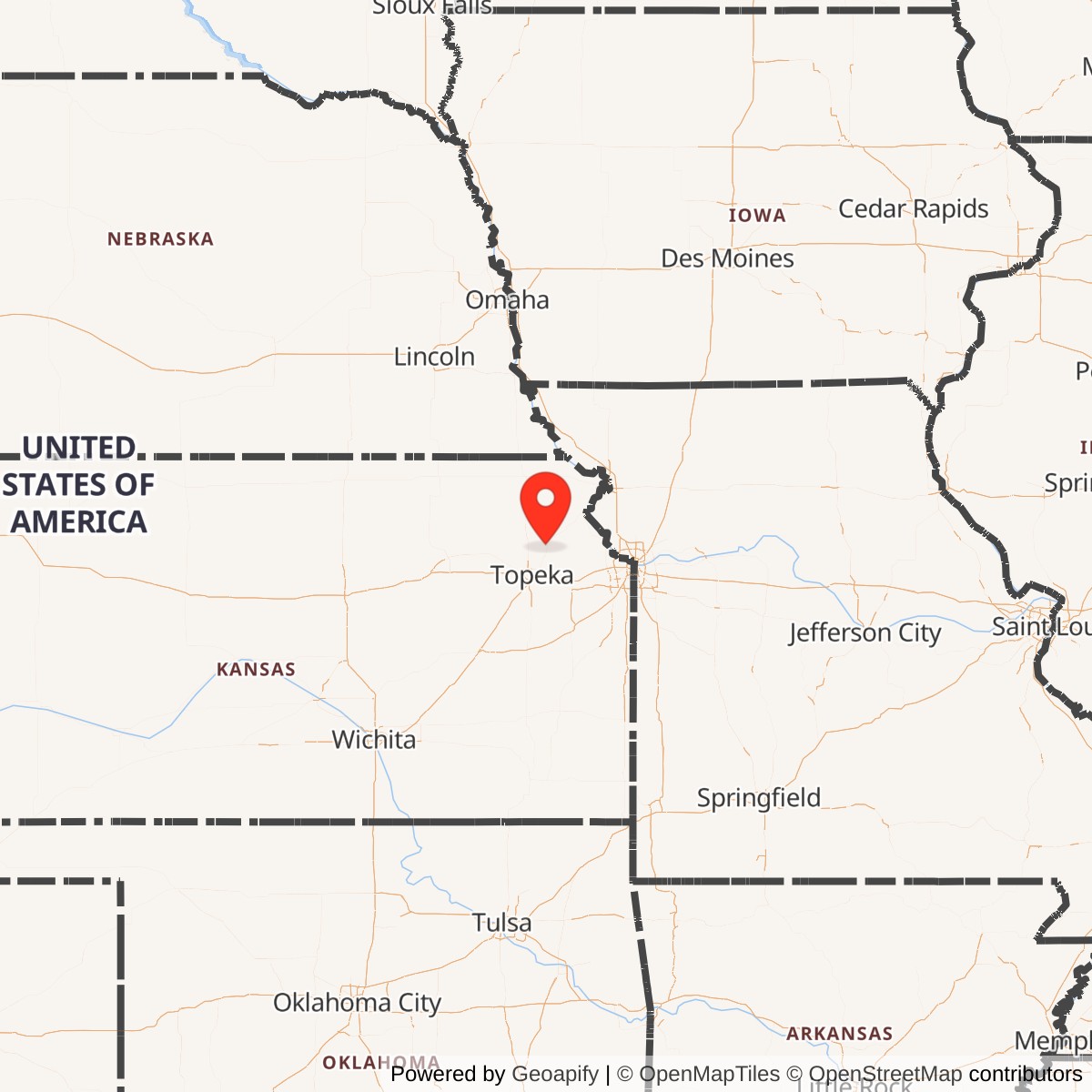
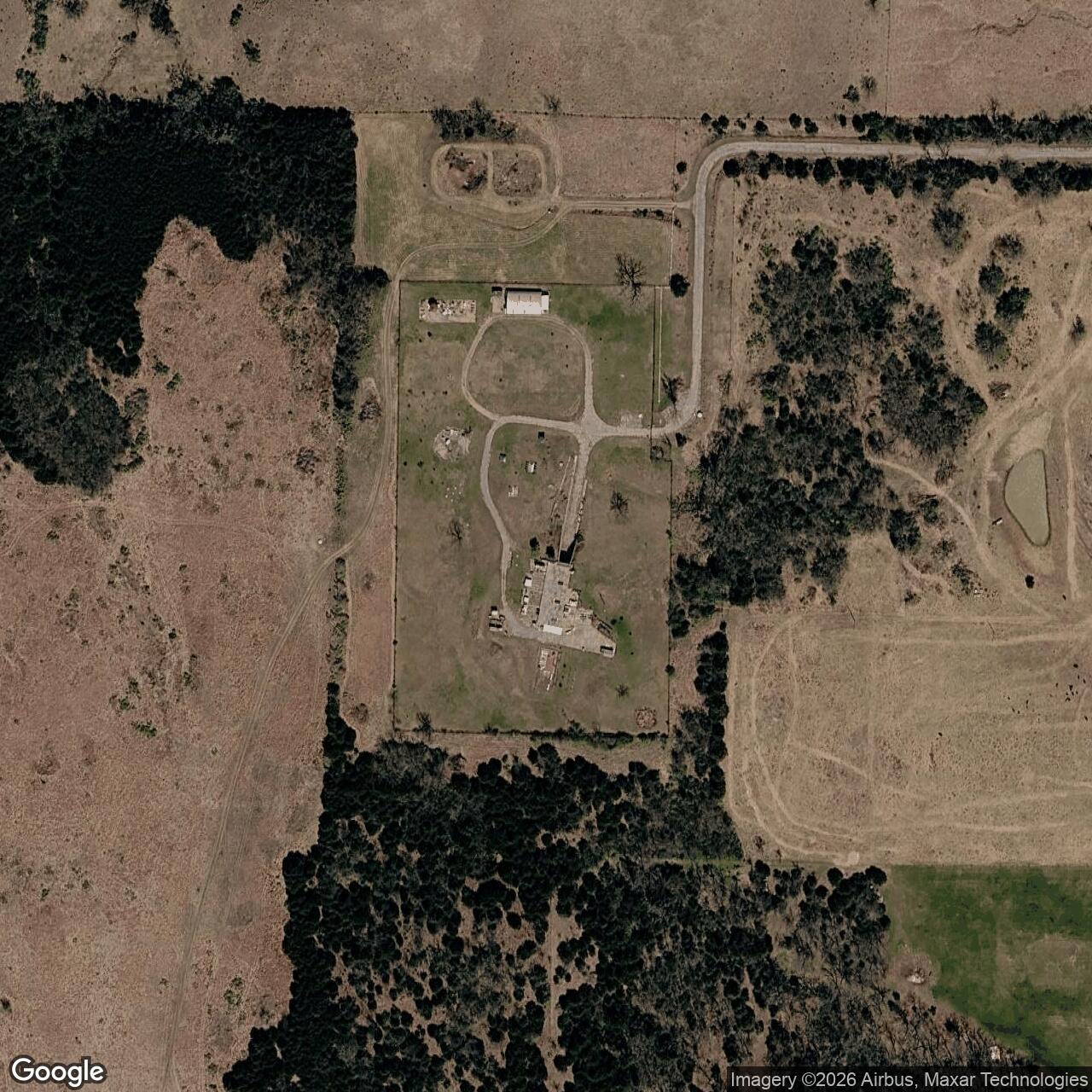
Atlas E Site 548-1 was a single-missile SM-65E Atlas intercontinental ballistic missile launch complex built for the 548th Strategic Missile Squadron near Valley Falls and the Rock Creek area of Jefferson County, Kansas. The site was one of nine Atlas E "coffin launcher" installations constructed around Forbes Air Force Base at Topeka, Kansas, and it was part of the Strategic Air Command missile force during the early 1960s. The parent base was Forbes Air Force Base. The operating squadron was the 548th Strategic Missile Squadron. The Forbes host-wing relationship is usually described in relation to the 40th Bombardment Wing / 40th Strategic Aerospace Wing period at Forbes, while the USAF unit history for the 548th SMS lists the squadron under Strategic Air Command and the 21st Air Division, later the 21st Strategic Aerospace Division. The U.S. Army Corps of Engineers identifies the cleanup property as Forbes Air Force Base Atlas S-01 / Former Forbes Atlas Missile Site S-1 in Jefferson County, Kansas, approximately 8 miles southwest of Valley Falls and approximately 20 miles northeast of Topeka. The site is inactive and decommissioned. It is no longer an active missile facility. The 548th Strategic Missile Squadron became operational in October 1961, began standing down from alert in early 1965, and was inactivated on March 25, 1965. After disposal by the federal government, the property entered private ownership. Current public-source documentation describes the site as private property with continuing USACE Formerly Used Defense Sites environmental response activity related primarily to groundwater contamination.
Location, Landscape, and Site Description
Site 548-1 sits in rural northeastern Kansas, in the agricultural landscape of Jefferson County, southwest of Valley Falls and northeast of Topeka. The surrounding land is grazing and farm country, a fitting example of the Atlas E deployment pattern around Forbes Air Force Base: the missile sites were dispersed away from the base in a ring so that a single enemy attack could not easily destroy all of the missiles at once. The site was close enough to Forbes for crew, maintenance, security, and logistics support, but remote enough to separate the missile from the base's runways, aircraft, headquarters, and other high-value SAC facilities. USACE describes the Forbes S-01 property as an approximately 28-acre rectangular site surrounded by agricultural grazing lands. The terrain on the property is generally level, with a gentle slope downward from the southwest toward the north and east. Like other Atlas E complexes, it was not a vertical Minuteman-style silo. It was a hardened horizontal launcher, commonly called a coffin launcher. The missile lay horizontally in an underground reinforced-concrete missile bay. The missile bay was connected by tunnel to an underground launch operations building or control center that contained personnel space, communications equipment, and diesel-generator support. At launch, the heavy roof over the missile bay would roll back, the missile would be raised upright, fueled, and launched. The layout of Site 548-1 reflected the transitional character of the Atlas E system. It was more survivable than open-pad or soft-site systems because the missile and launch equipment were below grade and hardened, but it still required liquid-oxygen loading before launch. The site therefore combined permanent underground structures, heavy mechanical launch equipment, propellant-handling systems, power and communications equipment, access roads, security fencing, and surface support features. Public environmental records also show that underground structures, the missile-bay sump, floor drains, standing water, and the former missile bay itself remained important features decades after military closure because they shaped the later environmental investigation.Strategic and Cold War Context
Atlas E Site 548-1 belonged to the first generation of operational American ICBM deployment. The Atlas program grew out of the urgent Cold War requirement to hold Soviet targets at risk from the continental United States. By the late 1950s the United States was moving from a deterrent force dominated by manned bombers toward a mixed force of bombers and ballistic missiles. Atlas was the first U.S. operational ICBM family, and the Atlas E represented an important step away from exposed launch pads and toward dispersed, hardened launch facilities. Forbes Air Force Base received Atlas E sites because Strategic Air Command wanted a geographically dispersed missile force in the interior United States. The nine Forbes launch sites placed the 548th Strategic Missile Squadron's missiles around Topeka rather than on the base itself. Dispersal gave the force greater survivability. A hardened coffin launcher gave each missile some protection against blast overpressure and made the missile less vulnerable than an open launch pad. The Atlas E also used all-inertial guidance rather than the earlier radio-inertial guidance used by some Atlas D deployments, which reduced dependence on external guidance infrastructure. Even so, the Atlas E was still an early liquid-fueled ICBM. Its fuel system and launch procedure were demanding. The missile used RP-1 kerosene fuel and liquid oxygen oxidizer. It could not sit for long periods fully loaded with liquid oxygen, so launch crews had to complete countdown actions that included opening the launcher roof, erecting the missile, and loading liquid oxygen before launch. This made Atlas E faster and more survivable than earlier soft basing concepts, but less rapid and less maintainable than later solid-fueled Minuteman missiles. Site 548-1 therefore represents a short but significant moment in ICBM evolution: hardened, dispersed, operationally alert, but still dependent on liquid-oxygen launch preparation.Construction and Activation
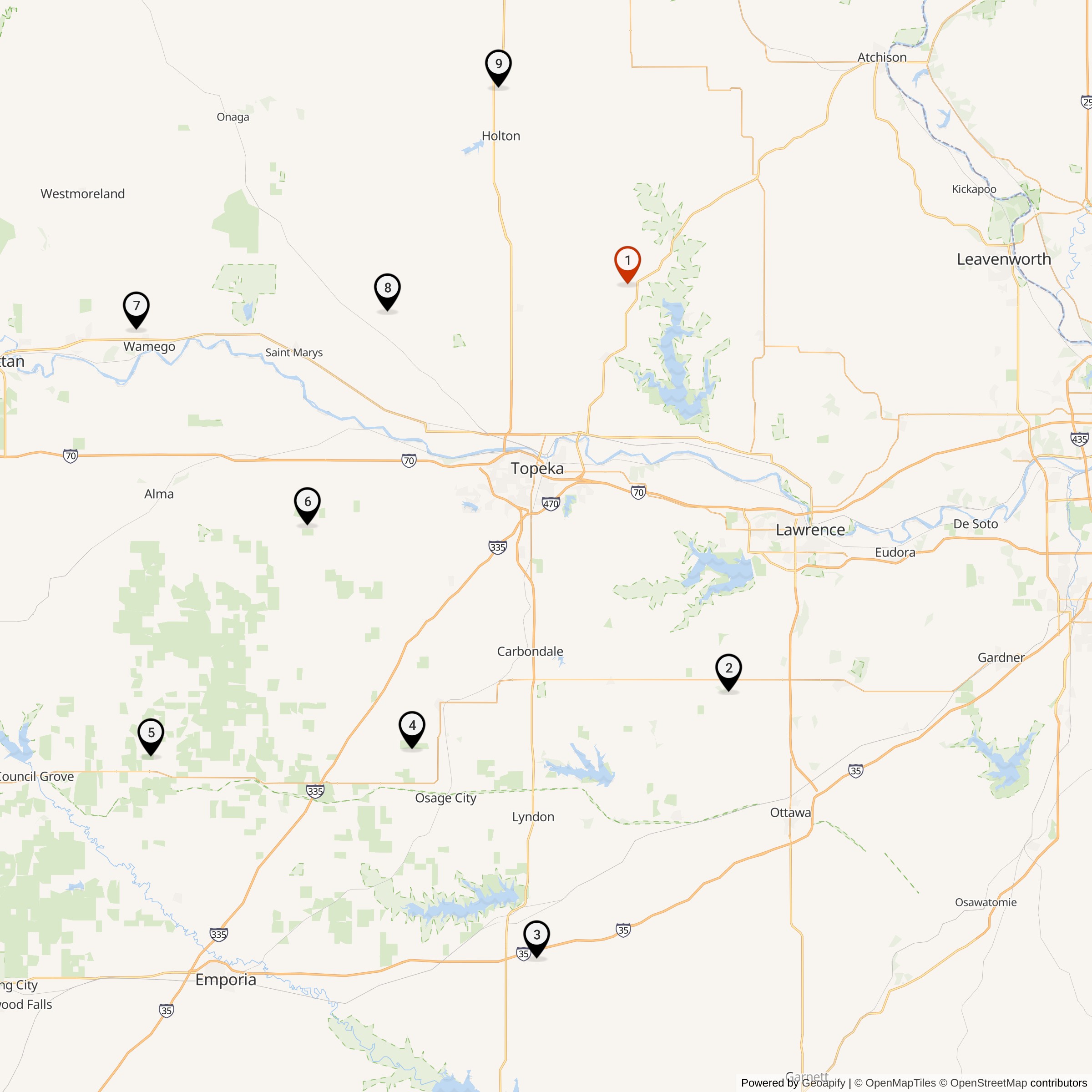
The Forbes Atlas E missile-field project began as national missile construction expanded in the late 1950s. In October 1958, Topeka learned that Forbes Air Force Base would support Atlas E missile sites in the surrounding area. The Corps of Engineers Kansas City District managed construction of the nine Forbes coffin-launcher sites. Forbes was originally slated for three sites with three missiles at each site, but in February 1959 the Air Force directed that each missile be placed at an individual launch site. This change produced the nine separate Atlas E sites later associated with Valley Falls, Dover, Waverly, Osage City, Delia, Wamego, Overbrook, Holton, and Bushong. Construction officially began on June 9, 1959, when Kansas Governor George Docking drove a silver nail into a construction form. The work was split between two firms, with one responsible for three sites and the other responsible for six. The missile-field construction effort was large, complicated, and subject to continual engineering change. The USAF unit history notes approximately 519 modifications during construction. One major source of difficulty was the propellant loading system. Components manufactured by Blaw-Knox in Pittsburgh for Atlas E sites at Vandenberg, F.E. Warren, Fairchild, and Forbes were expected to arrive preassembled on skids, but the skids often arrived late and subsequent testing revealed defects that had to be corrected. The construction program also experienced labor and safety problems. The USAF unit history records 22 work stoppages, including a longer October-November 1960 stoppage caused by a work-assignment dispute between hoisting engineers and electrical workers. It also records 25 lost-time accidents, including two electricity-related fatalities. These details are documented for the Forbes missile-field construction effort as a whole; the source does not assign all of those events specifically to Site 548-1. The 548th Strategic Missile Squadron was organized at Forbes on July 1, 1960. The first Atlas missile arrived at Forbes on January 24, 1961, and by October 1961 all nine Forbes Atlas E sites had missiles. The USAF unit history states that the Forbes sites were completed three weeks ahead of schedule. Operational control of the sites was turned over to Strategic Air Command on October 16, 1961, when Air Force Ballistic Missile Activation Chief Maj. Gen. Gerrity turned the sites over to Second Air Force Commander Lt. Gen. John D. Ryan. That date marked the practical beginning of the Forbes Atlas E missile field's operational alert role.Missile System and Technical Role
Site 548-1 housed one SM-65E Atlas missile. The Atlas E was a liquid-fueled ICBM developed by General Dynamics. Unlike later Minuteman missiles, the Atlas E was not a sealed, solid-fueled missile that could remain ready for immediate launch in an unattended silo. The Atlas E at a coffin-launcher site was stored horizontally in a protected concrete structure. To fire, the crew had to roll back the massive launcher roof, erect the missile, load propellants, and proceed through the launch sequence. Public missileer and USACE descriptions identify the Atlas E launcher roof as a heavy hardened structure, commonly described as a 400-ton roof or overhead door. The Atlas E used RP-1 kerosene and liquid oxygen. This combination gave the missile long intercontinental reach, but the use of liquid oxygen created a significant operational burden. Liquid oxygen had to be handled carefully, loaded shortly before launch, and supported by specialized storage, transfer, and safety procedures. The same kind of propellant-loading equipment that made the system operationally effective also contributed to construction complexity and, decades later, to environmental interest in underground structures, sumps, drains, and associated maintenance areas. The Atlas E used all-inertial guidance and was deployed singly, with one control center per missile. At Site 548-1, that meant the launch crew's control function was at the launch complex itself, in the underground launch operations building connected to the missile bay, not at a separate remote LCC. The alert crew concept was therefore different from later Minuteman operations. The site was not simply an unmanned silo waiting for commands from a remote capsule. Atlas E combat crews, maintenance personnel, security personnel, power-production technicians, missile electronics specialists, and propellant or weapons specialists all supported the operational site. The missile's nuclear payload was part of the public record. USACE states that the Atlas E missiles were equipped with a Mark IV reentry vehicle and carried a W-38 warhead with an approximate yield of 4 megatons and a range of approximately 6,000 miles.Operational History
Site 548-1's operational life was brief but intense. It belonged to the 548th Strategic Missile Squadron, which was based at Forbes Air Force Base and operated nine Atlas E sites around Topeka. The squadron was part of the Strategic Air Command deterrent force. Its mission was to maintain a nuclear-armed intercontinental missile force on alert, ready to execute national command authority orders if required. The 548th SMS was organized in July 1960, and the Forbes Atlas E missile field became operational in October 1961. The USAF unit history lists the squadron as operational on October 16, 1961. The Forbes Atlas E sites were manned around the clock during the squadron's active period. For Site 548-1, that means the facility should be understood as an operating missile base with crew presence, communications, power, security, missile maintenance, and propellant-handling functions. Unlike later solid-fueled missile launch facilities, the Atlas E site's launch readiness depended on trained crews physically present at, or rotating to, the launch complex. Routine operations would have involved alert duty, command-and-control checks, communications tests, missile system maintenance, site security, power-production support, inspections, and readiness evaluations. Maintenance personnel had to sustain the missile, launcher, propellant systems, power systems, guidance-related equipment, environmental controls, and real property installed equipment. Security personnel protected a nuclear-armed missile complex in open rural country. The site's presence also tied the local agricultural landscape into the national nuclear-alert system. Farmers, county roads, and small communities coexisted with one of the most advanced and destructive weapon systems of the early Cold War. The 548th SMS's operational period overlapped the Cuban Missile Crisis. The squadron association states that during the crisis all 548th sites were at a high level of alert and were ready to launch if required. That statement is squadron-wide; the available source does not provide a separate Site 548-1 log, but Site 548-1 was one of the nine 548th SMS Atlas E sites in that missile field. This is one of the clearest examples of how an individual rural Kansas missile site fit into the larger Cold War confrontation. The Atlas E force at Forbes did not remain active for long. By 1964, newer solid-fueled and more survivable systems were replacing the first-generation Atlas and Titan I systems. Secretary of Defense Robert McNamara's May 1964 directive accelerated the decommissioning of Atlas and Titan I missile bases. The 548th SMS recorded its first ICBM off alert on January 4, 1965, and its last ICBM shipped out on February 8, 1965. The squadron was inactivated on March 25, 1965.Deactivation and Disposal
Site 548-1's deactivation was part of the rapid retirement of first-generation liquid-fueled ICBM systems. By the mid-1960s, Atlas E was being superseded by more survivable and more easily maintained missile systems. Minuteman's solid-fueled, remotely monitored, widely dispersed launch facilities offered faster reaction and reduced the operational hazards associated with liquid oxygen. McNamara's 1964 direction to accelerate Atlas and Titan I retirement turned the Forbes Atlas E field from a frontline deterrent system into a short-lived transitional technology. The deactivation sequence included several distinct events. The first 548th SMS ICBM came off alert on January 4, 1965. The last ICBM was shipped out on February 8, 1965. The 548th SMS was inactivated on March 25, 1965. Those dates should not be collapsed into a single event. A missile could be taken off alert before being removed from the site, a missile could be shipped out before the squadron was inactivated, and site decommissioning or property disposal could continue afterward. The site was excessed and left federal operational missile use. USACE states that in 1967 the property was transferred from the U.S. Government to a private individual who used it to feed and water cattle. This transfer was not a museum preservation action and did not erase the hardened underground infrastructure. Instead, the former launch complex became a private rural property with major military structures still present below and at the surface. Later records show how post-closure conditions changed. In 1999, the missile bay roof was no longer present, the missile bay was open, and standing water was present. In 2010, the property transferred to a new owner. In 2014, that owner installed a roof over the missile bay, restarted the pump in the missile-bay sump, and pumped thousands of gallons of water out of the underground structures. USACE states that the missile-bay sump pump continued to operate so that the missile bay and launch operations building remained dry and in habitable condition. This is unusually detailed post-closure documentation for an Atlas E site and is important because it shows that the underground complex was not simply sealed and forgotten. Site 548-1 also became a FUDS/CERCLA environmental response site. USACE personnel visited in 1986 and 1991 to assess potential contamination from historical missile operations. In 1996, USACE and the Kansas Department of Health and Environment sampled standing water in the missile-bay sump for volatile organic compounds. Trichloroethene, trans-1,2-dichloroethene, and vinyl chloride were detected. USACE then conducted a 2000 site investigation that included soil sampling, groundwater monitoring wells, and missile-bay standing-water sampling. Later remedial investigation and feasibility-study work added monitoring wells and sampled soil, surface water, sediment, indoor air, and missile-bay sump water. The 2024 USACE proposed plan identifies groundwater as the main remedial issue. TCE and degradation products were detected during the remedial investigation, consistent with historical use of TCE in underground missile-base operations. USACE states that contamination had not spread beyond the Forbes S-01 monitoring-well network, that extensive soil sampling found only a few low-level TCE detections, and that no soil source for groundwater contamination was found. The preferred remedy in the 2024 proposed plan was an injection-based remedy combined with monitored natural attenuation and institutional control. The proposed plan describes the injection-based remedy as phased treatment, with monitoring of TCE, cis-1,2-DCE, trans-1,2-DCE, and vinyl chloride, along with five-year reviews until groundwater remediation goals are met. The same plan notes that contaminated groundwater was not currently being used as a water-supply source, that the closest water-supply well was about one mile away, and that a public water supply was available in the area.Current Status and Site Use
Atlas E Site 548-1 is inactive, decommissioned, and privately owned. It is not an active military installation, not a public museum, and not a publicly accessible historic site. The coordinate identifies the former launcher complex, not a public entrance or visitor area. Access should be considered private and restricted unless an owner grants permission. The current property retains significant former missile-site features. USACE records show that the underground missile bay and launch operations building remained central features of the site as late as the 2010s and 2020s, because they were involved in pumping, drying, air and water sampling, and environmental evaluation. The missile bay had been open and water-filled by 1999, but a roof was installed over it in 2014 and the sump pump was restarted. This indicates that major structural remains persisted and were actively managed by the private owner. The surrounding land remains rural and agricultural in character. Public-source information does not verify regular public tours, museum interpretation, or an official preservation program. USACE environmental records, rather than heritage-tourism sources, provide the strongest current documentation for the property.Chronology
- 1958-10 Topeka received news that Forbes Air Force Base would support Atlas E missile sites in the surrounding area.
- 1959-02 The Air Force directed that each Forbes Atlas E missile be placed at an individual launch site rather than in three-missile complexes.
- 1959-06-09 Construction officially began for the Forbes Atlas E missile-field project when Kansas Governor George Docking drove a silver nail into a construction form.
- 1960-07-01 The 548th Strategic Missile Squadron was organized at Forbes Air Force Base.
- 1961-01-24 The first Atlas missile arrived at Forbes.
- 1961-10 By October 1961, all nine Forbes Atlas E sites had their Atlas E missiles.
- 1961-10-16 The 548th Strategic Missile Squadron was listed as operational, and operational control of the Forbes Atlas E sites was turned over to Strategic Air Command.
- 1964-05 Secretary of Defense Robert McNamara directed acceleration of Atlas and Titan I missile-base decommissioning.
- 1965-01-04 The 548th SMS recorded its first ICBM off alert.
- 1965-02-08 The 548th SMS recorded its last ICBM shipped out.
- 1965-03-25 The 548th Strategic Missile Squadron was inactivated.
- 1967 The former Forbes S-01 property was transferred from the U.S. Government to a private individual who used it to feed and water cattle.
- 1986 USACE personnel visited Forbes S-01 to assess potential contamination from historical missile operations.
- 1991 USACE personnel again assessed the property as part of the defense environmental record for the former site.
- 1996 USACE and KDHE collected standing-water samples from the missile-bay sump and detected VOCs including TCE, trans-1,2-DCE, and vinyl chloride.
- 1999 The missile-bay roof was no longer present, the missile bay was open, and standing water was present.
- 2000 USACE conducted a site investigation that included soil sampling, installation and sampling of monitoring wells, and missile-bay standing-water sampling.
- 2010 The Forbes S-01 property was transferred to a new owner.
- 2014 The new owner installed a roof over the missile bay, restarted the missile-bay sump pump, and pumped thousands of gallons of water out of the underground structures.
- 2019 USACE completed a remedial investigation report for the former Forbes Atlas Missile Site S-1.
- 2022 USACE completed a groundwater potability determination report for the former Forbes Atlas Missile Site S-1.
- 2023 USACE completed a final feasibility study report for Forbes Air Force Base Atlas S-01.
- 2024-05-23 USACE opened the public-comment period for the Forbes S-01 proposed plan.
- 2024-06-24 The public-comment period for the Forbes S-01 proposed plan was scheduled to close.
- 2024 The proposed plan identified an injection-based remedy, monitored natural attenuation, and institutional control as the preferred alternative for groundwater remediation at Forbes S-01.
Read about the Atlas at Forbes AFB
All Atlas Missile Silo Locations