
Atlas E Site 548-2 Missile Silo, Worden / Lawrence area Kansas
Longitude: -95.3682872820103
Site Type: Atlas E single-missile coffin launcher complex
Missile Type: SM-65E Atlas
Number of Launchers/Missiles: 1
Parent Base: Forbes AFB
Missile Wing: 40th Bombardment Wing / 40th Strategic Aerospace Wing; USAF unit history also lists 21st Air (later Strategic Aerospace) Division assignment
Missile Squadron: 548th Strategic Missile Squadron
Current Site Use: Former Atlas E launch complex in rural Douglas County; KU 2020 and photo sources document abandoned/reclaimed remains including missile-bay/entry features, launcher-door features, heavy vegetation, and standing water/ponding.
Site Ownership: Private/non-federal ownership after active Air Force use; EPA flags the property as not a federal facility.
Accessible: No public access / private property.
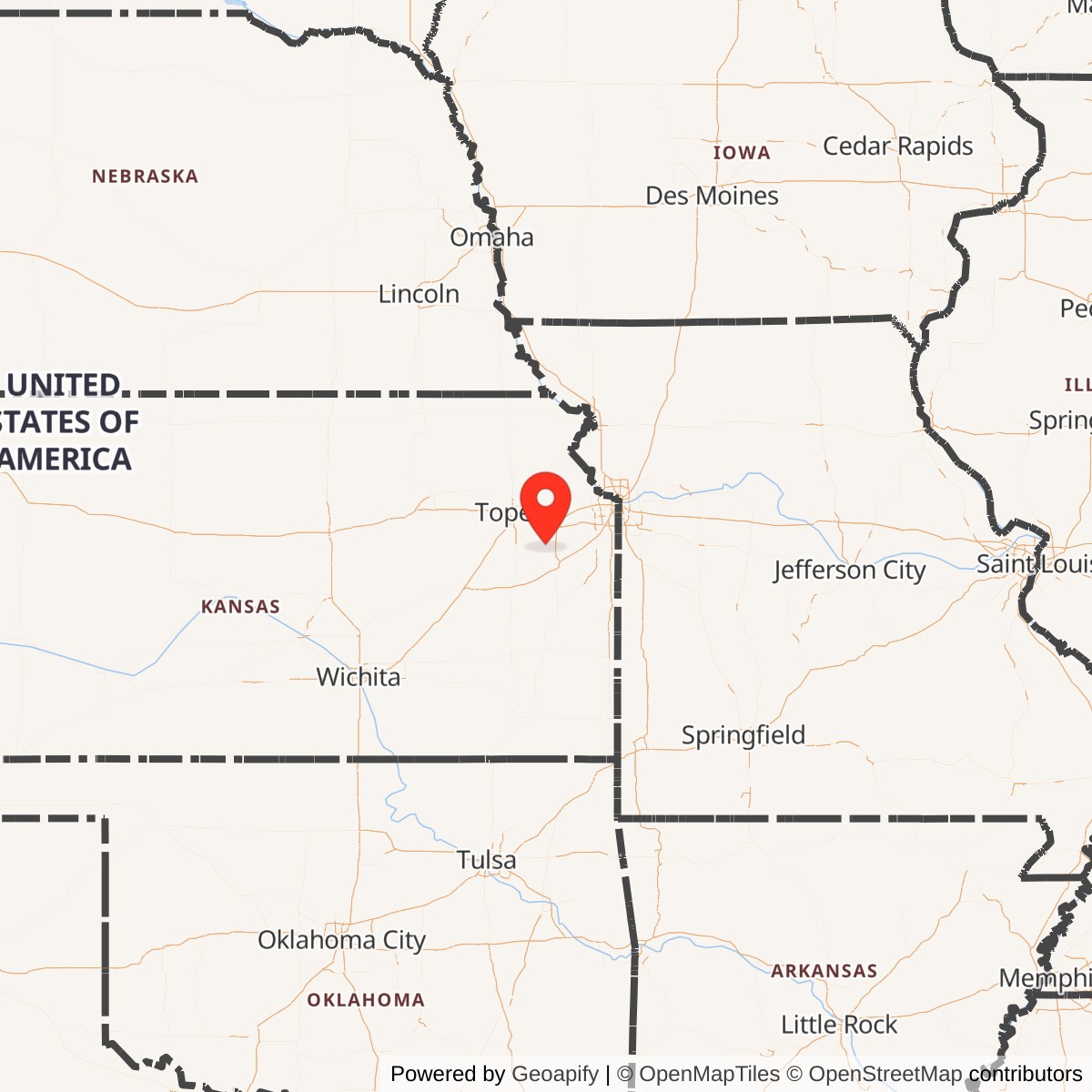
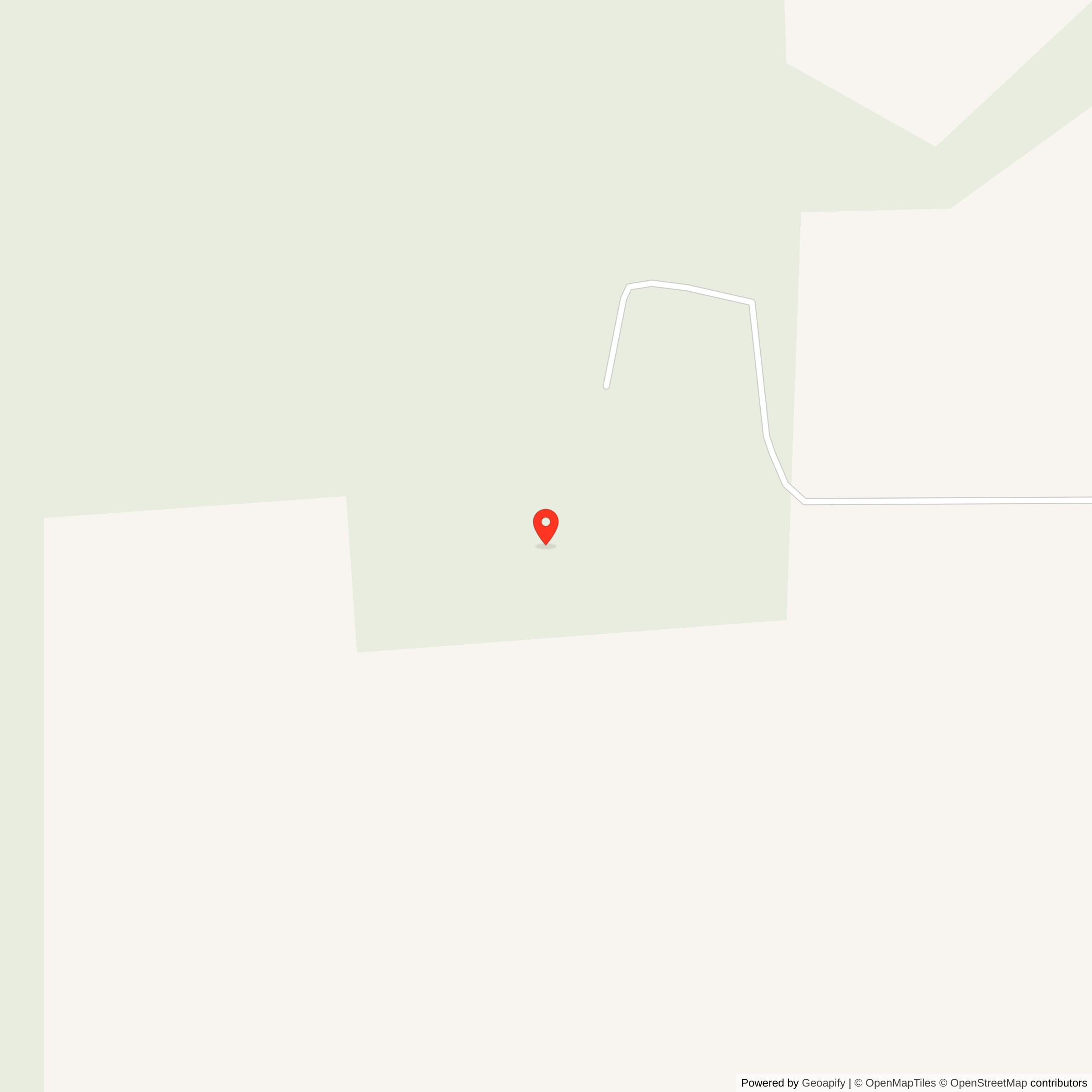
Atlas E Site 548-2 was a single-missile SM-65E Atlas intercontinental ballistic missile launch complex built for the 548th Strategic Missile Squadron near Worden, south of Lawrence, in Douglas County, Kansas. The site was one of nine Atlas E "coffin launcher" installations constructed around Forbes Air Force Base at Topeka, Kansas, and it formed part of Strategic Air Command's early-1960s Atlas E missile force. The parent base was Forbes Air Force Base. The operating squadron was the 548th Strategic Missile Squadron. Public unit-history sources describe the squadron under Strategic Air Command and the 21st Air Division, later the 21st Strategic Aerospace Division, while Forbes itself is commonly associated with the 40th Bombardment Wing / 40th Strategic Aerospace Wing period. The Atlas E launch complex included its own local launch operations/control facility rather than being tied to a separate Minuteman-style Launch Control Center.
The site is inactive and decommissioned. It is no longer an active missile facility. The 548th Strategic Missile Squadron became operational in October 1961, began standing down from alert in early 1965, and was inactivated on March 25, 1965. After the missile period ended, the property passed out of active Air Force missile use and is now a former military site in rural private/non-federal use. Public sources describe visible abandoned remains, vegetation, standing water at the old missile-bay entrance area, and recognizable former launch-facility features.
Location, Landscape, and Site Description
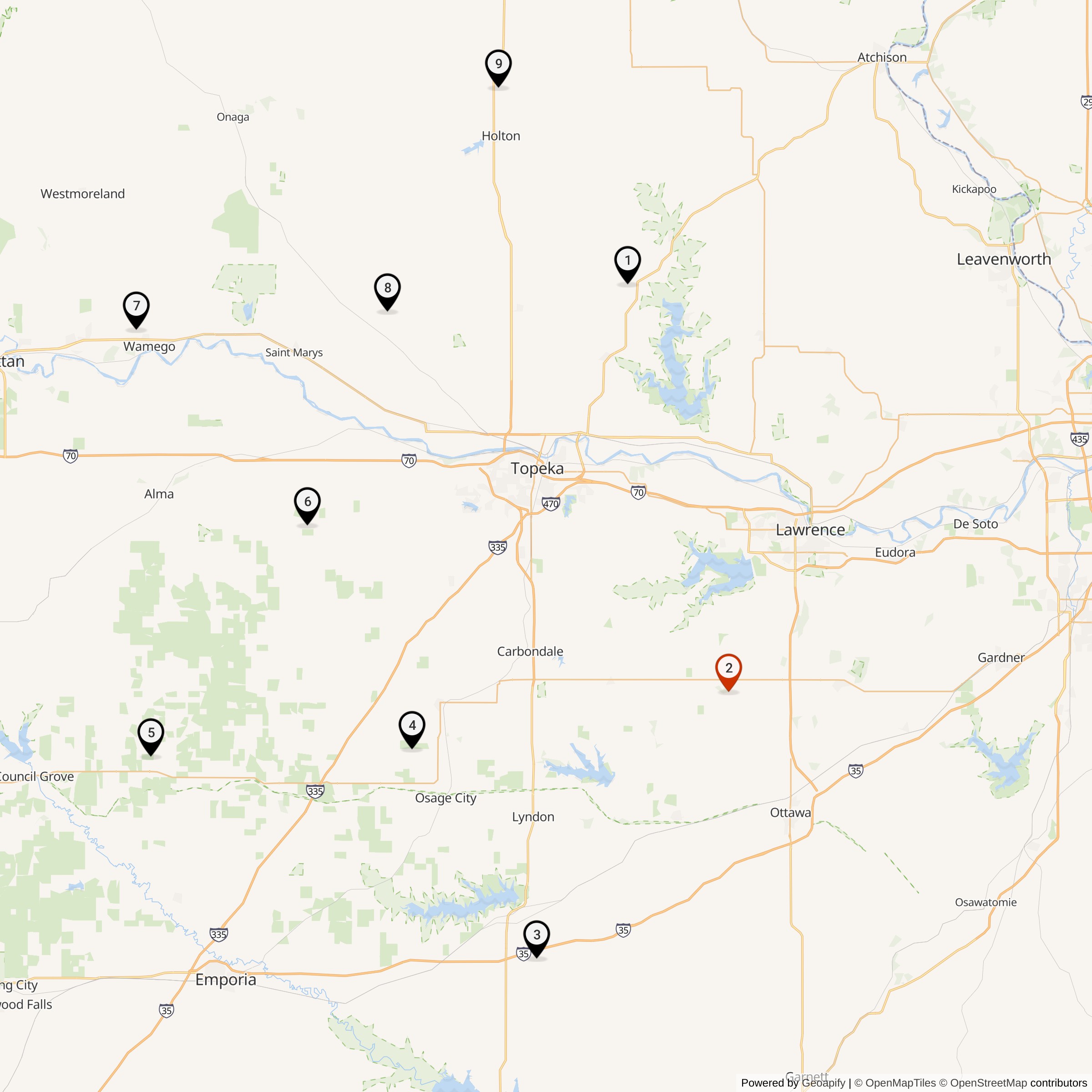
Site 548-2 is in rural Douglas County, Kansas, in the Worden area south of Lawrence and southeast of Forbes Air Force Base. The surrounding landscape is farm and pasture country, with wooded draws and cultivated fields typical of eastern Kansas. This setting was not accidental. Atlas E missiles assigned to Forbes were dispersed in a ring around Topeka so that a single strike on Forbes Air Force Base could not destroy the entire squadron. Site 548-2 lay far enough from the base to separate it from the airfield and base headquarters, but close enough for missile crews, maintenance teams, security forces, propellant support, and logistics to reach it by road.The site was a hardened horizontal launcher, not a later-style vertical silo. At an Atlas E "coffin launcher" site, the missile was stored horizontally in an underground reinforced-concrete bay. The bay had a massive movable roof or door, and the missile would be raised to the vertical position for launch. Underground and partially buried support structures included the launch operations/control area, power and communications spaces, personnel-support areas, and systems connected to the missile bay. Aboveground features included access roads, security fencing, hardstands, utility structures, antennas or communications features, and the heavy concrete and steel elements of the launcher itself.
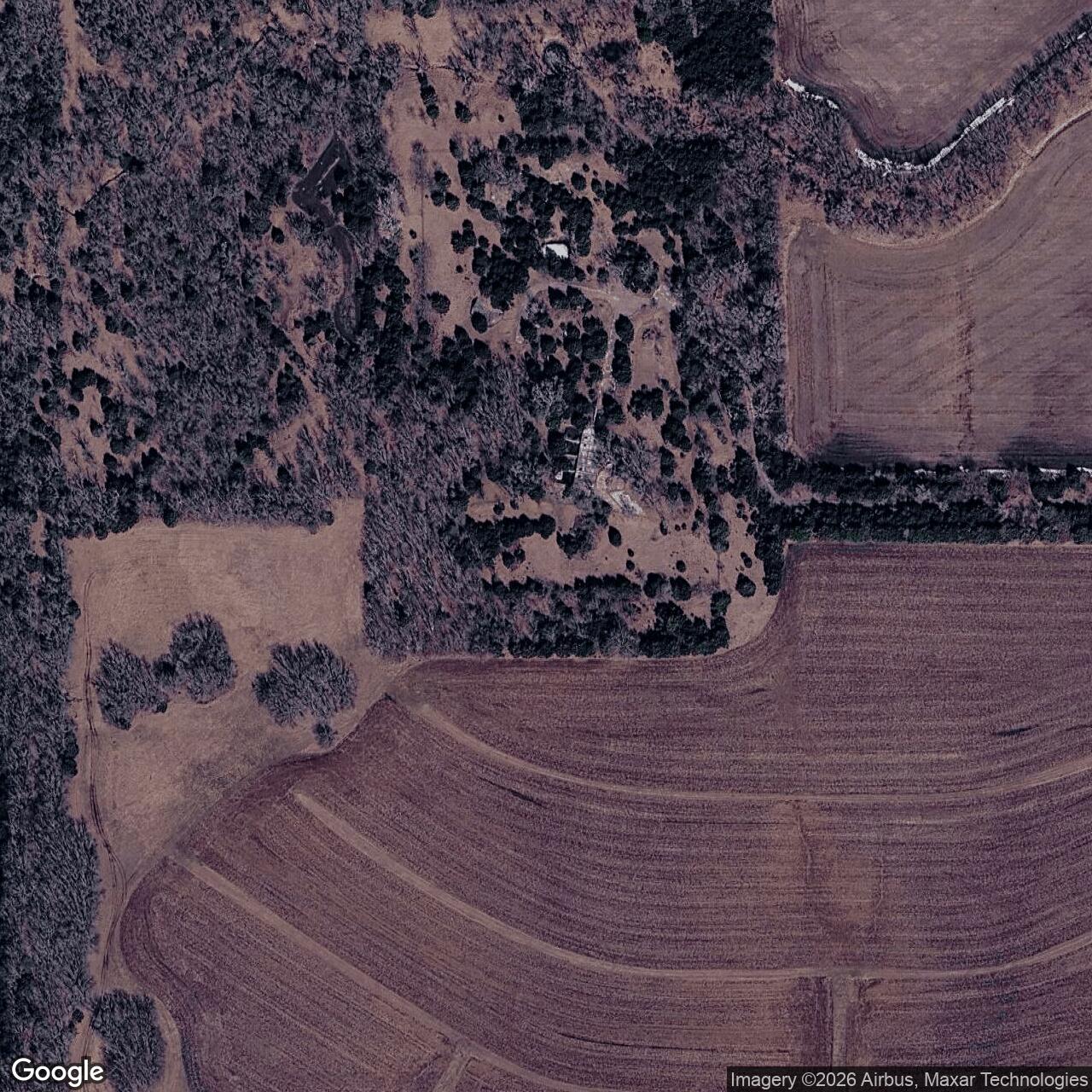
The University of Kansas's Cold War in the Heartland description of the Worden site emphasizes the way the former installation has been reclaimed by vegetation. It describes weeds, bushes, and trees covering much of the site and a pond that has formed in front of the entry door to the old missile bay. Even in that changed condition, the same source states that former launch-facility features are still recognizable, including buildings and the doors that allowed the missile to be launched. The site therefore retains the physical imprint of its Cold War function even though the missile, launch mission, and Air Force operation ended decades ago.
Strategic and Cold War Context
Atlas E Site 548-2 belonged to the first generation of operational American ICBM deployment. The Atlas program was developed during the period when the United States was trying to move from a deterrent posture dominated by manned bombers to a more survivable force that included long-range ballistic missiles. Atlas was the first operational U.S. ICBM family, and the Atlas E represented a major improvement over exposed launch-pad concepts because it placed each missile in a hardened, dispersed launcher.Forbes Air Force Base received Atlas E sites because Strategic Air Command wanted ICBMs deployed in the continental interior and separated from one another. The Forbes missile field used nine individual launch complexes, each with one missile, rather than concentrating missiles on the base. That pattern increased survivability by forcing an enemy to attack multiple separated targets. The Atlas E also used all-inertial guidance, reducing the dependence on the external guidance infrastructure associated with some earlier Atlas systems and making wider dispersal more practical.
The system still had the limitations of an early liquid-fueled ICBM. The SM-65E Atlas used RP-1 kerosene fuel and liquid oxygen oxidizer. The missile was normally stored horizontally in the launcher and was not kept continuously fueled with liquid oxygen. A launch sequence required opening the launcher roof, erecting the missile, loading oxidizer, completing countdown actions, and launching. That made the Atlas E more survivable than soft-pad Atlas basing, but less rapid and less maintainable than the solid-fueled Minuteman missiles that soon replaced much of the first-generation ICBM force. Site 548-2 is therefore significant as part of the short-lived transition from exposed early ICBMs to hardened, dispersed, alert missile fields.
Construction and Activation
The Forbes Atlas E missile-field project began as national missile construction accelerated in the late 1950s. In October 1958, Topeka received word that Forbes Air Force Base would support Atlas E missile sites in the surrounding area. The Corps of Engineers Kansas City District managed construction of the Forbes coffin-launcher sites. Forbes had originally been slated for three sites with three missiles at each site, but in February 1959 the Air Force directed that each missile be placed at an individual launch site. That decision created the nine separate Forbes Atlas E complexes later associated with Rock Creek or Valley Falls, Worden, Waverly, Burlingame, Bushong, Dover, Wamego, Delia, and Holton.Construction officially began on June 9, 1959, when Kansas Governor George Docking drove a silver nail into a construction form. The work was divided between two firms, with one responsible for three sites and another responsible for six. The USAF unit history notes that the construction effort faced continual modification, including approximately 519 changes during the project. Propellant-loading equipment was a recurring problem. Components manufactured by Blaw-Knox in Pittsburgh for Atlas E sites at Vandenberg, F.E. Warren, Fairchild, and Forbes were expected to arrive on skids, but the skids often arrived late and testing revealed defects that had to be corrected.
The construction program also faced labor and safety problems. The USAF unit history records 22 work stoppages, including a longer October-November 1960 stoppage caused by a jurisdictional dispute between hoisting engineers and electrical workers. It also records 25 lost-time accidents, including two electricity-related fatalities. Those details describe the Forbes Atlas E missile-field construction program as a whole; the available source does not assign each stoppage, accident, or modification to Site 548-2 individually.
The 548th Strategic Missile Squadron was organized at Forbes on July 1, 1960. The first Atlas missile arrived at Forbes on January 24, 1961, and by October 1961 all nine Forbes sites had Atlas E missiles. Operational control of the Forbes Atlas E sites was turned over to Strategic Air Command on October 16, 1961, when Air Force Ballistic Missile Activation Chief Maj. Gen. Gerrity turned the sites over to Second Air Force Commander Lt. Gen. John D. Ryan.
Missile System and Technical Role
Site 548-2 housed one SM-65E Atlas ICBM. The Atlas E was a liquid-fueled missile developed by General Dynamics and deployed in a hardened horizontal launcher. In a normal alert configuration, the missile remained protected in its underground bay. To launch, the crew would open the heavy launcher roof or door, raise the missile from horizontal to vertical, load liquid oxygen, and complete the countdown. This made the site a complicated blend of missile shelter, launch mechanism, propellant-handling plant, power station, communications point, and crewed control facility.The Atlas E was not an unattended Minuteman-style launch facility. Public missileer sources for the 548th SMS emphasize that the Forbes sites were manned around the clock during their active period. The local launch crew and support personnel were therefore part of the missile-site operation itself, not merely visitors from a distant control capsule. Maintenance teams, propellant specialists, security personnel, communications personnel, and base logistics support all mattered to the site's alert posture.
Public sources identify the Atlas E at Forbes as using a Mark IV reentry vehicle and a W-38 nuclear warhead. The missile's combination of long range, nuclear warhead, hardened shelter, and dispersed basing made Site 548-2 part of the retaliatory deterrent force rather than a tactical missile site.
Operational History
Atlas E Site 548-2's operational history was short but intense. The 548th Strategic Missile Squadron was organized in 1960, received missiles in 1961, became operational in October 1961, and was inactivated in March 1965. During that period, Site 548-2 was one of nine independent launch complexes that collectively gave Forbes Air Force Base an Atlas E alert mission.The operational routine at a site like 548-2 centered on readiness. The missile and launcher had to be maintained, tested, secured, and supplied. Launch crews had to be ready to execute alert procedures. Security personnel had to protect a nuclear-armed launch complex located away from the base. Maintenance and propellant crews had to keep complex mechanical, electrical, hydraulic, communications, power-generation, and liquid-oxygen systems available despite the demanding environment of an underground launcher. Because the Atlas E required prelaunch erection and oxidizer loading, the equipment that supported those steps was central to the site's mission.
The Forbes sites were not isolated curiosities; they were integrated into national nuclear command and Strategic Air Command readiness. The 548th SMS association states that during the Cuban Missile Crisis all 548th sites were at a high level of alert and ready to launch if required. That statement is squadron-wide rather than uniquely site-specific, so it should not be read as documenting a separate incident at Site 548-2 alone. It does, however, place Site 548-2 within the most dangerous nuclear-alert episode of its active service.
By early 1965 the Atlas E system was being removed from alert. USAF unit history records the first 548th SMS ICBM off alert on January 4, 1965, and the last ICBM shipped out on February 8, 1965. The 548th Strategic Missile Squadron was inactivated on March 25, 1965.
March 1962 Accident
On March 13th, 1962, Atlas E Site 548-2 experienced one of the most serious known incidents in the Forbes Atlas E missile field.Contemporary press accounts initially described the event as an electrical fire or possible explosion that triggered an Air Force alert, while Forbes AFB officials publicly minimized the episode as smoke from a motor being drawn through the site's ventilation system. A later newspaper account, quoted in a detailed local history, said the event was more than a "smoke scare": the Atlas missile itself reportedly ruptured or buckled after a malfunction inside the missile, the warhead was removed that night, and the damaged missile was expected to be returned for factory investigation.
Later accounts from 548th SMS veterans described the incident as occurring during routine electrical checkout work while the missile lay horizontally in the launcher bay. According to that account, a standboard crew was following a General Dynamics checklist when stray electrical energy, apparently not safely drained by the checklist procedure, ignited pyrotechnic components associated with the solid-propellant gas generators around one of the engines. Because the engine system was not in a fueled launch condition, the turbomachinery was not lubricated as it would have been during a proper start sequence; turbine components reportedly failed, damaging the missile internally and externally. The investigation reportedly found that the crew had followed the checklist and that the fault lay in the procedure rather than in crew error. The damaged missile was removed to the Forbes Missile Assembly Building, debris was cleared from Site 548-2, and a replacement Atlas was installed, returning the Worden site to service.
Deactivation and Disposal
The deactivation of Site 548-2 occurred during the rapid retirement of first-generation Atlas systems. In May 1964, Secretary of Defense Robert McNamara directed acceleration of Atlas and Titan I missile-base decommissioning. The Forbes Atlas E field was part of that drawdown. The USAF unit history records the first 548th SMS ICBM off alert on January 4, 1965, and the last ICBM shipped out on February 8, 1965. The squadron was inactivated on March 25, 1965.Available public sources do not provide a detailed, site-specific dismantling sequence for Site 548-2 comparable to the more detailed USACE proposed-plan narrative available for some other Atlas sites. The known sequence can still be described with care. The missile was removed from alert as part of the 548th SMS phaseout. The missile itself was shipped out before the squadron's inactivation. The launch site then left active Air Force missile service and became a former defense property. The EPA Superfund profile identifies the site as not a federal facility and lists it as Not on the NPL with an NFRAP non-NPL status, meaning EPA did not identify it as qualifying for the National Priorities List based on the information available in that record.
The U.S. Army Corps of Engineers FUDS inventory lists Forbes AFB Atlas S-02 in Douglas County at Worden under FUDS property number B07KS0200, with both CON/HTRW and HTRW project categories. In plain terms, the former site entered the Formerly Used Defense Sites cleanup universe for construction-related/hazardous, toxic, and radioactive waste concerns and for hazardous, toxic, and radioactive waste evaluation. ProPublica's DERP-based Bombs in Your Backyard summary lists Forbes AFB Atlas S-02 at Worden, Douglas County, with two hazardous sites and a low-risk highest-risk category. That public summary is useful as a screening-level environmental indicator, while EPA and USACE remain the stronger source hierarchy for the formal federal site identity.
Unlike later Minuteman and Peacekeeper reductions, the Forbes Atlas E shutdown was not primarily a Strategic Arms Reduction Treaty demolition event. The Atlas E sites were retired because the liquid-fueled first-generation ICBM force was being replaced by more modern systems. The public record for Site 548-2 does not show a treaty-verification demolition sequence, satellite-observable silo elimination, or museum preservation action. The physical remains visible today are the result of deactivation, disposal, partial abandonment, and environmental legacy rather than a formal preserved-historic-site program.
After the Atlas E phaseout, Site 548-2 did not initially follow the same disposal path as most of the Forbes missile sites. Once the missiles were removed, the 548th SMS stood down, and reusable Air Force equipment such as the site generators had been salvaged, the Forbes launcher sites were generally turned over for surplus-property disposal. Worden was one of four exceptions. Site 548-2 was initially assigned to the Federal Aviation Agency, later the Federal Aviation Administration, for operations and records storage, so it was excluded from the ordinary surplus sale track at first. Contemporary bid reporting still listed private offers for several Forbes sites, including Site 2, but the bids for the public-agency and educational-institution sites were rejected. In practice, the public-use plan did not preserve Worden as an intact federal facility long-term; like several other former Atlas E launchers, it eventually left federal control and entered private/post-military reuse.
Current Status and Site Use
Atlas E Site 548-2 is inactive, decommissioned, and not an active military installation. It is not a public museum and should be treated as private/non-public property unless a current owner or responsible authority grants permission.Public descriptions indicate that substantial remains of the former missile site are still visible. The University of Kansas Cold War in the Heartland page describes the Worden site as overgrown, with vegetation covering much of the former complex, a pond or standing-water feature in front of the old missile-bay entrance, and recognizable buildings and launcher-door features. Aerial images also show the former launch complex footprint in a rural setting.
Chronology
- 1958-10 Topeka received news that Forbes Air Force Base would support Atlas E missile sites in the surrounding area.
- 1959-02 The Air Force directed that each Forbes Atlas E missile be placed at an individual launch site rather than in three-missile complexes.
- 1959-06-09 Construction officially began for the Forbes Atlas E missile-field project when Kansas Governor George Docking drove a silver nail into a construction form.
- 1960-07-01 The 548th Strategic Missile Squadron was organized at Forbes Air Force Base.
- 1961-01-24 The first Atlas missile arrived at Forbes Air Force Base.
- 1961-10 By October 1961, all nine Forbes Atlas E sites had Atlas E missiles.
- 1961-10-16 Operational control of the Forbes Atlas E sites was turned over to Strategic Air Command, and the 548th SMS was listed as operational.
- 1962-10 During the Cuban Missile Crisis, the 548th SMS association states that all 548th sites were at a high level of alert and ready to launch if required.
- 1964-05 Secretary of Defense Robert McNamara directed acceleration of Atlas and Titan I missile-base decommissioning.
- 1965-01-04 The 548th SMS recorded its first ICBM off alert.
- 1965-02-08 The 548th SMS recorded its last ICBM shipped out.
- 1965-03-25 The 548th Strategic Missile Squadron was inactivated.
- 2017-12-05 ProPublica's DERP-based Bombs in Your Backyard project listed Forbes AFB Atlas S-02 at Worden, Douglas County, with two hazardous sites and a low-risk highest-risk category.
- 2020 The University of Kansas Cold War in the Heartland page documented visible remains of the Worden Atlas site, including overgrown structures, old launch-facility features, and standing water near the missile-bay entrance area.
Read about the Atlas at Forbes AFB
All Atlas Missile Silo Locations