Atlas E Site 548-3 Missile Silo, Waverly / Lebo area Kansas
Longitude: -95.67854703699825
Site Type: Atlas E single-missile coffin launcher complex
Missile Type: SM-65E Atlas
Number of Launchers/Missiles: 1
Parent Base: Forbes AFB
Missile Wing: 40th Bombardment Wing / 40th Strategic Aerospace Wing; 548th SMS assigned to SAC/21st Air Division per unit history
Missile Squadron: 548th Strategic Missile Squadron
Current Site Use: Former Atlas E launch complex in rural Coffey County; visible former launcher remains shown in public photo sources; no verified public/museum use found.
Site Ownership: Non-federal/private ownership likely; exact current parcel owner not verified.
Accessible: No public access / private property unless current owner grants permission.
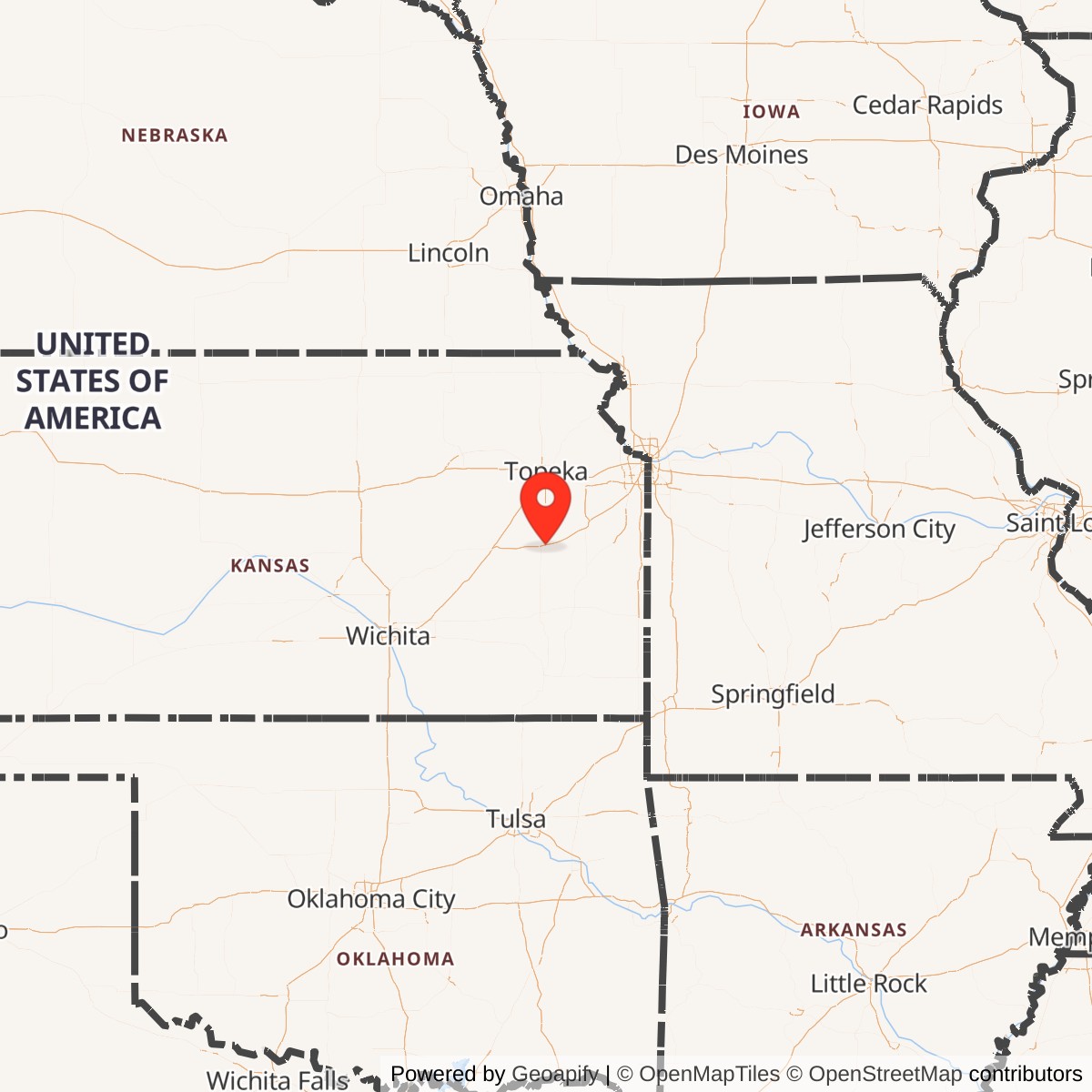
Atlas E Site 548-3 was a single-missile SM-65E Atlas intercontinental ballistic missile launch complex built for the 548th Strategic Missile Squadron near Waverly in Coffey County, Kansas. The site was one of nine Atlas E "coffin launcher" installations constructed around Forbes Air Force Base at Topeka, Kansas, and it formed part of Strategic Air Command's early-1960s Atlas E missile force. The parent base was Forbes Air Force Base. The operating squadron was the 548th Strategic Missile Squadron. Public unit-history sources describe the 548th SMS under Strategic Air Command and the 21st Air Division, later the 21st Strategic Aerospace Division, while Forbes itself was associated during this period with the 40th Bombardment Wing / 40th Strategic Aerospace Wing. An Atlas E launch complex included its own local launch operations/control facility rather than being tied to a separate Minuteman-style Launch Control Center.
The site is inactive and decommissioned. It is no longer an active missile facility. The 548th Strategic Missile Squadron was organized at Forbes on July 1, 1960, became operational on October 16, 1961, began standing down from alert in early 1965, and was inactivated on March 25, 1965. After the missile period ended, the property passed out of active Air Force missile use and is now a former military site on non-federal rural property.
Location, Landscape, and Site Description
Site 548-3 lies in rural Coffey County, Kansas, in the Waverly/Lebo area southwest of Topeka and southeast of Forbes Air Force Base. EPA identifies the property at 399 W 349th Street, five miles northwest of Waverly. The surrounding landscape is agricultural and pastoral, with rural roads, open fields, grassland, farm ponds, and scattered tree lines. This type of setting was typical of the Forbes Atlas E field. The missile complexes had to be reachable from Forbes by road for crews, security personnel, maintenance teams, propellant support, and logistics, but they also had to be far enough apart that a single attack on Forbes or on one missile site would not destroy the squadron's entire launch force.The site was a hardened horizontal Atlas E launcher, not a later vertical Atlas F silo and not a Minuteman-style unmanned launch facility. In Atlas E terminology, the missile was stored horizontally in a buried reinforced-concrete "coffin" shelter. To launch, the massive overhead door or roof section would be opened, the missile would be raised to vertical, liquid oxygen would be loaded, and the final launch sequence would be completed. The complex was therefore a combined missile shelter, launch mechanism, propellant-handling site, power and utility plant, communications point, local launch-control facility, and secured military installation.
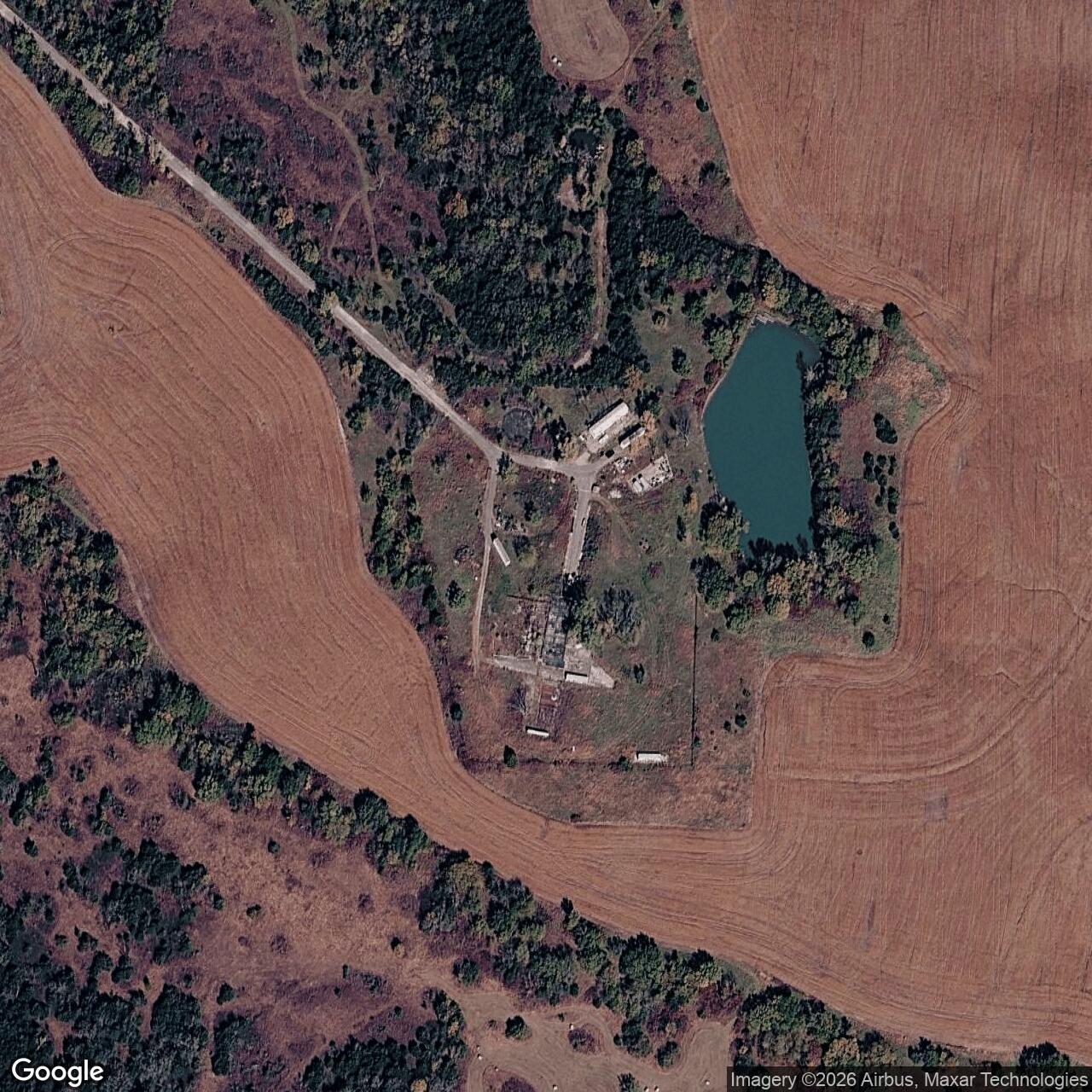
Available photographs and aerial imagery show that Site 548-3 retained a recognizable launch-complex footprint after decommissioning. Photographs show the former launcher area, access drives, hardstand surfaces, remaining structures, and the rural site context.
Strategic and Cold War Context
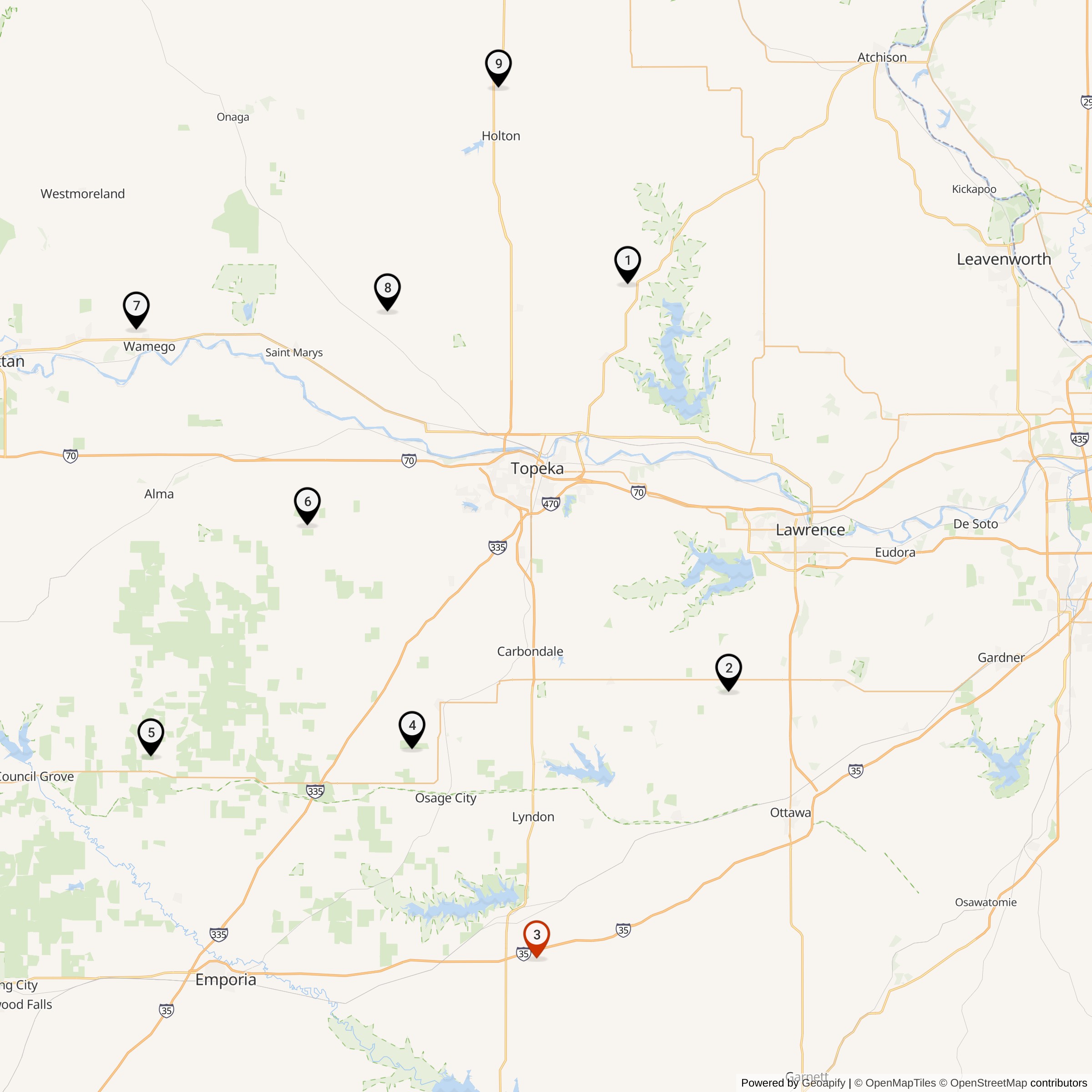
Atlas E Site 548-3 existed because the United States was trying to field a credible intercontinental ballistic missile deterrent during the first years of operational ICBM deployment. Atlas was the first operational U.S. ICBM family. It preceded the more survivable solid-fueled Minuteman systems and the deeper vertical Atlas F silo network, but it marked a major shift from reliance on bomber bases and test pads toward dispersed missile alert fields.The Forbes Atlas E field reflected a specific Strategic Air Command solution to early ICBM vulnerability. Forbes was originally expected to receive three sites with three missiles at each site, but in February 1959 the Air Force directed that each missile be placed at an individual launch site. That decision created the nine separate Forbes Atlas E complexes later associated with Valley Falls/Rock Creek, Worden, Waverly, Burlingame/Osage City, Bushong, Dover/Keene, Wamego, Delia, and Holton. Site 548-3 was the Waverly-area installation in that dispersed ring.
Atlas E was a transitional system. It was more survivable than the earliest exposed launch-pad concepts because the missile was protected in a below-ground shelter, but it still depended on liquid oxygen operations, mechanical erection, and substantial launch preparation. The National Park Service describes the Atlas E as an individual-launch-complex missile with inertial guidance, a below-ground coffin shelter, and an approximate fifteen-minute launch response time. The system's value lay in dispersal, hardening, and the ability to hold Soviet targets at risk during a period when the United States was racing to build a survivable strategic missile force.
Construction and Activation
The Forbes Atlas E missile-field project began as national missile construction accelerated in the late 1950s. In October 1958, Topeka received word that Forbes Air Force Base would support Atlas E missile sites in the surrounding area. The Corps of Engineers Kansas City District managed construction of the nine Forbes "coffin" launchers. The Air Force's February 1959 decision to disperse each missile at an individual site changed the field from a smaller number of multiple-missile complexes into nine separate launch complexes.Construction officially began on June 9, 1959, when Kansas Governor George Docking drove a silver nail into a construction form. The project was divided between two construction firms, one responsible for three sites and the other for six. Unit-history and Air National Guard historical summaries describe a difficult construction program. The project underwent roughly 519 modifications. The propellant-loading system was one recurring source of problems. Components built by Blaw-Knox in Pittsburgh for Atlas E sites at Vandenberg, F.E. Warren, Fairchild, and Forbes were supposed to arrive on skids, but the skids often arrived late and testing revealed defects that had to be corrected.
Construction also faced labor, safety, and local-public-reaction issues. Public unit-history sources record 22 work stoppages, including a longer October-November 1960 stoppage caused by a jurisdictional dispute between hoisting engineers and electrical workers. They also record 25 lost-time accidents, including two electricity-related fatalities. A minor disturbance occurred at one of the Forbes missile sites when student pickets from McPherson College protested ICBM deployment. The available source does not identify that protest site as Site 548-3, so it should be understood as a Forbes missile-field event, not a documented Waverly-site event.
The 548th Strategic Missile Squadron was organized at Forbes on July 1, 1960. The first Atlas missile arrived at Forbes on January 24, 1961, and by October 1961 all nine Forbes Atlas E sites had their missiles. Operational control of the Forbes Atlas E sites was turned over to Strategic Air Command on October 16, 1961, when Air Force Ballistic Missile Activation Chief Maj. Gen. Gerrity turned the sites over to Second Air Force Commander Lt. Gen. John D. Ryan.
Missile System and Technical Role
Site 548-3 housed one SM-65E Atlas ICBM. The Atlas E was a liquid-fueled missile developed from the early Atlas family and deployed in individual coffin-launcher complexes. The missile used RP-1 kerosene fuel and liquid oxygen oxidizer. It was normally stored horizontally in its hardened shelter and had to be erected and prepared before launch. That launch method required large mechanical, electrical, hydraulic, propellant, communications, and crew-support systems at each site.Public missileer and National Park Service sources describe the Atlas E as an inertial-guidance, single-launcher system deployed in below-ground coffin shelters. The 548th SMS historical association describes the Forbes Atlas E weapon system as using a Mark IV reentry vehicle developed by General Electric and carrying a W-38 nuclear warhead with an approximate yield of 3.8 megatons. The same source gives the Atlas E range as approximately 6,000 miles.
Site 548-3 was not a remotely monitored, unmanned Minuteman-style launch facility. Atlas E launch complexes were locally crewed and locally controlled. The 548th SMS historical association states that the Forbes sites were manned twenty-four hours a day, 365 days a year during the squadron's active period. Crew members at a site like 548-3 had to monitor missile status, maintain readiness, work with security and maintenance personnel, and be prepared to execute higher-headquarters orders under Strategic Air Command procedures. Propellant specialists and maintenance personnel were essential because the Atlas E's liquid-oxygen system and pressurized airframe required far more hands-on care than later solid-fueled missiles.
Operational History
The active operational life of Site 548-3 was short but intensive. The 548th Strategic Missile Squadron was organized at Forbes in 1960 and became the Atlas E missile unit responsible for the nine dispersed launch complexes around Topeka. USAF unit-history records list the squadron as organized on July 1, 1960, assigned to Strategic Air Command and the 21st Air Division, later the 21st Strategic Aerospace Division, and equipped with the SM-65E Atlas. Forbes was also home during this period to the 40th Bombardment Wing / 40th Strategic Aerospace Wing, which supplied the larger base context in which the missile squadron operated.By October 1961 all nine Forbes Atlas E sites had their missiles, and on October 16, 1961 the missile field was turned over for operational control. From that point Site 548-3 became part of the armed ICBM alert force. The site's day-to-day mission was readiness. Unlike a training pad or a test launch site, it existed to keep a nuclear-armed Atlas E available for emergency war order execution. That required continuous crew duty, scheduled inspections, equipment checks, communications reliability, security procedures, and rapid response to maintenance problems.
The Atlas E system was physically demanding. The missile's thin stainless-steel airframe required pressurization for structural integrity, and the liquid-oxygen launch process meant that cryogenic oxidizer was not simply stored passively in the missile while it sat in the launcher. The site therefore combined launch readiness with constant attention to mechanical and propellant-support equipment. The 548th SMS association's description of the launch process - rolling back the overhead door, raising the missile, fueling with RP-1 and liquid oxygen, and preparing for launch - captures why an Atlas E site needed trained crews and support personnel at the location.
The most important public operational episode associated with the 548th SMS as a whole was the Cuban Missile Crisis in October 1962. All 548th sites were at a high level of alert and ready to launch if required. That statement applies to the squadron and its nine-site missile field rather than to a uniquely documented action at Site 548-3 alone, but Site 548-3 was one of those nine Forbes Atlas E sites. The episode illustrates the operational purpose of the Waverly launcher: it was a live part of the Strategic Air Command alert posture during the most dangerous nuclear crisis of the Cold War.
Deactivation and Disposal
Site 548-3 left active missile service as part of the early retirement of the first-generation Atlas and Titan I force. Secretary of Defense Robert McNamara's May 1964 directive accelerated the decommissioning of Atlas and Titan I missile bases. USAF unit-history records show the 548th SMS first ICBM off alert on January 4, 1965 and the last ICBM shipped out on February 8, 1965. The squadron was inactivated on March 25, 1965.The available public sources for Site 548-3 do not provide a detailed site-by-site dismantling report. Based on the documented squadron phaseout, the missile would have been removed from alert, the Atlas weapon system and associated launch equipment would have been retired from active service, and the site would have ceased to function as a manned Strategic Air Command launch complex. Some equipment at surplus ICBM complexes was removed, salvaged, or otherwise disposed of during the Atlas phaseout.
The site was not deactivated under the later Strategic Arms Reduction Treaty demolition regime that affected many Minuteman and Peacekeeper facilities decades later. Atlas E retirement occurred because the first-generation liquid-fueled ICBM force had been overtaken by newer systems, especially solid-fueled Minuteman and more survivable second-generation deployments. The public record for Site 548-3 does not show a treaty-verification demolition sequence or a formal museum-preservation action.
The environmental record is clearer than the disposal record. EPA identifies the property as FORBES (EX) ATLAS FAC S-3, EPA ID KSN000703117, in Coffey County. EPA lists the site as Not on the National Priorities List and as NFRAP, meaning that based on existing information the site did not qualify for listing on the NPL. The USACE FUDS inventory identifies Forbes AFB Atlas S-03 as FUDS property number B07KS0201 and lists both CON/HTRW and HTRW project categories. Those records show that the former missile complex remained part of federal environmental tracking even after active missile operations ended.
Current Status and Site Use
Atlas E Site 548-3 is inactive, decommissioned, and not an active military installation. It is not a public museum, park, or official historic site. The property should be treated as private/non-public rural property unless a current owner or responsible authority grants access.The site's visible condition is known mainly from aerial and photographic sources. The photographs show the former launcher footprint, access drives, remaining hardstand areas, structures, and rural setting. These public images indicate that the Waverly site retained recognizable Cold War launch-complex features after decommissioning, but they do not document a current authorized public use. EPA's Superfund profile adds that the site is non-federal for CERCLA profile purposes, Not on the NPL, and NFRAP.
Chronology
- 1958-10 Topeka received news that Forbes Air Force Base would support Atlas E missile sites in the surrounding area.
- 1959-02 The Air Force directed that each Forbes Atlas E missile be placed at an individual launch site rather than in three-missile complexes.
- 1959-06-09 Construction officially began for the Forbes Atlas E missile-field project when Kansas Governor George Docking drove a silver nail into a construction form.
- 1960-07-01 The 548th Strategic Missile Squadron was organized at Forbes Air Force Base.
- 1961-01-24 The first Atlas missile arrived at Forbes Air Force Base.
- 1961-10 By October 1961, all nine Forbes Atlas E sites had Atlas E missiles.
- 1961-10-16 Operational control of the Forbes Atlas E sites was turned over to Strategic Air Command, and the 548th SMS was listed as operational.
- 1962-10 During the Cuban Missile Crisis, the 548th SMS association states that all 548th sites were at a high level of alert and ready to launch if required.
- 1964-05 Secretary of Defense Robert McNamara directed acceleration of Atlas and Titan I missile-base decommissioning.
- 1965-01-04 The 548th SMS recorded its first ICBM off alert.
- 1965-02-08 The 548th SMS recorded its last ICBM shipped out.
- 1965-03-25 The 548th Strategic Missile Squadron was inactivated.
- 2015-09-30 The USACE FUDS inventory listed Forbes AFB Atlas S-03, FUDS property number B07KS0201, in Coffey County with CON/HTRW and HTRW project categories.
Read about the Atlas at Forbes AFB
All Atlas Missile Silo Locations