
Atlas E Site 548-5 Missile Silo, Allen / Bushong / Council Grove area Kansas
Longitude: -96.3024136025075
Site Type: Atlas E single-missile coffin launcher complex
Missile Type: SM-65E Atlas
Number of Launchers/Missiles: 1
Parent Base: Forbes AFB
Missile Wing: 40th Bombardment Wing / 40th Strategic Aerospace Wing; 548th SMS later attached/reassigned during 1964 phaseout
Missile Squadron: 548th Strategic Missile Squadron
Approximate Base Size: approx. 25 acres
Current Site Use: Private 23-acre former Atlas E complex with surviving bunker/missile-base features, Quonset/living/garage space, fenced perimeter, and airstrip; active real-estate listing in May 2026; USACE groundwater remedy selected with implementation expected by 2029.
Site Ownership: Private ownership; USACE ROD identifies the site as under private ownership; RE/MAX listing active in 2026.
Accessible: No public access / private property; viewings only by owner/listing-agent arrangement; historical coordinate is not permission to enter.
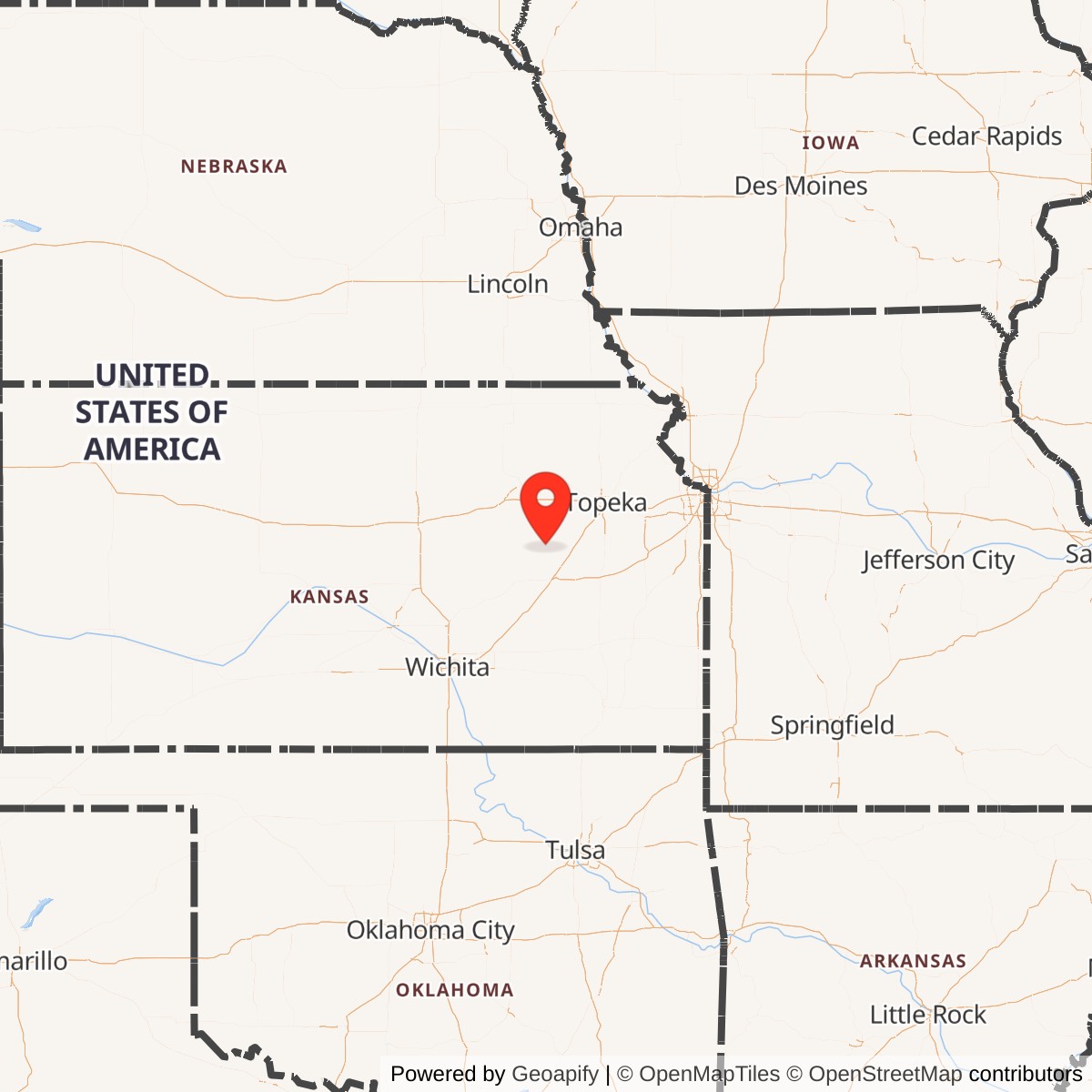
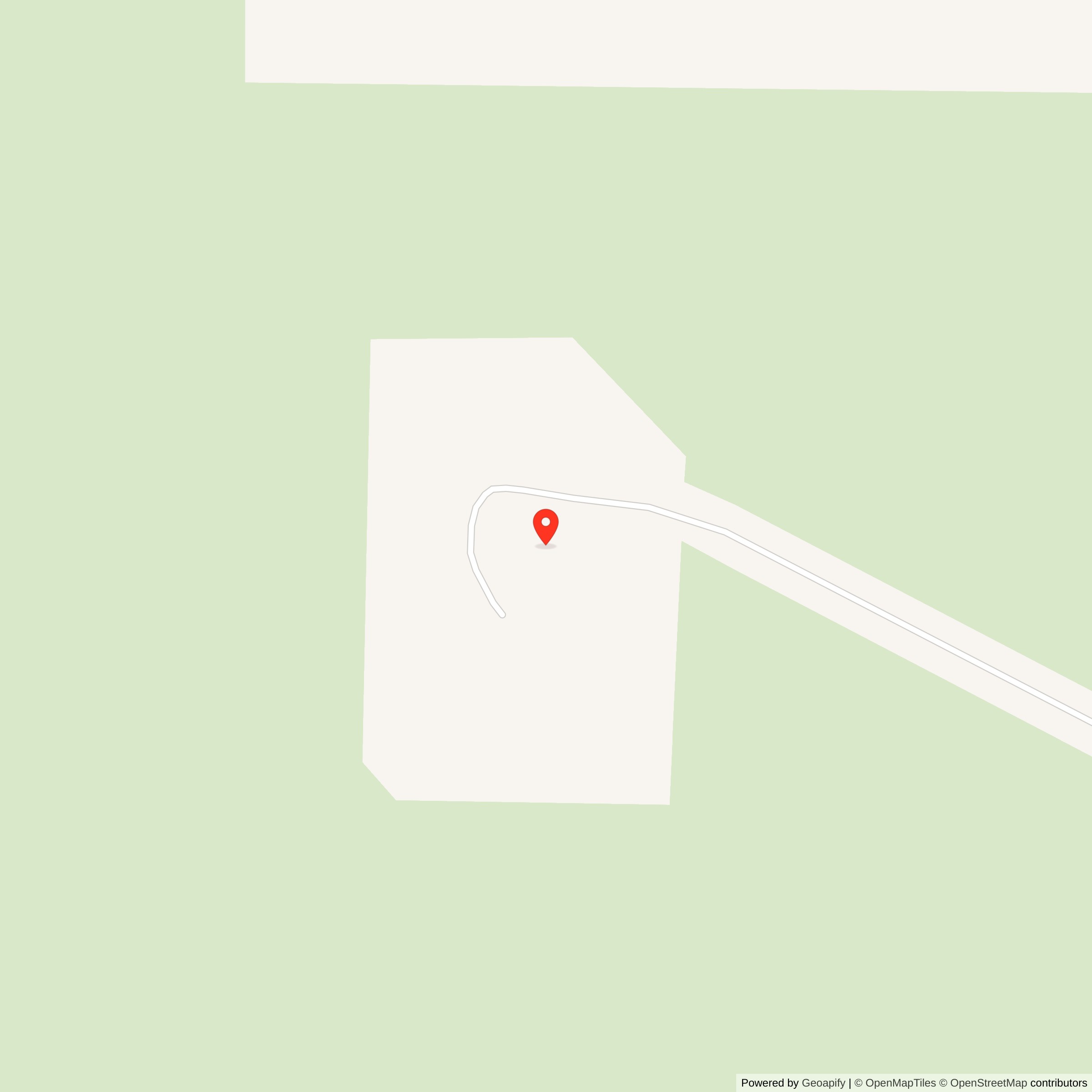
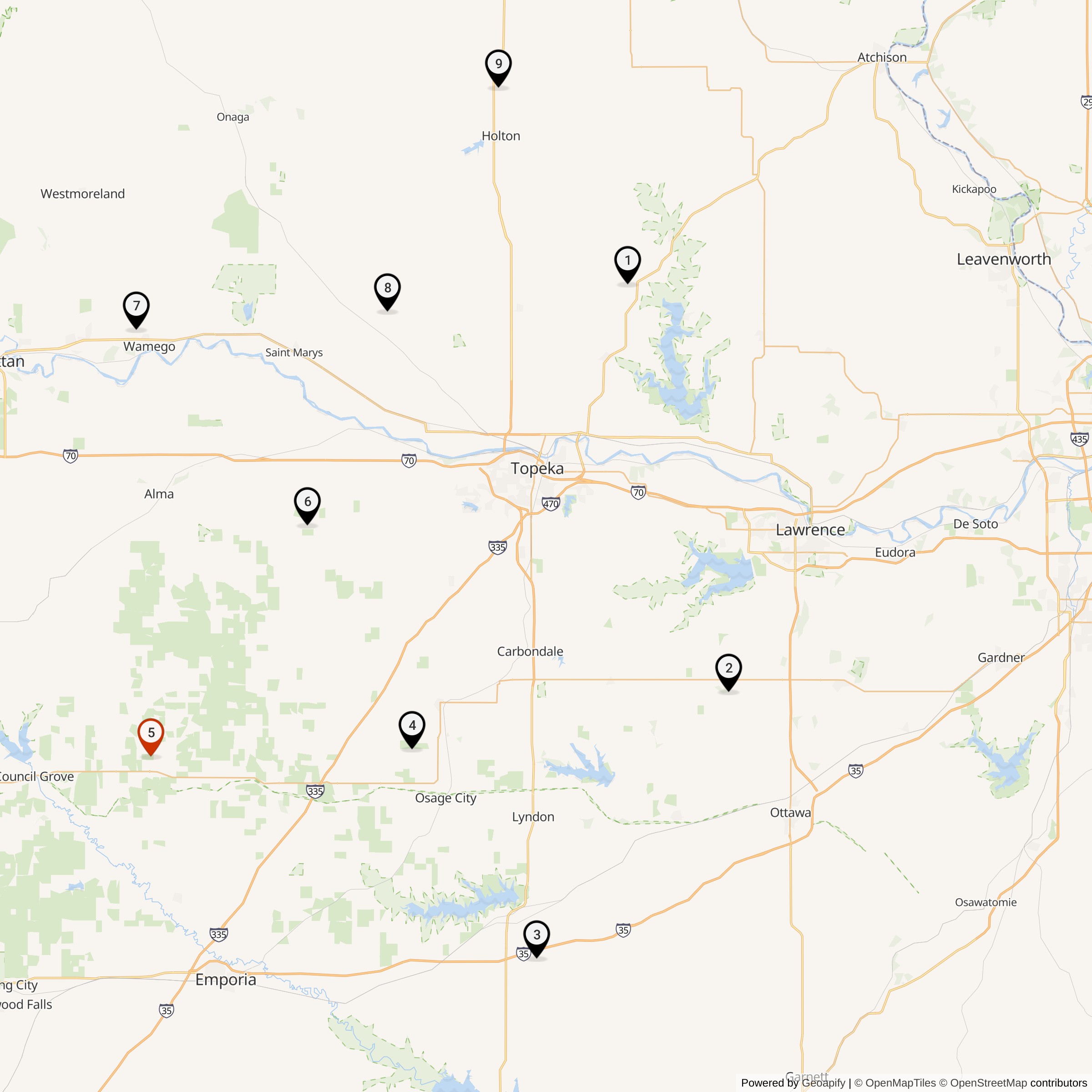
Atlas E Site 548-5 was a single-missile SM-65E Atlas intercontinental ballistic missile launch complex constructed for the 548th Strategic Missile Squadron in Lyon County, Kansas. It was one of nine Atlas E "coffin launcher" facilities built around Forbes Air Force Base near Topeka. The site is most often associated in Atlas missile sources with Bushong, Council Grove, or Allen, depending on the source being used. The best current identification is the former Forbes Atlas Missile Site S-5 at 3627 Road D, near Allen and northwest of Bushong, in Lyon County, Kansas.
The parent base was Forbes Air Force Base. The operating unit was the 548th Strategic Missile Squadron. Public unit-history sources place the squadron under Strategic Air Command and the 21st Air Division / 21st Strategic Aerospace Division during its Forbes Atlas E service, with Forbes associated in this period with the 40th Bombardment Wing and later the 40th Strategic Aerospace Wing. Atlas E sites were not Minuteman-style unmanned Launch Facilities controlled from a separate Launch Control Center. Each Atlas E launch complex included its own local launch-control spaces, crew facilities, power, communications, propellant systems, security perimeter, and missile launcher.
The site is inactive and decommissioned. It is no longer an active missile facility. The 548th Strategic Missile Squadron was organized at Forbes Air Force Base on July 1, 1960; its missiles began arriving in January 1961; the squadron was declared operationally ready in October 1961; the first squadron missiles began leaving alert in January 1965; and the squadron was inactivated on March 25, 1965. The former missile property later passed into private use, entered the Formerly Used Defense Sites / CERCLA environmental-response process, and today remains private property with a documented groundwater remedy selected by USACE. Current real-estate listing records reviewed describe the 23-acre former missile property as an active private listing with a Quonset hut, living/garage space, fenced perimeter, bunker/missile-base structures, and an airstrip.
Location, Landscape, and Site Description
Site 548-5 lies in rural Lyon County, Kansas, southwest of Topeka and northwest of Bushong, in the broader Allen / Bushong / Council Grove area. The Military Standard labels the nearest town as Council Grove. The 548th SMS Site 5 page labels the site as Bushong. EPA describes it as two miles west and three miles north of Bushong, with the city and ZIP shown as Allen, Kansas 66833. The USACE Record of Decision describes the former Forbes Atlas Missile Site S-5 as located at 3627 Road D in Lyon County, approximately eight miles west of Allen and about 45 miles southwest of Topeka.
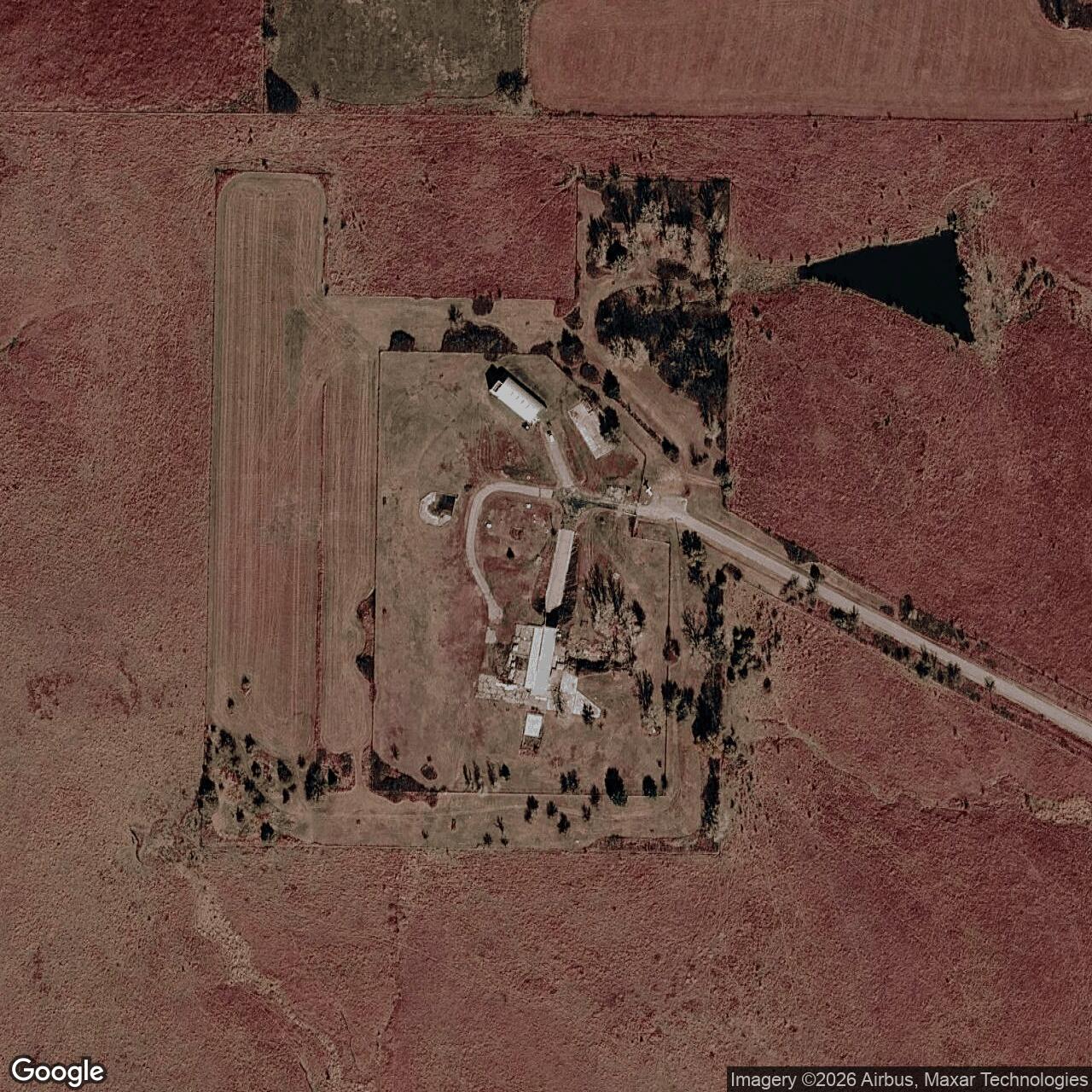
The surrounding setting is agricultural and pastoral. The site sits in open rural country, with grazing and farm ground around the former fenced missile-base area. USACE describes the site as a roughly 23-acre former missile property within a general rectangular area surrounded by agricultural grazing lands; the Record of Decision describes the fenced area as approximately 23 acres. This landscape suited the Atlas E deployment concept. The site had to be far enough from Forbes Air Force Base and from the other eight Forbes launchers to reduce vulnerability to a single attack or accident, but still close enough for crew changeovers, security response, maintenance, propellant support, warhead handling, communications, and logistics from the parent base.
The installation was an Atlas E coffin-launcher complex. The missile was not stored vertically in a deep Atlas F silo and was not an aboveground Atlas D gantry. Instead, the Atlas E missile was stored horizontally in a reinforced-concrete, semi-hardened, below-ground shelter. For launch, the overhead roof or door structure would roll back, the missile would be raised from the horizontal shelter to a vertical launch position, and the crew would complete the fueling and launch sequence from the local complex. USACE describes the Atlas E facilities as "coffin launcher" complexes in which the missile was kept horizontally; to launch, a 400-ton hardened concrete overhead roof was rolled back, the missile was elevated, and the rocket was fueled with RP-1 kerosene and liquid oxygen.
The post-military property retained substantial physical evidence of its missile function. The USACE Record of Decision states that property remaining on site included concrete foundations and pads, the concrete missile silo housing and control structure, and perimeter fencing. Current real-estate listing records and photographs describe or show the property as a former Atlas E missile silo/base with a bunker, a Quonset hut with living and garage space, about 10 acres of fenced perimeter, and a 1,250-foot airstrip.
Strategic and Cold War Context
Atlas E Site 548-5 existed because the United States was building a dispersed, land-based intercontinental ballistic missile deterrent during the most urgent years of the early Cold War. The Atlas family was the first operational U.S. Air Force ICBM family. It represented a major shift from aircraft-delivered strategic weapons toward missiles that could be kept on alert and launched across intercontinental distances. The National Park Service describes the Atlas as the Air Force's first operational ICBM and notes that, at their peak, 132 Atlas sites were operational from December 1962 through May 1964 before the system was phased out in favor of newer Minuteman and Titan missiles.
The Forbes missile field shows how quickly ICBM basing concepts changed. Early Atlas deployment planning included clustered launch facilities, but Atlas E moved toward individual launch complexes. The Forbes field used nine separate launch sites around the parent base, each with one missile. This dispersal reduced the chance that a single strike, accident, or local failure would disable an entire squadron. It also forced the Air Force to build a widely distributed support system: crews moved between Forbes and the remote sites; security forces guarded each installation; maintenance teams traveled to isolated launchers; and communications links tied each site into Strategic Air Command's alert network.
Atlas E was technologically important but operationally transitional. It improved on Atlas D by using inertial guidance and individual below-ground coffin launchers, and it offered better blast protection than the earliest exposed Atlas deployments. At the same time, it retained the operational burdens of a first-generation liquid-fueled missile. Atlas used a thin stainless-steel pressure-stabilized airframe, RP-1 fuel, and liquid oxygen oxidizer. The missile had to be pressurized, maintained, erected, loaded with cryogenic oxidizer, and launched through a comparatively complex sequence. The National Park Service gives Atlas E an approximate fifteen-minute launch response time. That was fast for an early ICBM, but slower and more maintenance-intensive than the solid-fueled Minuteman systems that soon followed.
For Kansas, the Forbes Atlas E sites placed rural communities directly into the front line of nuclear deterrence. A property such as Site 548-5 looked from a distance like a fenced rural industrial compound, but during active service it housed one of Strategic Air Command's nuclear-armed intercontinental missiles. The site was deliberately remote and specialized: its purpose was to keep one Atlas E missile protected, maintained, crewed, and capable of launch if national command authority ordered it.
Construction and Activation
The Forbes Atlas E missile-field project began as national missile construction accelerated in the late 1950s. USACE states that the Air Force started construction on the nine Forbes Atlas E missile facilities in 1959. Public unit-history and Kansas Air National Guard summaries describe the Forbes Atlas E construction program as a large and difficult engineering effort managed through the Corps of Engineers Kansas City District, with the nine coffin-launcher facilities distributed around the Forbes missile field.
Site-specific construction details for Site 548-5 are limited in public sources.
The broader squadron chronology is clearer. The 548th Strategic Missile Squadron was organized at Forbes on July 1, 1960. On January 24, 1961, the first Atlas missile arrived at Forbes from Vandenberg Air Force Base. USACE states that missiles first started arriving at the 548th SMS sites in January 1961 and that the 548th SMS was declared operationally ready in October 1961. Public unit-history summaries record operational turnover to Strategic Air Command on October 10, 1961 and the squadron listed as operational on October 16, 1961. By October 1961, all nine Forbes Atlas E sites had Atlas E missiles.
Construction of the Forbes sites took place under the intense "concurrency" approach used in early missile deployment, where design, construction, testing, and operational activation overlapped. This compressed schedule made the Atlas system available sooner but also produced modifications, construction delays, equipment problems, and maintenance burdens. The Forbes sites were not merely concrete bunkers. Each had to integrate the launcher and erector, propellant handling, liquid oxygen equipment, power generation, environmental controls, security facilities, communications, crew areas, and weapons-support systems. Site 548-5 was one node in that larger system, but it had to be capable of supporting a complete missile crew and a nuclear-armed Atlas E on alert.
Missile System and Technical Role
Site 548-5 housed one SM-65E Atlas missile. The Atlas E was a liquid-fueled, pressure-stabilized, one-and-a-half-stage intercontinental ballistic missile. It used RP-1 kerosene fuel and liquid oxygen oxidizer. Its engines and airframe represented the first generation of U.S. operational ICBM technology: capable, powerful, and historically important, but complicated to maintain and dependent on cryogenic oxidizer handling before launch.
The Atlas E launcher was a horizontal, semi-hardened coffin system. USACE describes the missile as stored horizontally, with a 400-ton hardened concrete overhead roof rolled back during the launch sequence. Once the shelter was opened, the missile would be raised to vertical and fueled. The Association of Air Force Missileers describes Atlas E as a system with one missile per site, one local control center per missile, inertial guidance, and a coffin roof at ground level providing roughly 25 pounds per square inch of overpressure protection. This made Atlas E more survivable than exposed gantry systems but not as hardened as later vertical silo systems.
The missile's public-source military payload was the Mark IV reentry vehicle with a W-38 thermonuclear warhead. USACE's S-5 page states that the Atlas E missiles were equipped with a Mark IV re-entry vehicle, carried a W-38 warhead with a yield of approximately four megatons of TNT, and had a range of approximately 6,000 miles. Smithsonian / National Air and Space Museum public collection information for the Mark 4 reentry vehicle describes the Mark 4 as made by AVCO and carrying a W-38 nuclear warhead with a yield of about 3.75 megatons.
The site was manned when on alert. Atlas E was unlike later Minuteman launch facilities that sat unmanned and were controlled from a distant LCC. The Association of Air Force Missileers describes Atlas E combat crews as including two officers and three enlisted members, with missile maintenance, ballistic missile analysis, and power-production expertise. Crews stood 24-hour alert tours, with a new crew departing the main base each morning to replace the crew on duty. Maintenance was also demanding: the squadron required specialists in missile systems, electronics, power production, reentry vehicles, real-property installed equipment, communications, propellant systems, and nuclear-weapons support. At Site 548-5, that meant the missile complex was both a launch site and a small self-contained military workplace.
Operational History
During active service, Site 548-5 was one of the nine Forbes Atlas E launch complexes operated by the 548th Strategic Missile Squadron. The site was part of Strategic Air Command's nuclear alert force from the operational activation of the Forbes field in 1961 until the Atlas E phaseout in early 1965. It did not operate as a training exhibit, storage depot, or reserve installation; its purpose was to hold one Atlas E missile ready for wartime launch.
The 548th SMS home page states that the squadron was based at Forbes Air Force Base from 1961 through 1965 and that nine sites were built in a ring around Topeka. It also states that the sites were manned 24 hours a day, 365 days a year while the squadron was active. That manning model shaped daily life at Site 548-5. Crews traveled from the parent base to the isolated site, took over from the previous crew, monitored equipment, maintained communications, followed Strategic Air Command alert procedures, and coordinated with maintenance and security teams. The site was remote by design, but it was not unattended.
Security was a constant operational requirement. The missile, reentry vehicle, propellant equipment, communications systems, and classified launch equipment required controlled access and guarded perimeters. Current and historic photographs of Atlas E sites show fenced compounds, gates, hardstands, and hardened structures. USACE's S-5 Record of Decision notes that perimeter fencing remained as part of the site after military use, showing that the fenced compound was a core physical feature of the installation.
Maintenance was equally important. Atlas E's liquid-fueled design required continuous attention. The missile's pressure-stabilized body, inertial guidance equipment, propulsion systems, liquid oxygen support equipment, RP-1 fuel systems, power systems, and launch-control equipment all had to remain ready. The site had to support periodic inspections, corrective maintenance, propellant-system work, communications checks, crew drills, and security operations. These activities were routine and often invisible, but they were the substance of the site's operational history.
The Cuban Missile Crisis was the highest-stress period of the Forbes Atlas E field's short life. During the crisis all 548th sites were at a high level of alert and ready to launch should it have become necessary. Public squadron summaries state that Strategic Air Command directed Atlas E missiles not already on alert for modifications to be placed on alert as covertly as possible, that training was suspended, and that missiles being used for operational training were to be placed on alert once liquid oxygen was available.
By 1964, Atlas E was becoming obsolete. Solid-fueled Minuteman missiles and more capable systems were changing the strategic missile force. Atlas E remained dangerous, complex, and expensive to maintain, and its semi-hardened coffin basing was less survivable than later silo systems. In November 1964, the Department of Defense announced the phaseout of Atlas E, Atlas F, and Titan I missiles. For the 548th SMS, the operational end came quickly. The first squadron missiles came off alert on January 4, 1965. One by one, missiles were removed from the Forbes launchers and shipped to Norton Air Force Base, California. The last Forbes missile was shipped out on February 8, 1965. The squadron was inactivated on March 25, 1965.
USACE states that environmental contamination at the Forbes S-5 Site resulted from waste-management practices during the facility's operational period and that much of the contamination is groundwater contamination beneath the site. Soil contaminants were not detected above screening criteria, but sediment and water from the main sump, sediment trap, flame tunnel, and various pits in and around the missile-base structure were considered potential sources of groundwater contamination. In 2018, an interim remedial action removed water and sediment from the sump, sediment trap, and flame-pit structures. In 2023, USACE announced completion of the Record of Decision for the site, stating that the site involves groundwater contamination and remedy, that the ROD was reviewed and concurred upon by KDHE, USACE Kansas City District, and USACE Northwestern Division, and that the remedy was expected to be in place by 2029.
Another modern event is the public real-estate exposure of the property. Wichita Eagle and MLS-linked listing records describe the 3627 Road D property as a former Atlas E missile silo/base in Allen, Kansas. RE/MAX and Redfin listing records reviewed list the property as active in May 2026 at $699,900, describe it as 23 acres, and note the former missile-base/bunker structures, Quonset hut with living/garage space, fenced perimeter, and airstrip.
Deactivation and Disposal
Site 548-5 left active service as part of the rapid phaseout of first-generation liquid-fueled ICBMs. The Department of Defense announced the removal of Atlas E, Atlas F, and Titan I missiles from the active inventory in November 1964. The Forbes Atlas E missiles began leaving alert in January 1965. Public squadron summaries and local-history sources state that the first Forbes missile went off alert on January 4, 1965, the last missile in the Forbes arsenal went off alert on January 28, 1965, and the last missile was shipped from Forbes to Norton Air Force Base on February 8, 1965. The 548th SMS was inactivated on March 25, 1965.
The deactivation process should be understood as a sequence rather than a single date. The missile was removed from alert. The missile and warhead were separated from the site and shipped or otherwise processed through Air Force channels. Launch equipment, government property, and salvageable systems were removed or turned over for disposition. The squadron inactivated. The missile sites were turned over to base civil-engineering management and then entered surplus-property disposal through the General Services Administration or related federal property channels. Site 548-5 then became private property rather than a continuing military installation.
Atlas E deactivation preceded the major strategic arms-control demolition regime associated with later Minuteman and Peacekeeper reductions. The site was not destroyed as part of a START-era silo elimination process. Instead, like many Atlas E sites, it survived as a surplus hardened industrial property. The concrete launcher housing, control structures, pads, fencing, and related site features remained. Over time, the property was adapted to private use rather than preserved as an official museum.
Environmental response became the site's most important federal post-closure issue. USACE identifies the property under the Formerly Used Defense Sites program. The 2021 Proposed Plan and 2023 Record of Decision focus on volatile organic compound contamination, especially trichloroethene in groundwater. The selected remedy in the Record of Decision is in-situ treatment of VOC-contaminated groundwater combined with long-term monitoring, alternative water supply, and informational institutional controls to notify and educate the landowner regarding the groundwater contamination. USACE's 2023 public notice states that the remedy is expected to be in place by 2029. This means the site is decommissioned as a missile installation but still has an active or pending environmental-remedy context.
Current Status and Site Use
Atlas E Site 548-5 is a decommissioned former missile complex on private property. It is not an active military installation, not a public park, and not an official museum. The site remains historically and physically significant because major features of the Atlas E complex survive, but it should be treated as private land with no public access unless the owner or authorized listing agent grants permission.
Current listing records reviewed describe 3627 Road D as an active private real-estate listing. RE/MAX identifies the property as 23 acres in Allen, Lyon County, with status active, listed by RE/MAX Connections. The listing description calls it an Atlas E missile silo with a nuclear missile base and bunker, describes a 4,000-square-foot Quonset hut with garage and modern living quarters, states that about 10 acres are fenced with chain link and barbed wire, and notes a 1,250-foot airstrip. Redfin similarly describes the property as a secluded 23-acre estate with an Atlas E missile silo/base and bunker, 10-acre fenced perimeter, Quonset hut, airstrip, and more than 15,000 square feet of total space.
Chronology
- 1959 The U.S. Air Force started construction on the nine Forbes Atlas E missile facilities.
- 1960-07-01 The 548th Strategic Missile Squadron was organized at Forbes Air Force Base.
- 1961-01-24 The first Atlas missile arrived at Forbes Air Force Base from Vandenberg Air Force Base.
- 1961-10 USACE states that the 548th SMS was declared operationally ready in October 1961.
- 1961-10-10 Public squadron chronology records turnover to Strategic Air Command.
- 1961-10-16 Public unit-history summaries list the 548th SMS as operational.
- 1962-10 During the Cuban Missile Crisis, 548th SMS sources state that the squadron's sites were at a high level of alert and ready to launch if required.
- 1964-11-19 The Department of Defense announced that Atlas E, Atlas F, and Titan I missiles would be removed from the inventory.
- 1965-01-04 The first 548th SMS ICBM was taken off alert.
- 1965-01-28 Local-history sources state that the last Forbes missile in the arsenal went off alert.
- 1965-02-08 The last 548th SMS ICBM was shipped out to Norton Air Force Base, California.
- 1965-03-25 The 548th Strategic Missile Squadron was inactivated.
- 1991 USACE records cited in the Proposed Plan identify a Final Confirmation Study for the former Forbes Atlas Missile Site S-5, Bushong, Kansas.
- 2018 USACE remedial-investigation work identified TCE as the primary chemical of concern in groundwater at the site.
- 2018 USACE completed an interim remedial action removing water and sediment from sump, sediment-trap, and flame-pit structures.
- 2021-07-19 USACE opened the public-comment period for the Draft Proposed Plan for former Forbes Atlas Missile Site S-5.
- 2021-08-24 The public-comment period for the Draft Proposed Plan closed.
- 2023-05-15 The Record of Decision signature page for Forbes Atlas Missile Site S-5 was digitally approved.
- 2023-06-20 USACE Kansas City District published notice that the Final Record of Decision for Forbes Atlas Missile Site S-5 had been completed.
- 2024-05-01 Redfin sale-history data shows the 3627 Road D property listed at $749,000.
- 2025-06-10 Redfin sale-history data shows the property relisted and the price changed to $699,900.
- 2026-05-13 RE/MAX listing data reviewed showed 3627 Road D, Allen, Kansas, as an active listing at $699,900, with 23 acres and Atlas E missile-base/bunker features.
The Past and Present of Rural Missile Sites
Real estate Listing for the site
It was built during the Cold War for nuclear missiles. Now it's on sale in rural Kansas
Read about the Atlas at Forbes AFB
All Atlas Missile Silo Locations