
Atlas E Site 548-7 Missile Silo, Wamego Kansas
Longitude: -96.32558372393854
Site Type: Atlas E single-missile coffin launcher complex
Missile Type: SM-65E Atlas
Number of Launchers/Missiles: 1
Parent Base: Forbes AFB
Missile Wing: 40th Bombardment Wing / 40th Strategic Aerospace Wing; 548th SMS later reassigned during final Atlas E phaseout period
Missile Squadron: 548th Strategic Missile Squadron
Approximate Base Size: approx. 23.7 acres (current-property source)
Current Site Use: Private former Atlas E launch complex near Wamego; modern property sources describe an off-market private residence/adaptive-use property at 16795 Say Rd. on roughly 23.7 acres with a 13,720 sq ft building; site also has documented post-closure criminal-investigation history tied to stored non-operational LSD lab equipment in 2000.
Site Ownership: Private/non-federal ownership after disposal; current owner not verified.
Accessible: No public access / private property.
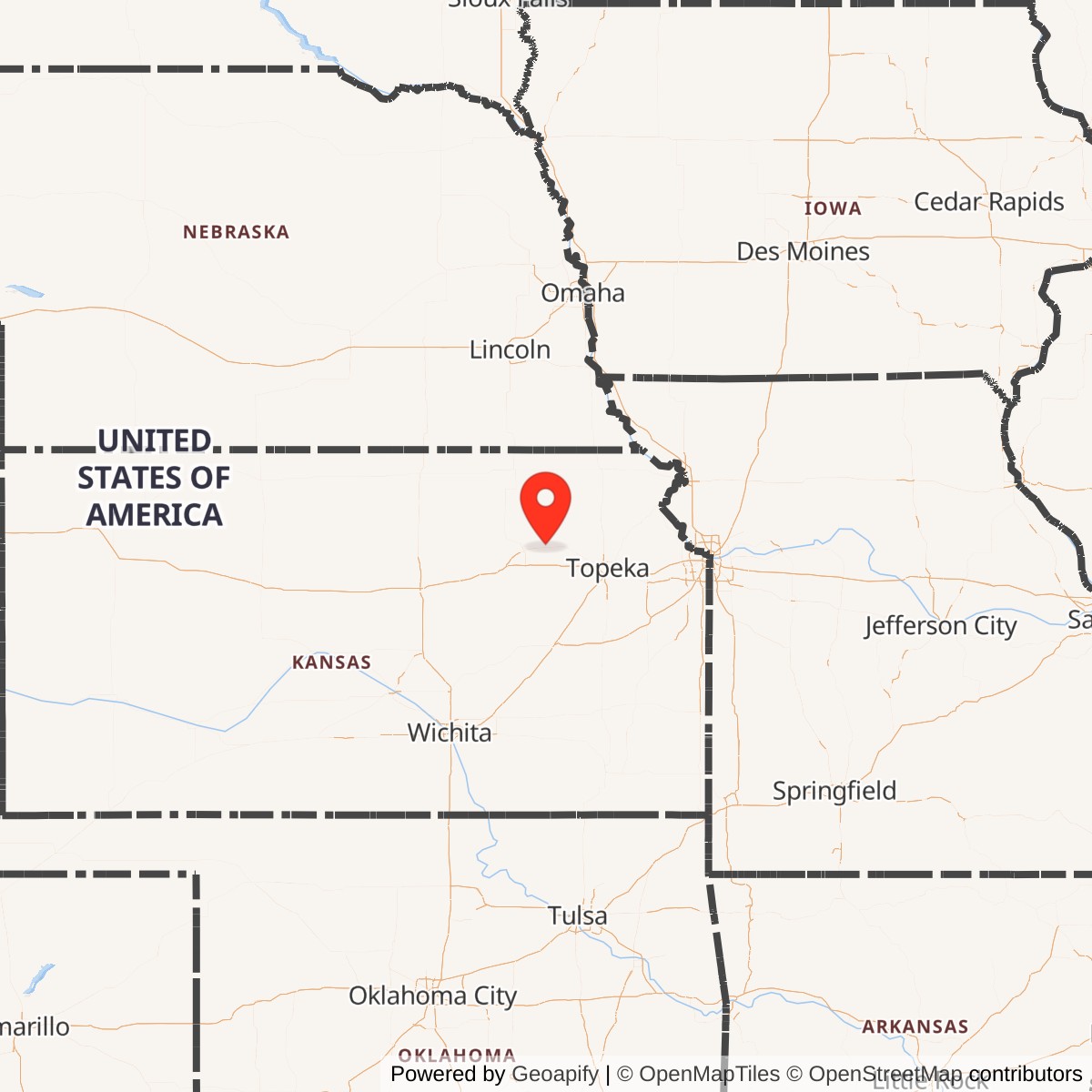
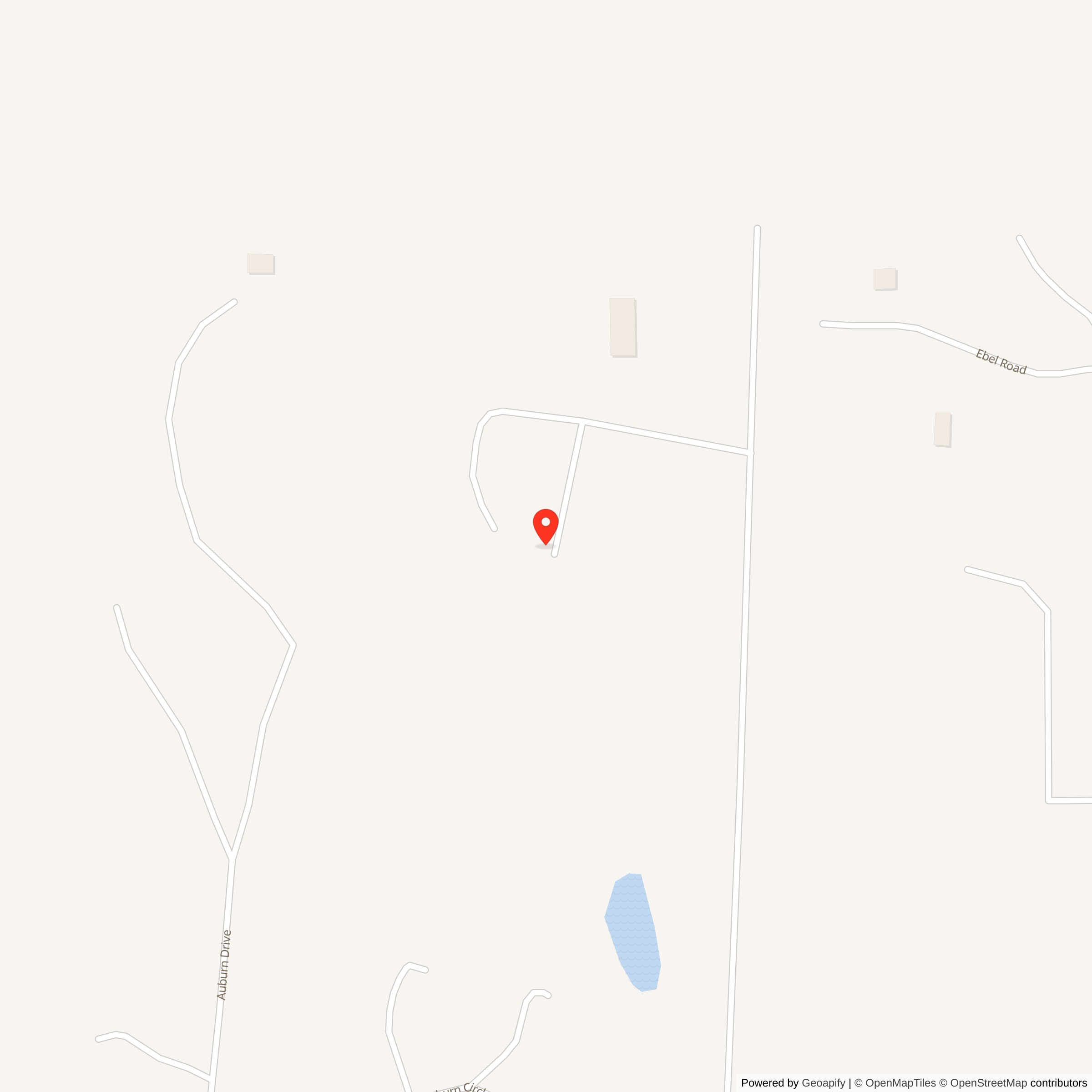
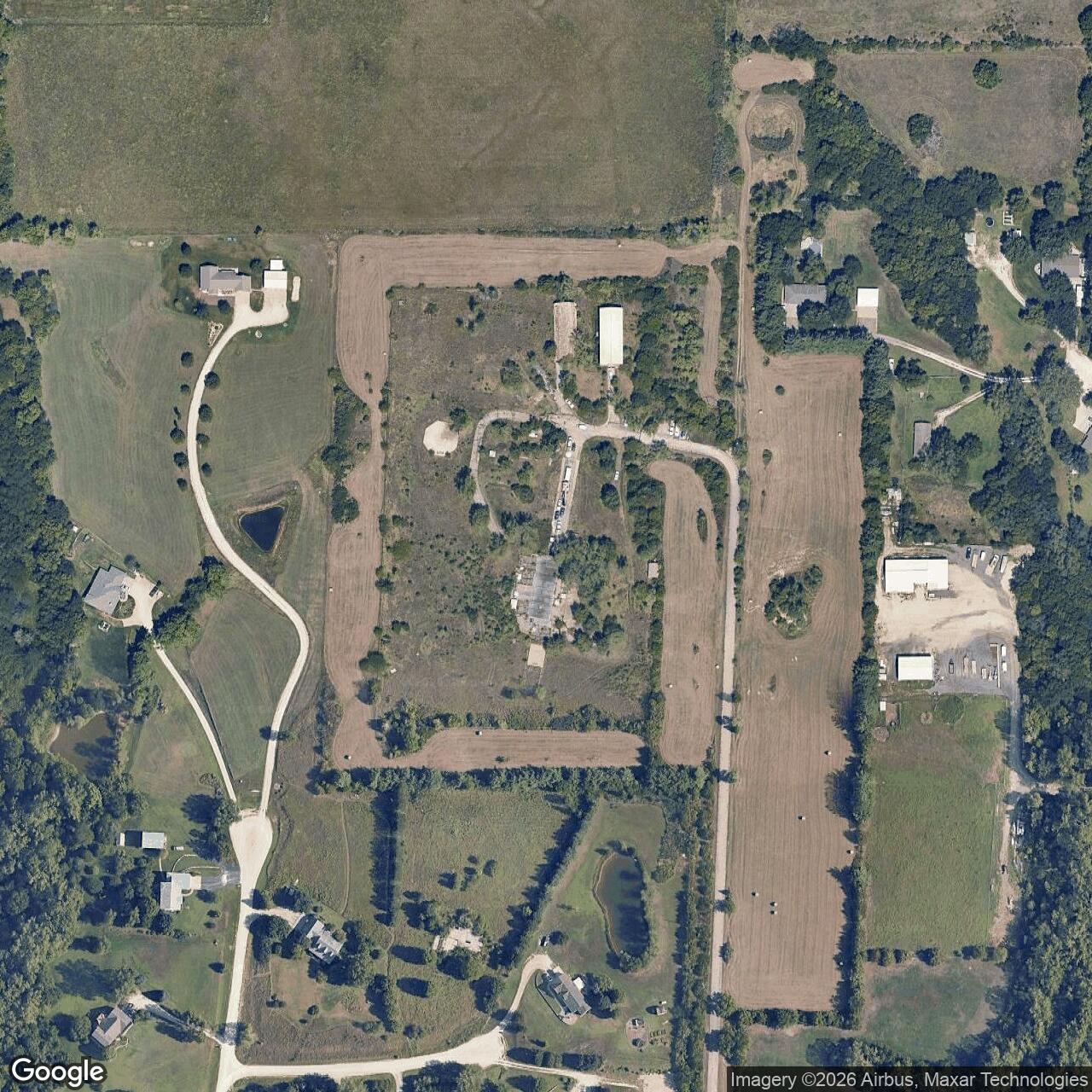
Atlas E Site 548-7 was a single-missile SM-65E Atlas intercontinental ballistic missile launch complex in Pottawatomie County, Kansas, near Wamego. It was one of nine Atlas E coffin-launcher facilities operated from the Forbes Air Force Base missile field near Topeka by the 548th Strategic Missile Squadron. The site is identified in The Military Standard as Atlas E 548-7, Forbes AFB, Kansas, nearest town Wamego. EPA identifies the environmental/property record as FORBES (EX) ATLAS FAC S-7, EPA ID KSN000703133, at 16795 Say Rd., Wamego, Kansas, in Pottawatomie County. The parent base was Forbes Air Force Base. The operating unit was the 548th Strategic Missile Squadron. Public unit-history sources place the squadron under Strategic Air Command and the 21st Air Division / 21st Strategic Aerospace Division during its Forbes Atlas E service, with Forbes associated during this period with the 40th Bombardment Wing and later the 40th Strategic Aerospace Wing. Atlas E sites were not Minuteman-style unmanned Launch Facilities controlled from a separate Launch Control Center. Each Atlas E site was a locally crewed launch complex with its own launch-control and crew spaces, power and communications equipment, security perimeter, propellant-support systems, and single missile launcher. The site is inactive and decommissioned. It is no longer an active missile installation. The 548th Strategic Missile Squadron was organized at Forbes Air Force Base on July 1, 1960; the first Atlas missile arrived at Forbes on January 24, 1961; the Forbes sites entered their operational period in 1961; the first squadron missiles were taken off alert in January 1965; and the squadron was inactivated on March 25, 1965. After active Air Force use ended, Site 548-7 was initially set aside for Kansas State College School of Engineering as a research-laboratory property, but it ultimately passed into private ownership. Modern property records and real-estate sources describe 16795 Say Rd. as a private, off-market residential property on a roughly 23.7-acre former missile-base parcel. It is not a public site.
Location, Landscape, and Site Description
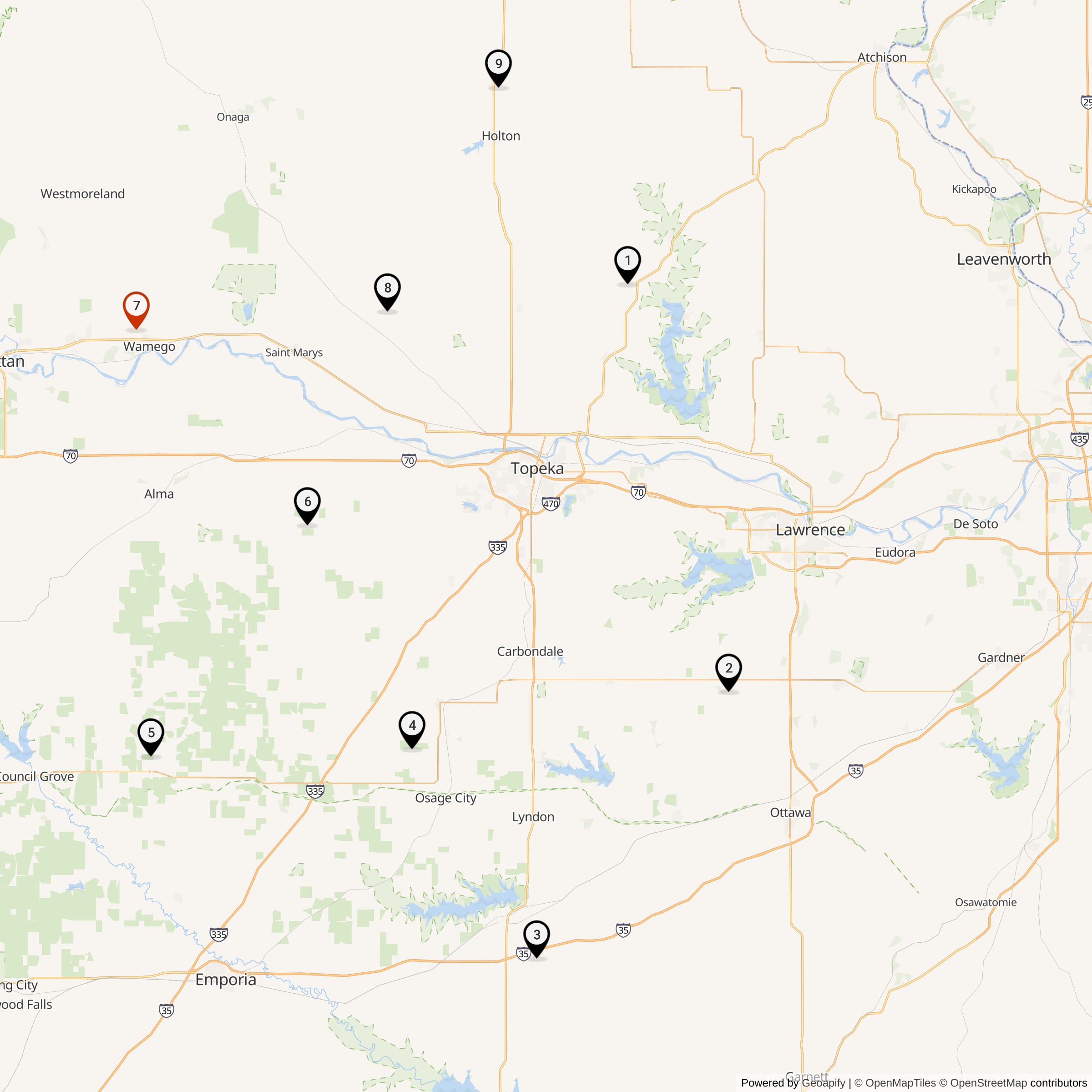
Site 548-7 lies northwest of Wamego in the Kansas River valley and Flint Hills transition landscape of Pottawatomie County. The immediate setting is rural-residential and agricultural, with the former missile complex reached from local roads near Say Road and Auburn Circle. The site's position northwest of Wamego made it one of the northern launchers in the Forbes Atlas E ring and, according to Flint Hills Special's account of 548th SMS operations, the most distant of the nine Forbes launch sites from the parent base. The Forbes Atlas E field was not arranged to defend Forbes Air Force Base. Intercontinental ballistic missiles were offensive strategic-deterrent weapons, not point-defense missiles. The nine Atlas E launchers were placed in a dispersed pattern around the base so that a single attack, accident, or local failure would be less likely to disable the entire squadron. At the same time, the launchers had to remain close enough to Forbes for regular crew changeovers, convoy movement, propellant support, security response, missile maintenance, and communications. Site 548-7 was an Atlas E coffin-launcher complex. The missile was stored horizontally in a semi-hardened underground concrete launcher rather than vertically in a deep Atlas F silo. The term "coffin" referred to the long rectangular launcher bay with a massive roof or door at ground level. For launch, the door would be opened, the missile erected to vertical, the propellant and oxidizer systems brought to launch condition, and the crew would complete the countdown from local launch-control equipment. The Association of Air Force Missileers summarizes the Atlas E basing concept as a singly deployed missile in a coffin launcher with roughly 25-psi overpressure protection. The Wamego site retained the usual Atlas E site components: the missile bay or launcher, launch-control room, crew-support areas, equipment and power spaces, communications equipment, access roads, fenced perimeter, and surface utility features. Photographs show the surviving launcher pad, roads, hardstands, former support structures, and later adaptive-use buildings. The site differed from the other Forbes launchers in two important ways. Flint Hills Special reports that Site 548-7 was the only one of the nine Forbes Atlas E sites that had public-utility electrical power in addition to the two on-site generators, and that it served as the alternate command post for the 548th Strategic Missile Squadron if the command facility at Forbes came under attack.Strategic and Cold War Context
Atlas E Site 548-7 existed because the United States was trying to establish an operational intercontinental missile deterrent rapidly during the early Cold War. The Atlas family was the first operational U.S. ICBM family. It bridged the era between strategic bombers and the later, more survivable and more easily maintained solid-fueled Minuteman force.The Atlas E was a transitional but important step in that development. Earlier Atlas D deployments used three-missile complexes and relied on radio-inertial guidance. Atlas E introduced all-inertial guidance and single-missile dispersed basing. That meant that a missile such as the one at Wamego could be based in its own launch complex, with its own crew and support systems, rather than being one of three launchers at a shared Atlas D complex.
The Forbes missile field shows how quickly early ICBM basing doctrine changed. The initial Forbes concept called for a 3-by-3 arrangement, with three launcher sites each holding three missiles. Before land acquisition was complete, the Air Force shifted to a 9-by-1 deployment pattern. Each missile was placed at a separate remote launcher near communities including Rock Creek, Worden, Waverly, Burlingame, Bushong, Keene, Wamego, Delia, and Holton. Site 548-7 was the Wamego member of that dispersed field.
Atlas E was powerful, but it was demanding to operate. The missile used RP-1 kerosene and liquid oxygen and retained the Atlas family's pressure-stabilized stainless-steel airframe. Liquid oxygen was cryogenic and could not simply be stored indefinitely inside the missile in the same way that a later solid-fueled missile remained ready for launch. Atlas E also had to be erected before launch. Its coffin launcher gave some protection and concealment, but the system remained slower-reacting and more maintenance-intensive than later Minuteman missiles. That combination of early strategic importance and rapid technological obsolescence explains why Site 548-7 had a short active life but an unusually long post-military afterlife.
Construction and Activation
The Forbes Atlas E construction program began in the national rush to deploy operational ICBM sites in the late 1950s and early 1960s. Topeka learned in October 1958 that Forbes would support Atlas E missile sites and that the Corps of Engineers Kansas City District managed construction of the nine horizontal-launcher "coffins." It also reports that construction officially began on June 9, 1959, when Kansas Governor George Docking drove a silver nail into a construction form.Construction was complex and fast-moving. Public accounts of the Forbes field describe contractor divisions of work, hundreds of design modifications, late and defective propellant-loading components, labor-management disruptions, work stoppages, lost-time accidents, and the public visibility of missile-site construction around Topeka. Flint Hills Special states that the Air Force awarded a six-million-dollar contract on April 5, 1960, to the Independent Telephone Association, Inc., a group of five independent telephone companies, for a direct circuit link between the nine missile sites and squadron headquarters at Forbes. In August 1960, additional road contracts were approved so long missile transporters could reach the remote launchers.
Flint Hills Special includes a 1960 image of Wamego Site 7 nearing completion and states that the site was unique because it received public-utility electrical power and was equipped to function as the squadron's alternate command post.
The first Atlas missile for the Forbes field arrived at Forbes Air Force Base from Vandenberg Air Force Base on January 24, 1961, carried in a C-133 transport aircraft. More missiles followed, and public unit-history summaries state that by October 1961 all nine Forbes Atlas E sites had missiles. As each missile was installed, Air Force and contractor teams positioned it horizontally in the missile bay, connected electrical and plumbing systems, tested erection and launch equipment, checked control consoles and logic units, and completed warhead/reentry-vehicle installation procedures under the security and nuclear-surety rules of the period. Operational control of the Forbes Atlas E sites was turned over to Strategic Air Command in October 1961.
Missile System and Technical Role
Site 548-7 housed one SM-65E Atlas missile, also known as Atlas E or CGM-16E in later nomenclature. The Atlas E was a liquid-fueled, pressure-stabilized, one-and-a-half-stage ICBM. Its booster engines and sustainer engine ignited at launch, and the booster section was jettisoned during flight while the sustainer continued. The missile used RP-1 kerosene fuel and liquid oxygen oxidizer. The need to handle liquid oxygen shaped the site: propellant support, safety procedures, crew training, and launch readiness all depended on careful operation of fuel and oxidizer systems.Public technical sources identify the Atlas E as having all-inertial guidance, which replaced the radio-inertial approach of earlier Atlas D systems. For a remote site like Wamego, that mattered because the missile's guidance did not depend on a separate radio-guidance facility during flight in the same way Atlas D had. The missile still depended on a broader communications and command network, but the launch complex itself controlled one missile.
Public museum and missile-history sources identify the Atlas E/F warhead package as an AVCO Mark 4 reentry vehicle carrying a W-38 thermonuclear warhead with an approximate yield of 3.75 megatons. The Smithsonian National Air and Space Museum describes the Mark 4 reentry vehicle as an ablative reentry vehicle used on Atlas E/F and Titan I missiles and states that it carried the W-38 warhead.
The crew relationship at Site 548-7 was different from the later Minuteman model. A Minuteman Launch Facility was normally unmanned and controlled from a separate Launch Control Center. An Atlas E site such as Wamego was a crewed launch complex. Flint Hills Special describes each Forbes Atlas site as having at least nine people present: a five-person launch crew and four armed guards, with launch crews rotating on 24-hour tours. The launch crew included the Missile Combat Crew Commander, Deputy Missile Combat Crew Commander, Ballistic Missile Analyst Technician, Missile Maintenance Technician, and Electrical Power Production Operator. The site's Combat Defense Team maintained surface security, while maintenance and support teams from Forbes handled specialized work.
Operational History
The operational history of Site 548-7 was brief but intense. It entered service as part of the first generation of operational U.S. ICBM sites, when the Air Force was still learning how to live with liquid-fueled missiles on nuclear alert. By October 1961, all nine Forbes Atlas E missiles were in place. On October 16, 1961, operational control of the Forbes sites was turned over to Strategic Air Command, marking their transition from construction and acceptance into the operational alert force.A normal tour at Wamego would have combined routine and vigilance. The launch crew monitored the missile, launch-control equipment, communications systems, power systems, and site conditions. Guards controlled access and patrolled the surface perimeter. Maintenance personnel performed inspections and repairs. Communications linked the site to Forbes and Strategic Air Command. The Wamego site was especially important within that network because it was equipped as an alternate command post. Flint Hills Special states that, in addition to hard-wired telephone links to Forbes and a direct line to SAC headquarters at Offutt, the Wamego site had a single-sideband console that could communicate with SAC sites worldwide.
The site's distance from Forbes shaped operations. Flint Hills Special reports that Site 548-7 was listed in Air Force documents as 56 miles from the base, making it the most distant of the nine Forbes launch sites. That distance meant longer crew-change and support trips, greater reliance on reliable communications, and a special need for sustained utility power and on-site self-sufficiency. The site retained two generators like other Atlas E launchers, but it also had public-utility electrical power, which may help explain why later sources note that Wamego did not suffer the same groundwater-flooding problems that affected the other former Forbes launchers after decommissioning and generator removal.
The Cuban Missile Crisis brought the Forbes Atlas E sites into one of the most serious alert periods of the Cold War. Public unit-history summaries state that on October 20, 1962, Strategic Air Command directed the 548th SMS to place Atlas E missiles not already on alert for modifications on alert status as covertly as possible. Training was suspended, and missiles being used for operational training were to be placed on alert as liquid oxygen became available. As tensions eased, normal training resumed on November 15, and by November 29 the number of alert missiles returned to its pre-crisis level.
Operational risk was built into Atlas service. The Forbes field experienced several documented incidents at other sites, including a September 1961 bulkhead incident at Site 548-4, a March 1962 event at Site 548-2, a November 1962 guard fatality at Site 548-4, and an August 1963 maintenance explosion at Site 548-6. No comparable Atlas-era accident was found in the reviewed public sources for Site 548-7 itself. Its documented site-specific importance rests instead on its alternate-command-post role, its unique power arrangement, and its later post-closure history.
Site-Specific and Squadron-Specific Events
Site 548-7's most important site-specific operational feature was its alternate-command-post role. Flint Hills Special states that the Wamego site was designated as the 548th Strategic Missile Squadron's alternate command post if the command facility at Forbes came under attack. It also states that Site 7 had a single-sideband console capable of talking to any SAC site in the world. This made the Wamego launcher more than simply one of nine identical missile sites; it was a backup node in the squadron's command-and-control system.The Wamego site was also distinctive because it had public-utility electrical power in addition to its on-site generators. Flint Hills Special identifies Site 7 as the only Forbes launcher with that arrangement. After deactivation, when the Air Force removed the 100-kilowatt generators from the Atlas E sites, this became significant. Public accounts state that the other former Forbes launcher sites were prone to groundwater flooding after generator removal, while Wamego was the exception.
At the squadron level, the Forbes Atlas field had several documented high-alert or unusual events. The Cuban Missile Crisis alert actions affected the 548th SMS as a whole. The November 22, 1963 assassination of President John F. Kennedy also produced a SAC alert condition described in crew recollections, though the public account reviewed places the recalled duty tour at Site 548-4 rather than at Wamego. These events are important to the operational culture of the 548th SMS, but they should not be read as documented site-specific incidents at Site 548-7 unless a source specifically ties them to Wamego.
After closure, Site 548-7 acquired a widely reported and legally documented post-military notoriety. In the 1990s the decommissioned site was purchased by Gordon Todd Skinner and heavily remodeled. In 2000, federal appellate court records in United States v. Apperson described DEA activity at the Wamego missile base, including a DEA tour on October 27, 2000, the observation of a non-operational LSD laboratory packed in shipping containers, later searches of the base, and seizure of chemicals and equipment. News reporting and Atlas Obscura summarize the same post-closure notoriety under the "Wamego LSD missile silo" label. This was a civilian criminal-history episode after the military mission had ended; it was not part of the site's Air Force operational history.
Deactivation and Disposal
Atlas E Site 548-7 left service because the Atlas E system became obsolete very quickly. By 1964, the United States had begun to field more modern missile systems. Solid-fueled Minuteman missiles offered much faster reaction and simpler alert operations. Titan II offered a different high-yield, storable-propellant capability. Secretary of Defense Robert McNamara's 1964 phaseout accelerated the removal of Atlas E, Atlas F, and Titan I missiles from the operational inventory.The Forbes phaseout was rapid. Public squadron-history summaries state that the first 548th SMS missiles were taken off alert on January 4, 1965, that the last missile in the squadron's arsenal went off alert on January 28, 1965, and that the last missile was shipped from Forbes to Norton Air Force Base on February 8, 1965. Flint Hills Special reports that all 149 Atlas and Titan missiles involved in the wider phaseout were moved by surface to Norton with no accidents by April 29, 1965. The 548th Strategic Missile Squadron was inactivated on March 25, 1965. The 548th SMS Site 7 page records Site 548-7 itself as decommissioned on April 12, 1965.
The decommissioning process distinguished several steps. The missile was removed from alert. The missile and warhead were removed from the site and sent through Air Force disposition channels. Valuable equipment was removed or salvaged. Flint Hills Special reports that the Air Force removed 100-kilowatt generators from Atlas E, Atlas F, and Titan I sites and that many were refurbished and shipped to Department of Defense installations in Southeast Asia or placed in storage. After generator removal and salvage, the sites were turned over to the General Services Administration for disposal unless assigned to another federal or public use.
Site 548-7 had a different initial disposal path from many other Forbes sites. Flint Hills Special states that four Forbes launch sites were given to educational institutions or government users and were initially excluded from surplus sale: Site 2 to the Federal Aviation Administration, Site 6 to Unified School District 330, Site 7 to Kansas State College School of Engineering for a research lab, and Site 9 to Unified School District 335. It further states that, of the educational-institution sites, only Site 9 was actually used for the intended school purpose; the others eventually passed to private individuals. Site 548-7 therefore avoided some of the immediate salvage patterns seen at other sites and retained enough of its structure to support later adaptive reuse.
The site is included in environmental tracking systems. EPA lists FORBES (EX) ATLAS FAC S-7, EPA ID KSN000703133, as not on the National Priorities List and as NFRAP, meaning the site does not qualify for NPL listing based on existing information. USACE's 2015 FUDS inventory lists FORBES AFB ATLAS S-07, property number B07KS0205, in Pottawatomie County at Wamego, with CON/HTRW and HTRW project categories. A FY 2014 Defense environmental report listed FORBES AFB ATLAS S-07 among Kansas FUDS properties with cost estimates and FY 2014 obligations. No public source found documents a complete site-specific remedial decision narrative comparable to the more detailed records available for some other Forbes Atlas E sites.
Current Status and Site Use
Atlas E Site 548-7 is a decommissioned former missile site in private use. It is not an active military facility and is not a public historic site. The preferred coordinate identifies the former launcher area, not a public entrance or visitor facility.The site survives as one of the most recognizable former Forbes Atlas E properties because much of the site footprint remained visible after decommissioning and because the former underground complex was later adapted to private residential use. Redfin and Compass both identify 16795 Say Rd., Wamego, as an off-market private property of approximately 13,720 square feet on a roughly 23.7-acre lot, with a public-record sale in October 2005. Those real-estate records are not historical authorities for the Air Force mission, but they help confirm the modern private-property and adaptive-use status of the former missile site.
Public-access sources vary in label but agree that the property is not open as a normal public attraction. Mapcarta describes "Missile Silo Home" on Say Road in Wamego Township and notes that access is restricted and requires permission. Atlas Obscura maps the former Wamego missile silo and repeats the site's post-closure notoriety, but the property remains private. The presence of roads, concrete features, buildings, and launcher-related remains visible in public imagery should not be taken as permission to enter.
Chronology
- 1958-10 Topeka learned that Forbes Air Force Base would support Atlas E missile sites in the surrounding area.
- 1959-02 The Air Force directed that the Forbes Atlas E missiles be placed at individual launch sites rather than in three three-missile complexes.
- 1959-06-09 Construction of the Forbes Atlas E launch-site program officially began, according to The Military Standard's Forbes overview.
- 1960-04-05 The Air Force awarded a direct-circuit communications-link contract for the nine missile sites and squadron headquarters.
- 1960-07-01 The 548th Strategic Missile Squadron was organized at Forbes Air Force Base.
- 1960-08 Kansas road contracts were approved to improve access to the nine missile sites for large missile transporters.
- 1960-10-26 An electrical/hoisting-engineer labor dispute stopped work at the Forbes missile sites until an injunction in November 1960.
- 1961-01-24 The first Atlas missile arrived at Forbes Air Force Base from Vandenberg Air Force Base.
- 1961-07-28 Flint Hills Special states that the Air Force officially accepted all nine Forbes launch sites from Convair.
- 1961-10 Public unit-history summaries state that all nine Forbes Atlas E sites had missiles by October 1961.
- 1961-10-16 Operational control of the Forbes Atlas E sites was turned over to Strategic Air Command.
- 1962-10-20 During the Cuban Missile Crisis, SAC directed the 548th SMS to place available Atlas E missiles on alert as covertly as possible.
- 1962-11-15 Normal training resumed as Cuban Missile Crisis tensions eased.
- 1962-11-29 The number of alert 548th SMS missiles returned to its pre-crisis level.
- 1964-08 The 40th Strategic Aerospace Wing became nonoperational, and the 548th SMS was reassigned during the final Atlas E phaseout period.
- 1964-11-19 Secretary of Defense Robert McNamara announced the phaseout of Atlas E, Atlas F, and Titan I missiles.
- 1965-01-04 The first 548th SMS missiles were taken off alert.
- 1965-01-28 Flint Hills Special states that the last missile in the 548th SMS arsenal went off alert.
- 1965-02-08 Public unit-history summaries state that the last 548th SMS missile was shipped from Forbes to Norton Air Force Base.
- 1965-03-25 The 548th Strategic Missile Squadron was inactivated.
- 1965 Site 548-7 was set aside for Kansas State College School of Engineering as a research-laboratory property, according to Flint Hills Special, but later passed to private ownership.
- 1996 News reporting states that Gordon Todd Skinner purchased the decommissioned Wamego Atlas E silo and remodeled it.
- 2000-10-27 Federal appellate court records state that DEA agents toured the Wamego missile base and observed the contents of a non-operational LSD laboratory packed in shipping containers.
- 2000-11 Federal court records describe searches and seizures at the Wamego missile base during the federal investigation.
- 2005-10-01 Public real-estate records summarized by Redfin state that the 16795 Say Rd. property last sold on this date.
- 2015 USACE FUDS inventory data listed FORBES AFB ATLAS S-07, property number B07KS0205, in Pottawatomie County, Wamego, with CON/HTRW and HTRW categories.
Read about the Atlas at Forbes AFB
All Atlas Missile Silo Locations