
Atlas F Site 550-1 Missile Silo, Bennington Kansas
Longitude: -97.543411
Site Type: Atlas F vertical silo launch facility
Missile Type: SM-65F Atlas
Missile Assigned to this Silo: GD mfg no. 46F; GD serial no. 61-2532; AF tail no. 532; accepted 1962-01-19; delivered 1962-03-21; not launched; salvaged as scrap.
Number of Launchers/Missiles: 1
Parent Base: Schilling AFB
Missile Wing: 310th Strategic Aerospace Wing
Missile Squadron: 550th Strategic Missile Squadron
Corps of Engineers Site ID: 1
Current Site Use: Former Atlas F missile launch complex / private rural property; FUDS environmental monitoring and alternate-water-supply remedy context.
Site Ownership: Private ownership; exact current owner not verified; environmental records remain under EPA/KDHE/USACE identifiers.
Accessible: No public access / private property.
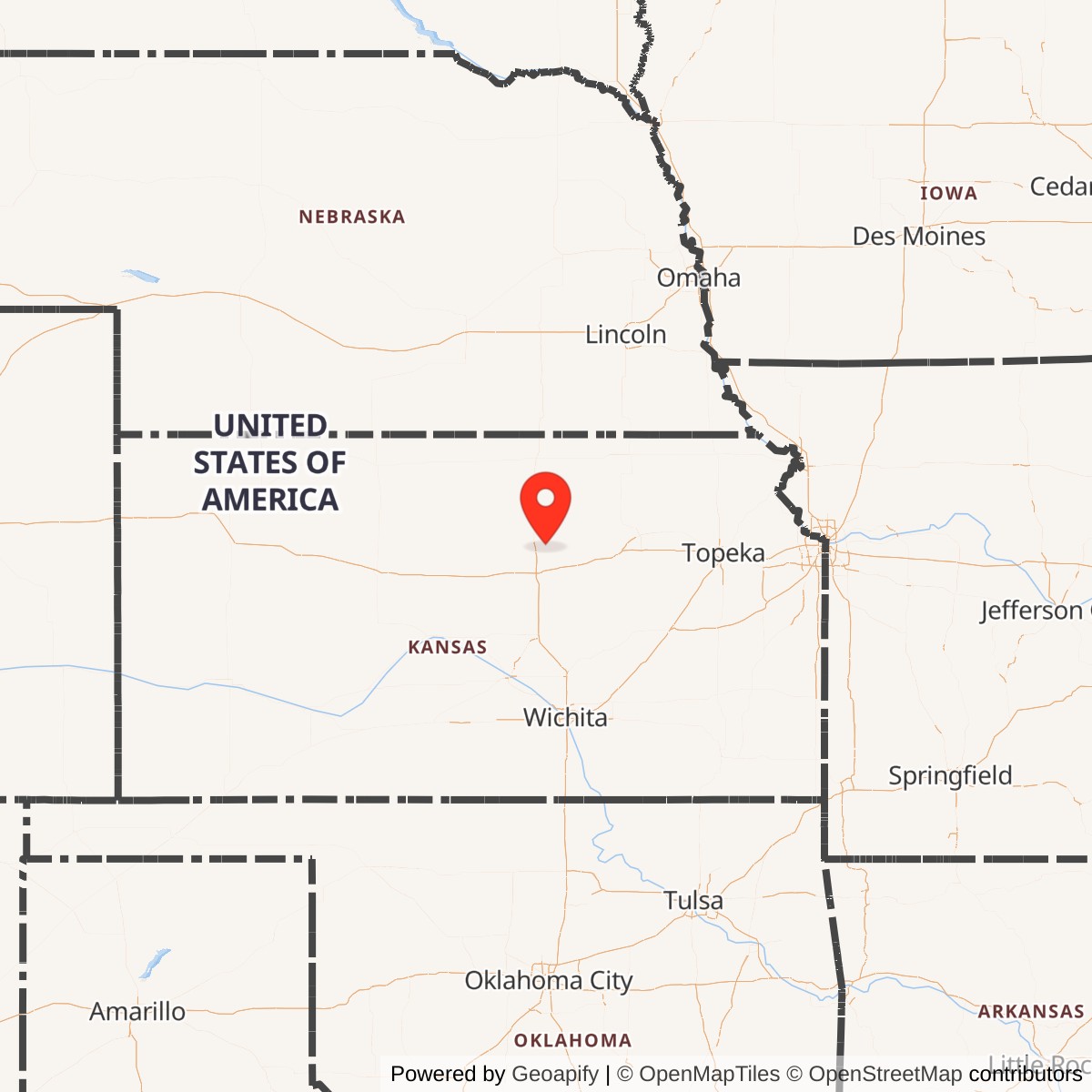
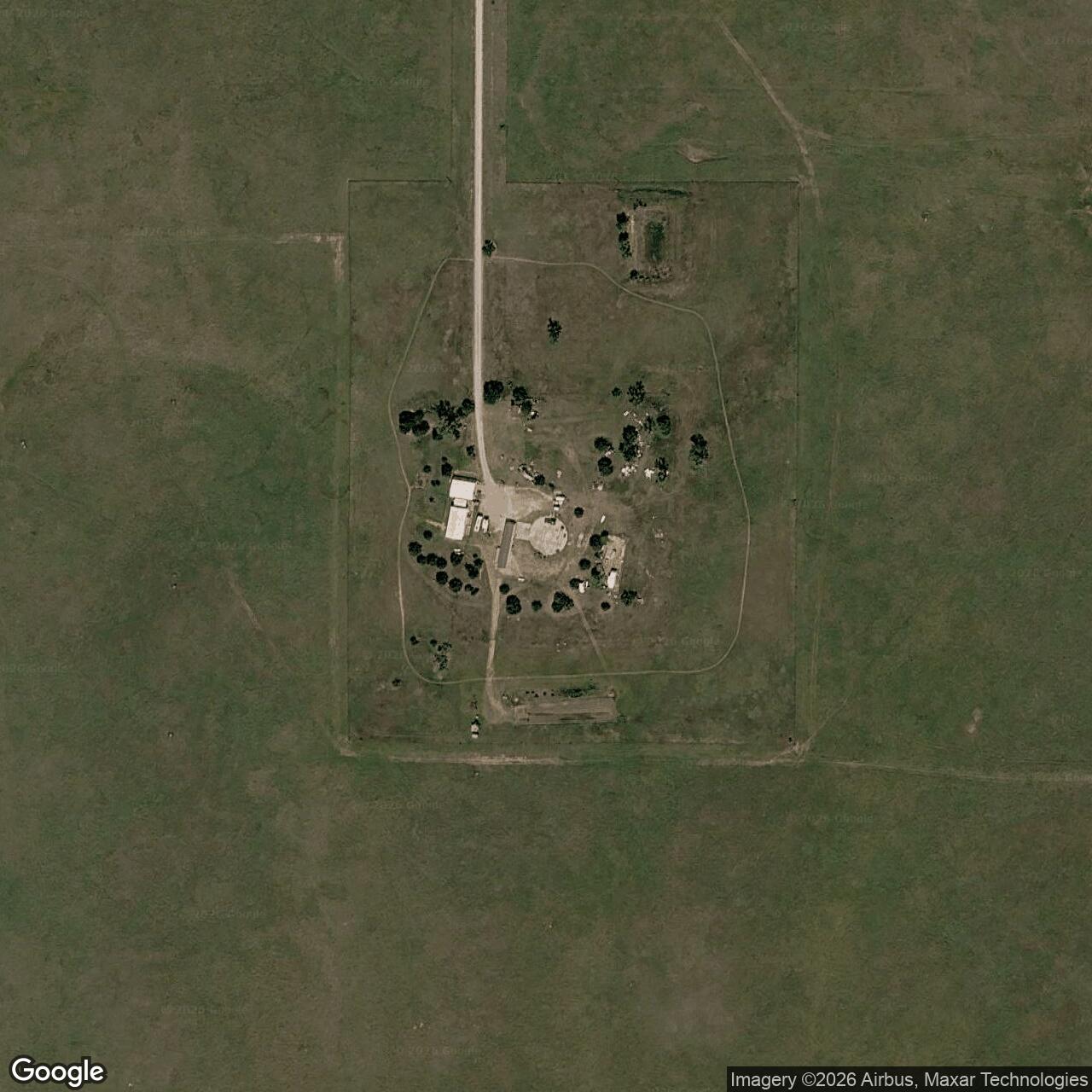
A quiet piece of Ottawa County farm country once held one of the most dangerous machines on earth. Atlas F Site 550-1, the Bennington missile site, was not a base with runways, hangars, or parade-ground visibility. It was a hardened underground launch complex built to hide a fully armed intercontinental ballistic missile beneath rural Kansas soil, keep it ready under Strategic Air Command control, and raise it only if the Cold War turned into a nuclear exchange.
Atlas F Site 550-1 was a former SM-65F / HGM-16F Atlas intercontinental ballistic missile launch complex assigned to the 550th Strategic Missile Squadron at Schilling Air Force Base, Salina, Kansas. Its parent wing was the 310th Bombardment Wing, later the 310th Strategic Aerospace Wing. The site was one of twelve Atlas F vertical-silo launch complexes dispersed around Schilling AFB. It was the first numbered launch site in the 550th SMS field and was identified by construction and operational site number 1.
The site is located near Bennington in Ottawa County, Kansas, at approximately. Public Atlas-site references identify the nearest town as Bennington, while some broader squadron lists describe the site as south of Wells.
Site 550-1 is inactive and decommissioned. The 550th Strategic Missile Squadron itself was inactivated on 1965-06-25, during the accelerated phaseout of Atlas E, Atlas F, and Titan I cryogenic missile systems. The assigned missile was General Dynamics manufacturing number 46F, General Dynamics missile serial number 61-2532, Air Force tail number 532. It was accepted on 1962-01-19, delivered on 1962-03-21, was not launched, and was ultimately salvaged as scrap.
Location, Landscape, and Site Description
Site 550-1 sat in the open agricultural country of north-central Kansas. Its location near Bennington placed it far enough from Schilling AFB at Salina to serve the Atlas F dispersal concept: each missile was isolated in its own hardened complex, separated from the others so that a single enemy weapon could not easily destroy the entire squadron. The landscape around the site is rural, with open fields, farm roads, and low terrain rather than the dense military infrastructure that readers might associate with an Air Force base.Unlike later Minuteman launch facilities, which were unmanned silos controlled from a remote Launch Control Center, an Atlas F complex was a self-contained launch site. The launch crew worked inside the individual site's underground control center, and the launch complex included the missile silo, launch-control equipment, power and environmental systems, fuel and oxidizer support equipment, communications equipment, access structures, and surface security features. The Atlas F site had its own launch-control function rather than being one of several unmanned launch facilities assigned to a Minuteman-style remote LCC.
The Atlas F design stored the missile vertically in an underground concrete-and-steel silo. When placed through launch sequence, the overhead doors opened and an elevator raised the missile to the surface. The missile was then prepared for launch above the silo. This arrangement offered better protection while the missile was stored than the earlier Atlas D aboveground "coffin" launcher and the Atlas E horizontal semi-buried launcher, but it still had a major weakness: the Atlas F could not launch directly from inside the silo. During the final launch sequence, the missile had to be elevated into the open and loaded with liquid oxygen.
Strategic and Cold War Context
Site 550-1 existed because the United States needed a survivable intercontinental missile force during the most dangerous years of the early Cold War. The Atlas program was the nation's first operational ICBM family. Atlas D gave the United States an initial operational capability, Atlas E improved dispersal and hardening, and Atlas F represented the final operational Atlas configuration: a vertical underground silo launcher intended to make the missile harder to destroy before launch.The 550th Strategic Missile Squadron at Schilling AFB was part of that transition. Its twelve Kansas Atlas F sites were among the first operational Atlas F silos. The field reflected Strategic Air Command's movement away from concentrated bomber-base vulnerability and toward dispersed missile alert. Each site's isolation mattered. The purpose was not merely to hide missiles in the countryside, but to force an enemy to target many separate hardened points instead of one visible air base.
The Atlas F was still a first-generation cryogenic missile system. It used RP-1 fuel and liquid oxygen oxidizer. RP-1 could be stored aboard the missile during alert, but liquid oxygen was cryogenic and had to be loaded as part of launch preparation. During periods of heightened readiness, an Atlas F site could be kept in an operational launch-ready alert posture, but that did not mean the missile was continuously raised out of the silo or continuously loaded with liquid oxygen. In practical terms, launch-ready alert meant that the missile, crew, communications, power, guidance, safety systems, and propellant-support systems were maintained so the site could proceed through the launch checklist rapidly if ordered. The missile normally remained lowered in the silo; liquid oxygen loading and missile raising occurred only during launch preparation, training, testing, or special procedures.
Construction and Activation
Construction of Site 550-1 began in 1960. This places Site 550-1 in the intense national-priority construction period when Atlas F complexes were being built across Kansas, Nebraska, Oklahoma, Texas, New Mexico, New York, Vermont, and other Atlas fields.The assigned missile, 46F / serial 61-2532 / Air Force tail number 532, was accepted on 1962-01-19 and delivered on 1962-03-21. The timing shows how Site 550-1 moved from construction into operational preparation during the first half of 1962. By September 1962, the 550th Strategic Missile Squadron was declared operational. Site 550-1 should be understood within that squadron-wide operational status, even though the available site page records the individual site turnover only as 1962 rather than by exact day.
The construction of an Atlas F site was a major engineering project. The launch silo had to support a large missile, elevator, blast-door system, environmental-control equipment, propellant systems, and a hardened underground control area. Even after acceptance, the site required missile delivery, checkout, communications integration, crew training, maintenance validation, and readiness evaluation before it became a dependable component of the alert force.
Missile System and Technical Role
Site 550-1 housed an SM-65F / HGM-16F Atlas missile. Atlas F was the last and most advanced operational Atlas ICBM variant. It carried a General Electric Mark IV reentry vehicle with a W-38 thermonuclear warhead, with public sources commonly listing the warhead yield at approximately 3.8 megatons. Its range is generally described as about 6,000 miles, giving the missile an intercontinental role.Atlas F was a "stage-and-a-half" liquid-fueled missile. Its booster engines and sustainer engine ignited together at launch; the booster section was jettisoned after initial flight, while the sustainer continued burning. At Site 550-1, the missile was stored vertically underground on an elevator. The on-site crew and support systems existed to keep the missile, guidance system, communications, launch-control equipment, electrical power, and propellant systems ready for rapid execution of a valid launch order.
The missile assigned to Site 550-1, 46F, did not have a later test-launch career, rather it was salvaged as scrap. That detail matters because many retired Atlas missiles were later reused as space-launch or test vehicles. Site 550-1's missile instead appears to have followed the disposal path of an operational missile removed from service during the 1965 Atlas phaseout.
Operational History
The 550th Strategic Missile Squadron was based at Schilling AFB and operated twelve Atlas F sites arranged in a ring around the Salina area. Site 550-1 was part of that dispersed network. The site's day-to-day operational history would have centered on the launch crew, maintenance teams, security personnel, communications checks, power and environmental systems, missile readiness checks, and periodic inspections required to keep a liquid-fueled ICBM on alert.For Atlas F, the launch complex itself was a place of continuous human responsibility. This differed from later solid-fueled Minuteman launch facilities, where the silos were normally unmanned and controlled remotely from Launch Control Centers. At Site 550-1, the underground control center and the silo belonged to the same launch complex. Personnel had to manage not only communications and command authentication, but also the practical demands of a cryogenic missile: liquid oxygen support equipment, pressurization systems, RP-1 fuel status, environmental controls, safety procedures, and the mechanical systems needed to raise the missile.
The Cuban Missile Crisis occurred only months after the 550th became operational. Squadron histories and Atlas summaries note that the operational 550th SMS sites were placed at a high level of alert during the crisis. For the 550th field, this meant training activity was subordinated to alert readiness, crews and sites were positioned to respond quickly, and missiles not already limited by maintenance or modification status were prepared for alert as resources and safety rules permitted. For Site 550-1, this was the most intense strategic moment of its short active life, the newly operational Kansas Atlas F field was part of the force SAC could rely on during the confrontation with the Soviet Union.
Deactivation and Disposal
The 550th Strategic Missile Squadron was inactivated on 1965-06-25.The Atlas E, Atlas F, and Titan I phaseout was accelerated in late 1964 and early 1965 as solid-fueled Minuteman and storable-propellant Titan II systems replaced the first generation of cryogenic ICBMs. Phaseout planning divided work into several practical stages. SAC retained responsibility for missile assets and site security during initial deactivation. Reentry vehicles, missiles, classified components, propellants, and excess equipment had to be removed or prepared for shipment. Sites then had to be placed in shutdown configuration, with unnecessary power and equipment turned off and remaining systems protected. Finally, the real estate could be reported excess for General Services Administration disposal.
For Site 550-1, the assigned missile 46F was not reused for a later launch. It was salvaged as scrap.
Current Status and Site Use
Site 550-1 is no longer an active military installation. It is a former Atlas F launch complex on private rural property near Bennington, Ottawa County, Kansas. Public access should be treated as prohibited unless an owner specifically grants permission. Former missile sites can contain confined spaces, structural hazards, old utility systems, environmental monitoring wells, and contaminated groundwater concerns, so the site should not be approached casually or entered without authorization.Environmental records are a major part of the site's current history. EPA's Superfund site search lists SCHILLING (EX) AIR FORCE ATLAS FAC S-1 at Bennington, Ottawa County, Kansas, with EPA ID KSN000703290, and identifies it as Not NPL. KDHE's Identified Sites List includes SCHILLING ATLAS MISSILE S-01 as C507203054. A U.S. Army Corps of Engineers public notice for the former Schilling S-1 Missile Site stated that USACE evaluated alternatives for groundwater contamination and proposed Long Term Monitoring with Alternate Water Supply as the preferred alternative during the 2016 Proposed Plan public-review process.
Chronology
- 1960 Construction began at Atlas F Site 550-1; the exact month and day were not found in the available site-level sources.
- 1961-04 The 550th Strategic Missile Squadron was organized at Schilling AFB as an Atlas F unit.
- 1962-01-19 The Site 550-1 missile, General Dynamics manufacturing number 46F / serial 61-2532 / Air Force tail number 532, was accepted.
- 1962-03-21 Missile 46F was delivered for assignment to the 550th Strategic Missile Squadron, Site 1.
- 1962 Site 550-1 was turned over to the Air Force; the exact date was not found in the available site-level sources.
- 1962-09-09 SAC declared the 550th Strategic Missile Squadron operational.
- 1962-10 During the Cuban Missile Crisis, operational 550th SMS Atlas F sites were held at a high level of alert.
- 1963 SAC operational-readiness activity evaluated early Atlas F readiness in the 550th SMS field.
- 1965-03-25 Atlas F Site 550-1 was decommissioned.
- 1965-06-25 The 550th Strategic Missile Squadron was inactivated.
- 2016-04-11 USACE made the Proposed Plan available for public review for the former Schilling Atlas Missile Site S-1 groundwater-contamination response.
- 2016-05-05 USACE scheduled a public availability session and formal public meeting for the former Schilling S-1 Proposed Plan.
- 2016-05-13 The public-comment period for the former Schilling S-1 Proposed Plan closed.
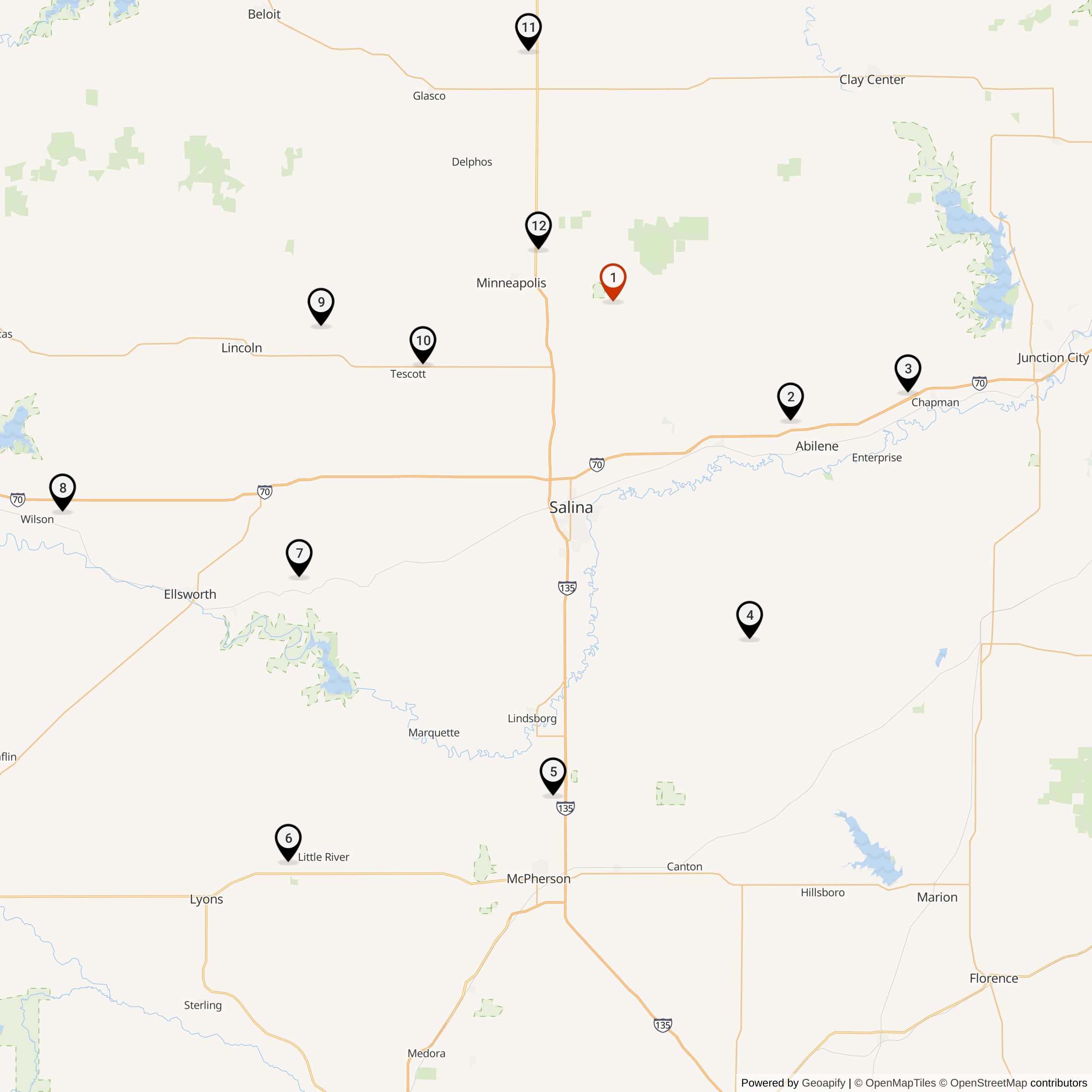
Read about the Atlas at Schilling AFB
All Atlas Missile Silo Locations