
Atlas F Site 550-5 Missile Silo, McPherson Kansas
Longitude: -97.641022
Site Type: Atlas F vertical silo launch facility
Missile Type: SM-65F Atlas
Missile Assigned to this Silo: GD mfg no. 23F; GD serial no. 60-5546; AF tail no. 546; accepted 1961-11-22; delivered 1962-01-10; assigned to 550th SMS Site 5; later launched successfully 1978-06-26 from Vandenberg SLC-3W with Agena D / SEASAT-A (some records use 1978-06-27 UTC).
Number of Launchers/Missiles: 1
Parent Base: Schilling AFB
Missile Wing: 310th Strategic Aerospace Wing
Missile Squadron: 550th Strategic Missile Squadron
Corps of Engineers Site ID: 4
Current Site Use: Former Atlas F silo complex north of McPherson; private rural former missile property with FUDS/EPA/KDHE environmental record.
Site Ownership: Private ownership; exact current owner not verified; former DOD site listed in FUDS/EPA/KDHE records.
Accessible: No public access confirmed; private former missile/FUDS site. Do not enter without permission.
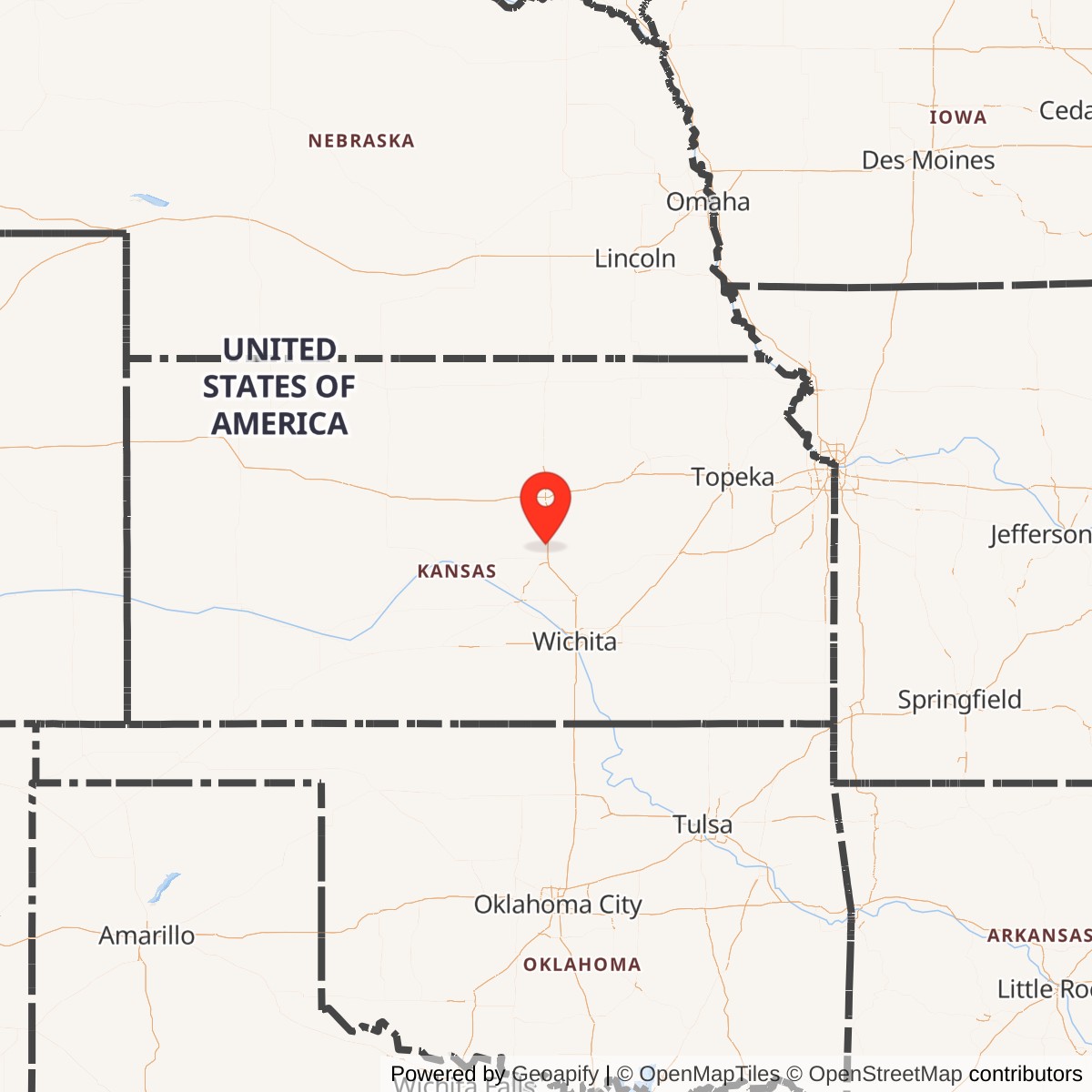
On the open ground north of McPherson, Kansas, a Cold War launch complex still marks a moment when farm country became part of the nation's nuclear alert system. Atlas F Site 550-5 was not a base in the ordinary sense. It was a self-contained underground missile complex built to hold one SM-65F Atlas intercontinental ballistic missile, one of twelve dispersed Atlas F sites tied to Schilling Air Force Base near Salina. Its active life was short, but its story reaches from the construction rush of the early 1960s to the Cuban Missile Crisis, the rapid retirement of first-generation liquid-fueled ICBMs, and the later rebirth of its assigned missile as a space-launch booster.
Atlas F Site 550-5 was an SM-65F Atlas launch complex associated with Schilling Air Force Base, the 310th Strategic Aerospace Wing, and the 550th Strategic Missile Squadron. It was not a Minuteman-style Launch Facility controlled by a separate remote Launch Control Center; an Atlas F complex had its own underground launch, control, equipment, and support spaces, so the parent LCC field is not applicable. The site was located near McPherson in McPherson County, Kansas.
The site was one of the twelve Atlas F launch complexes of the 550th Strategic Missile Squadron. The 550th SMS was discontinued on 1965-06-25. The site is no longer active, is decommissioned, and is best treated today as private property with a documented FUDS/EPA/KDHE environmental record.
Location, Landscape, and Site Description
Site 550-5 lies in rural McPherson County, Kansas, in the agricultural landscape between McPherson and Lindsborg. The EPA record describes the site as approximately seven miles north of McPherson.The physical setting is important to the site's mission. The Atlas F force was dispersed across rural sites so that no single attack on Schilling AFB could eliminate the missile squadron. The surrounding farmland and road grid allowed the Air Force to separate each missile complex by miles, place security and maintenance activity away from dense population centers, and still keep the sites close enough to Schilling AFB for squadron support, command, maintenance, and logistics.
The Atlas F design made Site 550-5 a substantial underground installation. The principal elements of a standard Atlas F complex included a vertical launch silo for the missile, an elevator and launch mechanism, heavy overhead silo doors, underground control and equipment areas, access tunnels, crew and support spaces, power and communications systems, propellant handling infrastructure, a surface access road, security fencing, and surface support structures. The missile was stored vertically in the silo and, if ordered through the launch sequence, would have been lifted to the surface for launch. This made the Atlas F more protected than the earlier Atlas D and Atlas E launch arrangements, but still operationally demanding because the missile had to be elevated and liquid oxygen had to be handled during launch preparation.
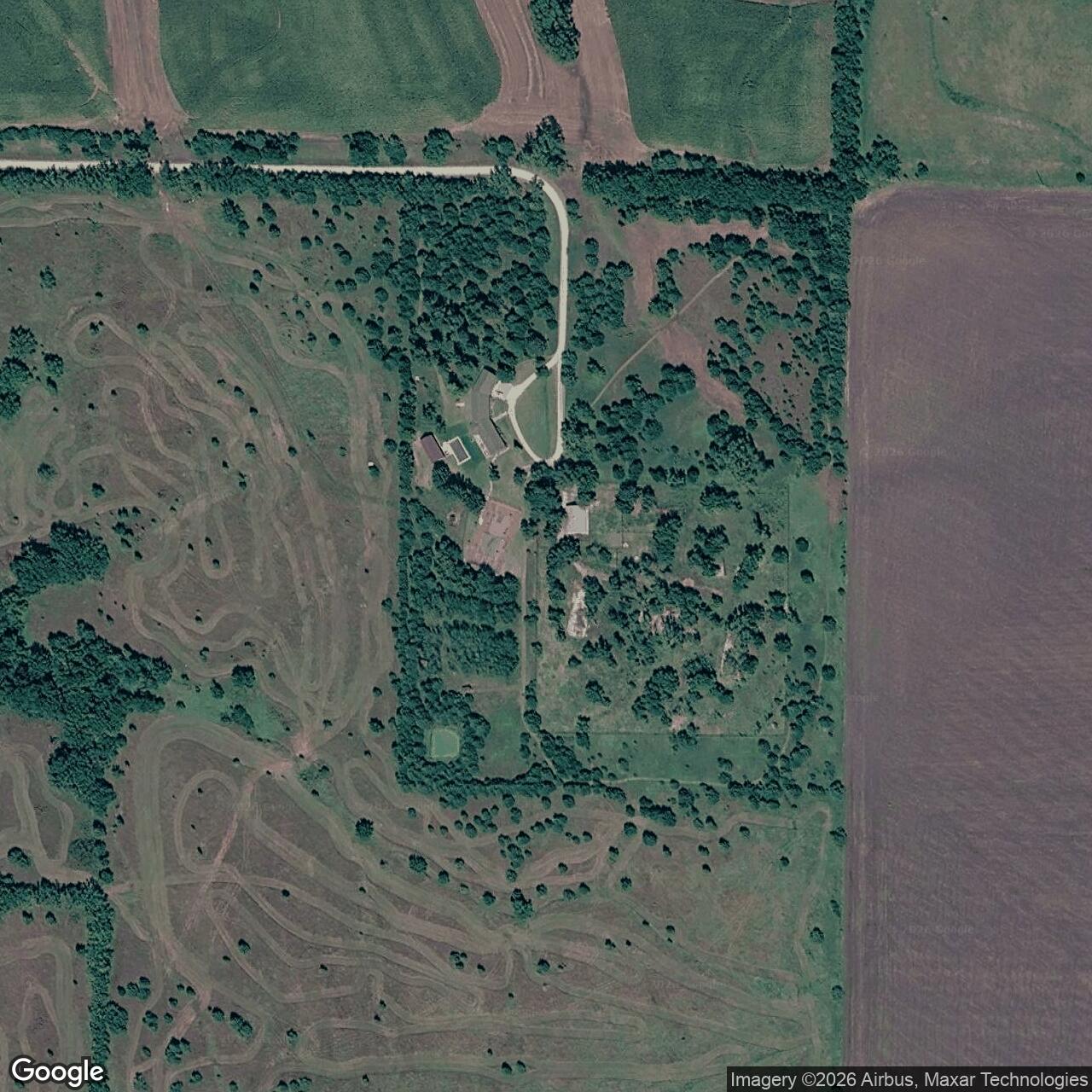
Satellite images show the surviving road pattern and the broad surface outline of a former Atlas F complex in a rural landscape. They do not establish public access; the site should be treated as private property and as a former military facility with potential physical and environmental hazards.
Strategic and Cold War Context
Site 550-5 existed because the United States was trying to build a survivable land-based nuclear deterrent during the years when the first operational American ICBMs were entering service. Atlas was the first operational U.S. intercontinental ballistic missile, and Atlas F was the most dispersed and hardened version of the Atlas family. Instead of clustering missiles at one launch area, the 550th Strategic Missile Squadron placed twelve individual Atlas F launch complexes around Schilling AFB. Site 550-5 was one point in that ring.The strategic problem was survivability. A bomber base could be attacked; a missile field spread across rural Kansas was harder to destroy in one blow. Each Atlas F site was designed to keep a single missile in a protected vertical silo with its own support and launch systems. The arrangement gave Strategic Air Command a geographically dispersed alert force and made the first generation of U.S. ICBMs more credible as a deterrent.
Atlas F also shows the limits of first-generation ICBM technology. The missile used RP-1 kerosene fuel and liquid oxygen oxidizer. RP-1 could be kept aboard the missile during alert, but liquid oxygen was cryogenic and could not be stored in the missile indefinitely. When Atlas F sites were placed in an operational launch-ready alert posture, that did not mean the missile was continuously raised aboveground or continuously loaded with liquid oxygen. It meant the missile, guidance set, power systems, communications links, launch crew procedures, propellant-support systems, security posture, and site equipment were maintained so that the crew could proceed through the required launch-preparation sequence if ordered. The missile remained a rapid-reaction weapon by early-1960s standards, but it was not a later solid-fueled Minuteman-style weapon that could launch directly from the silo within minutes.
Construction and Activation
Construction began in 1960, with turnover to the Air Force in 1962.Schilling originally was to receive nine Atlas F silos, but the number increased to twelve sites located at or near Bennington, Abilene, Chapman, Carlton, McPherson, Mitchell, Kanopolis, Wilson, Beverly, Tescott, Glasco, and Minneapolis. A joint venture of Utah-Manhattan-Sundt received a nine-silo contract with a bid of $17.2 million and a separate $6.2 million contract for three additional lift-launcher silos. Major design changes, demanding government standards, contractor difficulties, and high water tables at some excavation sites contributed to cost overruns and construction problems.
The construction effort was dangerous. Safety was a continuing issue across the Schilling Atlas project, five fatalities and numerous injuries marred the construction effort. That statement is project-wide rather than tied specifically to Site 550-5, but it is important context for how the missile field was built. These were not small rural utility projects. Each Atlas F launcher required deep excavation, massive reinforced-concrete and steel construction, complex mechanical systems, underground equipment spaces, propellant systems, and exacting Air Force acceptance standards.
The 550th Strategic Missile Squadron was activated on 1960-07-22 and organized at Schilling AFB on 1961-04-01. The first operational Atlas F sites at Schilling and Lincoln were accepted by Strategic Air Command in June 1962, and the 550th SMS was declared operational in September 1962. Site 550-5 was therefore part of the operational Atlas F field during the tense early 1960s, including the Cuban Missile Crisis period.
Missile System and Technical Role
Site 550-5 was designed for the SM-65F Atlas, the silo-based Atlas ICBM. Atlas F was stored vertically underground on an elevator within a hardened launch complex. During the launch sequence, the silo doors would open, the missile would be raised to the surface, liquid oxygen would be loaded, and the missile would launch from above the silo. The system represented a major hardening and dispersal improvement over earlier Atlas basing modes, but it still required complex liquid-fuel operations.Public sources identify the Atlas E/F reentry vehicle and warhead family as the Mark 4 reentry vehicle with the W-38 thermonuclear warhead. The Smithsonian National Air and Space Museum's Mark 4 collection record describes the Mark 4 as used on U.S. Air Force Titan I and Atlas E/F intercontinental ballistic missiles deployed in the early 1960s and states that it carried a W-38 nuclear warhead with a yield of about 3.75 megatons.
The assigned missile for Site 550-5 was Atlas 23F. It was General Dynamics manufacturing number 23F, General Dynamics missile serial number 60-5546, Air Force tail number 546, accepted on 1961-11-22, delivered on 1962-01-10, assigned to the 550th Strategic Missile Squadron at Site 5, and assigned to an operational ICBM mission at Schilling AFB.
Atlas 23F had a notable second career. After its ICBM service, it was later used as a space-launch booster. Atlas 23F launched successfully from Vandenberg AFB Space Launch Complex 3 West with an Agena D upper stage and the SEASAT-A remote-sensing satellite. The launch date was 1978-06-26. The later launch is historically significant because Seasat was a pioneering ocean-observation mission and the Atlas 23F/Agena D flight was the final Atlas-Agena mission.
Operational History
The 550th Strategic Missile Squadron operated Site 550-5 as part of the Schilling Atlas F missile field. The squadron was assigned to the 310th Bombardment Wing, later the 310th Strategic Aerospace Wing, at Schilling AFB. Its twelve Atlas F complexes formed a 1-by-12 dispersed configuration: one missile per hardened launch complex, spread across central Kansas. Site 550-5 represented the McPherson-area component of that field.Atlas F operations differed from later Minuteman operations. The site itself was not an unmanned Minuteman launch facility monitored from a remote missile alert facility. Atlas F complexes included their own underground crew/control and support areas, and the sites were manned around the clock during the squadron's active period. Crews, maintenance personnel, and security forces had to keep the missile, launch structure, communications, power, fuel systems, and environmental systems ready while also controlling the risks inherent in liquid-fueled missile operations.
The most important operational episode for the 550th SMS was the Cuban Missile Crisis. SAC chronology and squadron histories record that, during the latter part of October 1962, the Series F Atlas squadrons at Schilling, Lincoln, Altus, and Dyess were required for the first time to place all twelve missiles on alert. For Site 550-5, that meant the McPherson-area launch complex was part of the squadron-wide push to reach the highest possible Atlas F readiness. The event should not be imagined as a missile sitting aboveground for days with liquid oxygen boiling off. Rather, SAC's order meant that missiles not already on alert or not held back for required modifications were brought into a launch-ready alert posture, training activity was curtailed, and the sites were prepared to execute their launch sequence if national command authority ordered it.
The 550th SMS continued alert operations after the crisis, but the Atlas F system's active life was brief. By 1963 and 1964, the solid-fueled Minuteman force and the more advanced Titan II had changed the balance of U.S. ICBM operations. Atlas F had demonstrated that hardened, dispersed missile fields could be built and operated, but its liquid oxygen requirements and above-silo launch exposure made it a transitional system. Site 550-5 therefore spent only a few years in active missile service before the Atlas phaseout reached Schilling.
Deactivation and Disposal
Site 550-5 left active missile service during the rapid phaseout of first-generation Atlas ICBMs. Squadron-level records state that the first 550th SMS ICBM was removed from alert on 1965-02-01, the last 550th SMS ICBM was removed from alert on 1965-03-05, and the last 550th SMS ICBM was shipped on 1965-03-11. The 550th SMS was discontinued on 1965-06-25, along with the end of remaining Atlas operational missile-squadron service.The former launch complex was part of a larger post-military disposal process. After Schilling AFB closed, responsibility for the sites passed to F.E. Warren AFB in July 1967 and the sites were disposed of in March 1971.
The site later entered environmental records. The U.S. Army Corps of Engineers 2015 Kansas FUDS inventory lists SCHILLING AFB ATLAS S-05 at McPherson, McPherson County, property number B07KS0263, with two HTRW project entries. The EPA Superfund/CERCLA record identifies the site as SCHILLING (EX) AIR FORCE ATLAS FAC S-5, EPA ID KSN000703108, approximately seven miles north of McPherson, not on the National Priorities List, and NFRAP, meaning the site did not qualify for the NPL based on information available to EPA. KDHE's Bureau of Environmental Remediation ISL search page lists SCHILLING ATLAS MISSILE S-05 under site number C505970097.
Current Status and Site Use
Atlas F Site 550-5 is inactive and decommissioned. It is not an active military installation, not a public museum, and not a publicly accessible historic site. The best current description from the reviewed sources is a former Atlas F launch complex on private rural property north of McPherson, Kansas, with a FUDS/EPA/KDHE environmental record.Satellite imagery r shows the former launch complex footprint, access roads, and surface traces. Like other Atlas F sites, it likely retains at least some combination of filled, sealed, reused, or deteriorated underground and surface features, but the exact status of the silo interior, control spaces, utilities, and property is not known.
Chronology
- 1960 Construction began at Site 550-5.
- 1960-07-22 The 550th Strategic Missile Squadron was redesignated and activated.
- 1961-04-01 The 550th Strategic Missile Squadron was organized at Schilling AFB, Kansas.
- 1961-11-22 Atlas 23F, the missile assigned to Site 550-5, was accepted.
- 1962-01-10 Atlas 23F was delivered.
- 1962 Site 550-5 was turned over to the Air Force.
- 1962-06 The first Series F Atlas ICBM operational sites at the 550th Strategic Missile Squadron, Schilling AFB, and the 551st Strategic Missile Squadron, Lincoln AFB, were accepted by Strategic Air Command.
- 1962-09 Headquarters SAC declared the 550th Strategic Missile Squadron operational.
- 1962-10 During the Cuban Missile Crisis, the 550th Strategic Missile Squadron was required to place all twelve Atlas F missiles on alert for the first time.
- 1965-02-01 The first 550th SMS ICBM was removed from alert.
- 1965-03-05 The last 550th SMS ICBM was removed from alert.
- 1965-03-11 The last 550th SMS ICBM was shipped.
- 1965-06-25 The 550th Strategic Missile Squadron was discontinued.
- 1967-07 Responsibility for the Schilling Atlas sites passed to F.E. Warren AFB after Schilling AFB closed.
- 1971-03 The Schilling Atlas sites were disposed of.
- 1978-06-26 Atlas 23F, the former Site 550-5 missile, successfully launched SEASAT-A with an Agena D upper stage from Vandenberg AFB Space Launch Complex 3 West; some records express the launch as 1978-06-27 UTC.
- 2015-09-30 The USACE Kansas FUDS inventory listed Schilling AFB Atlas S-05 at McPherson, McPherson County, Kansas, property number B07KS0263, with two HTRW project entries.
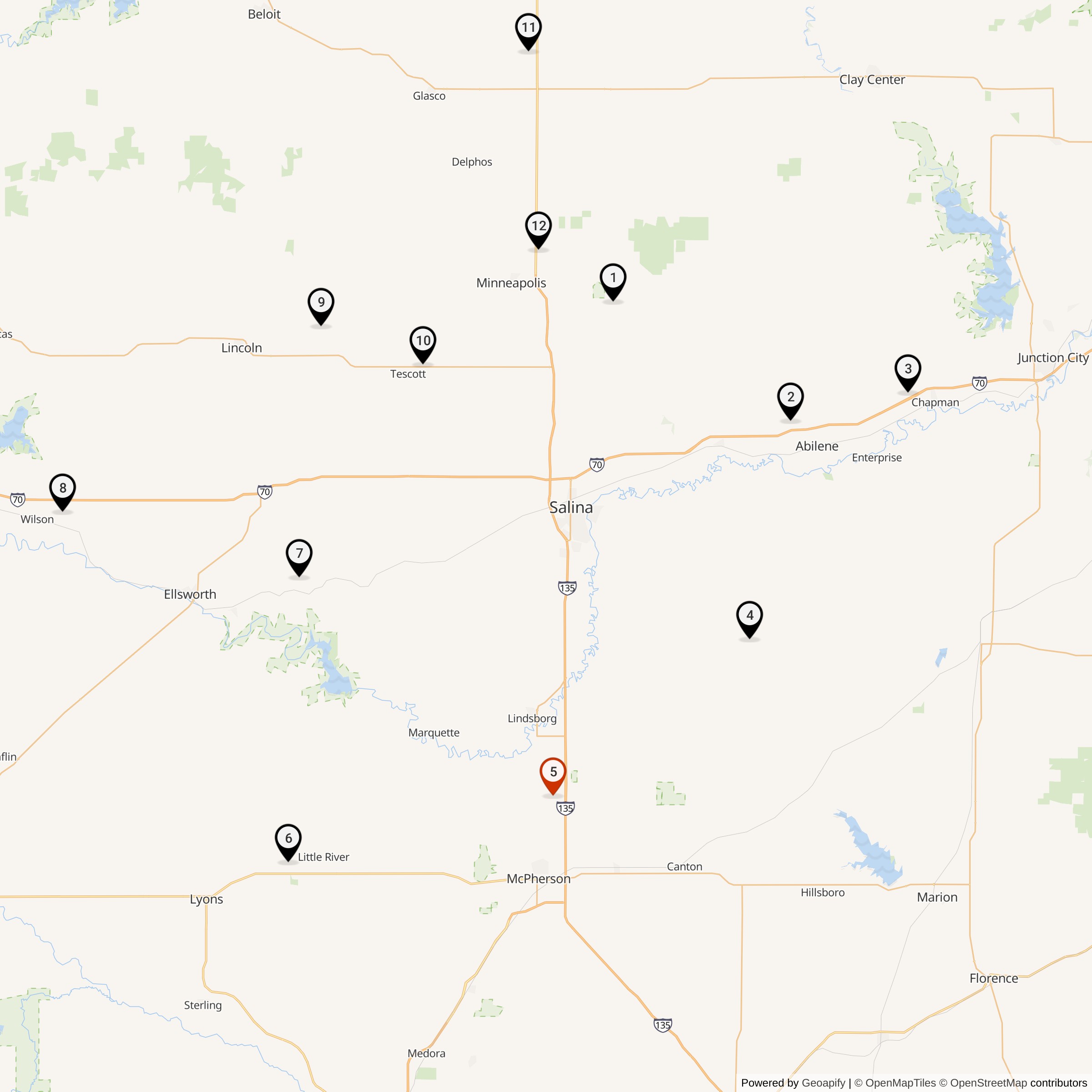
Read about the Atlas at Schilling AFB
All Atlas Missile Silo Locations