Atlas F Site 551-11 Missile Silo, Seward Nebraska
Longitude: -97.186491
Site Type: Atlas F vertical silo launch facility
Missile Type: SM-65F Atlas
Missile Assigned to this Silo: GD mfg 35F; GD serial 60-5558; AF tail 558
Number of Launchers/Missiles: 1
Parent Base: Lincoln AFB
Missile Wing: 98th Strategic Aerospace Wing
Missile Squadron: 551st Strategic Missile Squadron
Current Site Use: Former Atlas F silo complex on Seward County property; road-maintenance / public-safety reuse indicated, with E911 tower and law-enforcement shooting range noted in 2022 county minutes; possible UNL / Antarctic Drilling ice-drilling test, education, museum, and conference/event reuse discussed but not confirmed completed.
Site Ownership: Former USAF; later Seward County property or county-controlled site per 2022 county minutes; original disposal chain not fully verified.
Accessible: No casual public access; county property / restricted former missile site; access only by permission.
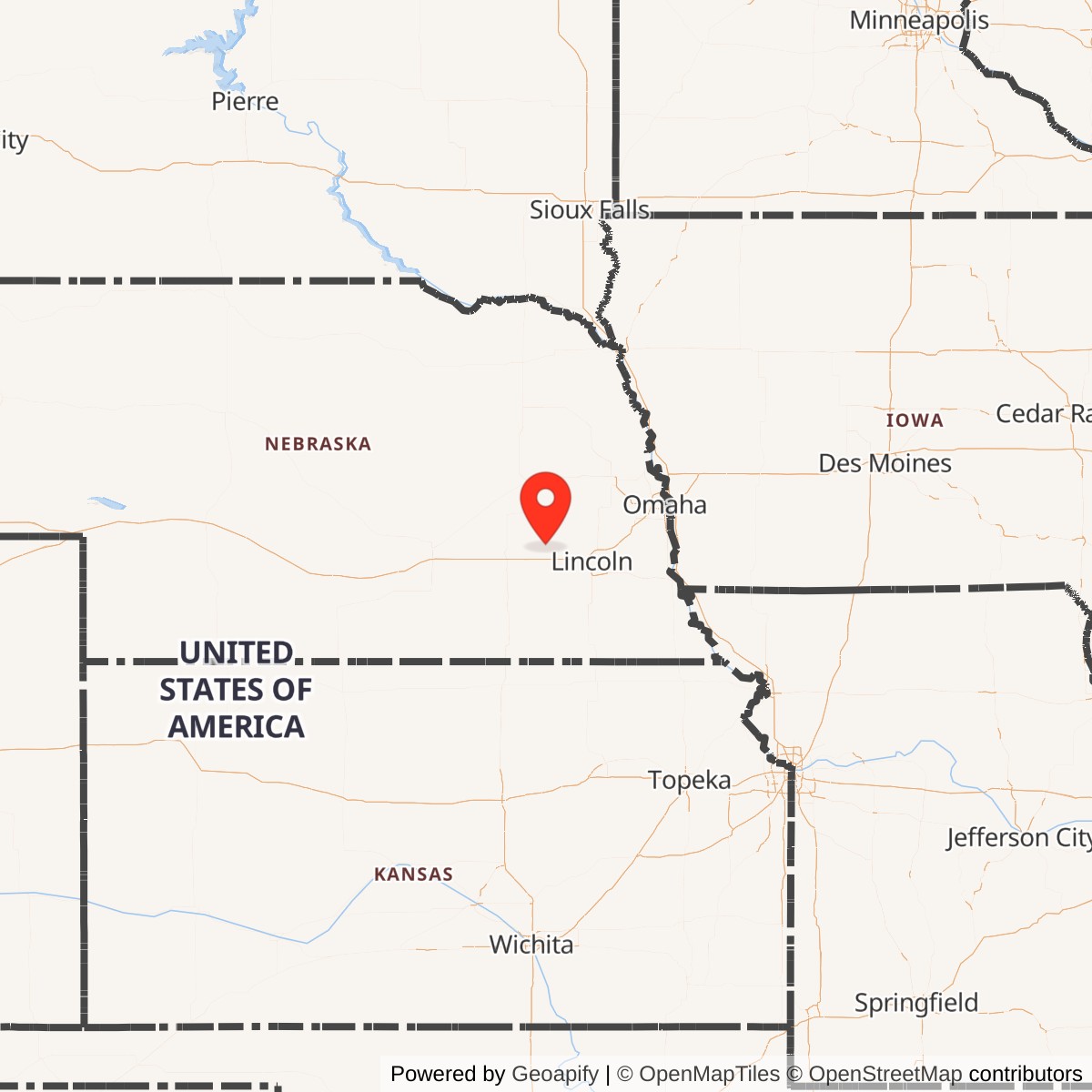
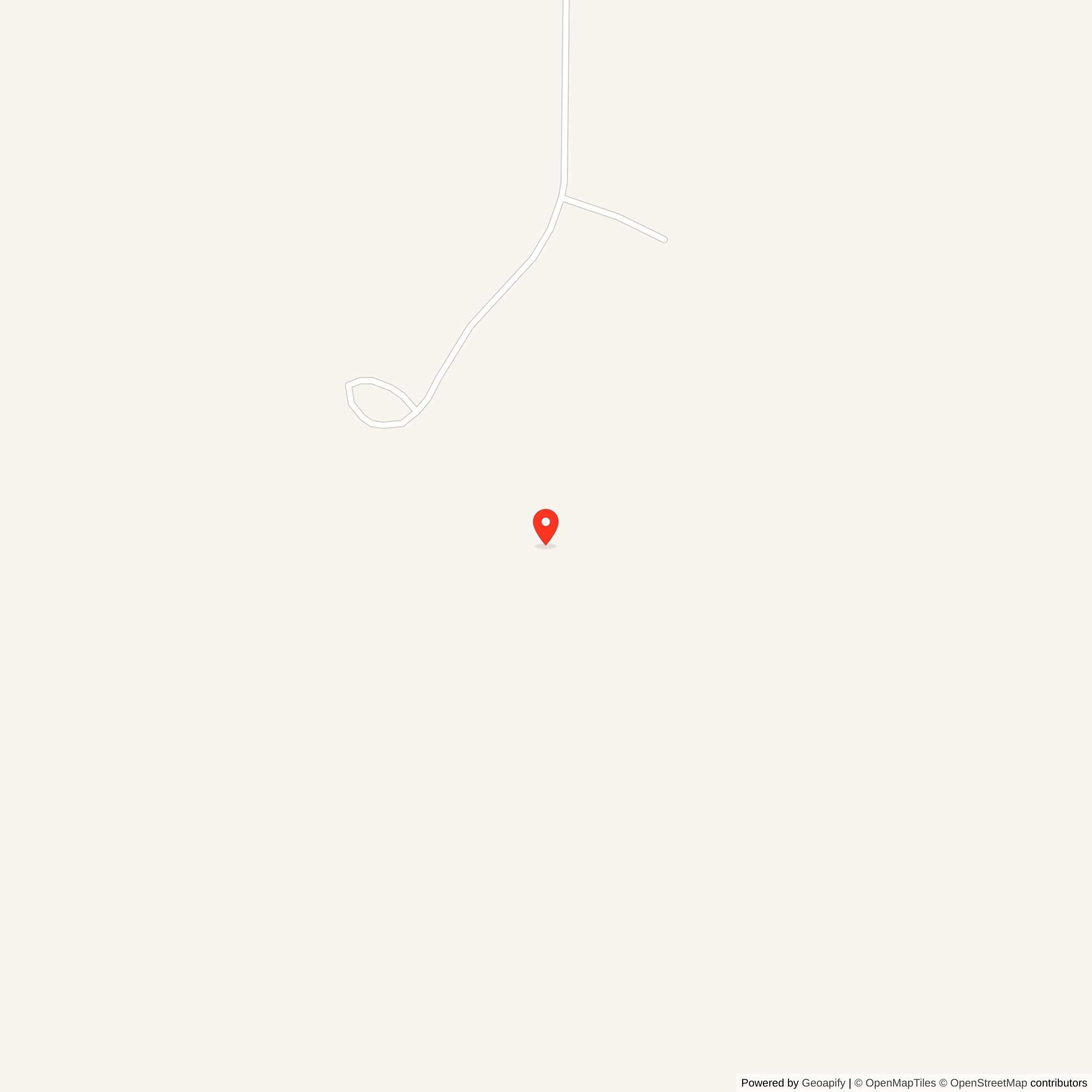
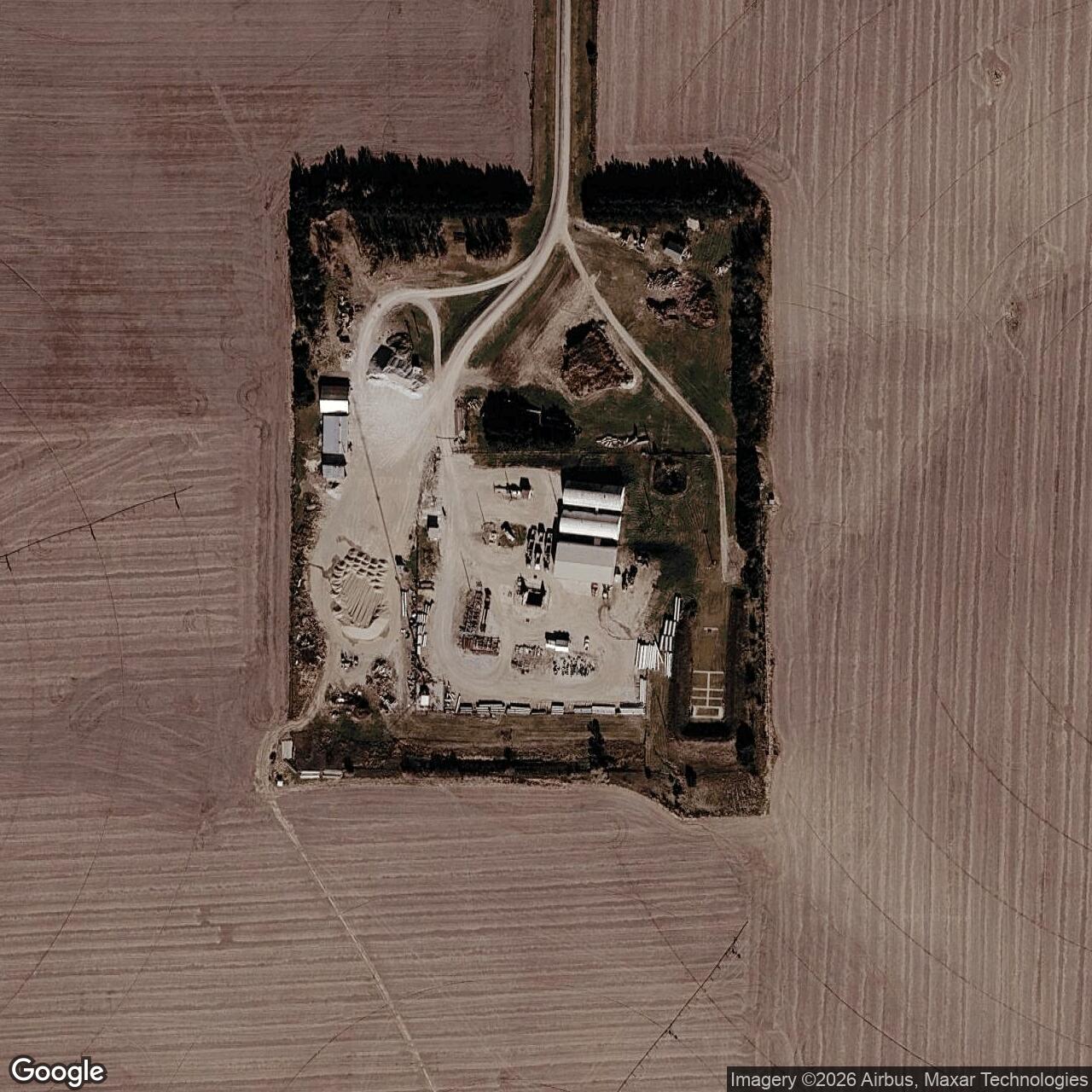
Northwest of Seward, Nebraska, a county maintenance yard occupies the ground where a nuclear missile once waited under concrete, steel, and secrecy. Atlas F Site 551-11 is compelling because its story did not end when the 551st Strategic Missile Squadron stood down: the assigned missile later helped build the GPS age by launching NAVSTAR-5, while the old silo property itself remained visible enough that county records in 2022 discussed a possible University of Nebraska / Antarctic Drilling reuse as an ice-drilling test, education, and museum facility.
Atlas F Site 551-11 was a single-missile SM-65F Atlas launch complex assigned to the 551st Strategic Missile Squadron at Lincoln Air Force Base, Nebraska. The former launch complex is located northwest of Seward in Seward County, Nebraska. The parent organization during the missile period was Strategic Air Command; the site is associated with the 98th Strategic Aerospace Wing and the 551st Strategic Missile Squadron. Atlas F complexes were self-contained crewed launch complexes, rather than Minuteman-style unmanned launch facilities controlled from a separate remote Launch Control Center.
The site is inactive and decommissioned. Squadron records show that the 551st Strategic Missile Squadron's final Atlas F missiles were removed from alert by 1965-04-12, that the last Series F Atlas to leave a SAC operational base was shipped from the 551st SMS on 1965-04-20, and that the 551st SMS was inactivated on 1965-06-25. The former launch complex is not an active military installation. Public records and local-history photography indicate that it is a Seward County-owned or county-controlled property used for road-maintenance and public-safety functions, with no casual public access.
Location, Landscape, and Site Description
Site 551-11 is located in the rural agricultural landscape northwest of Seward, Nebraska.The Lincoln AFB Online Museum's Site 11 page is especially useful for the present-day physical description. Its captions describe a silo-lid parking lot, with red pickups parked directly over the doors, giving a visible sense of the Atlas launcher's size. The same page identifies the main entry portal, air-intake pipe, escape hatch, probable antenna silo near the main entrance, several Quonset-style buildings described as likely original, a water-pump house, an intact entry gate, a snow-drift shield by the entry portal, and a door marked with a danger warning.
The site layout followed the standard Atlas F concept. The missile was stored vertically in a hardened underground silo. The launch complex included the silo, massive sliding silo doors, elevator and support equipment, access portals, crew/control spaces, utilities, fuel and oxidizer handling systems, ventilation, communications, power, security fencing, and support structures. The Atlas F was intended to improve survivability over earlier Atlas launch configurations by putting the missile in a hardened underground silo-lift complex rather than in a relatively exposed aboveground gantry or semi-buried coffin launcher.
Strategic and Cold War Context
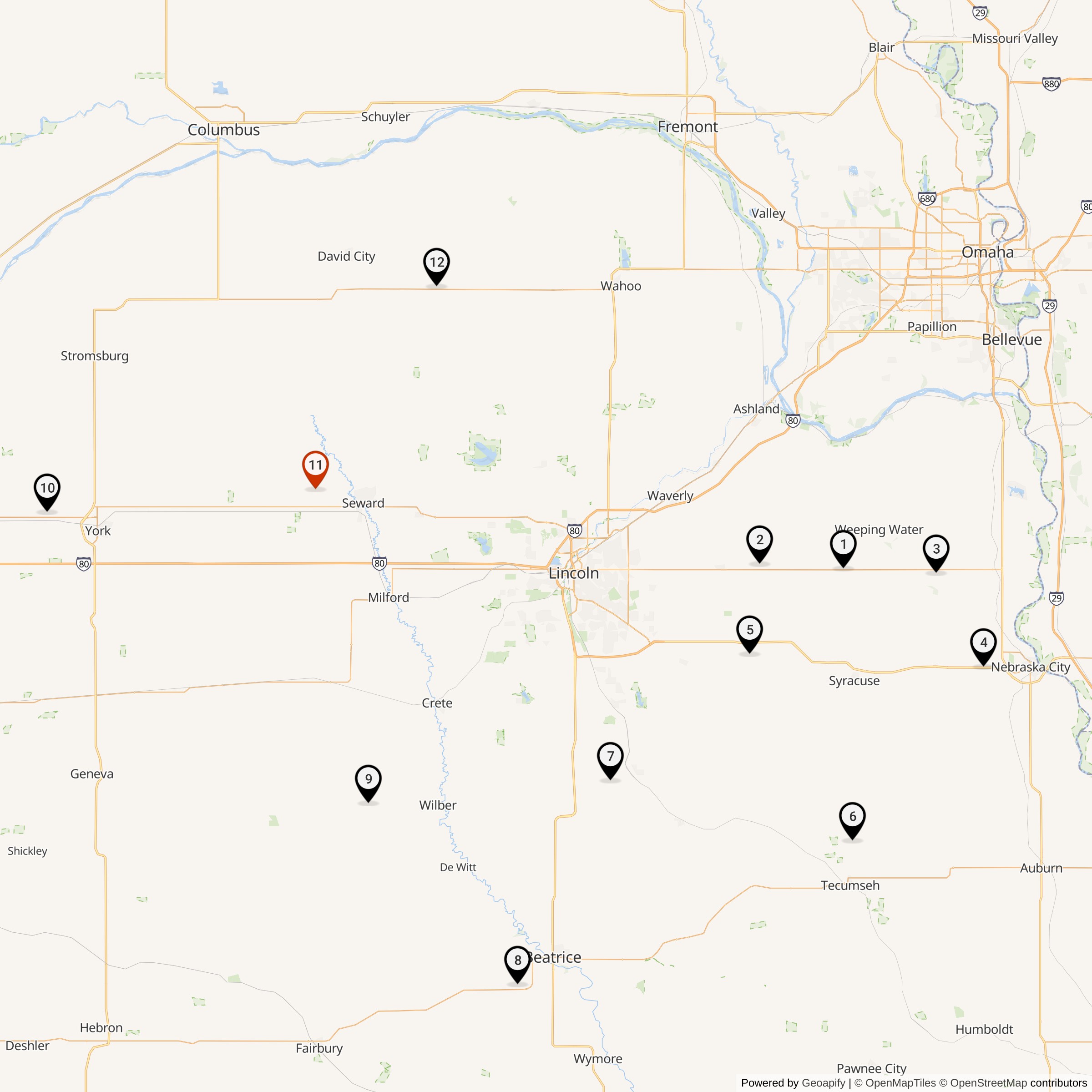
Atlas F Site 551-11 existed because the United States was trying to make its first operational ICBM force survivable enough to matter. The Atlas was the Air Force's first operational intercontinental ballistic missile. Early Atlas D sites used grouped aboveground launchers and radio guidance; Atlas E improved dispersal and survivability with individual coffin launchers and inertial guidance; Atlas F pushed the system into hardened underground silo-lift launchers.The Lincoln missile field was part of that hardened Atlas F deployment. Lincoln AFB's twelve Atlas F sites formed a dispersed ring around the base and communities such as Elmwood, Eagle, Avoca, Nebraska City, Palmyra, Tecumseh, Firth/Cortland, Beatrice, Wilber, York, Seward, and Brainard/David City. The purpose of dispersal was straightforward: a potential attacker would have to target many separate launch complexes spread across rural eastern Nebraska, not a single compact missile base.
The Atlas F remained a transitional system. It used storable RP-1 kerosene fuel but required liquid oxygen before launch. The missile was not continuously raised above the silo, and it was not continuously loaded with liquid oxygen. In an operational launch-ready alert posture, the missile sat protected underground with its crew, power, communications, guidance support, safety systems, security, and launch procedures ready. If a valid launch order or exercise procedure required launch preparation, the crew would open the silo doors, prepare the missile, raise it on its elevator, load liquid oxygen, perform checks, and launch. This was more survivable and faster-reacting than earlier Atlas configurations, but it still required hazardous cryogenic oxidizer handling and exposed the missile during the final countdown.
Construction and Activation
The Lincoln Atlas F program moved quickly. The Lincoln AFB Online Museum's 551st history states that the Air Force designated Lincoln for missile-base development in 1959, that the original construction contract called for nine silos, and that three more sites were later added. It describes construction from 1959 to 1962, with peak work involving about 1,900 workers building the silos around the clock because of the international tension of the period. Construction finally ended in June 1962, and Atlas F missiles were then shipped from their production plants and emplaced in the Lincoln field.The 551st squadron history compiled from Air Force historical records lists the squadron as organized at Lincoln AFB on 1961-04-01, and it gives the Lincoln Atlas F force's turnover to SAC and operational date as 1962-09-15.
The construction story mattered locally. Nebraska History's article on Atlas construction in rural Nebraska describes how rural communities became front-line Cold War places, how Atlas construction promised employment and regional development, and how the scale of the underground silos changed the surrounding communities' relationship to national defense. Site 551-11 was one of those local transformations: a farm-country parcel near Seward became a hardened nuclear launch center, staffed around the clock and connected to Strategic Air Command's deterrent mission.
Missile System and Technical Role
Site 551-11 housed one SM-65F Atlas intercontinental ballistic missile. The Atlas F was built by General Dynamics / Convair and was the final operational Atlas ICBM variant. The Smithsonian National Air and Space Museum identifies the Atlas F as the last version of the first ICBM in the U.S. nuclear arsenal, deployed from 1962 to 1965, using liquid fuel and all-inertial guidance, carrying a thermonuclear warhead, and having a range of more than 7,000 miles. The National Park Service describes the Atlas F as an 82-foot missile in a blast-proof silo-lift configuration, with seventy-two Atlas F missiles deployed from Schilling, Lincoln, Altus, Dyess, Walker, and Plattsburgh.Open public sources commonly associate the Atlas F weapon system with the W-38 thermonuclear warhead and Mark IV reentry vehicle, although public yield summaries differ by source.
The assigned missile for Site 551-11 was General Dynamics manufacturing number 35F, General Dynamics missile serial number 60-5558, and Air Force missile tail number 558.
Site 551-11's assigned missile later had a second career. Missile 35F / AF tail 558 was launched from Vandenberg AFB's SLC-3E on 1980-02-09 carrying NAVSTAR 5 Navigation Satellite / GPS 5, and the launch was successful.
Operational History
The 551st Strategic Missile Squadron operated the Lincoln Atlas F force during its short active life. The squadron was redesignated for the missile mission and organized at Lincoln AFB on 1961-04-01. Lincoln AFB Online Museum records show the unit activated on 1961-04-01, reassigned on 1964-01-01 to the 98th Strategic Aerospace Wing under the 818th Strategic Aerospace Division, reassigned again on 1965-03-25 to the 98th Strategic Aerospace Wing under the 810th Strategic Aerospace Division, and inactivated on 1965-06-25.Operationally, Atlas F launch complexes differed from later Minuteman launch facilities. A Minuteman LF was normally unmanned and remotely monitored from a launch control center. An Atlas F complex such as Site 551-11 was a crewed launch complex. The 551st history describes a five-man crew: missile combat crew commander, deputy missile combat crew commander, ballistic missile analysis technician, missile facility technician, and electric power production technician. These personnel worked shifts at the site and were supported by surface security. The site was therefore both a missile storage facility and a small, round-the-clock operating station.
The Lincoln AFB Online Museum's 551st page states that the twelve sites were manned twenty-four hours a day, seven days a week, during the squadron's active period. It also states that during the Cuban Missile Crisis all operational 551st sites were at a high level of alert and ready to launch should it have become necessary. It meant that trained crews, communications, security, power, missile-support systems, procedures, and launch readiness were intensified. It did not mean the missile was continuously raised above the silo or continuously loaded with liquid oxygen.
The site was decommissioned as the first-generation Atlas force became obsolete. The 551st history notes that the last Atlas F missiles at Lincoln were removed from alert on 1965-04-12, completing operational phaseout of the Atlas F weapon system, and that the last Series F Atlas to leave a SAC operational base was shipped from the 551st SMS on 1965-04-20 for storage and possible future launch-vehicle use. Site 551-11's assigned missile was one of those that ultimately had a post-SAC launch career, flying successfully in 1980 with NAVSTAR 5 / GPS 5.
Deactivation and Disposal
Site 551-11 left operational missile service during the rapid retirement of the first-generation Atlas force. The 551st Strategic Missile Squadron chronology shows the first ICBM removed from alert on 1965-03-10, the last ICBM removed from alert on 1965-04-12, the last ICBM shipped on 1965-04-20, and the squadron inactivated on 1965-06-25. These events should be distinguished from each other: the site decommissioning date, missile off-alert dates, missile shipment, and squadron inactivation were related but not identical administrative and physical steps.The missile assigned to Site 551-11 was not destroyed at the site. It was removed from SAC operational service, stored, and later converted or used as a launch vehicle in the post-Atlas ICBM period. Its successful 1980 launch with NAVSTAR 5 illustrates the broader fate of many Atlas E and F missiles after first-generation ICBM retirement: once their nuclear-alert service ended, their airframes and engines retained value for research, development, and space-launch missions.
Local public records show that by 2022 the site was in Seward County hands. The Lincoln AFB Online Museum photographs show remaining surface and access features rather than total demolition. The EPA Superfund site-search table lists LINCOLN (EX) ATLAS "F" FAC S-11, Seward, Seward County, EPA ID NEN000703416, as Not NPL, with status unavailable. No detailed USACE site fact sheet comparable to the Tecumseh, Beatrice, Wilber, or York pages was found.
Current Status and Site Use
Site 551-11 is inactive and decommissioned. It is not an active Air Force installation and is not a public missile museum. Publicly available local records indicate Seward County ownership or control. The site has been associated with a road-department / maintenance-yard use, an E911 communications radio tower, and a local law-enforcement shooting range. The 2022 county-minutes discussion identified interest by University of Nebraska and Antarctic Drilling representatives in acquiring and repurposing the facility for ice-drilling testing, education, museum, and possible conference/event use, but this history does not assume completion of that reuse without a later confirming source.Visible remains documented by the Lincoln AFB Online Museum include the silo-lid parking area, entry portal, air-intake pipe, escape hatch, probable antenna silo, likely original Quonset structures, pump house, intact entry gate, and warning signage. The site therefore appears to retain a meaningful amount of Atlas F surface character, even though its operational missile equipment and assigned missile are long gone.
Public access should be treated as restricted. The site is a former missile complex with public-agency use and possible environmental and structural hazards. Anyone interested in visiting or documenting the property should seek permission from the current responsible public authority or property owner.
Chronology
- 1959 The Air Force designated Lincoln AFB for missile-base development; the plan eventually became a twelve-site Atlas F field.
- 1961-04-01 The 551st Strategic Missile Squadron was organized at Lincoln AFB for the Atlas missile mission.
- 1961 Assigned missile 35F / AF tail 558 was accepted by General Dynamics.
- 1962-02-07 Missile 35F / AF tail 558 as delivered for the Lincoln AFB Atlas F force.
- 1962-09-15 The 551st Strategic Missile Squadron history lists turnover to SAC and operational status on this date for the Lincoln Atlas F force.
- 1962-10 During the Cuban Missile Crisis, operational 551st SMS sites were placed at a high level of alert, meaning crews, procedures, support systems, communications, security, and launch readiness were intensified; this did not mean the Atlas F missiles were continuously raised or continuously loaded with liquid oxygen.
- 1964-01-01 The 551st SMS was reassigned to the 98th Strategic Aerospace Wing under the 818th Strategic Aerospace Division.
- 1965-03-10 The 551st SMS history lists the first Lincoln Atlas F ICBM removed from alert.
- 1965-03-25 Lincoln AFB Online Museum records list the 551st SMS reassigned to the 98th Strategic Aerospace Wing under the 810th Strategic Aerospace Division.
- 1965-04-12 The last Atlas F ICBMs at the 551st Strategic Missile Squadron were removed from alert, completing the operational phaseout of the Atlas F weapon system.
- 1965-04-20 The last Series F Atlas ICBM to leave a SAC operational base was shipped from the 551st SMS at Lincoln AFB to storage for future launch-vehicle use.
- 1965-06-25 The 551st Strategic Missile Squadron was inactivated.
- 1980-02-09 Missile 35F / AF tail 558, formerly assigned to Site 551-11, launched successfully from Vandenberg AFB SLC-3E carrying NAVSTAR 5 / GPS 5.
- 2022-01 Seward County Board of Commissioners minutes recorded UNL / Antarctic Drilling interest in acquiring Site 551-11 from Seward County for possible ice-drilling testing, education, museum, and related reuse.
Read about the Atlas at Lincoln AFB
All Atlas Missile Silo Locations