
Atlas F Site 551-2 Missile Silo, Eagle Nebraska
Longitude: -96.3614828638376
Site Type: Atlas F vertical silo launch facility
Missile Type: SM-65F Atlas
Missile Assigned to this Silo: GD mfg 47F; GD serial 61-2533; AF tail 533
Number of Launchers/Missiles: 1
Parent Base: Lincoln AFB
Missile Wing: 98th Strategic Aerospace Wing
Missile Squadron: 551st Strategic Missile Squadron
Current Site Use: Former Atlas F launch complex on private rural/agricultural property; surface structures/remains and operational-era equipment views documented in Lincoln AFB Legacy Project photos.
Site Ownership: Former USAF/DOD; private ownership
Accessible: No public access / private property
Atlas F Site 551-2 is the Lincoln missile field site where the Cold War's engineered confidence met the fragility of the Atlas itself: a rural Nebraska silo built to protect a nuclear-armed missile from blast pressure, yet remembered locally for an October 1962 missile body collapse just before the Cuban Missile Crisis. The site's story is not only about deterrence. It is about a thin-skinned, pressure-stabilized first-generation ICBM, a five-man crew at an isolated launch complex, and a farm-country installation that had to be ready for nuclear war while still carrying the technical risks of the earliest silo-based missiles. Atlas F Site 551-2 was one of the twelve SM-65F Atlas intercontinental ballistic missile launch complexes assigned to the 551st Strategic Missile Squadron at Lincoln Air Force Base, Nebraska. The site was near Eagle in Cass County. The site appears in records as Atlas F Site 551-2, 551st Strategic Missile Squadron Site 2, Air Force Operational Site Number 2, and Former Lincoln AFB AF FAC S-2. Its assigned missile was General Dynamics manufacturing number 47F, General Dynamics serial number 61-2533, Air Force missile tail number 533. The parent base was Lincoln AFB; the parent operational wing during the later Atlas period was the 98th Strategic Aerospace Wing; and the operating missile unit was the 551st Strategic Missile Squadron. Atlas F sites did not use the later Minuteman arrangement of unmanned Launch Facilities controlled from separate remote Launch Control Centers. Each Atlas F launch complex was a self-contained facility with its own underground launch control space connected to the silo, and it was manned during alert operations. Site 551-2 is no longer an active missile installation. The 551st Strategic Missile Squadron's final Atlas F missiles came off alert in April 1965, the last missile was shipped later that month, and the squadron was inactivated on 1965-06-25. The site is now private property with no public access. The former military property is also listed in USACE FUDS inventory material as LINCOLN AFB AF FAC S-2, FUDS Property Number B07NE0588, with HTRW and CON/HTRW project categories.
Location, Landscape, and Site Description
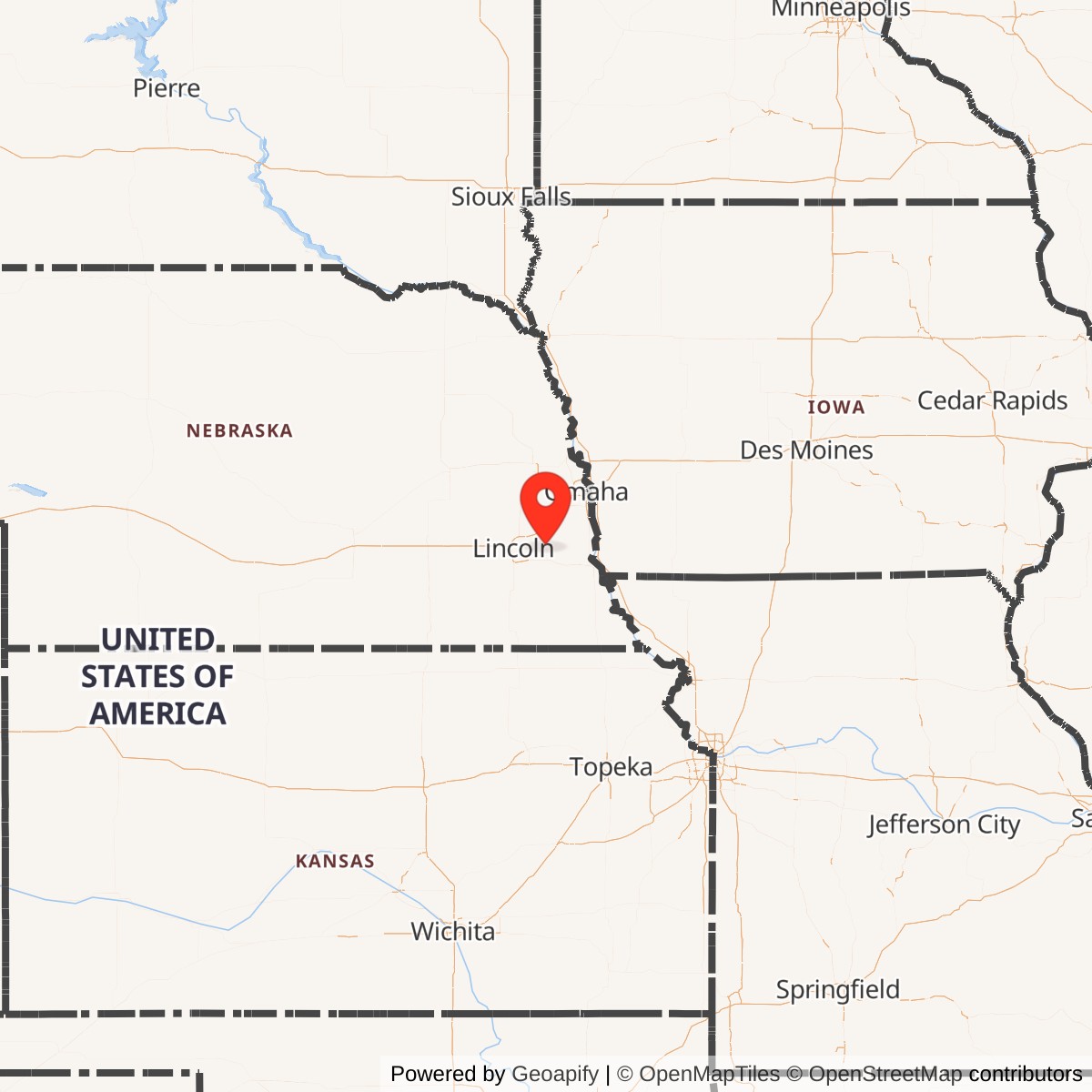
Atlas F Site 551-2 sits in the agricultural landscape of Cass County, Nebraska, east of the village of Eagle and east-southeast of Lincoln.The surrounding landscape is the kind of open farm country that defined the Lincoln missile field. The sites were dispersed around Lincoln AFB so that no single attack on the base could destroy the squadron's entire missile force. Site 551-2 lay far enough from Lincoln AFB to be a separate target, but close enough to be supported by the squadron's maintenance, security, communications, and missile-handling infrastructure.
The site followed the Atlas F vertical-silo pattern. A complete Atlas F operational complex normally included a deep reinforced-concrete silo, an elevator mechanism for raising the missile to the surface, a pair of heavy overhead silo doors, an underground launch-control area, power and environmental systems, propellant and gas support systems, communications equipment, security fencing, access roads, and small surface support structures. The Lincoln AFB Legacy Project's Eagle page and photographs document visible site features and operational-era equipment views, including the silo cap, fill and vent shaft, a gas recharger, helium compressor and tanker, and surface structures in an open fenced farm setting.
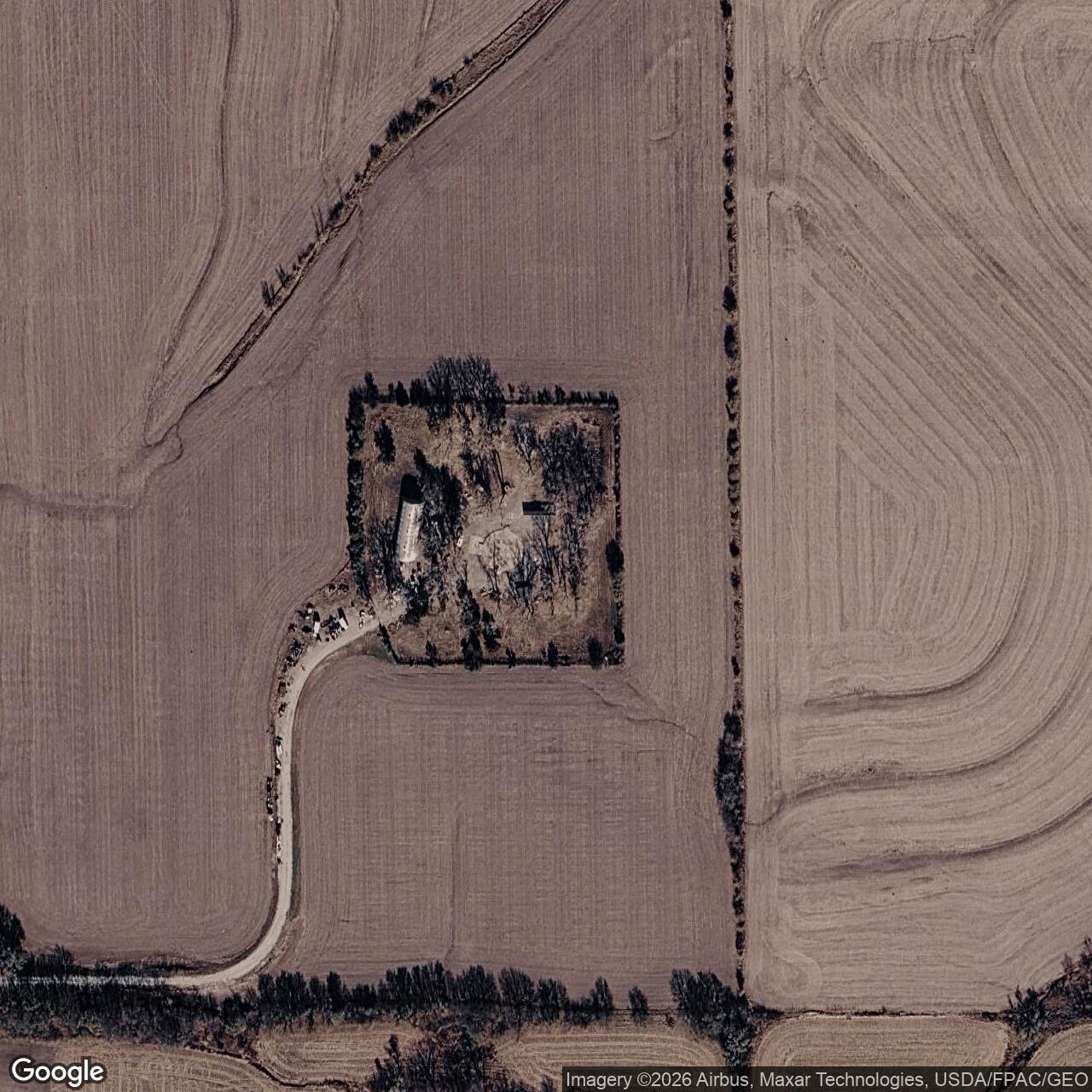
The site's surface appearance today is rural and subdued compared with its original military function. Lincoln AFB Legacy Project photographs from 2012 show former Atlas F Site 2 as a private rural site with low surviving structures or structural remains set among agricultural fields and tree lines. Satellite photos also shows a rectangular former missile-site footprint set within farm fields, with the principal surface structures clustered inside the former installation boundary. Nothing about the site should be read as public or safely accessible; it is private property, and former missile installations can contain confined spaces, open shafts, unstable surfaces, environmental hazards, and other dangers.
Strategic and Cold War Context
Site 551-2 existed because the United States needed a dispersed, hardened nuclear deterrent before later solid-fueled ICBMs were fully available. Atlas was the Air Force's first operational ICBM. It was developed under pressure from the Soviet nuclear and missile threat, and its deployment reflected the early Cold War problem of how to keep American strategic weapons ready for use after a possible first strike.The Atlas D and Atlas E systems were important steps toward a fielded ICBM force, but they had limits. The Atlas D was deployed in three-missile complexes with relatively vulnerable launch arrangements and radio guidance. Atlas E used individual semi-hardened launchers and inertial guidance. Atlas F, the final operational Atlas model, placed the missile in a hardened underground silo-launcher. The 551st Strategic Missile Squadron's history describes Atlas F as an internally guided missile placed in hardened underground silo launchers, with an Atlas F silo rated for substantially greater blast resistance than earlier Atlas sites.
Even with that hardening, Atlas F was still a first-generation missile. It used RP-1 kerosene and liquid oxygen rather than storable hypergolic propellants or solid fuel. The RP-1 fuel could be kept aboard or otherwise maintained as part of the alert configuration, but the cryogenic liquid oxygen was not a permanent onboard load. A real launch sequence required the site to prepare the missile, load liquid oxygen, open the heavy silo doors, raise the missile to the surface, and launch from above the silo. The missile was housed vertically in a silo launcher, the two 75-ton doors opened, the missile was lifted out of the silo, and liquid oxygen was loaded before the missile was raised and fired.
That technical reality is important when describing alert posture. During the Cuban Missile Crisis, sources state that operational 551st SMS Atlas F sites were placed on a high level of alert. For Atlas F, being in an operational launch-ready alert posture did not mean the missile sat continuously raised above the silo or continuously loaded with liquid oxygen. It meant the launch crew, communications, power systems, propellant systems, guidance equipment, security force, and support equipment were maintained so the missile could move rapidly through the required launch sequence if an authenticated order arrived.
Missile System and Technical Role
The missile assigned to Site 551-2 was an SM-65F Atlas, the final operational version of the Atlas ICBM. The site missile was GD manufacturing number 47F, GD serial number 61-2533, and Air Force tail number 533. The missile was accepted on 1962-01-27 and delivered on 1962-03-23 for the Lincoln AFB / 551st SMS operational ICBM mission.The Atlas F used all-inertial guidance and was deployed from a hardened vertical silo-lift complex. The Smithsonian National Air and Space Museum describes the Atlas F as a liquid-fuel ICBM deployed from 1962 to 1965, carrying a thermonuclear warhead and having a range of more than 7,000 miles. The same museum identifies the Mark 4 reentry vehicle as the RV used on Atlas E/F and Titan I missiles; it carried the W-38 nuclear warhead, which the Smithsonian gives as about 3.75 megatons. The 551st SMS history uses a rounded description of the Atlas F warhead as a 3-megaton class weapon. Either way, this was a city-destroying strategic weapon housed beneath rural Nebraska.
Atlas was also mechanically unusual. The Atlas airframe was a "balloon tank" structure: very thin stainless steel walls depended on internal pressure for stiffness. The 551st SMS history states that the missile skin was extremely thin, in places about the thickness of a dime, to save weight and extend range. This pressure-stabilized design is central to understanding the reported Site 2 missile body collapse. A collapse did not necessarily mean a nuclear accident, a launch, or an explosion. It meant that the missile body itself, which depended on pressure and careful ground support, buckled or failed structurally. The public information for this site does not provide enough detail to identify the cause.
Operationally, an Atlas F site was both a missile launch complex and a small, round-the-clock military workplace. The 551st SMS history describes the crew as five personnel: the missile combat crew commander, deputy missile combat crew commander, ballistic missile analysis technician, missile facility technician, and electric power production technician. Two guards remained topside to protect the site. That staffing pattern is a major difference from later Minuteman Launch Facilities, which were normally unmanned and remotely monitored from separate Launch Control Centers.
Construction and Activation
The Lincoln missile field was planned during the rapid expansion of the United States ICBM force. The 551st SMS history states that Lincoln was designated for a missile mission in 1959 and that the initial plan called for nine silos before three additional silos were added, producing the twelve-site Atlas F field. The history describes construction at the Lincoln sites as occurring from 1959 to 1962, with peak work involving about 1,900 workers operating around the clock.The assigned missile reached the Air Force early in 1962. Missile 47F / serial 61-2533 / tail 533 was accepted on 1962-01-27 and delivered on 1962-03-23. The broader squadron history gives 1962-09-15 as both turnover to Strategic Air Command and the operational date for the 551st SMS.
Operational History
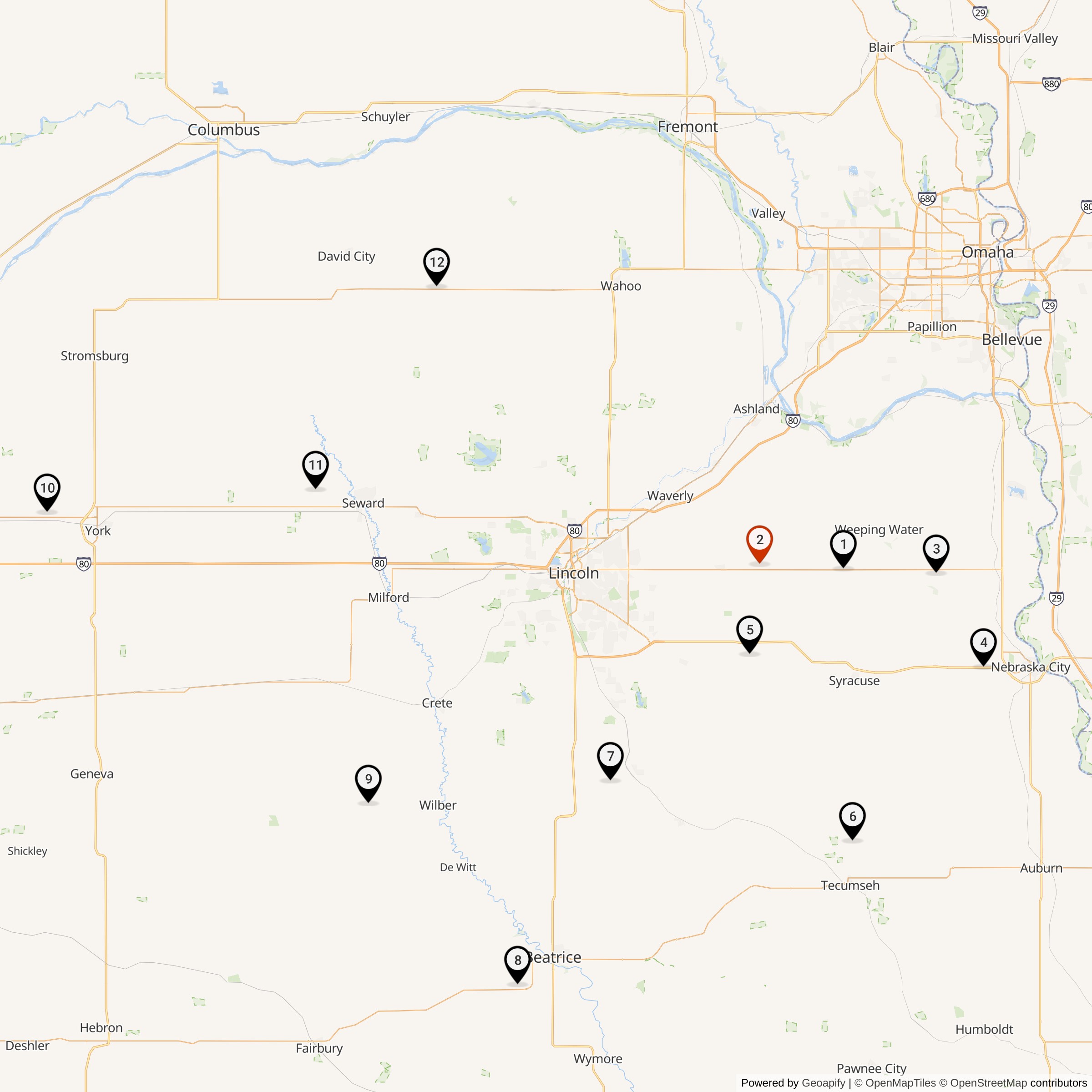
Atlas F Site 551-2's operational life was short but intense. The site became part of a twelve-missile ring around Lincoln AFB at a moment when Strategic Air Command was trying to establish credible, survivable, land-based nuclear alert. The 551st Strategic Missile Squadron was organized at Lincoln AFB on 1961-04-01 and operated Atlas missiles from 1962 until the Atlas F phaseout in 1965. Its sites were located near Eagle, Elmwood, Avoca, Nebraska City, Palmyra, Tecumseh, Cortland, Beatrice, Wilber, York, Seward, and Brainard.The site's ordinary daily function was alert duty. A crew lived and worked inside the launch complex, monitoring the missile, power, environmental systems, communications, and launch equipment. Security personnel guarded the surface. Maintenance and specialist teams from Lincoln AFB supported the site as required. The Atlas F was powerful but maintenance-intensive, and its liquid oxygen system, pressure-stabilized airframe, kerosene fuel, gas systems, hydraulic systems, electrical systems, and elevator/silo-door equipment all demanded constant attention.
During the Cuban Missile Crisis in October 1962, the 551st SMS was placed under extraordinary pressure. The 551st SMS history states that by the crisis most of Lincoln's Atlas F missiles were operational and that members of the 551st pulled long shifts because there were too few fully trained crews for the heightened alert tempo. In the official SAC chronology, the crisis forced the Atlas F squadrons at Schilling, Lincoln, Altus, and Dyess to place their twelve-missile forces on alert for the first time.
Site 551-2's operational history is especially notable because the Lincoln AFB Legacy Project records a missile body collapse at the Eagle site during October 1962, before the Cuban Missile Crisis. The publicly available site page does not provide a precise date, cause, damage assessment, repair record, injury report, or official accident-board narrative. It also does not state whether the affected missile was the assigned 47F or another missile present during operations. Because of that, the event should be described carefully: it was a documented missile body collapse at Site 2, not a documented nuclear detonation risk, missile launch, or explosion in the reviewed public record.
No detailed official accident report was found for this incident.
Deactivation and Disposal
Atlas F's time as an operational ICBM was brief. By 1964 and 1965, solid-fueled Minuteman missiles and other newer systems had made the Atlas F force increasingly obsolete. The operational burden of liquid oxygen, pressure-stabilized tanks, long launch sequences, and intensive maintenance made Atlas unattractive compared with missiles that could remain ready for rapid launch without cryogenic fueling.551st SMS history gives 1965-04-12 as the date the last Series F Atlas ICBMs were removed from alert at Lincoln, completing the operational phaseout of Atlas F, and 1965-04-20 as the date the last Atlas F missile was shipped from the 551st Strategic Missile Squadron to storage for future research and launch-vehicle use. Headquarters SAC inactivated the 551st SMS on 1965-06-25.
The site appears in USACE FUDS inventory material as LINCOLN AFB AF FAC S-2, FUDS Property Number B07NE0588, in Cass County, with two project categories: Site 01 HTRW and Site 02 CON/HTRW. Older GAO FUDS status material lists the HTRW project as Complete-RI/FS and the CON/HTRW project as Complete-RA-C. Those records indicate that the former site entered the federal formerly used defense site / environmental-response universe, but a modern detailed USACE fact sheet with current remedial status comparable to the public Site 1 and Site 6 fact sheets was not located.
Current Status and Site Use
Atlas F Site 551-2 is private property. The Lincoln AFB Legacy Project explicitly lists "Site Today: Private ownership." The reviewed photographs show rural former-missile-site features and surface structures in an agricultural setting. Satellite photos shows the former site footprint set in farm fields east of Eagle.No public access should be assumed. Former Atlas sites can be structurally dangerous, and privately owned former missile sites may include locked buildings, open shafts, unstable underground areas, contaminated materials, or other hazards.
Chronology
- 1959 Lincoln was designated for an ICBM mission; the missile field was later expanded to twelve Atlas F sites.
- 1961-04-01 The 551st Strategic Missile Squadron was organized at Lincoln AFB.
- 1962-01-27 The assigned missile, GD manufacturing number 47F / GD serial 61-2533 / AF tail 533, was accepted.
- 1962-03-23 Missile 47F was delivered for the Lincoln AFB / 551st SMS operational ICBM mission.
- 1962 Site 551-2 was turned over to the Air Force; the exact month and day are not documented in the reviewed source.
- 1962-09-15 The 551st SMS history lists turnover to SAC and operational status on this date.
- 1962-10 Site 551-2 suffered a missile body collapse at Eagle, Nebraska, before the Cuban Missile Crisis, according to the Lincoln AFB Legacy Project.
- 1962-10 During the Cuban Missile Crisis, operational 551st SMS Atlas F sites were held at a high level of alert; for Atlas F this meant launch-ready posture, not continuous aboveground or liquid-oxygen-loaded status.
- 1964-01-01 The 551st SMS was reassigned to the 98th Strategic Aerospace Wing, 818th Strategic Aerospace Division.
- 1965-04-12 The last Series F Atlas ICBMs at the 551st SMS were removed from alert, completing the operational phaseout of the Atlas F weapon system.
- 1965-04-20 The last Series F Atlas ICBM and the last first-generation liquid-fuel ICBM to leave a SAC operational base was shipped from the 551st SMS to storage for future use as a launch vehicle.
- 1965-06-25 Headquarters SAC inactivated the 551st Strategic Missile Squadron.
- 1978-10 Former Site 551-2 missile 47F later launched successfully from Vandenberg carrying NAVSTAR 3 / GPS 3.
- 2015 USACE's Nebraska FUDS inventory listed LINCOLN AFB AF FAC S-2 / B07NE0588 in Cass County with HTRW and CON/HTRW projects.
Read about the Atlas at Lincoln AFB
All Atlas Missile Silo Locations