
Atlas F Site 551-8 Missile Silo, Beatrice Nebraska
Longitude: -96.811205
Site Type: Atlas F vertical silo launch facility
Missile Type: SM-65F Atlas
Missile Assigned to this Silo: GD mfg 39F; GD serial 61-2525; AF tail 525
Number of Launchers/Missiles: 1
Parent Base: Lincoln AFB
Missile Wing: 98th Strategic Aerospace Wing
Missile Squadron: 551st Strategic Missile Squadron
Approximate Base Size: 19.4 acres
Current Site Use: Vacant/abandoned former missile site; limited cattle grazing; significantly altered/salvaged; FUDS groundwater remediation record
Site Ownership: Private ownership after 1967 transfer
Accessible: No public access / private property
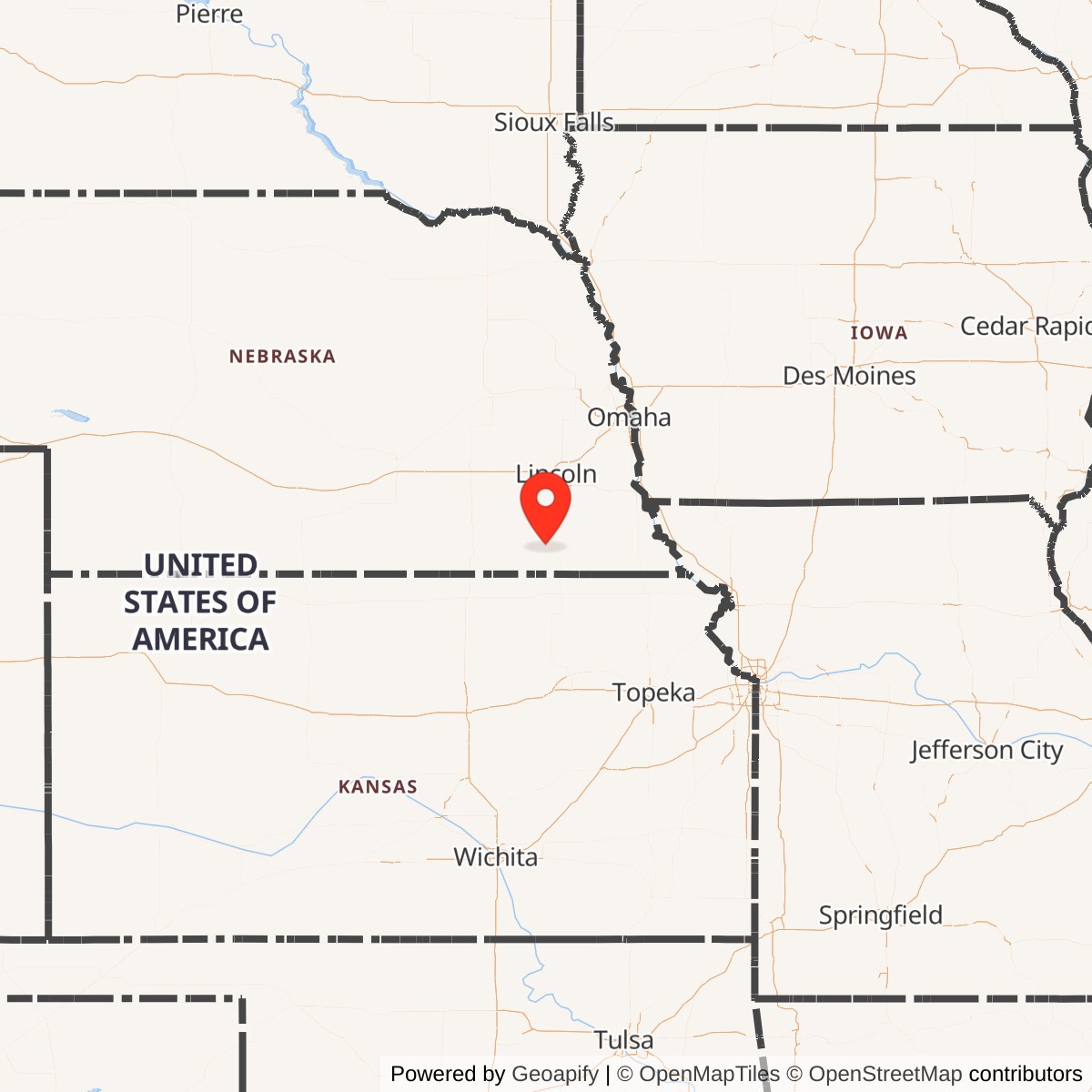
Atlas F Site 551-8 is a Cold War launch complex whose story did not end when the missile left Nebraska. Four miles southwest of Beatrice, a hardened Atlas F silo once held a first-generation intercontinental ballistic missile on alert for Strategic Air Command; decades later, the same fenced ground was described by the U.S. Army Corps of Engineers as vacant, heavily altered, used only for limited cattle grazing, and affected by trichloroethylene groundwater contamination. The missile itself had a second life. After its brief alert career in the Lincoln missile field, the assigned Atlas, General Dynamics manufacturing number 39F / Air Force tail number 525, was converted into a space launcher and successfully carried NAVSTAR 4, an early GPS satellite, from Vandenberg. The site is therefore a compact example of three overlapping Atlas legacies: nuclear alert, rural environmental cleanup, and the reuse of retired ICBM hardware for the navigation-satellite age.
Atlas F Site 551-8 was one of the twelve SM-65F Atlas intercontinental ballistic missile launch complexes operated by the 551st Strategic Missile Squadron at Lincoln Air Force Base, Nebraska. The site is near Beatrice in Gage County at approximately 40.228184, -96.811205. It appears in sources as Atlas F Site 551-8, 551st Strategic Missile Squadron Site 8, Construction Site Number 5, Air Force Operational Site Number 8, S-8, LINCOLN AFB AF FAC S-8 in FUDS / DERP records, and LINCOLN (EX) ATLAS "F" FAC S-8 in EPA Superfund records.
The parent base was Lincoln AFB. The operational missile unit was the 551st Strategic Missile Squadron, later associated with the 98th Strategic Aerospace Wing during the final Atlas F period. Atlas F launch complexes did not use a Minuteman-style remote Launch Control Center. Each Atlas F site was a self-contained, manned launch complex with its own underground launch-control area connected to the missile silo.
The missile assigned to Site 551-8 was General Dynamics manufacturing number 39F, General Dynamics missile serial number 61-2525, and Air Force missile tail number 525. The missile was accepted on 1961-12-29 and delivered on 1962-03-12 for the Lincoln AFB / 551st Strategic Missile Squadron operational ICBM mission. 39F was launched from Vandenberg AFB's Space Launch Complex 3E carrying NAVSTAR 4, also known as GPS 4 on 1978-12-11.
Site 551-8 is no longer an active missile installation. The Lincoln Atlas F force left active service during the 1965 phaseout of first-generation ICBMs. The former launch complex was transferred to private ownership in 1967. It is now private property, not open to the public, and remains associated with federal FUDS / environmental records for TCE groundwater contamination.
Location, Landscape, and Site Description
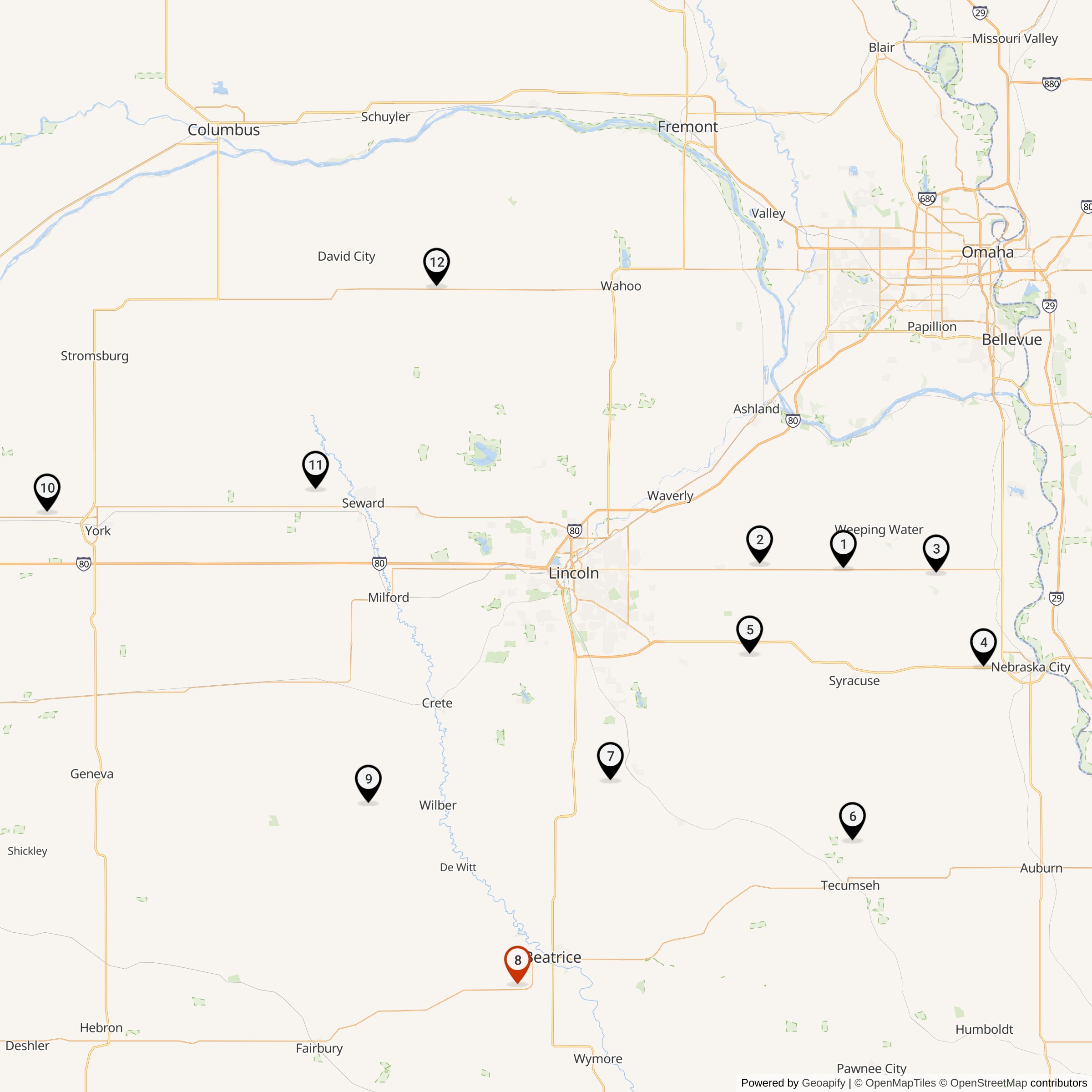
Site 551-8 lies in the agricultural landscape southwest of Beatrice, Nebraska.The site's location mattered because Atlas F was designed around dispersal. The twelve Lincoln launch complexes were spread in a broad ring around Lincoln AFB rather than concentrated on the base. Site 551-8 was far enough from the parent base and from other 551st SMS sites that it presented a separate target and required its own local security, maintenance, utilities, and operations. In practice, that meant a manned underground launch complex placed into a rural road-and-farm landscape.
USACE describes Site 8 as a 19.4-acre property located four miles directly southwest of Beatrice in Gage County. Its facilities included an underground reinforced-concrete launch silo, a connecting underground launch control center, an industrial wastewater evaporation lagoon, two offsite water wells located about 1.5 miles away, and underground storage tanks for water, diesel fuel, and fuel catchment. Support structures included a cooling tower, septic tank with subsurface sand filter, and two corrugated steel igloos. This was not merely a hole in the ground. It was an integrated launch-support installation built to keep one liquid-fueled ICBM, its crew, utilities, communications, and safety systems ready under Strategic Air Command control.
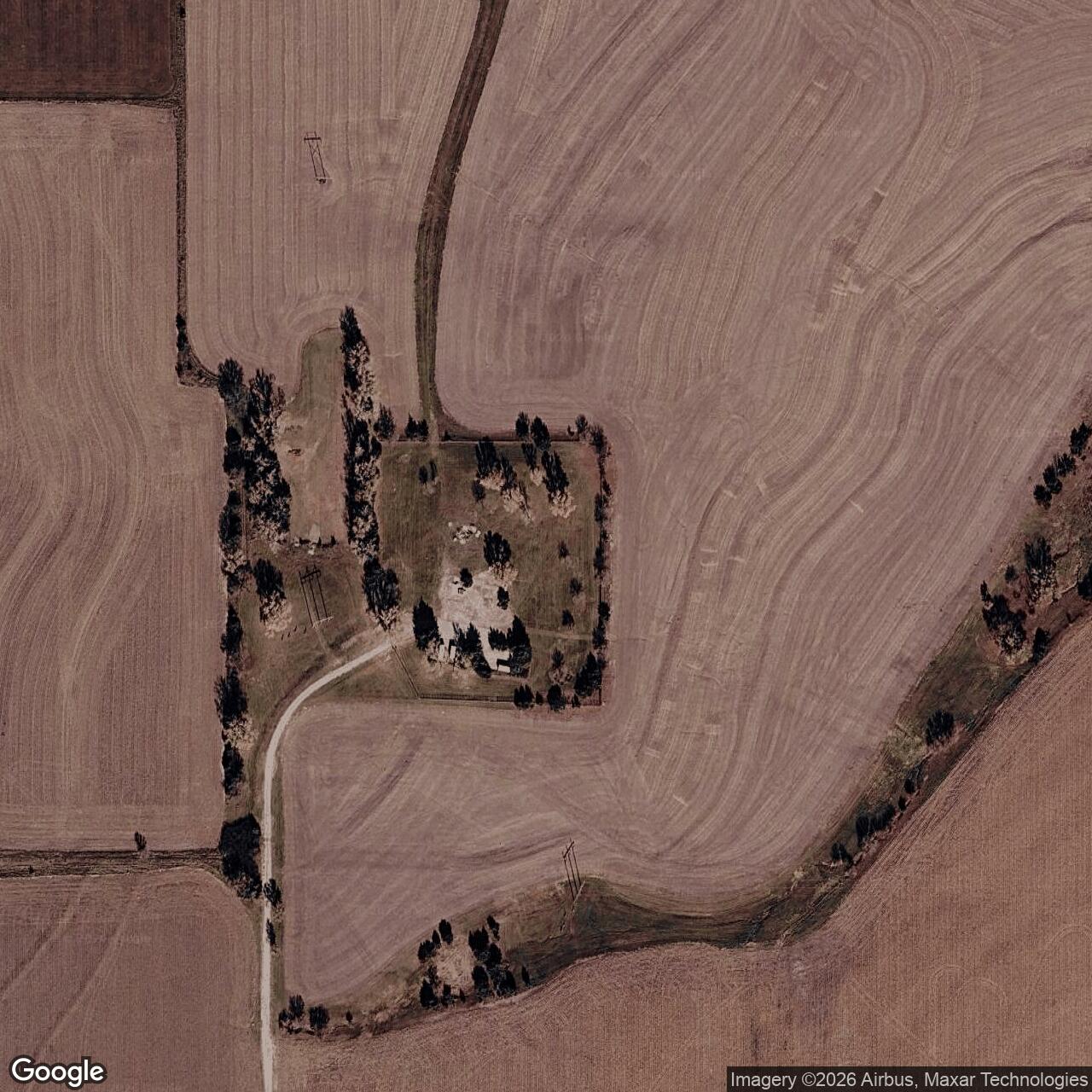
The post-military landscape is heavily altered. USACE states that most aboveground features were removed and that bulldozing flattened much of the surrounding area. Except for the concrete pad around the silo and a parking area, the fenced area is grass-covered with scattered shrubs and trees, and most of the fence remained intact when the fact sheet was prepared. Lincoln Air Force Base Online Museum photographs from December 2012 show a rural, abandoned former launch complex with paved access surfaces, exposed concrete and metal remnants, monitoring or utility features, trees, brush, and open farmland around the former military reservation. The Online Museum summarizes the site's condition as "Salvaged site, stripped of steel" and "Abandoned."
The site should not be visited without lawful permission. Former Atlas F complexes can include unsafe underground spaces, unstable concrete, open or partially covered voids, scrap-metal hazards, contaminated groundwater, utility remnants, and private-property restrictions. The site's history can be studied from public sources, but the property itself is not a public historic site.
Strategic and Cold War Context
Site 551-8 existed because the United States needed a hardened and dispersed intercontinental missile force during the short but intense transition between early vulnerable ICBMs and later solid-fueled missile systems. Atlas was the first operational American ICBM family. Atlas F was the final operational Atlas model and represented the most hardened Atlas deployment configuration. Unlike earlier Atlas variants that used aboveground or semi-hardened launch arrangements, Atlas F stored the missile vertically in a deep underground silo and raised it to the surface for launch.The 551st Strategic Missile Squadron at Lincoln AFB was one of the Atlas F units that helped bring that final Atlas model into Strategic Air Command service. The squadron's twelve sites were not symbolic Cold War landmarks; they were real manned launch complexes tied to a national nuclear war plan. Site 551-8 was one of those twelve independent points, each built around a single missile, a trained crew, communications and authentication procedures, and a security-and-maintenance system that connected the rural launch site to SAC command authority.
Atlas F was powerful but operationally demanding. It used RP-1 kerosene fuel and liquid oxygen oxidizer. The missile could sit vertically in the silo with RP-1 aboard, but liquid oxygen was not a long-term storable oxidizer and had to be loaded during the launch sequence. After preparation, the missile would be elevated out of the silo and launched from aboveground. This gave Atlas F better protection than earlier Atlas systems, but it still had a vulnerable and mechanically complex final launch sequence when compared with later Titan II and Minuteman systems that could launch from within the silo or remain more nearly launch-ready by design.
When a Lincoln Atlas F site was placed in an operational launch-ready alert posture, that did not mean the missile was continuously raised above the silo or continuously loaded with liquid oxygen. It meant the assigned missile, trained crew, secure communications, authentication procedures, launch-control equipment, power and environmental-control systems, security force, maintenance support, fuel and oxidizer handling equipment, and SAC command links were postured so that, after a valid launch order, the site could proceed through the Atlas F launch sequence as quickly as the system allowed.
The Cuban Missile Crisis demonstrated the urgency behind that posture. Public 551st SMS histories state that most Lincoln Atlas F sites were operational by October 1962 and that operational sites went to a heightened level of alert. That heightened posture meant sustained crew duty, support work, security, and readiness at dispersed rural sites such as 551-8. It did not make Atlas F a modern quick-launch solid-fueled missile, but it did turn the Beatrice site into one of the real operational nodes of SAC's early ICBM deterrent during the most dangerous nuclear crisis of the Cold War.
Construction and Activation
USACE places construction in 1960 and 1961. The construction work produced a self-contained launch complex, including the deep silo, underground launch control center, surface support features, water supply, wastewater evaporation lagoon, underground storage tanks, septic system, and support structures. These details help explain why former Atlas F sites remained environmental cleanup concerns decades after deactivation: the launch complex had industrial systems, fuels, solvents, storage tanks, water systems, and maintenance infrastructure in addition to the missile silo itself.The broader 551st SMS record gives the operational context. The 551st Strategic Missile Squadron was organized at Lincoln AFB on 1961-04-01. Public unit-history material states that the first operational Atlas F sites at the 550th SMS, Schilling AFB, and the 551st SMS, Lincoln AFB, were accepted by SAC in June 1962, and that the 551st SMS became operational in September 1962. Lincoln AFB Online Museum history states that construction of the Lincoln Atlas F silos was completed in June 1962 and that missiles were shipped from their construction plants and placed in the ground.
The assigned missile, General Dynamics 39F / AF tail 525, was accepted on 1961-12-29 and delivered on 1962-03-12. Those dates place the missile's availability within the broader final construction and operational-turnover period for the Lincoln Atlas F field. By the Cuban Missile Crisis in October 1962, the Beatrice site was part of a squadron whose operational sites were being treated as part of SAC's alert force.
Missile System and Technical Role
Site 551-8 housed the SM-65F Atlas, also known as Atlas F. In later Air Force designations, Atlas F was associated with the HGM-16F designation. It was a liquid-fueled intercontinental ballistic missile built by Convair / General Dynamics. The Atlas F carried an Atlas E/F W-38 thermonuclear warhead in a Mark IV reentry vehicle, with public sources generally describing the W-38 yield as approximately 3.8 megatons and the Atlas F range as roughly 6,000 miles.The missile was kept vertically in a silo-launcher style complex. RP-1 fuel remained aboard the missile during alert, while liquid oxygen was loaded before launch. The missile was then lifted out of the silo before firing. The system was faster and more protected than earlier Atlas arrangements, but it still required cryogenic oxidizer handling and a mechanical elevator launch sequence.
The launch complex itself was manned. Unlike later Minuteman Launch Facilities, which were unmanned silos controlled remotely from Launch Control Centers, Atlas F sites contained their own underground launch-control area. Missile crews, security police, maintenance personnel, propellant handlers, and support teams all had roles in keeping the site ready. The site's technical purpose was therefore not just to store the missile; it was to maintain a complete launch system in which people, machinery, communications, fueling equipment, safety procedures, and SAC command authority all had to function together.
Missile 39F's later career helps show how the Atlas program outlived its nuclear-alert mission. After the Atlas F ICBM force was retired, some missiles were adapted for space-launch work. Missile 39F became an Atlas F/SVS launch vehicle and successfully carried NAVSTAR 4 / GPS 4 from Vandenberg SLC-3E in December 1978. The rocket that once belonged to the Beatrice launch complex thus became part of the early Global Positioning System development program.
Operational History
The 551st Strategic Missile Squadron was responsible for the Lincoln Atlas F sites. The squadron was initially tied to Strategic Air Command's 818th Air Division / Strategic Aerospace Division structure and later associated with the 98th Strategic Aerospace Wing. Its twelve sites formed a dispersed missile field around Lincoln AFB, with each site housing a single Atlas F missile in a 1-by-12 configuration.For the Beatrice site, day-to-day operations would have centered on keeping one Atlas F missile and its launch complex ready. That meant maintaining the missile and support equipment, monitoring environmental conditions, operating the underground launch-control equipment, maintaining communications, protecting the site, controlling access, and keeping the crew ready to execute valid SAC orders. A missile on alert depended on more than the missile itself: it required RP-1 fuel aboard, liquid-oxygen loading capability, elevator and door systems, power, water, HVAC, communications, security, and trained crews.
The site's operational life was brief. It was built in 1960-1961, turned over to the Air Force in 1962, and decommissioned in 1965. This short service life was typical for first-generation Atlas systems. They were deployed urgently because the United States needed an operational ICBM force, but they were overtaken quickly by more survivable and operationally practical systems, especially solid-fueled Minuteman.
Site 551-8's most intense operational period almost certainly came during the Cuban Missile Crisis. Public 551st SMS histories state that during the crisis, operational 551st sites were placed at a high level of alert and were ready to launch should it become necessary. Strategic Air Command documentation and later unit histories describe the 551st as part of the Atlas F force that went through crisis alert measures. For Site 551-8, that meant the routine machinery of alert duty became part of a national emergency: the same roads, gates, crew spaces, fuel systems, and communications links had to support a real wartime readiness posture.
The site was never a long-lived weapon installation. By 1965, SAC and the Air Force were retiring first-generation Atlas and Titan I systems as Minuteman and Titan II took over the strategic-alert burden. USAF unit-history material states that the first 551st SMS ICBM was removed from alert on 1965-03-10, the last 551st SMS ICBM was removed from alert on 1965-04-12, and the last was shipped out on 1965-04-20. The 551st Strategic Missile Squadron was inactivated on 1965-06-25.
Deactivation and Disposal
Site 551-8 left active missile service during the 1965 retirement of the Atlas F force. First ICBM off alert on 1965-03-10, last ICBM off alert on 1965-04-12, last ICBM shipped out on 1965-04-20, and squadron inactivation on 1965-06-25.The deactivation of Atlas F was not primarily an arms-control demolition event in the later Strategic Arms Reduction Treaty sense. It was a force-modernization phaseout. Atlas F was replaced by newer systems that could remain on alert with less operational complexity and better survivability. At the site level, that meant removal of the missile, removal or abandonment of military equipment, deactivation of launch functions, property disposal, salvage, and eventual private ownership.
USACE states that after five short years of operation, Site 8 was decommissioned and transferred to private ownership in 1967. The property later sat vacant and unused except for some cattle grazing. Most aboveground features were removed, and bulldozing altered much of the site. The Lincoln Air Force Base Online Museum's "stripped of steel" description is consistent with the common post-military fate of many Atlas F complexes: valuable metal and accessible equipment were salvaged, leaving concrete, buried infrastructure, capped or exposed openings, and altered surface remains.
The environmental history is a major part of the site's post-military record. USACE identifies the release of trichloroethylene into groundwater. During 2010, the Omaha District completed remedial-investigation fieldwork to delineate groundwater contamination. USACE reported that contamination was found in two water-bearing zones pitching in opposite directions, and that groundwater moved off site to the north in an S-shaped path, complicating delineation. The final decision document was approved in 2013, and planned 2015-2016 work included residential-well sampling, pilot-study work for chemical oxidation, and full-scale remediation planning.
EPA lists the site as LINCOLN (EX) ATLAS "F" FAC S-8, EPA ID NEN000703216, four miles southwest of Beatrice, Gage County, Nebraska. EPA's Superfund profile identifies it as Not on the National Priorities List and NFRAP, meaning it did not qualify for the NPL based on existing information under the Superfund screening record. FUDS and DERP records separately track the former defense-site cleanup history. USACE FUDS Inventory records list LINCOLN AFB AF FAC S-8 / B07NE0010 in Gage County with two projects: CON/HTRW and HTRW. A later DOD DERP status table lists LINCOLN AFB AF FAC S-8 / NE79799F041300 with two IRP sites and a final-response-complete target in the early 2030s.
Current Status and Site Use
The former Site 551-8 launch complex is private property southwest of Beatrice, Nebraska. It is not an active military installation, not a public museum, and not a publicly accessible historic site. USACE describes it as vacant and unused except for some cattle grazing. Lincoln Air Force Base Online Museum calls it abandoned and notes that it was salvaged and stripped of steel.The site remains recognizable as a former Atlas F property because of its access pattern, fenced area, concrete and paved remnants, silo-pad area, and the altered footprint of the old launch complex. However, the aboveground military features are largely gone or heavily altered. USACE specifically states that most aboveground features were removed and that most features were bulldozed to flatten the surrounding areas.
Chronology
- 1960-1961 USACE states that construction of Site 8 occurred during 1960 and 1961.
- 1961-04-01 The 551st Strategic Missile Squadron was organized at Lincoln AFB.
- 1961-12-29 Missile 39F / AF tail 525 was accepted.
- 1962-03-12 Missile 39F / AF tail 525 was delivered for the Lincoln AFB / 551st SMS operational ICBM mission.
- 1962-06 Public unit-history material states that the first operational Atlas F sites at the 550th SMS and 551st SMS were accepted by SAC.
- 1962-09 Public unit-history material states that the 551st SMS became operational.
- 1962-10 During the Cuban Missile Crisis, operational Lincoln Atlas F sites were held in a heightened launch-ready alert posture; for Atlas F, this did not mean continuous aboveground or liquid-oxygen-loaded status.
- 1965-03-10 USAF unit-history material states that the first 551st SMS ICBM was removed from alert.
- 1965-04-12 USAF unit-history material states that the last 551st SMS ICBM was removed from alert.
- 1965-04-20 USAF unit-history material states that the last 551st SMS ICBM was shipped out.
- 1965-06-25 The 551st Strategic Missile Squadron was inactivated according to USAF unit-history material.
- 1967 USACE states that Site 8 was transferred to private ownership.
- 1978-12-10 / 1978-12-11 Missile 39F / AF tail 525 was successfully launched from Vandenberg SLC-3E carrying NAVSTAR 4 / GPS 4; reviewed sources differ by one day, likely because of local-date versus UTC/date-recording treatment.
- 2001 GAO records listed LINCOLN AFB AF FAC S-8 / B07NE0010 in Gage County with eligible FUDS hazards and two eligible cleanup projects.
- 2010 USACE Omaha District completed remedial-investigation fieldwork to delineate groundwater contamination at Site 8.
- 2012-12-27 / 2012-12-28 Lincoln Air Force Base Online Museum photographs documented visible surface remains at the privately owned Site 8 property.
- 2013 USACE states that the final decision document for Site 8 was approved.
- 2015-04-07 USACE published its public FUDS fact sheet for Former Lincoln Air Force Base, Atlas "F" Missile Site 8, near Beatrice, Nebraska.
- 2015 The USACE FUDS Inventory for Nebraska listed LINCOLN AFB AF FAC S-8 / B07NE0010 in Gage County with CON/HTRW and HTRW project categories.
- 2024 DOD/DENIX Table 7 listed LINCOLN AFB AF FAC S-8 / NE79799F041300 with two IRP sites and a final-response-complete target of FY 2031.
Read about the Atlas at Lincoln AFB
All Atlas Missile Silo Locations