
Atlas F Site 556-12 Missile Silo, Mooers Forks New York
Longitude: -73.633666
Site Type: Atlas F vertical silo launch facility
Missile Type: SM-65F Atlas
Missile Assigned to this Silo: GD mfg 91F; GD serial 62-12127; AF tail 127; accepted 1962-08-27; delivered 1962-08-28; later launched 1970-05-30 from Vandenberg AFB Gantry A-3 with ABRES RMP-B17 reentry-vehicle test payload; successful.
Number of Launchers/Missiles: 1
Parent Base: Plattsburgh AFB
Missile Wing: 380th Strategic Aerospace Wing
Missile Squadron: 556th Strategic Missile Squadron
Corps of Engineers Site ID: 9
Approximate Base Size: 242.64 silo/easement tract acres; 9.22 actual acres sold/disposed (Plattsburgh history-office packet).
Current Site Use: Former Atlas S-12 silo complex near Mooers Forks; 1988 USACE report documented Town of Mooers municipal vehicle-maintenance/highway-equipment use with Quonset huts, pump houses, closed silo doors, and unused silo/LCC. Current public access/use not independently reverified beyond municipal-garage references.
Site Ownership: Former USAF; 9.22 actual acres conveyed by GSA to Town of Mooers in 1967; municipal ownership/use documented in 1988 USACE report.
Accessible: No public access confirmed; municipal/former missile/FUDS site. Do not enter without owner permission.
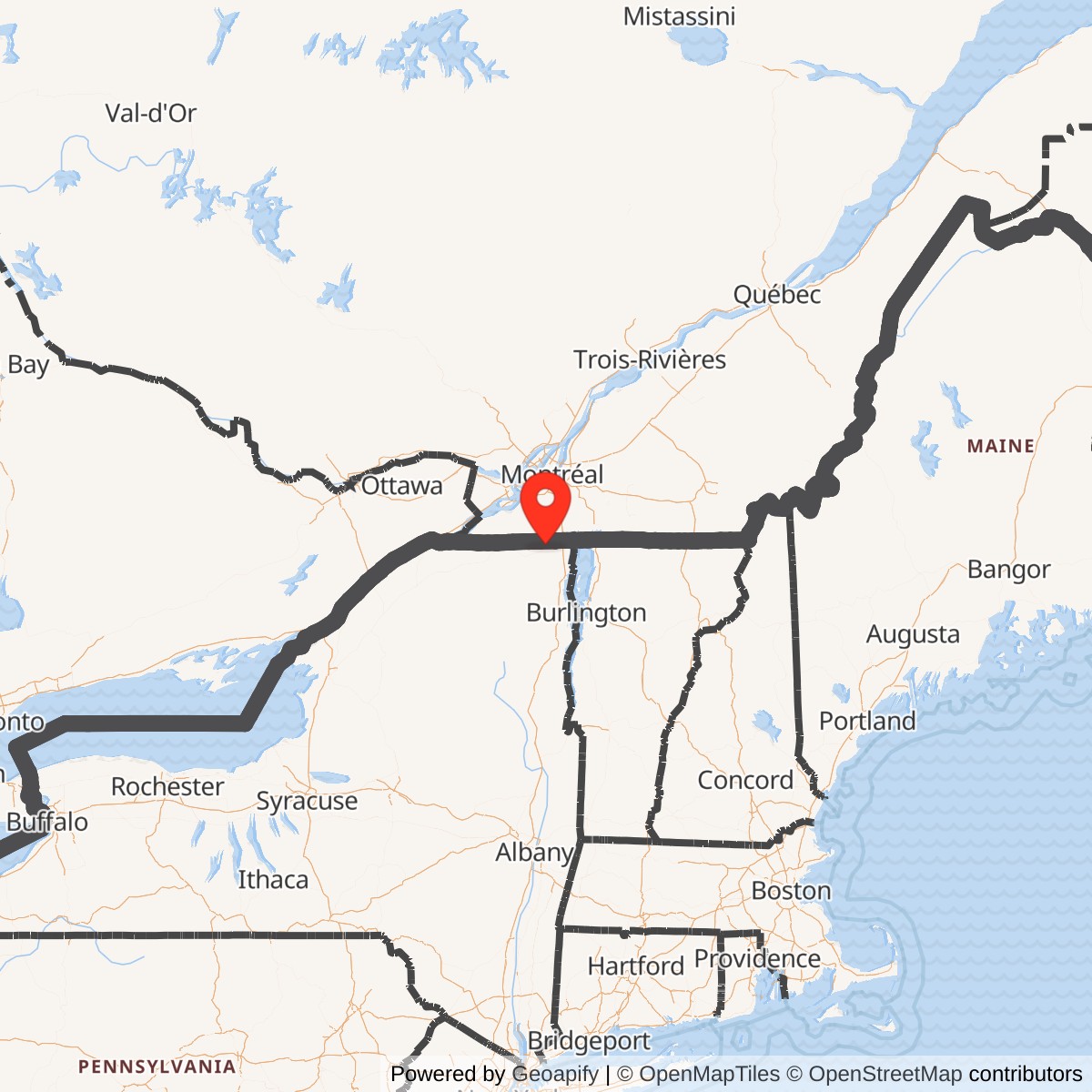
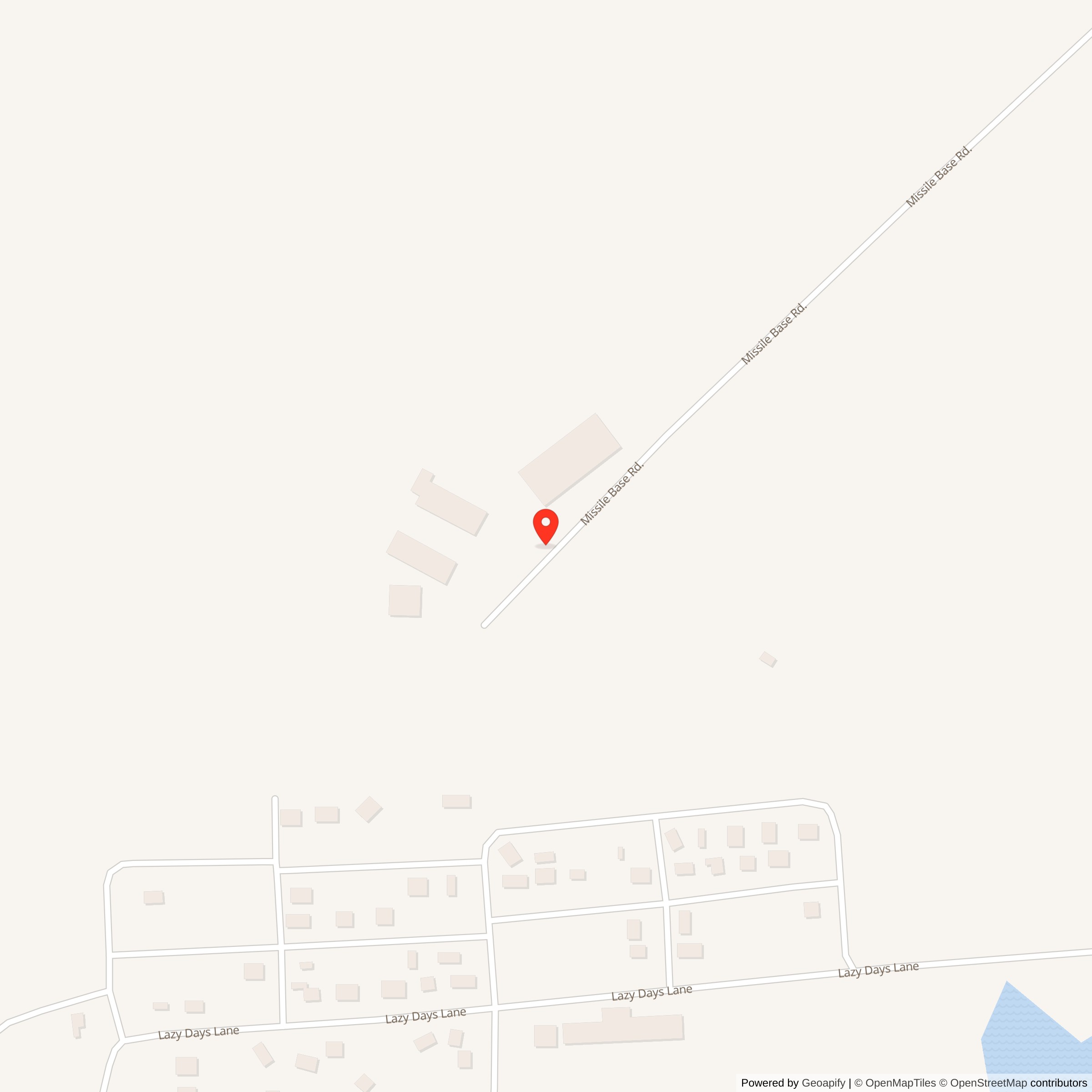
Near Mooers Forks, New York, only a short drive south of the Canadian border, a rural municipal work site hides one of the farthest-north Atlas F launch complexes in the former Plattsburgh missile ring. Atlas F Site 556-12 was built to hold a single SM-65F Atlas intercontinental ballistic missile in a hardened underground silo. During the early 1960s, that quiet Clinton County location was part of the only operational ICBM base east of the Mississippi River; after the missiles left, it became a municipal property and later one of the best-documented Plattsburgh Atlas sites in environmental records.
Atlas F Site 556-12 was an SM-65F Atlas launch facility assigned to the 556th Strategic Missile Squadron, Plattsburgh Air Force Base, New York. The missile force was associated with the 380th Bombardment Wing and later the 380th Strategic Aerospace Wing as Plattsburgh moved through its bomber, tanker, and missile missions. Site 556-12 was the squadron's operational Site 12. It was not a Minuteman-style Launch Facility tied to a remote Launch Control Center; like other Atlas F complexes, it had its own hardened launch complex, associated underground control and crew spaces, support structures, utilities, fuel-related systems, and access road.
The site is inactive and decommissioned. A Plattsburgh history-office packet lists Site 12 as accepted on 1962-12-06 and shows that the former site was later sold to the Town of Mooers, with a quitclaim date of 1967-07-20.
Location, Landscape, and Site Description
Site 556-12 sat north of U.S. Highway 11 in the Mooers Forks area, roughly 30 to 33 miles from Plattsburgh Air Force Base depending on the route and source, and about two miles south of the United States-Canada border. The 1988 contamination-evaluation report for Former Atlas Missile Site S-12 describes access from Plattsburgh by traveling north on U.S. Highway 9, west on U.S. Highway 11 to Duprey Road, then to Miller Road and the site access road. A Plattsburgh missile-site distance map in the history-office packet lists Site 12 as 33 miles from Plattsburgh AFB and 16 miles from the railhead.The landscape was rural and lightly developed. The 1988 report described the immediate area around Former Atlas Site S-12 as primarily rural residential land, farms, and unused woodlands, with Mooers Forks about one mile south of the site. The site lies in glacial deposits over dolostone and sandstone, and the ground surface slopes gently east. Surface runoff from the site flowed into a swale and nearby unnamed stream that ultimately tied into the Great Chazy River drainage.
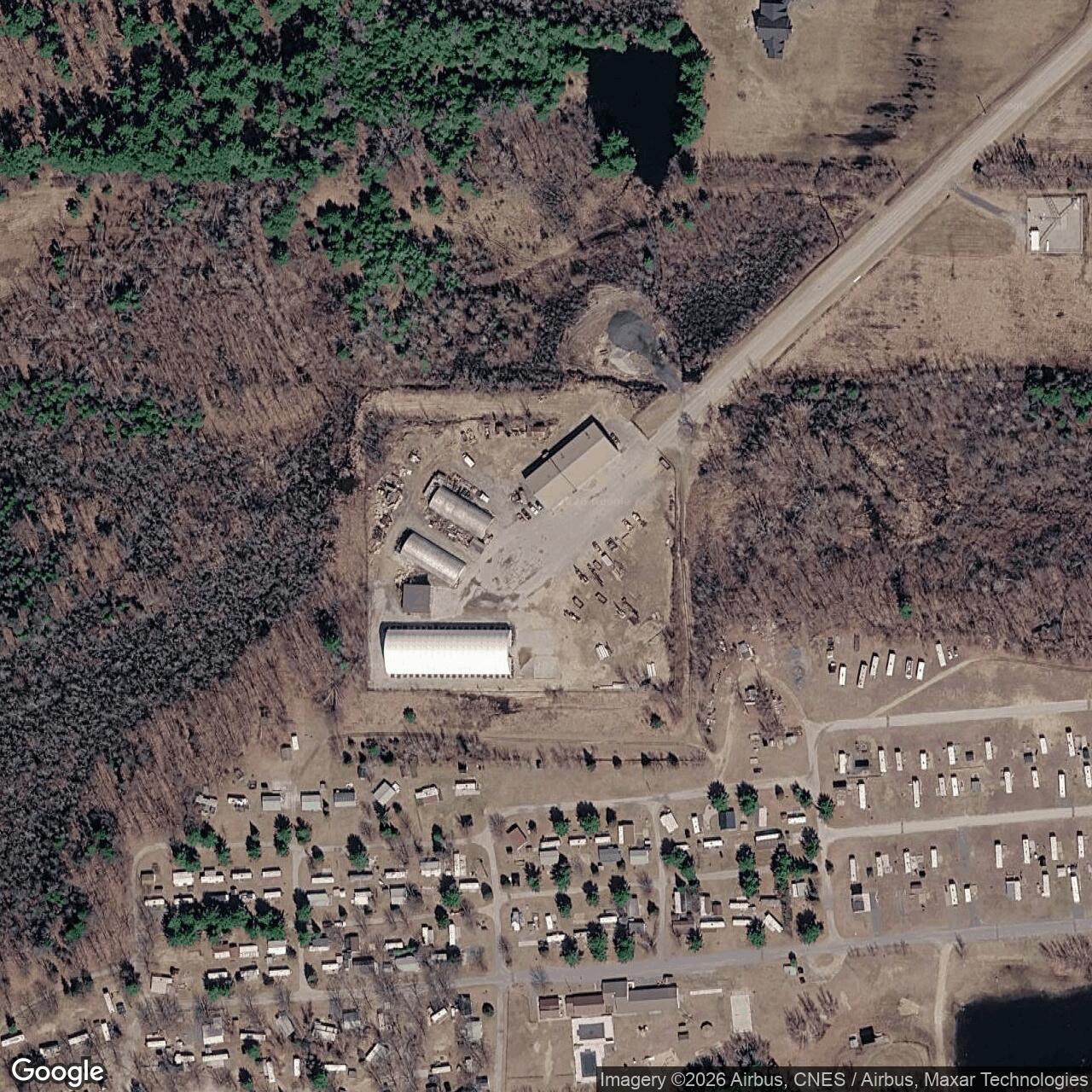
The physical layout followed the Atlas F vertical-silo pattern. In a typical Atlas F complex, the missile stood upright inside a hardened underground silo and would be raised to the surface for launch. At S-12, the 1988 field report documented a central concrete-and-steel missile silo, closed silo doors, fuel tanks, two pump houses, two Quonset huts, a buried concrete launch-control center, and other support features. It also described a sump-discharge swale leading east toward a nearby stream. The report gave site-specific field dimensions of the silo as approximately 70 feet in diameter and 187 feet deep, with thick reinforced-concrete walls. Other Atlas F source material for Plattsburgh and Atlas F sites gives the common silo depth as roughly 174 feet and notes the massive concrete-and-steel construction required for each complex.
The complex was not simply a hole in the ground. It was a self-contained missile-launch installation with a silo, launch-control and crew areas, tunnels or buried utility connections, support buildings, diesel fuel systems, water systems, sanitary systems, cooling and ventilation functions, roads, hardstands, fencing, and communications links. The Atlas F system demanded an unusual blend of heavy civil engineering and high-readiness military operations: a hardened silo to protect the missile, a control facility to monitor and execute launch procedures, and enough support infrastructure to keep a liquid-fueled ICBM ready in a remote rural setting.
Strategic and Cold War Context
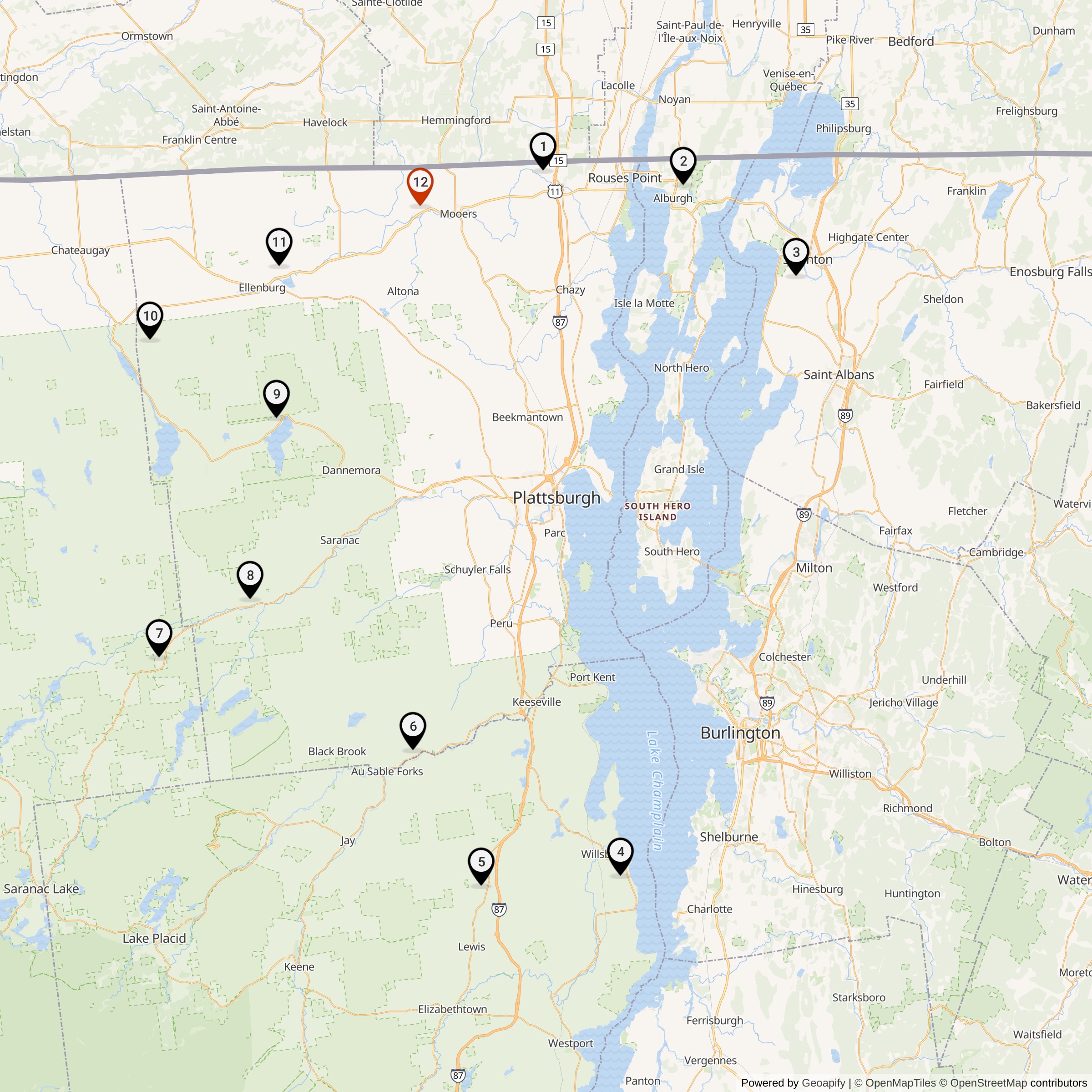
Site 556-12 existed because the United States was racing to field survivable intercontinental missiles during a period when early ICBMs were still large, complex, liquid-fueled weapons. Atlas was a first-generation American ICBM. The Atlas F variant represented the most hardened operational Atlas configuration: rather than using exposed pads or semi-hardened coffin launchers, Atlas F placed each missile in an underground vertical silo designed to improve survivability against blast overpressure.Plattsburgh's Atlas F field had a distinctive role in that national story. Twelve Atlas F sites were built within about a 50-mile radius of Plattsburgh Air Force Base, and the 556th Strategic Missile Squadron was the last Atlas squadron accepted into SAC service. Plattsburgh also became the only ICBM base east of the Mississippi River. Site 556-12 was one of those twelve dispersed sites, located far enough from the base and from the other silos to complicate enemy targeting, but close enough to be supported by the Plattsburgh missile organization.
The hardened-silo design was a response to Cold War logic. A fixed missile could be targeted, so it had to be hardened, dispersed, guarded, and tied into reliable command-and-control systems. Atlas F was still a liquid-fueled system, using RP-1 kerosene fuel and liquid oxygen oxidizer. In practical terms, that made alert operations more demanding than later solid-fueled Minuteman operations. The missile could not simply sit indefinitely with liquid oxygen aboard. When sources describe Atlas sites being placed in an operational launch-ready alert posture, that should not be read to mean the missile was continuously raised above the silo or continuously loaded with liquid oxygen. For Atlas F, it meant the missile, site equipment, crews, communications, security, fuel systems, and countdown procedures were configured so a launch order could be executed; liquid oxygen loading, silo-door opening, elevator movement, and final launch preparations were part of the launch sequence.
Construction and Activation
The Plattsburgh Atlas F program was a major engineering effort layered onto an already active Strategic Air Command bomber base. During the early 1960s, construction began on twelve Atlas F ICBM sites under Plattsburgh AFB control, all within a roughly 50-mile radius of the base. The HAER history of Plattsburgh AFB notes that preparation of all twelve silos and installation of all twelve Atlas F missiles required several additional months because of sub-zero weather and water-seepage problems.A Plattsburgh history-office packet provides unusually specific site data for Site 12. Soil testing for the Plattsburgh Atlas sites began in January 1960, and excavation began in June 1960. Raymond International was identified as the prime contractor in the packet. SAC Special Orders No. G-52, dated 1961-05-12, reflected real-property records for the sites; Site 12 was listed at Mooers, New York, with permanent installation number 7478 and permanent installation code THZP.
The packet lists Site 12 as accepted on 1962-12-06. SAC declared the 556th Strategic Missile Squadron operational on 1962-12-20, completing the deployment of the Atlas ICBM force.
The history-office packet also preserves the scale and cost of the individual complex. It lists a silo/easement tract acreage of 242.64 acres and an actual acreage of 9.22 acres. It gives the total construction cost for Site 12 as $4,989,816.94. Those figures underscore how much money, land-rights work, and engineering went into a single missile site that might appear today as a small rural utility or municipal compound.
Missile System and Technical Role
Site 556-12 was built for one SM-65F Atlas missile. The Plattsburgh history-office packet states that each site had one silo and was capable of launching only one missile. The 556th Strategic Missile Squadron had twelve operational launch sites and thirteen Atlas F missiles, allowing one missile per silo plus an additional spare.The assigned missile documented for Site 12 was General Dynamics manufacturing number 91F, General Dynamics missile serial number 62-12127, Air Force tail number 127. The missile was accepted on 1962-08-27 and delivered on 1962-08-28, with Site Assignment 12 and destination Plattsburgh Air Force Base. After its operational career, that missile was later used in an ABRES reentry-vehicle test, on 1970-05-30, Missile 91F was successfully launched from Vandenberg Air Force Base, Gantry A-3, carrying the ABRES RMP-B17 payload. That later launch gives Site 556-12 a traceable missile biography rather than only a site biography.
Public-source technical data describe Atlas F as a large, liquid-fueled first-generation ICBM. The Plattsburgh packet gives the missile's designed range as 6,325 statute miles and notes that it was designed to carry a nuclear warhead. It lists an 80-foot missile length, a takeoff thrust of about 360,000 pounds, a takeoff weight of about 130 tons, and a top speed of about 15,000 miles per hour. Atlas F was stored vertically in its silo and raised for launch by elevator. Fuel and oxidizer handling, guidance checks, communications, countdown coordination, and security all made the site far more complex than later popular images of a simple sealed silo.
The public Smithsonian National Air and Space Museum entry for the Mark 4 reentry vehicle states that the Mark 4 RV was used on U.S. Air Force Titan I and Atlas E/F ICBMs deployed in the early 1960s and carried a W-38 nuclear warhead with a yield of about 3.75 megatons.
Operational History
The 556th Strategic Missile Squadron was transferred to Plattsburgh Air Force Base on 1961-10-01 and became operational on 1962-12-20. The squadron's Atlas phase was brief but intense. It had to bring twelve dispersed hardened sites into service in a northern climate while Plattsburgh was still a major SAC bomber and tanker installation. The 380th Strategic Aerospace Wing history notes that the wing briefly controlled Atlas intercontinental ballistic missile operations from December 1962 through April 1965.Site 556-12's operational role was to keep one Atlas F missile available as part of the Plattsburgh alert force. The site would have been manned and supported by missile crews, maintenance personnel, security forces, and communications specialists rather than by a permanent Minuteman-style remote LCC crew arrangement. Atlas F complexes had on-site control and crew facilities. Security and maintenance teams had to support both the underground missile system and the aboveground support compound.
The Cuban Missile Crisis occurred during the Plattsburgh Atlas F buildup. SAC chronology records that, during the latter part of the crisis, the first few Series F Atlas ICBMs at the 556th Strategic Missile Squadron, Plattsburgh AFB, were also placed on alert. Site 556-12's exact participation in that crisis posture should be treated carefully. Its assigned missile had been accepted and delivered in August 1962, but the site-specific acceptance date in the Plattsburgh packet is 1962-12-06, after the crisis. Without a source naming Site 12 as one of the specific Plattsburgh missiles on crisis alert, the safest statement is that Site 556-12 belonged to the squadron whose first few Atlas F missiles entered that elevated alert posture, but the individual site's crisis role is not independently verified.
Throughout its active service, Site 556-12 shared the same fundamental operating pattern as the other Plattsburgh Atlas F sites: alert duty, site security, technical maintenance, communications readiness, inspection preparation, and support from Plattsburgh AFB. The site's active missile career lasted only a few years. That brevity is part of its significance. Atlas F represented a major step toward hardened silo deployment, but it was quickly overtaken by the solid-fueled Minuteman system, which could remain on alert with far less demanding propellant handling.
Deactivation and Disposal
The Atlas F force was short-lived because first-generation liquid-fueled ICBMs were rapidly surpassed by later systems. In November 1964, Secretary of Defense Robert McNamara announced that remaining first-generation ICBMs, including Atlas and Titan I systems, would be removed from the operational force by the end of June 1965. New York State military-history summaries use 1965-06-25 for the broader Plattsburgh Atlas removal or 556th SMS inactivation; HAER states that the 556th SMS was officially inactivated on 1965-06-25.For the individual site, deactivation did not simply mean turning off a switch. The Atlas F missile had to be removed, reusable missile and support equipment had to be salvaged or transferred, hazardous and fuel-related systems had to be addressed, and the real estate had to pass out of active Air Force use. HAER states that Atlas F missiles assigned to Plattsburgh were removed from their silos, equipment was salvaged for use by the U.S. Air Force Space program, and the sites were divested from Air Force ownership.
The Plattsburgh history-office packet gives the property-disposal details for Site 12. It lists the actual acreage sold as 9.22 acres, the sale price as $7,800, the buyer as the Town of Mooers, and the quitclaim date as 1967-07-20. Public FUDS records later identified the property as Plattsburgh Atlas S-12 / C02NY0217. The 2015 U.S. Army Corps of Engineers New York FUDS inventory lists two entries for the property: Site 01 under Building Demolition/Debris Removal and Site 02 under Potentially Responsible Party Actions / Hazardous, Toxic and/or Radioactive Waste. A GAO FUDS listing also identifies Plattsburgh Atlas S-12, C02NY0217, in Clinton County, including a PRP/HTRW entry listed as underway in 2002. ProPublica's Defense Environmental Restoration Program summary lists Plattsburgh Atlas S-12 at Mooers Forks with two hazardous sites and a highest-risk category of "Risk Not Evaluated or Not Required."
Current Status and Site Use
Atlas F Site 556-12 is no longer an active missile site. It is a decommissioned former Atlas F launch complex near Mooers Forks, Clinton County, New York. The best documented post-military use is municipal reuse. The 1988 USACE contamination-evaluation report described the property as a Town of Mooers vehicle-maintenance garage and highway-equipment storage site. It documented two Quonset huts, pump houses, a diesel fuel tank, stored vehicles and materials, closed silo doors, and unused underground missile facilities.The site should be treated as non-public unless current ownership and access permission are independently confirmed. Former missile sites can contain physical hazards, confined spaces, unstable structures, contaminated media, or active municipal operations. The coordinates mark the former launch complex/silo area, not a public visitor site.
Chronology
- 1960-01 Soil testing for the Plattsburgh Atlas sites began.
- 1960-06 Excavation began for the Plattsburgh Atlas sites; Raymond International was identified as prime contractor in the Plattsburgh history-office packet.
- 1961-05-12 SAC Special Orders No. G-52 reflected real-property records for the Plattsburgh Atlas sites; Site 12 was listed at Mooers, New York, with permanent installation number 7478 and permanent installation code THZP.
- 1961-10-01 The 556th Strategic Missile Squadron transferred to Plattsburgh AFB and began its Atlas F phase.
- 1962-08-27 Atlas missile 91F / serial 62-12127 / tail number 127 was accepted.
- 1962-08-28 Atlas missile 91F was delivered for the 556th Strategic Missile Squadron, Site Assignment 12.
- 1962-10 During the Cuban Missile Crisis, SAC chronology states that the first few Series F Atlas ICBMs at the 556th Strategic Missile Squadron, Plattsburgh AFB, were placed on alert; the individual participation of Site 556-12 is not independently verified.
- 1962-12-06 Site 12 was accepted, according to the Plattsburgh history-office packet.
- 1962-12-20 Headquarters SAC declared the 556th Strategic Missile Squadron operational, completing Atlas ICBM deployment.
- 1965-06-25 New York State military-history, and HAER sources use this date for Plattsburgh Atlas removal from alert or 556th SMS inactivation.
- 1967-07-20 The former Site 12 property was quitclaimed/sold to the Town of Mooers, according to the Plattsburgh history-office packet.
- 1970-05-30 Former Site 12 missile 91F was successfully launched from Vandenberg AFB, Gantry A-3, with ABRES RMP-B17 as a reentry-vehicle test payload.
- 1987-06 A site visit was conducted for the Former Atlas Missile Site S-12 contamination evaluation.
- 1988-06 Law Environmental, Inc. completed the Final Report, Contamination Evaluation of Former Atlas Missile Site S-12, Mooers Forks, New York, for the U.S. Army Corps of Engineers.
- 2002 GAO listed Plattsburgh Atlas S-12 / C02NY0217 PRP/HTRW work as underway.
- 2015 The USACE New York FUDS inventory listed Plattsburgh Atlas S-12 / C02NY0217 with Building Demolition/Debris Removal and PRP/HTRW entries.
Read about the Atlas at Plattsburgh AFB
All Atlas Missile Silo Locations