
Atlas F Site 556-7 Missile Silo, Riverview / Sugarbush New York
Longitude: -73.975974
Site Type: Atlas F vertical silo launch facility
Missile Type: SM-65F Atlas
Missile Assigned to this Silo: GD mfg 96F; GD serial 62-12132; AF tail 132; accepted/delivered 1962-07-15; later successfully launched from Vandenberg AFB Gantry A-3 on 1970-02-08 as ABRES RMP-B15 reentry-vehicle test.
Number of Launchers/Missiles: 1
Parent Base: Plattsburgh AFB
Missile Wing: 380th Strategic Aerospace Wing
Missile Squadron: 556th Strategic Missile Squadron
Corps of Engineers Site ID: 11
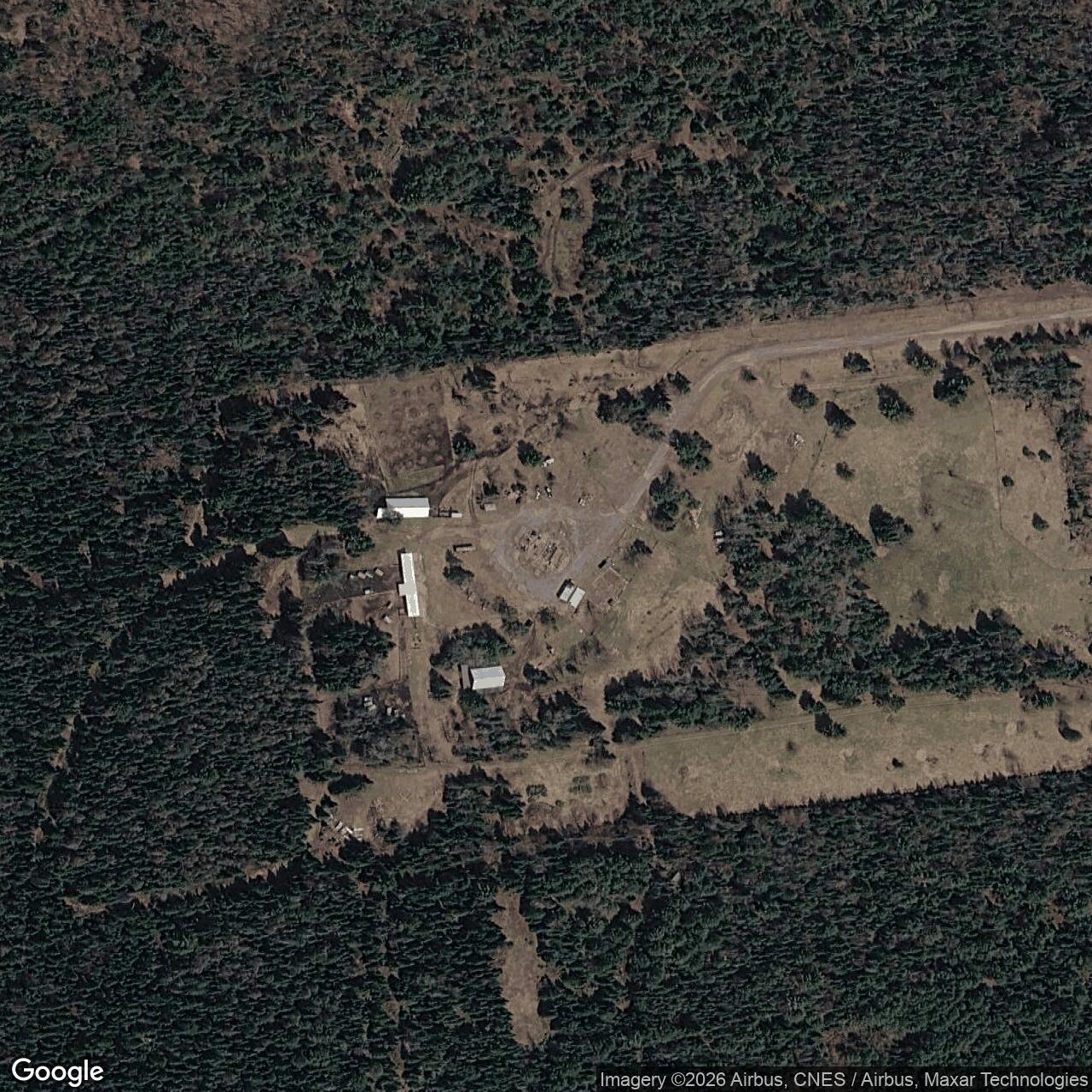
Current Site Use: Private former Atlas F silo near Riverview/Sugarbush; underground site reported sealed/flooded, quonset huts gone, hunting cabin on site, visible silo-door/debris remains, possible former exterior helicopter pad.
Site Ownership: Private ownership reported by field-observation source; current owner not independently reverified.
Accessible: No public access / private property; former missile site with possible hazards; do not enter without owner permission.
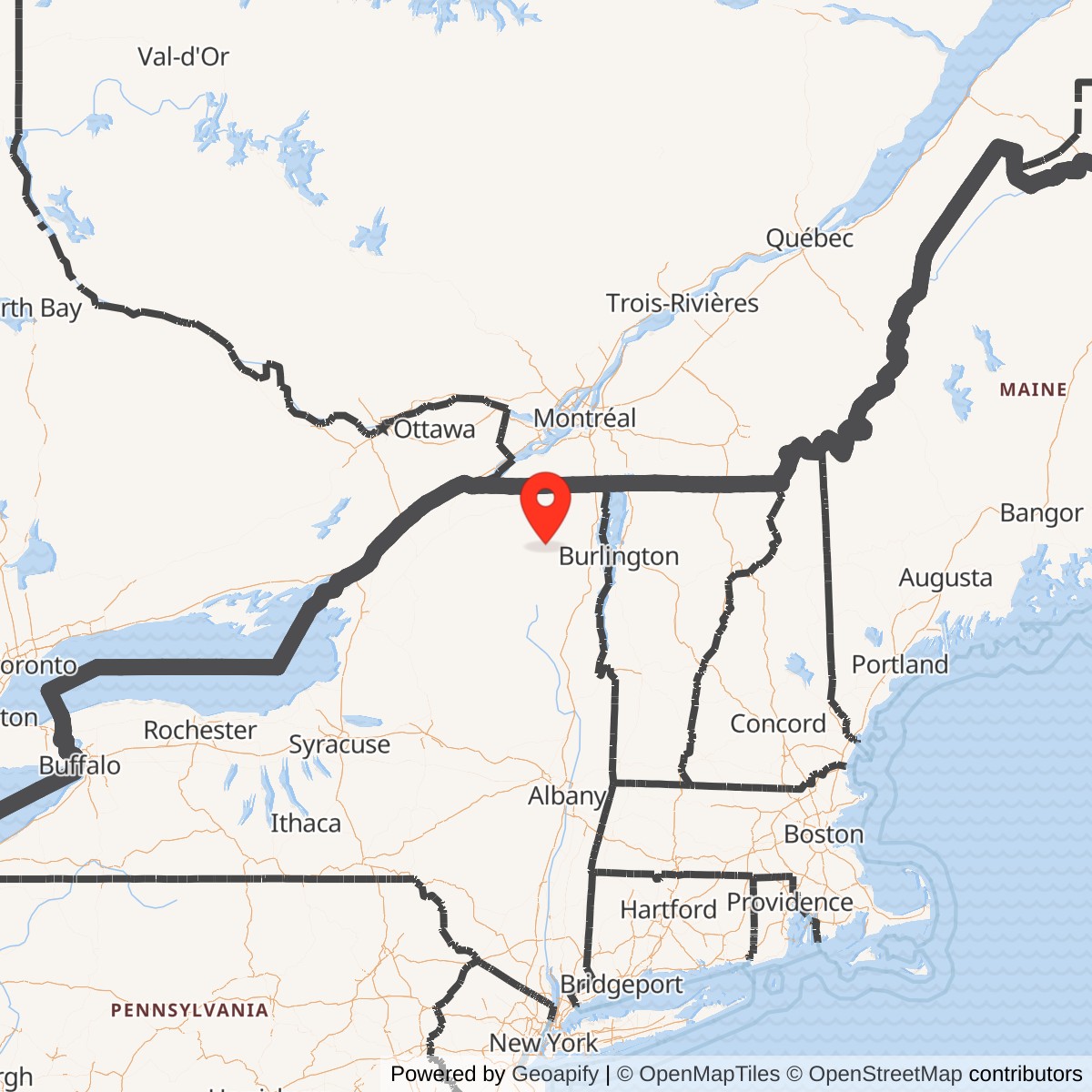
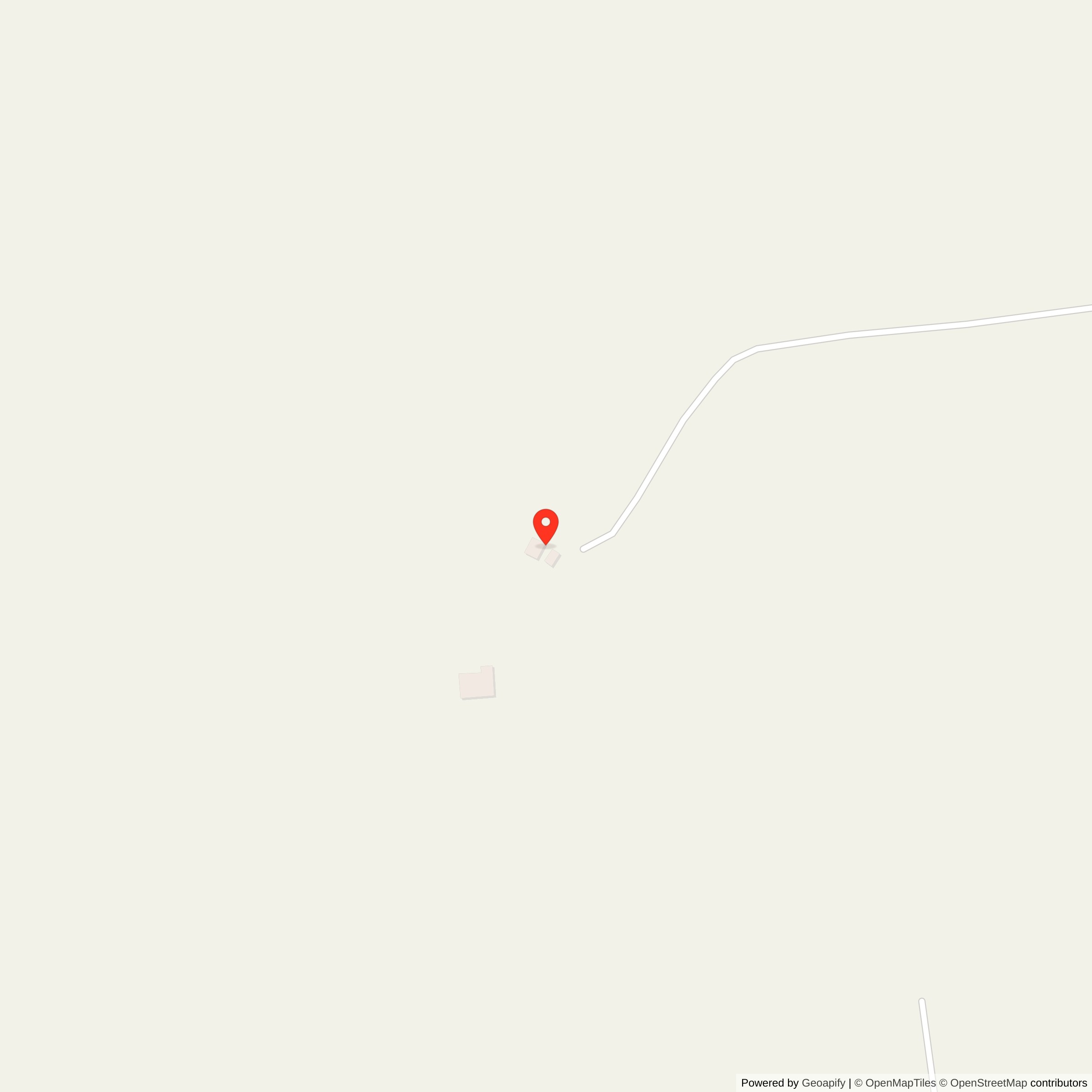
In the woods near Riverview and Sugarbush, the Cold War left a scar that is harder to explain than an abandoned factory or an old railroad grade. Atlas F Site 556-7 was built to hide a thermonuclear missile in a vertical underground silo, keep it ready under Strategic Air Command procedures, and then raise it into the open only if the United States crossed the final threshold from deterrence to nuclear war. Today the same place is described in field photographs as sealed, overgrown, privately owned, and partly reclaimed by the northern New York landscape, but its exact missile, its later test launch, and its environmental record are all still traceable.
Atlas F Site 556-7 was a single-missile SM-65F Atlas intercontinental ballistic missile launch facility associated with Plattsburgh Air Force Base and the 556th Strategic Missile Squadron. The site was part of the Plattsburgh Atlas F missile field operated in northern New York and Vermont during the early 1960s. It is best identified as Atlas F Site 556-7, Atlas S-7, or the Riverview / Sugarbush site, near Riverview in the Town of Franklin, Franklin County, New York.
The site is inactive and decommissioned. The 556th Strategic Missile Squadron was formally inactivated on 1965-06-25 as part of the Atlas ICBM phaseout. Because Atlas F sites were self-contained vertical-silo launch complexes, 556-7 did not have a Minuteman-style remote parent Launch Control Center; its launch-control and support functions were part of the individual complex. The property is reported as privately owned, with the underground site sealed, the former quonset huts gone, a hunting cabin on the surface, and visible remnants including partly open silo doors and debris. The site is not open to the public.
Location, Landscape, and Site Description
Site 556-7 sits in Franklin County, New York in a rural wooded upland area associated with Riverview and Sugarbush. The location is west-southwest of Plattsburgh Air Force Base and west of the Lake Champlain corridor, placing the site in the northern Adirondack / North Country landscape rather than on the parent base. The dispersed placement was intentional. Plattsburgh's Atlas F missiles were spread in a ring around the base so that an attack on the base itself would not necessarily destroy every missile at once.The Atlas F complex was a hardened, single-missile vertical silo-launcher site. It included the deep silo, heavy silo doors, elevator/launcher machinery, propellant and oxidizer support equipment, power and environmental systems, communications, security fencing and access controls, and an underground control/support area. Field-observation photographs and notes from the former site describe partly open silo doors held by debris, a hunting cabin on or near the launch-area slab, the absence of the former quonset huts, and a possible exterior helicopter pad about 500 feet from the missile site. The same source cautions that it was unknown whether that pad was related to construction or operational use. That possible helipad is worth noting because the observer described it as the only exterior helicopter-pad feature found among the 556th Strategic Missile Squadron sites.
Strategic and Cold War Context
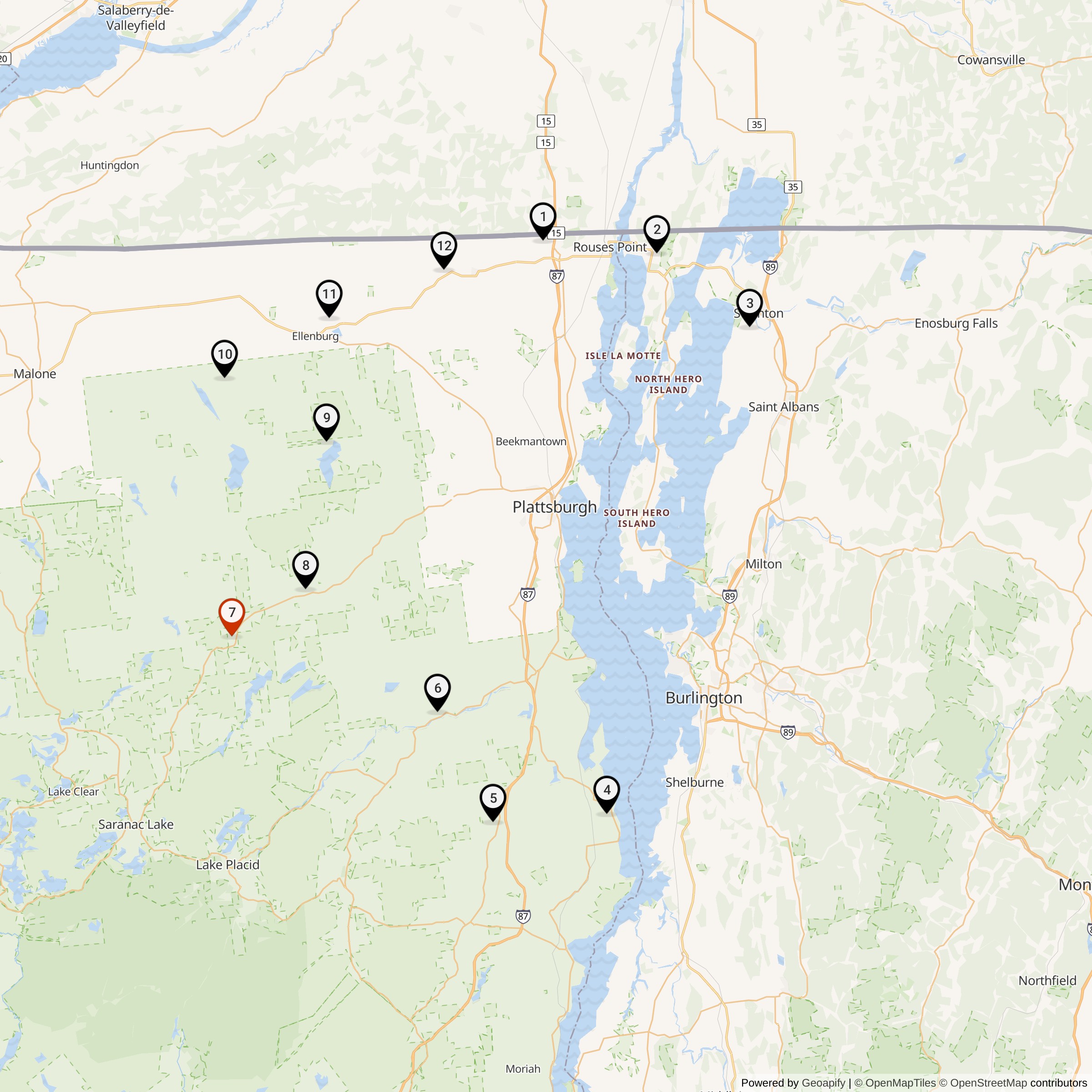
Site 556-7 existed because the United States needed a dispersed, survivable intercontinental missile force at a time when nuclear deterrence was shifting from bomber bases and exposed missile pads to hardened, geographically separated launch sites. The Atlas F was the final operational Atlas ICBM variant. It stored the missile vertically in an underground silo and raised it to the surface for launch, a more survivable arrangement than earlier Atlas D and Atlas E launch systems even though the missile still became vulnerable once raised.The Plattsburgh missile field was especially unusual because it put operational ICBMs in the northeastern United States. The 556th Strategic Missile Squadron's Atlas phase placed twelve Atlas F sites around Plattsburgh Air Force Base in New York and Vermont, these were the only ICBM facilities east of the Mississippi River. That made the Plattsburgh field a visible northern-frontier expression of the same national deterrent system more often associated with the Great Plains, Texas, Oklahoma, Kansas, New Mexico, and the intermountain West.
Atlas F also shows why first-generation ICBM sites had such short active lives. The SM-65F Atlas could carry a thermonuclear warhead across intercontinental distances, but it remained a liquid-fueled missile that required liquid oxygen before launch. Its RP-1 fuel could remain aboard the missile during alert, but liquid oxygen was cryogenic and had to be loaded during the launch sequence. The system was impressive, expensive, and strategically important, but it was quickly overtaken by solid-fueled Minuteman missiles that could remain ready with far less fueling complexity.
Construction and Activation
Construction of Site 556-7 began during the broader early-1960s buildout of the Plattsburgh Atlas F field. General Dynamics Atlas missile 96F, serial number 62-12132, Air Force tail number 132, was accepted on 1962-07-15 and delivered on 1962-07-15 for assignment to the 556th Strategic Missile Squadron's Site 7.Official SAC chronology places the larger squadron milestones in sequence. Headquarters SAC activated the 556th Strategic Missile Squadron at Plattsburgh AFB on 1961-10-01, identifying it as the last Series F Atlas squadron. Headquarters SAC later declared the 556th Strategic Missile Squadron operational on 1962-12-20, completing the deployment of the Atlas ICBM force. For Site 556-7, the most conservative interpretation is that the complex received its assigned missile in July 1962 and was part of the field brought into formal squadron operational status by 1962-12-20.
The construction challenge at Plattsburgh was not only technical but geographic. The launch sites had to be built across rural northern New York and Vermont, often in wooded or remote settings, and then connected operationally to Plattsburgh AFB.
Missile System and Technical Role
Site 556-7 housed an SM-65F Atlas missile in a vertical underground silo-launcher complex. The Atlas F was a first-generation liquid-fueled ICBM built by General Dynamics / Convair. Public historical descriptions of the Plattsburgh Atlas F system state that the missile used RP-1 fuel and liquid oxygen, carried a General Electric Mark IV reentry vehicle with a W-38 thermonuclear warhead, and had a range of about 6,000 miles. The W-38 yield was approximately 3.8 megatons of TNT.Site 556-7's missile was General Dynamics manufacturing number 96F, General Dynamics serial number 62-12132, and Air Force missile tail number 132. After its service at Plattsburgh, the missile was later used in the Advanced Ballistic Re-entry Systems program. It was launched from Vandenberg AFB, Gantry A-3, on 1970-02-08 with an ABRES RMP-B15 reentry-vehicle test payload, and the launch outcome is listed as successful.
When a Plattsburgh Atlas F site was in an operational launch-ready alert posture, that did not mean the missile was continuously raised aboveground or continuously loaded with liquid oxygen. In normal alert configuration, the missile remained vertical inside the underground silo. RP-1 fuel was aboard, while liquid oxygen was loaded only during the launch sequence. If a launch order came, the crew and launch systems would proceed through checkout, liquid-oxygen loading, silo-door opening, missile raising, lock-in at the launch position, and final launch steps. A short launch hold could be supported by topping off liquid oxygen, but the raised missile's exposure and the nature of cryogenic liquid oxygen made continuous raised or continuously LOX-loaded posture impractical.
Operational History
Site 556-7 was one of twelve Plattsburgh Atlas F sites assigned to the 556th Strategic Missile Squadron. Atlas sites were manned around the clock during the squadron's active Atlas period, but this should be understood in the Atlas F context: each complex had its own underground control/support spaces and required continuous operational staffing and security coverage, unlike later Minuteman launch facilities that were normally unmanned and remotely controlled from separate launch-control centers.The site was part of the 556th SMS missile field during the tense period around the Cuban Missile Crisis. The site-specific missile for 556-7 had been accepted and delivered in July 1962, but Headquarters SAC did not declare the full squadron operational until 1962-12-20. The Plattsburgh Atlas field was being armed and brought to readiness in 1962, and the operational 556th sites were placed in elevated alert status during the October crisis. That alert did not mean Atlas F missiles were continuously raised or continuously liquid-oxygen-loaded.
Operational life at 556-7 would have centered on the demanding routines of a liquid-fueled ICBM site: maintaining the missile and its guidance equipment, testing power and communications links, preserving the launch elevator and silo-door systems, controlling the propellant and oxidizer support equipment, maintaining security, and keeping crews trained for a launch sequence everyone hoped would never be ordered. The site had to be ready without advertising itself; the landscape looked rural, but the underground structure held a weapon designed for intercontinental nuclear delivery.
The SAC Missile Chronology adds two important squadron-level events. On 1963-04-21 to 1963-04-26, the SAC Inspector General conducted the first formal Operational Readiness Inspection of a Series F Atlas ICBM squadron at the 556th Strategic Missile Squadron. That was a squadron-level inspection, not a documented individual Site 556-7 event, but it directly involved the Plattsburgh Atlas F force. On 1964-11-19, Secretary of Defense Robert S. McNamara announced that remaining first-generation ICBMs, including Atlas systems, would be phased out by the end of fiscal year 1965. Within months, Site 556-7's operational career was over.
Deactivation and Disposal
Site 556-7 was decommissioned as part of the rapid retirement of the Atlas ICBM force. Headquarters SAC inactivated the 556th Strategic Missile Squadron on 1965-06-25, along with the remaining Atlas ICBM squadrons at Lincoln, Schilling, Forbes, Dyess, Altus, Walker, and Plattsburgh.The Secretary of Defense had already announced in November 1964 that the remaining first-generation ICBMs, including Atlas and Titan I, would be phased out by the end of fiscal year 1965. Unlike later launch facilities removed under strategic arms-control verification regimes, the Plattsburgh Atlas F silos were not generally imploded as treaty items. They passed instead into a mixed post-military world of salvage, transfer, private ownership, reuse, environmental review, and abandonment. Some Atlas F sites were adapted, restored, or reused; others remained sealed and hazardous. Site 556-7 appears in the latter category: private, sealed, not open to the public, and still physically recognizable.
Current Status and Site Use
The former Site 556-7 launch complex is decommissioned, inactive, and privately owned. It is not an active military installation and is not a public museum. Field-observation material describes the underground site as sealed, the former quonset huts as gone, and a hunting cabin on the surface. The same source notes partly open silo doors held by debris and a possible exterior helicopter pad about 500 feet from the missile site. Current conditions may have changed since those observations, so the most durable statement is that the site is a private former Atlas F launch complex with surviving surface and subsurface remnants.Public access should be treated as closed unless a current owner gives explicit permission. Former missile sites can contain fall hazards, confined spaces, standing water, unstable structures, environmental hazards, and private-property restrictions.
Chronology
- 1960 Construction began on Site 556-7, exact month and day not identified in the site-specific source.
- 1961-10-01 Headquarters SAC activated the 556th Strategic Missile Squadron at Plattsburgh AFB as the last Series F Atlas squadron.
- 1962-07-15 Atlas missile 96F, General Dynamics serial 62-12132 and Air Force tail number 132, was accepted and delivered for assignment to the 556th Strategic Missile Squadron's Site 7.
- 1962-10 During the Cuban Missile Crisis, operational 556th sites were placed at a high level of alert; Atlas F alert did not mean continuously raised or continuously liquid-oxygen-loaded.
- 1962-12-20 Headquarters SAC declared the 556th Strategic Missile Squadron operational, completing deployment of the Atlas ICBM force.
- 1963-04-21 to 1963-04-26 The SAC Inspector General conducted the first formal Operational Readiness Inspection of a Series F Atlas ICBM squadron at the 556th Strategic Missile Squadron; this was squadron-level, not documented as specific to Site 556-7.
- 1964-11-19 Secretary of Defense Robert S. McNamara announced that remaining first-generation ICBMs, including Atlas systems, would be phased out by the end of fiscal year 1965.
- 1965-06-25 Headquarters SAC inactivated the 556th Strategic Missile Squadron at Plattsburgh AFB.
- 1970-02-08 The former Site 556-7 missile, Atlas 96F, was successfully launched from Vandenberg AFB, Gantry A-3, with an ABRES RMP-B15 reentry-vehicle test payload.
- 1976-03-21 Available public search metadata identifies an ASR-3C report for PLATTSBURGH ATLAS MISSILE SITE S-7, Town of Franklin, Franklin County, New York, project C02NY021201.
- 2015-09-30 The USACE New York FUDS inventory listed PLATTSBURGH ATLAS S-7, C02NY0212, in Franklin County, New York, under PRP/MMRP.
- 2022 Department of Defense DERP data for properties achieving final remedy complete before FY22 listed PLATTSBURGH ATLAS S-7 / NY29799F109800 with one MMRP site and no IRP site.
Plattsburgh history-office packet on Atlas Missile Deployment
Read about the Atlas at Plattsburgh AFB
All Atlas Missile Silo Locations