Atlas F Site 556-9 Missile Silo, Dannemora / Chazy Lake New York
Longitude: -73.82240975109495
Site Type: Atlas F vertical silo launch facility
Missile Type: SM-65F Atlas
Missile Assigned to this Silo: GD mfg 28F; GD serial 60-5551; AF tail 551; accepted/delivered 1962-09-11 per missile page (site page lists 1962-10-11); mission Operational ICBM / ABRES; later successfully launched 1970-03-13 from Vandenberg AFB Gantry A-3 with ABRES RMP-B16 reentry-vehicle test payload.
Number of Launchers/Missiles: 1
Parent Base: Plattsburgh AFB
Missile Wing: 380th Strategic Aerospace Wing
Missile Squadron: 556th Strategic Missile Squadron
Corps of Engineers Site ID: 7
Current Site Use: Former Atlas F silo reused by the Town of Dannemora as a highway/public works and municipal operations property at 78 Higby Road / Town Garage Road; underground silo/control structures reported flooded/not used; surface covered by asphalt and municipal buildings.
Site Ownership: Town of Dannemora municipal ownership
Accessible: Limited municipal-property access only; no public access to underground missile structures.
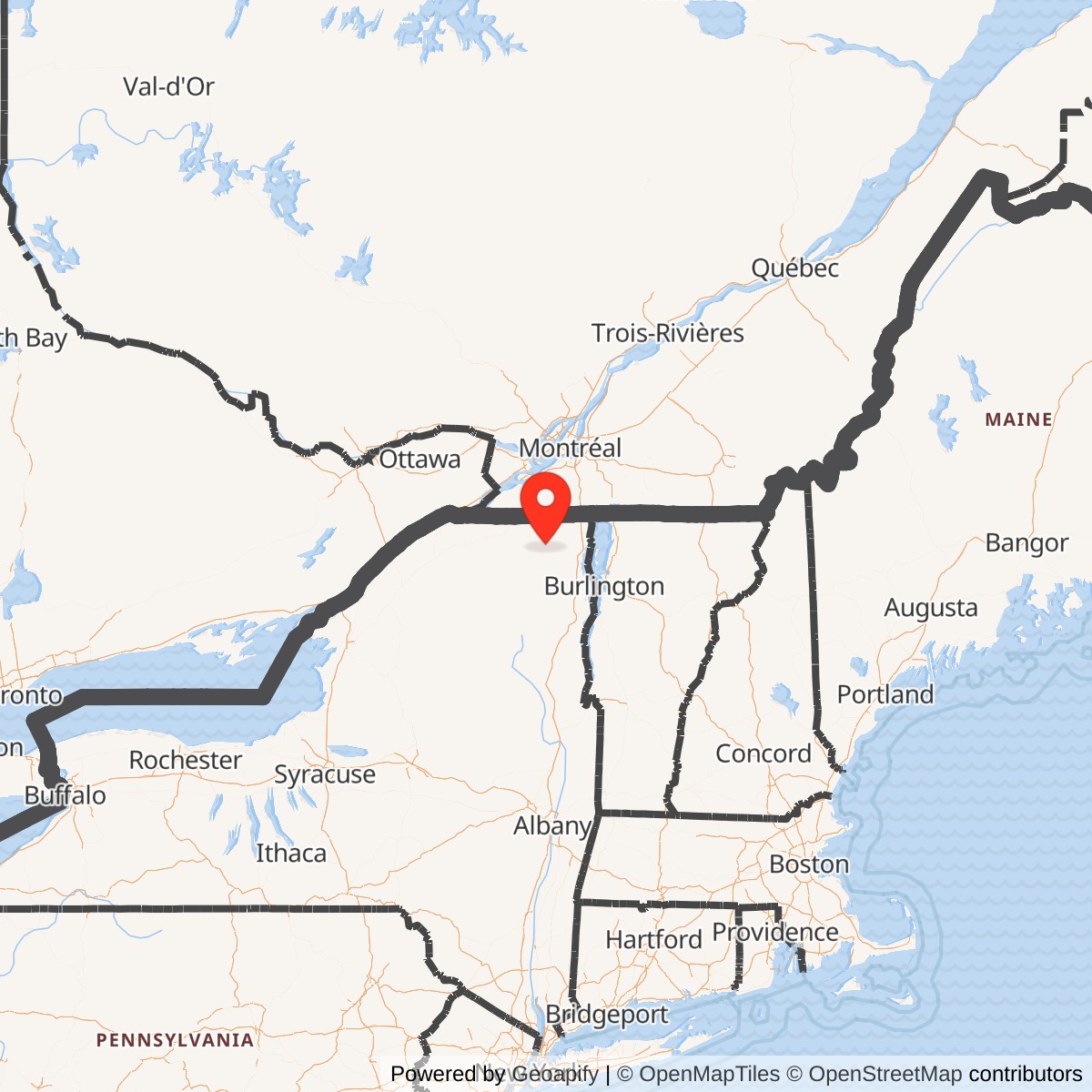
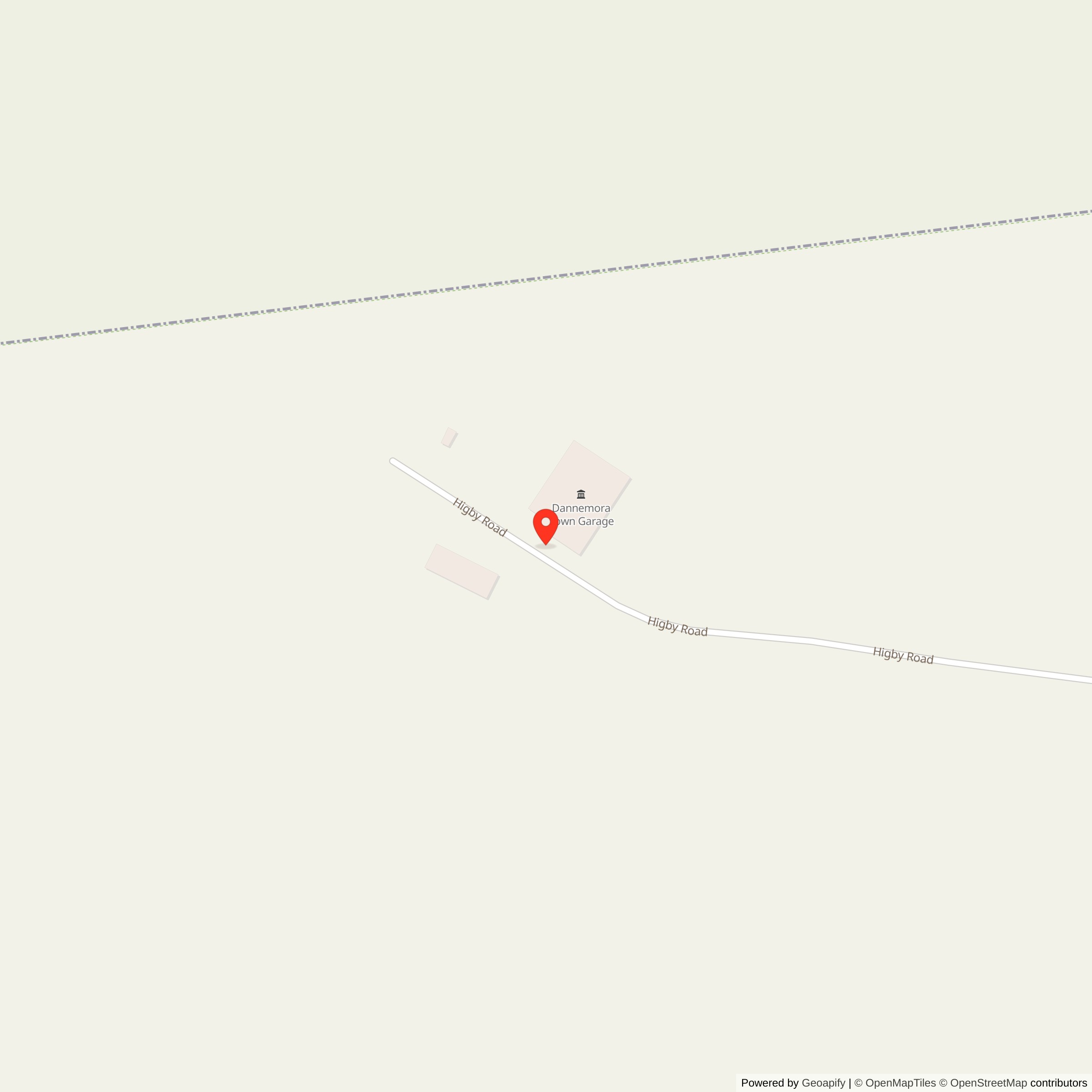
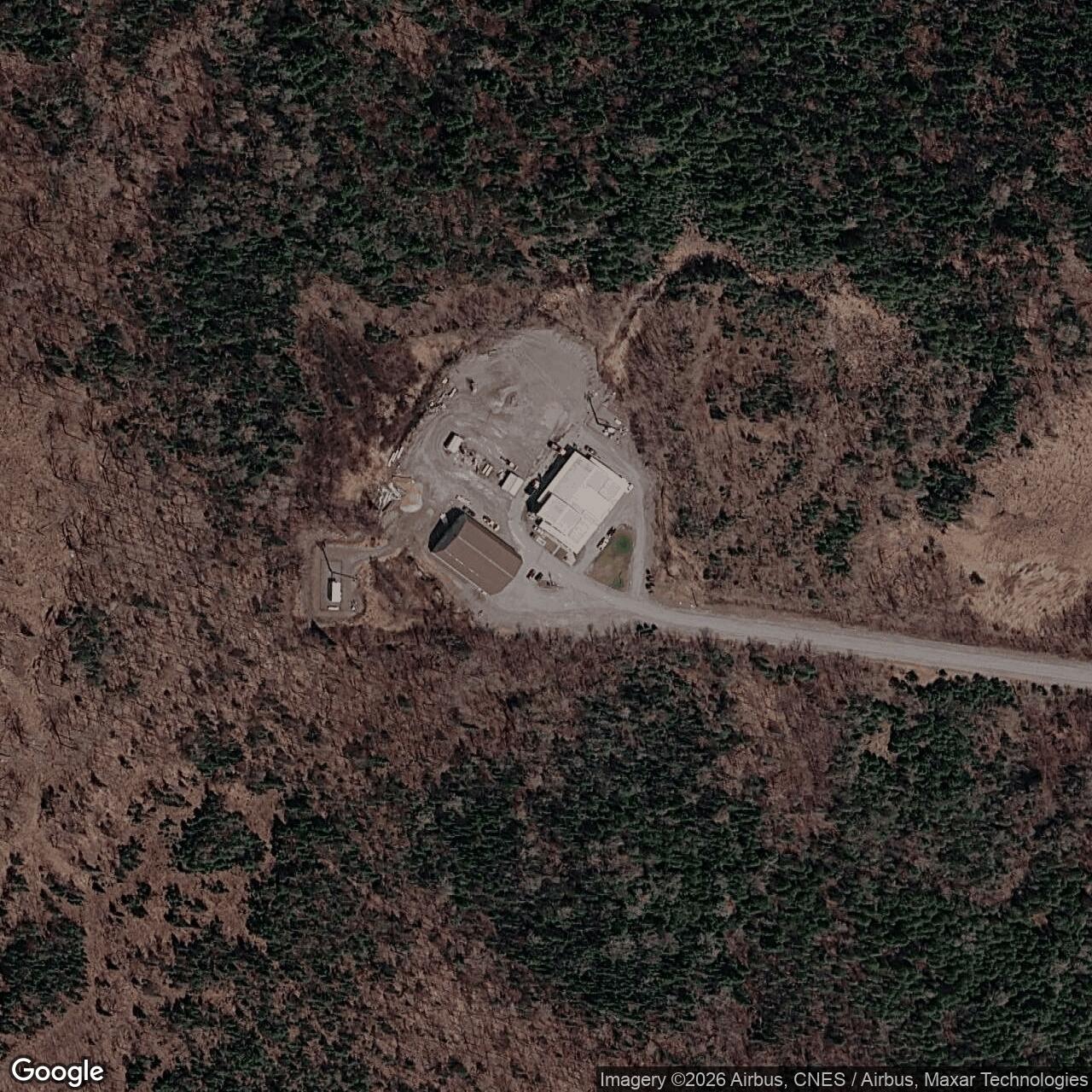
A municipal highway yard outside Dannemora, New York, is not where most people expect to find the remains of a thermonuclear missile complex. But located here, beneath the practical surface world of asphalt, plows, storage buildings, and town operations, the concrete bones of Atlas F Site 556-9 still mark one of the strangest transformations in the Plattsburgh missile field. This was once a Strategic Air Command launch complex where an Atlas F intercontinental ballistic missile waited vertically underground. Today it is a working Town of Dannemora site, a place where the Cold War was not preserved as a museum but absorbed into everyday municipal infrastructure.
Atlas F Site 556-9 was a single-missile SM-65F Atlas intercontinental ballistic missile launch facility associated with Plattsburgh Air Force Base, the 380th Bombardment Wing / 380th Strategic Aerospace Wing, and the 556th Strategic Missile Squadron. It is best identified as Atlas F Site 556-9, Atlas S-9, or the Dannemora / Chazy Lake site. The former launch complex is in Clinton County, New York, at the end of Higby Road, also identified in environmental records as Town Garage Road or 78/85 Higby Road, in the Town of Dannemora.
The site is inactive, decommissioned, municipally owned, and reused. Official Plattsburgh Air Force Base HAER documentation states that the 556th Strategic Missile Squadron became operational on 1962-12-20, and that the squadron was inactivated on 1965-06-25 after the Atlas F missiles assigned to Plattsburgh were removed from their silos and the sites were divested from Air Force ownership. Because Atlas F sites were self-contained vertical-silo launch complexes, 556-9 did not have a Minuteman-style remote parent Launch Control Center; its launch-control and support functions were part of the individual complex. The former complex is now used by the Town of Dannemora, primarily as a highway / public works and municipal operations property, and the underground missile structures are not open to the public.
Location, Landscape, and Site Description
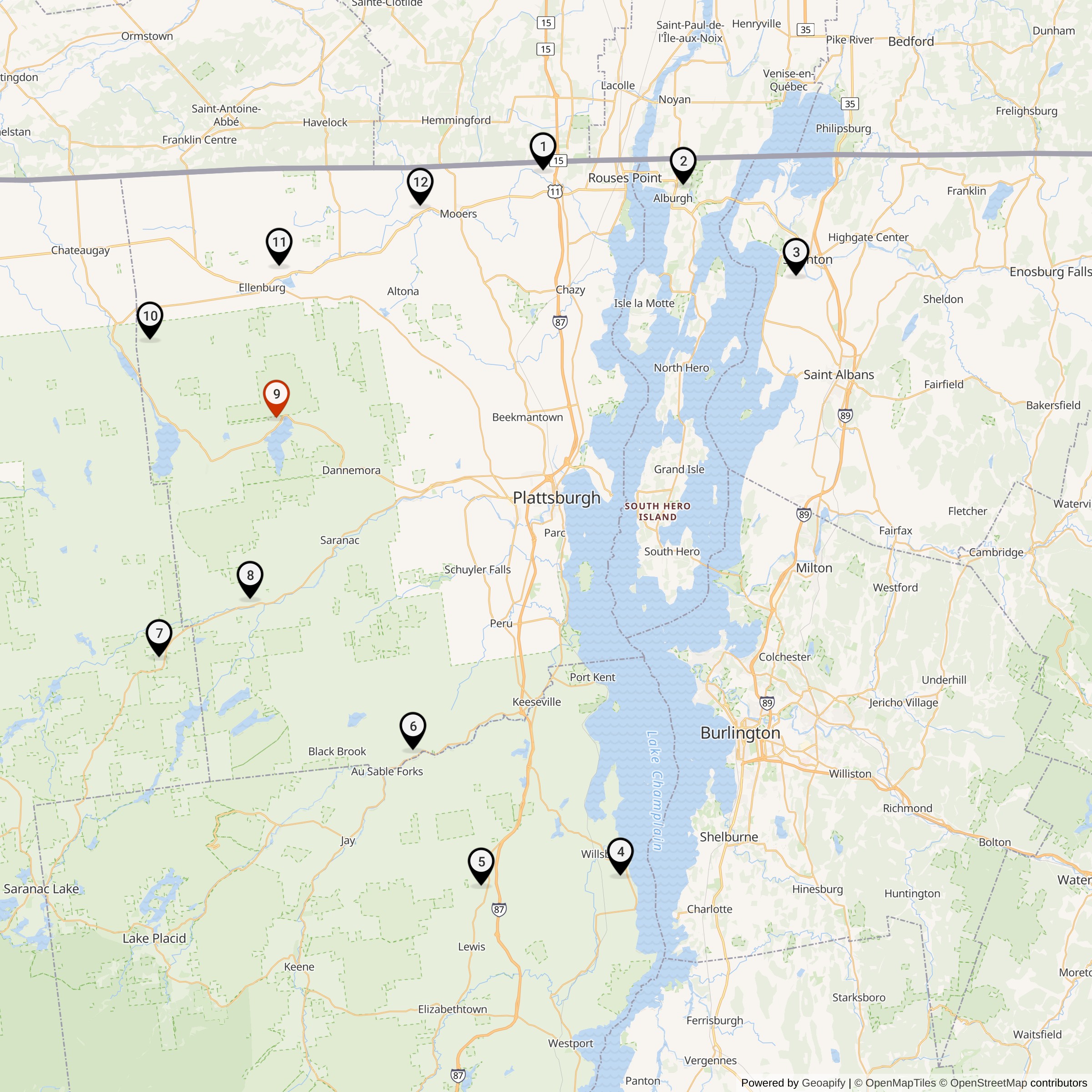
Site 556-9 sits in the northern Adirondack / Clinton County landscape west and northwest of the village of Dannemora. The surrounding area is rural, wooded, and hilly, with the Chazy Lake area to the west and the former Plattsburgh Air Force Base to the east-southeast. A field-observation page for the 556th Atlas F sites identifies Site 9 as "Chazy Lake," while the environmental record identifies the property as Atlas S-9 at 78 Higby Road / Town Garage Road in the Town of Dannemora.The site was one of twelve Atlas F launch complexes dispersed around Plattsburgh Air Force Base. Its location mattered because Atlas F deployment depended on dispersal. The twelve missiles were not clustered at the parent base; they were spread across northern New York and Vermont so that a single attack would not necessarily destroy the entire squadron. Site 556-9 was therefore both geographically tied to Plattsburgh AFB and physically separate from it.
The original Atlas F complex was a hardened, single-missile vertical silo-launcher site. It included a deep missile silo, an underground launch-control / command structure, a connecting tunnel, elevator/launcher machinery, silo doors, emergency power, communications, propellant and oxidizer support equipment, security fencing, access controls, and surface support buildings. The New York State Military Museum's Atlas-sites summary describes the general Plattsburgh Atlas F layout as a two-story command building about 40 feet in diameter, a missile silo about 50 feet in diameter and approximately 185 feet deep, and an inner fenced area around the complex.
Post-military sources describe what survived and how the site changed. The Center for Land Use Interpretation reports that the Town of Dannemora's highway department took over the former missile silo a few miles west of the village, added surface structures, and claimed not to use the underground facilities. A field-observation page for Site 9 states that the Highway Department uses the site and the Quonset huts for storage and that the underground site is flooded to ground level. The 2018 Atlas S-9 site closure report prepared for the U.S. Army Corps of Engineers describes the property as the Town of Dannemora's township headquarters and public works yard, with the surface covered by asphalt and various buildings used for township business. A geophysical survey appended to that report states that the concrete infrastructure of the missile silo and command center is still in place beneath the ground.
Strategic and Cold War Context
Site 556-9 existed because the United States needed a missile force that could survive long enough to deter a Soviet first strike. The Atlas F program was a bridge between the earliest exposed or semi-hardened ICBM launch arrangements and the later solid-fueled Minuteman silos. Earlier Atlas D and Atlas E complexes improved American intercontinental capability, but Atlas F put the missile vertically underground in a hardened silo-launcher. That made the missile more survivable while stored, even though it still had to be raised aboveground before launch.The Plattsburgh Atlas field was also geographically unusual. The 556th Strategic Missile Squadron's Atlas phase placed twelve Atlas F sites in a ring around Plattsburgh Air Force Base in New York and Vermont, the only ICBM facilities east of the Mississippi River. New York State Military Museum's Atlas-sites summary identifies the New York locations as Champlain, Willsboro, Lewis, Au Sable Forks, Riverview, Redford, Dannemora, Brainardsville, Ellenburg Depot, and Mooers, with two additional sites in Vermont. Site 556-9 was the Dannemora-area link in that ring.
Atlas F was powerful but transitional. The missile could deliver a nuclear warhead over intercontinental distance, but it remained a liquid-fueled system. It used RP-1 fuel and liquid oxygen; RP-1 could be stored aboard the missile, but liquid oxygen was cryogenic and had to be loaded as part of the launch sequence. The missile was normally kept in its underground vertical silo on an elevator/launcher. In a launch sequence, the site opened the silo doors, loaded or topped liquid oxygen, raised the missile, completed final checks, and launched from the surface. The later solid-fueled Minuteman system removed much of this fueling complexity and could remain in a far faster reaction posture. That is why Atlas F sites like 556-9 represented both a major leap in survivable basing and a system the Air Force began retiring after only a few years of alert service.
Construction and Activation
Construction of Site 556-9 began as part of the broader Plattsburgh Atlas F buildout in the early 1960s. The site was built as one of twelve independent Atlas F launch complexes assigned to the 556th Strategic Missile Squadron. Historic American Engineering Record documentation for Plattsburgh Air Force Base states that construction began on twelve Atlas F sites under Plattsburgh control in the early 1960s, all within a 50-mile radius of the base, and that a portion of a flightline hangar at Plattsburgh was used as a missile assembly area.The Plattsburgh HAER record also explains why activation was not instantaneous. Preparation of all twelve silos and installation of the twelve Atlas F missiles took several additional months because of sub-zero weather conditions and water seepage. The 556th Strategic Missile Squadron became operational on 1962-12-20.
Site 9's missile was General Dynamics manufacturing number 28F, General Dynamics serial number 60-5551, and Air Force tail number 551. On 1970-03-13, after its Plattsburgh service, Atlas 28F was launched successfully from Vandenberg Air Force Base, Gantry A-3, with an ABRES RMP-B16 reentry-vehicle test payload.
Missile System and Technical Role
Site 556-9 housed an SM-65F Atlas, the final operational Atlas ICBM variant. The Atlas F was a first-generation liquid-fueled intercontinental ballistic missile built by General Dynamics / Convair. Public historical sources for the Plattsburgh Atlas F system state that the missile used RP-1 fuel and liquid oxygen, carried a General Electric / Avco Mark IV reentry vehicle with a W-38 thermonuclear warhead, and had a range of about 6,000 miles. The W-38 nominal yield was about 3.75 megatons.The Atlas F silo-launcher design shaped every operational detail at Site 556-9. The missile sat vertically underground on a launch elevator rather than lying horizontal in a coffin launcher or standing exposed on a surface pad. The launch crew worked from the site's underground control spaces rather than a remote Minuteman-style Launch Control Center. The site's launch-control and command structure, missile silo, tunnel, blast doors, ventilation systems, electrical systems, diesel power, communications, security perimeter, and propellant-handling equipment formed a single hardened launch complex.
When Site 556-9 or another Atlas F complex was in an operational launch-ready alert posture, that did not mean the missile was continuously raised aboveground, and it did not mean the missile was continuously loaded with liquid oxygen. In practical terms, the missile, crew, launch-control systems, communications links, security force, power systems, support equipment, and propellant supplies were maintained so that the site could begin a launch sequence promptly if ordered. The RP-1 fuel could remain aboard the missile during alert. Liquid oxygen, because it boiled away and required cryogenic handling, was not kept continuously loaded for long periods. A launch sequence required liquid oxygen loading or top-off, opening the silo doors, raising the missile, completing final checks, and then launching from the surface. This gave Atlas F a quicker and more protected posture than earlier Atlas D and E configurations, but it still lacked the near-instant sealed-silo responsiveness of later solid-fueled Minuteman missiles.
Operational History
The 556th Strategic Missile Squadron was organized at Plattsburgh Air Force Base on 1961-10-01 and assigned to the 380th Bombardment Wing, later the 380th Strategic Aerospace Wing. USAF unit-history material describes the 556th as the last Series F Atlas squadron and the last squadron in the Atlas program. The squadron had earlier been associated with the Snark missile program, but at Plattsburgh its mission was Atlas F nuclear deterrence.Site 556-9's daily operational life would have been a mixture of tension and routine. The site was designed for 24-hour readiness. Launch crews, security personnel, maintenance teams, and support specialists had to keep a complex liquid-fueled missile system ready in a harsh northern climate. The missile was valuable, dangerous, and mechanically demanding. It required power, communications, environmental controls, propellant and oxidizer support, periodic maintenance, inspections, security checks, and coordination with the parent base.
The Cuban Missile Crisis occurred while the 556th Strategic Missile Squadron was still moving toward full operational status. The public sources used here do not verify that Site 556-9 itself was on alert on a particular crisis date. That distinction matters because the Plattsburgh squadron's missiles were being received, installed, and turned over during 1962. Squadron-level histories and SAC chronology, however, show that operational 556th sites were placed at a high alert level during the crisis and that missiles received but not yet on alert were to be brought toward alert status as quickly and quietly as possible. For Atlas F, that kind of crisis posture meant readiness to execute launch procedures if ordered; it did not mean the missile was continuously raised out of the silo or continuously LOX-loaded.
The site-specific missile, Atlas 28F / tail number 551, gives Site 556-9 a traceable missile biography. While at Dannemora it was assigned as an operational ICBM. After the Atlas F force was retired, the missile did not simply disappear into scrap. 28F later served an ABRES mission and was successfully launched from Vandenberg Air Force Base on 1970-03-13 with the RMP-B16 reentry-vehicle test payload.
Deactivation and Disposal
Atlas F Site 556-9's active missile career was short. The Atlas system had been a national priority in the late 1950s and early 1960s, but the first-generation liquid-fueled ICBMs were overtaken quickly by Titan II and especially Minuteman. Secretary of Defense Robert S. McNamara announced in November 1964 that the remaining first-generation ICBMs, including Atlas systems, would be phased out by the end of fiscal year 1965.USAF unit-history material for the 556th Strategic Missile Squadron lists the first ICBM off alert on 1965-03-12, the last ICBM off alert on 1965-04-10, and the last ICBM shipped on 1965-04-13. The squadron itself was officially inactivated on 1965-06-25. The Plattsburgh HAER record states that the Atlas F missiles assigned to Plattsburgh were removed from their silos, that equipment was salvaged from the sites for use by the U.S. Air Force space program, and that the sites were divested from Air Force ownership.
Site 556-9 entered the post-military world as a Formerly Used Defense Site. The 2015 USACE New York FUDS inventory lists PLATTSBURGH ATLAS S-9 as property C02NY0214 in Clinton County under CON/HTRW. Older DOD FUDS indexing identifies PLATTSBURGH ATLAS S-9 with FFID NY29799F110000. A 2001 GAO FUDS cleanup table listed PLATTSBURGH ATLAS S-9, C02NY0214, as a Clinton County cleanup project, then shown as under way. Later DERP tables show the site's cleanup status changing over time. The 2023 DERP Table 9 of properties achieving final response complete before FY22 lists PLATTSBURGH ATLAS S-9 / NY29799F110000 with one Installation Restoration Program site and no Military Munitions Response Program site.
The most detailed individual disposal/environmental record found is the 2018 site closure report. It identifies the property as Atlas S-9, FUDS property C02NY0214, at 78 Higby Road / 78 Town Garage Road / 78-85 Higby Road, Dannemora, New York. The report states that the property is currently owned by the Town of Dannemora and used as township headquarters and a public works yard, with asphalt and municipal buildings covering the surface. It investigated the possible remains of a suspected diesel underground storage tank. The ground-penetrating radar work did not find evidence of a tank; because the site had dense buried utilities and no tank-like anomalies, the report concluded the suspected tank had been removed previously.
Current Status and Site Use
Atlas F Site 556-9 is no longer an active military installation. It is a decommissioned former Atlas F launch complex reused as municipal property by the Town of Dannemora. The official Town of Dannemora highway department page lists the Dannemora Town Highway Department at 78 Higby Road, Ellenburg Depot, New York 12935, the same address used in the Atlas S-9 closure report. The Town of Dannemora court page also uses 78 Higby Road as a municipal address, reflecting the broader town-government use of the former missile property.The Center for Land Use Interpretation describes the town highway department's takeover of the former silo and notes that additional surface structures were built. The 2018 closure report describes the site surface as covered with asphalt and municipal buildings. Frontiernet's field-observation page states that the Highway Department uses the site and Quonset huts for storage, that the silo doors are used as storage space, and that the underground site is flooded to ground level. The GPR survey in the closure report states that the concrete infrastructure of the missile silo and command center remains beneath the ground.
Public access should be treated as limited to whatever municipal business the Town of Dannemora allows. The former missile structures are not a public historic attraction or museum. The underground spaces are not open to the public and should be presumed hazardous because former missile facilities can contain confined-space hazards, standing water, fall risks, old utilities, unstable surfaces, and environmental issues.
Chronology
- 1960 Construction began on Site 556-9, exact month and day not identified in the site-specific source.
- 1961-10-01 Headquarters SAC activated the 556th Strategic Missile Squadron at Plattsburgh AFB as the last Series F Atlas squadron and the last squadron in the Atlas program.
- 1962-09-11 / 1962-10-11 Sources conflict on the acceptance and delivery date for Atlas missile 28F, General Dynamics serial 60-5551 and Air Force tail number 551; the separate missile page lists 1962-09-11, while the Site 9 page lists 1962-10-11.
- 1962-10 During the Cuban Missile Crisis, operational 556th Strategic Missile Squadron sites were placed at high alert; the individual operational status of Site 556-9 on specific crisis dates is not verified in the public sources used here.
- 1962-12-20 The 556th Strategic Missile Squadron became operational at Plattsburgh AFB, completing the operational activation of the Atlas ICBM force.
- 1963-04-21 to 1963-04-26 The SAC Inspector General conducted the first formal Operational Readiness Inspection of a Series F Atlas ICBM squadron at the 556th Strategic Missile Squadron; this was squadron-level, not documented as specific to Site 556-9.
- 1964-11-19 Secretary of Defense Robert S. McNamara announced that the remaining first-generation ICBMs, including Atlas systems, would be phased out by the end of fiscal year 1965.
- 1965-03-12 USAF unit-history material lists the first 556th Strategic Missile Squadron ICBM off alert.
- 1965-04-10 USAF unit-history material lists the last 556th Strategic Missile Squadron ICBM off alert.
- 1965-04-13 USAF unit-history material lists the last 556th Strategic Missile Squadron ICBM shipped.
- 1965-06-25 The 556th Strategic Missile Squadron was officially inactivated.
- 1970-03-13 The former Site 556-9 missile, Atlas 28F, was successfully launched from Vandenberg AFB, Gantry A-3, with an ABRES RMP-B16 reentry-vehicle test payload.
- 2001 A GAO FUDS cleanup table listed PLATTSBURGH ATLAS S-9, C02NY0214, Clinton County, as an under-way cleanup project.
- 2015-09-30 The USACE New York FUDS inventory listed PLATTSBURGH ATLAS S-9, C02NY0214, in Clinton County under CON/HTRW.
- 2018-05-22 A USACE contractor performed a GPR and utility-locating investigation at Atlas S-9 for a suspected underground storage tank.
- 2018-06 The Atlas S-9 site closure report concluded that no underground storage tank was found and that the suspected tank had likely been removed earlier.
- 2022 DoD DERP Table 9 listed PLATTSBURGH ATLAS S-9 / NY29799F110000 among properties achieving final response complete before FY22, with one IRP site and no MMRP site.
Plattsburgh history-office packet on Atlas Missile Deployment
Read about the Atlas at Plattsburgh AFB
All Atlas Missile Silo Locations