
Atlas D Site 565-A Missile Silo, Cheyenne Wyoming
Longitude: -104.641790775549
Site Type: Atlas D three-missile launch complex
Missile Type: SM-65D Atlas
Number of Launchers/Missiles: 3
Parent Base: F.E. Warren AFB
Missile Wing: 706th Strategic Missile Wing; 389th Strategic Missile Wing after 1961-07-01
Missile Squadron: 565th Strategic Missile Squadron
Approximate Base Size: 857 acquired acres (includes fee/easements)
Current Site Use: Former missile site / private ranch property; FUDS environmental monitoring/remediation
Site Ownership: Private ownership with former GSA/easement history; Warren Livestock Company identified by USACE as current owner of the sold fee/easement property at time of fact sheet
Accessible: No public access / private property
Atlas D Site 565-A was a three-launcher SM-65D Atlas intercontinental ballistic missile launch complex operated by the 565th Strategic Missile Squadron at F. E. Warren Air Force Base, Wyoming.
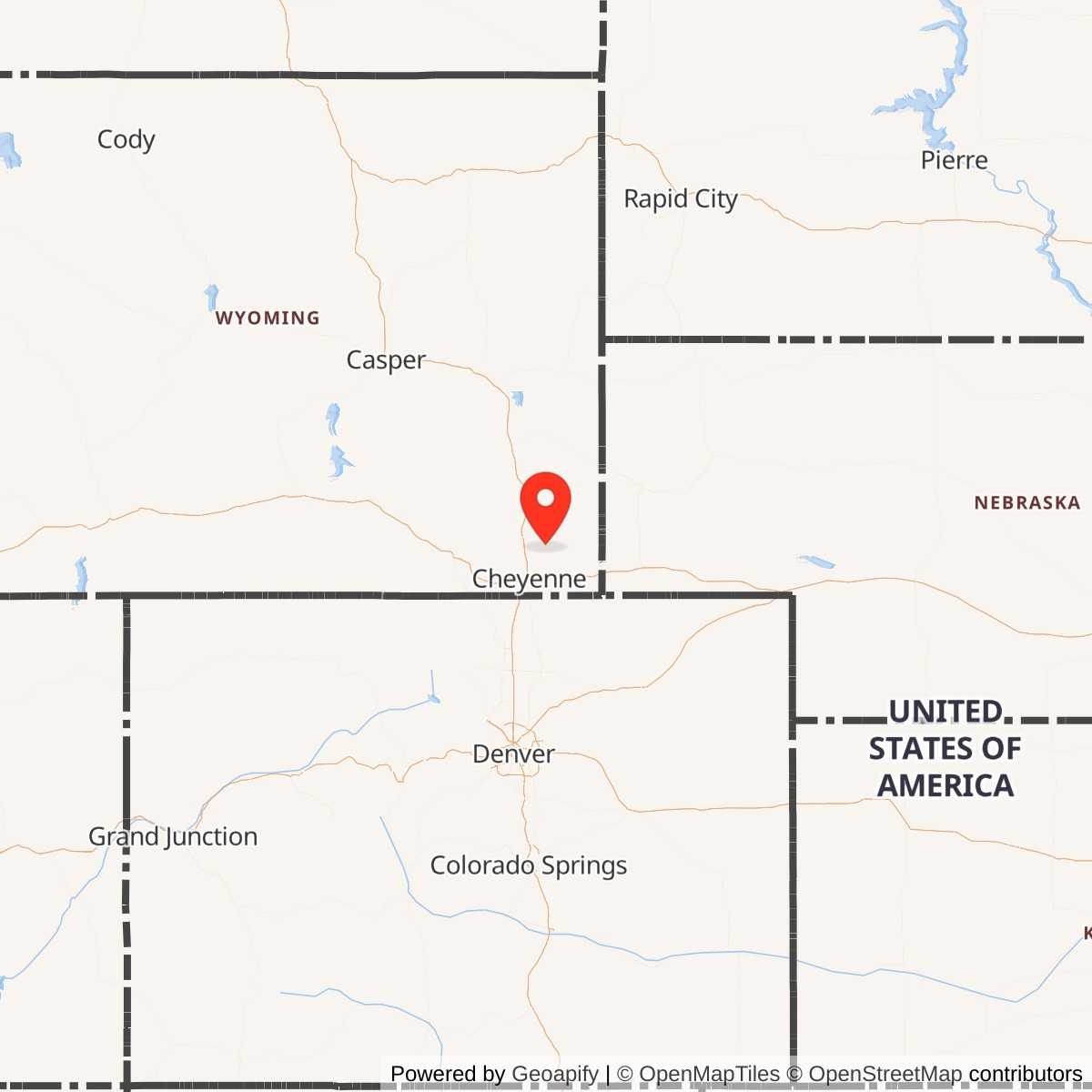
Atlas D Site 565-A was located in Laramie County, Wyoming, in the high-plains missile field northeast of Cheyenne. U.S. Army Corps of Engineers material identifies the broader former Atlas D Missile Site 2 property as about 20 miles northeast of Cheyenne.
The 565th Strategic Missile Squadron became operational on March 7, 1961, according to the USAF Unit Histories summary, and the squadron's last ICBM was shipped on August 1, 1964. The squadron was inactivated on December 1, 1964. The former site area became private property after federal disposal and is associated with the Warren Ranch / Former Atlas D Missile Site 2 Formerly Used Defense Site environmental record. It is not a public historic site, and public access should not be assumed.
Location, Landscape, and Site Description
Atlas D Site 565-A stood in open high-plains country northeast of Cheyenne. The landscape was well suited to early missile deployment because it offered large tracts of relatively open land within reach of F. E. Warren Air Force Base, yet far enough from the main urban area to reduce the immediate hazards and land-use conflicts associated with liquid-fueled ICBM operations. The U.S. Army Corps of Engineers describes the former Site 2 property as consisting of 857 acres acquired by purchase and condemnation between 1958 and 1961.The 565-A complex was one of three Warren II Atlas D sites built for the 565th Strategic Missile Squadron. The Association of Air Force Missileers describes the basic Atlas D deployment pattern: soft, above-ground horizontal coffin complexes, three missiles and one control center per complex. This was not the later Minuteman pattern of widely dispersed individual unmanned launch facilities. The Atlas D complex was a clustered facility designed around the technical requirements of the missile and its ground-based guidance system.
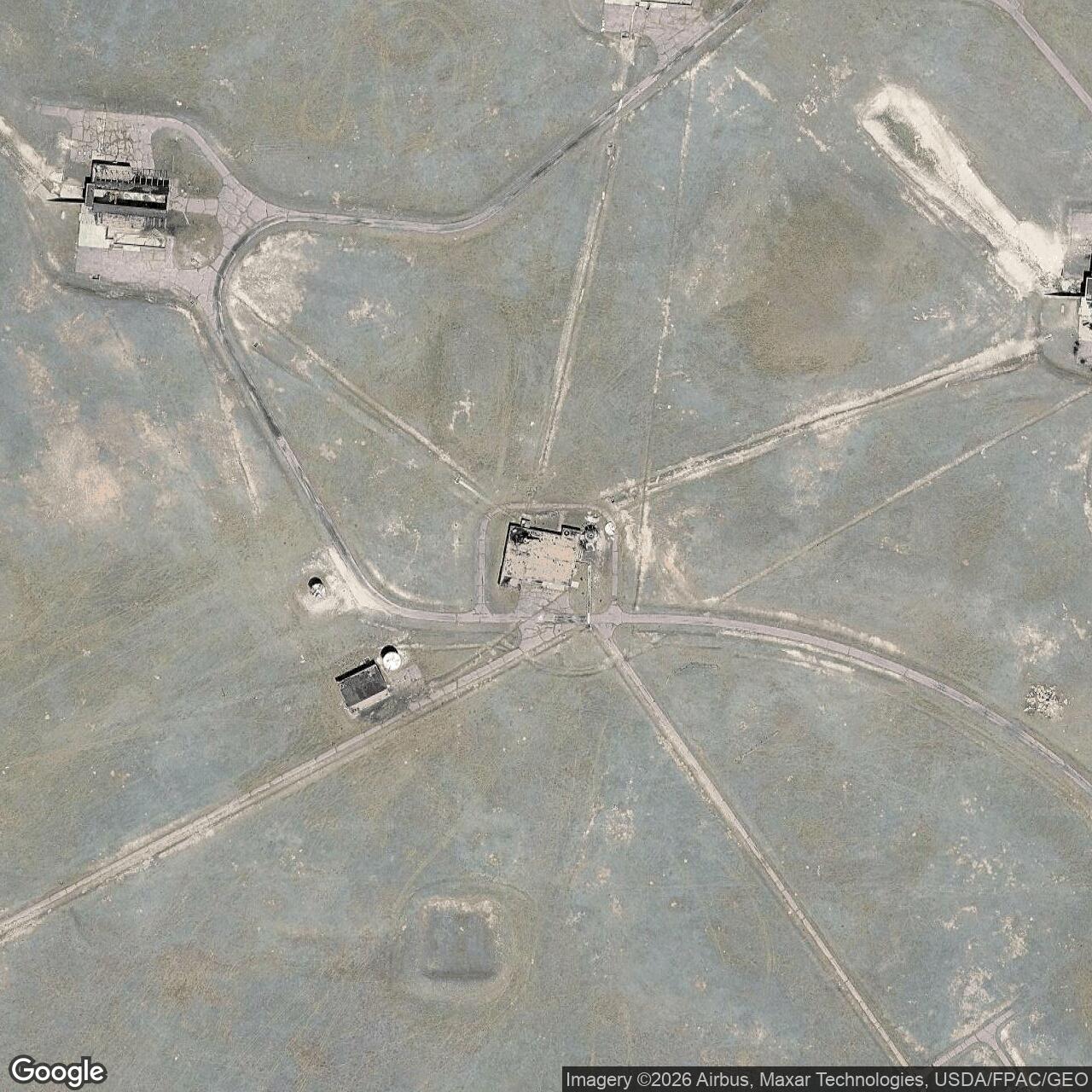
The site's three launchers were arranged around a common control and support area. The three launchers were distinct pads or launcher positions within one integrated site, connected by internal roads and utility corridors and supported by a central operations area. The launchers were near each other, belonged to the same operational complex, and shared the site's control and support infrastructure.
The Atlas D launcher type was commonly called a coffin launcher. At F. E. Warren's operational Atlas D sites, the missile was stored horizontally in a reinforced launch-and-service shelter. To launch, the shelter roof or cover had to open, the missile had to be raised to vertical, and the missile then had to be fueled with RP-1 and liquid oxygen. The 565-A complex therefore would have included three launcher structures, a control center, guidance and communications equipment, power and environmental-support systems, propellant and servicing features, access roads, hardstands, security fencing, and maintenance areas. It was a missile base in miniature, not simply a buried silo.
Strategic and Cold War Context
Atlas D Site 565-A existed because the United States needed to place an operational land-based ICBM force on alert before more mature systems were ready. In the late 1950s, the United States was moving from a deterrent posture centered on manned bombers toward one that also depended on long-range ballistic missiles. Atlas was the first operational U.S. ICBM, and F. E. Warren was the first operational ICBM base. That context gives the 565th Strategic Missile Squadron more than local significance: it was part of the first generation of American missile units translating test-range missile development into an operational nuclear-alert force.The Atlas D was revolutionary but transitional. The National Park Service describes Atlas D as the first deployed ICBM and notes that each Atlas D crew controlled three missiles, a control center, and a radio guidance system. The missile had a launch-response time of about fifteen minutes and could be deployed either in vertical gantry launchers or horizontal above-ground coffin shelters. F. E. Warren's 565th SMS used the grouped coffin-launcher version.
The site's clustered layout reflected the limits of the technology. Atlas D used ground-based radio-inertial guidance, so the launchers had to remain close enough to guidance and control facilities to permit the system to function. This requirement explains why 565-A, 565-B, and 565-C were each three-launcher complexes rather than widely separated single-launcher silos. It also explains why Atlas D had such a short service life. Even as the 565th SMS was becoming operational, the Air Force was already moving toward Atlas E, Atlas F, Titan, and Minuteman systems that offered greater dispersal, better hardening, improved guidance, or faster reaction.
Construction and Activation
Atlas D Site 565-A was part of the Warren II construction program. To Defend and Deter explains that, as work proceeded at Warren I for the 564th Strategic Missile Squadron, the Corps of Engineers contracted for Warren II, a complex of three Atlas D sites with three launchers each. The Blount Company won the bid to build the Warren II annexes, identified as B, C, and D, to be scattered northeast, southeast, and southwest of Cheyenne. The 565th Strategic Missile Squadron operated the nine launchers.Construction was difficult. To Defend and Deter states that slow material deliveries, modifications, and eleven work stoppages hindered the Warren II complexes. Although the project was originally slated for completion in February, Warren II was not ready until the summer of 1960. The same source notes that the safety record at Warren II was better than at Warren I, but the broader lesson was the same: early ICBM construction involved compressed schedules, changing designs, evolving missile-support equipment, labor problems, and a national urgency that pushed contractors and the Corps of Engineers to build while the weapon system was still maturing.
The 565th Strategic Missile Squadron had been activated at F. E. Warren on December 1, 1958. The USAF Unit Histories summary states that the squadron was turned over to Strategic Air Command on March 4, 1961 and became operational on March 7, 1961.
Missile System and Technical Role
Atlas D Site 565-A supported the SM-65D Atlas, a first-generation liquid-fueled intercontinental ballistic missile. Public official sources describe Atlas as the Air Force's first operational ICBM. F. E. Warren's Atlas fact sheet states that the Atlas ICBM could deliver a nuclear warhead more than 6,300 miles from its launch site, while the National Park Service gives Atlas D a range of about 5,500 miles and describes it as carrying a 1.44-megaton warhead. The 565th SMS Atlas D carried a W-49 nuclear warhead in a General Electric Mark III reentry vehicle.The missile's technical characteristics shaped daily operations at 565-A. Atlas used very thin stainless-steel balloon tanks that had to remain pressurized to preserve the missile's structural integrity. It also used liquid oxygen, which could not be stored indefinitely aboard the missile in the same manner as later solid-propellant systems. On alert, the missile was not sitting ready to fire from a hardened underground silo. Instead, the crew had to open the launcher shelter, raise the missile, load liquid oxygen, prepare guidance, and execute the launch sequence.
The Association of Air Force Missileers describes the Atlas D coffin-launch process as a sequence in which the crew opened the roof of the coffin, erected the missile to vertical, loaded RP-1 and liquid oxygen, locked on radio guidance, and then launched. The first missile in a three-launcher complex could be fired about fifteen minutes after execution, with the second and third following later in the sequence. This operational pattern explains both the strength and the weakness of Atlas D: it gave the United States an early operational ICBM deterrent, but it required complex, exposed, liquid-fueled procedures that would soon be overtaken by hardened and solid-fueled systems.
The 565-A site was not a Minuteman-style unmanned LF controlled from a distant Launch Control Center. It was a manned Atlas D launch complex with its own control center and a rotating alert crew. The 565th sites were manned 24 hours a day, 365 days a year while the squadron was active. The Association of Air Force Missileers describes Atlas D combat crews as including two officers, the launch officer and guidance officer, along with enlisted missile maintenance, ballistic missile analyst, guidance, and power-production technicians. Crews served 24-hour alerts, with a new crew departing the main base each morning to relieve the on-duty crew.
Operational History
Atlas D Site 565-A entered service as one of the three operational complexes of the 565th Strategic Missile Squadron. The squadron's three sites gave it nine Atlas D missiles, arranged in the 3x3 pattern: three sites, each with three launchers and a control center. The USAF Unit Histories summary specifically notes that with the activation of the 565th Strategic Missile Squadron, the 3x3 dispersal configuration was implemented for the first time. That makes the 565th SMS an important bridge between the compact Warren I "Six Pack" arrangement of the 564th SMS and the later, more dispersed Atlas E/F and Minuteman fields.Operational life at 565-A centered on alert duty. The missiles, launcher systems, guidance equipment, power systems, propellant systems, communications circuits, and security arrangements had to be maintained in a state that could support rapid response. The site's crew was not simply guarding an inert structure. It was responsible for a large, dangerous, liquid-fueled weapon system that required constant technical attention. Any launch sequence would have involved raising and fueling the missile, connecting the missile to the guidance sequence, and coordinating the release of one or more missiles in the complex.
The 565th SMS also served during the most dangerous nuclear confrontation of the Cold War. During the Cuban Missile Crisis all 565th sites were placed at a high level of alert and were ready to launch if necessary.
The site's operational career was brief. Atlas D gave the Air Force an early ICBM capability, but it was rapidly superseded. The same years that saw 565-A enter service also saw the arrival of more survivable and efficient missile systems. Minuteman construction around F. E. Warren began during the early 1960s, and the solid-fueled Minuteman force soon became the long-term foundation of the base's ICBM mission. Atlas D therefore served as an essential first step, but not as a durable final design.
Deactivation and Disposal
The end of 565-A's missile mission came quickly. The USAF Unit Histories summary states that the 565th SMS had its first ICBM off alert on July 1, 1964, and that the last ICBM was shipped on August 1, 1964. The squadron was inactivated on December 1, 1964.The former Warren Ranch / Site 2 property was excessed to the General Services Administration in 1965. The U.S. Army Corps of Engineers states that 415 fee acres and easements over 80 acres were sold to Southern Scrap Iron and Metal Company of St. Louis, Missouri, and that this portion was later sold to Warren Livestock Company of Cheyenne. Additional easements were under GSA control or conveyed to original owners. The site's post-military story is therefore a typical early-ICBM disposal pattern: the weapon system disappeared quickly, but land ownership, easements, buried infrastructure, and environmental responsibilities remained.
The deactivation of 565-A occurred before the later arms-control regimes that produced formal silo-demolition verification for more modern ICBM systems. Atlas D sites were removed from service because the weapon system was obsolete and because newer, more survivable missiles were taking over the deterrent mission.
Current Status and Site Use
Atlas D Site 565-A is inactive and decommissioned. It is no longer part of F. E. Warren's active missile force, and it is not a public museum or official historic site. The former property is associated with private ownership and the Warren Ranch / Former Atlas D Missile Site 2 environmental record.The current-status issue most relevant is environmental and coordinate documentation. EPA identifies Warren F. E. AFB Atlas "D" Missile Site #2 as a non-NPL federal-facility cleanup site with EPA ID WY0009138928. The EPA site profile gives the location as twenty-five miles northeast of Cheyenne, in Township 17N, Range 65W, Section 34. The U.S. Army Corps of Engineers identifies trichloroethene groundwater contamination and describes remedial investigation and interim monitoring activities. These records show that the site remains historically and environmentally consequential even after the missile mission ended.
Chronology
- 1957-11-21 The Department of Defense announced that F. E. Warren Air Force Base would become the nation's first ICBM base.
- 1958-12-01 The 565th Strategic Missile Squadron was activated at F. E. Warren Air Force Base, Wyoming.
- 1959-02 Bids were opened for Warren II, the three-site Atlas D complex that would be operated by the 565th Strategic Missile Squadron.
- 1960 Construction begins in 1960; the exact month and day are not currently verified.
- 1960 summer To Defend and Deter states that Warren II was ready in the summer of 1960 after construction delays.
- 1961 Turned over to the Air Force in 1961; the exact month and day are not currently verified.
- 1961-03-04 The 565th Strategic Missile Squadron was turned over to Strategic Air Command.
- 1961-03-07 The 565th Strategic Missile Squadron became operational.
- 1961-07-01 The 706th Strategic Missile Wing stood down, and command responsibilities at F. E. Warren shifted to the 389th Strategic Missile Wing.
- 1962-10 During the Cuban Missile Crisis, the 565th Strategic Missile Squadron's sites were placed at a high alert posture.
- 1964-05 As Atlas D missiles were being phased out, the 389th Strategic Missile Wing received SAC's last operational readiness inspection for the Atlas D system.
- 1964-07-01 The 565th Strategic Missile Squadron's first ICBM was taken off alert.
- 1964-08-01 The 565th Strategic Missile Squadron's last ICBM was shipped.
- 1964-12-01 The 565th Strategic Missile Squadron was inactivated.
- 1965 The former Atlas D Missile Site 2 property was excessed to the General Services Administration.
- 2009-06 The U.S. Army Corps of Engineers states that a final remedial investigation report for the former Site 2 property was submitted in June 2009.
- 2011-02 The U.S. Army Corps of Engineers states that an addendum to the remedial investigation report was completed in February 2011.
Read about the Atlas at F.E. Warren AFB
All Atlas Missile Silo Locations