
Atlas E Site 566-1 Missile Silo, Chugwater Wyoming
Longitude: -104.7769733221364
Site Type: Atlas E single-missile coffin launcher complex
Missile Type: SM-65E Atlas
Number of Launchers/Missiles: 1
Parent Base: F.E. Warren AFB
Missile Wing: 389th Strategic Missile Wing
Missile Squadron: 566th Strategic Missile Squadron
Approximate Base Size: 18 fee acres + 240 easement acres (258 total)
Current Site Use: Former Atlas E missile complex reused by Frontier Astronautics for rocket engine/testing facilities; FUDS/CERCLA environmental cleanup context.
Site Ownership: Private ownership; USACE 2015 identifies Tim Bendel / Frontier Astronautics occupancy; former federal property conveyed by quitclaim deed 1967-07-20.
Accessible: No public access / private aerospace test facility.
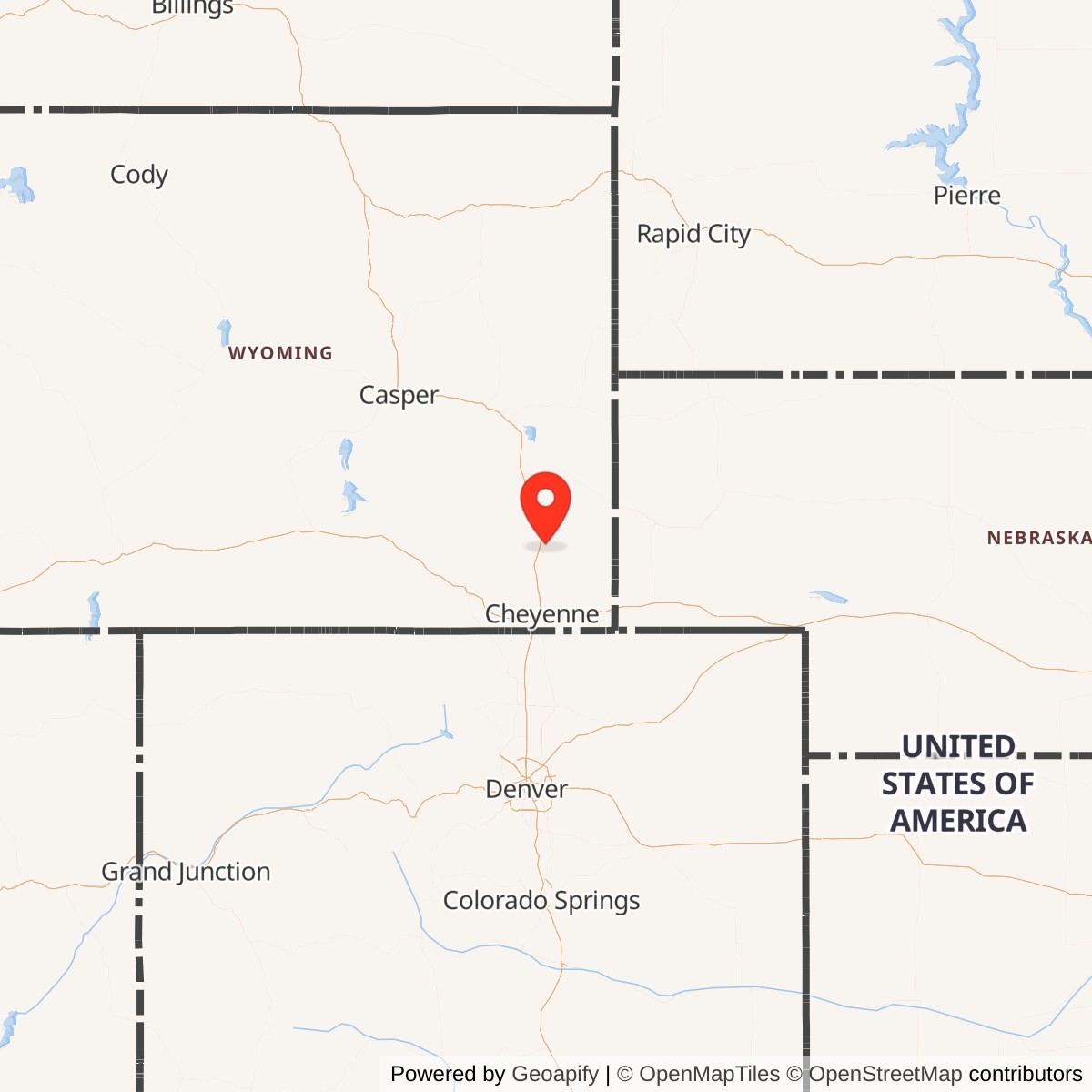
Atlas E Site 566-1 was a one-missile SM-65E Atlas launch complex operated from F.E. Warren Air Force Base near Cheyenne, Wyoming. The site was assigned to the 566th Strategic Missile Squadron and the 389th Strategic Missile Wing during the Atlas E period. It was located near Chugwater in Platte County, Wyoming, approximately five to seven miles southeast of the town, depending on the source and measuring point used.
The site is no longer an active missile facility. It was part of the first generation of liquid-fueled U.S. intercontinental ballistic missile sites, and it left active missile service during the Atlas phaseout in 1964-1965. The 566th Strategic Missile Squadron's unit history records that the squadron's first ICBM came off alert on 1964-10-01 and that its last ICBM was shipped on 1964-10-22. Site-specific Atlas sources list Site 1 as decommissioned on 1965-03-25, and the U.S. Army Corps of Engineers records the property as excessed in August 1965 and conveyed to private owners in 1967.
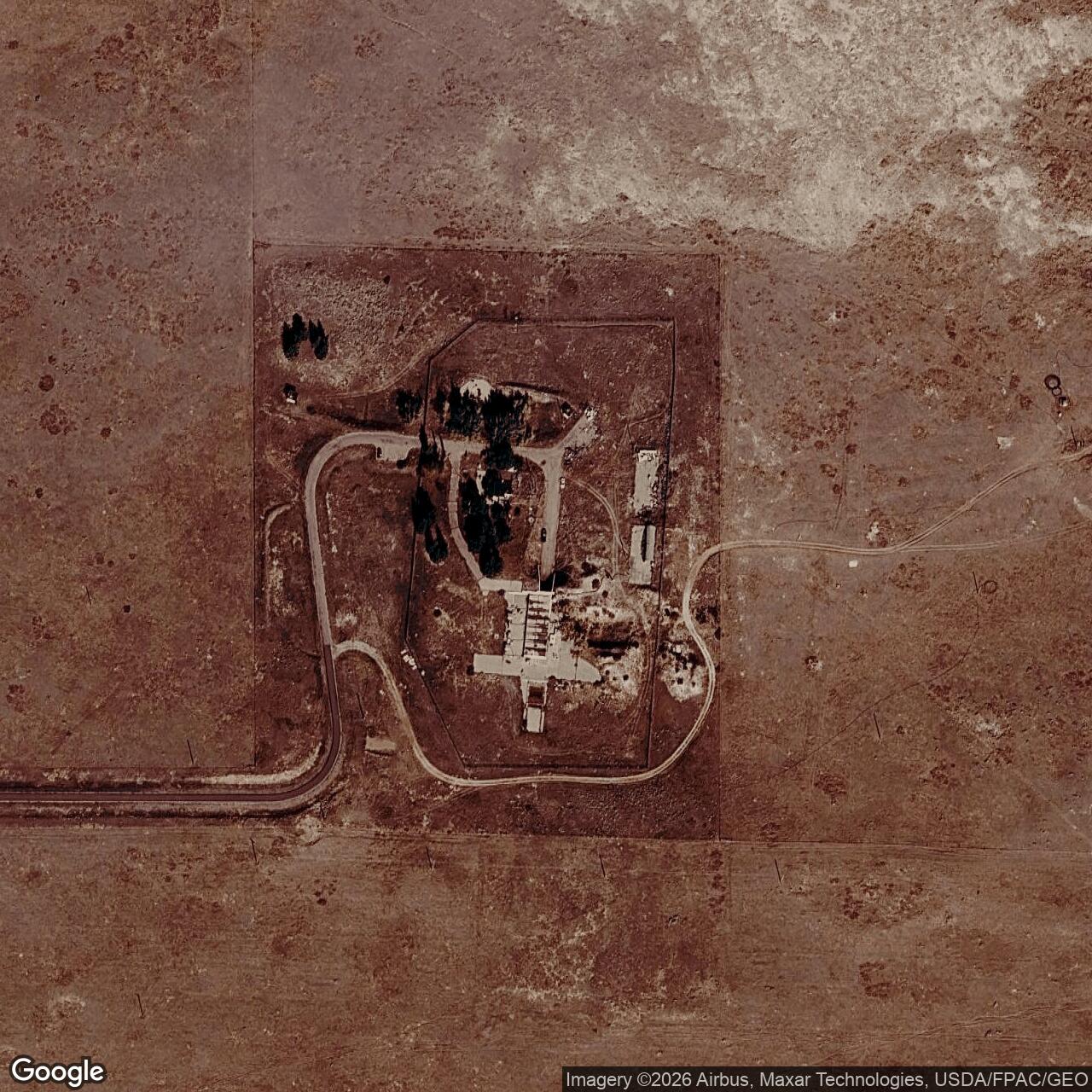
Site 566-1 survives in altered but recognizable form. The former Atlas E complex is privately owned and has been reused by Frontier Astronautics, a small aerospace and propulsion company, as a rocket-engine and flight-test development facility. That reuse is historically appropriate in an unusual way: a Cold War Atlas E launch site built for liquid-fueled ICBM operations later became a private facility for modern rocket propulsion testing.
Location, Landscape, and Site Description
Site 566-1 lies in the high-plains ranching landscape southeast of Chugwater, Wyoming. Chugwater is a small Platte County town north of Cheyenne and south of Wheatland, close enough to F.E. Warren Air Force Base to be part of the Warren missile field but remote enough to support the dispersed basing pattern required for Atlas E. The site's location reflected the main operational logic of Atlas E deployment: each missile was placed in its own launch complex rather than clustered in groups of three as in the earlier Atlas D fields.The U.S. Army Corps of Engineers identifies the former Chugwater site as five miles southeast of the city of Chugwater in Platte County.
The Atlas E physical layout differed from both the earlier Atlas D three-launcher complexes and the later Atlas F silo-lift sites. Atlas E used an individual "coffin" launcher. In this arrangement, the missile was stored horizontally in a protective belowground or semi-buried launch-and-service building. To launch, the heavy door was opened, the missile was raised upright, fueled, and prepared for firing. The 566th SMS site description summarizes the Atlas E arrangement as a coffin-launcher complex in which the missile was kept horizontal, a 400-ton overhead door was rolled back, the missile was raised to a vertical position, and then RP-1 and liquid oxygen were loaded.
The U.S. Army Corps of Engineers describes the Chugwater improvements as including one underground launch operations building and one launch and service building, segregated storage buildings, a sentry house, two water wells and pump stations, a helicopter pad, a spray pond, roads, walks, fences, and water, sewer, and electrical systems. That description identifies 566-1 as a complete self-contained launch complex, not merely an isolated missile hole. The site had to support alert crews, security, mechanical handling, propellant operations, utilities, water supply, emergency response, communications, and maintenance access in a remote rural setting.
Strategic and Cold War Context
The Atlas E program belonged to the first operational generation of American ICBMs. The United States entered the late 1950s and early 1960s trying to create a credible land-based missile deterrent quickly, while the Soviet Union was fielding its own long-range missile force. Atlas was the first U.S. Air Force intercontinental ballistic missile to reach operational service, but it was complex and vulnerable by later standards. It used liquid oxygen and RP-1 fuel, required pressurization and careful checkout, and could not sit fueled indefinitely in the way later solid-fueled Minuteman missiles could remain ready.Atlas E represented an improvement over Atlas D. The National Park Service describes Atlas E as similar to Atlas D but deployed in individual launch complexes, using inertial guidance, and housed in belowground coffins that somewhat improved blast protection. NPS also states that Atlas E had a launch-response time of approximately fifteen minutes and that 28 Atlas E missiles were placed in the field, including nine based out of F.E. Warren Air Force Base. Site 566-1 was one of those nine Warren Atlas E sites.
The shift from grouped Atlas D complexes to dispersed Atlas E sites mattered militarily. Atlas D complexes placed three missiles at one site, a pattern that saved infrastructure but concentrated vulnerability. Atlas E's inertial guidance made a more dispersed field practical because the missiles were no longer tied to a central radio-guidance facility in the same way. Spreading individual launch complexes across Wyoming, Nebraska, and northern Colorado increased the chance that some missiles would survive an attack long enough to be launched.
Construction and Activation
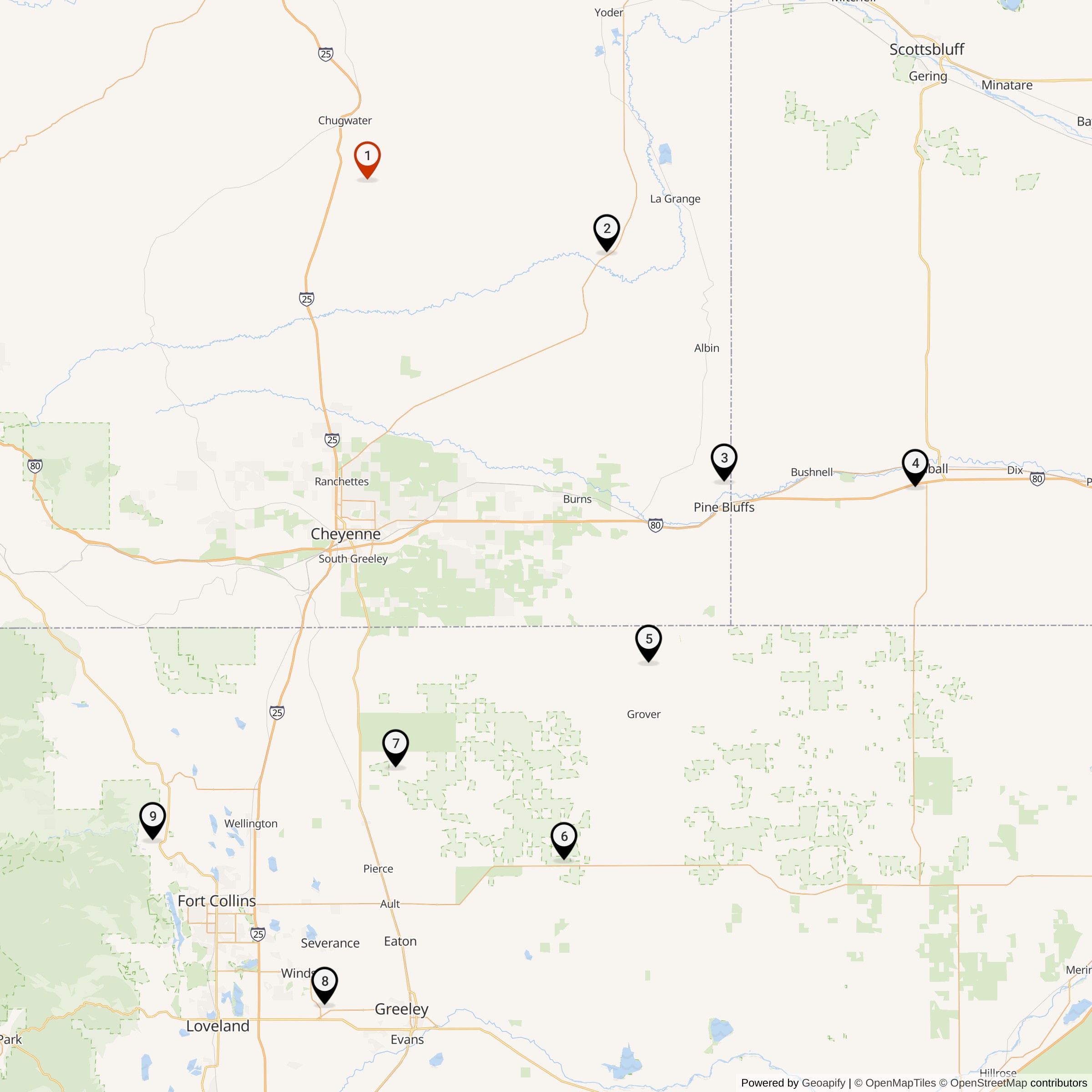
Construction began in 1960 and turnover to the Air Force occurred in 1961. The U.S. Army Corps of Engineers records that the Chugwater site consisted of 18 fee acres and easements over 240 acres acquired between May 1961 and May 1962. Those two statements are not necessarily contradictory. Construction, operational turnover, land acquisition, easement finalization, and administrative property actions often overlapped in early missile-field construction.The Warren Atlas E field was created during a period of organizational change. The 566th Strategic Missile Squadron had originally been activated as an Atlas unit at Offutt Air Force Base in 1959, but its later Atlas E service occurred at F.E. Warren. The 566th unit history records the squadron at Offutt AFB beginning 1959-08-15 and at Francis E. Warren AFB from 1961-07-01 to 1965-03-25. At Warren, the squadron operated nine Atlas E sites: Chugwater, LaGrange, Pine Bluffs, Kimball, Grover, Briggsdale, Nunn, Greeley, and Fort Collins.
The site was built as a single-missile complex. Unlike Atlas D sites 564-A, 565-B, or 549-C, there was not three missiles sharing one local launch-control complex. Instead, 566-1 had its own launch operations building, launch and service building, utilities, security post, helicopter pad, storage areas, and support infrastructure. The result was a more dispersed but still manpower-intensive alert site.
Missile System and Technical Role
Site 566-1 housed the SM-65E Atlas, a liquid-fueled intercontinental ballistic missile. Atlas E used RP-1 kerosene and liquid oxygen. It was stored horizontally in its coffin launcher and had to be raised, fueled, and checked before launch. The missile's thin stainless-steel pressure-stabilized structure, cryogenic oxidizer, and hazardous propellant operations made Atlas E a demanding weapon system to keep on alert.Public sources identify Atlas E as an intercontinental-range nuclear missile. The F.E. Warren Atlas fact sheet states that Atlas could deliver a nuclear warhead more than 6,300 miles from its launch site. National Park Service material describes Atlas E as a dispersed, individually based Atlas variant with inertial guidance and an approximately fifteen-minute launch response time. Public museum and Atlas missile sources identify Atlas E and Atlas F as using a Mark 4 / Mark IV reentry vehicle carrying the W-38 thermonuclear warhead, generally described in public sources as approximately 3.75 to 3.8 megatons.
Site 566-1's technical role was therefore not simply storage. It was a complete alert launch facility for one nuclear-armed ICBM. Alert crews, maintenance technicians, security personnel, and support teams had to keep the missile and its launch system ready, safe, and connected to Strategic Air Command's command-and-control system. Because the Atlas E could not be kept permanently fueled, readiness depended on trained personnel, reliable ground equipment, liquid oxygen supply, communications, electrical power, and practiced launch procedures.
Operational History
The 566th Strategic Missile Squadron was the Atlas E squadron at F.E. Warren during the site's operational period. AtlasMissileSilo.com states that the squadron was based at F.E. Warren from 1961 through 1965 and that it controlled nine SM-65 Atlas E missile bases deployed around the Cheyenne region. Its Site Locations page lists Site 1 at Chugwater, Wyoming. The unit's missile-field geography crossed state lines, with sites in Wyoming, Nebraska, and Colorado.Site 566-1 was manned around the clock while operational. The 566th SMS site states that its missile sites were manned 24 hours a day, 365 days a year during the squadron's active period. That point is important because Atlas E operations were more manpower-intensive than later unmanned Minuteman launch facilities. A Minuteman launch facility was normally unmanned and remotely controlled from a launch control center; an Atlas E site like 566-1 required personnel at the launch complex to sustain alert operations and execute the lengthy launch sequence if ordered.
The Cuban Missile Crisis was the site's most important known squadron-level operational episode. The 566th SMS site states that during the crisis all 566th sites were at a high level of alert and ready to launch if necessary. Broader accounts of Strategic Air Command missile operations during October and November 1962 describe emergency efforts to return Atlas missiles to alert, including the diversion of liquid oxygen production to SAC. For an Atlas E site, that alert posture would have had practical consequences: crews, propellant supply, communications, security, and maintenance status all had to be managed under crisis conditions.
No documented launch, accident, detonation, or combat use is associated with Site 566-1. Its historical importance lies in its alert service as one of the nine dispersed Atlas E sites in the Warren missile field and in its later reuse. The site's operational history was brief, but that short period coincided with the most dangerous years of the early ICBM era.
Frontier Astronautics' use of the former Atlas E complex as a rocket-engine and testing facility is unusual among former ICBM sites. Frontier's own description says its headquarters is established at a decommissioned Atlas E missile silo with more than 15,000 square feet of subterranean reinforced-concrete structure, paved access, a vertical test stand built for the Atlas E missile, the main missile bay, flame trench, blast door, access tunnels, machine shop area, spray pond, and horizontal engine-testing facilities. This reuse gives Site 566-1 a continuing aerospace role long after its nuclear-alert mission ended.
Deactivation, Disposal, and Post-Closure History
The Atlas E force was retired quickly as solid-fueled Minuteman missiles entered service and as the Air Force phased out the first-generation liquid-fueled systems. The 566th unit history records that the squadron's first ICBM came off alert on 1964-10-01 and that the last ICBM was shipped on 1964-10-22. Site-specific Atlas sources list Site 566-1 as decommissioned on 1965-03-25. The unit-history file contains a date ambiguity: it lists the squadron as inactivated on 1964-12-15 in the lineage section, while the station line continues Francis E. Warren AFB service to 1965-03-25. The safest interpretation is that missile alert removal, missile shipment, squadron administrative actions, and site decommissioning did not occur on the same day.After the military mission ended, the physical property went through the normal excess-and-disposal process for a rural Atlas site. USACE records that the site was excessed in August 1965. By quitclaim deed dated 1967-07-20, the entire area was conveyed to Francis Orvis Daellenbach and Murrill H. Daellenbach. Unlike sites that were demolished into unusable ruins, 566-1 retained substantial structures that could be reused. The former launch and operations areas, reinforced concrete spaces, roads, blast door, flame trench, spray pond, and support spaces remained valuable for specialized testing and storage.
The site later entered the Formerly Used Defense Sites environmental program because of trichloroethene groundwater contamination. USACE identifies a Hazardous, Toxic and Radioactive Waste project under the Defense Environmental Restoration Program for FUDS. EPA identifies the site as Warren F.E. AFB Atlas "E" Missile Site #5, EPA ID WY0009138958, not on the National Priorities List, with federal-facility-lead cleanup activity. USACE's 2015 fact sheet states that a remedial action contract had been awarded with FY11 FUDS funding and that proposed plan, decision document, remedial design, implementation, and performance monitoring were being pursued to address TCE mass reduction.
The most distinctive post-closure use is Frontier Astronautics. USACE records the site as owned and occupied by Tim Bendel and used by Frontier Astronautics. Frontier's own website says the company obtained a retired Atlas E missile silo in rural Wyoming for rocket-engine and vehicle testing, and it describes county and local support, a special-use permit for rocket engine testing and launching of rocket vehicles, and exemption from county fire bans because the concrete test facilities were designed to withstand an Atlas E launch. That reuse preserved many of the site's major structural features and adapted the Cold War launch complex to a civilian aerospace role.
Chronology
- 1960 Construction of Site 566-1 began in 1960.
- 1961 Site 566-1 turned over to the Air Force in 1961.
- 1961-05 USACE records that fee acreage and easements for the Chugwater Atlas E site were acquired beginning in May 1961.
- 1961-07-01 The 566th Strategic Missile Squadron station changed to Francis E. Warren Air Force Base.
- 1961-09 National Park Service material identifies Atlas E ICBMs as operational beginning in September 1961.
- 1962-05 USACE records the Chugwater site's fee acreage and easement acquisition period as extending to May 1962.
- 1962-10 During the Cuban Missile Crisis, the 566th SMS sites were at a high level of alert as part of the squadron-wide readiness posture.
- 1964-10-01 The 566th Strategic Missile Squadron unit history records the first ICBM off alert.
- 1964-10-22 The 566th Strategic Missile Squadron unit history records the last ICBM shipped.
- 1964-12-15 The 566th unit-history lineage section lists the squadron as inactivated on this date.
- 1965-03-25 Site 566-1 decommissioned; the 566th unit-history station line also continues F.E. Warren service to this date.
- 1965-08 USACE records the former Chugwater Atlas E site as excessed in August 1965.
- 1967-07-20 USACE records conveyance of the site by quitclaim deed to Francis Orvis Daellenbach and Murrill H. Daellenbach.
- 2011 USACE records that a remedial action contract was awarded with FY11 FUDS funding for the site's TCE groundwater contamination.
- 2015 USACE described remedial design, implementation, and performance monitoring work for TCE mass reduction at the former Atlas E site.
- 2024 Frontier Astronautics' website continued to describe its headquarters and test facilities as located at a decommissioned Atlas E missile silo in rural Wyoming.
Read about the Atlas at F.E. Warren AFB
All Atlas Missile Silo Locations