
Atlas E Site 566-3 Missile Silo, Pine Bluffs Wyoming
Longitude: -104.065699304562
Site Type: Atlas E single-missile coffin launcher complex
Missile Type: SM-65E Atlas
Number of Launchers/Missiles: 1
Parent Base: F.E. Warren AFB
Missile Wing: 389th Strategic Missile Wing
Missile Squadron: 566th Strategic Missile Squadron
Approximate Base Size: 265 acquired acres
Current Site Use: Former Atlas E launch complex on private property; documented FUDS/CERCLA groundwater monitoring and no-action decision.
Site Ownership: Private ownership after GSA conveyance; USACE 2015 identifies Mr. and Mrs. Stan Kolby as owners/occupants.
Accessible: No public access / private property.
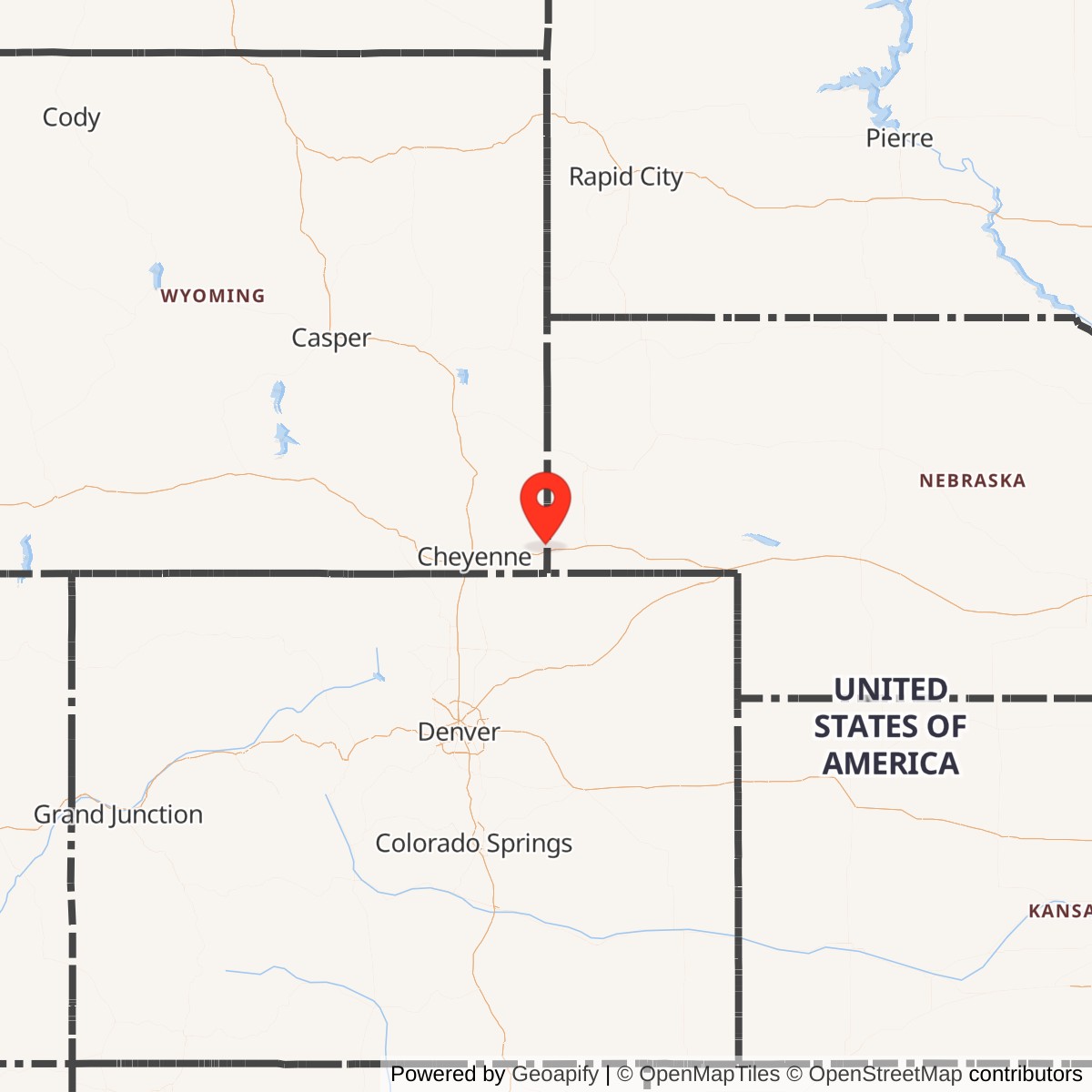
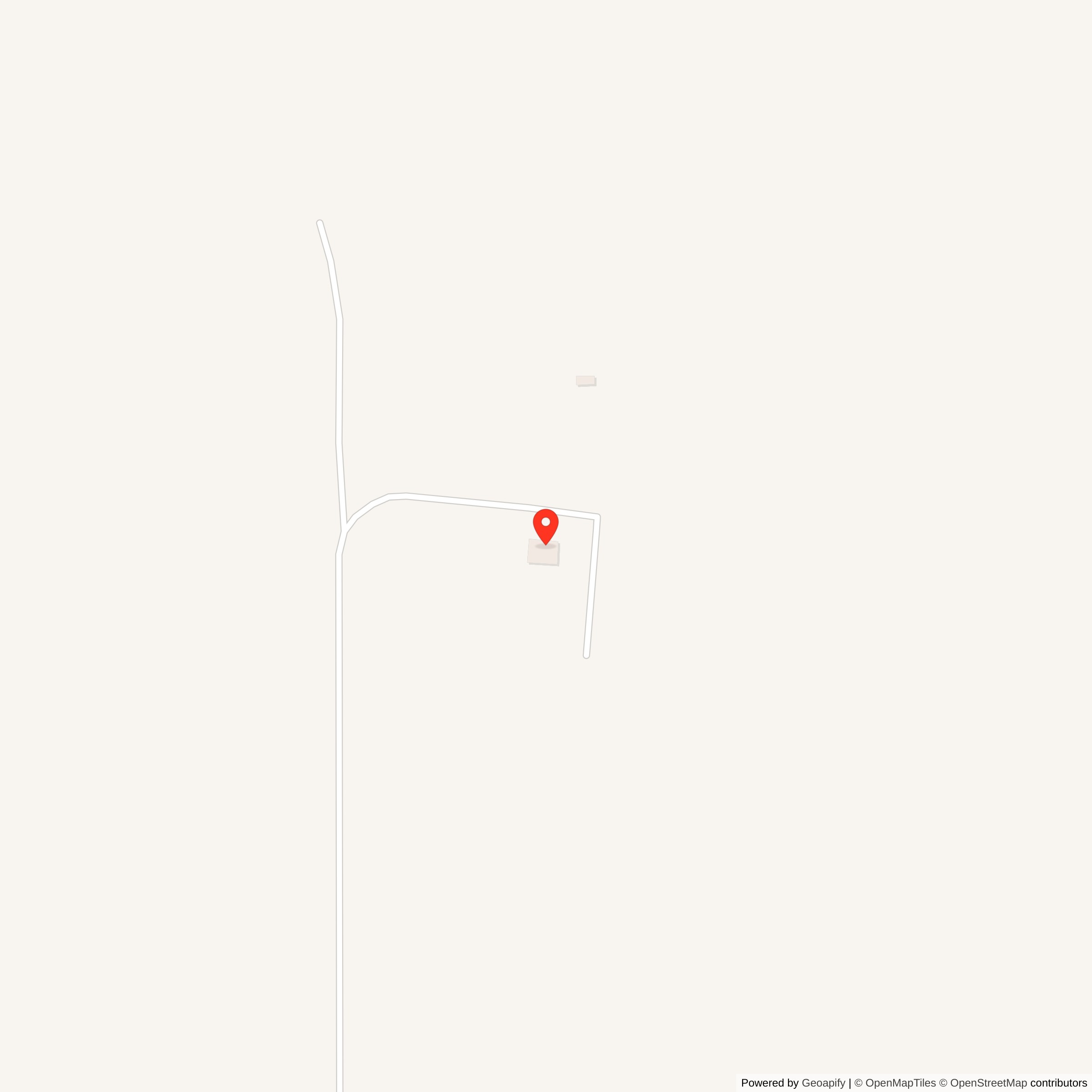
Atlas E Site 566-3 was a single-missile SM-65E Atlas intercontinental ballistic missile launch complex operated by the 566th Strategic Missile Squadron from the F.E. Warren Air Force Base missile field. It was one of the nine Atlas E sites assigned to the 566th SMS and the 389th Strategic Missile Wing. In Air Force operational-site references it is normally identified as Site 3, Pine Bluffs, Wyoming. In U.S. Army Corps of Engineers and EPA environmental records, the same former property is identified as F.E. Warren Air Force Base Facility Former Atlas "E" Missile Site 7, Pine Bluffs, Laramie County, Wyoming.
The site is no longer an active missile installation. It was decommissioned after the Atlas E force was withdrawn from alert in 1964 and 1965, and the property was later conveyed into private ownership by the General Services Administration. The former launch complex is private property and is also documented as a Formerly Used Defense Site / CERCLA cleanup location because of trichloroethene groundwater contamination.
Location, Landscape, and Site Description
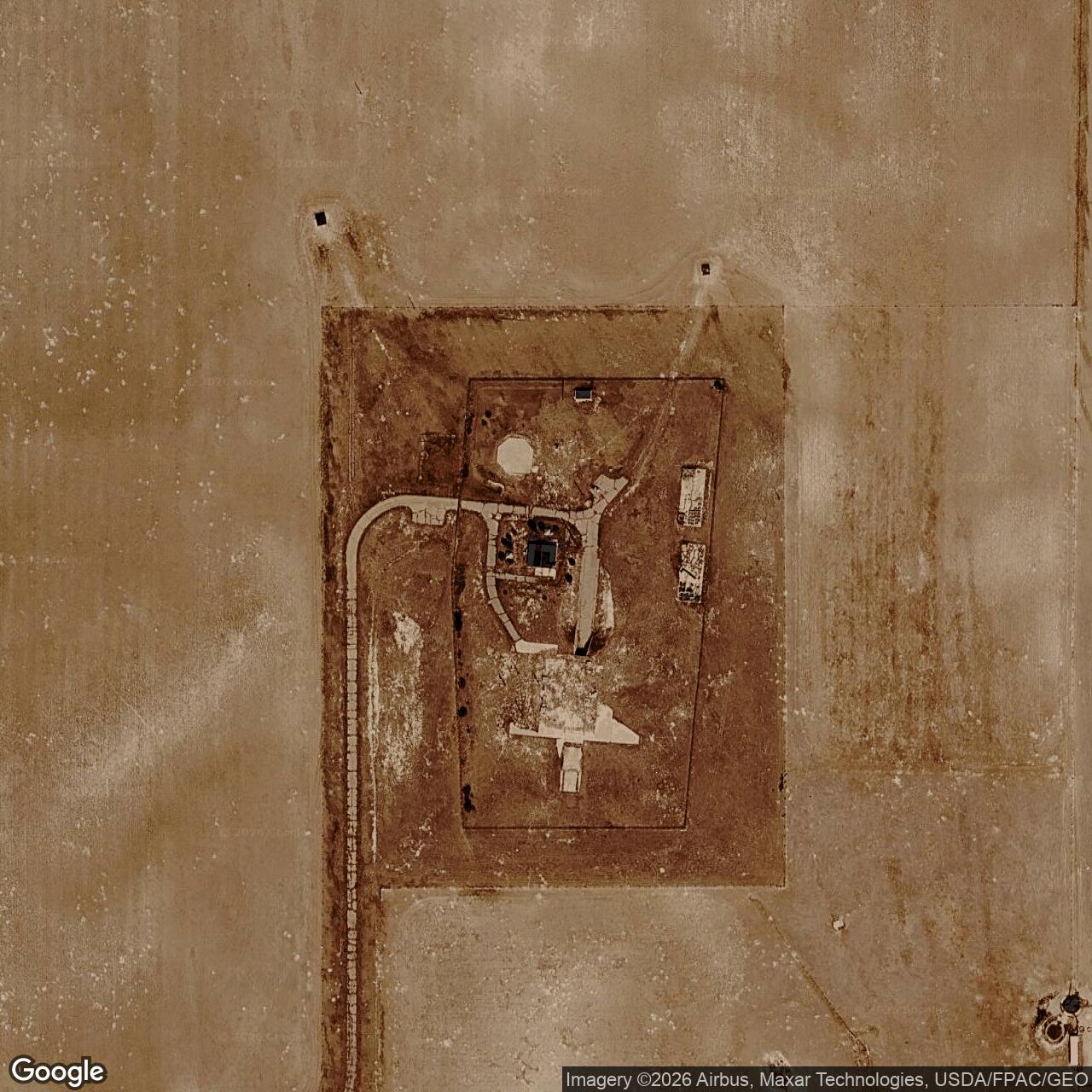
Site 566-3 lies in rural southeastern Wyoming about two miles north of Pine Bluffs in Laramie County. The site occupies open High Plains agricultural land near County Road 215, east of Cheyenne and close to the Wyoming-Nebraska state line. Its location placed the missile far enough from F.E. Warren AFB to support the Atlas E dispersed-field concept, while still allowing the site to be supported from the Cheyenne base by road, communications, security, maintenance, and logistics teams.The former Pine Bluffs Atlas E property was a self-contained launch complex rather than a later Minuteman-style unmanned launch facility. USACE describes the former Site 7 property as 265 acres acquired between July 1960 and May 1962. Its improvements included one underground launch operations building, one launch and service building, two water wells and pump stations, segregated storage buildings, a sentry house, a helicopter pad, a spray pond, roads, walks, fences, and water, sewer, and electrical systems.
Atlas E sites used the "coffin" launcher arrangement. The missile was stored horizontally in a semi-hardened below-ground or ground-level shelter. To launch, the roof or door of the launcher opened, the missile was raised upright, and launch preparation continued with fueling and final system checks. This layout gave the missile better protection than an exposed gantry but did not provide the fully hardened vertical silo-lift arrangement later used by Atlas F. The Pine Bluffs site therefore represents the middle stage of the Atlas deployment sequence: more dispersed and more independent than Atlas D, but still constrained by the operational demands of a liquid-fueled, first-generation ICBM.
Strategic and Cold War Context
F.E. Warren AFB became one of the first major American ICBM installations because it offered a central continental location, open land for dispersed missile deployment, and an existing Air Force installation that could be transferred to Strategic Air Command missile operations. The base's official history states that F.E. Warren became the nation's first operational ICBM base after the introduction of Atlas missiles and that the 706th Strategic Missile Wing was redesignated as the 389th Strategic Missile Wing on 1961-07-01.The Atlas E reflected an effort to improve survivability and readiness over the earlier Atlas D system. Atlas D grouped multiple missiles in one complex and, in its early form, depended on radio guidance. Atlas E used individual launch complexes and inertial guidance, which made each missile more independent. The National Park Service describes Atlas E as an individual-complex missile deployed in below-ground coffins with an approximately fifteen-minute launch response time. Even so, Atlas remained a first-generation liquid-fueled weapon. Its stainless-steel airframe had to be pressurized on alert, and the missile could not remain fully fueled with liquid oxygen for long periods. Those realities made the system labor-intensive and helped explain its short operational service life.
Construction and Activation
The 566th Strategic Missile Squadron was activated on 1959-08-15 and later assigned to F.E. Warren AFB. The official 566th SMS unit summary records turnover to Strategic Air Command and operational status for the squadron on 1961-03-30.USACE records give the physical scope of the Pine Bluffs acquisition and site improvements. The federal government acquired 265 acres between July 1960 and May 1962, and the finished complex included the launch and service building, underground launch operations building, wells and pump systems, storage, security, helicopter, spray-pond, utility, road, walk, fence, water, sewer, and electrical infrastructure. This was a complete remote missile operating site, not simply a concrete launch pad.
Missile System and Technical Role
Site 566-3 housed one SM-65E Atlas missile in a coffin-style launch complex. The Atlas E was an intercontinental-range liquid-fueled missile using RP-1 kerosene and liquid oxygen. It was stored unfueled and horizontal inside the coffin shelter and had to be raised and fueled as part of the launch sequence. The Association of Air Force Missileers describes Atlas E sites as single-missile complexes with one control center per missile and an all-inertial guidance system. It also describes the Atlas E combat crew as two officers and three enlisted members standing 24-hour alerts.The missile's role at Site 566-3 was to maintain one nuclear-armed ICBM on Strategic Air Command alert. Unlike later Minuteman launch facilities, the Atlas E site was crewed locally. The launch crew, site security, maintenance teams, power and utility systems, communications equipment, and missile-support equipment all had to function at the remote Pine Bluffs location. The crew's mission was to maintain readiness, execute checklists, handle launch preparation if ordered, and keep the weapon system available as part of SAC's early ICBM deterrent force.
Missile capability, warhead, and reentry vehicle: Atlas E was an early liquid-fueled ICBM designed to deliver a single nuclear warhead at intercontinental range. The National Park Service identifies Atlas E as an individual-complex, inertially guided ICBM deployed in below-ground coffins. The 566th SMS source identifies the Atlas E as carrying a W-38 nuclear warhead in a Mark IV reentry vehicle, with an approximately 3.8-megaton yield. The Smithsonian's National Air and Space Museum identifies the Mark 4 reentry vehicle as used on Atlas E/F and Titan I missiles and states that it carried a W-38 nuclear warhead with a yield of about 3.75 megatons.
Operational History
Site 566-3 served as part of the 566th Strategic Missile Squadron's nine-site Atlas E field around F.E. Warren AFB. Its active life was brief, but it belonged to the period in which the Atlas force formed the operational edge of the United States' first land-based ICBM deterrent. The 566th SMS was operational by 1961-03-30, and its nine launch complexes extended the F.E. Warren Atlas field beyond Wyoming into nearby Nebraska and Colorado.Daily operations at Site 566-3 centered on alert duty, maintenance, security, and readiness of a complex liquid-fueled missile system. The Atlas E missile had to remain pressurized while on alert, because the Atlas airframe used thin stainless-steel construction that depended on internal pressure for structural integrity. Maintenance personnel had to keep the launch mechanism, guidance, propellant-handling equipment, power systems, communications, environmental controls, security systems, and site utilities ready. The crew had to be able to transition from peacetime alert to launch configuration under SAC procedures if directed.
The most significant documented operational event affecting the entire F.E. Warren Atlas force occurred during the Cuban Missile Crisis. F.E. Warren's official base history states that during the crisis, from 1962-10-16 to 1962-10-28, the 389th Strategic Missile Wing placed all of its Atlas missiles in launch configuration and maintained a ready posture until 1962-11-27. That statement applies to the wing's Atlas force as a whole, not uniquely to Site 566-3, but it is directly relevant to understanding the alert role of the Pine Bluffs site during the most dangerous nuclear crisis of the Cold War.
The most important documented event tied to Site 566-3 is the Cuban Missile Crisis alert posture of the 389th Strategic Missile Wing and the 566th SMS missile field. The available sources describe the event at wing or squadron level, rather than as a separate incident at the Pine Bluffs site itself. The site was part of the wing's Atlas force when the wing placed its Atlas missiles in launch configuration and kept them ready until the crisis had abated.
The 566th SMS unit history also preserves a useful piece of squadron identity. The Atlas-era squadron emblem, approved on 1962-03-02, used a mole emerging from the earth with a missile and a halo of nine stars. The unit history explains that the mole represented the underground worker and the guidance system used in a "blind" launch site, while the nine stars represented the nine dispersed launch sites. That emblem closely matched the actual 566th SMS field structure that included Site 566-3.
Deactivation and Disposal
The Atlas E system at F.E. Warren was withdrawn after only a few years of operational service. The official 566th SMS summary records the first squadron ICBM off alert on 1964-10-01 and the last ICBM shipped on 1964-10-22. It lists the squadron as inactivated on 1964-12-15, while the station entry runs to 1965-03-25.USACE records state that the Pine Bluffs former Atlas E Missile Site 7 was excessed in 1965 and conveyed to private ownership by the General Services Administration. That means the missile and active Air Force mission were removed, the property was declared surplus to military needs, and the remaining land and structures passed out of federal operational use. The consulted public sources do not provide a detailed equipment-removal inventory, and they do not specify exactly which internal launch, guidance, power, or fueling components were removed, sealed, demolished, or left in place before conveyance.
Post-closure environmental documentation gives the clearest picture of what happened next. Because trichloroethene groundwater contamination was identified, USACE initiated a Hazardous, Toxic and Radioactive Waste project under the Defense Environmental Restoration Program for Formerly Used Defense Sites. A USACE contract was awarded in fiscal year 2010 for biannual interim groundwater monitoring during the remedial-design phase. USACE reported that the monitoring was conducted over a three-year period to assess plume migration, that a proposed plan was submitted to close out the site, and that the selected remedy of "No Action" was signed on 2014-09-09 by the Omaha District Commander. USACE's 2015 fact sheet stated that work would proceed with abandonment of ten monitoring wells, while also noting that the Wyoming Department of Environmental Quality was advocating for a remedial action for the TCE-contaminated groundwater plume. The same fact sheet said WDEQ had indicated that surface and subsurface soil contamination and indoor air quality were not significant concerns.
Current Status and Site Use
Site 566-3 is a decommissioned former Atlas E launch complex on private property near Pine Bluffs. EPA identifies the CERCLA site as WARREN F.E. AFB ATLAS "E" MISSILE SITE #7, EPA ID WY0009138978, at 1501 County Road 215, two miles north of Pine Bluffs, Laramie County, Wyoming. EPA lists it as not on the National Priorities List and as a federal-facility cleanup site. USACE's 2015 fact sheet stated that the property was then owned and occupied by Mr. and Mrs. Stan Kolby.It is private property and a former military cleanup site, not a museum or official historic attraction. Public imagery and missile-site photo sources show the recognizable footprint of the former launch complex in agricultural surroundings, but the active missile, launch crew, Air Force alert mission, and military operating status all ended in the 1960s.
Chronology
- 1959-08-15 The 566th Strategic Missile Squadron was activated.
- 1960 Construction began at Site 566-3, according to the site-specific AtlasMissileSilo.com summary.
- 1960-07/1962-05 The federal government acquired the 265-acre former Pine Bluffs Atlas E property, according to USACE.
- 1961 Site 566-3 was turned over to the Air Force, according to the site-specific summary; the exact month and day were not identified in that source.
- 1961-03-30 The 566th SMS was turned over to Strategic Air Command and recorded as operational in the official unit summary.
- 1961-07-01 The 706th Strategic Missile Wing was redesignated as the 389th Strategic Missile Wing.
- 1962-03-02 The 566th SMS Atlas-era emblem was approved; its nine stars represented the squadron's nine dispersed launch sites.
- 1962-10 During the Cuban Missile Crisis, the 389th Strategic Missile Wing placed its Atlas missiles in launch configuration.
- 1962-11-27 F.E. Warren's Atlas crisis posture ended after the Cuban Missile Crisis abated.
- 1964-10-01 The first 566th SMS ICBM was removed from alert.
- 1964-10-22 The last 566th SMS ICBM was shipped.
- 1964-12-15 The 566th Strategic Missile Squadron was inactivated.
- 1965 USACE records state that the Pine Bluffs former Atlas E site was excessed and conveyed to private ownership by GSA.
- 1965-03-25 Site 566-3 is listed as decommissioned by the site-specific AtlasMissileSilo.com summary.
- 2010 USACE awarded a contract for biannual interim groundwater monitoring during the remedial-design phase.
- 2014-09-09 The USACE Omaha District Commander signed a decision document selecting "No Action" as the remedy.
- 2015 USACE described planned abandonment of ten monitoring wells and noted WDEQ concern over the TCE-contaminated groundwater plume.
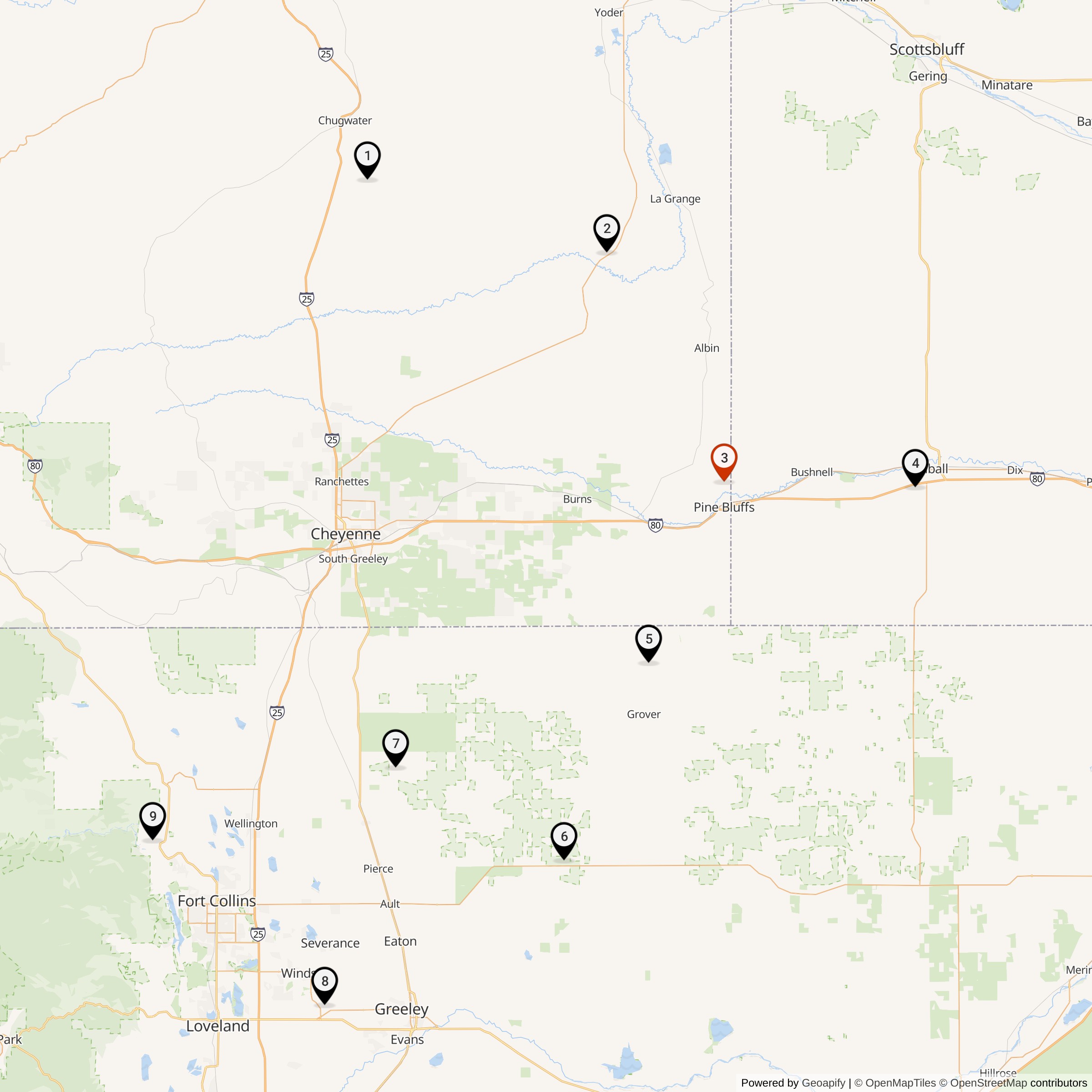
Read about the Atlas at F.E. Warren AFB
All Atlas Missile Silo Locations