
Atlas E Site 566-4 Missile Silo, Kimball Nebraska
Longitude: -103.686090274884
Site Type: Atlas E single-missile coffin launcher complex
Missile Type: SM-65E Atlas
Number of Launchers/Missiles: 1
Parent Base: F.E. Warren AFB
Missile Wing: 389th Strategic Missile Wing
Missile Squadron: 566th Strategic Missile Squadron
Current Site Use: Former Atlas E launch complex converted into a private underground residence/survival shelter; documented FUDS/CERCLA groundwater cleanup.
Site Ownership: Private ownership after GSA excessing in August 1965; F.E. Warren 2007 feature identified Don and Charlene Zwonitzer as owners at that time.
Accessible: No public access / private property.
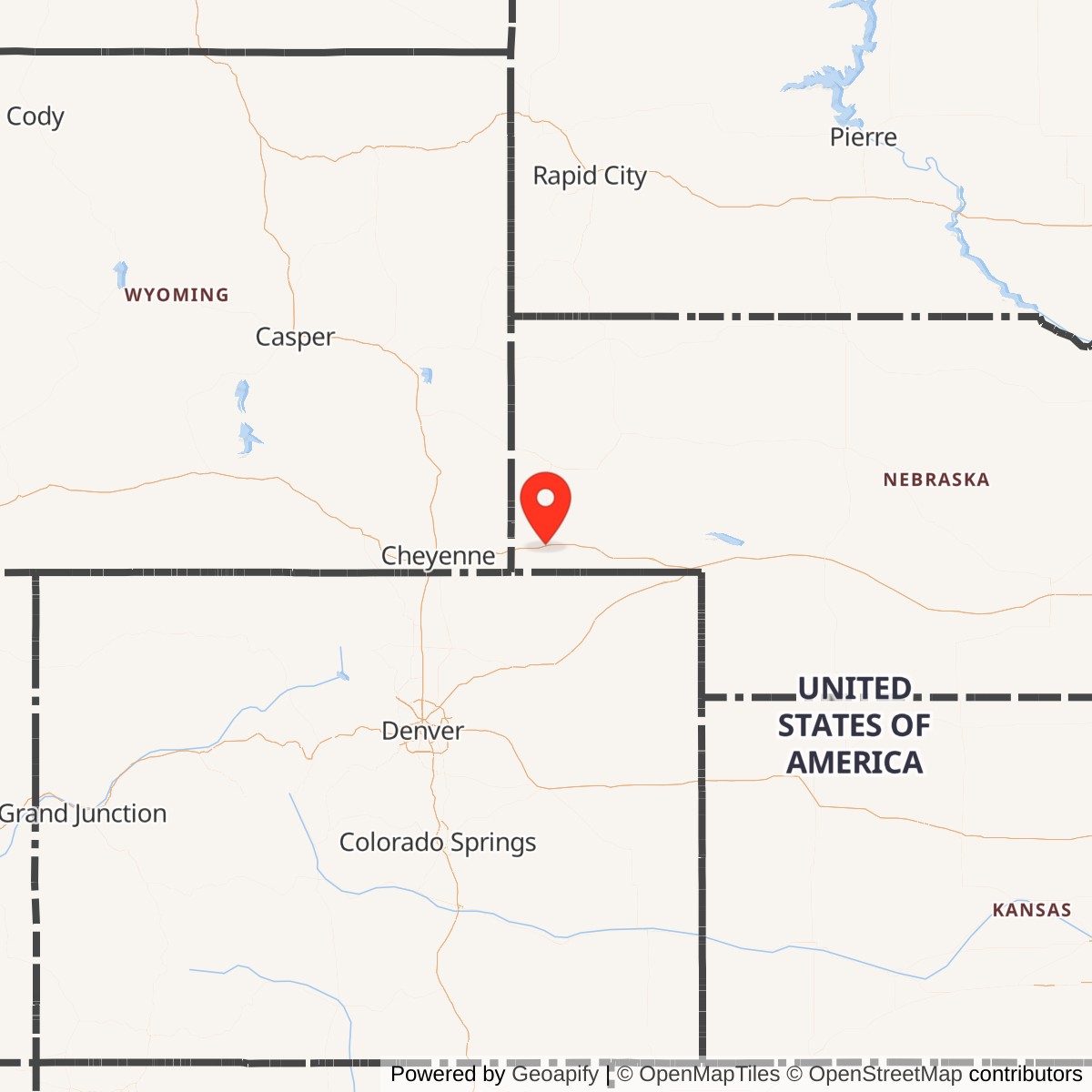
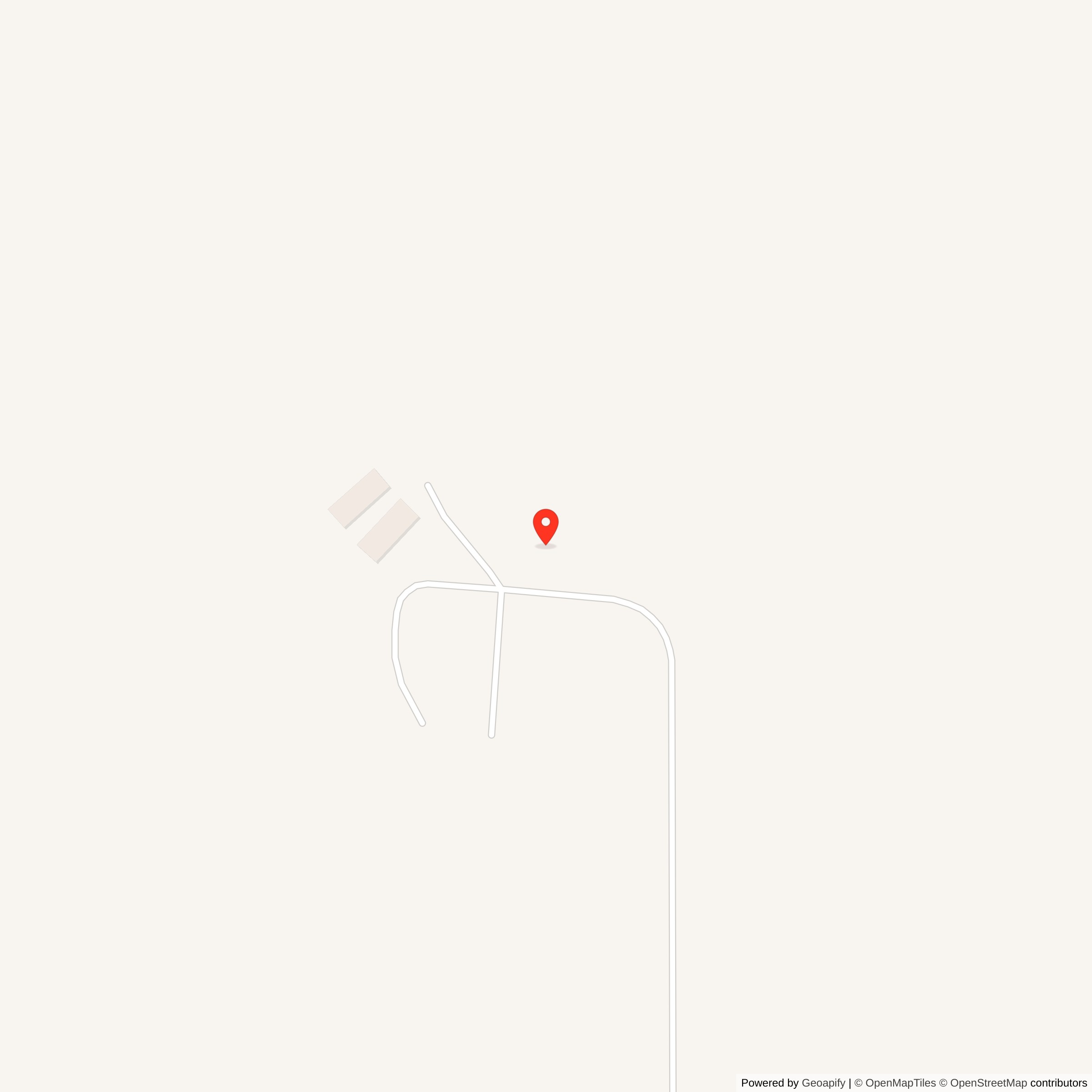
Atlas E Site 566-4 was a single-missile SM-65E Atlas intercontinental ballistic missile launch complex assigned to the 566th Strategic Missile Squadron and the 389th Strategic Missile Wing at F.E. Warren Air Force Base. The site was the fourth operational Atlas E launch complex in the 566th SMS missile field and was located near Kimball, Kimball County, Nebraska.
The site is no longer an active missile installation. It was removed from active Atlas service during the 1964-1965 phaseout of the 566th SMS missile force. After its Air Force use ended, the property was declared excess by the General Services Administration in August 1965. The former launch complex later passed into private ownership and became one of the better-known reused Atlas E sites, converted into a private underground residence and survival shelter near Kimball. It is also documented as a Formerly Used Defense Site / CERCLA cleanup location because of trichloroethene groundwater contamination.
Location, Landscape, and Site Description
Site 566-4 lies in the open High Plains of western Nebraska, southwest of Kimball and east of the Wyoming state line. U.S. Army Corps of Engineers environmental documentation describes the site as four miles southwest of Kimball; a F.E. Warren public-affairs feature describes the reused Atlas E home as located about two miles southwest of Kimball. Both descriptions place the former missile complex in the same rural area near County Road 30 and the Kimball city-water infrastructure.The site's location reflected the Atlas E pattern around F.E. Warren: individual launch complexes were dispersed away from the parent base and away from one another, but they remained close enough to be supported by the squadron's maintenance, security, and crew-relief system. The site was not a later Minuteman-style unmanned launch facility controlled by a remote launch control center. It was an Atlas E alert site with one missile, its own control/operations area, and a five-person crew that stood alert at the complex.
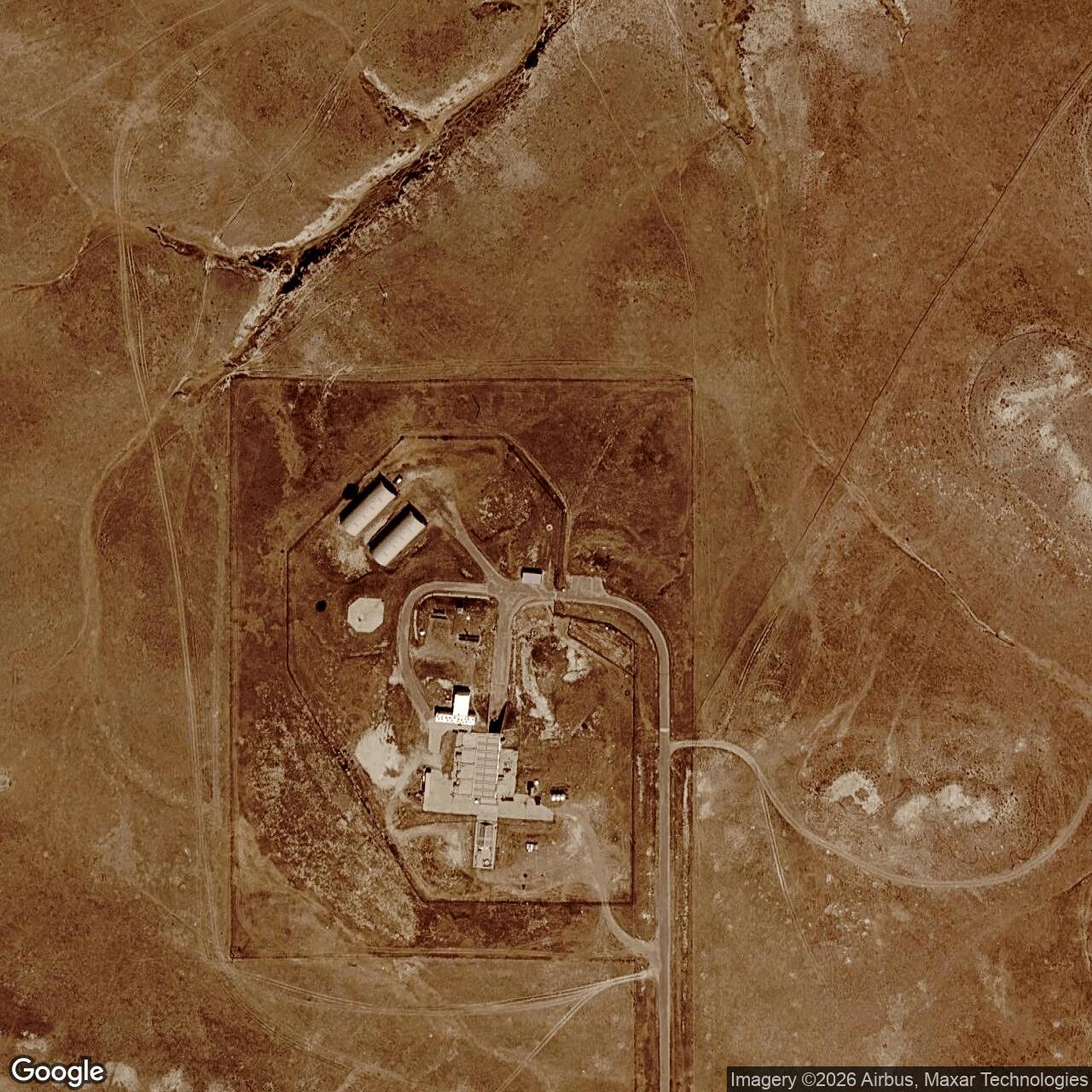
U.S. Army Corps of Engineers documentation describes the Kimball Atlas E property as including one underground launch operations building and one launch and service building, along with segregated storage buildings, a sentry house, a helicopter pad, a spray pond, roads, walks, fences, water, sewer, and electrical systems. The facility was also connected to the Kimball city water system, with a pump station located near the city water tower. These details show that Site 566-4 was not merely a buried launcher; it was a self-contained military-industrial installation designed to keep one liquid-fueled ICBM on alert in an isolated rural setting.
The Atlas E missile was housed in a below-ground "coffin" launcher. The missile rested horizontally inside the large reinforced launch and service structure. During launch preparation, the massive roof or door opened, the missile was raised upright, and the crew loaded the liquid-oxygen oxidizer and RP-1 kerosene fuel before initiating the final launch sequence. The large concrete and steel structure that once protected and serviced the missile later became the central feature of the reused Kimball residence.
Strategic and Cold War Context
The Atlas program placed the United States' first operational intercontinental ballistic missiles on alert. The missile was developed to give Strategic Air Command a nuclear-delivery system that could reach intercontinental targets from the continental United States without relying only on bomber bases or overseas missile deployments. F.E. Warren became one of the earliest Atlas bases because its location near Cheyenne offered open land for dispersed sites, central continental geography, access to transportation and utilities, and an existing military installation that could be converted to missile operations.Atlas E represented an important transitional step in this first-generation ICBM deployment. The earlier Atlas D system at F.E. Warren used grouped launch complexes with shared control arrangements. Atlas E moved to individually dispersed missile sites and all-inertial guidance. That made each missile less dependent on a central radio-guidance facility and allowed the sites to be spread more widely across Wyoming, Nebraska, and Colorado.
The improvement was real but temporary. Atlas remained a liquid-fueled missile with a thin pressurized stainless-steel airframe. The National Park Service explains that Atlas missiles had to remain pressurized on alert because their thin shell required internal pressure to keep its shape. Launch still required opening the launcher, erecting the missile, loading liquid oxygen and RP-1, and completing the countdown. For that reason, Atlas E was soon overtaken by solid-fueled Minuteman missiles, which offered faster reaction, lower maintenance burden, and better long-term survivability.
Construction and Activation
The 566th Strategic Missile Squadron was activated on 1959-08-15 and was later assigned to F.E. Warren AFB. The official 566th SMS unit summary records turnover to Strategic Air Command and operational status for the squadron on 1961-03-30, before the squadron formally moved under the 389th Strategic Missile Wing at F.E. Warren on 1961-07-01.Construction of the Kimball site required extensive excavation, reinforced concrete, utilities, and support buildings. The launch and service building had to house a full Atlas E missile horizontally, provide access for maintenance, and withstand a limited level of overpressure. The launch operations building, sentry house, storage facilities, roads, helicopter pad, water and sewer systems, and electrical infrastructure made the site capable of operating as an independent alert complex. The later Air Force public-affairs feature on the residence stated that the Atlas site was built with 139,000 cubic yards of concrete, and described the old command section as buried under two feet of concrete and about five feet of earth.
Missile System and Technical Role
Site 566-4 housed one SM-65E Atlas missile in a coffin-style launcher. The Association of Air Force Missileers describes the Atlas E as using an all-inertial guidance system, with missiles deployed singly and one control center per missile. It also states that Atlas E crews included two officers and three enlisted members; a new crew departed the main base each morning to relieve the crew already on 24-hour alert. Maintenance support included missile, facility, electronics, power-production, propellant, nuclear-weapons, and installed-equipment specialists.The launch process reflected the demands of a first-generation liquid-fueled ICBM. After completing emergency-war-order procedures, the crew would open the coffin roof, erect the missile, and load liquid oxygen and RP-1. Once propellants were fully loaded, the launch sequence could be initiated. Public Atlas summaries describe Atlas E as having an approximately fifteen-minute launch response time.
Missile capability, warhead, and reentry vehicle: Atlas E was an early liquid-fueled ICBM designed to deliver a single nuclear warhead at intercontinental range. The National Park Service identifies Atlas E as an individual-complex, inertially guided ICBM deployed in below-ground coffins. The 566th SMS source identifies the Atlas E as using a Mark IV reentry vehicle and W-38 nuclear warhead with an approximately 3.8-megaton yield, while the Smithsonian's National Air and Space Museum identifies the Mark 4 reentry vehicle as carrying a W-38 nuclear warhead with a yield of about 3.75 megatons.
Operational History
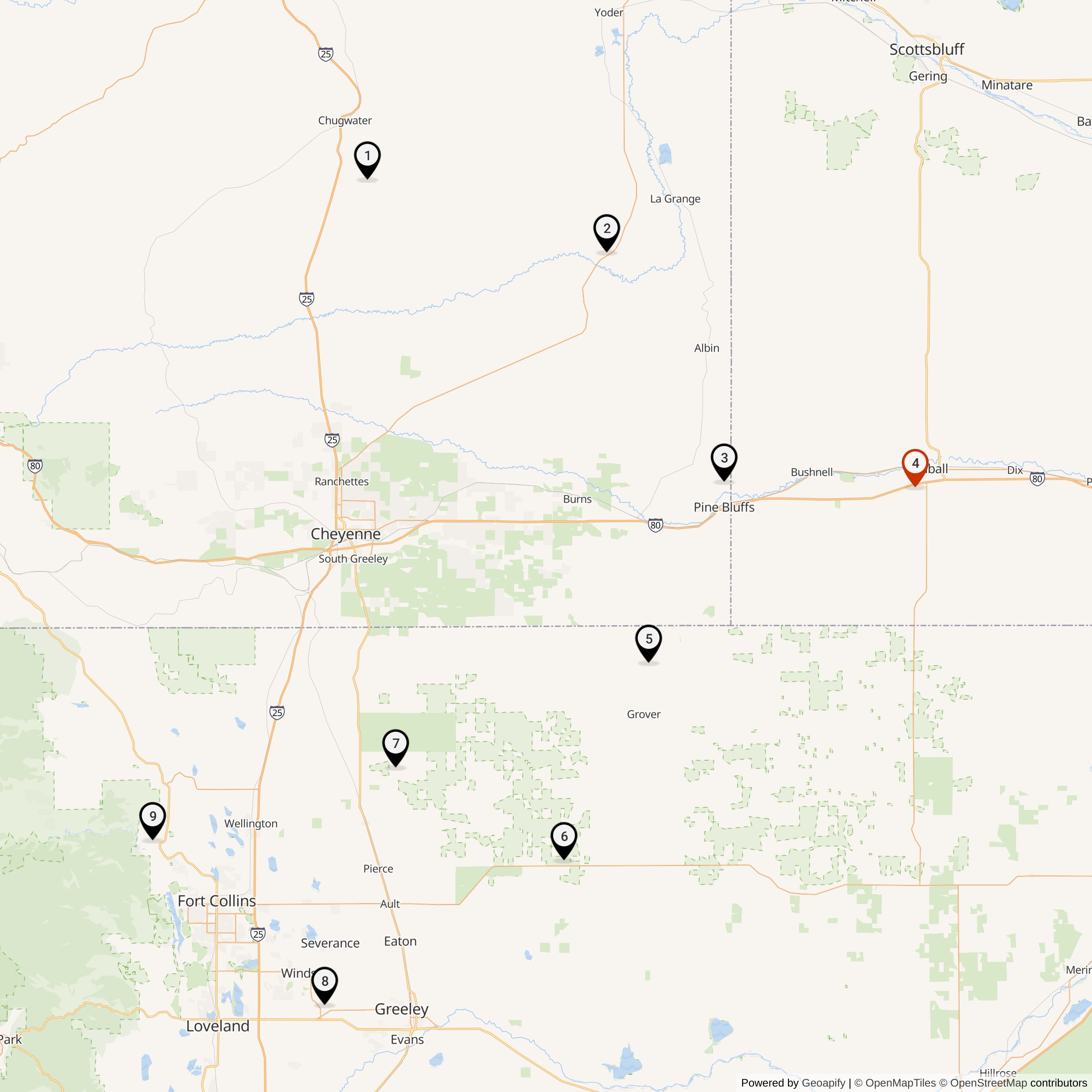
Site 566-4 formed part of the nine-site Atlas E ring operated by the 566th Strategic Missile Squadron around F.E. Warren AFB. The base's official history states that F.E. Warren became the nation's first operational ICBM base after receiving its first Atlas D missile in October 1959 and later acquiring Atlas D and E missiles. On 1961-07-01, the 706th Strategic Missile Wing was redesignated as the 389th Strategic Missile Wing, the wing under which the 566th SMS operated its Atlas E sites.Operational life at Site 566-4 centered on alert duty. Unlike the later Minuteman concept, where unmanned launch facilities were monitored from launch control centers, an Atlas E crew was physically stationed at the remote site. The crew's job was to keep the missile, launch equipment, guidance system, power equipment, communications, and site-support systems ready. Security forces controlled access; maintenance technicians supported the missile, launcher, equipment, and utilities; and crew relief required daily movement between F.E. Warren and the dispersed site.
The site's service took place during the most dangerous years of the Cold War. F.E. Warren's official base history states that during the Cuban Missile Crisis the 389th Strategic Missile Wing placed all its Atlas missiles in launch configuration and maintained that posture until 1962-11-27. That statement applies to the wing's Atlas force as a whole rather than documenting a separate Site 566-4-only incident, but it directly describes the alert environment in which the Kimball site operated. The 566th SMS site history likewise describes all 566th sites as being at a high level of alert during the crisis.
Site-Specific and Squadron-Specific Events
The best documented squadron-level event affecting Site 566-4 was the Cuban Missile Crisis alert posture in October and November 1962. F.E. Warren's official base history says the 389th Strategic Missile Wing placed all of its Atlas missiles in launch configuration until the crisis abated on 1962-11-27, while the 566th SMS history describes the squadron's sites as being at high alert during the crisis. Because the available sources describe the event at wing and squadron level, it should be read as a 389th SMW / 566th SMS event rather than a separately verified, site-only incident at Kimball.Site 566-4 also has an unusually well-documented post-military reuse story. In 2007, F.E. Warren's 90th Space Wing Public Affairs published a feature on Don and Charlene Zwonitzer's conversion of the former Atlas E site into a home. The article described the 20,000-square-foot underground site, two diesel generators, inverters, battery banks, a wind generator, a large missile door, remote cameras, and a converted flame pit used as a greenhouse. That feature makes the Kimball complex one of the more publicly documented private residential reuses of an Atlas E missile site.
Deactivation, Disposal, and Arms-Control Context
The 566th SMS Atlas E force was withdrawn from alert as the Air Force phased out Atlas in favor of newer ICBM systems. The official 566th SMS unit summary records the first squadron ICBM off alert on 1964-10-01 and the last ICBM shipped on 1964-10-22. It lists the squadron as inactivated on 1964-12-15, while the station entry continues to 1965-03-25. AtlasMissileSilo.com's Site 4 page lists the Kimball site as decommissioned on 1965-03-25. Those dates likely describe successive stages: removal from alert, shipment of missiles, squadron inactivation, and final site or administrative decommissioning.U.S. Army Corps of Engineers documentation records that the General Services Administration excessed the Kimball Atlas E site in August 1965. The available fact sheet does not provide a detailed inventory of missile removal, equipment salvage, or sealing work, but the subsequent private conversion shows that major structural elements remained. The launch operations building, the launcher structure, the massive missile door, and the flame pit were still substantial enough to be adapted into a residence, mechanical/self-sufficiency systems, vehicle/storage space, and a greenhouse.
The post-closure environmental history is documented more clearly than the initial disposal work. USACE identifies the property as a Formerly Used Defense Site and says a Hazardous, Toxic and Radioactive Waste project was initiated because of trichloroethene groundwater contamination. By 2015, USACE reported that its contractor had completed the proposed plan and decision document, that design and implementation of the full-scale remedy were planned, and that performance monitoring would be used to confirm that the remedy continued to reduce TCE mass. The same fact sheet identified continuing concerns by NDEQ and EPA about reducing the TCE-contaminated groundwater plume and noted funding was being programmed to continue operation and monitoring of the remedial action.
Current Status and Site Use
Site 566-4 is a decommissioned former Atlas E missile complex under private ownership. The best documented current use is private residential and preparedness reuse, based on the F.E. Warren article describing the Zwonitzer home at the former missile site. The launcher doors, underground command/living areas, large reinforced-concrete structures, power systems, surface access, and former flame pit were incorporated into the residence and associated self-sufficiency features.The site should not be treated as publicly accessible. It is private property, and the public articles and photo pages do not establish any museum, tour program, or general access right. It remains historically important both as a former operational ICBM launch complex and as a vivid example of how Cold War missile infrastructure could survive decommissioning through private reuse.
Chronology
- 1959-08-15 The 566th Strategic Missile Squadron was activated.
- 1960 Construction began at Site 566-4.
- 1961 Site 566-4 was turned over to the Air Force, according to the site-specific summary; the exact month and day were not identified in that source.
- 1961-03-30 The 566th SMS was turned over to Strategic Air Command and recorded as operational in the official unit summary.
- 1961-07-01 The 566th SMS came under the 389th Strategic Missile Wing at F.E. Warren AFB.
- 1962-03-02 The 566th SMS emblem with nine stars representing the nine dispersed launch sites was approved.
- 1962-10 During the Cuban Missile Crisis, the 389th Strategic Missile Wing placed its Atlas missiles in launch configuration.
- 1962-11-27 F.E. Warren's Atlas crisis posture ended after the Cuban Missile Crisis abated.
- 1964-10-01 The first 566th SMS ICBM was removed from alert.
- 1964-10-22 The last 566th SMS ICBM was shipped.
- 1964-12-15 The 566th Strategic Missile Squadron was inactivated.
- 1965-03-25 Site 566-4 is listed as decommissioned.
- 1965-08 The General Services Administration excessed the Kimball Atlas E site, according to USACE.
- 2007-05-09 F.E. Warren published a public-affairs feature on the former Kimball Atlas E site's conversion into a private underground home.
- 2015 USACE reported proposed-plan and decision-document completion, planned full-scale remedy implementation, and continued performance monitoring for TCE contamination at the site.
Read about the Atlas at F.E. Warren AFB
All Atlas Missile Silo Locations