
Atlas E Site 566-7 Missile Silo, Nunn Colorado
Longitude: -104.719713964608
Site Type: Atlas E single-missile coffin launcher complex
Missile Type: SM-65E Atlas
Number of Launchers/Missiles: 1
Parent Base: F.E. Warren AFB
Missile Wing: 389th Strategic Missile Wing
Missile Squadron: 566th Strategic Missile Squadron
Current Site Use: Former Atlas E launch complex near Nunn; CDPHE identifies Atlas 11 as a commercial-use site the site was sold to the University of Colorado and was not salvaged, making it one of the best-preserved F.E. Warren Atlas E complexes.
Site Ownership: Public/private ownership after 1965 disposal; historical sale to University of Colorado; current commercial ownership not independently verified.
Accessible: No public access / private or controlled commercial property; CDPHE advises most Atlas sites are private property and should not be entered.
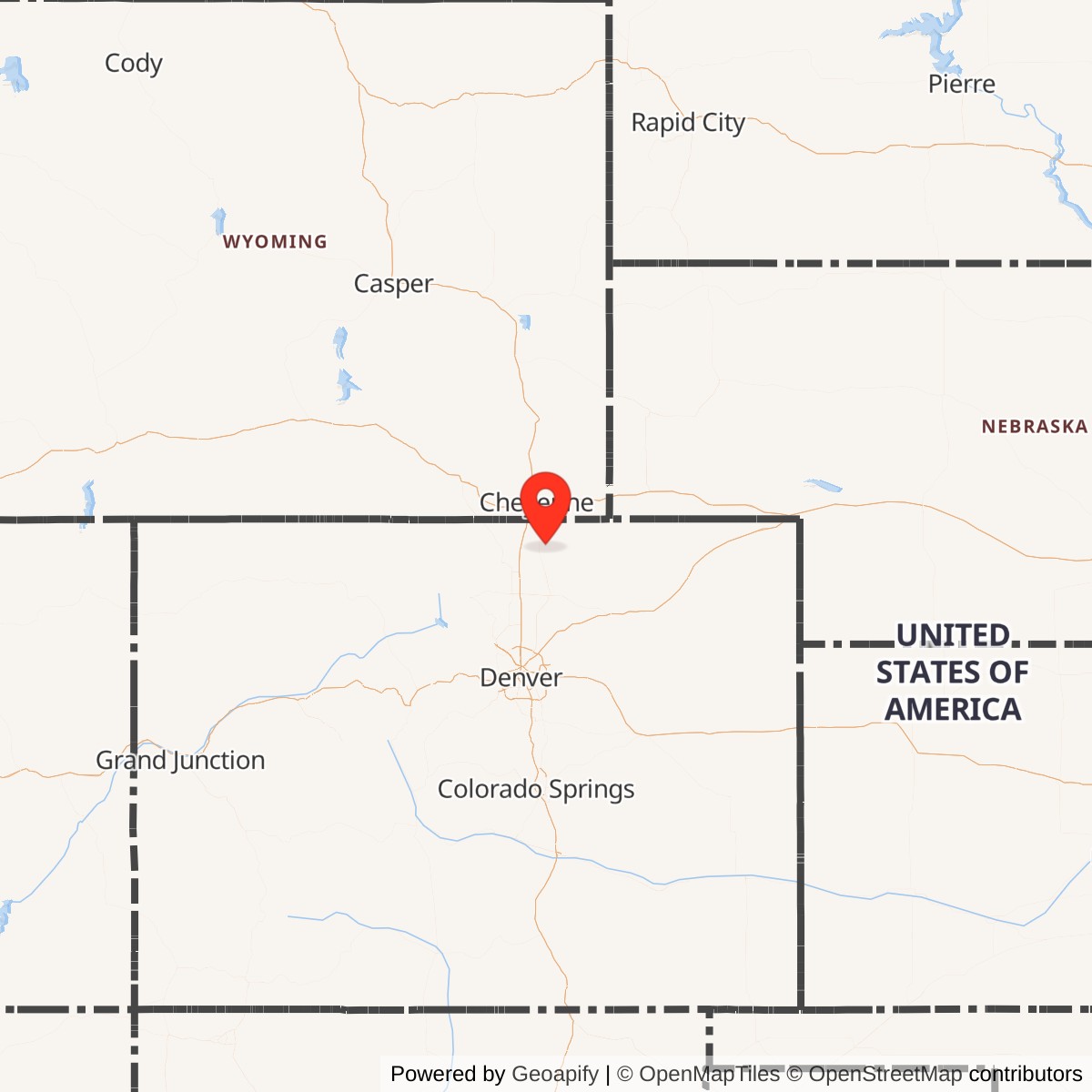
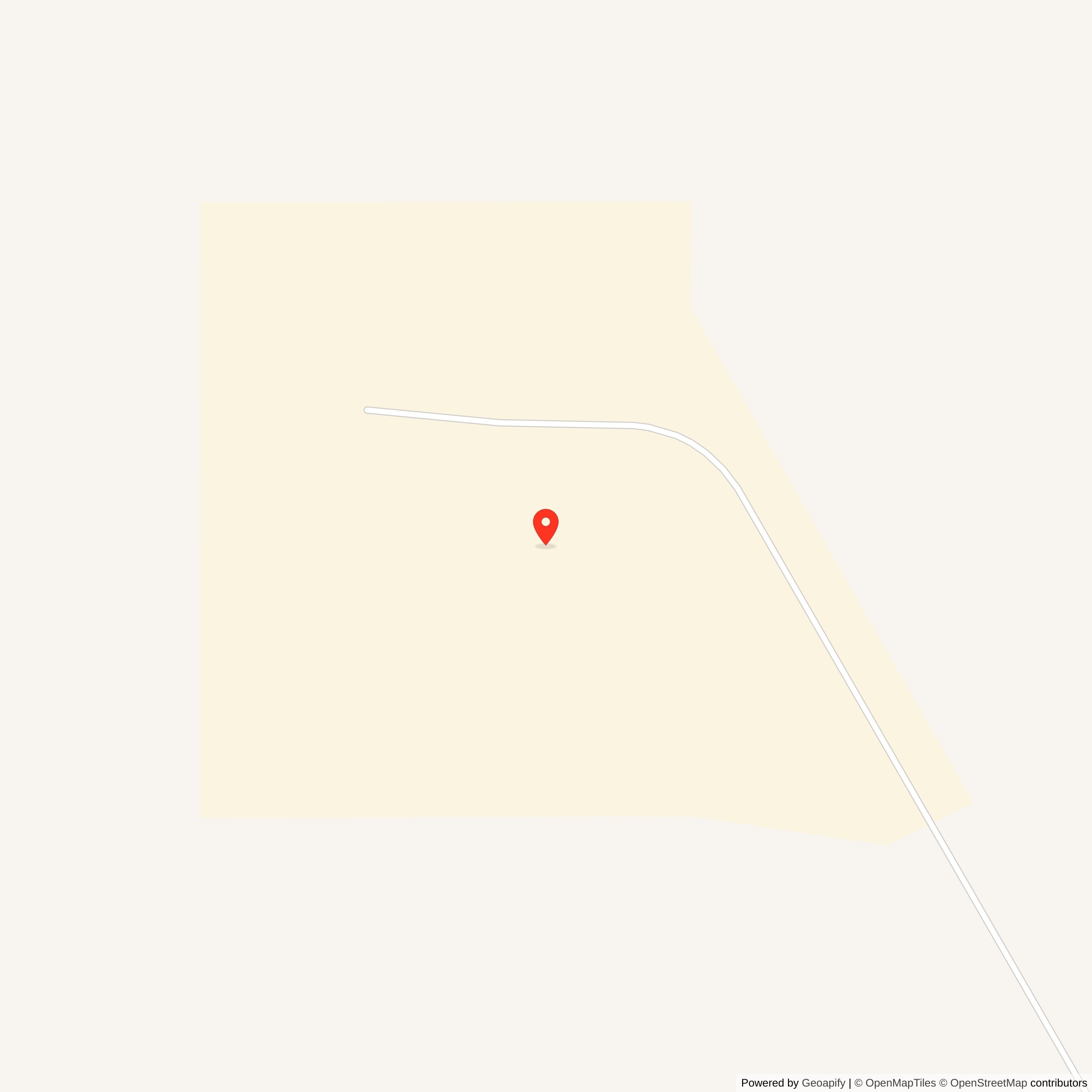
Atlas E Site 566-7 was a single-missile SM-65E Atlas launch complex operated by the 566th Strategic Missile Squadron under the 389th Strategic Missile Wing at F.E. Warren Air Force Base. The site was located near Nunn in Weld County, Colorado.
The site was one of the Colorado Atlas E launch complexes associated with the F.E. Warren missile field. In operational Atlas sources it appears as 566th Strategic Missile Squadron Site 7, while environmental records refer to it as Atlas 11 or Site #11. It was an Atlas E coffin-launcher complex, not a later Minuteman Launch Facility and not an Atlas F vertical silo.
Site 566-7 entered Atlas E service in 1961, with exact turnover and alert dates not verified in available public sources. The site is no longer active as a missile installation. It is a decommissioned former ICBM launch complex in commercial or controlled reuse and is associated with a Formerly Used Defense Site / CERCLA environmental cleanup record. It is not a public historic site.
Location, Landscape, and Site Description
Site 566-7 stood on the open high plains north and east of Nunn, Colorado. EPA's site profile describes the location as three miles east and six miles north of Nunn, in Township 10 North, Range 66 West, Section 36. The surrounding landscape is rural Weld County agricultural and rangeland terrain: broad, exposed, sparsely settled, and well suited to the dispersal logic of early ICBM basing. F.E. Warren Air Force Base in Cheyenne, Wyoming, provided the command and support base, but the individual Atlas E launchers were deliberately scattered across Wyoming, Nebraska, and northern Colorado rather than concentrated on the base itself.The Atlas E configuration used at Site 566-7 was commonly described as a "coffin" launcher. The missile was stored horizontally in a reinforced below-grade launcher structure, with the protective roof at or near ground level. This arrangement gave the missile more protection than an exposed launch pad but less protection than the later Atlas F vertical underground silo. To launch, the missile would have been raised from its horizontal shelter, fueled with RP-1 kerosene and liquid oxygen, and fired from the surface rather than launched from inside a vertical silo.
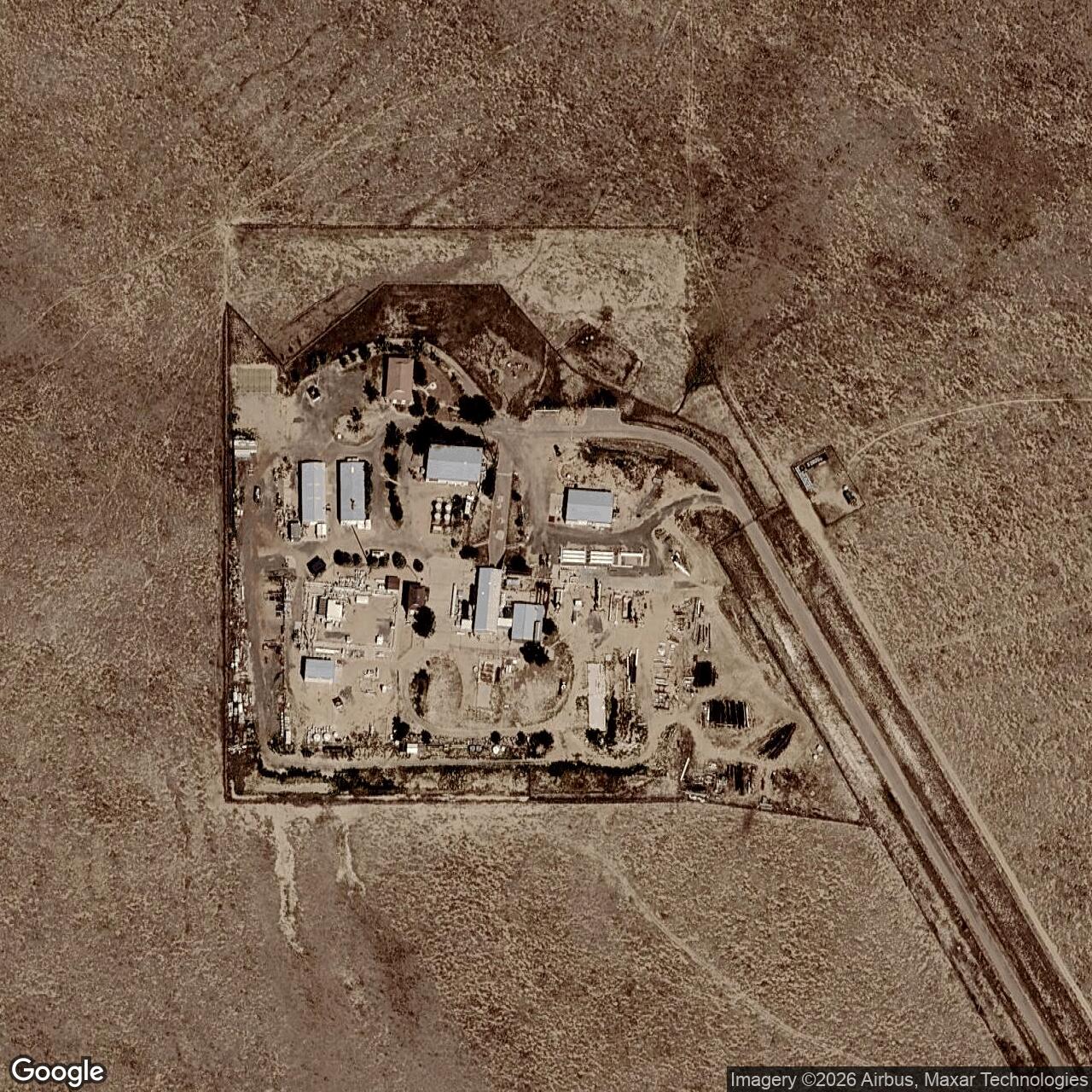
The complex would have included the launcher structure, access road, support and utility features, communications and control equipment, security fencing, hardstand or paved areas, and the specialized infrastructure required for liquid-fueled Atlas operations. Available public aerial imagery and site photographs show that the former launch complex remains physically legible, although this history does not rely on field entry and does not verify current interior condition. Sources describe the site as sold to the University of Colorado, not salvaged, and among the best-preserved of the F.E. Warren Atlas E sites. CDPHE classifies Atlas 11 as a commercial-use site.
Strategic and Cold War Context
Atlas E Site 566-7 was part of the first generation of American operational intercontinental ballistic missile infrastructure. The Atlas program was developed under intense Cold War urgency, as the United States sought a land-based nuclear missile force able to threaten targets at intercontinental range and complicate Soviet planning. Atlas was not yet the mature solid-fueled missile represented later by Minuteman. It was a large, liquid-fueled missile that required careful propellant handling, pressurized tank maintenance, and complex launch procedures.The Atlas E represented an important step beyond the earliest Atlas D deployments. Atlas E used all-inertial guidance, which allowed the Air Force to disperse individual launch complexes more widely. That mattered for the F.E. Warren field. Instead of building every missile in a tightly grouped complex, the Air Force could place single Atlas E launchers across a wider rural area. Dispersal increased survivability by forcing an adversary to target many separated launch points rather than a single compact installation.
The site also illustrates the transitional nature of early ICBM basing. Atlas E was more survivable than aboveground launchers but still vulnerable compared with later hardened vertical silos. Its liquid-fueled alert posture demanded constant maintenance and hazardous propellant procedures. The coffin launcher was a compromise between speed of deployment, cost, engineering limits, and survivability. Site 566-7 therefore belongs to the brief but important period when the United States was rushing liquid-fueled first-generation ICBMs into the field while solid-fueled Minuteman and more modern silo systems were already emerging.
Construction and Activation
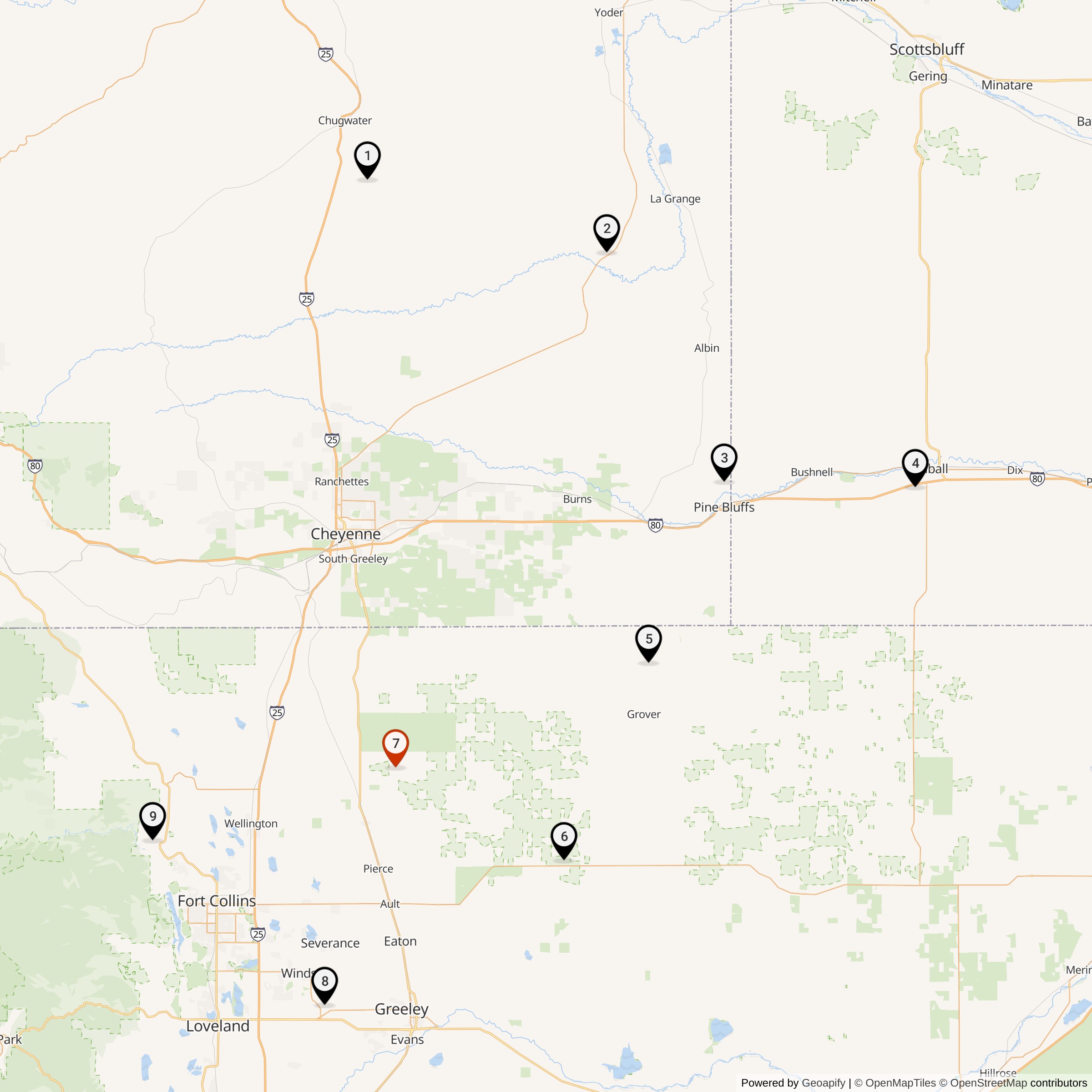
The F.E. Warren Atlas E program was the Warren III phase of Atlas construction. Public missile-history sources identify the Martin K. Elby Construction Company of Wichita, Kansas, as the low bidder for the Warren III Atlas E work. Construction began on December 7, 1959. The Atlas E field consisted of nine single coffin-launcher sites scattered across a broad area: three in Wyoming, one in Nebraska, and five in Colorado. The Colorado locations were associated with Grover, Briggsdale, Nunn, Greeley, and Fort Collins.Construction was not simple. The Warren III sites were spread across three states, forcing contractors to coordinate labor, materials, and logistics over a wide area. Historical accounts note erratic steel deliveries following the national steel strike, labor complications that varied by site and union local, work stoppages at some individual locations, and continuing problems with the propellant loading system. Those difficulties were part of a wider pattern in early missile construction and helped lead to the creation of the Corps of Engineers Ballistic Missile Construction Office as a specialized organization for missile-site construction oversight.
The 549th Strategic Missile Squadron was activated at F.E. Warren on October 1, 1960, as the Atlas E squadron, and on July 1, 1961, it was redesignated the 566th Strategic Missile Squadron. On that same date, command responsibilities at Warren shifted from the 706th Strategic Missile Wing context to the newly activated 389th Strategic Missile Wing. Site 566-7 should therefore be understood as a 566th Strategic Missile Squadron operational site during its active service, even though some construction and early activation planning occurred under the preceding squadron designation.
Missile System and Technical Role
Site 566-7 housed the SM-65E Atlas, a liquid-fueled intercontinental ballistic missile. Atlas used RP-1 kerosene fuel and liquid oxygen oxidizer. Its thin stainless-steel pressure-stabilized structure required internal pressure to maintain rigidity, a distinctive feature of the Atlas design. The Atlas E version used inertial guidance and the MA-3 propulsion system and was deployed at individual launch complexes rather than only in clustered launch groups.Operationally, the Atlas E coffin launcher stored the missile horizontally underground. In a launch sequence the shelter would open, the missile would be raised to firing position, loaded with liquid oxygen, and prepared for launch. Public National Park Service material describes Atlas E launch response in roughly the 15-minute range, reflecting the fact that these liquid-fueled missiles could not be fired with the near-instant reaction time later associated with solid-fueled Minuteman missiles. The site's technical role was therefore to maintain a single nuclear-armed Atlas E missile in an alert posture, with launch crews, maintenance personnel, communications equipment, security forces, propellant-handling systems, and support infrastructure all tied into the wider Strategic Air Command missile field.
Public sources identify Atlas nuclear payloads in broad terms. CDPHE notes that the Colorado Atlas sites were equipped for plutonium-based nuclear warheads and states that there is no evidence of radioactive contamination at the sites, because warhead maintenance and related activities were conducted at the base rather than at the dispersed launch sites. The Smithsonian's National Air and Space Museum describes the Atlas-associated Mark 4 reentry vehicle as carrying the W-38 thermonuclear warhead with an approximate yield of 3.75 megatons.
Operational History
Atlas E Site 566-7 was operated as part of the F.E. Warren Atlas E missile field by the 566th Strategic Missile Squadron. The squadron's mission was to maintain a small but strategically significant force of first-generation ICBMs on alert during a period when the United States was rapidly building the nuclear triad. The site itself was one of nine Atlas E launchers assigned to the F.E. Warren field. Five of those launchers were in Colorado, including the Nunn site.The daily operational significance of Site 566-7 was not that it housed large numbers of personnel, but that it maintained a single launch-ready missile and all the infrastructure needed to support it. Atlas E operations required inspection, communications checks, security, maintenance of launcher and power systems, readiness of propellant loading equipment, and careful handling of hazardous materials. The missile used RP-1 and liquid oxygen, and CDPHE's environmental history notes that trichloroethene, or TCE, was used during construction and by missile crews to flush fuel tanks after readiness tests. Spent TCE and residual RP-1 from those procedures were routed to a sump below the launch building, eventually contributing to shallow groundwater contamination at several Colorado Atlas sites, including Atlas 11.
The site existed during a tense moment in Cold War nuclear history. By the time of the Cuban Missile Crisis in October 1962, the broader Atlas force formed part of the nation's operational nuclear deterrent, even as newer Titan and Minuteman systems were entering service. Public sources do not identify a unique Cuban Missile Crisis event, accident, launch attempt, or security incident at Site 566-7 itself. For that reason, the site's operational history should be interpreted as part of the 566th Strategic Missile Squadron and F.E. Warren Atlas E alert mission rather than as a site with a known individual incident record.
Deactivation and Disposal
The Atlas E missile force had a short active life. By the mid-1960s, Atlas and Titan I systems were being phased out in favor of more capable and maintainable systems, especially solid-fueled Minuteman missiles and later-generation silo-based forces. The F.E. Warren Atlas D squadron was already being removed from service in 1964, and the 566th Strategic Missile Squadron's Atlas E sites followed during the 1965 phaseout.CDPHE states that the Colorado Atlas E sites were decommissioned and their missiles removed in 1965, after which the sites were sold to public and private owners. This means several separate actions should be distinguished: the missile was removed from active service; the launch complex ceased to be an operational Strategic Air Command ICBM site; the squadron was inactivated during the phaseout; and the property later passed out of active Air Force missile use.
The post-closure physical treatment of Site 566-7 appears different from some other former Atlas properties. The site was sold to the University of Colorado, was not salvaged, and is among the best preserved of the F.E. Warren Atlas E sites. That statement should not be read to mean that the missile, nuclear equipment, and military operational systems remained in place. The missile and warhead-related military role ended in 1965. Rather, the available public description suggests that the former structure was not stripped or demolished to the extent seen at some other decommissioned Atlas complexes.
Environmental cleanup became the major post-closure federal issue. EPA identifies the property as Warren F.E. AFB Atlas "E" Missile Site #11, EPA ID CO0009139006, not on the National Priorities List and assigned to federal facility-lead cleanup. CDPHE describes the Colorado Atlas sites as FUDS/CERCLA sites investigated and cleaned up through the U.S. Army Corps of Engineers Omaha District, with CDPHE oversight and EPA Region 8 involvement. At Atlas 11, investigations characterized soil contamination and TCE groundwater contamination, a soil removal action took place in 2006, and a remedy involving in-situ chemical oxidation was implemented for the TCE plume beneath the silo area. Long-term monitoring continues, and a second plume discovered in 2017 remains part of the site's cleanup history.
Current Status and Site Use
Atlas E Site 566-7 is a decommissioned former missile launch complex. CDPHE identifies Atlas 11 as a commercial-use site, while another source reports a historical sale to the University of Colorado and describes the property as not salvaged. Current ownership was not independently confirmed beyond those public-source descriptions.Visible remains appear to survive, based on public aerial imagery.
Chronology
- 1959-12-07 Work began on Warren III, the F.E. Warren Atlas E coffin-launcher construction program.
- 1960 Construction began at 566th Strategic Missile Squadron Site 7 near Nunn.
- 1960-10-01 The 549th Strategic Missile Squadron was activated at F.E. Warren as the Atlas E squadron.
- 1961 Site 7 was turned over to the Air Force.
- 1961-07-01 The 549th Strategic Missile Squadron was redesignated the 566th Strategic Missile Squadron.
- 1961-07-01 The 389th Strategic Missile Wing assumed F.E. Warren missile command responsibilities after the 706th Strategic Missile Wing stood down.
- 1961 Atlas E sites in the F.E. Warren field, including northern Colorado locations, entered the operational Atlas E era.
- 1965 Colorado Atlas E sites were decommissioned and their missiles removed.
- 2006 CDPHE reports that a soil removal action was completed at Atlas 11.
- 2017 CDPHE reports that a second groundwater contamination area was identified west of the original Atlas 11 plume, beneath land associated with the U.S. Department of Agriculture.
- 2026 EPA lists Warren F.E. AFB Atlas "E" Missile Site #11, CO0009139006, as not on the National Priorities List and under federal facility-lead cleanup status.
Read about the Atlas at F.E. Warren AFB
All Atlas Missile Silo Locations