Atlas E Site 567-1 Missile Silo, Deer Park Washington
Longitude: -117.4090826064613
Site Type: Atlas E single-missile coffin launcher complex
Missile Type: SM-65E Atlas
Number of Launchers/Missiles: 1
Parent Base: Fairchild AFB
Missile Wing: 92d Bombardment Wing; 92d Strategic Aerospace Wing after 1962-02-15
Missile Squadron: 567th Strategic Missile Squadron
Current Site Use: Former Atlas E launch complex near Deer Park; 2009 NRHP documentation for Fairchild Atlas E Site 9 states Site 1 was used by a private contractor for munitions storage; current tenant/use requires parcel-level verification.
Site Ownership: Private ownership after post-1965 disposal; EPA lists the CERCLA record as not a federal facility.
Accessible: No public access / private property.
Atlas E Site 567-1 was a single-missile SM-65E Atlas intercontinental ballistic missile launch complex operated by the 567th Strategic Missile Squadron in the Fairchild Air Force Base missile field. The site was one of nine Atlas E complexes dispersed around the Spokane, Washington, region under Strategic Air Command. Its parent base was Fairchild Air Force Base near Spokane. Its parent wing was the 92d Bombardment Wing during the early missile deployment period and the 92d Strategic Aerospace Wing after the wing redesignation of 1962. The site did not have a separate parent Launch Control Center in the Minuteman sense; Atlas E launch-control functions were contained at the launch complex itself.
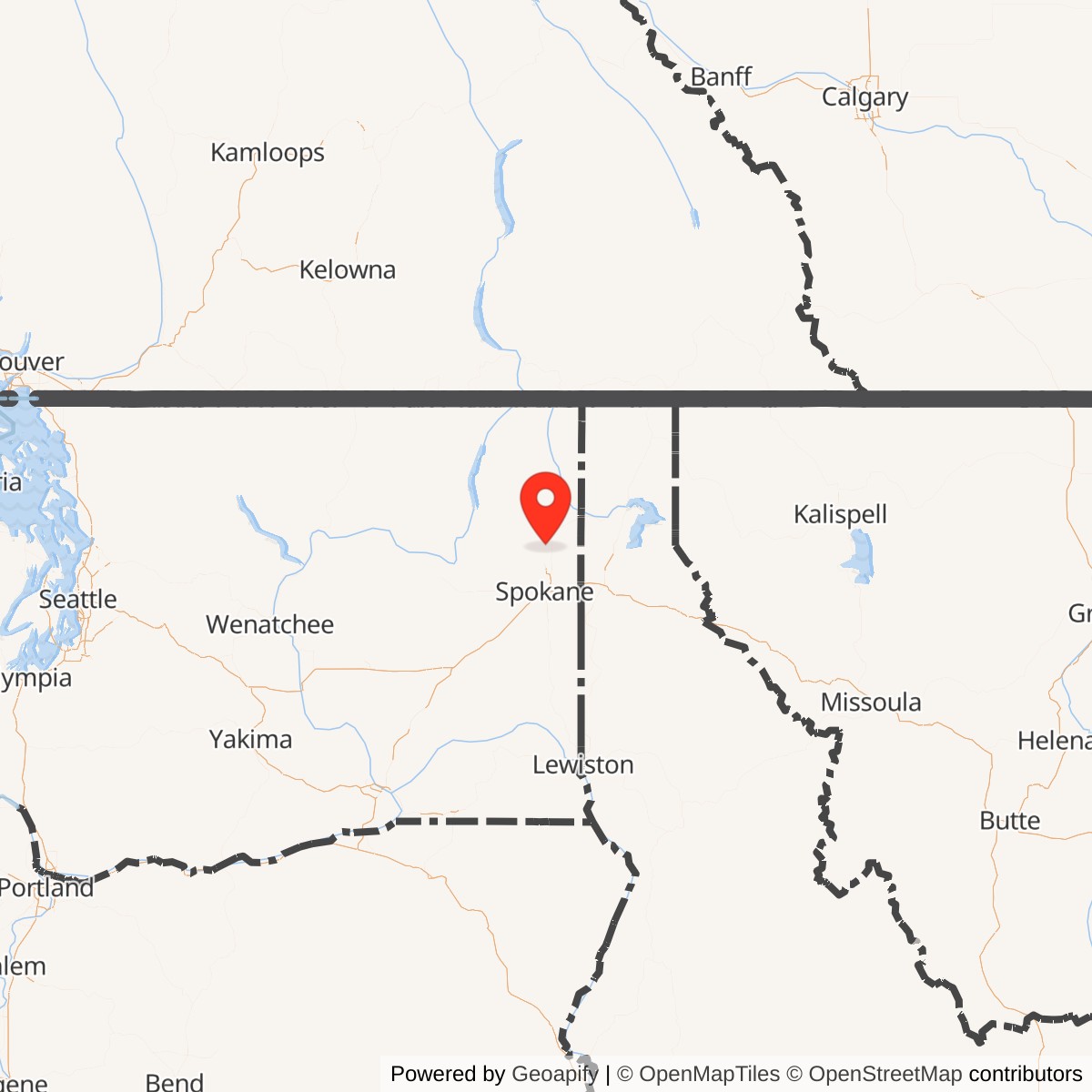
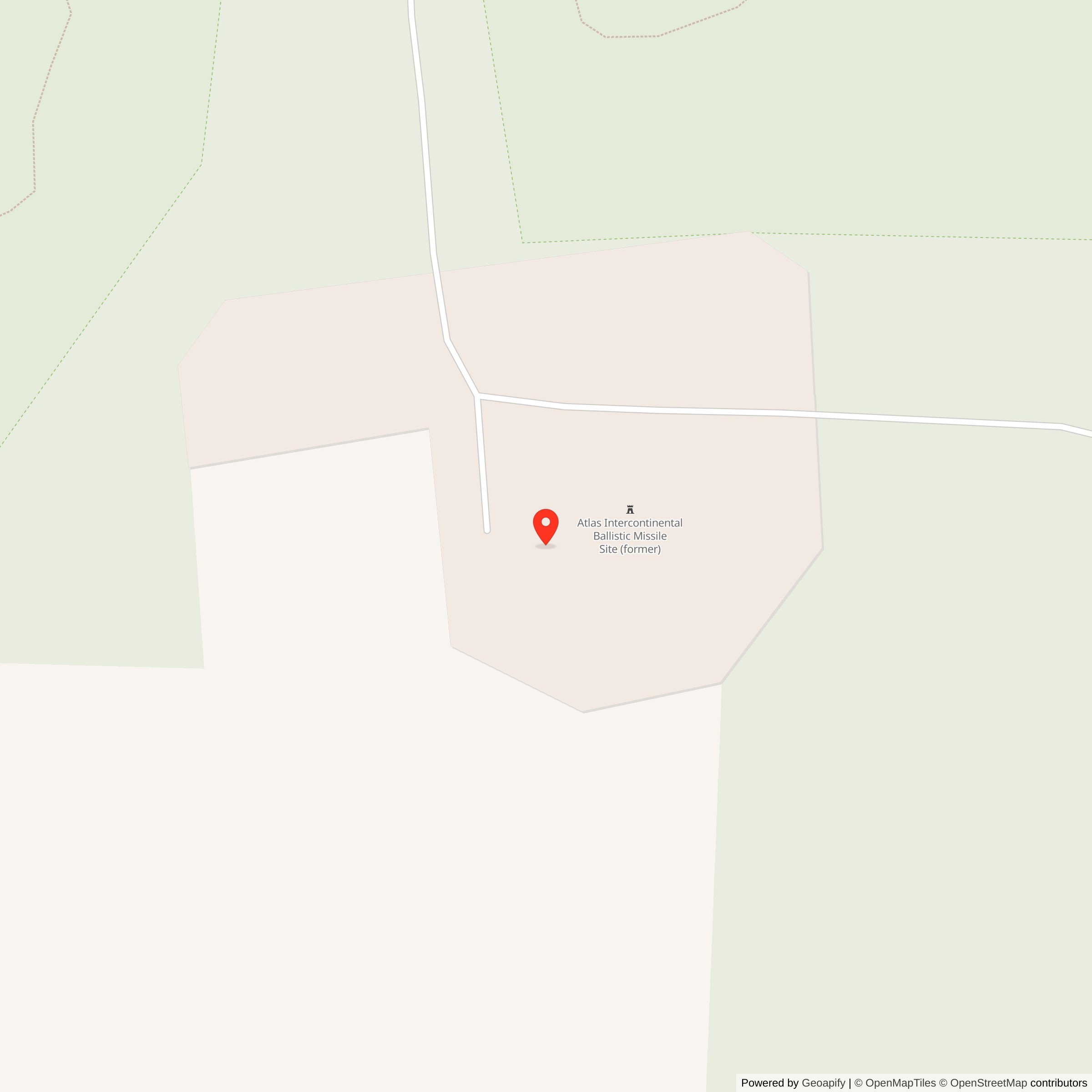
The site was located near Deer Park in Spokane County, Washington, east-northeast of the town and north of Spokane. EPA's Superfund/CERCLA record identifies the cleanup property as the Former Fairchild Atlas E Missile S-1 Site, EPA ID WAN001002985, at 3.4 miles east-northeast of Deer Park, 21 miles north of Spokane, Township 29 North, Range 43 East, Section 32, Parcel 39293.0005.
The site is inactive and decommissioned. The 567th Strategic Missile Squadron was activated at Fairchild on 1960-04-01, Fairchild's Atlas E construction and turnover process continued into 1961, the first Fairchild Atlas E missile was placed on alert on 1961-10-01, and the bulk of the Fairchild Atlas E force was on alert by November 1961. Atlas E missiles at Fairchild came off alert in early 1965, the last missile was off alert by 1965-03-31, and the 567th Strategic Missile Squadron was inactivated on 1965-06-25.
Location, Landscape, and Site Description
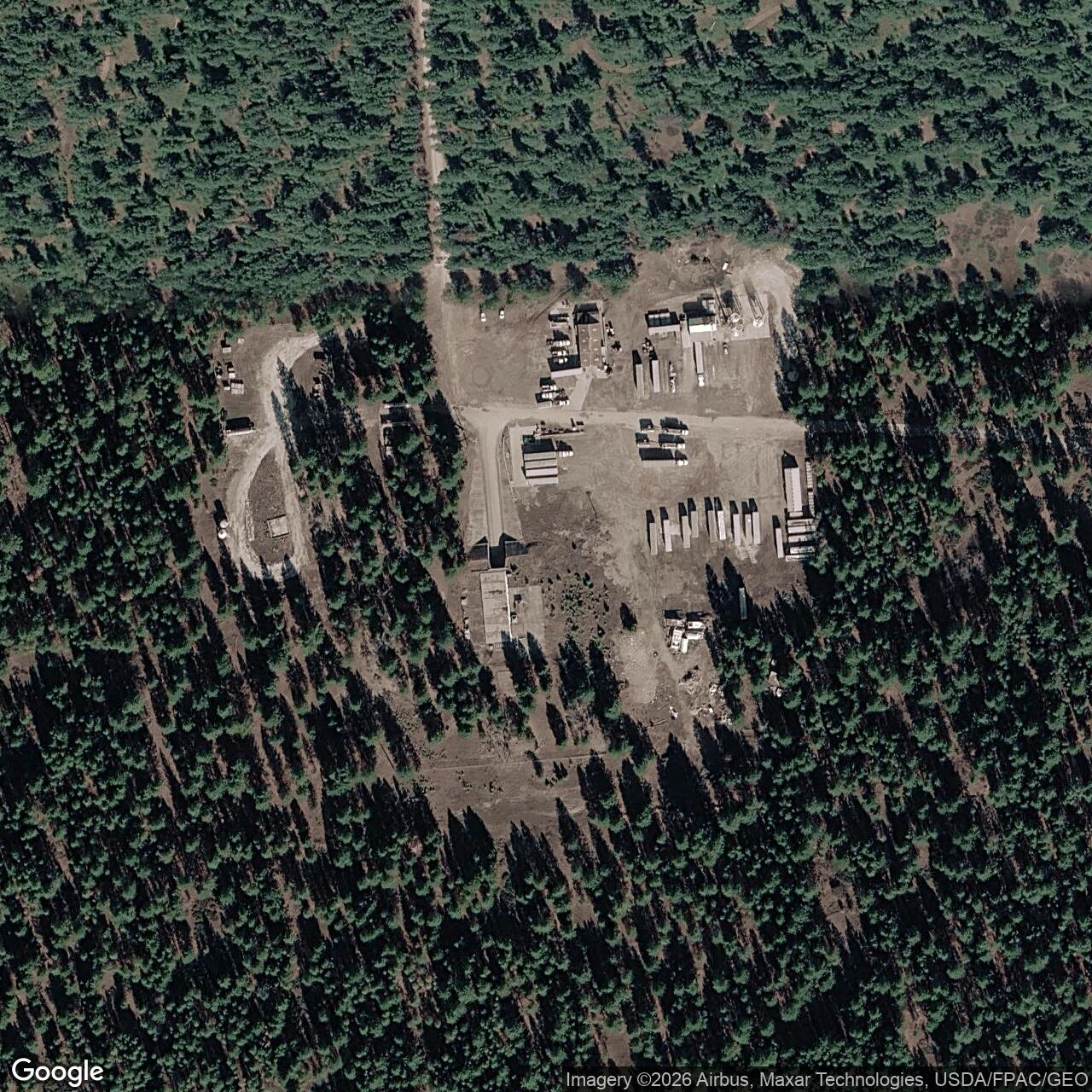
Site 567-1 occupied a rural Inland Northwest setting near Deer Park, north of Spokane and near the edge of the agricultural and timbered landscape around the Deer Park municipal airport area. Contemporary local accounts describe why the Deer Park area attracted military attention: the Air Force and Corps of Engineers sought a large, level tract in the Spokane region, and the open land around the airport area fit those early requirements. The finished Atlas E site sat away from Fairchild Air Force Base rather than on the base itself, which reflected the logic of missile dispersal. A single nuclear-armed missile placed several miles from the next launch complex was less vulnerable than a group of missiles concentrated at one base.The Fairchild Atlas E complexes followed the same general design. Each site occupied roughly a 20-acre property with a smaller fenced inner launch-control area. The inner compound included the reinforced concrete missile launcher, the launch operations building, an underground passage between the launch operations building and the missile structure, propellant storage, power and support systems, security fencing, and related surface structures. The Fairchild Atlas E inner areas included a reinforced-concrete launch-operations building that was underground except for its exposed roof, with control consoles, crew living facilities, and a power plant. That launch operations building was about 150 feet from the missile structure and was connected by an underground tunnel.
The Atlas E launcher was a "coffin" launcher rather than a vertical silo. The missile was stored horizontally in a hardened, below-grade structure. For launch, the heavy roof retracted, the missile was raised to vertical position, fueled, and fired. At an operational site, the Air Force had to protect the missile, control access, maintain secure communications, and support the small combat crew and security personnel assigned to the site. Site 567-1's rural setting gave it space for blast separation and security, but it also made dependable communications, road access, propellant logistics, and winter-weather operations important parts of the site's practical military life.
Strategic and Cold War Context
Atlas E Site 567-1 existed because the United States moved urgently in the late 1950s and early 1960s to field an operational intercontinental ballistic missile force. The Atlas program represented the first generation of American operational ICBMs. It was designed during a period when U.S. planners worried about Soviet long-range missile capability, the vulnerability of bomber bases, and the need for a deterrent force that could threaten a rapid nuclear response even if U.S. territory came under attack.The Fairchild missile field placed nine Atlas E missiles around Spokane. Washington's inland location, its existing Strategic Air Command base at Fairchild, and the availability of open land made the area suitable for early ICBM deployment. The missile sites were not intended to function as isolated local weapons. They were components of a national command-and-control system tied to Strategic Air Command's nuclear war planning. Each site had to be able to receive authenticated emergency war orders, maintain the missile and warhead under controlled conditions, fuel the missile when ordered, and launch within the technical limits of the Atlas E system.
The Atlas E was a transitional weapon. It was more advanced than the earlier Atlas D because it used an all-inertial guidance system and could be dispersed at independent launch sites without the same dependence on a central radio guidance facility. At the same time, it retained the liabilities of first-generation liquid-fueled ICBMs. It used liquid oxygen and RP-1 kerosene, could not be kept fully fueled for long periods, and had to be raised and fueled before launch. Later solid-fueled Minuteman missiles would remove many of these limitations by remaining fueled, sealed, and ready in hardened vertical launch facilities. Site 567-1 therefore belongs to the brief but important moment between bomber-dominated deterrence and the more mature solid-fueled ICBM force of the later Cold War.
Construction and Activation
Fairchild's Atlas E program began before the 567th Strategic Missile Squadron became operational. An official Fairchild history article states that work on the nine missile complex sites began on 1959-05-12, the first Atlas E missile arrived at Fairchild on 1960-12-03, and the last site construction work was completed on 1961-02-10. Strategic Air Command accepted the first Atlas E complex on 1961-07-29. Operational readiness training began in August 1961 and was significant because, at Fairchild, Atlas E crews conducted this training at their own operational sites rather than only at Vandenberg Air Force Base.The Deer Park site was part of that nine-site construction effort. The 567th Strategic Missile Squadron historical site identifies Site 1 as Deer Park, Washington, with construction starting in 1960 and turnover to the Air Force in 1961, although it does not give exact month and day for those two milestones. The public records therefore support a construction period of roughly 1959-1961 for the Fairchild missile field, with Site 567-1 reaching Air Force control during 1961. Exact site-specific acceptance and alert dates for 567-1 were not confirmed.
The local effects of construction were not abstract. A missile site required roads capable of handling extraordinary loads, survey work, construction labor, utilities, fencing, concrete, steel, and movement of large missile and support components. Local historical accounts from Deer Park describe military survey activity and road-route issues, including the need to move missile transport traffic through town. These details show how the national missile program entered the daily geography of a small Washington community.
Missile System and Technical Role
Site 567-1 housed one SM-65E Atlas missile. The Atlas E was a one-and-one-half-stage liquid-fueled missile built by Convair/General Dynamics. It used booster and sustainer engines, burned RP-1 kerosene and liquid oxygen, and was stored horizontally in a hardened coffin launcher. The missile could not simply sit ready with cryogenic oxidizer on board indefinitely. Launch readiness depended on crew procedures, propellant loading, checkout, secure communications, and the physical act of raising the missile from its horizontal launcher to firing position.The Atlas E's all-inertial guidance system was a major operational improvement over earlier Atlas arrangements. Because the missile carried its own inertial guidance, Fairchild's Atlas E launchers could be separated into individual sites rather than clustered around a central guidance facility. For Site 567-1, that meant the launch complex itself combined missile storage, launch control, communications, crew support, power, and security functions.
Public museum and historical sources identify the Atlas E/F reentry vehicle as the Mark 4. The National Air and Space Museum describes the Mark 4 reentry vehicle as used on U.S. Air Force Titan I and Atlas E/F ICBMs and states that it carried a W38 nuclear warhead with a yield of about 3.75 megatons.
Site 567-1's launch role was not the same as a later Minuteman launch facility. Atlas E sites had on-site launch-control and crew facilities. The site was staffed and monitored, with officers and enlisted personnel assigned to keep the missile, communications, and support systems ready. The missile combat crew worked at the site rather than at a remote Minuteman-style Launch Control Center.
Operational History
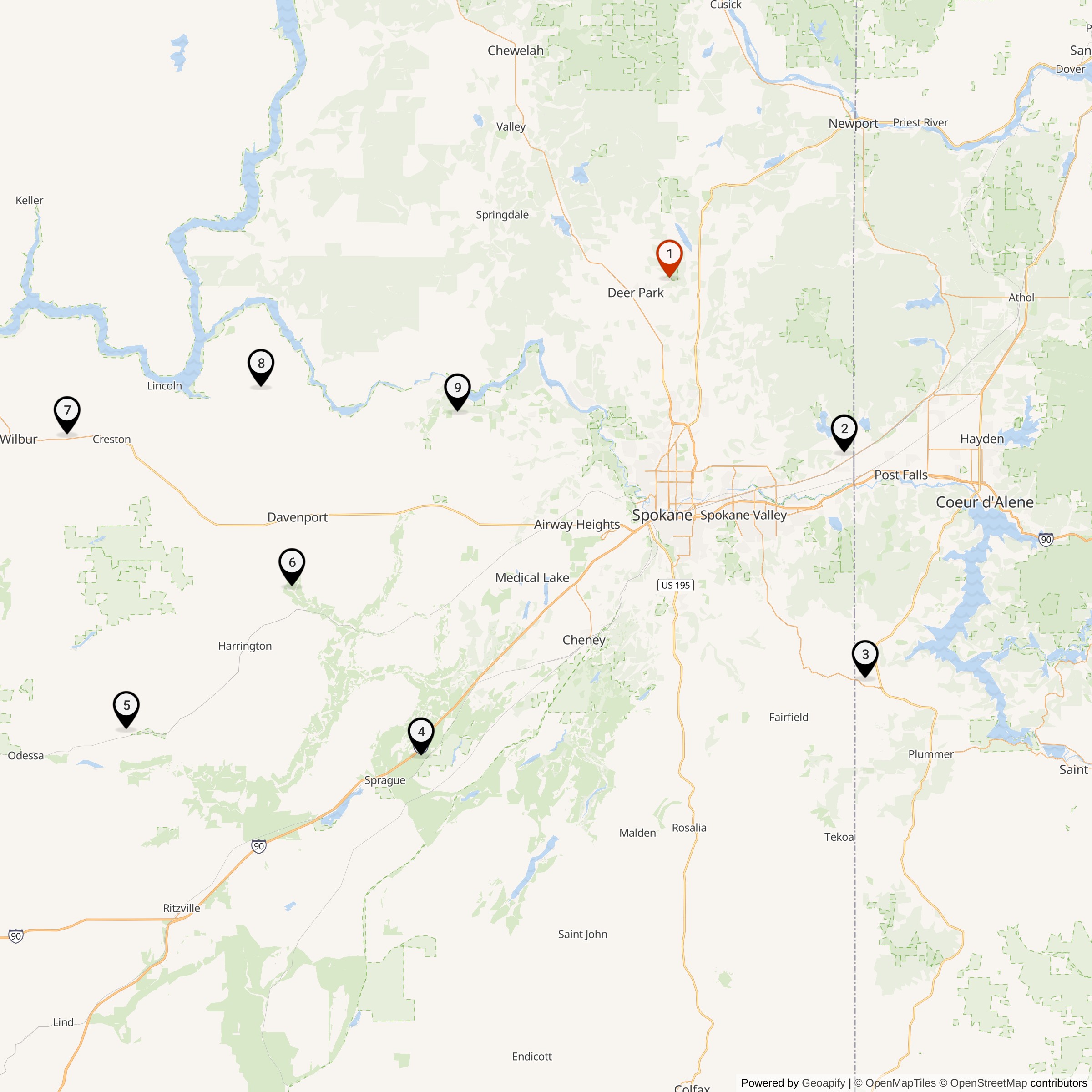
The 567th Strategic Missile Squadron was organized at Fairchild Air Force Base on 1960-04-01 and became the first Strategic Air Command Atlas E squadron. Its nine missiles were deployed at independent sites around the Spokane region: Deer Park, Newman Lake, Rockford/Worley, Sprague, Lamona, Davenport, Wilbur, Egypt/Deer Meadows, and Reardan. Site 567-1 was the Deer Park site.Operational readiness came quickly once construction and acceptance allowed the squadron to use its field sites. The Air Force article on Fairchild's missile squadron states that Headquarters Strategic Air Command declared the squadron operational on 1961-09-28, that the first Atlas E missile went on alert on 1961-10-01, and that most of the Fairchild missile force was on alert by November 1961. Those milestones made Fairchild one of the early operational Atlas E missile fields and turned the 92d wing into an organization combining bombers, tankers, and ICBMs.
Daily operation at Site 567-1 revolved around readiness rather than launch. The crew had to maintain communications, preserve the security of coded procedures, monitor environmental and mechanical systems, support the missile and warhead, and stand ready for a launch order that everyone hoped would never come. The technical complexity of the Atlas E system made maintenance, inspection, and training central to the site's life. Liquid oxygen handling, RP-1 fuel systems, hydraulic equipment, missile-raising equipment, generators, communications links, and security systems all required routine attention. The site's isolated location also meant that support from Fairchild and contractor specialists had to travel to the launch complex.
The short active life of the Atlas E program did not make the site insignificant. The Fairchild missile field was operational during the Cuban Missile Crisis, the highest-risk nuclear confrontation of the Cold War. Public squadron histories state that the Fairchild Atlas E force went to heightened readiness during the crisis.
By April 1963, the 567th Strategic Missile Squadron had passed an Operational Readiness Inspection and was recognized for unusually strong performance. Fairchild's official historical article states that the squadron was the first Strategic Air Command missile squadron to pass an ORI and that it did not fail one during its active missile service. The same account lists awards for safety, maintenance, and missile-unit performance. Those honors belong to the squadron as a whole, not to Site 567-1 alone, but they help explain the operational culture surrounding the Deer Park site.
The Clayton/Deer Park Historical Society's Atlas Missile Album identifies a photograph of Launch Complex 567-1 at Deer Park, Washington, during a dual propellant loading exercise on 1961-08-18. The image shows the Atlas E raised at the site with the launcher roof retracted. The accompanying caption explains visible frost and venting associated with liquid oxygen. This is a documented site-specific event and one of the clearest public photographic records of 567-1 in active missile-service configuration.
Deactivation and Disposal
Atlas E Site 567-1 left active missile service as part of the rapid mid-1960s phaseout of first-generation liquid-fueled ICBMs. Solid-fueled Minuteman missiles had made the Atlas E's operational disadvantages more apparent: Atlas E required fueling before launch, used volatile propellants, and had to be raised from its coffin launcher before firing. Fairchild's official history states that the first Fairchild Atlas E missile came off alert in January 1965, the last missile was off alert by 1965-03-31, and the missiles were shipped to storage. The 567th Strategic Missile Squadron was inactivated on 1965-06-25, completing the Air Force's Atlas ICBM squadron inactivation.The best public chronology separates several events that are often compressed into the single word "decommissioned." The missile's alert role ended during the first quarter of 1965. The missile and high-value military equipment were then removed or prepared for shipment. The squadron was formally inactivated on 1965-06-25. Subsequent disposal removed military equipment and salvageable material, and the former launch complexes were sold or otherwise transferred out of active Air Force use.
Site 567-1 did not have a post-Cold War arms-control demolition history like later Minuteman or Peacekeeper launch facilities eliminated under strategic arms agreements. Its deactivation predated those treaty-driven demolition campaigns. The disposal context was instead a 1960s weapons-system phaseout driven by obsolescence and the move from liquid-fueled first-generation ICBMs to more survivable, solid-fueled systems.
Environmental and cleanup records identify the site as the Former Fairchild Atlas E Missile S-1 Site. EPA's CERCLA page lists EPA ID WAN001002985, Spokane County, and states that the site is not on the National Priorities List. EPA classifies it as NFRAP, meaning the site did not qualify for listing on the NPL based on available information, and states that no further federal action will be taken. The EPA record also identifies the site as "Not a Federal Facility," consistent with disposal from active federal missile use.
Current Status and Site Use
Atlas E Site 567-1 remains inactive and decommissioned. The site is private property and has no public access. Its former missile-service structures and surface layout are visible in aerial imagery, but public sources should be used carefully because older imagery may not reflect every current condition on the ground.The most specific public statement found for post-closure use comes from the National Register documentation for Fairchild Atlas E Site 9 at Reardan. That document discusses the nine Fairchild Atlas E sites as a group and states that Site 1 was being used by a private contractor for munitions storage. Because that document was prepared for Site 9 and dates from 2009, it should be treated as a documented post-closure use rather than a guaranteed current condition.
Chronology
- 1958 Military interest in the Deer Park area was reported locally as the Air Force and Corps of Engineers investigated potential Atlas E site locations in the Spokane region.
- 1959-05-12 Work began on the nine Fairchild Atlas E missile complex sites.
- 1960 The Deer Park Site 1 construction period was underway; the 567th Strategic Missile Squadron historical site gives 1960 as the start year for Site 1 construction.
- 1960-04-01 The 567th Strategic Missile Squadron was organized at Fairchild Air Force Base.
- 1960-12-03 The first Atlas E missile arrived at Fairchild Air Force Base.
- 1961-02-10 Construction work on the last Fairchild Atlas E site was completed.
- 1961 Site 567-1 was turned over to the Air Force.
- 1961-07-29 Strategic Air Command accepted the first Fairchild Atlas E complex.
- 1961-08 Operational readiness training began in the Fairchild Atlas E missile field.
- 1961-08-18 A dual propellant loading exercise was photographed at Launch Complex 567-1, Deer Park, Washington.
- 1961-09-28 Headquarters Strategic Air Command declared the 567th Strategic Missile Squadron operational.
- 1961-10-01 The first Fairchild Atlas E missile went on alert.
- 1961-11 Most of the Fairchild Atlas E missile force was on alert.
- 1962-02-15 The 92d Bombardment Wing was redesignated the 92d Strategic Aerospace Wing.
- 1962-10 The 567th Strategic Missile Squadron's Atlas E field was affected by Strategic Air Command's heightened alert posture during the Cuban Missile Crisis.
- 1963-04 The 567th Strategic Missile Squadron passed its first Operational Readiness Inspection and was recognized as the first Strategic Air Command missile squadron to pass an ORI.
- 1965-01 The first Fairchild Atlas E missile came off alert as the system was phased out.
- 1965-03-25 The 567th Strategic Missile Squadron historical site lists Site 1 as decommissioned on this date.
- 1965-03-31 Fairchild's last Atlas E missile was off alert and prepared for shipment to storage.
- 1965-06-25 The 567th Strategic Missile Squadron was inactivated.
- 1965-1967 Washington's former Atlas and Titan I sites were stripped of equipment and salvageable material and disposed of, generally into private ownership except for the Reardan site.
- 2009 National Register documentation for Fairchild Atlas E Site 9 stated that Site 1 was being used by a private contractor for munitions storage.
- 2026 EPA's public CERCLA profile for the Former Fairchild Atlas E Missile S-1 Site listed the property as not on the NPL, NFRAP, and no-further-federal-action.
Read about the Atlas at Fairchild AFB
All Atlas Missile Silo Locations