
Atlas E Site 567-2 Missile Silo, Newman Lake Washington
Longitude: -117.060406181296
Site Type: Atlas E single-missile coffin launcher complex
Missile Type: SM-65E Atlas
Number of Launchers/Missiles: 1
Parent Base: Fairchild AFB
Missile Wing: 92d Bombardment Wing; 92d Strategic Aerospace Wing after 1962-02-15
Missile Squadron: 567th Strategic Missile Squadron
Current Site Use: Former Atlas E launch complex near Newman Lake; private former missile property. Spokesman-Review reported the site sold in 1999 and was vacant/considered for museum or commercial reuse in 2014.
Site Ownership: Private ownership after post-1965 disposal; EPA lists the CERCLA record as not a federal facility.
Accessible: No public access / private property.
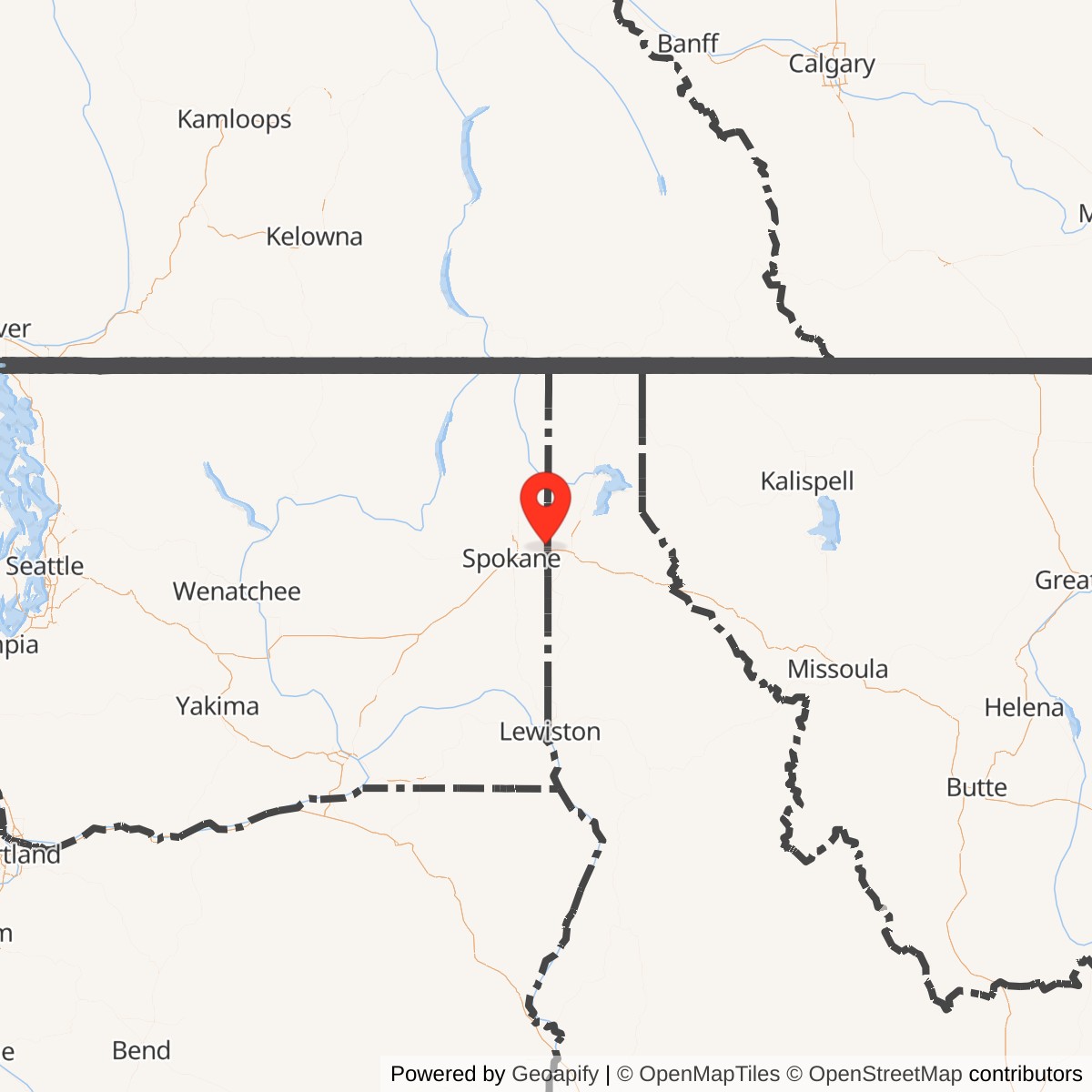
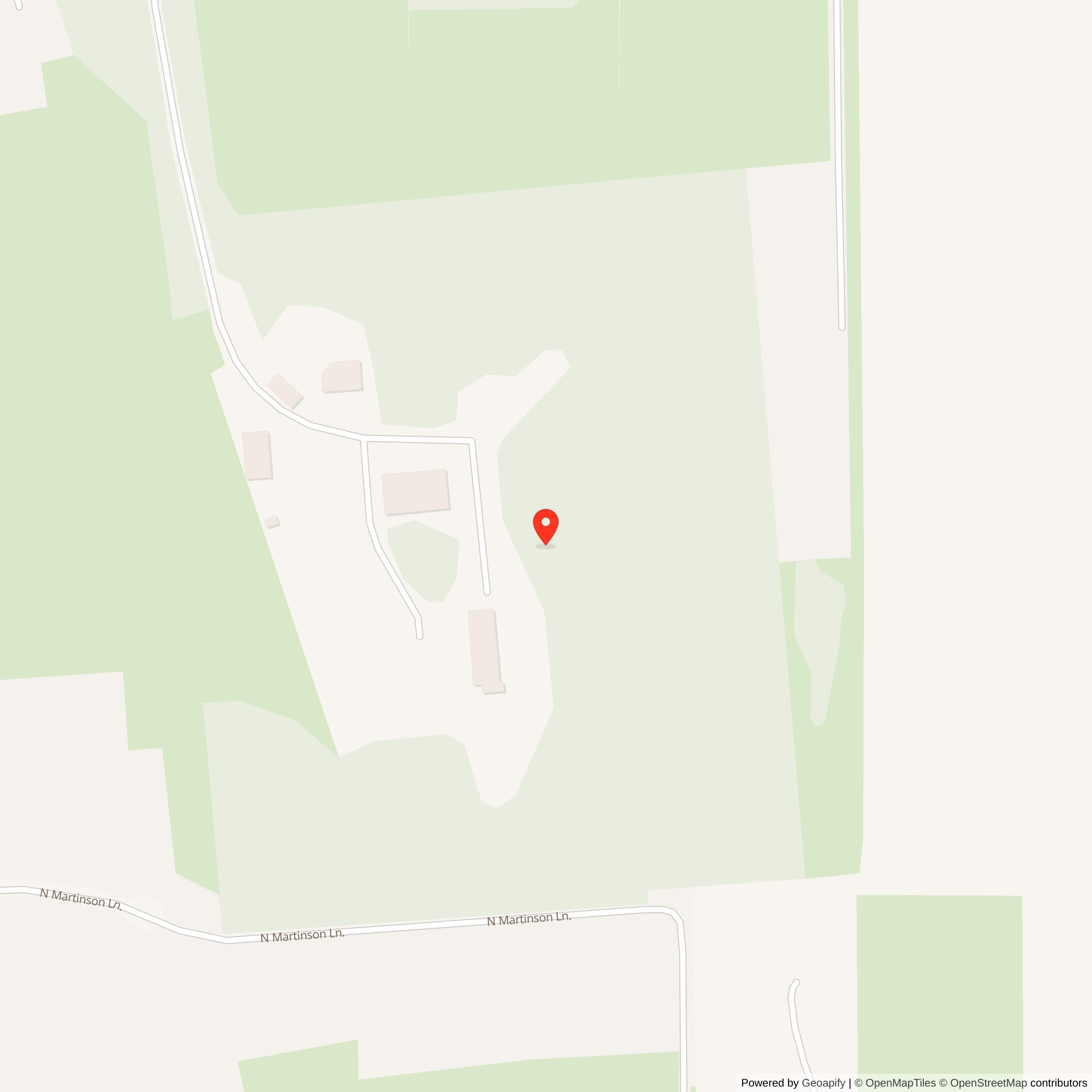
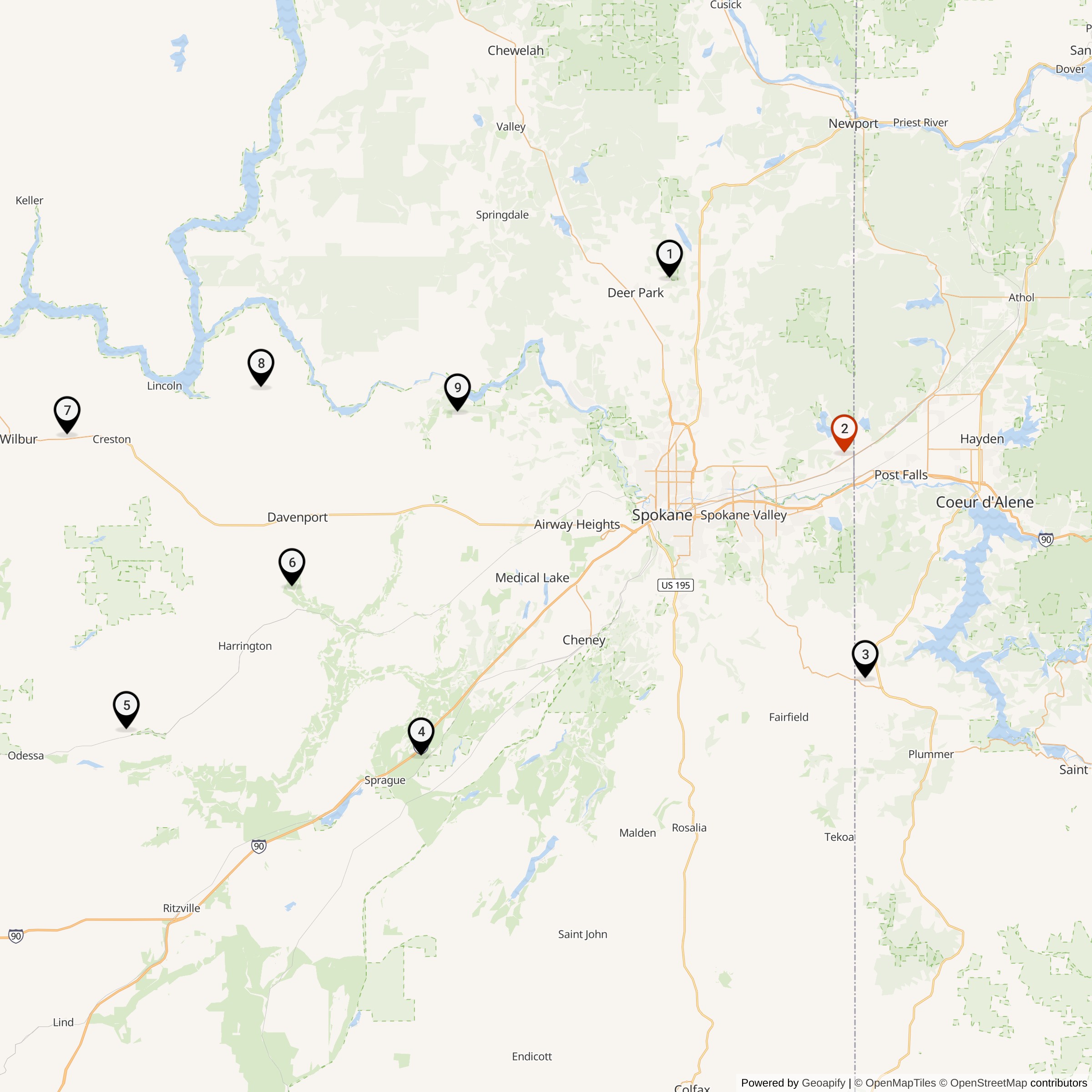
Atlas E Site 567-2 was a single-missile SM-65E Atlas intercontinental ballistic missile launch complex operated by the 567th Strategic Missile Squadron in the Fairchild Air Force Base missile field. It was one of nine Atlas E complexes dispersed around Spokane and eastern Washington under Strategic Air Command. Its parent base was Fairchild Air Force Base. Its parent wing was the 92d Bombardment Wing during the early deployment period and the 92d Strategic Aerospace Wing after the wing's redesignation on 1962-02-15. The site did not have a separate parent Launch Control Center in the later Minuteman sense; Atlas E launch-control functions were contained at the launch complex itself.
The site was located near Newman Lake in Spokane County, Washington, east-northeast of Spokane. EPA independently identifies the cleanup/property record as the Former Fairchild Atlas E Missile S-2 Site, EPA ID WAN001002990, at 8908 N. Martinson Road, 17 miles east-northeast of Spokane, Township 26 North, Range 45 East, Section 24, Parcel 56242.9066, Newman Lake, Spokane County, Washington.
The site is inactive and decommissioned. The 567th Strategic Missile Squadron was activated at Fairchild on 1960-04-01, Fairchild's Atlas E construction and turnover process continued into 1961, the first Fairchild Atlas E missile was placed on alert on 1961-10-01, and the bulk of the Fairchild Atlas E force was on alert by November 1961. The Atlas E missiles at Fairchild came off alert during the 1965 phaseout. The 567th Strategic Missile Squadron historical site lists Site 2 as decommissioned on 1965-03-25. Fairchild's broader Atlas E phaseout was complete by the end of March 1965, and the 567th Strategic Missile Squadron was formally inactivated on 1965-06-25. The site is now a privately controlled former missile complex with no public access identified.
Location, Landscape, and Site Description
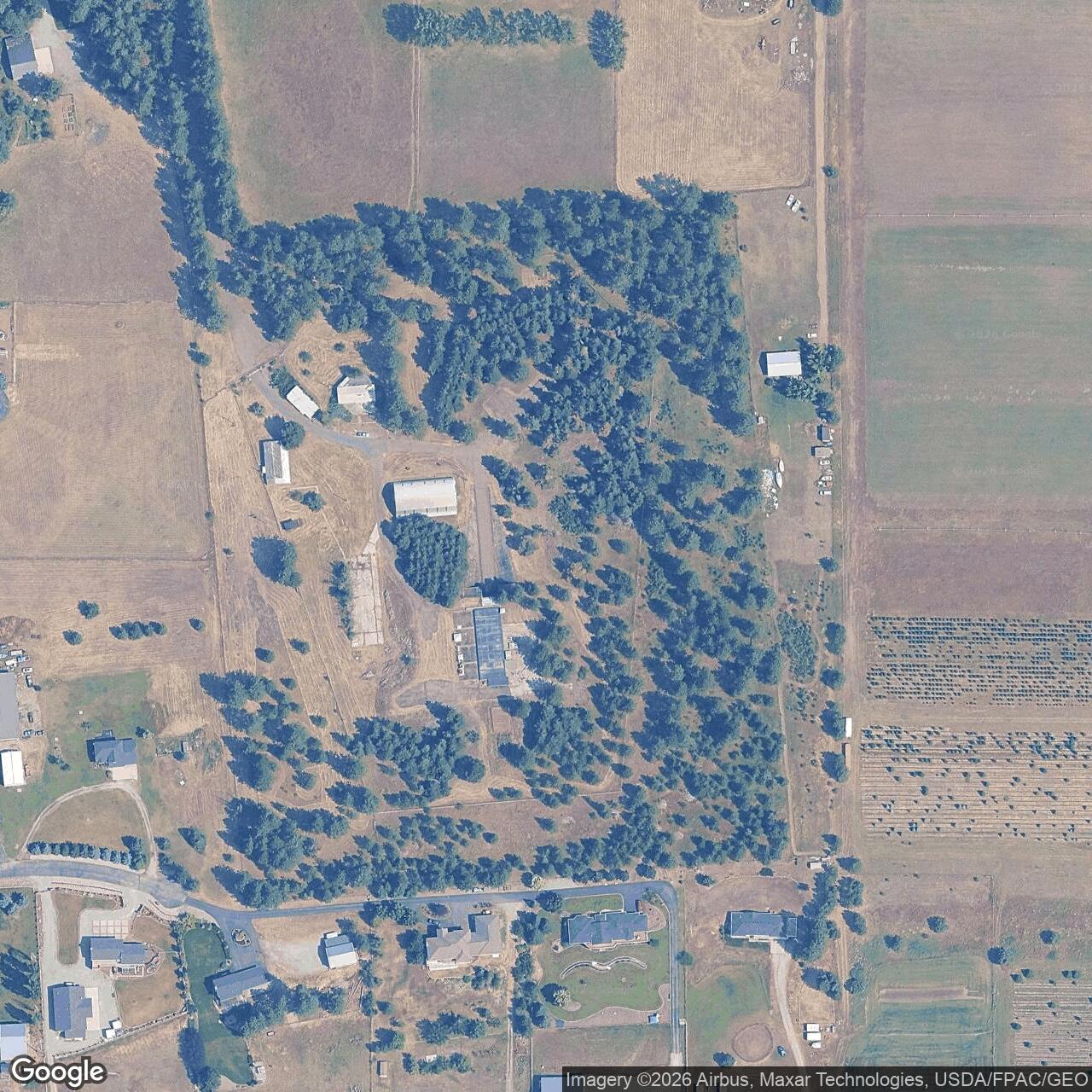
Site 567-2 occupied a rural Inland Northwest setting near Newman Lake, in the agricultural and semi-rural landscape east of Spokane and north of the Spokane Valley. EPA's location description places the former missile property at 8908 N. Martinson Road and 17 miles east-northeast of Spokane. The location put the launcher close enough to Fairchild Air Force Base for crew rotation, maintenance, security response, and command communications, but far enough away from the base and other launch complexes to serve the Cold War purpose of dispersal. The site was not a launch pad on Fairchild AFB; it was one of the off-base hardened launch complexes forming a wide missile field around the Spokane region.The Fairchild Atlas E complexes followed a common design. Each of the nine Fairchild Atlas E sites was a roughly 20-acre facility with a five-acre inner launch-and-control area. The inner compound was originally fenced, and later fencing enclosed the larger property. Air Force security police patrolled the sites and maintained security. The inner area included the reinforced-concrete launch-operations building, the missile-launch structure, a tunnel connection between the launch-control/operations building and the missile structure, fuel and oxidizer storage, a metal storage building, power systems, access roads, and other support features. The launch-operations building was underground except for its exposed roof and contained control consoles, crew living facilities, and a power plant.
The Atlas E launcher was not a vertical Minuteman-style silo. It was a semi-hardened "coffin" launcher. The missile was stored horizontally in a below-grade reinforced concrete bay under a large retractable roof. For launch, the roof was moved aside, the missile was raised to vertical position, loaded with liquid oxygen and RP-1 kerosene, checked out, and fired from the open launcher. That design offered more blast protection than an aboveground launcher but less survivability than the later Atlas F and Minuteman vertical silo systems. Site 567-2 therefore combined hardened underground working space, a horizontal missile bay, and surface equipment that would become exposed during launch preparations.
A site-specific communications detail is available from local historical accounts of the Fairchild Atlas E system. The Clayton/Deer Park Historical Society's detailed account of the Fairchild missile field states that the microwave communications system formed a rough figure-eight network with Fairchild near the center, and that the link from Lookout Mountain toward Antoine Peak connected into the uplink from Site 2 at Newman Lake. This does not make Site 2 a communications center in the way a later Minuteman Launch Control Center functioned, but it does show that the Newman Lake complex was an active node in the dispersed Fairchild Atlas E communications network.
Strategic and Cold War Context
Atlas E Site 567-2 existed because the United States moved urgently in the late 1950s and early 1960s to field an operational intercontinental ballistic missile force. The Atlas missile was the first operational American ICBM, and the Atlas E represented an early attempt to make that first-generation weapon more survivable and more deployable than the earlier Atlas D. Washington's inland location, existing Strategic Air Command infrastructure at Fairchild, and availability of large tracts of open land made the Spokane region useful for this early ICBM deployment.The Cold War purpose of the Newman Lake site was not local defense. It was part of the national nuclear deterrent. The missile and its crew were expected to remain ready to receive authenticated orders through Strategic Air Command channels, prepare the missile, and launch if directed. Each site's isolation and hardening were intended to complicate any Soviet attempt to destroy the missile force in a first strike. Dispersal mattered because a single attack on Fairchild Air Force Base would not necessarily destroy every missile assigned to the wing.
The Atlas E was a transitional weapon. It improved on earlier Atlas deployment by using all-inertial guidance, which reduced dependence on a central radio guidance facility and allowed the missiles to be deployed singly at separated launch complexes. At the same time, it retained the major limitations of the first operational ICBM generation. It was liquid-fueled, relied on cryogenic liquid oxygen, could not be stored indefinitely in a fully fueled launch-ready condition, and had to be raised and fueled before firing. Later solid-fueled Minuteman missiles could remain fueled and sealed in hardened vertical launch facilities, giving them a much better alert posture. Site 567-2 therefore represents the short but important period when the United States was learning how to operate an ICBM alert force before the arrival of more durable solid-fuel missile systems.
Construction and Activation
Fairchild's Atlas E missile field was built during the rapid national ICBM construction program of the late 1950s and early 1960s. A Fairchild Air Force Base history article states that work on the nine missile complex sites began on 1959-05-12. The 567th Strategic Missile Squadron was activated at Fairchild on 1960-04-01. The first Atlas E missile arrived at Fairchild on 1960-12-03. Work on the last of the nine Fairchild launch sites was completed on 1961-02-10, and Strategic Air Command accepted the first Fairchild Atlas E complex on 1961-07-29. Operational readiness training began in August 1961.Construction of an Atlas E complex required far more than a hole in the ground. The Air Force and its contractors had to build the reinforced concrete launch bay, retractable roof and door systems, underground launch-operations building, tunnel, utility systems, liquid oxygen and fuel support systems, power plant, access roads, fencing, security equipment, and communications links. The completed Newman Lake complex had to function as a self-contained weapon site staffed and visited by missile crews, maintenance specialists, power-production technicians, communications personnel, and security forces.
Missile System and Technical Role
Site 567-2 housed one SM-65E Atlas missile. The Atlas E was a one-and-one-half-stage liquid-fueled ICBM built by Convair/General Dynamics. It used RP-1 kerosene and liquid oxygen, a thin pressure-stabilized stainless-steel airframe, booster and sustainer engines, vernier engines for fine control, and an inertial guidance system. The missile's thin "balloon tank" construction meant that it had to be kept pressurized to maintain structural integrity. This made Atlas a technically demanding alert weapon and helps explain why operations, maintenance, and safety discipline were so central to the Fairchild missile field.The Atlas E site design placed the missile, launch crew, support systems, power, and security functions at a single dispersed complex. The Association of Air Force Missileers describes the Atlas E as a missile deployed singly with one control center per missile, with a coffin roof at ground level. Fairchild sources describe a five-person site crew arrangement, generally two officers and three enlisted specialists, with security personnel also present. The crew did not simply "push a button." They were responsible for authentication procedures, site access control, system monitoring, readiness checks, and the complex sequence of raising and fueling the missile if launch orders were received.
Public sources identify the Atlas E/F reentry vehicle as the Mark 4. The National Air and Space Museum describes the Mark 4 as an unflown reentry vehicle type used on U.S. Air Force Titan I and Atlas E/F ICBMs deployed in the early 1960s, carrying a W38 nuclear warhead with a yield of about 3.75 megatons.
Operational History
Operationally, Site 567-2 was one of nine Fairchild Atlas E launch complexes assigned to the 567th Strategic Missile Squadron. The squadron was the first Strategic Air Command Atlas E unit. Fairchild's history article states that the Atlas E program at Fairchild marked the first time Strategic Air Command activated an E-series Atlas missile unit. The first Fairchild Atlas E missile went on alert on 1961-10-01, and by November 1961 the bulk of the Fairchild missile force was on alert.The Newman Lake site's daily operational life would have followed the standard Fairchild Atlas E pattern. Crews reported at Fairchild, received briefings, traveled by vehicle to the assigned launch site, passed through security and access-control procedures, relieved the outgoing crew, checked the site, monitored equipment, and maintained alert status until relieved. Local accounts from former Fairchild missileers describe a 24-hour duty cycle, daily passwords, crew and guard transport to the sites, checks of surface structures and propellant-system caps, controlled entry through the main gate and entrapment/security areas, and separation of crew and guard duties once inside the complex.
Because Atlas E sites were self-contained launch complexes, a great deal of operational activity occurred at the site rather than at a remote Launch Control Center. The crew commander and deputy were responsible for the missile launch-control functions, while enlisted specialists handled ballistic missile analysis, maintenance, electrical power, and related systems. Maintenance teams rotated through the sites to inspect and repair the missile, launcher, power plant, communications systems, and environmental controls. Security police maintained perimeter control and responded to access and alarm conditions.
The Newman Lake complex also formed part of the Fairchild missile communications network. The local historical account connecting Site 2 to the Antoine Peak microwave uplink is important because secure communications were essential to a dispersed liquid-fueled missile field. Orders, status information, and command messages had to reach sites that were separated by long distances, rural roads, and winter weather. The site's practical readiness depended not only on the missile in its coffin launcher, but also on the communications, power, and security infrastructure that connected a remote rural property to Strategic Air Command.
The squadron's short operational history included significant unit-level achievements. Fairchild's official article states that the 567th SMS received a General Dynamics Astronautics safety trophy for installation and checkout safety, won the first Headquarters "Outstanding Achievement in Missile Safety" award for 1961, passed its first Operational Readiness Inspection in April 1963, and became the first Strategic Air Command missile squadron to pass an ORI.
A 2014 Spokesman-Review article reported that the Newman Lake Atlas E site had been sold in 1999 and, at the time of the article, sat vacant while the owner considered museum or commercial reuse. Because ownership and use may have changed after 2014, that report is best treated as a documented post-closure snapshot, not as definitive present-day ownership information.
Deactivation and Disposal
The Atlas E system's active life at Fairchild was brief. By the mid-1960s, Atlas E was being overtaken by more survivable and more efficient missile systems, especially solid-fueled Minuteman. Fairchild's official history states that the first Fairchild Atlas E missiles came off alert in January 1965, that by 1965-03-31 all of the squadron's missiles had been prepared for shipment to storage, that the squadron became non-operational on 1965-04-06, and that it was inactivated on 1965-06-25.Deactivation did not mean that the concrete complex disappeared. The missile was removed, weapons and sensitive equipment were removed, salvageable material and installed equipment were stripped or sold, and the site passed out of active Air Force missile use.
The Atlas E phaseout occurred before the later Strategic Arms Limitation Treaty and START-era demolition practices that made some later missile-silo closures highly visible arms-control events. The Newman Lake site therefore was not demolished as part of a later treaty display in the way many Minuteman or Peacekeeper facilities were. Instead, its post-military life followed the common early-ICBM pattern: removal of missile and equipment, disposal of the real property, private reuse or vacancy, and later environmental tracking under federal and state site-record systems.
EPA's public CERCLA profile identifies the property as the Former Fairchild Atlas E Missile S-2 Site, EPA ID WAN001002990. EPA lists it as not on the National Priorities List and as NFRAP, meaning the site did not qualify for the NPL based on existing information. The EPA record also states that the site is not flagged as a federal facility. Unlike some former Atlas E sites in Colorado and Wyoming, no detailed public cleanup narrative for Site 567-2 was located beyond the EPA NFRAP/non-NPL status. The correct conclusion is not that the site had no environmental concern, but that EPA's public Superfund profile records it as a non-NPL, no-further-remedial-action-planned type site based on available information.
Current Status and Site Use
Atlas E Site 567-2 is a decommissioned former missile launch complex on private property near Newman Lake. EPA identifies the site address as 8908 N. Martinson Road and the parcel as 56242.9066. Spokane-area reporting in 2014 described the Newman Lake site as purchased in 1999 and sitting vacant at that time while museum or commercial reuse was considered. The site's current ownership, tenant use, and interior condition should be verified through current county records before any claim more specific than private property/former missile complex is made.Visible remains appear to include the large engineered missile-site footprint, access roads, hardstand/launcher-area geometry, and later surface buildings shown in publicly available aerial images. However, aerial imagery and historical photographs cannot by themselves confirm safe interior access, structural condition, or current legal use. The site should be treated as private property with no public access. Former missile complexes can contain confined spaces, old tanks, electrical hazards, structural hazards, and environmental restrictions.
Chronology
- 1959-05-12 Work began on the nine Fairchild Atlas E missile complex sites.
- 1960 Construction-start year for the Newman Lake site.
- 1960-04-01 The 567th Strategic Missile Squadron was organized at Fairchild Air Force Base.
- 1960-12-03 The first Atlas E missile arrived at Fairchild Air Force Base.
- 1961-02-10 Construction work on the last Fairchild Atlas E site was completed.
- 1961 Site 567-2 was turned over to the Air Force.
- 1961-07-29 Strategic Air Command accepted the first Fairchild Atlas E complex.
- 1961-08 Operational readiness training began in the Fairchild Atlas E missile field.
- 1961-09-28 Headquarters Strategic Air Command declared the 567th Strategic Missile Squadron operational.
- 1961-10-01 The first Fairchild Atlas E missile went on alert.
- 1961-11 Most of the Fairchild Atlas E missile force was on alert.
- 1962-02-15 The 92d Bombardment Wing was redesignated the 92d Strategic Aerospace Wing.
- 1962-10 The 567th Strategic Missile Squadron's Atlas E field was placed in a heightened alert posture during the Cuban Missile Crisis.
- 1963-04 The 567th Strategic Missile Squadron passed its first Operational Readiness Inspection and was recognized as the first Strategic Air Command missile squadron to pass an ORI.
- 1965-01 The first Fairchild Atlas E missiles began coming off alert during the Atlas phaseout.
- 1965-03-31 Fairchild's last Atlas E missile had been taken off alert and prepared for shipment to storage.
- 1965-04-06 The 567th Strategic Missile Squadron became non-operational.
- 1965-06-25 The 567th Strategic Missile Squadron was inactivated; The Military Standard lists this as the deactivation date for Atlas E 567-2.
- 1999 Spokane-area reporting later stated that the Newman Lake Atlas E site was sold in 1999.
- 2014 The Spokesman-Review reported that the Newman Lake site was vacant while museum or commercial reuse was being considered.
- 2026 EPA's public CERCLA profile listed the Former Fairchild Atlas E Missile S-2 Site as not on the NPL and NFRAP.
Read about the Atlas at Fairchild AFB
All Atlas Missile Silo Locations