
Atlas F Site 576-D Missile Silo, Lompoc / Vandenberg SFB California
Longitude: -120.556974160539
Site Type: Atlas F underground silo-lift launch facility / Vandenberg test and training facility
Missile Type: SM-65F Atlas
Missile Assigned to this Silo: Test missiles launched from Site D: 63F (GD serial 61-2549; AF tail 549; accepted 1962-04-06; delivered 1962-04-30; Operation Tall Tree V / Tall Tree 5; successful) and 36F (GD serial 60-5559; AF tail 559; accepted 1961-11-28; delivered 1962-03-13; DASO / Operation Big Deal; successful).
Number of Launchers/Missiles: 1
Parent Base: Vandenberg AFB (now Vandenberg SFB)
Missile Wing: 1st Missile Division / 1st Strategic Aerospace Division
Missile Squadron: 576th Strategic Missile Squadron
Current Site Use: Abandoned former Atlas F silo-lift ICBM test site within Vandenberg Space Force Base; 2021 VSFB Commercial Space Master Plan lists Site D - 576 Delta as an abandoned ICBM test site with no operator; Cape Canaveral Space Force Museum states silo was decommissioned and stripped of equipment.
Site Ownership: Department of Defense / U.S. Space Force (Vandenberg SFB)
Accessible: No general public access; within active Vandenberg Space Force Base and accessible only with base authorization.
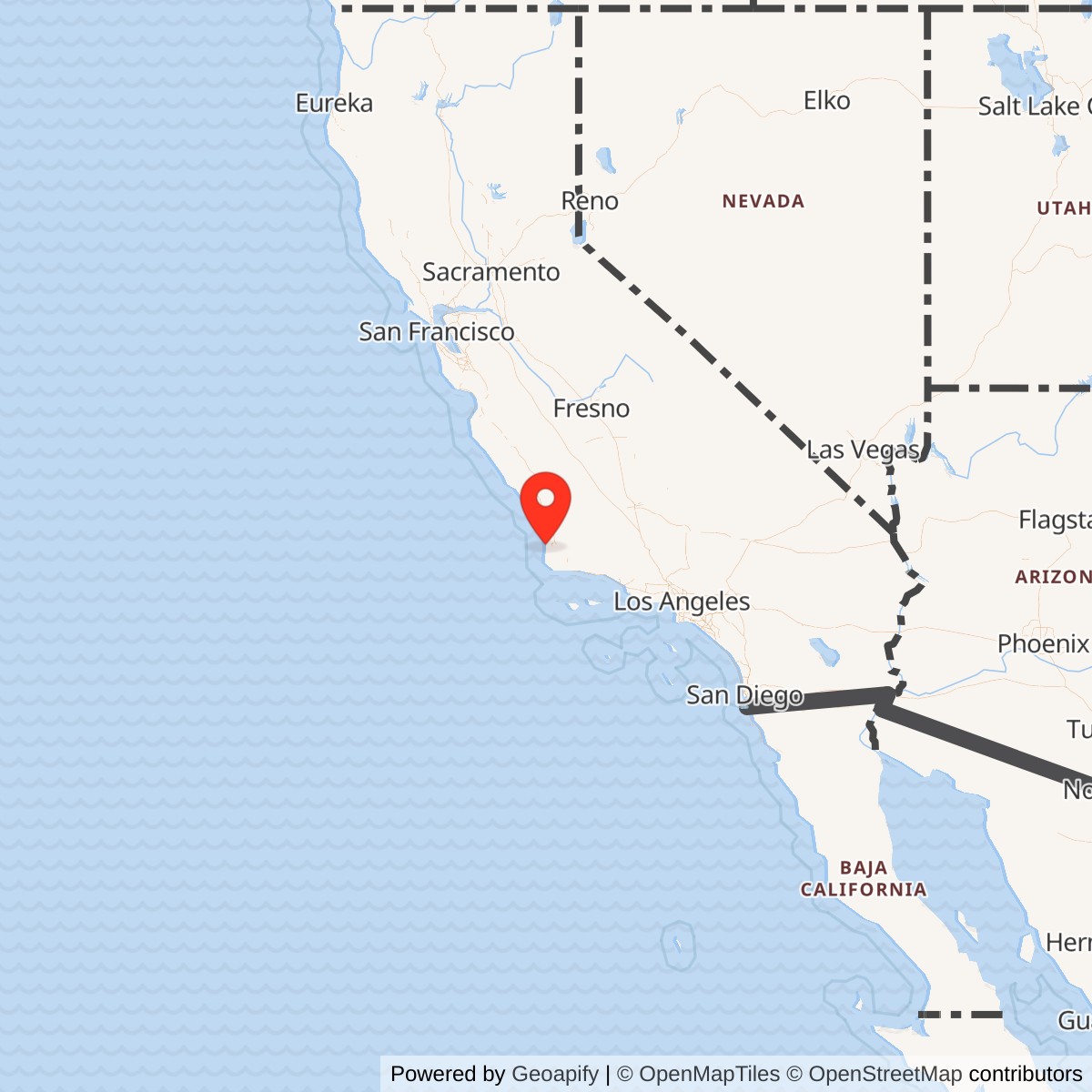
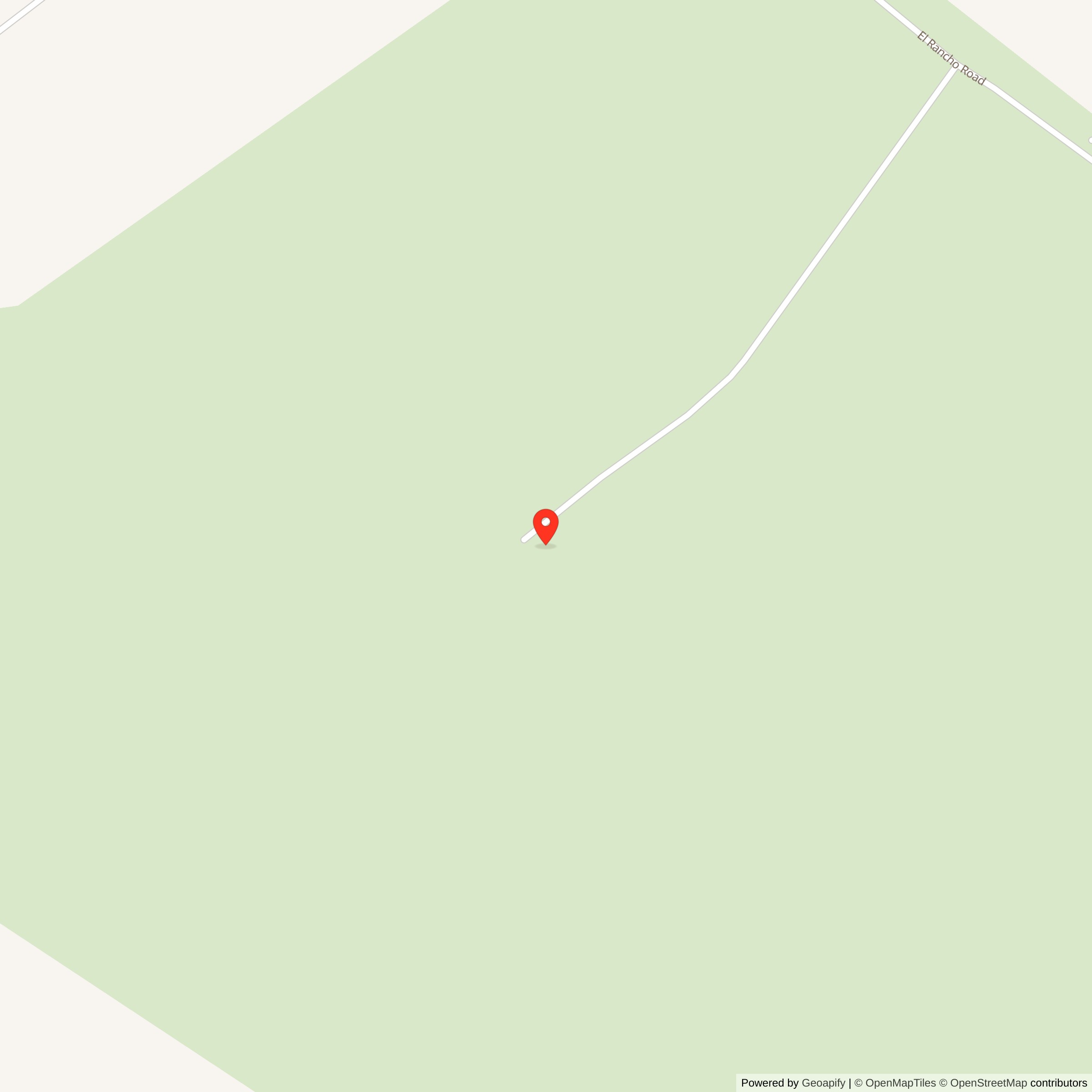
On a remote part of Vandenberg's north-base missile range, Atlas F Site 576-D was built for a very narrow but historically important purpose: to prove that the Air Force could take the Atlas F out of the laboratory, put it in a hardened vertical silo, and fire it in an operationally realistic test from the West Coast. It was not one of the scattered combat-alert silos that surrounded Schilling, Lincoln, Altus, Dyess, Walker, or Plattsburgh. It was a Vandenberg test silo, a single Atlas F silo-lift facility whose two launches helped validate the procedures, crews, equipment, and missile handling practices used by the first generation of American silo-based intercontinental ballistic missiles.
Atlas F Site 576-D, also known as Site D or 576 Delta, was a Strategic Air Command Atlas F launch facility at Vandenberg Air Force Base, now Vandenberg Space Force Base, in Santa Barbara County, California. The site was associated with the 576th Strategic Missile Squadron, the Atlas test squadron at Vandenberg, and with the 1st Missile Division / 1st Strategic Aerospace Division era of Vandenberg missile testing. Because Site 576-D was an Atlas F test and training launch facility rather than a dispersed Minuteman-style operational Launch Facility, it did not have a separate parent Launch Control Center in the Minuteman LCC sense; the Atlas F complex incorporated its own underground support and control spaces.
The facility was a single Atlas F underground silo-lift launcher. Public Vandenberg launcher-status material lists 576-D as a hard silo-lift Atlas F ICBM facility accepted by the Air Force on 1961-06-30, with its first launch on 1963-03-15 and its last launch on 1964-08-31. The site is inactive and decommissioned. It remains inside Vandenberg Space Force Base, an active military installation, and is not open to the public. A 2021 Vandenberg Space Force Base commercial-space master-plan asset table lists Site D / 576 Delta as an abandoned ICBM test site with no operator.
Location, Landscape, and Site Description
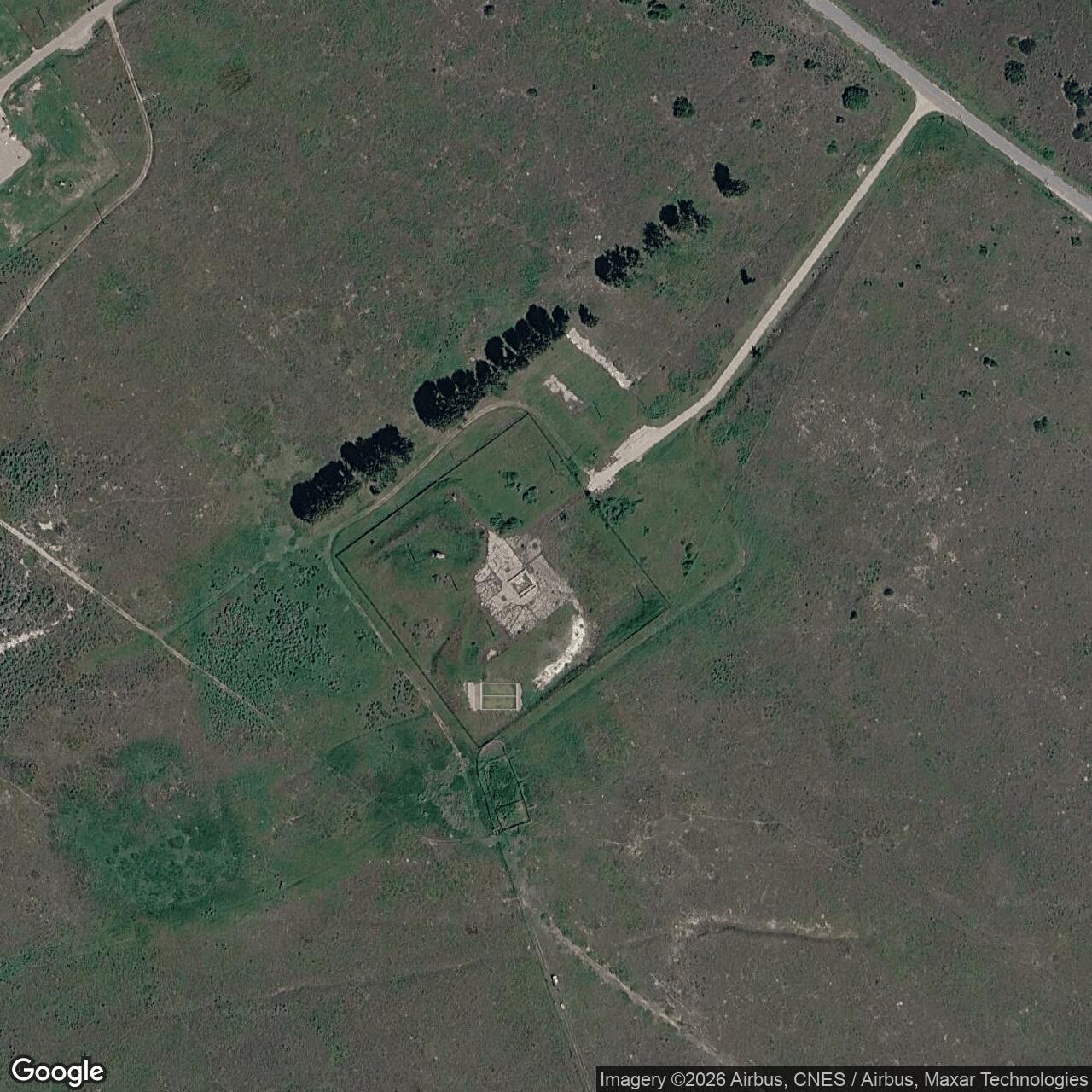
Site 576-D lies in the rolling coastal uplands of northern Vandenberg, northeast of the main runway and inland from the Pacific Ocean. The surrounding landscape is typical of Vandenberg's missile range: open grassland, scattered oak and chaparral-covered terrain, internal range roads, restricted access, and enough distance from communities and other launch areas to support hazardous missile testing. The closest civilian geography is the Lompoc / Casmalia area of Santa Barbara County, but the site itself is within the secure boundary of Vandenberg Space Force Base.The physical layout was that of a single Atlas F vertical silo-lift complex. Atlas F did not launch from inside a sealed underground tube in the way later Minuteman missiles did. Instead, the missile was stored vertically in a hardened underground silo and raised to the surface on an elevator before launch. The complex therefore included the silo structure, silo doors, elevator/lift machinery, underground access and support spaces, equipment areas, approach roads, hardstands, and the utilities necessary to support a liquid-fueled Atlas. Unlike the Atlas D gantry pads at Site 576-A, and unlike the Atlas D and E coffin launchers at 576-B, 576-C, and OSTF-1, 576-D represented the vertical Atlas F silo-lift design.
Strategic and Cold War Context
Atlas was the United States Air Force's first operational ICBM. It was born in the early Cold War, when the United States needed a land-based missile that could threaten targets at intercontinental range and provide a deterrent counterweight to Soviet long-range weapons. Atlas was also a transitional system. It arrived before the solid-fueled Minuteman, before the durable Titan II, and before the later command-and-control arrangements that defined the mature ICBM force. Atlas still used liquid oxygen and RP-1, relied on a thin pressure-stabilized airframe, and required substantial ground support. Yet it was the first missile to make the American ICBM force operational.The Atlas F was the most survivable deployed Atlas variant. Earlier Atlas D launchers used vertical gantries or aboveground coffin shelters, while Atlas E used semi-hardened horizontal coffin launchers. Atlas F placed the missile vertically underground in a hardened silo-lift facility. In an operational combat-alert missile field, the design was meant to protect the missile until launch preparation. The missile still had to be raised before firing, and liquid-oxygen handling remained a central operational constraint. Site 576-D gave SAC a place to practice and validate that concept at Vandenberg, where operational crews, test organizations, range instrumentation, and recovery/analysis systems could turn each launch into data.
Vandenberg's role was different from that of the dispersed Atlas F missile fields. The combat fields existed to hold nuclear-armed missiles on alert. Vandenberg existed to test the weapons system, train crews, conduct demonstration and shakedown operations, support readiness testing, and help determine whether the missile, ground equipment, procedures, and crews performed as expected. Site 576-D fits that Vandenberg mission precisely. It was an operationally configured Atlas F silo used for test launches, not a remote alert silo guarding a specific sector of the United States.
Construction and Activation
The Atlas test facilities at Vandenberg were built in stages as the Atlas program matured. Site 576-A used open gantry launchers for Atlas D. Site 576-B used Atlas D coffin launchers. Site 576-C and Site F / OSTF-1 supported Atlas E. Site D, Site E, and Site G / OSTF-2 were Atlas F silo-lift facilities. This progression mirrored the missile program's design evolution from exposed and semi-hardened launchers toward hardened vertical silos.Vandenberg launcher-status material gives Air Force acceptance date of 1961-06-30. The site did not conduct its first launch until 1963-03-15, when an Atlas F flew from 576-D as a SAC operational test under the nickname Tall Tree 5. The gap between acceptance and first launch was normal for a complex weapons-test site: construction completion did not mean immediate operational firing. Checkout, procedures, missile assignment, range scheduling, safety approvals, and squadron readiness all had to align before an Atlas F could be fired from the silo.
The Cape Canaveral Space Force Museum's Vandenberg facility page summarizes the site in spare but useful terms: Complex 576-D was a single Atlas F silo, first launched on 1963-03-15, last launched on 1964-08-31, with two total launches, and later decommissioned and stripped of equipment.
Missile System and Technical Role
The SM-65F Atlas, later commonly identified as HGM-16F in the hardened-silo configuration, was a liquid-fueled, one-and-a-half-stage intercontinental ballistic missile. It burned RP-1 kerosene and liquid oxygen. The Atlas airframe was pressure-stabilized: without internal pressurization, its thin stainless-steel structure could not fully support itself. That engineering choice saved weight and made the missile powerful enough for intercontinental range, but it also imposed demanding maintenance, handling, and alert procedures.Public Air Force and National Park Service summaries describe Atlas as the Strategic Air Command's first ICBM and explain the silo-lift logic. The missile was protected underground, but the silo was not the launch tube. An elevator raised the Atlas to ground level for launch. The Atlas F configuration therefore sat between two worlds: it was a hardened underground missile system, but it still belonged to the liquid-fueled era before fully sealed, solid-fueled, launch-from-silo Minuteman operations.
For its nuclear-warhead role, the Atlas E/F family used the Mark 4 reentry vehicle. The Smithsonian National Air and Space Museum identifies the Mark 4 as an AVCO-built reentry vehicle used on U.S. Air Force Titan I and Atlas E/F missiles in the early 1960s and states that it carried the W-38 nuclear warhead with a yield of about 3.75 megatons. At Site 576-D, however, the two documented launches were operational-readiness / demonstration-and-shakedown style test missions from Vandenberg, not combat-alert nuclear deployments.
The two Atlas F missiles known to have flown from Site D were:
- 63F - General Dynamics serial 61-2549; Air Force tail number 549; accepted 1962-04-06; delivered 1962-04-30; launched from Site D as Operation Tall Tree V; successful.
- 36F - General Dynamics serial 60-5559; Air Force tail number 559; accepted 1961-11-28; delivered 1962-03-13; mission listed as Operational Readiness Training; launched from Site D as DASO / Operation Big Deal; successful. 36F had been damaged and sent back to General Dynamics/Astronautics, was replaced by Atlas 97F, and returned to Vandenberg on 1964-05-14 before becoming the second and last missile launched from Site D.
Operational History
Site 576-D's operational history is short, but it is more important than its launch count might suggest. It was one of the Vandenberg facilities used to translate Atlas F from a design and construction program into a launchable silo-based weapon system. Vandenberg crews and range organizations used sites like 576-D to test not just the missile but the whole operational chain: countdown discipline, equipment readiness, propellant handling, ground-power and environmental systems, communications, safety controls, range instrumentation, and post-flight assessment.The 576th Strategic Missile Squadron was the unit most closely tied to that mission. The 576th SMS was the Atlas test squadron at Vandenberg and lists seven Atlas test sites assigned to it, plus SLC-3E and SLC-3W for later Atlas missions. The squadron's Vandenberg Atlas work spanned Atlas D, E, and F. Its launch facilities included the three Atlas D gantry launchers at Site A, three Atlas D coffin launchers at Site B, two Atlas E coffin sites, and three Atlas F underground silo-style launcher complexes. The modern 576th Flight Test Squadron lineage preserves that test role: the Air Force Global Strike Command fact sheet describes today's 576th Flight Test Squadron as the nation's dedicated ICBM test squadron, conducting ground and flight tests to measure ICBM performance, accuracy, reliability, and system improvements.
Site 576-D's first firing was part of the March 1963 cluster of Atlas operational tests at Vandenberg. Public Vandenberg launch-history material lists sequence 211 on 1963-03-15 as "Tall Tree 5," facility 576-D, vehicle Atlas F, program OT, command SAC.
The site's second and final firing came on 1964-08-31. The missile was Atlas 36F, serial 60-5559, tail 559, the payload / mission as DASO - Operation Big Deal. The launch outcome was successful. A public Vandenberg launcher-status table also gives 1964-08-31 as Site 576-D's last launch, and the Cape Canaveral Space Force Museum likewise lists that date as the site's final launch. After that, 576-D did not become a long-term space-launch pad or ABRES workhorse in the way some other Atlas facilities did. Its useful career had been to validate Atlas F silo operations through two successful flights.
Deactivation
Site 576-D's deactivation was part of the larger retirement of the Atlas ICBM force. By 1964 and 1965, the Air Force was moving decisively toward Titan II and Minuteman. Atlas had proven that the United States could deploy an ICBM force, but it was operationally cumbersome compared with solid-fueled Minuteman and more capable follow-on systems. Its liquid oxygen handling requirements, pressure-stabilized airframe, and launch-preparation demands made it a first-generation weapon.The final Site D launch took place on 1964-08-31. The Cape Canaveral Space Force Museum states that the silo was decommissioned and stripped of equipment. The available public sources do not provide a detailed equipment-removal chronology for Site D: they do not specify the exact dates when power, fueling, guidance, elevator, communications, or launch-support systems were removed, nor do they document a separate property transfer. Because the site remains inside Vandenberg Space Force Base, there was no post-SAC private sale history like the dispersed Atlas F sites in Kansas, Nebraska, Oklahoma, Texas, New Mexico, and New York.
Current Status and Site Use
Atlas F Site 576-D is inactive, decommissioned, abandoned, and inside the boundaries of Vandenberg Space Force Base. It is not publicly accessible. The former silo area is on an active military installation, and any approach would require authorization through the base. The 2021 Commercial Space Master Plan for Vandenberg Space Force Base lists "Site D - 576 Delta" in the North Base ballistic-test asset table as an ICBM test site with current status "Abandoned" and user/operator "None." That public planning document is the clearest current-status source for the site.
Chronology
- 1960 Construction began on Atlas F Site 576-D.
- 1961 Construction was completed on Site 576-D.
- 1961-06-30 Vandenberg launcher-status material lists Site 576-D as accepted by the Air Force.
- 1962-04-06 Atlas missile 63F, later launched from Site 576-D, was accepted.
- 1962-04-30 Atlas missile 63F was delivered.
- 1963-03-15 Vandenberg launch-summary material and the Cape Canaveral Space Force Museum list the first Site 576-D launch, Tall Tree 5 / Atlas F, as occurring on this date.
- 1963-03-16 Atlas 63F, Operation Tall Tree V, as launched successfully from Site 576-D on this date.
- 1964-05-14 Atlas 36F, later the second Site 576-D launch vehicle, returned to Vandenberg after having been damaged and sent to General Dynamics/Astronautics.
- 1964-08-31 Atlas 36F launched successfully from Site 576-D as DASO / Operation Big Deal; this was Site D's final launch.
- 2021 The Vandenberg Space Force Base Commercial Space Master Plan listed Site D / 576 Delta as an abandoned ICBM test site with no operator.
All Atlas Missile Silo Locations