Atlas F Site 576-E Missile Silo, Lompoc / Vandenberg SFB California
Longitude: -120.619501906048
Site Type: Atlas F underground silo-lift launch facility / Vandenberg test and later space-launch facility
Missile Type: SM-65F Atlas
Missile Assigned to this Silo: Test missiles launched from Site E: 15F (GD serial 60-5538; AF tail 538; accepted 1961-09-14; delivered 1961-10-30; Operation His Nibs; successful; first Atlas F flight from Vandenberg); 52F (GD serial 61-2538; AF tail 538; accepted 1962-02-27; delivered 1962-03-28; Operation Tall Tree 4; failed/self-destructed at T+91 seconds); 110F (GD serial 62-12146; AF tail 146; accepted 1963-05-31; delivered 1964-05-05; DASO / Operation Large Charge; successful); 111F (GD serial 62-12443; AF tail 443; accepted 1963-10-31; DASO / Operation Step Over; successful; last Site E Atlas launch).
Number of Launchers/Missiles: 1
Parent Base: Vandenberg AFB (now Vandenberg SFB)
Missile Wing: 1st Missile Division / 1st Strategic Aerospace Division
Missile Squadron: 576th Strategic Missile Squadron
Current Site Use: Former Atlas F silo-lift test facility modified as Launch Complex / Space Launch Complex 576-E for Taurus and Minotaur-C; 2021 VSFB Commercial Space Master Plan lists LC 576-E as Active with user/operator TBD; last documented launch in pass was 2017 Minotaur-C.
Site Ownership: Department of Defense / U.S. Space Force (Vandenberg SFB)
Accessible: No general public access; within active Vandenberg Space Force Base and accessible only with base authorization. Launch viewing, when applicable, is from authorized/public viewing areas away from the pad.
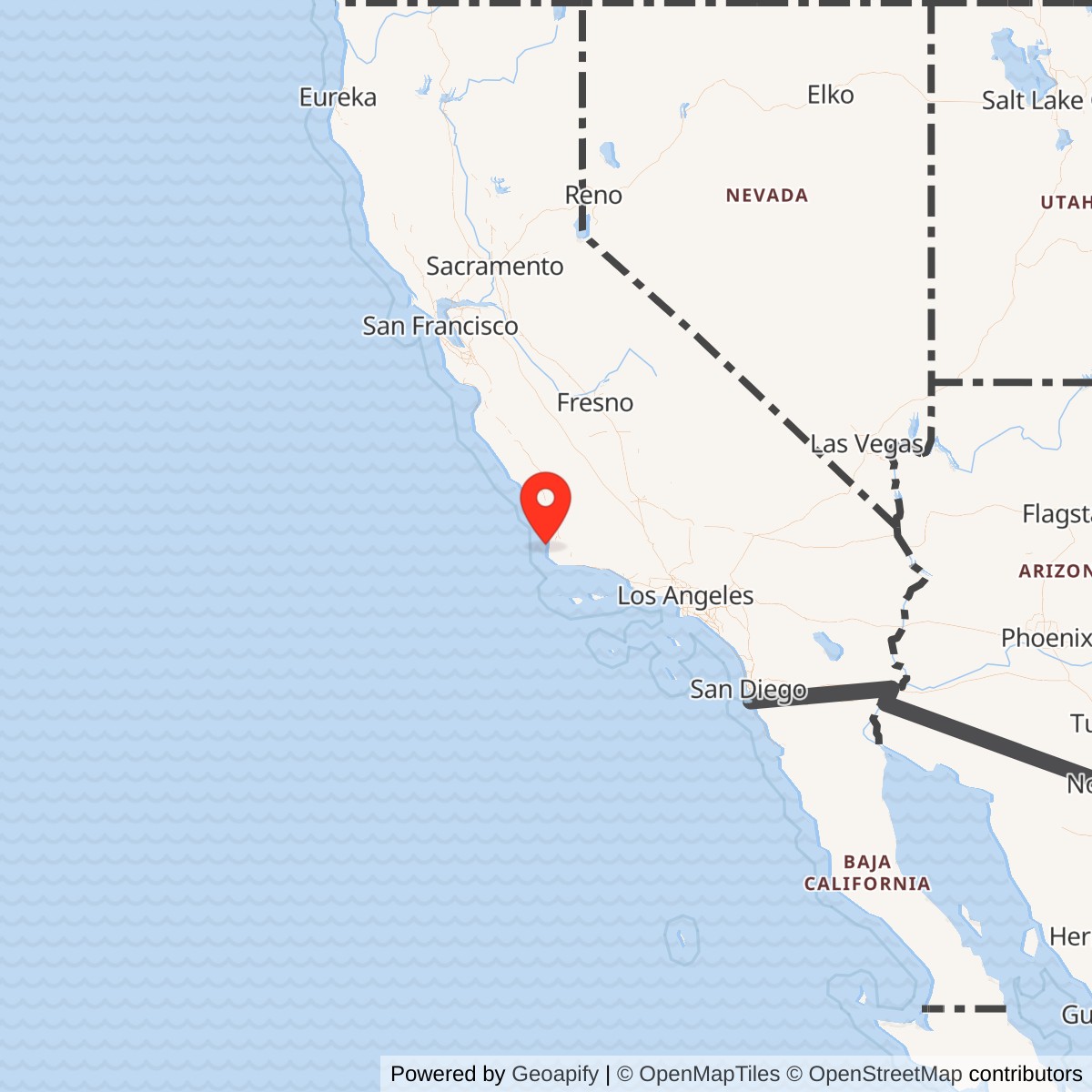
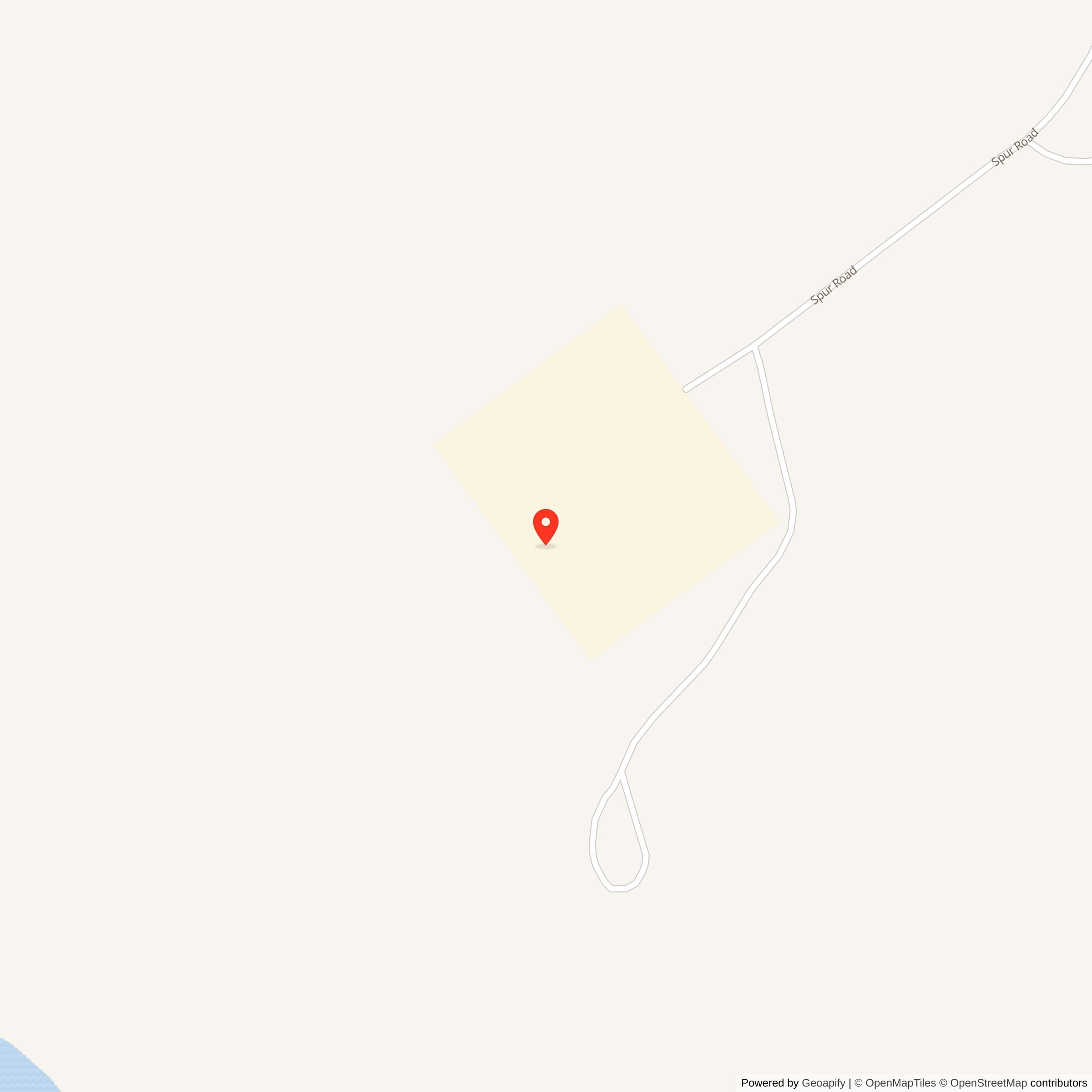
Atlas F Site 576-E is where the Atlas F story at Vandenberg became more than an engineering promise. From this single hardened silo-lift launcher on California's Central Coast, the Air Force fired the first Atlas F from Vandenberg, suffered a sharp reminder of how unforgiving liquid-fueled missile testing could be, then watched the same Cold War launch site return decades later as a small-launch orbital pad for Taurus and Minotaur-C rockets. Most Atlas F sites ended as sealed rural relics. Site 576-E became a bridge: first an ICBM test silo, then a reused space-launch complex.
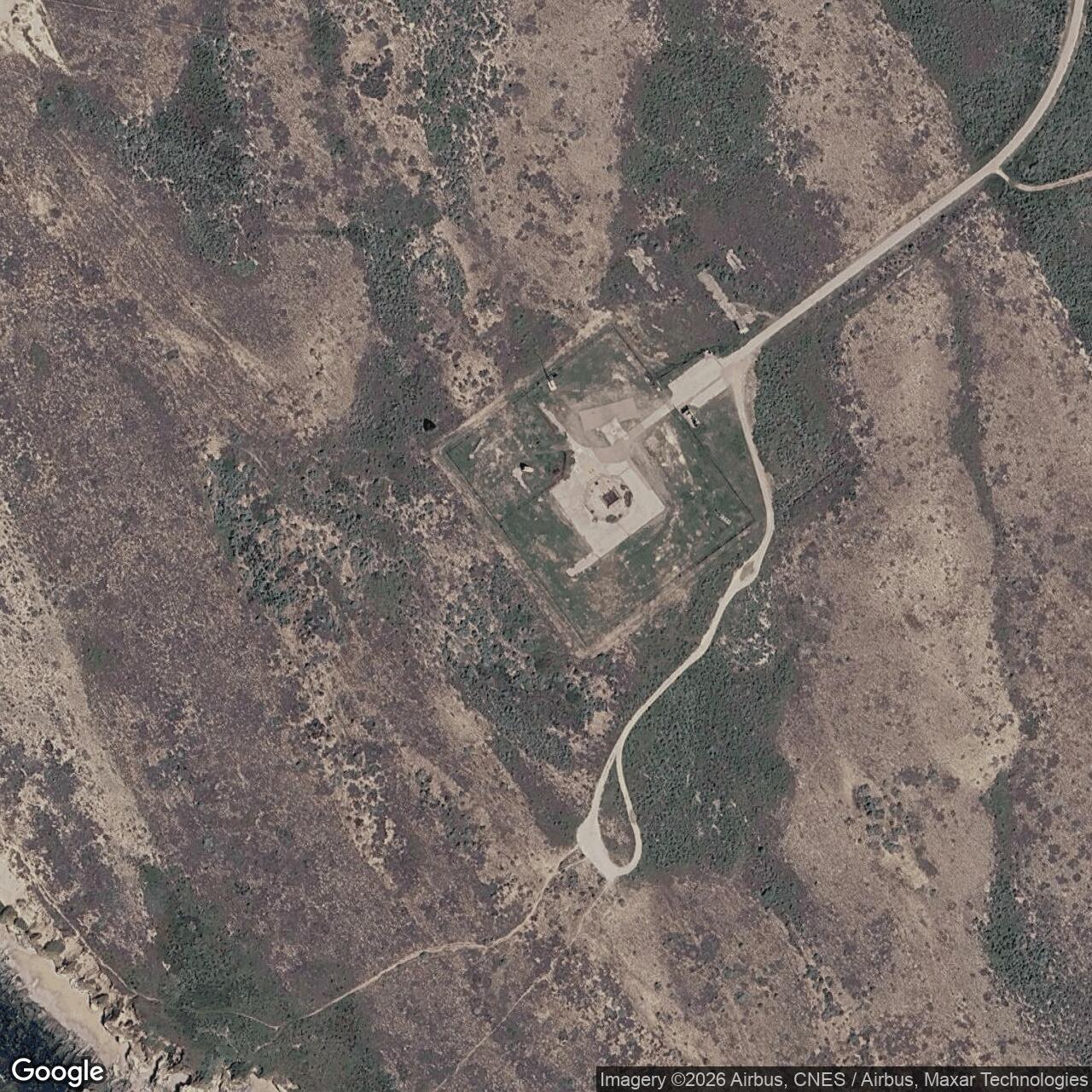
Atlas F Site 576-E, also known as Site E, 576 Echo, Launch Complex 576-E, or Space Launch Complex 576-E, is a former Strategic Air Command Atlas F underground silo-lift launch facility at Vandenberg Air Force Base, now Vandenberg Space Force Base, in Santa Barbara County, California. The site was associated with the 576th Strategic Missile Squadron, Vandenberg's Atlas missile test squadron, and with the 1st Missile Division / 1st Strategic Aerospace Division era of early West Coast missile testing. Because it was an Atlas F test and launch facility rather than a dispersed Minuteman-style Launch Facility, it did not have a separate parent Launch Control Center in the Minuteman LCC sense; the Atlas F complex incorporated its own control and support spaces.
Site 576-E was a single underground Atlas F silo-lift launcher. Construction began in 1960, was completed in 1961, and decommissioned on 1966-04-02. Vandenberg launcher-status material lists the site as accepted by the Air Force on 1961-07-07, with its first launch on 1962-08-01 and last Atlas launch on 1964-12-22. The Cape Canaveral Space Force Museum summarizes the Atlas-era record as one silo, four Atlas F launches, first launch on 1962-08-01, last launch on 1964-12-22, and a silo later decommissioned and stripped of equipment.
The site is no longer an active Atlas missile facility. It was decommissioned as an Atlas silo, stripped, and later modified for Taurus launches. In that later role, the facility became a small space-launch site. The Cape Canaveral Space Force Museum lists the first Taurus launch from 576-E on 1994-03-13 and the last Taurus launch on 2011-03-04, with ten Taurus launches. Vandenberg official public-affairs reporting documents a later Minotaur-C launch from Space Launch Complex 576-E on 2017-10-31. A 2021 Vandenberg Space Force Base Commercial Space Master Plan asset table lists Launch Complex 576-E as an active launch site with user/operator "TBD." The site remains inside Vandenberg Space Force Base and is not open to general public access.
Location, Landscape, and Site Description
Site 576-E lies on Vandenberg's North Base, near the base runway and inland from the Pacific coast, in the restricted military landscape west of Lompoc, California. The area is part of Santa Barbara County's windswept missile and space-launch coast: grassland, low hills, internal security roads, range infrastructure, and restricted access shaped by decades of ballistic-missile and orbital-launch operations.The Atlas-era facility was a single Atlas F vertical silo-lift site. Atlas F was not a launch-from-silo missile in the later Minuteman sense. The missile was stored vertically in a hardened underground silo and raised to the surface before firing. That meant the site required the silo, silo doors, elevator/lift machinery, launch equipment, underground support and control spaces, propellant-handling systems, electrical and communications support, access roads, security areas, and hardstand space. It was a more hardened and compact design than Atlas D gantry launchers or Atlas E horizontal coffin launchers, but it still belonged to the liquid-fueled Atlas era.
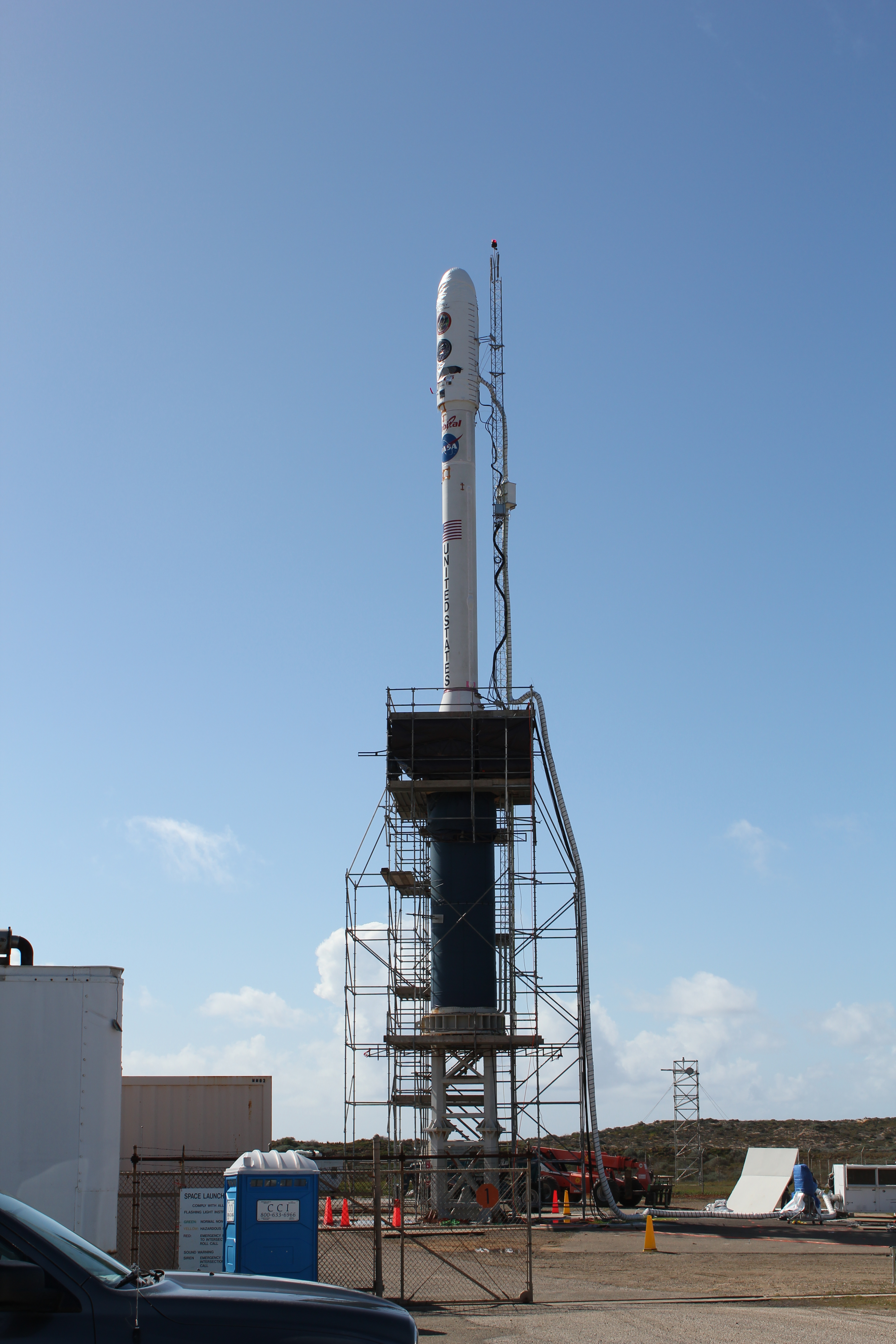
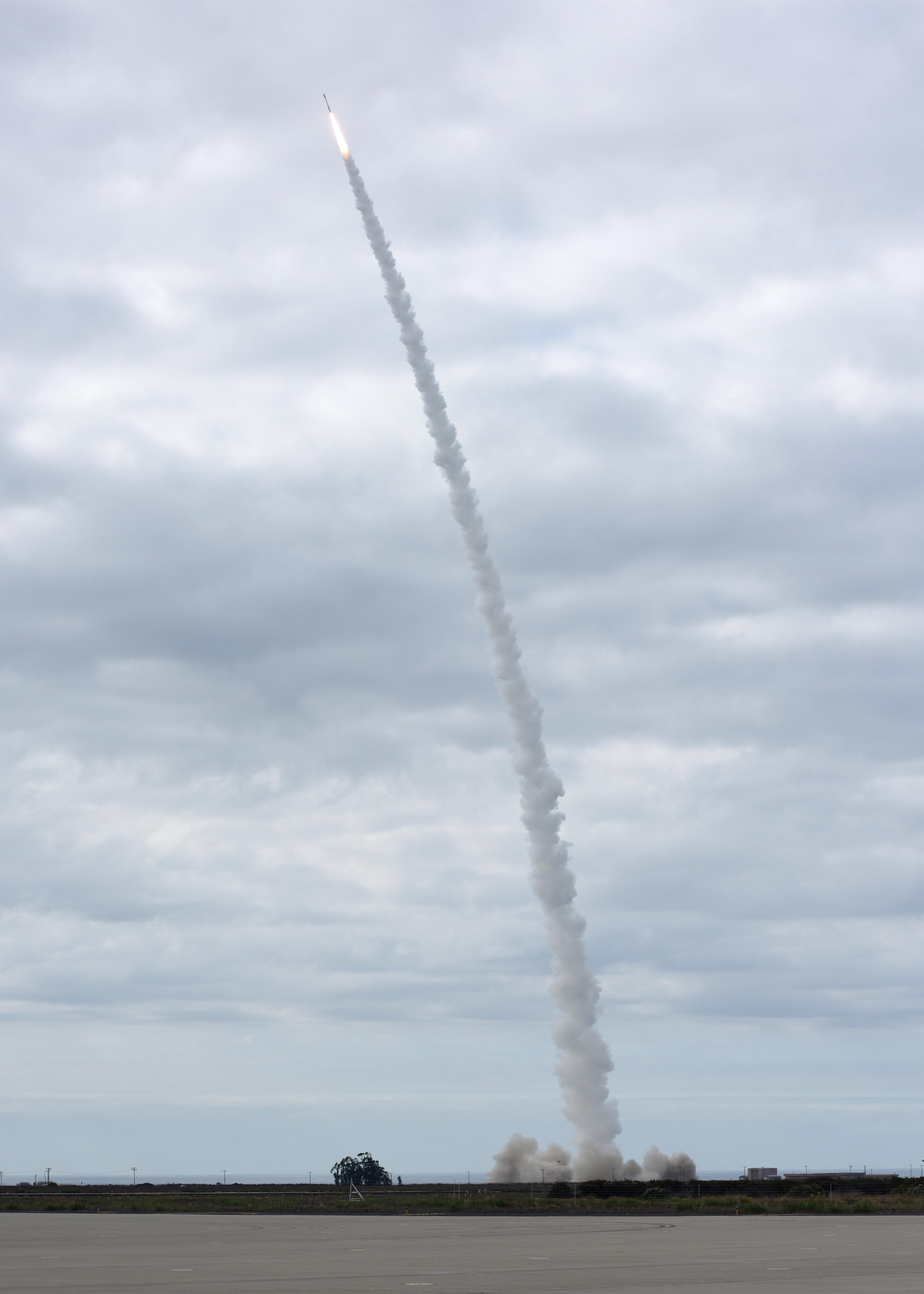
The later Taurus/Minotaur-C conversion changed the meaning of the surface complex. Instead of supporting a liquid-fueled Atlas ICBM raised from a silo, the site was adapted as a small-launch pad for solid-fueled launch vehicles. Public Vandenberg imagery (photo 1) from 2011 shows a Taurus XL standing on pad 576-E for NASA's Glory mission, and 2017 Air Force imagery (photo 2) shows the Minotaur-C launching from the same complex. Those later photographs make Site 576-E visually different from the abandoned Vandenberg Atlas silos: it is a former missile facility whose launch pad infrastructure remained useful enough to support a second career.
Strategic and Cold War Context
Atlas was the United States Air Force's first operational intercontinental ballistic missile. It was developed to solve one of the central strategic problems of the early Cold War: how to hold distant Soviet targets at risk from the continental United States and how to create a land-based nuclear deterrent that could respond faster than bomber forces alone. The National Park Service describes Atlas as the Air Force's first operational ICBM and places the 576th Strategic Missile Squadron at Vandenberg in the early operational history of the system.Atlas was also an interim technology. It proved that the United States could field an ICBM, but it did so before solid-fueled missiles, launch-from-silo Minuteman facilities, and later hardened command-and-control systems made the ICBM force faster and easier to maintain. Atlas used RP-1 kerosene and liquid oxygen, and its thin stainless-steel, pressure-stabilized airframe needed internal pressure to retain structural integrity. Those design features made Atlas a powerful missile but an operationally demanding one.
The Atlas F represented the most protected Atlas deployment concept. Earlier Atlas D facilities used exposed gantry launchers or aboveground coffin shelters; Atlas E used semi-hardened horizontal coffin launchers. Atlas F placed the missile vertically underground in a hardened silo-lift launcher. The missile had to be raised to the surface before launch, and liquid oxygen remained a major operating constraint, but the silo-lift system was a major step toward the hardened missile fields that defined the 1960s.
Vandenberg's mission was not the same as a dispersed combat-alert Atlas F field. The operational fields at Schilling, Lincoln, Altus, Dyess, Walker, and Plattsburgh held nuclear-armed Atlas F missiles on alert. Vandenberg tested, trained, demonstrated, evaluated, and collected data. Site 576-E's launches helped validate the Atlas F system, operational procedures, and test programs from a controlled range environment. That made the site strategically important even though it was not itself a rural alert silo.
Construction and Activation
Site 576-E was built as part of the Vandenberg Atlas test complex known broadly as Launch Complex 576. The complex reflected the evolution of the Atlas program. Site 576-A supported Atlas D gantry-style operations. Site 576-B supported Atlas D coffin launchers. Site 576-C and Site F / OSTF-1 supported Atlas E. Site 576-D, Site 576-E, and Site G / OSTF-2 represented the Atlas F silo-lift generation.Site E began in 1960 and completed in 1961. The Vandenberg launch-summary status table gives a more precise acceptance date of 1961-07-07 for 576-E. The site's first launch came on 1962-08-01, when Atlas 15F flew from 576-E as Operation His Nibs. 15F was the first operationally configured Series F successfully launched from a Vandenberg silo-style launch facility. The Vandenberg launch-summary table also records the launch as 1962-08-01, nickname His Nibs, facility 576-E, vehicle Atlas F, program R&D.
The Cape Canaveral Space Force Museum's facility page confirms the same basic Atlas-era chronology: 576-E was a single silo; first Atlas F launch on 1962-08-01; last Atlas F launch on 1964-12-22; total Atlas F launches, four; silo decommissioned and stripped of equipment. Site 576-E's construction and activation therefore mark the beginning of Vandenberg's Atlas F silo-launch record, not simply another facility in the larger Atlas test range.
Missile System and Technical Role
The SM-65F Atlas, later commonly associated with the hardened-silo HGM-16F designation, was a liquid-fueled, one-and-a-half-stage ICBM. It used two booster engines, a sustainer engine, and vernier engines, with all main propulsion started before liftoff. It burned RP-1 fuel and liquid oxygen. The Air Force and National Park Service summaries emphasize that Atlas was a first-generation ICBM, and F.E. Warren's Atlas fact sheet describes a missile capable of delivering a nuclear warhead more than 6,300 miles from its launch site.Atlas F's silo-lift arrangement was intended to increase survivability. The missile sat underground until launch preparation, then rose to the surface before firing. That design reduced exposure compared with earlier Atlas D and Atlas E launchers, but it did not remove the complexity of liquid oxygen handling or the vulnerabilities of a missile that had to be raised before launch. The silo was a protective structure and a launch-preparation facility, not a sealed launch tube.
For the operational nuclear mission, Atlas E and Atlas F used the Mark 4 reentry vehicle. The Smithsonian National Air and Space Museum identifies the Mark 4 as an AVCO-built reentry vehicle used on Air Force Titan I and Atlas E/F ICBMs in the early 1960s and states that it carried the W-38 nuclear warhead with a yield of about 3.75 megatons. At Site 576-E, however, the documented launches were test, readiness, demonstration, or shakedown launches from Vandenberg, not nuclear-alert deployments.
The four Atlas F missiles documented as launched from Site 576-E were:
- 15F General Dynamics serial 60-5538; Air Force tail number 538; accepted 1961-09-14; delivered 1961-10-30; mission was listed as Operational Readiness Training; launched 1962-08-01 with payload "CAT II - Operation His Nibs"; outcome successful. This was the first flight of an Atlas F series missile launched from Vandenberg AFB.
- 52F General Dynamics serial 61-2538; Air Force tail number 538; accepted 1962-02-27; delivered 1962-03-28; assigned to the 576th at Site E; mission listed as Operational Readiness Training; launched 1963-03-23 as Operation Tall Tree 4; outcome failure. The missile self-destructed at T+91 seconds and that insufficient telemetry existed to determine the cause.
- 110F General Dynamics serial 62-12146; Air Force tail number 146; accepted 1963-05-31; delivered 1964-05-05; mission listed as Operational Readiness Training; launched 1964-08-07 as DASO / Operation Large Charge; outcome successful.
- 111F General Dynamics serial 62-12443; Air Force tail number 443; accepted 1963-10-31; destination listed as General Dynamics/Astronautics storage; mission listed as Operational Readiness Training; launched 1964-12-22 as DASO / Operation Step Over; outcome successful. It was the last of four missiles launched from Site E.
Operational History
Site 576-E's operational Atlas history was brief, concentrated, and consequential. The site's first launch, on 1962-08-01, came only months before the Atlas F force reached its peak operational relevance during the period surrounding the Cuban Missile Crisis. Vandenberg launch-summary material records the launch as His Nibs, Atlas F, from 576-E. In practical terms, Site 576-E helped prove the Vandenberg silo-lift test environment for the Atlas F variant.The second launch, on 1963-03-23, showed the other side of early ICBM testing. Atlas 52F flew as Operation Tall Tree 4 from Site E and failed. The missile self-destructed at T+91 seconds, telemetry was insufficient to determine the cause. It did not destroy the launch complex in the way some Atlas propellant-loading accidents destroyed operational sites elsewhere, but it is part of the real operational story: Vandenberg existed to reveal weaknesses before they mattered in the alert force.
Site 576-E returned to successful Atlas F launches in 1964. On 1964-08-07, Atlas 110F launched as DASO / Operation Large Charge. Vandenberg launch-summary material identifies the launch as Large Charge from 576-E, Atlas F, program DASO, under SAC. On 1964-12-22, Atlas 111F launched as DASO / Operation Step Over. That final Site E Atlas launch occurred only weeks before the last Series D Atlas ICBMs were removed from alert at Offutt and only months before the Atlas F force itself was removed from active alert service. By the end of 1964, the Atlas program's test and operational window was closing rapidly.
Site 576-E was therefore active in the exact period when Atlas was transitioning from front-line deterrent to obsolete first-generation system. The 576th Strategic Missile Squadron, originally activated as SAC's Atlas test unit, operated in the era when missile crews, contractors, range teams, and maintenance personnel were learning how to make the first American ICBM system reliable enough for national defense. The site's launches were part of that learning process.
After its Atlas-era decommissioning, 576-E was modified for the Taurus launch vehicle. DARPA describes the Taurus program as emerging from the Small Standard Launch Vehicle effort, intended to provide quick-response, lower-cost launch of tactical satellites from ground facilities, with the initial DARPA model first used operationally in 1994. The Cape Canaveral Space Force Museum identifies 1994-03-13 as the first Taurus launch from 576-E.
The reused site also had major modern failures. NASA later determined the technical root cause of the Taurus XL launch failures of the Orbiting Carbon Observatory mission in 2009 and the Glory mission in 2011: faulty materials supplied for the payload-fairing rail frangible joint. NASA's public release specifically illustrates the Glory upper stack being prepared on Space Launch Complex 576-E and states that the fairing failed to separate on command in the earlier public summaries.
The last documented launch was the 2017-10-31 Minotaur-C mission from Space Launch Complex 576-E (photo 2). Vandenberg reported that an Orbital ATK Minotaur-C carrying ten small satellites owned by Planet launched from SLC-576-E at 2:37 p.m. PDT. The launch marked the first at Vandenberg in six years. This event shows that 576-E's useful life extended more than half a century beyond its first Atlas F launch.
Deactivation
The Atlas-era deactivation of Site 576-E reflected the larger retirement of the Atlas ICBM force. Atlas had been essential as the first operational American ICBM, but by the mid-1960s it was being superseded by Titan II and Minuteman. Liquid oxygen, pressure-stabilized missile structure, exposed launch preparation, and the need to raise Atlas F before firing all made the system less desirable than solid-fueled missiles that could remain in hardened silos at a higher state of readiness.Site 576-E's final Atlas launch occurred on 1964-12-22. The Cape Canaveral Space Force Museum states that the silo was decommissioned and stripped of equipment. The public sources do not provide a detailed equipment-removal chronology showing exactly when guidance, launch-control, fueling, elevator, electrical, or communications equipment was removed.
Unlike rural Atlas F sites outside Vandenberg, Site 576-E did not become a private farm, ranch, museum, or abandoned off-base parcel. It remained inside the Vandenberg military reservation. That means its post-Atlas history is a base-reuse story rather than a GSA disposal or FUDS property-transfer story.
The old Atlas silo-launch infrastructure was then altered for a different military and commercial space role. That later conversion is one of the features that separates 576-E from most Atlas F sites.
Current Status and Site Use
Site 576-E is decommissioned as an Atlas missile site but reused as Launch Complex / Space Launch Complex 576-E within Vandenberg Space Force Base. It remains federal military property on an active Space Force installation. There is no general public access to the site. Visitors should not attempt to approach it without official base authorization.The Cape Canaveral Space Force Museum describes the Atlas silo as decommissioned and stripped of equipment, then modified to launch Taurus. Vandenberg's 2017 public-affairs release confirms a Minotaur-C launch from Space Launch Complex 576-E on 2017-10-31. The 2021 Vandenberg Space Force Base Commercial Space Master Plan lists Launch Complex 576-E as a launch site with current status "Active" and user/operator "TBD." No later official source located showed a newer launch from the site after 2017.
Chronology
- 1960 Construction began on Atlas F Site 576-E.
- 1961 Construction was completed on Site 576-E.
- 1961-07-07 Vandenberg launch-summary status material lists Site 576-E as accepted by the Air Force.
- 1961-09-14 Atlas missile 15F, later the first missile launched from Site 576-E, was accepted.
- 1961-10-30 Atlas missile 15F was delivered.
- 1962-08-01 Atlas 15F launched successfully from Site 576-E as Operation His Nibs; this was the first Atlas F launch from Vandenberg.
- 1963-02-27 Atlas missile 52F was accepted.
- 1963-03-23 Atlas 52F launched from Site 576-E as Operation Tall Tree 4 and failed; the missile self-destructed at T+91 seconds.
- 1964-08-07 Atlas 110F launched successfully from Site 576-E as DASO / Operation Large Charge.
- 1964-12-22 Atlas 111F launched successfully from Site 576-E as DASO / Operation Step Over; this was Site 576-E's final Atlas F launch.
- 1966-04-02 The 576th Strategic Missile Squadron ended its original Atlas-era service on this date.
- 1994-03-13 The modified 576-E facility hosted its first Taurus launch, according to the Cape Canaveral Space Force Museum.
- 2009 The NASA Orbiting Carbon Observatory Taurus XL mission from 576-E failed after the payload fairing did not separate on command.
- 2011-03-04 The last Taurus launch listed by the Cape Canaveral Space Force Museum occurred from 576-E; NASA later linked the Glory and OCO Taurus XL failures to faulty materials in the payload-fairing rail frangible joint.
- 2017-10-31 Vandenberg reported that a Minotaur-C carrying ten Planet satellites launched from Space Launch Complex 576-E at 2:37 p.m. PDT.
- 2021 The Vandenberg Space Force Base Commercial Space Master Plan listed Launch Complex 576-E as an active launch site with user/operator "TBD."
All Atlas Missile Silo Locations