
Atlas F Site 578-10 Missile Silo, Nolan Texas
Longitude: -100.15319762
Site Type: Atlas F vertical silo launch facility
Missile Type: SM-65F Atlas
Number of Launchers/Missiles: 1
Parent Base: Dyess AFB
Missile Wing: 96th Strategic Aerospace Wing
Missile Squadron: 578th Strategic Missile Squadron
Current Site Use: Private former Atlas F silo; silo reportedly has no internal structure, but LCC is remarkably intact; no original Quonset hut/outbuilding remains; original functioning water wells remain.
Site Ownership: Private ownership; Atlas Missile Museum of Texas states Site 10 was the only Dyess site purchased from the government by its current owner; current deed ownership not independently verified.
Accessible: Private property / controlled access only; not open for casual public access.

South of Trent and near the rural Nolan community, Atlas F Site 578-10 is a reminder that some of the most consequential Cold War places were designed to look almost invisible from the road. The former Dyess Atlas F complex sat behind fences and access roads in open Nolan County country, its main weapon hidden below the surface in a hardened vertical silo. What mattered most was underground: the missile tube, the massive doors above it, the launch-control center, the protected passageways, fuel and oxidizer systems, power equipment, water systems, communications circuits, and the crew spaces that kept a first-generation American ICBM ready during the tense opening years of the 1960s.
Site 578-10 is especially useful for telling the human side of the Dyess missile field. The former site is not only documented by coordinates and construction photographs; it also appears in later public memory through a missile facilities technician who identified himself as a crew member at the Nolan silo during the Cuban Missile Crisis. His recollections place a young maintenance specialist inside the machinery of nuclear alert: keeping the site ready, managing facility systems, and recalling a later alert after the assassination of President John F. Kennedy when, according to his account, the missile was raised and liquid oxygen was being topped. The result is a site history that is both technical and personal: a hardened Atlas F launcher built by the Army Corps of Engineers and contractors, operated by Strategic Air Command crews, retired after only a few years, and left as a privately owned underground relic of a very short but intense missile age.
Installation / Site Identity
Atlas F Site 578-10 was a single SM-65F Atlas intercontinental ballistic missile launch complex assigned to the 578th Strategic Missile Squadron at Dyess Air Force Base, Texas. The site code is 578-10. It was one of twelve Dyess Atlas F launch complexes operated by the 96th Bombardment Wing, later the 96th Strategic Aerospace Wing, through the 578th Strategic Missile Squadron.Like the other Dyess Atlas F complexes, Site 578-10 did not have a separate Minuteman-style remote Launch Control Center. The launch complex itself contained its own underground launch-control center and support spaces.
Official 578th Strategic Missile Squadron unit-history material states that the squadron was organized at Dyess Air Force Base on 1961-07-01, that construction of the Dyess missile-field project began on 1960-06-07, that the squadron was turned over to Strategic Air Command on 1962-11-04, and that the squadron became operational on 1962-11-15.
Atlas F Site 578-10 is inactive and decommissioned as a military installation. It is not an active missile facility. The 578th Strategic Missile Squadron was inactivated on 1965-03-25 during the accelerated phaseout of the Atlas E, Atlas F, and Titan I first-generation ICBMs. The former Site 578-10 property is privately owned. The Atlas Missile Museum of Texas describes it as the only one of the Dyess group purchased from the government by its current owner, states that the silo has no remaining internal structure, and notes that the launch-control center is remarkably intact. Public access should be treated as private and controlled rather than open.
Location, Landscape, and Site Description
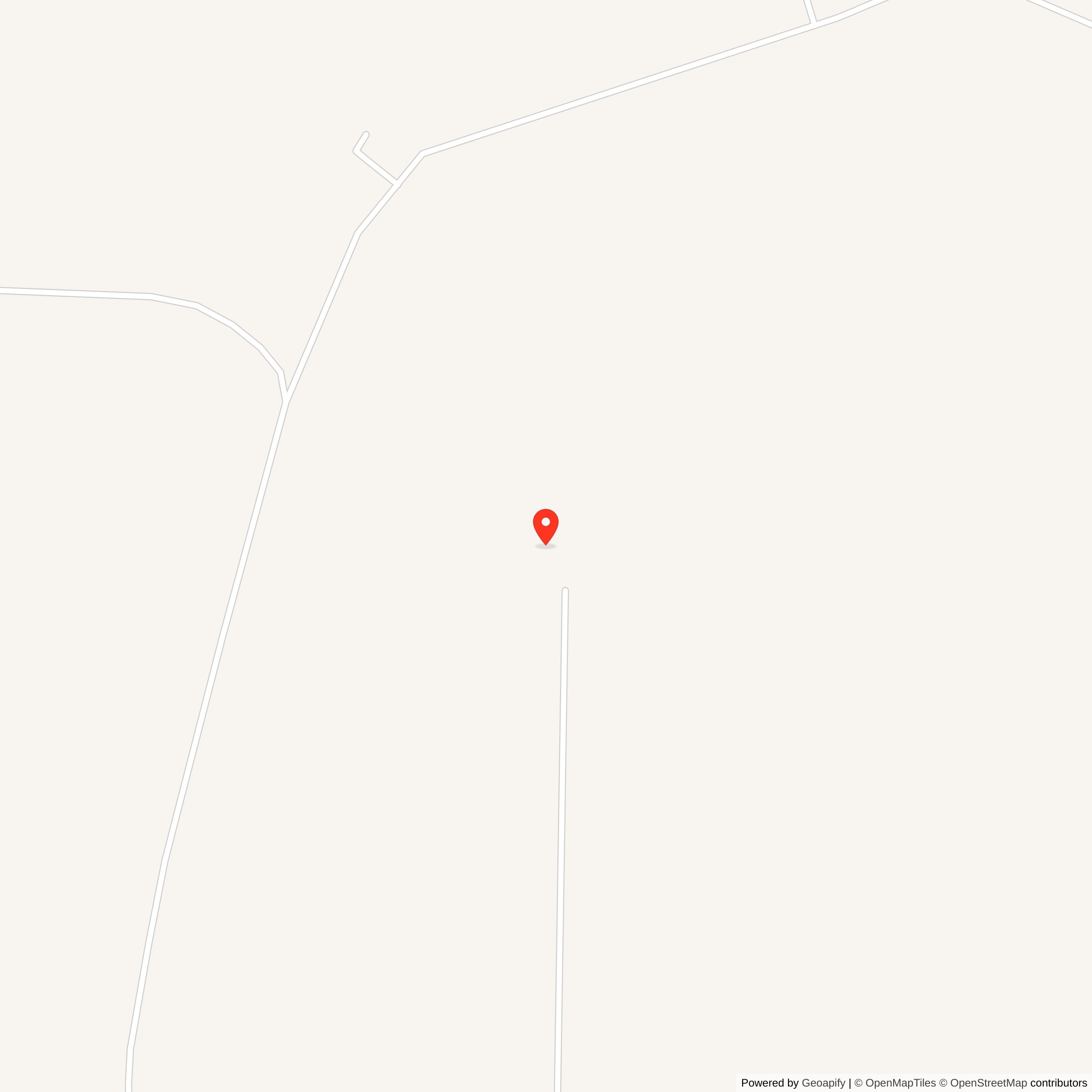
Site 578-10 lies in rural Nolan County in West Texas, west-southwest of Abilene and south of the Interstate 20 corridor. The site is associated with Nolan, Texas, while other general site lists describe it as south of Trent.The location reflects the Atlas F deployment logic around Dyess. The twelve launch complexes were dispersed around the parent base so that a single attack could not destroy the entire squadron, but they were close enough to be supported by Dyess-based missile maintenance, security police, civil engineering, propellant, communications, and command personnel. The 578th SMS site ring included launch facilities near Abilene/Lake Fort Phantom Hill, Albany, Clyde, Denton Community, Oplin, Lawn, Bradshaw/Ovalo, Winters, Shep, Nolan, Anson, and Corinth.
As built, Site 578-10 would have followed the standard Atlas F silo-lift configuration. The missile was stored vertically in a hardened underground silo, but it could not launch directly from inside that silo. Before launch, the two large overhead silo doors opened and the elevator-like launcher raised the missile and launch platform to the surface. The site therefore combined underground protection with a surface launch sequence. The complex included the missile silo, silo cap and doors, launcher platform, internal steel crib, work levels, propellant and pressurization equipment, electrical and environmental systems, water systems, access tunnel, and an underground launch-control center set apart from the missile tube.
The Atlas Missile Museum of Texas gives important current-condition detail for the Nolan site. Its Site 10 page states that the silo no longer has internal structure, but the launch-control center is remarkably intact. It also records that at one point the owner opened one of the 75-ton overhead silo doors using railroad jacks and large oil-field service or drilling trucks. The same page states that the site has no original Quonset hut or outbuilding and that it still uses original functioning water wells. Those details make Site 578-10 unusually vivid as a surviving private property: much of the missile equipment is gone, but the heavy civil-engineering shell, the doors, the LCC, and supporting utility elements continue to show how substantial the original construction was.
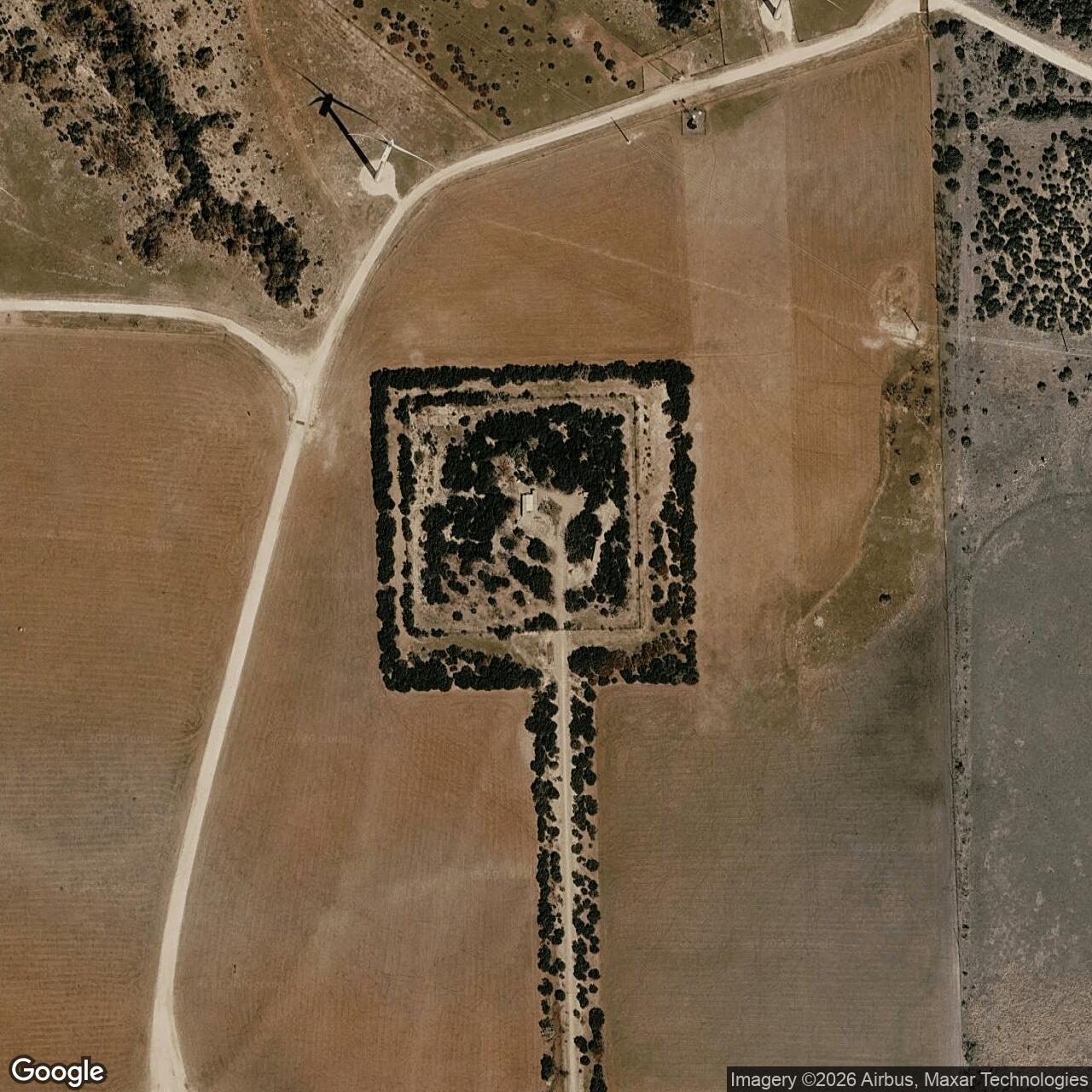
Present-day satellite views of Site 10 show the former missile complex as a rectangular tree-lined or brushy compound set amid open land, with an access road or drive and the circular silo-related feature visible within the former fenced area.
Strategic and Cold War Context
Site 578-10 existed because the United States wanted a rapid-reaction, survivable, land-based nuclear deterrent during the early 1960s. The Atlas was the United States Air Force's first operational intercontinental ballistic missile. It was developed during the earliest period of the American ICBM program, when long-range ballistic missiles were still new, difficult, and expensive. The Atlas F was the final and most hardened operational Atlas variant, but it remained a first-generation system: liquid-fueled, maintenance-intensive, and dependent on complex ground-support systems.The National Park Service describes the Atlas as the Air Force's first operational ICBM and explains that Atlas sites peaked at 132 operational locations from December 1962 through May 1964. The same NPS summary describes the Atlas F as the most capable of the deployed Atlas types: an 82-foot missile held in a blast-proof silo-lift configuration and capable of launch in approximately ten minutes. Seventy-two Atlas F missiles were deployed in the field, with twelve each at Schilling, Lincoln, Altus, Dyess, Walker, and Plattsburgh Air Force Bases.
The Atlas F deployment represented a transitional moment in U.S. missile basing. Earlier Atlas D missiles used aboveground launchers or coffin-type shelters, while Atlas E used individual semi-hardened coffin sites. Atlas F moved the missile into a deep vertical silo for protection but still required the missile to be raised to the surface before launch. That made the Atlas F more survivable than earlier Atlas variants but less operationally simple than solid-fueled Minuteman missiles, which could remain in underground silos and launch directly from them.
For the Dyess field, the strategic purpose was direct: the 578th Strategic Missile Squadron gave Strategic Air Command a dispersed force of twelve Atlas F ICBMs in West Texas. The surrounding communities saw only a ring of remote military properties, but each complex was tied into a national command-and-control system and maintained by crews trained to bring the missile to alert condition, fuel it with liquid oxygen as needed, raise it, and launch if ordered. Site 578-10 was one of those nodes.
Construction and Activation
The Dyess Atlas F construction program was a major Army Corps of Engineers and contractor effort. Official 578th SMS unit-history material states that initial responsibility for constructing the twelve Atlas F silos fell to the Corps of Engineers Fort Worth District. The Fort Worth District also received responsibility for nationwide procurement of the Atlas F propellant loading system. After the Corps of Engineers Ballistic Missile Construction Office, known as CEBMCO, was formed in 1960, the Fort Worth District was relieved of direct silo-construction oversight.The same unit-history account gives the key contract chronology. On 1960-05-26, six bids were opened at Abilene, Texas. The low bid, approximately $20 million, came from a joint venture of the H.B. Zachry Company and Brown & Root, Inc. Construction commenced on 1960-06-07. The official list of twelve lift-launcher locations included Abilene, Albany, Clyde, Denton County, Oplin, Lawn, Bradshaw, Winters, Shep, Nolan, Anson, and Corinth.
This source is important because it establishes both the local construction framework and the larger administrative setting. The Dyess silos were not small local projects; they were part of a national missile-construction effort managed at the intersection of the Air Force, the Army Corps of Engineers, specialized missile contractors, and Strategic Air Command deadlines. Site 578-10 was one of the Nolan County pieces of that program.
The construction work itself was massive. Each Atlas F site required excavation for a deep vertical silo, heavy concrete work, installation of steel liner and internal crib structures, construction of a buried launch-control center, tunneling or protected passage between major underground spaces, installation of tanks, piping, ventilation and environmental-control systems, electrical and communications infrastructure, emergency power, water systems, access roads, fencing, and support buildings. At a finished Atlas F complex, what looked like a small rural military property on the surface concealed a multi-level hardened launch plant.
The Smithsonian National Air and Space Museum's Atlas Missile Project Site Construction Photographs collection documents the Dyess construction program. The collection consists of 120 black-and-white photographs showing construction of the Atlas missile installation at Dyess Air Force Base, along with drawings of typical launcher-platform and missile-silo equipment. The Smithsonian finding aid notes that the photographs were marked with dates and captions and that the Dyess Site Activation Task Force received an award for completing the construction on time and under budget.
That "on time and under budget" outcome did not mean the work was easy or safe. The 578th SMS unit history states that the Dyess construction project had no labor-unrest stoppages, but it also recorded three fatalities and thirty-three disabling injuries. That human cost belongs in the construction story. These sites were built quickly, under national urgency, with heavy excavation, cranes, steel, concrete, underground work, and industrial hazards.
The 578th SMS history supplies the field-level 1960-06-07 construction start and 1962-11-15 squadron operational date.
Missile System and Technical Role
Site 578-10 housed the SM-65F Atlas, the final operational version of the Atlas ICBM.The Site 10 missile was General Dynamics missile serial number 61-2541, manufacturing number 55F, and Air Force tail number 541. The missile acceptance date was 1962-03-01 and the delivery date was 1962-03-30.The Atlas F was a liquid-fueled, one-and-a-half-stage missile. The 578th SMS site describes the squadron's Atlas F weapon system as using RP-1 fuel and liquid oxygen. RP-1 was kept aboard the missile during alert, while liquid oxygen was loaded before the missile was raised and launched. Internal pressure was maintained by gaseous nitrogen. If a launch hold occurred after the missile was up and locked, the crew could top off liquid oxygen for a limited time before the final launch command. These requirements help explain the elaborate ground systems at each Atlas F site: the missile itself was only one part of the weapon system; the complex also needed fueling, pressurization, environmental, power, water, communications, and control infrastructure.
The launch-control center at Site 578-10 was the crewed command space for the complex. Unlike later Minuteman launch facilities, which were normally unmanned and controlled from remote Launch Control Centers, an Atlas F complex included its own underground control center. Missile combat crews, missile facilities technicians, maintenance teams, communications technicians, security personnel, and other support specialists all contributed to the site's alert posture. The Atlas Missile Museum of Texas' statement that the Nolan LCC is still remarkably intact is therefore historically important: the LCC was not a generic basement; it was the human command space from which the site was monitored and readied.
The 578th SMS site states that the Atlas F carried a Mark IV reentry vehicle developed by General Electric and a W-38 nuclear warhead with an approximate yield of 3.8 megatons. The Smithsonian National Air and Space Museum identifies the Mark 4 reentry vehicle as used on Titan I and Atlas E/F ICBMs deployed in the early 1960s and states that it carried a W-38 nuclear warhead with a yield of about 3.75 megatons. The National Park Service summarizes Atlas F as having a much larger warhead than earlier variants and being deployed in a blast-proof silo-lift configuration.
Operational History
The 578th Strategic Missile Squadron was organized at Dyess Air Force Base on 1961-07-01 and served there until inactivation on 1965-03-25. Official unit-history material lists the SM-65F Atlas as the squadron's weapon system in 1962. The squadron belonged to the 96th Bombardment Wing, later the 96th Strategic Aerospace Wing, and operated the twelve dispersed Atlas F sites around Dyess.Operationally, Site 578-10 was a single-missile alert complex. It was not a launch pad in the ordinary sense, nor was it a simple storage bunker. It was a round-the-clock weapons system. During its active period, the site's mission was to keep an Atlas F missile, its silo-lift launcher, its propellant and support systems, its command equipment, and its crew procedures ready for Strategic Air Command alert. The 578th SMS history site states that the Dyess sites were manned continuously during the squadron's active period and that all operational 578th sites were on a high level of alert during the Cuban Missile Crisis.
A site like 578-10 required constant maintenance. Atlas was famous for its thin stainless-steel, pressure-stabilized airframe. The National Park Service explains that Atlas missiles had to be pressurized on alert because the structure was so thin that pressure helped keep it rigid on the ground. In practical terms, the missile and site required careful attention to pressurization, propellant readiness, environmental controls, guidance and communications equipment, power, safety systems, and the launch sequence.
The Cuban Missile Crisis was the most important operational moment for the Dyess Atlas F field. Official 578th SMS unit-history material states that, as the squadron became operational in 1962, the 578th and its twelve missiles were all placed on alert status during the crisis. A later historical summary of the 578th SMS notes that, after Soviet missiles were detected in Cuba, Strategic Air Command directed degraded missiles to be returned to alert as covertly as possible, used emergency turnover procedures for missiles still under Air Force Systems Command control, and adjusted alert levels after the peak of the crisis. Site 578-10's assigned missile had been accepted and delivered earlier in 1962, placing the Nolan complex within the critical first year of Dyess Atlas F alert operations.
The Nolan site also has an unusual human record in public memory. In a 2024 KTXS interview, Frank Dlugas stated that he had served on crew 34 at the Nolan Missile Silo as the missile facilities technician. He described taking care of site systems other than the missile itself and recalled the permanent alert readiness expected of the silo. In the same interview, he remembered the Cuban Missile Crisis period and a later red-alert episode after President Kennedy's assassination, when he said the missile was raised out of the silo and liquid oxygen was being topped.
Deactivation and Disposal
Site 578-10's active missile career was brief. The Dyess Atlas F field became operational in November 1962, during the same period as the Cuban Missile Crisis, and the squadron was inactivated less than three years later. The short service life was not a sign that the site was minor. It reflects how quickly first-generation liquid-fueled ICBMs were overtaken by solid-fueled Minuteman and more advanced Titan systems.The official phaseout chronology begins in 1964. The 578th SMS unit history states that Secretary of Defense Robert S. McNamara directed the accelerated phaseout of Atlas and Titan I ICBMs on 1964-05-16. It further states that the first Atlas F missile at Dyess was removed from alert on 1964-12-01 ahead of schedule to avoid costly maintenance expenditures. The same source lists the last 578th SMS ICBM off alert on 1965-02-03 and the last ICBM shipped on 1965-02-10. The squadron was inactivated on 1965-03-25.
After the Atlas mission ended, former sites were demilitarized and disposed of through federal property processes. Dyess Air Force Base's official history states that, after decommissioning in 1965, the Atlas missiles were removed and all sites were demilitarized. At Site 578-10, later sources indicate substantial removal of missile-system equipment. The Atlas Missile Museum of Texas states that the silo has no internal structure, no original Quonset hut, and no original outbuilding. At the same time, the site retains a remarkably intact LCC and functioning original water wells, and one of the heavy silo doors was reportedly opened by the owner using improvised heavy equipment.
The site also appears in Formerly Used Defense Sites records. The U.S. Army Corps of Engineers 2015 Texas FUDS inventory lists NOLAN ATLAS AF FAC S-10, property number K06TX0115, in Nolan County with HTRW and CON/HTRW categories. In the FUDS inventory legend, HTRW means Hazardous, Toxic and/or Radioactive Waste, and CON/HTRW means Containerized Hazardous, Toxic and/or Radioactive Waste. ProPublica's Bombs in Your Backyard database lists ATLAS AF FAC S-10 at Nolan, Nolan County, as "Response Complete."
Current Status and Site Use
Atlas F Site 578-10 is a decommissioned former missile launch complex on private property. The site is not active, not a public military installation, and not a general public museum.The Atlas Missile Museum of Texas provides the most useful public description of its current physical condition. It states that Site 10 was the only one in the Dyess group purchased from the government by its current owner. It also says the silo has no structure, the LCC is remarkably intact, the site lacks an original Quonset hut or outbuilding, and original functioning water wells are still used for water. This combination suggests a site where some of the original military equipment and aboveground support fabric is gone, but major underground civil-engineering spaces remain.
Chronology
- 1954 The U.S. Air Force selected Convair's Atlas missile program as part of the development of intercontinental ballistic missiles with nuclear warheads.
- 1960-05-26 Six bids were opened at Abilene for the Dyess Atlas F silo construction project; the low bid of about $20 million came from the H.B. Zachry Company and Brown & Root, Inc. joint venture.
- 1960-06-07 Official 578th SMS unit-history material states that construction commenced on the Dyess Atlas F missile-field project.
- 1961-07-01 The 578th Strategic Missile Squadron was organized at Dyess Air Force Base.
- 1962-03-01 Acceptance date for Site 578-10's assigned missile, Atlas 55F / serial 61-2541 / tail 541.
- 1962-03-30 Delivery date for Atlas 55F.
- 1962-10 During the Cuban Missile Crisis, official unit-history material states that the 578th SMS and its twelve missiles were placed on alert status.
- 1962-11-04 Official unit-history material lists turnover of the 578th Strategic Missile Squadron to Strategic Air Command.
- 1962-11-15 Official unit-history material lists the 578th Strategic Missile Squadron as operational.
- 1963-11-22 In a later public interview, a former Nolan Missile Silo missile facilities technician recalled a red-alert episode after President Kennedy's assassination, when he said the missile was raised and liquid oxygen was being topped.
- 1964-05-16 Secretary of Defense Robert S. McNamara directed accelerated phaseout of Atlas and Titan I ICBMs.
- 1964-12-01 The first Atlas F missile at Dyess was removed from alert ahead of schedule.
- 1965-02-03 The last 578th SMS ICBM was removed from alert.
- 1965-02-10 The last 578th SMS ICBM was shipped.
- 1965-03-25 The 578th Strategic Missile Squadron was inactivated.
- 2015 The U.S. Army Corps of Engineers Texas FUDS inventory listed NOLAN ATLAS AF FAC S-10, K06TX0115, in Nolan County with HTRW and CON/HTRW categories.
- 2024 KTXS published an interview with Frank Dlugas, who identified himself as a missile facilities technician on crew 34 at the Nolan Missile Silo and recalled Cuban Missile Crisis and alert-duty experiences.

Read about the Atlas at Dyess AFB
All Atlas Missile Silo Locations