
Atlas F Site 578-6 Missile Silo, Lawn Texas
Longitude: -99.7031695370433
Site Type: Atlas F vertical silo launch facility
Missile Type: SM-65F Atlas
Number of Launchers/Missiles: 1
Parent Base: Dyess AFB
Missile Wing: 96th Strategic Aerospace Wing
Missile Squadron: 578th Strategic Missile Squadron
Current Site Use: Privately owned preserved former Atlas F complex; Lawn Atlas Missile Base / Atlas Missile Base Cold War Center; museum tours, Cold War interpretation, and scuba use in flooded silo.
Site Ownership: Private ownership; public sources identify Larry Sanders / Lawn Atlas Missile Base, with acquisition timing varying between late 1990s/early 2000s.
Accessible: Private property; limited or appointment-only tours through current owner/center; no unscheduled public access.
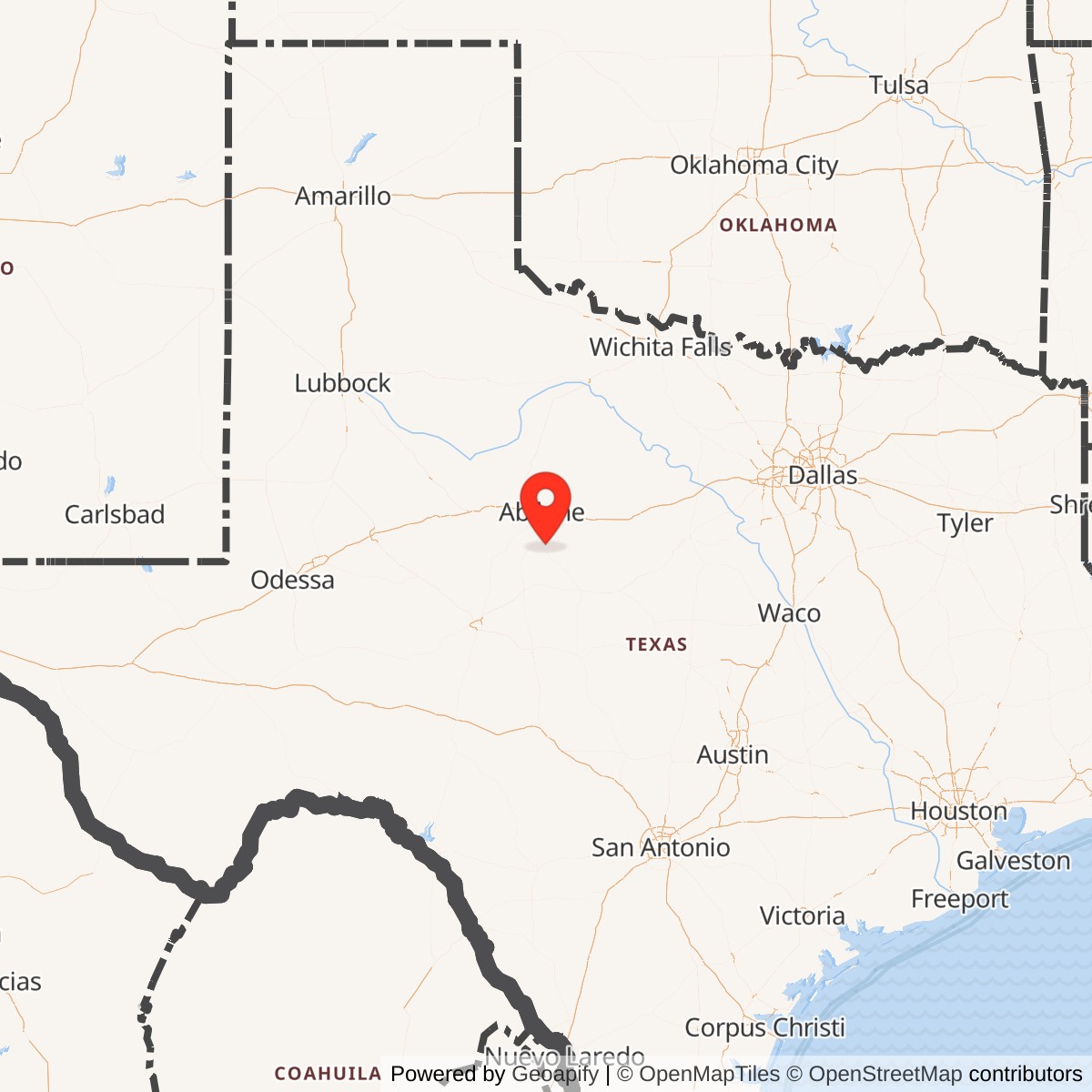
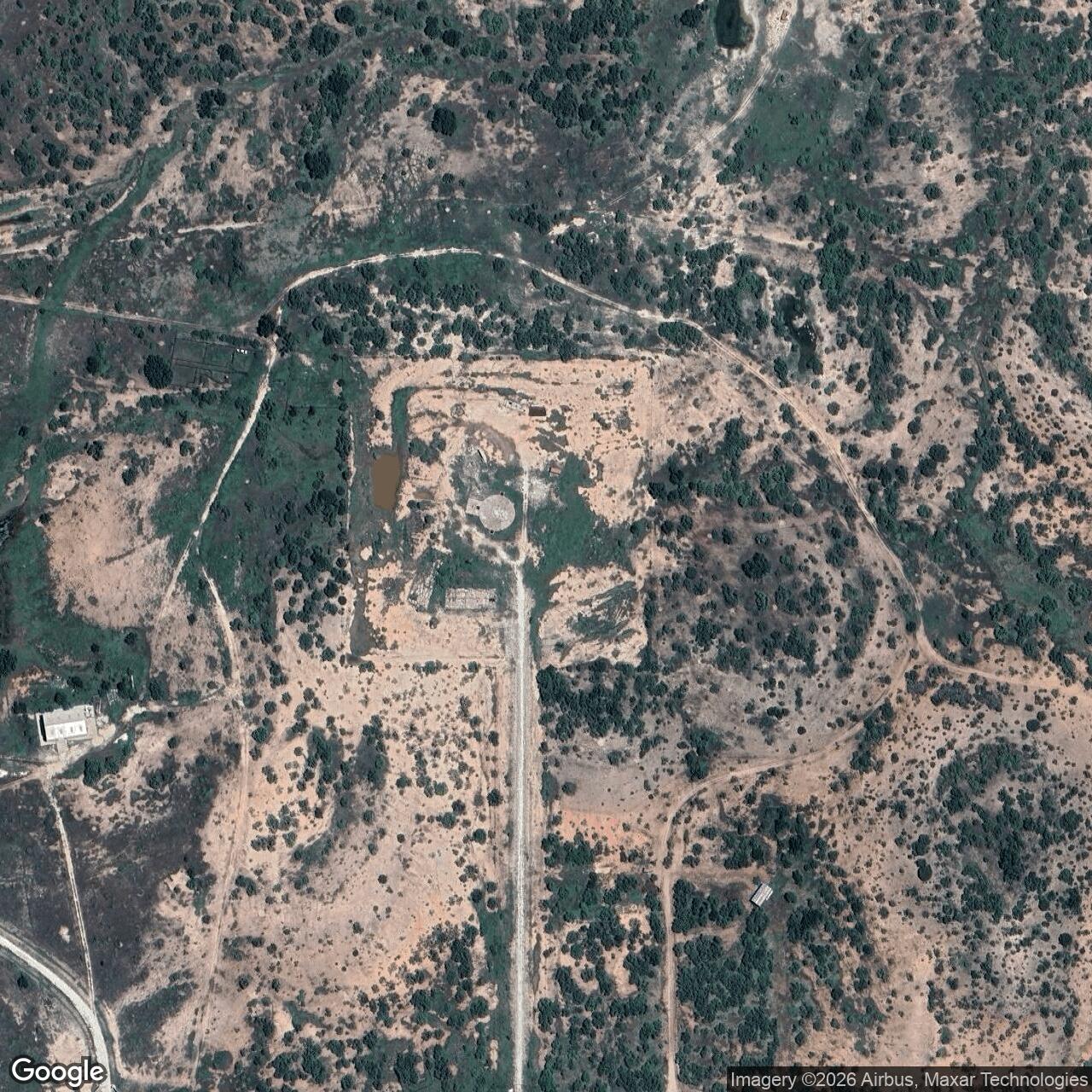
On the open ground east of Lawn, Texas, Atlas F Site 578-6 is one of the rare former ICBM sites where the Cold War is still physically legible. A low concrete entryway, heavy blast doors, an underground launch-control center, a long tunnel, and a flooded vertical missile silo remain from a weapon system designed to be hidden, hardened, and ready. The site was built as Dyess S-6, one of twelve Atlas F launch complexes that ringed Dyess Air Force Base, and it later became the Lawn Atlas Missile Base, a preserved and interpreted Cold War landmark.
Site 578-6 has a particularly strong public story because it survives not merely as a coordinate on a former missile map but as a place that has been toured, photographed by official Air Force public-affairs teams, listed by the Texas Historical Commission, and used for Cold War interpretation. Its assigned Atlas missile also had a second life: public Atlas records identify the Site 6 missile as Atlas 65F, later launched from Vandenberg in 1977 carrying Navigation Technology Satellite 2, an important predecessor in the development of the NAVSTAR / GPS system.
Installation / Site Identity
Atlas F Site 578-6 was a single SM-65F Atlas intercontinental ballistic missile launch complex assigned to the 578th Strategic Missile Squadron at Dyess Air Force Base, Texas. The site code is 578-6. It was one of twelve Dyess Atlas F sites operated by the 96th Bombardment Wing, later redesignated the 96th Strategic Aerospace Wing, through the 578th Strategic Missile Squadron.The site is located near Lawn in Taylor County, Texas. Texas Historical Commission marker data identifies the Lawn Atlas ICBM Launch Facility at 1990 FM 604 in Lawn, Taylor County, and USACE Formerly Used Defense Sites inventory material also identifies the former site as Lawn Atlas AF Facility S-6 in Taylor County.
Like the other Dyess Atlas F sites, Site 578-6 did not have a separate Minuteman-style remote Launch Control Center. The Atlas F launch complex incorporated its own hardened launch-control and support facilities within the individual site.
Construction of the Dyess Atlas F field began in 1960. Official unit-history material gives 1960-06-07 as the start of construction for the Dyess missile-field project, while a Goodfellow Air Force Base article specifically reports that Dyess S-6 construction started in November 1960. The 578th Strategic Missile Squadron was organized at Dyess on 1961-07-01, turned over to Strategic Air Command on 1962-11-04, and became operational on 1962-11-15.
Atlas F Site 578-6 is inactive and decommissioned. It is no longer an active missile facility. The 578th Strategic Missile Squadron was inactivated on 1965-03-25 during the accelerated phaseout of Atlas E, Atlas F, and Titan I first-generation ICBMs. The former launch complex is now a privately owned historic and interpretive site known as the Lawn Atlas Missile Base / Atlas Missile Base Cold War Center. Public access is limited and should be arranged only through the current owner or center; it is not an open public park.
Location, Landscape, and Site Description
Site 578-6 was built east of the small town of Lawn in Taylor County, south of Abilene and southeast of Dyess Air Force Base. The landscape is typical of the southern part of the Dyess missile field: open pasture, low ridges, ranch and farm roads, scattered rural residences, and long views across central Texas. The setting made the site remote enough to be dispersed from the parent base, but close enough to remain within the maintenance, security, communications, and command reach of Dyess AFB.The Dyess Atlas F sites were deliberately arranged in a broad ring rather than clustered at the base. This gave Strategic Air Command twelve separated launch complexes around Abilene, each with one missile, one hardened silo, and its own crewed control facility. The Texas Historical Commission marker for the Lawn site describes it as one of twelve built near Dyess Air Force Base and one of seventy-two Atlas F complexes built in groups of twelve near six military installations. The ring around Dyess made small places such as Lawn, Oplin, Bradshaw, Winters, Shep, Nolan, Anson, Albany, Clyde, and the Denton community part of the first generation of America's hardened ICBM landscape.
A completed Atlas F complex was much more than a vertical tube. The Lawn site included a deep reinforced-concrete missile silo, a silo-lift launch platform, overhead launch doors, a suspended crib and working levels, propellant and gas systems, a launch-control center, blast doors, access tunnels, electrical and mechanical systems, ventilation and environmental-control systems, communications equipment, power equipment, security fencing, road access, and aboveground support structures. The Texas Historical Commission marker states that each Atlas F complex included a 185-foot-deep silo, an underground tunnel connecting the main missile silo to a launch-control center, and aboveground access and support spaces. Goodfellow Air Force Base's 2020 article described the surviving Lawn site as having a five-person crew arrangement, heavy blast doors, a large underground silo, 65-ton doors, and nine-foot-thick concrete and rebar walls.
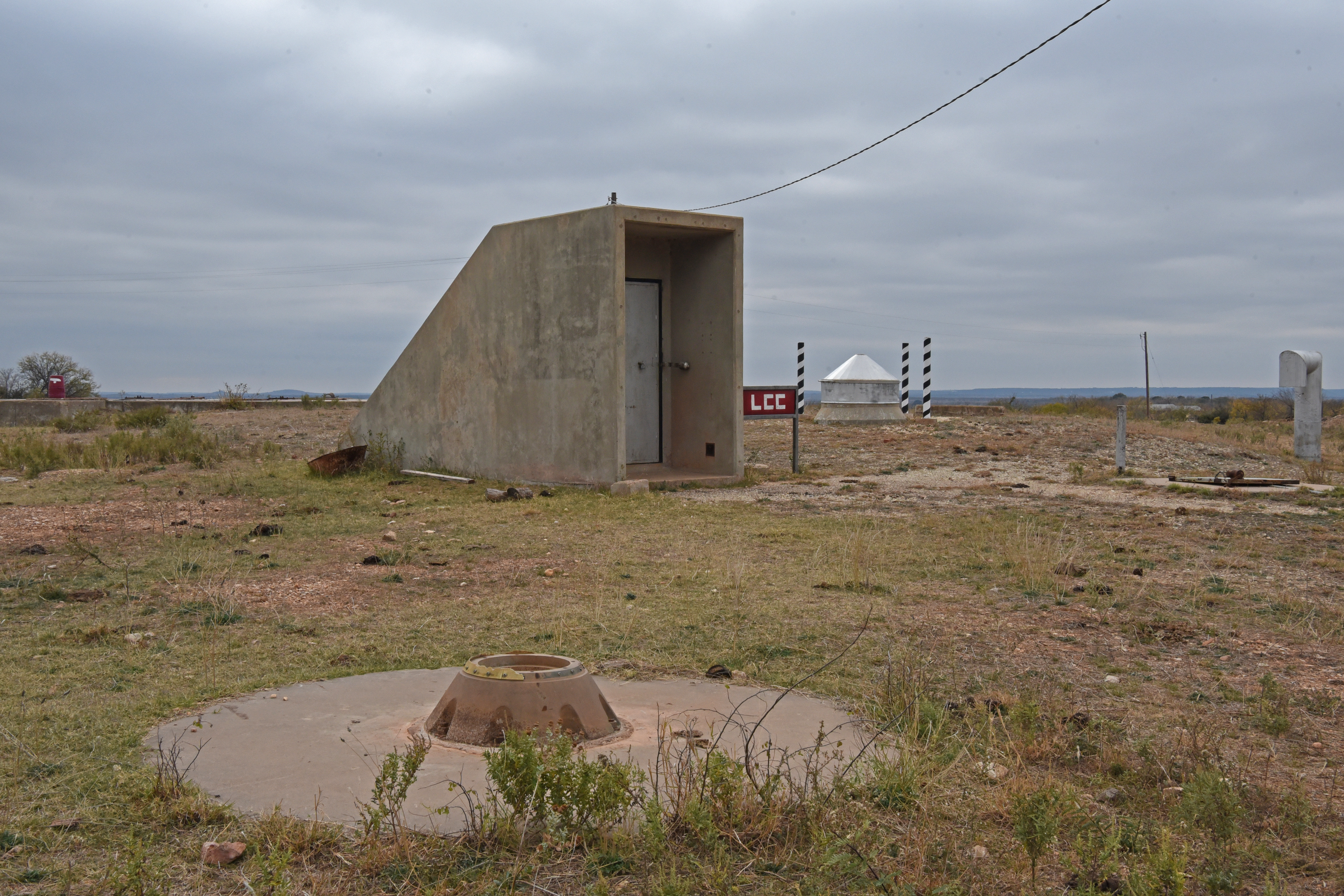
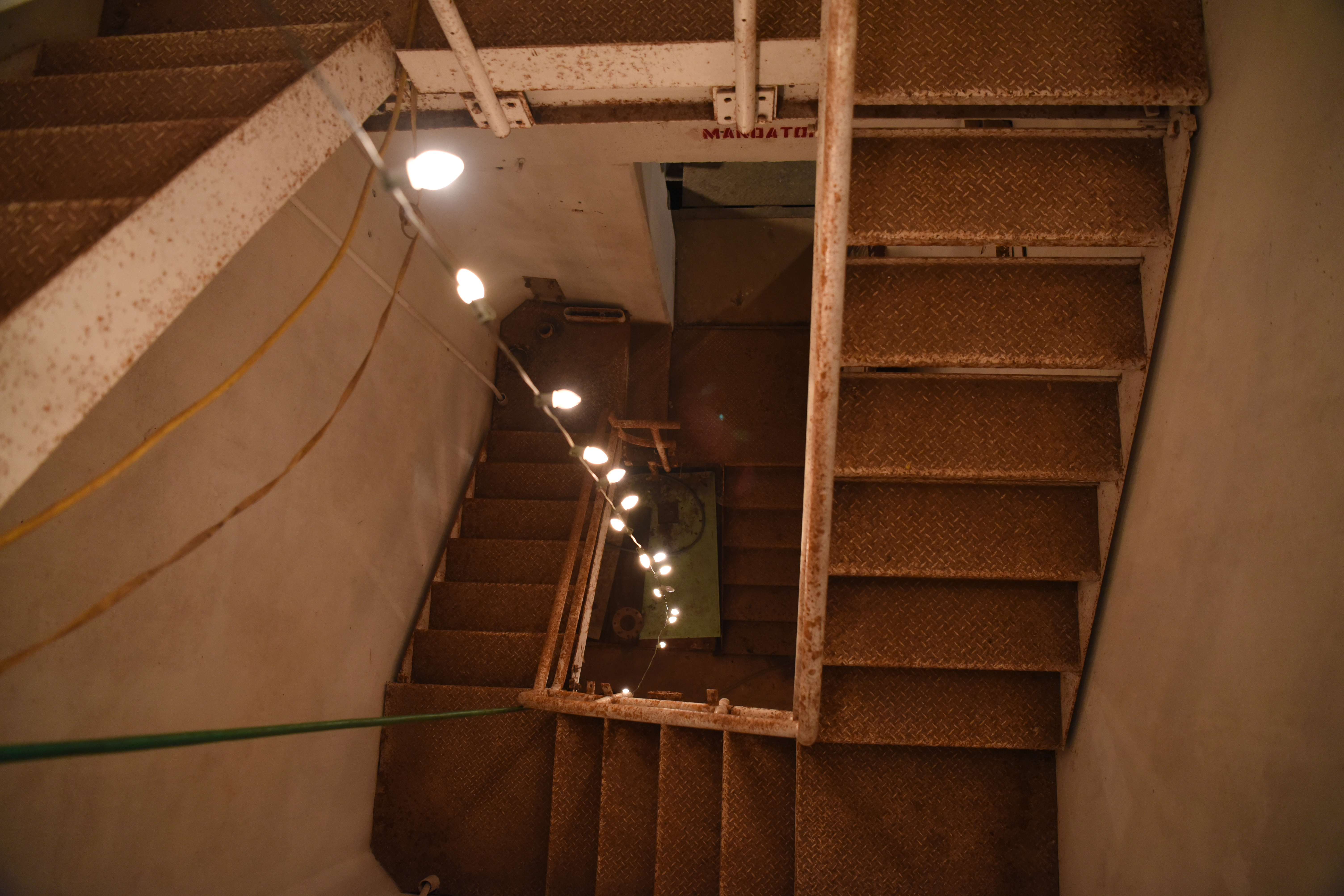
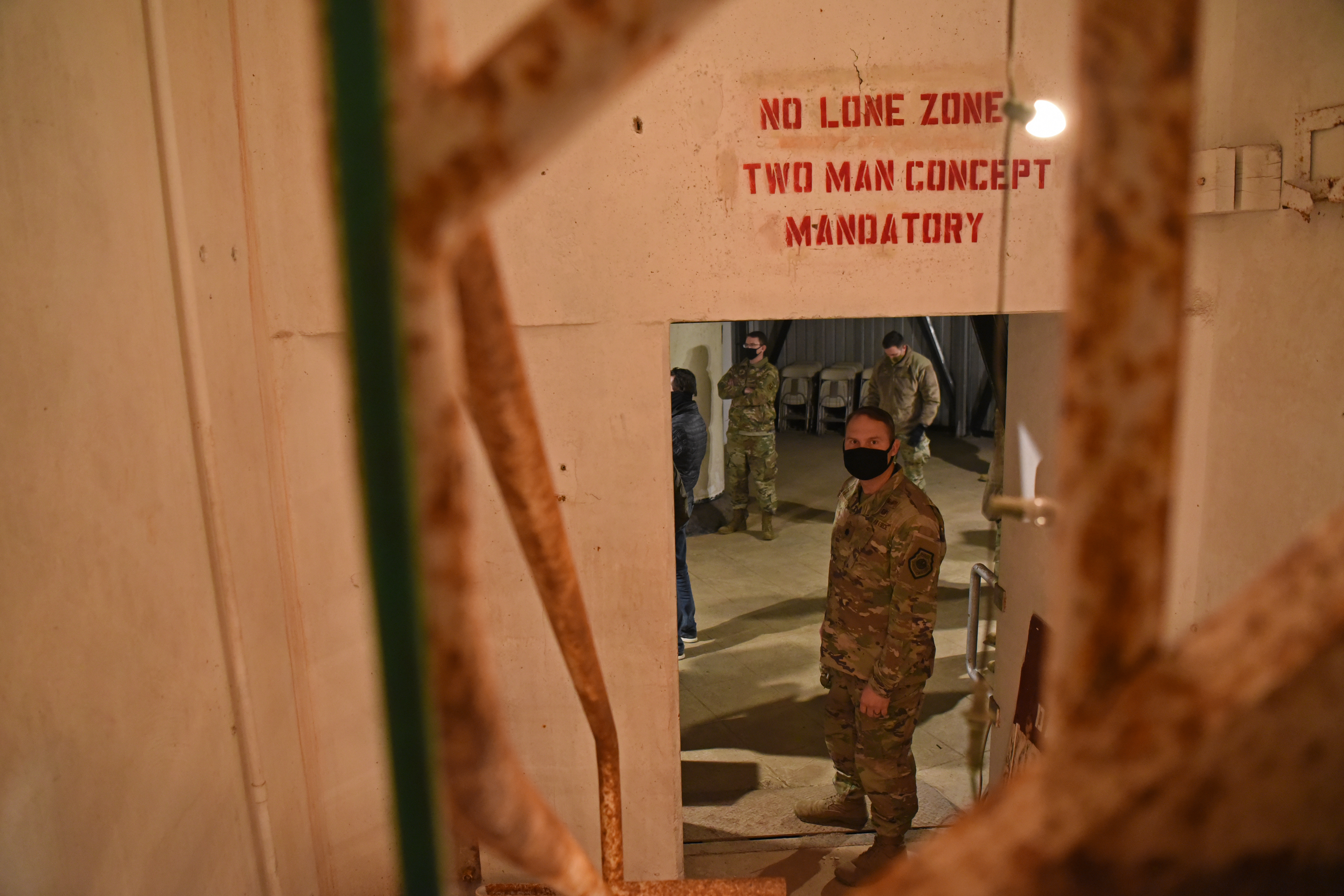
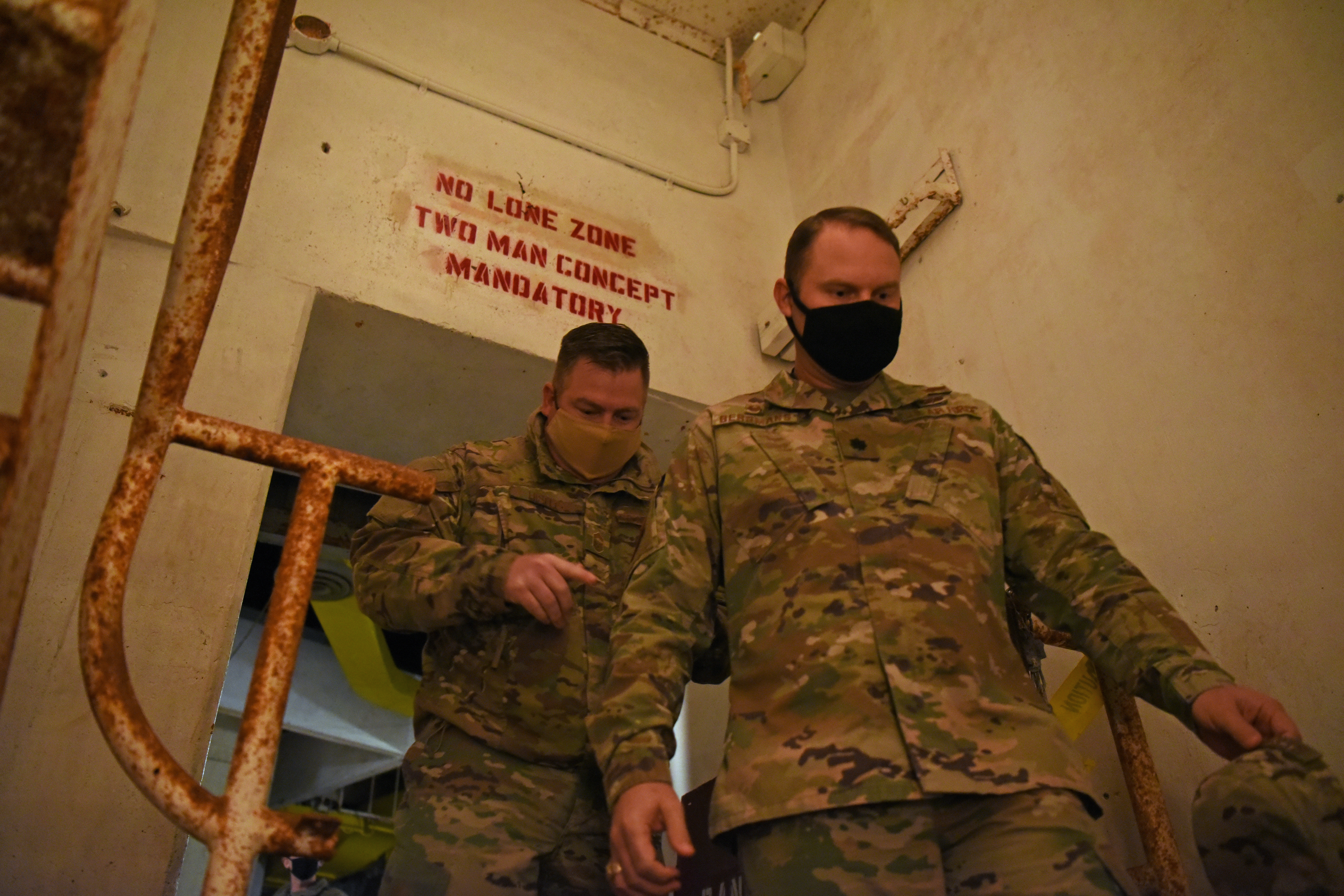
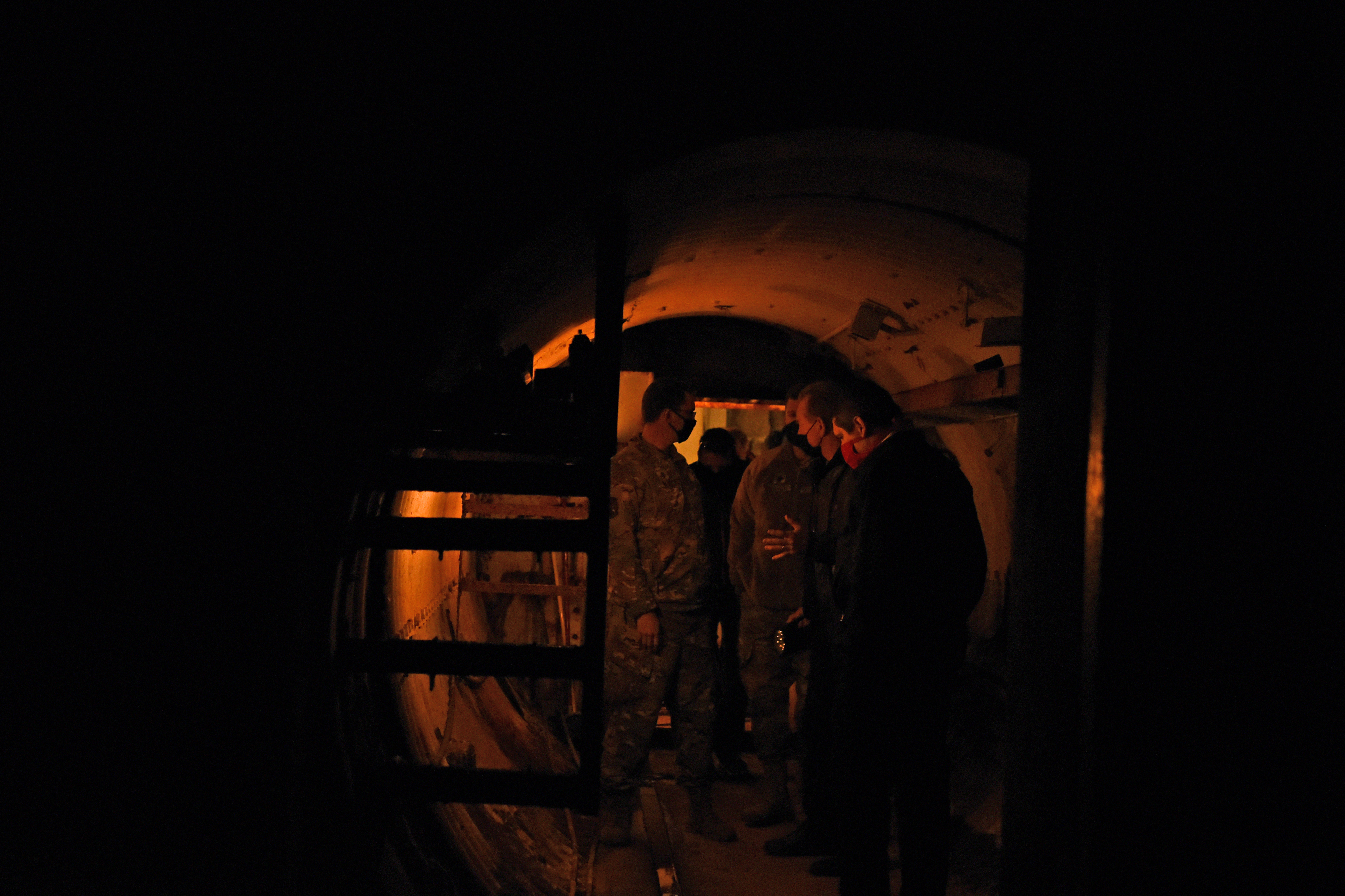
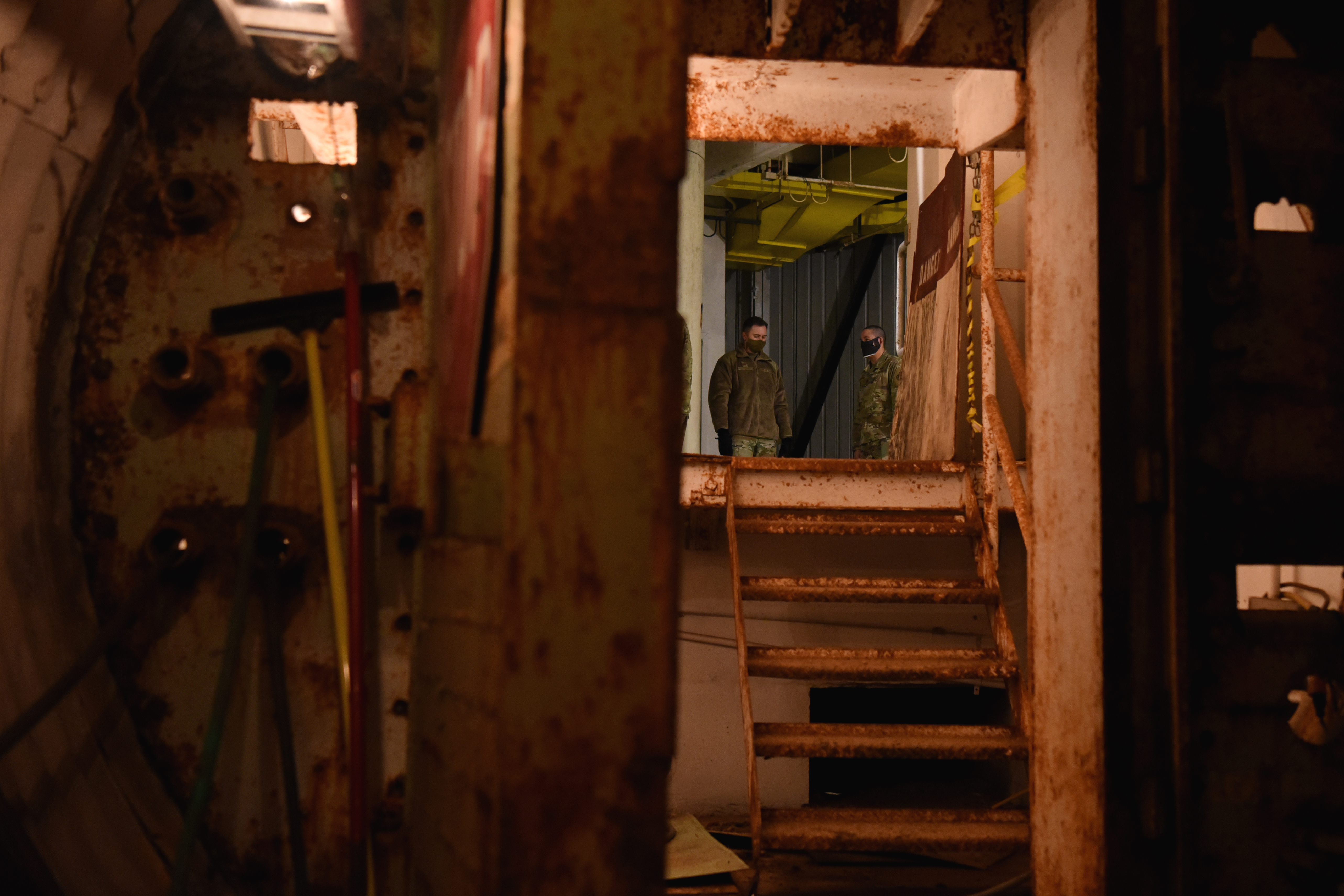
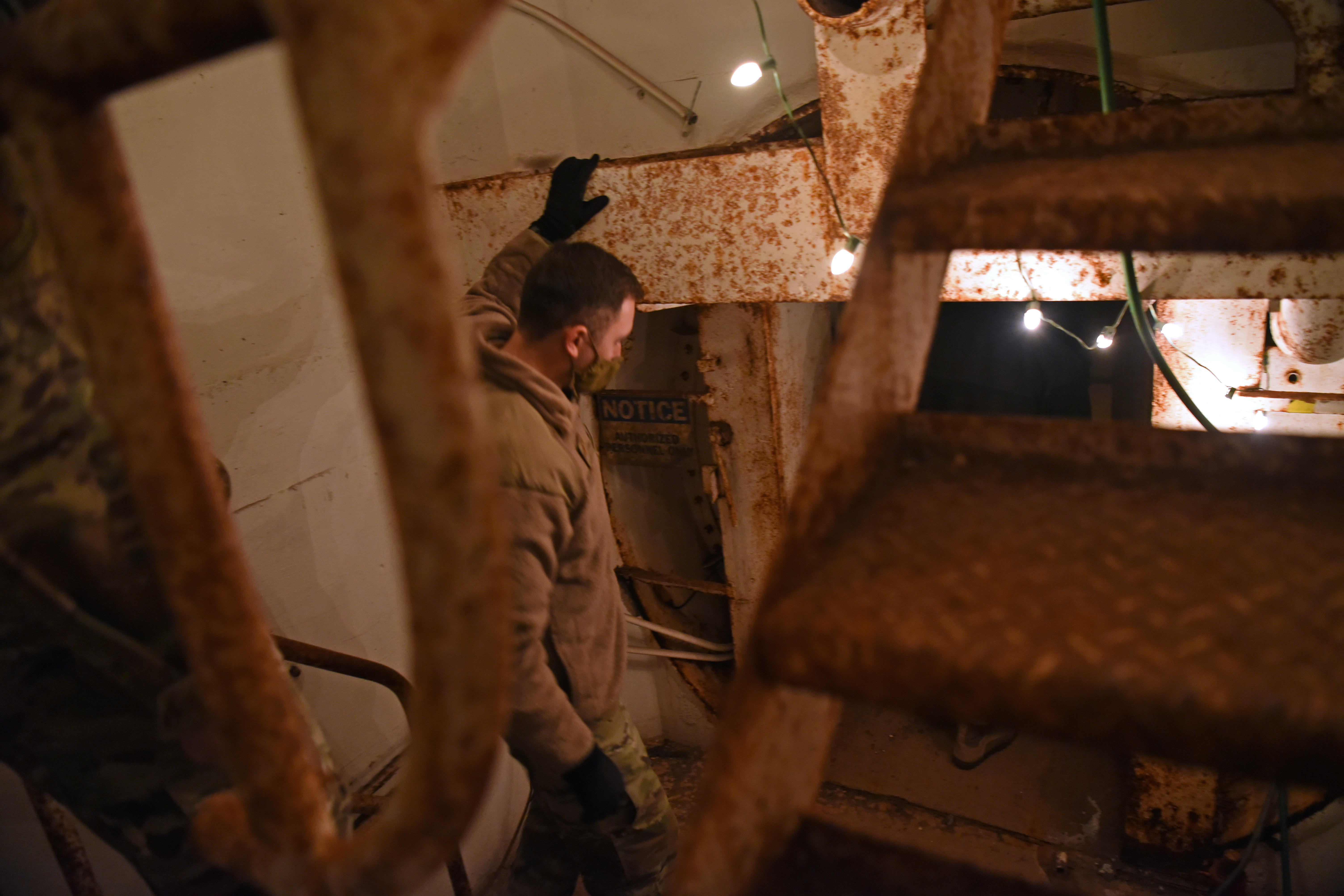
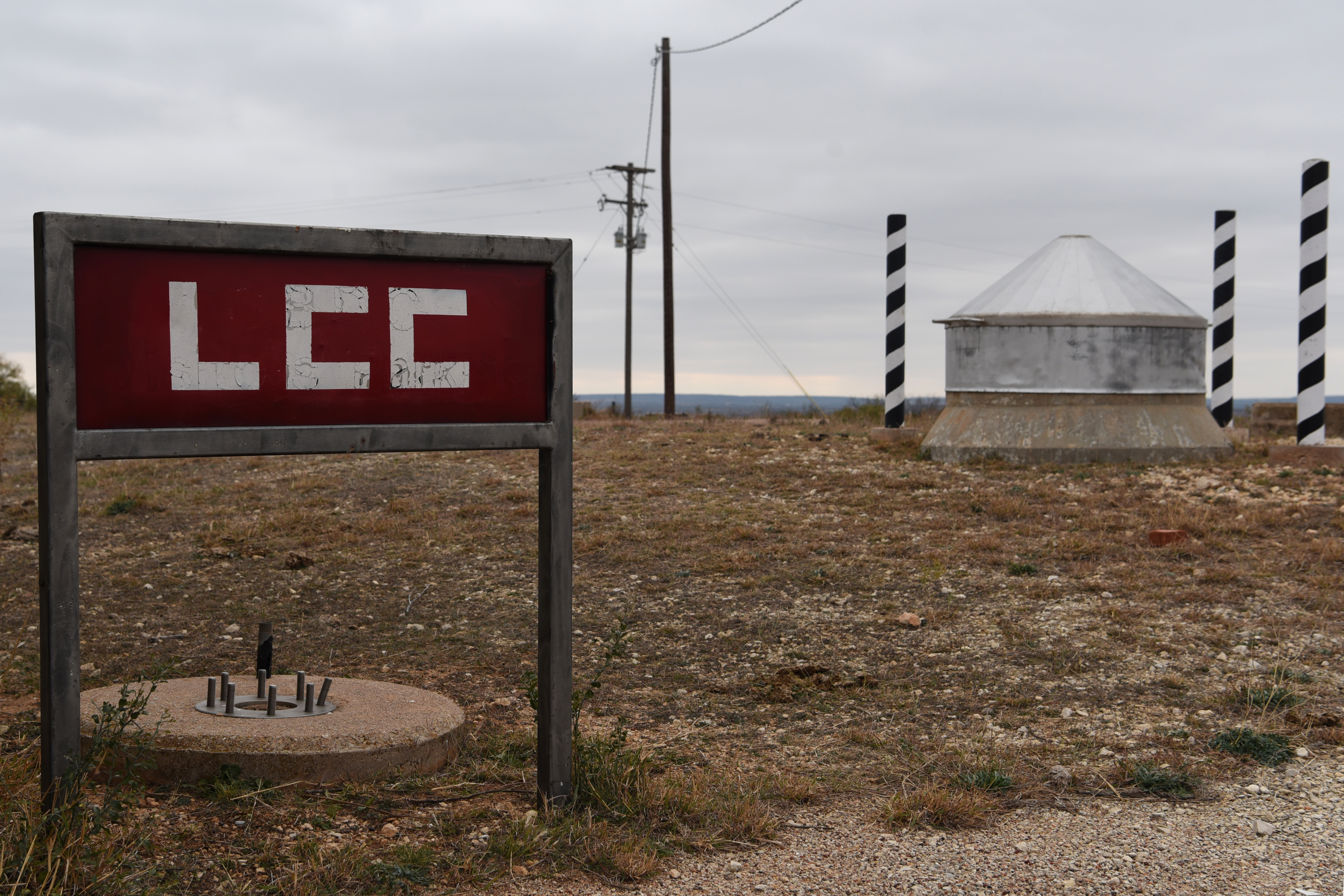
Today, the site remains unusually interpretable because much of the underground structure survives. Official Air Force photographs from 2020 show the aboveground launch-control-center access point, the heavy access doors and tunnel, the second floor of the launch-control center, stairs and ladders inside the underground spaces, and views toward or into the silo. Other official captions describe the silo as flooded by groundwater and rainwater after decommissioning. The Atlas Missile Museum of Texas page for Site 6 states that the site has been used as a museum for tours and historical archiving and has also been used as a scuba-diving facility because the silo has substantial water levels.
Strategic and Cold War Context
Atlas F Site 578-6 existed because the United States needed a dispersed, hardened, land-based nuclear deterrent during the most dangerous years of the Cold War. The Atlas program produced the Air Force's first operational intercontinental ballistic missile, and Atlas F represented the most protected operational version of that family. The National Park Service describes the Atlas F as the best of the deployed Atlas types and notes that it used a blast-proof silo-lift configuration. Seventy-two Atlas F missiles were deployed at six bases, including Dyess Air Force Base.The Atlas F was an interim but crucial system. It was a first-generation ICBM: liquid-fueled, maintenance-intensive, and cryogenic because it required liquid oxygen before launch. It was also a major improvement over earlier aboveground or horizontal-shelter Atlas layouts because it stored the missile vertically underground inside a hardened silo. The missile could not launch from inside the silo in the way later Titan II missiles could; instead, its doors opened, the launch platform raised the missile to the surface, and the missile fired from above ground. This made the silo a protective shelter and launch-preparation system rather than a true in-silo launch tube.
The Dyess missile field entered service just as Cold War danger reached one of its highest points. The 578th SMS sites were manned around the clock during the active period and during the Cuban Missile Crisis, operational 578th sites were at a high level of alert and ready to launch if required. Official unit-history material similarly states that the 578th's twelve missiles were all placed on alert status during the Cuban Missile Crisis.
Construction and Activation
The construction history of Site 578-6 is one of the most important parts of its story. The official unit history of the 578th Strategic Missile Squadron states that initial responsibility for constructing the twelve Dyess Atlas F silos fell to the U.S. Army Corps of Engineers Fort Worth District. The Fort Worth District also received responsibility for nationwide procurement of the Atlas F propellant-loading system. With the formation of the Corps of Engineers Ballistic Missile Construction Office, or CEBMCO, in 1960, the Fort Worth District was relieved of direct silo-construction oversight, but the Dyess effort remained part of the large Corps-managed national missile-construction program.The Dyess construction contract was a major regional undertaking. Official unit-history material states that six bids were opened at Abilene on 1960-05-26 and that the low bid of about $20 million came from a joint venture of H.B. Zachry Company and Brown & Root, Inc. Construction commenced on 1960-06-07. The same unit-history account lists the twelve lift-launcher locations as Abilene, Albany, Clyde, Denton County, Oplin, Lawn, Bradshaw, Winters, Shep, Nolan, Anson, and Corinth. Lawn corresponds to Site 578-6.
A Goodfellow Air Force Base article provides the most direct public construction detail for the Lawn site itself. It states that Dyess S-6's construction started in November 1960 alongside the other eleven Dyess sites. The article describes the twelve sites as being built roughly like points on a clock and says the entire group was completed in about fourteen months. That schedule was remarkable for the scale of work: each complex required deep excavation, reinforced concrete, heavy steel, blast protection, mechanical systems, propellant systems, electrical systems, communications links, security systems, and acceptance testing. The same article explains the schedule partly by standardization: the seventy-two Atlas F sites were largely built to the same basic design and even faced the same way.
The official unit history emphasizes that Dyess was an exception among Atlas construction programs because it was completed on time. There were no work stoppages due to labor unrest. Even so, the project was dangerous. The official unit-history summary records three fatalities and thirty-three disabling injuries associated with the Dyess Atlas F construction project. Those figures are a reminder that the missile field was not only a strategic program but a massive civil-engineering and heavy-construction effort involving deep shafts, unstable geology, large cranes, blasting, steel erection, concrete placement, and continuous pressure to meet national-priority deadlines.
The best surviving engineering description for the Dyess Atlas F construction process is the Historic American Engineering Record documentation for Dyess Atlas F Site S-8 near Winters. HAER TX-25-B is site-specific to Site 578-8, not Site 578-6, but it is highly useful as representative documentation for the standardized Dyess Atlas F design and construction process. The HAER report states that Site S-8 construction began with open-cut excavation using DW-20 scrapers, dozers, and a grader before vertical shaft excavation began. The initial open cut created the working elevation from which the silo shaft could be sunk. A "taxcavator," a type of front-end loader with rear ripper teeth, began the shaft work, while a forty-ton crane with a clam bucket removed excavated material from the shaft. As the shaft deepened, a hoist, bucket, and guide-track system was installed to continue removing earth.
The HAER account shows how difficult the geology could become. At Site S-8, excavation proceeded smoothly until workers encountered gypsum, limestone, and shale that could not be removed by the existing method. Contractors then drilled and shot the material with explosives. The report describes three shots, each about twenty-one feet deep, with approximately three hundred two-inch holes per shot and about three-quarters of a pound of dynamite per cubic yard of material. The blasts broke shale and limestone into pieces generally less than a foot in size, while gypsum fractured poorly and had to be removed in larger blocks by cable. Although this exact sequence is documented for S-8 rather than S-6, it illustrates the kind of deep excavation problem that Atlas F construction teams in the Dyess field had to solve.
As the excavation deepened, shoring was required to resist pressure from surrounding earth. HAER describes circular I-beam segments bolted together into continuous ring beams around the shaft. The spaces between rings were filled with welded wire mesh, pneumatic concrete, and metal or wood shoring. Once excavation was complete, workers sealed the shaft floor with reinforced concrete. The concrete was placed after reinforcing rods were installed, using a bucket lowered by a truck crane. Wall construction then began, including reinforcing steel and a slip-form system.
The slip-form method was central to creating the tall cylindrical concrete silo. HAER describes the slip form as a circular wooden device approximately four feet six inches high with two platforms: an upper platform for concrete buggies and a lower platform for concrete finishers. Pneumatic jacks raised the slip form at roughly thirteen inches per hour as the wall was poured. As the lower concrete set and the form moved upward, reinforcing steel was extended and the process repeated. This method allowed contractors to create the tall, thick, continuous reinforced-concrete silo walls needed for blast protection and structural stability.
After the silo shaft walls were complete, the steel crib became the heart of the working missile bay. The HAER report describes the octagonal steel crib as the structure that supported the missile and eight work levels carrying operating ground equipment and missile launch equipment. The crib included an elevator descending to level eight and spiral stairs to level seven, with a ladder for level-eight access. The crib was about forty-two feet wide and 151 feet deep. It was suspended from the silo wall by shock-isolating struts and spring assemblies, leaving a "rattle space" between the crib and the silo wall so the structure and missile equipment could move somewhat independently from ground shock.
Propellant and gas systems were then installed. HAER describes installation of a 23,000-gallon liquid-oxygen tank and three gaseous-nitrogen tanks as part of the propellant-loading system. Delays in delivery of these vessels required changes to the construction sequence at S-8, and a derrick was used to lower the vessels into place after delivery. Once the crib was substantially complete, workers installed floor gratings, stairs, ladders, handrails, preassembled piping units, electrical equipment, mechanical equipment, launch-platform counterweights, and drive mechanisms. The silo cap and doors came late in the process. HAER describes the silo cap as a nine-foot-thick reinforced-concrete slab and the doors as thick steel members operated by hydraulic cylinders and high-pressure nitrogen/hydraulic systems.
The launch platform was one of the most important engineered components. Atlas F missiles were stored underground but launched above ground. HAER explains that the platform had to raise the missile out of the silo while preventing flames and exhaust gases from entering the silo during launch and while tolerating engine blast, heat, and misalignment forces. The platform was approximately sixteen feet square, forty-nine feet tall, and weighed roughly 222,000 pounds without the missile and operating ground equipment. It was raised and lowered by electric motors, gear reducers, cable drums, steel cables, and counterweights.
The final stages of construction involved testing and validation. HAER describes specialized teams of Corps of Engineers, Air Force, and contractor personnel testing each system against checklists, with final sign-off documented by all parties. This was essential because an Atlas F complex was not merely a building: it was an integrated weapon system. A failure in power, hydraulics, cryogenic propellant loading, nitrogen pressure, guidance support, communications, elevator machinery, blast doors, ventilation, or access systems could affect alert status and launch readiness.
Site 578-6 was turned over to the Air Force sometime in 1962. Official 578th SMS unit history lists turnover to Strategic Air Command on 1962-11-04 and operational status on 1962-11-15. The transition from construction to operations was therefore rapid: within roughly two and a half years of the construction contract, the Lawn site was part of a live nuclear-alert missile squadron.
Missile System and Technical Role
Site 578-6 housed an SM-65F Atlas missile. The Atlas F was a one-and-a-half-stage, liquid-fueled intercontinental ballistic missile developed by Convair / General Dynamics. It used RP-1 fuel and liquid oxygen oxidizer. RP-1 could be stored aboard the missile, but liquid oxygen had to be loaded before launch. The missile's thin stainless-steel, pressure-stabilized structure made it light enough for its mission but required careful pressurization and maintenance. The National Park Service describes the Atlas as needing pressure while on alert because the stainless-steel shell was so thin that pressure kept it in place on the ground.The Atlas F's principal operational improvement was its vertical silo-lift launch complex. Earlier Atlas D and Atlas E sites used less protected basing modes; Atlas F placed each missile in an individual blast-resistant underground silo. The missile remained vertical and protected below ground. When ordered to launch, crews opened the silo doors, loaded liquid oxygen, raised the missile on its launch platform, and fired it from above ground. The Atlas F used RP-1 and liquid oxygen, that RP-1 remained aboard the missile on alert, and that liquid oxygen was loaded before the missile was raised and launched. The launch crew could top off liquid oxygen after the missile was up and locked if a short hold occurred.
Public sources describe the Atlas F as an intercontinental weapon capable of delivering a nuclear warhead at strategic range. The National Park Service states that Atlas F used a blast-proof silo-lift configuration, could be launched in approximately ten minutes, and that seventy-two Atlas F missiles were deployed. The Atlas F used a Mark IV reentry vehicle and carried a W-38 nuclear warhead with an approximate yield of 3.8 megatons. The National Air and Space Museum identifies the Mark 4 reentry vehicle as used on Atlas E/F and Titan I missiles and states that it carried the W-38 nuclear warhead with a yield of about 3.75 megatons. The precise yield is usually rounded slightly differently among public sources.
The Site 6 missile was General Dynamics manufacturing number 65F, General Dynamics serial number 61-2551, and Air Force missile tail number 551.
The missile assigned to Site 578-6 had a notable post-ICBM career. Atlas 65F was later launched from Vandenberg AFB / Space Launch Complex 3 West on 1977-06-23 with the prototype GPS satellite NTS-2 / P76-4. The U.S. Naval Research Laboratory identifies Navigation Technology Satellite II, or NTS-II, as the first operational NAVSTAR GPS satellite and gives its launch date as 1977-06-23. That means the former Site 6 missile connects the Lawn ICBM site not only to Strategic Air Command's nuclear-alert mission but also to the early development of satellite navigation.
Operational History
The 578th Strategic Missile Squadron was organized at Dyess Air Force Base on 1961-07-01 and operated twelve SM-65F Atlas sites around the base. The squadron belonged to the 96th Bombardment Wing, later the 96th Strategic Aerospace Wing. Official unit-history material lists Dyess AFB as the squadron's station from 1961-07-01 through 1965-03-25 and the SM-65F Atlas as its missile system in 1962.Operationally, Site 578-6 functioned as one launch point in a dispersed missile field. The site was not a small local air base. It was a self-contained launch complex, crewed by a missile combat crew and supported by maintenance, security, communications, power, propellant, and command personnel from Dyess and Strategic Air Command. Goodfellow Air Force Base describes each silo complex as manned by a five-person crew: a missile combat crew commander, deputy missile combat crew commander, ballistic missile analyst technician, missile facilities technician, and electrical power production technician.
Life at Site 578-6 centered on alert readiness. Crew members monitored the missile, launch-control systems, power systems, environmental systems, communications, and security status. Maintenance and propellant teams performed inspections, corrections, and periodic testing. Security personnel protected the site as a nuclear weapon facility. The site's isolation was intentional, but isolation did not mean inactivity. A live Atlas F complex required frequent checks, readiness exercises, technical maintenance, and procedural discipline.
The Cuban Missile Crisis was the site's most important operational context. The 578th SMS sites were on 24-hour active duty and that, during the Cuban Missile Crisis, all operational 578th sites were at a high level of alert and ready to launch if necessary. Official unit-history material states that the 578th and its twelve missiles were all placed on alert status during the crisis. Site 578-6's active service was short, but it coincided with the moment when America's ICBM forces moved from rapid expansion to real crisis readiness.
The Atlas F system's operational demands were rooted in its liquid-fueled design. The missile used stored RP-1 fuel but required liquid oxygen before launch. Liquid oxygen was extremely cold, boiled away, and had to be handled by specialized ground systems. The missile's pressure-stabilized structure also required careful attention. This made Atlas F more complex to keep on alert than later solid-fueled Minuteman missiles. Atlas F was a major technological achievement, but it was already approaching obsolescence almost as soon as it was deployed because Minuteman offered solid-fueled, quicker-reacting, lower-maintenance, and more survivable alert operations.
The Dyess Atlas F sites were also connected to the surrounding communities in a distinctive way. The sites were remote enough to be secure and dispersed, yet they were not invisible to local residents. Construction convoys, contractors, military vehicles, security patrols, maintenance traffic, and the presence of fenced federal sites placed the nuclear deterrent directly into the agricultural and ranching landscape of central Texas. The Texas Historical Commission marker notes that many Texans were unaware at the time of the state's role in the global military confrontation. The Lawn site now helps make that hidden history visible.
Site 578-6 is unusually well documented after its military service because it became a recognized Cold War landmark and an interpretive site. The Texas Historical Commission lists the Lawn Atlas ICBM Launch Facility as Historical Marker 16131, Atlas Number 5507016131, at 1990 FM 604 in Lawn, Taylor County. The marker was placed in 2008 and the site is identified as a Recorded Texas Historic Landmark. The marker text specifically identifies the site as the Atlas F launch site Dyess S-6 near Lawn and describes the 185-foot-deep silo, launch-control-center tunnel, five-man crew, and operation by the 578th Strategic Missile Squadron from 1962 until 1965.
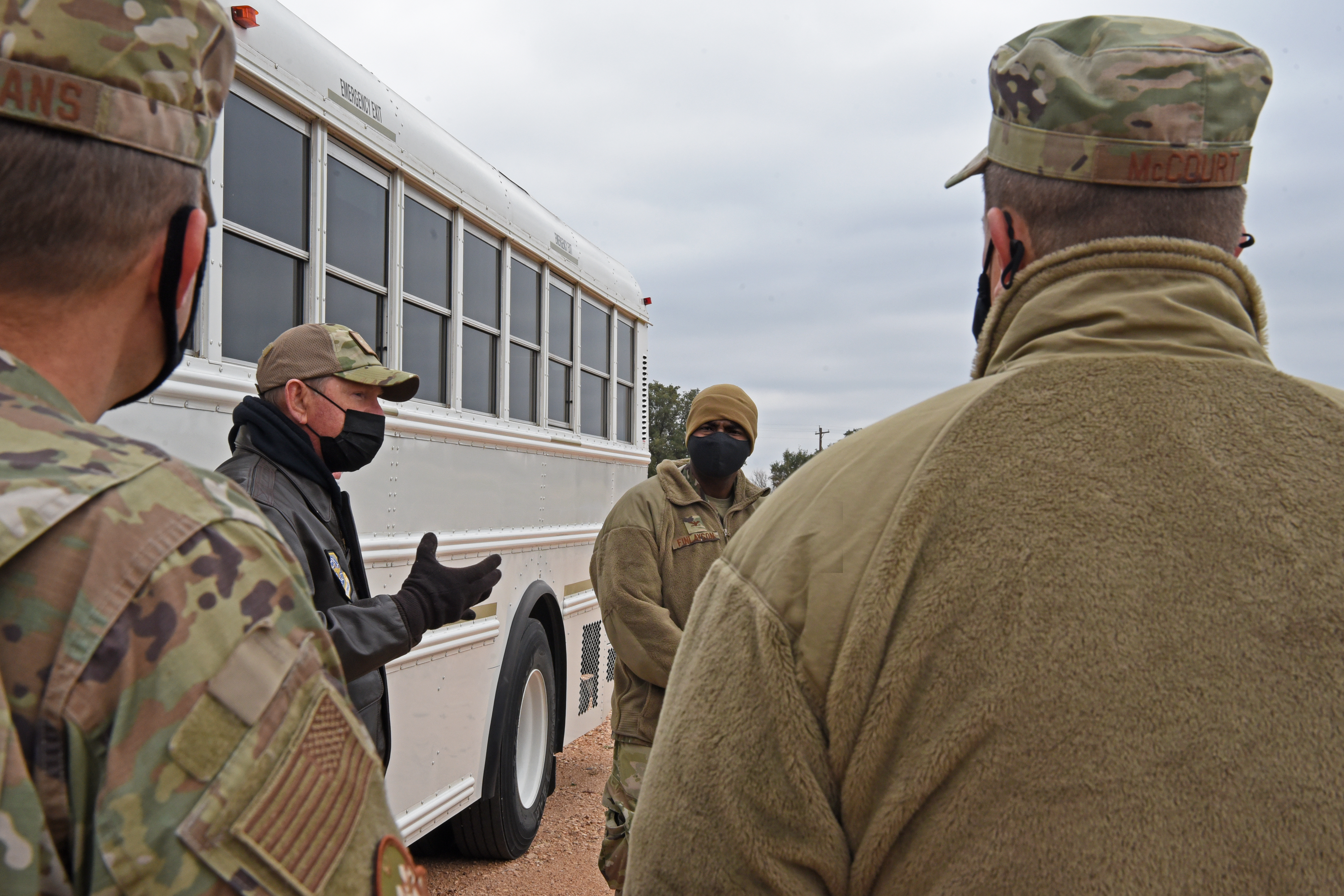
In 2020, Goodfellow Air Force Base public-affairs personnel documented staff rides and tours to the Lawn Atlas Missile Base. The October 2020 Goodfellow article described the site as a former Atlas F storage and launch facility and identified Larry Sanders as owner and a member of the Atlas Missile Base Cold War Center. It also recorded site-specific preservation details: the site had been owned by the town of Lawn and used as a shelter after decommissioning; Sanders began work on the site after buying it from Lawn; the silo had flooded with groundwater and rainwater; and restoration work had continued for years with family, volunteers, and regional support.
A December 2020 official Air Force photo feature, published on the Nellis Air Force Base website, documented Goodfellow personnel touring the site as part of a heritage program. The captions show that personnel toured the launch-control center, accessed the missile tunnel, viewed the silo, and discussed the Cuban Missile Crisis narrative. The photo captions also note that when the Atlas program ended in 1965, the missiles were removed and all twelve sites were demilitarized. These official 2020 photographs are useful because they document surviving physical features decades after the site left military service.
Deactivation and Disposal
Atlas F Site 578-6 left active missile service during the rapid retirement of the first generation of Atlas and Titan I ICBMs. The reason was not that the Atlas F had failed to work; rather, it had been surpassed by newer systems. Solid-fueled Minuteman missiles offered easier alert maintenance, quicker launch readiness, and a more durable long-term basing system. Titan II offered true in-silo launch capability and a storable liquid propellant system. Atlas F, with liquid oxygen, pressure-stabilized structure, and silo-lift launch procedure, was too expensive and manpower-intensive to retain once newer missiles were available.Official 578th SMS unit history states that Secretary of Defense Robert S. McNamara directed the accelerated phaseout of Atlas and Titan I ICBMs on 1964-05-16. The first Atlas F missile at Dyess was removed from alert on 1964-12-01 ahead of schedule to avoid costly maintenance. The last 578th SMS ICBM was removed from alert on 1965-02-03, and the last ICBM was shipped on 1965-02-10. The 578th Strategic Missile Squadron was deactivated on 1965-03-25.
The Texas Historical Commission marker states that after decommissioning, the missiles were removed and all sites were demilitarized. Official Air Force photo captions from the 2020 Goodfellow heritage visit use similar language. In practical terms, demilitarization for an Atlas F site meant removal of the missile, nuclear and classified systems, operational launch equipment, much of the communications and control equipment, and other usable military property. The site was stripped of its active weapon-system function even though the concrete, tunnels, launch-control structure, and silo remained.
The Lawn site then followed a post-military path unlike many former Atlas silos. Goodfellow Air Force Base's 2020 article states that after decommissioning, the site was bought by Lawn and used as a shelter. Later, it entered private preservation use. Public sources differ on the exact acquisition date by the current private owner. Goodfellow's 2020 article states that Sanders started work on the site in 1999 after buying it from Lawn, while the Atlas Missile Museum of Texas Site 6 page states that the site was purchased by its current owner in 2002. A 2007 Texas Co-op Power article described Sanders as acquiring the silo from the city of Lawn through a lease-to-own economic-development agreement. The safest conclusion is that the site passed from municipal use to private preservation over a period spanning roughly the late 1990s and early 2000s, with exact transaction dates requiring parcel-level deed verification.
Environmental and FUDS records also document the former military status of Site 578-6. The 2015 USACE Formerly Used Defense Sites inventory lists the property as LAWN ATLAS AF FACILITY S-6, property number K06TX0111, in Taylor County, with category BD/DR. ProPublica's DERP-derived "Bombs in Your Backyard" table lists ATLAS AF FACILITY S-6 at Lawn, Taylor County, with one hazardous site and "Response Complete" as the highest risk/status category. These records indicate former-defense-site tracking but do not by themselves describe every cleanup action at the site.
Current Status and Site Use
Atlas F Site 578-6 is privately owned and preserved / reused as the Lawn Atlas Missile Base and associated Cold War interpretive site. It is not an active military facility and is not open public land. Visitors should use only authorized tour arrangements or official contact channels; former missile complexes contain underground structures, confined-space hazards, water hazards, rusted steel, steep stairs, blast doors, electrical and mechanical remnants, and other safety risks.The site's current identity is unusually strong. The Texas Historical Commission lists it as the Lawn Atlas ICBM Launch Facility, a 2008 Recorded Texas Historic Landmark. Goodfellow Air Force Base and Nellis Air Force Base photo features identify it as Lawn Atlas Missile Base. Abilene-area visitor information describes the Atlas Missile Base Cold War Center as a place where visitors may descend to the launch-control center, see crew spaces and interpretive materials, and experience an actual missile silo by private tour.
The Atlas Missile Museum of Texas Site 6 page states that the site has been used as a museum for tours and archiving historical information. It also notes that the silo has substantial water levels and has been used as a scuba-diving facility. The same page states that there were no original outbuildings on the site. Official Air Force photos show the aboveground access structure, the LCC entry area, and surviving underground spaces; captions describe the flooded silo, the launch-control center, access tunnel, blast doors, and site features.
Chronology
- 1954 The U.S. Air Force selected Convair's Atlas missile program as part of the development of intercontinental ballistic missiles with nuclear warheads.
- 1960-05-26 Six bids were opened at Abilene for the Dyess Atlas F silo construction project; the low bid of about $20 million came from the H.B. Zachry Company and Brown & Root, Inc. joint venture.
- 1960-06-07 Official 578th SMS unit-history material states that construction commenced on the Dyess Atlas F missile-field project.
- 1960-11 Goodfellow Air Force Base reported that construction of Dyess S-6 near Lawn began in November 1960.
- 1961 The Texas Historical Commission marker states that seventy-two Atlas F complexes were built in groups of one dozen each near six military facilities.
- 1961-07-01 The 578th Strategic Missile Squadron was organized at Dyess Air Force Base.
- 1962 The 578th SMS became an SM-65F Atlas missile squadron at Dyess, and Site 578-6 was turned over to the Air Force sometime during the year.
- 1962-11-04 Official unit-history material lists turnover of the 578th Strategic Missile Squadron to Strategic Air Command.
- 1962-11-15 Official unit-history material lists the 578th Strategic Missile Squadron as operational.
- 1962-10 During the Cuban Missile Crisis, official unit-history material states that the 578th SMS and its twelve missiles were placed on alert status.
- 1964-05-16 Secretary of Defense Robert S. McNamara directed accelerated phaseout of Atlas and Titan I ICBMs.
- 1964-12-01 The first Atlas F missile at Dyess was removed from alert ahead of schedule.
- 1965-02-03 The last 578th SMS ICBM was removed from alert.
- 1965-02-10 The last 578th SMS ICBM was shipped.
- 1965-03-25 Atlas F Site 578-6 was decommissioned, and the 578th Strategic Missile Squadron was inactivated.
- 1977-06-23 Atlas 65F, the former Site 578-6 missile, launched NTS-2 / P76-4 from Vandenberg AFB Space Launch Complex 3 West.
- 2007 Texas Co-op Power described Larry Sanders's effort to acquire and preserve the former Lawn Atlas silo through an agreement with the city of Lawn.
- 2008 The Lawn Atlas ICBM Launch Facility received a Texas Historical Commission marker and was recorded as a Recorded Texas Historic Landmark.
- 2020-10-26 Goodfellow Air Force Base personnel toured the Lawn Atlas Missile Base, and the visit was documented by official Air Force public-affairs photographs and article coverage.
- 2020-12-03 Goodfellow personnel conducted another heritage visit to the Lawn Atlas Missile Base; official Air Force photographs documented the launch-control center, access tunnel, silo, and interpretive tour.
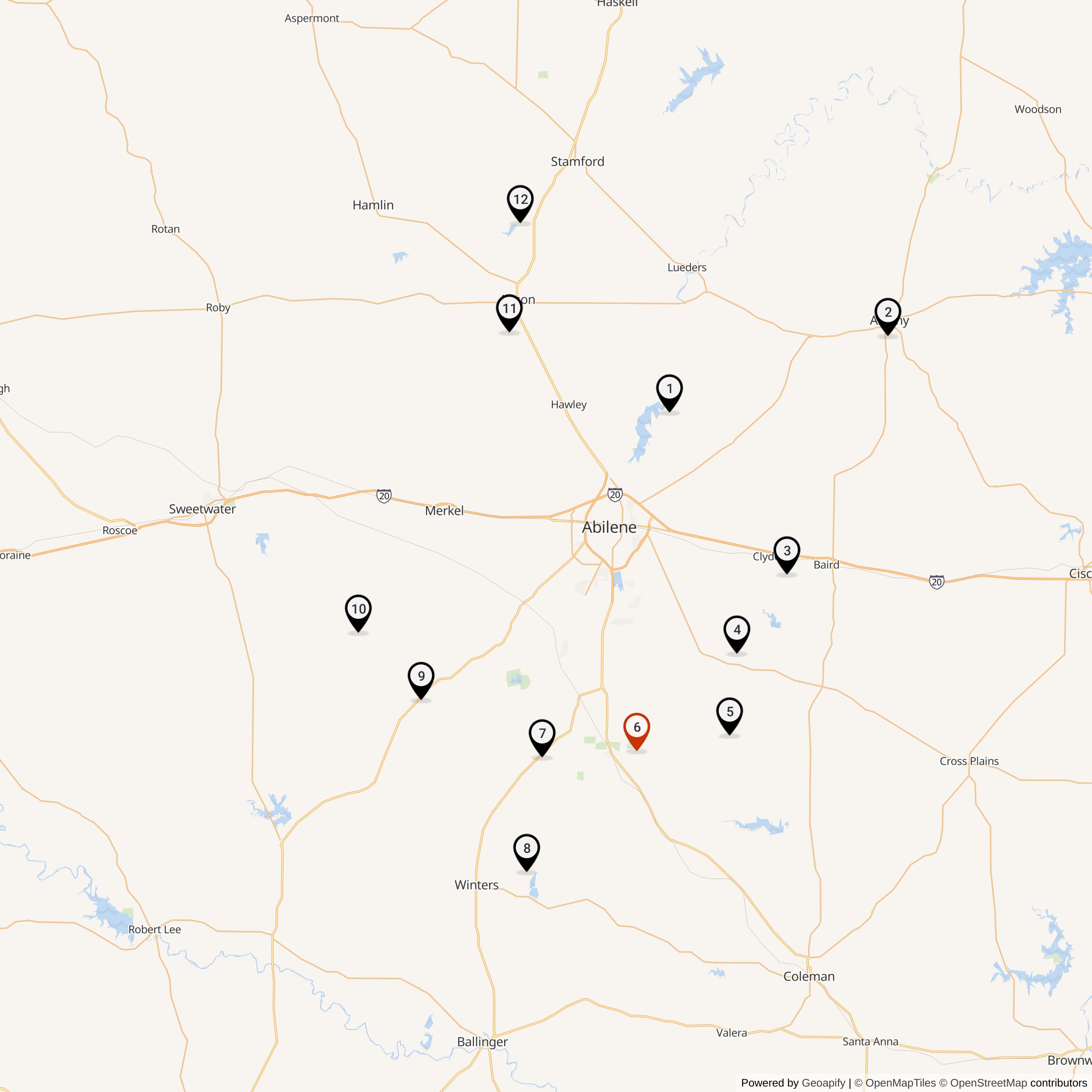
Read about the Atlas at Dyess AFB
All Atlas Missile Silo Locations