
Atlas F Site 578-8 Missile Silo, Winters Texas
Longitude: -99.8803310981717
Site Type: Atlas F vertical silo launch facility
Missile Type: SM-65F Atlas
Number of Launchers/Missiles: 1
Parent Base: Dyess AFB
Missile Wing: 96th Strategic Aerospace Wing
Missile Squadron: 578th Strategic Missile Squadron
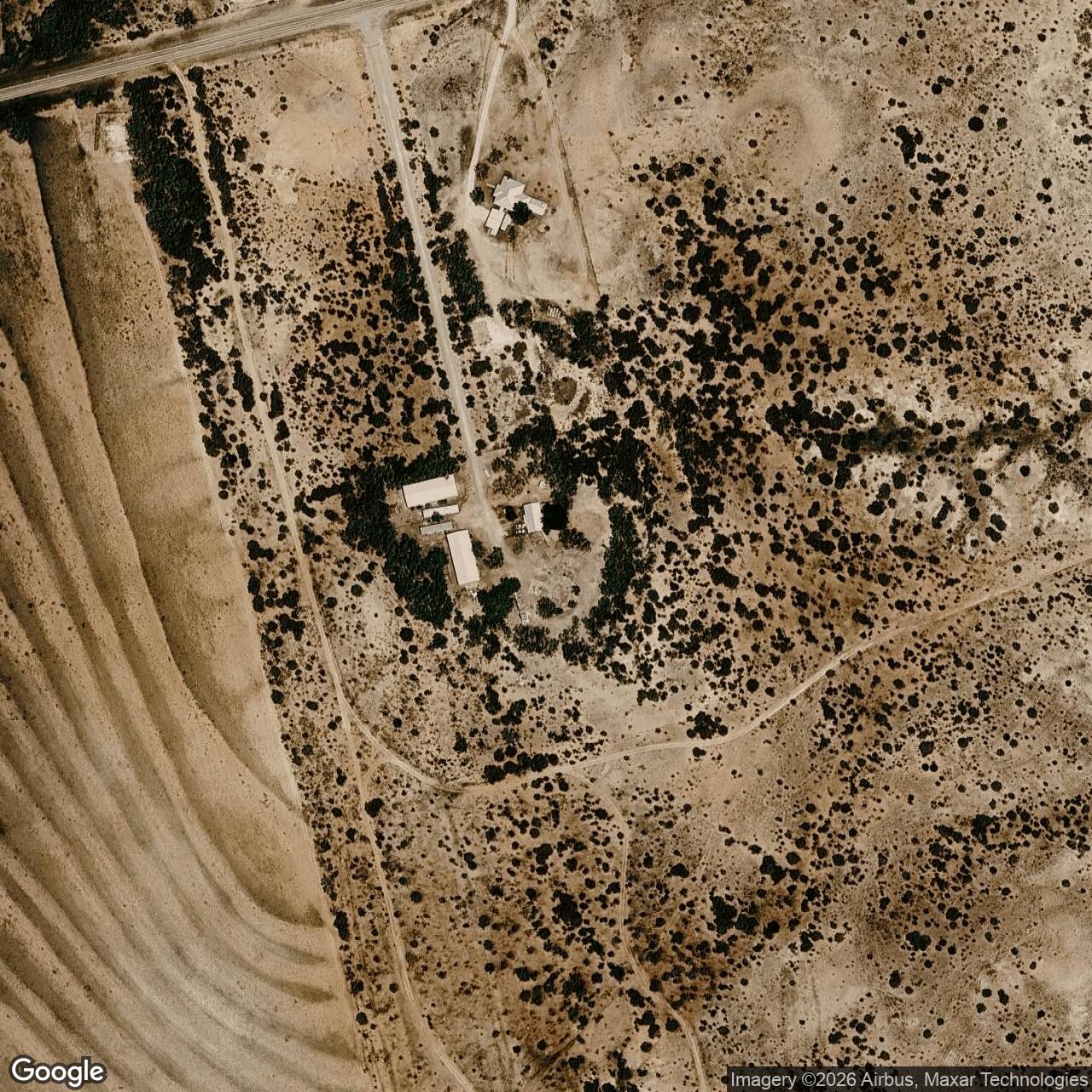
Current Site Use: Former Atlas F launch complex reused as private rural/residential property; 1999 source observed houses and mobile homes; 2000 Atlas Missile Museum account says the LCC was used as an aviary, silo not accessed, and no original outbuildings remained.
Site Ownership: Private ownership; exact current owner not confirmed.
Accessible: No public access / private property; view only from public roads.
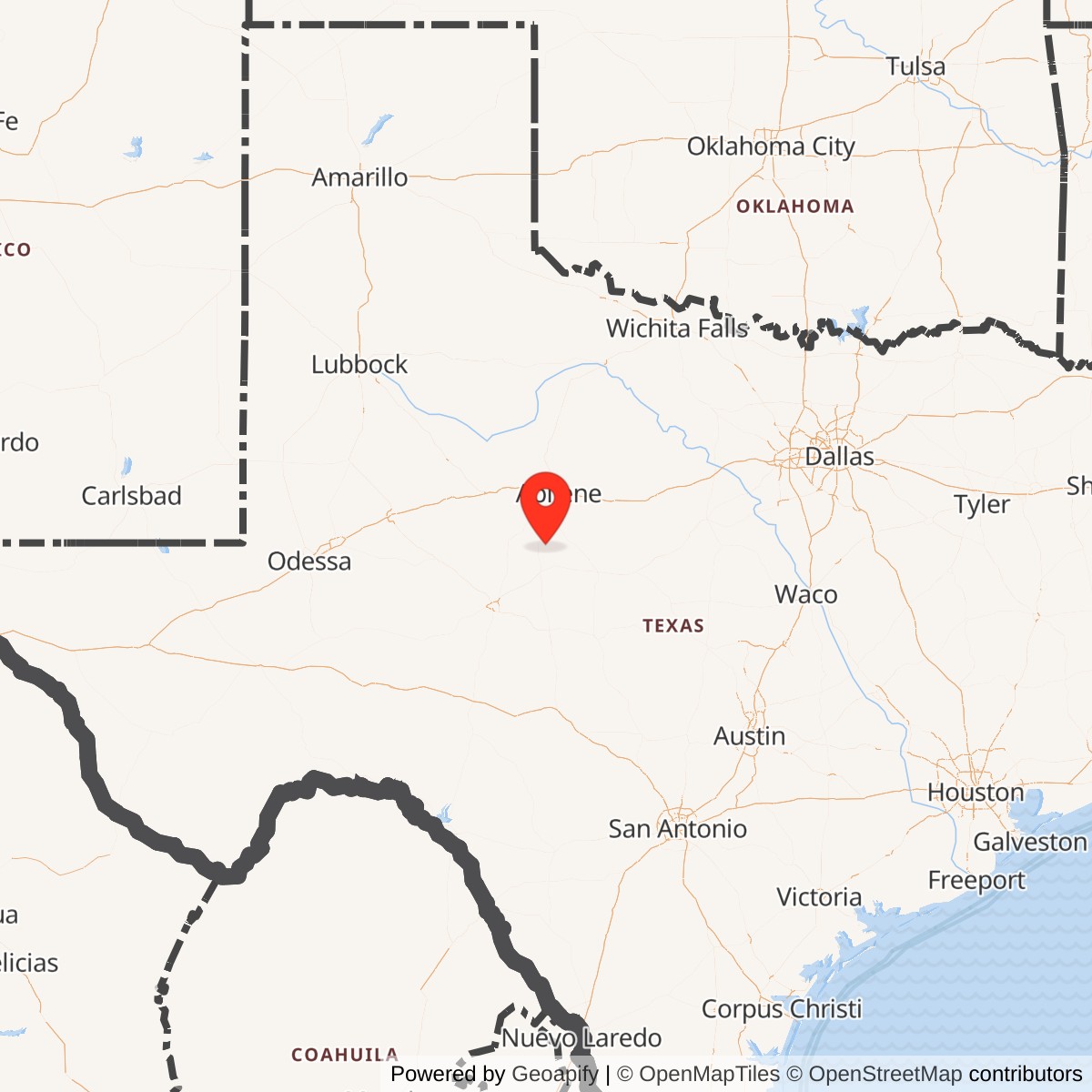
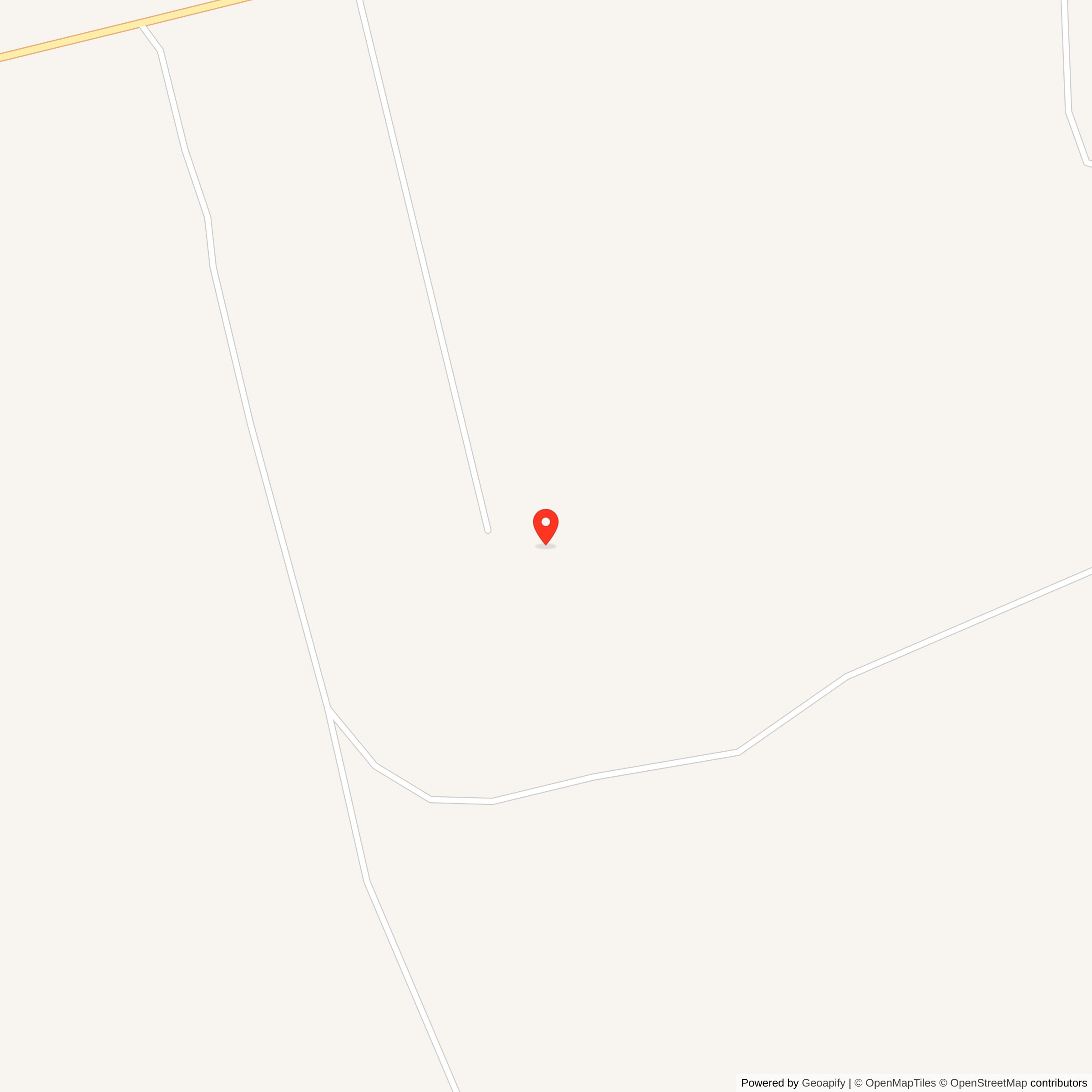
East of Winters, Texas, where Farm Road 1770 cuts through quiet Runnels County farm and ranch land, Atlas F Site 578-8 is easy to overlook from the road. That was the point. The site was built so that almost everything important was underground: a hardened missile silo, a buried launch-control center, blast doors, propellant systems, communications equipment, and the machinery needed to raise an SM-65F Atlas intercontinental ballistic missile from a deep protective shaft before launch. To a passerby it could look like another rural tract; in the early 1960s it was part of Strategic Air Command's nuclear alert force.
Site 578-8 is especially valuable because it is one of the best documented Dyess Atlas F complexes at the engineering level. The Historic American Engineering Record documented the Winters site with measured drawings and historical data for both the launch facility and the launch-control center. Those HAER records turn this site from a coordinate on a missile map into a detailed case study of how an Atlas F silo was actually dug, reinforced, fitted with a suspended steel crib, equipped with tanks and launch machinery, and connected to a shock-isolated underground control center. Later accounts add a different kind of afterlife: by 1999 the former missile property had houses and mobile homes on it, and a 2000 visit found the launch-control center being used as an aviary.
Installation / Site Identity
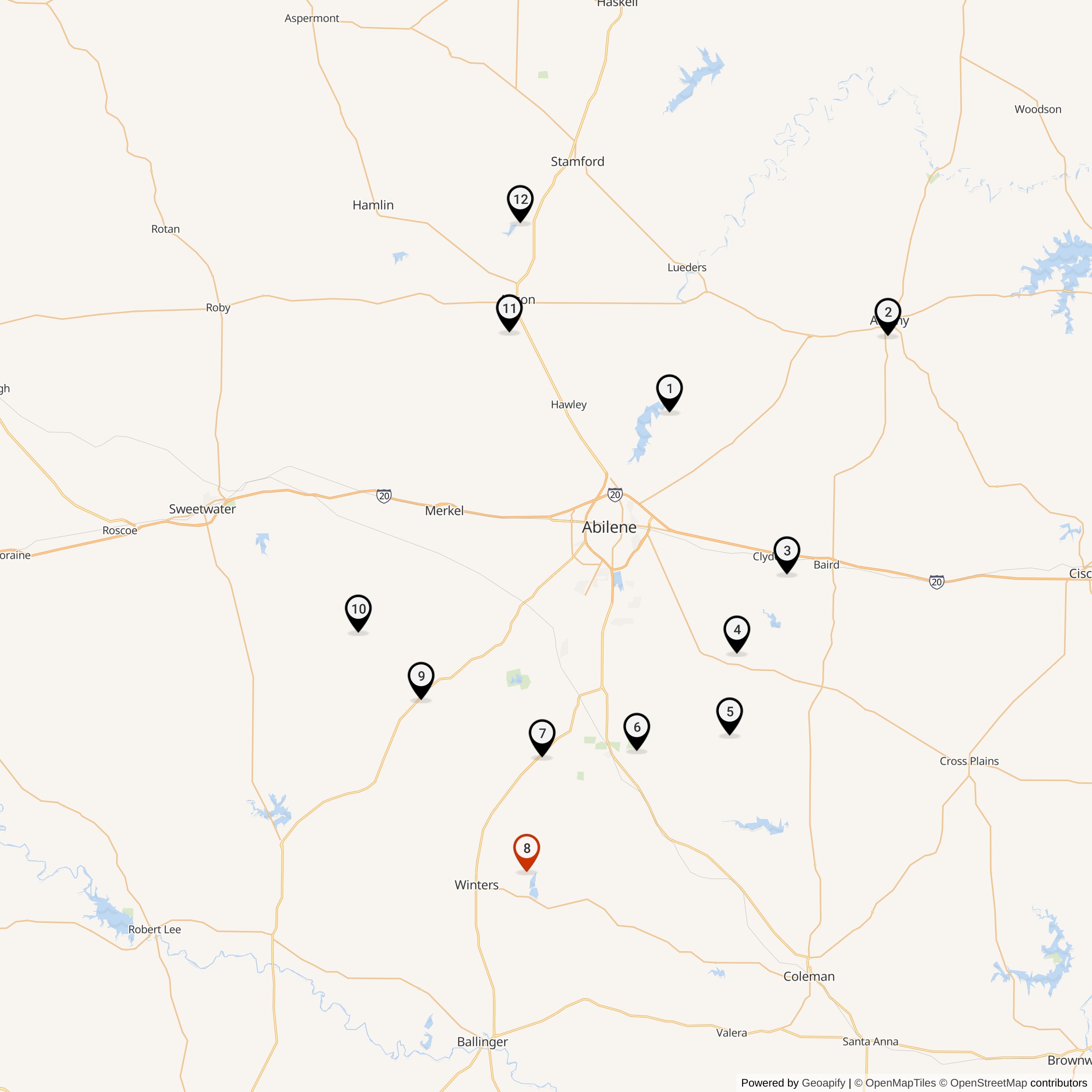
Atlas F Site 578-8 was a single SM-65F Atlas intercontinental ballistic missile launch complex assigned to the 578th Strategic Missile Squadron at Dyess Air Force Base, Texas. The site code is 578-8. It was one of twelve Dyess Atlas F sites operated by the 96th Bombardment Wing, later redesignated the 96th Strategic Aerospace Wing, through the 578th Strategic Missile Squadron.The site is located near Winters in Runnels County, Texas.
Like the other Dyess Atlas F sites, Site 578-8 did not have a separate Minuteman-style remote Launch Control Center. The individual Atlas F launch complex contained its own underground launch-control center and support facilities.
Construction of the broader Dyess Atlas F missile field began in 1960. Official unit-history material gives 1960-06-07 as the start of construction for the Dyess missile-field project. For Site S-8 specifically, HAER launch-facility documentation states that construction at the missile silo began on 1960-06-28. Official 578th SMS unit-history material states that the squadron was turned over to Strategic Air Command on 1962-11-04 and became operational on 1962-11-15.
Atlas F Site 578-8 is inactive and decommissioned. It is no longer an active missile facility. The 578th Strategic Missile Squadron was inactivated on 1965-03-25 during the accelerated phaseout of Atlas E, Atlas F, and Titan I first-generation ICBMs. The former site is privately reused rural/residential property in public-source accounts and is not an open public historic site.
Location, Landscape, and Site Description
Site 578-8 was built east of Winters in Runnels County, Texas, approximately three miles east of Winters and about 500 feet southwest of Farm Road 1770 according to HAER title information. The site was part of the outer southern-to-southwestern arc of the Dyess missile field and was one of the more distant Dyess Atlas locations from the parent base at Abilene. The Atlas Missile Museum of Texas describes Site 8 as the most distant from Dyess AFB.The landscape is rural, open, and lightly settled, with agricultural fields, ranch land, small roads, and scattered residences. The site's location reflected the Atlas F deployment concept: disperse the twelve launch complexes around Dyess so that no single enemy strike could eliminate the entire squadron, while keeping them close enough to be supported by the parent base, maintenance forces, security forces, communications systems, and missile logistics.
The HAER launch-facility record describes the launch facility as the center of the complex, approximately three miles east of Winters and 500 feet southwest of Highway 1770. The HAER LCC record describes the launch-control center as northwest of the launch facility. These descriptions fit the standard Atlas F pattern: a vertical silo and associated launch facility, an underground launch-control center offset from the silo, a utility/access tunnel, support systems, road access, and aboveground features that were much less substantial than the underground works.
As originally built, Site 578-8 contained the characteristic Atlas F vertical silo launch arrangement. The launch facility included the reinforced-concrete silo shaft, heavy silo cap and doors, an elevator-type launch platform, a suspended internal steel crib, work platforms for missile access, propellant-loading systems, liquid-oxygen and gaseous-nitrogen tanks, mechanical and electrical equipment, and the machinery needed to raise the missile and platform to the surface. The LCC was a separate buried, shock-isolated control structure, connected to the silo by an eight-foot-diameter utility tunnel with flexible connections and blast-door protection.
Strategic and Cold War Context
Site 578-8 existed because the United States needed a dispersed, hardened, land-based nuclear deterrent during the early 1960s. The Atlas program produced the Air Force's first operational intercontinental ballistic missile. Atlas F was the last and most protected operational Atlas ICBM variant, but it was still a first-generation weapon: liquid-fueled, maintenance-intensive, and based on a pressure-stabilized missile structure that required careful handling and constant attention.The National Park Service describes Atlas as the United States Air Force's first operational ICBM and notes that 132 Atlas sites were operational at the program's peak from December 1962 through May 1964. The same NPS summary describes Atlas F as the best of the deployed Atlas types, held in a blast-proof silo-lift configuration, and states that seventy-two Atlas F missiles were deployed at Schilling, Lincoln, Altus, Dyess, Walker, and Plattsburgh. Dyess received twelve of those launch complexes.
The Atlas F silo-lift concept was an intermediate step between earlier exposed or coffin-style Atlas basing and later solid-fueled missiles that could remain on alert for long periods and launch from within hardened silos. The Atlas F missile sat vertically in a deep underground silo for protection, but it could not fire from inside the silo. Before launch, the heavy silo doors opened, the launch platform raised the missile to the surface, the missile was fueled and checked, and the launch sequence proceeded from the launch-control center.
The Dyess missile field became operational at the height of Cold War tension. Official unit-history material states that the 578th SMS became operational in 1962 and that its twelve missiles were placed on alert status during the Cuban Missile Crisis.
Construction and Activation
The construction history of Site 578-8 is unusually rich because the Winters site became the representative Dyess Atlas F complex documented by the Historic American Engineering Record. HAER documentation identifies the U.S. Army Corps of Engineers as engineer/builder and H.B. Zachry and Brown & Root, Inc. as builders. Official 578th SMS unit-history material states that initial responsibility for constructing the twelve Dyess Atlas F silos fell to the U.S. Army Corps of Engineers Fort Worth District. The Fort Worth District also received responsibility for nationwide procurement of the Atlas F propellant-loading system. After the Corps of Engineers Ballistic Missile Construction Office, or CEBMCO, was formed in 1960, the Fort Worth District was relieved of direct silo-construction oversight, but the Dyess project remained part of the Corps-managed missile-construction program.The Dyess contract was awarded in the intense national mobilization to build hardened ICBM sites quickly. Official 578th SMS unit-history material states that six bids were opened at Abilene on 1960-05-26 and that the low bid of about $20 million came from a joint venture of H.B. Zachry Company and Brown & Root, Inc. Construction on the Dyess missile field began on 1960-06-07. The twelve lift-launcher locations were Abilene, Albany, Clyde, Denton County / Denton Community, Oplin, Lawn, Bradshaw, Winters, Shep, Nolan, Anson, and Corinth. The same unit history notes that the Dyess project was completed on time, with no work stoppages due to labor unrest, but at a human cost of three fatalities and thirty-three disabling injuries.
For Site S-8 specifically, HAER states that construction at the missile silo began on 1960-06-28. The first phase was open-cut excavation. DW-20 scrapers, three dozers, and a grader worked down to a reference elevation of 960.5 feet by 1960-07-13. HAER explains that the top of the shaft was treated as reference elevation 1000. Once the open cut reached the required level, shaft excavation began on 1960-07-23.
The shaft was not simply dug like an ordinary pit. HAER describes the use of a front-end loader with rear ripper teeth, called a "taxcavator," to begin the shaft excavation. A 40-ton crane with a clamshell bucket removed material from the shaft. As the excavation deepened, the contractor installed a hoist with a bucket and guide tracks to remove earth and rock. The excavation proceeded smoothly until the crews encountered harder material composed of gypsum, limestone, and shale. At that point the contractor had to "drill and shoot," using explosives to loosen the material.
The blasting work was substantial. HAER states that three shots were drilled, each approximately twenty-one feet deep. Each shot used about 300 two-inch holes, and approximately three-quarters of a pound of dynamite was used per cubic yard of excavated material. The blasting broke the shale and limestone into manageable pieces, but the gypsum did not fracture as well and larger blocks had to be removed with cables. This detail is one of the strongest examples of why Site 578-8 matters historically: it preserves a specific record of the hard physical work required to build a vertical Atlas F silo in Texas geology.
As the excavation deepened, shoring was required to resist increasing earth pressure. HAER states that circular I-beam segments were bolted together to form continuous ring beams around the excavation. The space between ring beams was filled with welded wire mesh, pneumatic concrete, and metal or wood shoring. Once excavation was complete, the shaft floor was sealed with reinforced concrete. After reinforcing rods were placed, concrete was poured with a two-ton bucket lowered by a truck crane. Reinforcing steel for the silo walls followed.
The silo wall construction used a slip-form method. HAER describes a circular wooden slip form, 4 feet 6 inches high, made of two platforms. Concrete buggies operated on the upper platform while finishers worked on the lower platform. Steel rods supported the slip form, and manually controlled pneumatic jacks raised it at a rate of about thirteen inches per hour. The crew poured concrete, allowed it to set, installed reinforcing steel for higher elevations, and repeated the process as the wall rose.
After the shaft walls were complete, the internal steel crib was erected. HAER describes the crib as an octagonal steel structure that supported the missile and eight work levels holding operating ground equipment and missile-launch equipment. It included a facility elevator descending to level eight, spiral stairs reaching level seven, and a ladder to level eight. HAER gives the crib's overall dimensions as about forty-two feet wide and 151 feet deep. The crib was hung from the concrete silo wall with a shock-isolating suspension system, and a "rattle space" between the crib and the silo wall allowed movement under ground-shock conditions.
The crib suspension system was a major part of Atlas F hardening. HAER states that four silo-wall brackets were mounted ninety degrees apart near the top of level two. These brackets supported eight crib-suspension shock struts paired into four sets. Each strut was 64 feet, 2.5 inches long and had seven decks of springs, three sets of springs per deck. The goal was to isolate the missile, the steel crib, and the operating ground equipment from the damaging effects of a ground shock.
The propellant-loading equipment also shaped the construction sequence. HAER notes that after crib assembly began, tanks for the propellant loading system were installed, including a 23,000-gallon liquid-oxygen tank and three gaseous-nitrogen tanks. Delivery of those vessels to Dyess was delayed, forcing modifications in the construction sequence. To avoid losing time, structural steel at level eight was left incomplete, cross bracing between levels seven and eight was minimized, the silo cap placement was postponed, and an eighteen-inch parapet wall was cast around the perimeter so backfilling could be completed. Once the vessels arrived, a derrick lifted and lowered them into place.
Mechanical and electrical installation followed the substantial completion of the crib. HAER states that crews first installed floor grating, stairs, ladders, and handrails to make the structure safer and more accessible. Preassembled piping units, electrical equipment, mechanical units, launch-platform counterweights, and drive mechanisms were then installed. Finally, the silo cap and doors were cast. HAER gives the silo cap as a nine-foot-thick reinforced-concrete slab and the steel doors as 2.5 feet thick.
Final inspection and validation were multi-party tasks. HAER states that testing was performed by special teams for each system, made up of Corps of Engineers, Site Activation Task Force, Air Force, and contractor personnel. Each test used checklist items that were signed and documented by all parties. This formal testing process was essential because the completed complex was not a simple structure; it was a deeply integrated missile-launch machine with power, fueling, environmental, hydraulic, communications, safety, command, and structural systems.
The launch-control center had its own hardened construction logic. HAER describes the LCC as a reinforced-concrete and steel structure with two circular levels about forty feet in diameter. The floors were supported within a two-story steel crib suspended inside the reinforced-concrete outer wall, serving as a shock absorber in the same general way as the silo crib. The concrete wall surrounding the interior closure was 2.5 feet thick. The lower level housed communications equipment and the launch-control console, while the upper floor contained mess and berth facilities capable of sustaining the launch crew for up to ten days in the event of nuclear attack.
The LCC was buried about 6.5 feet below the surface and located about forty-five feet northwest of the silo. Entry was by a surface stairwell descending through a tunnel into an entry vestibule. HAER explains that bends in the entry route were designed to provide radiation protection, and a blast-proof emergency escape hatch was provided in the LCC roof. A utility tunnel at the lower level connected the LCC to the launch silo. This tunnel had an interior diameter of eight feet, flexible connections at its ends to accommodate differential settlement, and served as the conduit for utilities between the LCC and silo. HAER states that three of the site's five blast doors were in the utility tunnel and two were at the ground-level entrance.
Activation followed the construction, inspection, turnover, and site-activation process. The 578th Strategic Missile Squadron was organized at Dyess on 1961-07-01. Site 8's assigned missile, Atlas 72F / serial 61-2558 / tail number 558, was accepted on 1962-04-26 and delivered on 1962-05-10. Official unit-history material lists turnover to SAC on 1962-11-04 and operational status on 1962-11-15.
Missile System and Technical Role
Site 578-8 was built for the SM-65F Atlas, also known as Atlas F. The Atlas F was a liquid-fueled, first-generation intercontinental ballistic missile using RP-1 fuel and liquid oxygen oxidizer. It was stored vertically in a hardened silo on a lift-launcher platform. Unlike later Minuteman missiles, it could not launch directly from inside the silo; the missile and launch platform had to be raised above ground before firing.Public sources describe Atlas F as the most advanced operational Atlas ICBM variant. The National Park Service states that Atlas F was held in a blast-proof silo-lift configuration and could be launched in approximately ten minutes. F.E. Warren Air Force Base's public Atlas fact sheet explains the general silo-lift concept by noting that the Atlas was raised to ground level for launching because it could not be launched from its underground silo. The Atlas missile could deliver a nuclear warhead more than 6,300 miles from its launch site according to the same Air Force fact sheet.
The missile assigned to Site 578-8 was General Dynamics missile serial number 61-2558, manufacturing number 72F, and Air Force tail number 558. Its acceptance date was 1962-04-26, delivery date as 1962-05-10, launch date as "Not Launched," and final disposition as "Salvaged as Scrap." That makes Site 578-8 different from some nearby Dyess sites whose Atlas missiles later became space or test launch vehicles.
The National Park Service states that Atlas F carried a 4.5-megaton warhead, while the Smithsonian National Air and Space Museum identifies the Mark 4 reentry vehicle used on Atlas E/F and Titan I as carrying a W-38 nuclear warhead with a yield of about 3.75 megatons.
The LCC's technical role was to monitor, control, and launch the missile. HAER documentation states that the LCC launch-control room contained panels and consoles necessary to initiate missile launch and monitor complex activities. The Facility Remote Control Panel monitored facility equipment and alarms, while the Launch Control Console monitored and controlled the missile and associated ground equipment during standby and countdown. The Power Remote Control Panel provided limited control and monitoring of silo power-generation equipment. The Control Station Manual Operating Level panel contained controls for manually raising and lowering the launch platform. Two LOX tanking panels allowed emergency manual tanking and detanking.
The LCC was therefore not merely an office under the ground. It was the human control point for a complex machine. Launch crews lived and worked in a suspended, shock-isolated structure with blast doors, communications equipment, power systems, launch panels, environmental controls, and enough support facilities to sustain them during crisis conditions.
Operational History
Atlas F Site 578-8's active missile career was brief but intense. It served during the short operational life of the Atlas F force at Dyess, roughly from the squadron's 1962 operational status until the accelerated phaseout of 1964-1965. During that period the site belonged to the 578th Strategic Missile Squadron under the 96th Bombardment Wing / 96th Strategic Aerospace Wing at Dyess Air Force Base.The 578th SMS's Atlas mission joined bomber and missile operations in the same parent wing. The 96th Bombardment Wing became the 96th Strategic Aerospace Wing in 1963, reflecting SAC's combination of aircraft and missiles in strategic deterrence. The missile crews, maintenance teams, security personnel, communications specialists, and base support functions at Dyess sustained twelve dispersed Atlas F launch complexes scattered across rural central Texas.
Operationally, Site 578-8 would have required continuous readiness rather than frequent public activity. Atlas F crews and support teams had to maintain a liquid-fueled ICBM in a protected but demanding alert configuration. The missile required pressure stabilization, oxidizer and fuel systems, environmental controls, power systems, missile and ground-equipment checks, launch-control systems, security inspections, and communications readiness. Because the Atlas F could not launch directly from inside the silo, the lift platform, silo doors, hydraulic systems, and propellant-loading equipment were central to the alert mission.
The Cuban Missile Crisis gave the 578th SMS its most historically consequential operational moment. Official unit-history material states that the 578th and its twelve missiles were all placed on alert status during the crisis. Site 578-8 was one of those twelve dispersed Dyess sites, tying the Winters area directly to the October 1962 nuclear confrontation.
HAER documentation gives a useful window into what alert operation meant inside the LCC. The LCC's upper level contained the ready room, storage, latrine, kitchen, HVAC room, and medical-supplies space, while the lower level contained the launch-control room, office, battery room, and communications/equipment room. HAER states that Atlas E and F launch crews consisted of five members, smaller than the twelve-person Atlas D crews, and that crews rotated regularly. In an alert setting, the LCC was a small self-contained operating environment built for endurance, isolation, and rapid execution of formal procedures.
Deactivation and Disposal
Atlas F Site 578-8 left active service as part of the broader retirement of the first-generation Atlas E, Atlas F, and Titan I missile forces. Secretary of Defense Robert S. McNamara directed accelerated phaseout of Atlas and Titan I ICBMs in 1964. Official 578th SMS unit-history material states that the first Atlas F missile at Dyess was removed from alert on 1964-12-01 ahead of schedule to avoid costly maintenance expenditures, the last 578th SMS ICBM was removed from alert on 1965-02-03, the last missile was shipped on 1965-02-10, and the squadron was deactivated on 1965-03-25.The broader Atlas E/F and Titan I phaseout history describes how deactivation was organized. SAC retained accountability for missile assets until disposal, prepared missiles for shipment, secured missile launch facilities, and continued care-and-custody functions at deactivated sites. Air Force Logistics Command was responsible for overall program guidance, actual missile shipments, and disposition of missile assets. The deactivation process was divided into phases: removal and preparation of reentry vehicles, missiles, classified components, mobile equipment, propellants, and gases; shutdown and removal or protection of selected site equipment; and eventual reporting of the site as excess to the General Services Administration for real-estate disposition.
The Dyess Atlas F force belonged to the third-quarter 1965 deactivation group. The phaseout history lists Dyess Atlas F with the first missile off alert on 1964-12-01, last missile off alert on 1965-02-03, last missile shipped on 1965-02-10, and unit inactivation on 1965-03-25. It also notes that an Atlas F site was to be preserved rather than disposed of in the same way as some Atlas E facilities, reflecting the Air Force's changing approach to the surplus first-generation ICBM infrastructure.
Atlas 72F / serial 61-2558 / tail 558 was not launched and was salvaged as scrap. This suggests that the missile did not enter the later space-launch or test-launch inventory in the way some former Dyess Atlas missiles did.
After deactivation, the physical site entered the uneven post-Cold War and post-ICBM pattern typical of Atlas properties: government custody, equipment removal or redistribution, real-property disposal, private reuse, environmental review, and in some cases demolition, filling, abandonment, or adaptation. The public-source pass did not find a site-specific disposal deed or sale record for Site 578-8. However, public accounts document later private rural/residential reuse. Airforcebase.net's 1999 trip report noted houses and mobile homes on the former Atlas F site. The Atlas Missile Museum of Texas states that in 2000 the LCC was being used as an aviary and that no original outbuildings remained.
The site also appears in the U.S. Army Corps of Engineers Formerly Used Defense Sites inventory. The 2015 USACE Texas FUDS inventory lists WINTERS ATLAS AF FAC S-8, property number K06TX0113, in Runnels County, with HTRW category.
Chronology
- 1954 The U.S. Air Force selected Convair's Atlas missile program as part of the development of intercontinental ballistic missiles with nuclear warheads.
- 1960-05-26 Six bids were opened at Abilene for the Dyess Atlas F silo construction project; the low bid of about $20 million came from the H.B. Zachry Company and Brown & Root, Inc. joint venture.
- 1960-06-07 Official 578th SMS unit-history material states that construction commenced on the Dyess Atlas F missile-field project.
- 1960-06-28 HAER documentation states that construction at the Site S-8 missile silo began.
- 1960-07-13 HAER documentation states that open-cut excavation at Site S-8 reached reference elevation 960.5 feet.
- 1960-07-23 HAER documentation states that silo shaft excavation began at Site S-8.
- 1961-07-01 The 578th Strategic Missile Squadron was organized at Dyess Air Force Base.
- 1962-04-26 Acceptance date for Site 578-8's assigned missile, Atlas 72F / serial 61-2558 / tail 558.
- 1962-05-10 Delivery date for Atlas 72F.
- 1962 HAER lists 1962 as the construction date for the Site S-8 launch facility and launch-control center, reflecting completion/operational-era documentation rather than the first start of excavation.
- 1962-10 During the Cuban Missile Crisis, official unit-history material states that the 578th SMS and its twelve missiles were placed on alert status.
- 1962-11-04 Official unit-history material lists turnover of the 578th Strategic Missile Squadron to Strategic Air Command.
- 1962-11-15 Official unit-history material lists the 578th Strategic Missile Squadron as operational.
- 1964-05-16 Secretary of Defense Robert S. McNamara directed accelerated phaseout of Atlas and Titan I ICBMs.
- 1964-11-19 Department of Defense phaseout actions included Atlas F with Atlas E and Titan I phaseout.
- 1964-12-01 The first Atlas F missile at Dyess was removed from alert ahead of schedule.
- 1965-02-03 The last 578th SMS ICBM was removed from alert.
- 1965-02-10 The last 578th SMS ICBM was shipped.
- 1965-03-25 The 578th Strategic Missile Squadron was inactivated, and Atlas F Site 578-8 left active missile service.
- 1999-07-03 Airforcebase.net's trip report observed houses and mobile homes on the former Dyess Missile Site #8 property.
- 2000 The Atlas Missile Museum of Texas states that the Site 8 LCC was visited, was being used as an aviary, and that visitors did not have access to the silo.
- 2015 The USACE Texas FUDS inventory listed WINTERS ATLAS AF FAC S-8, K06TX0113, in Runnels County with HTRW category.
Read about the Atlas at Dyess AFB
All Atlas Missile Silo Locations