Atlas F Site 578-9 Missile Silo, Shep Texas
Longitude: -100.05127222
Site Type: Atlas F vertical silo launch facility
Missile Type: SM-65F Atlas
Number of Launchers/Missiles: 1
Parent Base: Dyess AFB
Missile Wing: 96th Strategic Aerospace Wing
Missile Squadron: 578th Strategic Missile Squadron
Current Site Use: Private flooded former Atlas F silo reused as Valhalla / Dive Valhalla scuba-diving and training site; LCC reportedly restored with new floors; no original outbuilding remains.
Site Ownership: Private ownership; Texas Highways identified Mark and Linda Hannifin as owners in 2015, but current deed ownership not independently verified.
Accessible: Limited / controlled access only through authorized dive operators or owner arrangements; not open for casual public access.
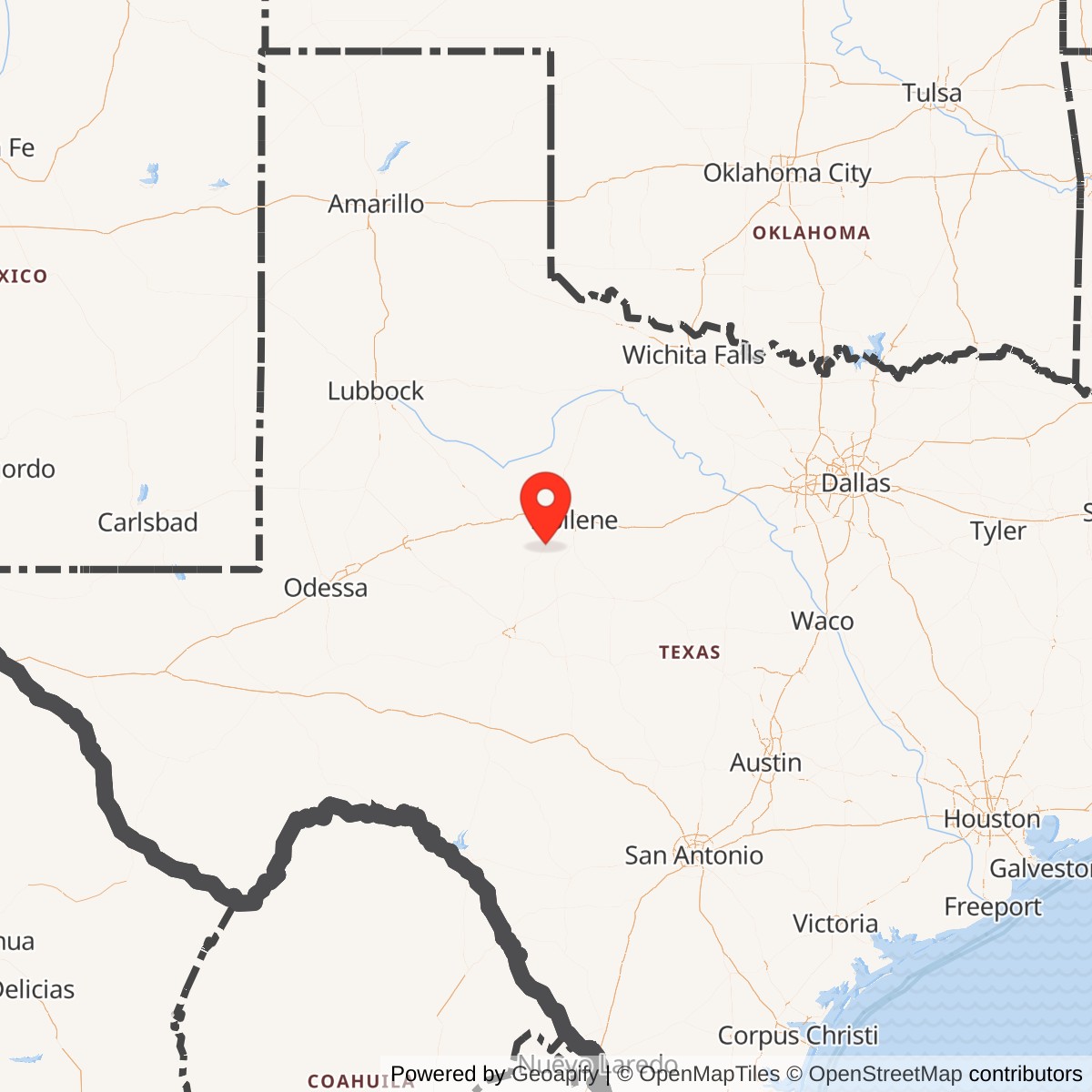
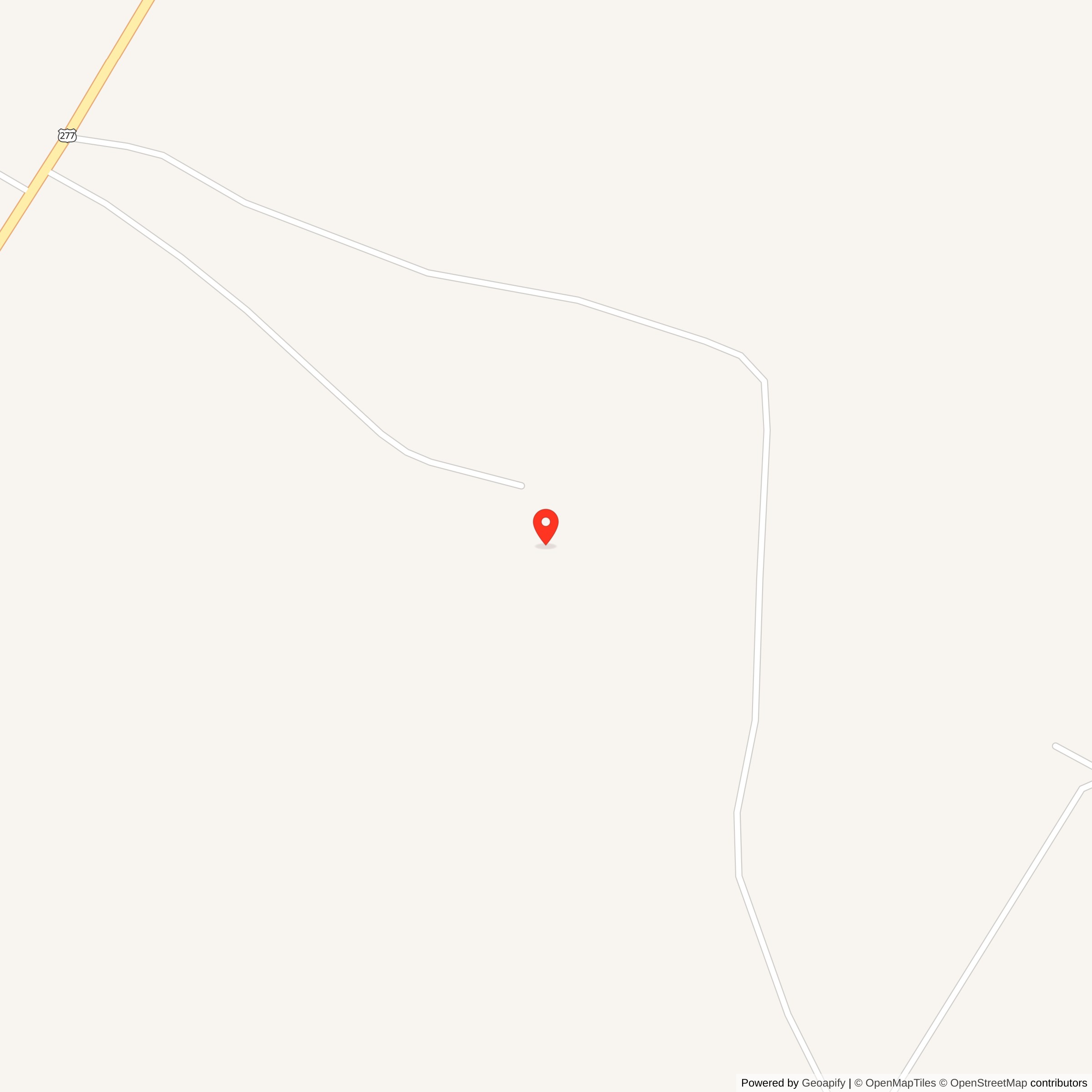
Southwest of Abilene, near the small Taylor County community of Shep, Atlas F Site 578-9 has one of the strangest afterlives of any Dyess missile site. It began as a hardened Cold War launch complex: a deep concrete-and-steel silo, a buried launch-control center, blast doors, tunnel connections, propellant systems, power equipment, communications circuits, and the machinery needed to lift an SM-65F Atlas missile from underground protection to the surface. Decades later, the same underground space became known to divers as Valhalla, a flooded missile silo where the relic of Strategic Air Command alert duty turned into an underground scuba-diving site.
It is not simply an abandoned coordinate on a missile map. It is a place where the original Cold War engineering still shapes the post-military experience: the long descent underground, the heavy doors, the offset control space, the tunnel to the missile tube, the massive cylindrical silo, and the groundwater that slowly filled the emptied launch structure after the Atlas missile and much of its equipment were removed. The site's history therefore runs from rapid-response nuclear alert during the Cuban Missile Crisis to one of the most unusual civilian reuses of a former ICBM launch facility in Texas.
Installation / Site Identity
Atlas F Site 578-9 was a single SM-65F Atlas intercontinental ballistic missile launch complex assigned to the 578th Strategic Missile Squadron at Dyess Air Force Base, Texas. The site code is 578-9. It was one of twelve Dyess Atlas F sites operated by the 96th Bombardment Wing, later redesignated the 96th Strategic Aerospace Wing, through the 578th Strategic Missile Squadron.Like the other Dyess Atlas F sites, Site 578-9 did not have a separate Minuteman-style remote Launch Control Center. The individual Atlas F launch complex contained its own underground launch-control center and support facilities.
Official 578th SMS unit-history material states that the squadron was organized at Dyess on 1961-07-01, that construction of the Dyess missile-field project began on 1960-06-07, that the squadron was turned over to Strategic Air Command on 1962-11-04, and that the squadron became operational on 1962-11-15.
Atlas F Site 578-9 is inactive and decommissioned as a military installation. It is no longer an active missile facility. The 578th Strategic Missile Squadron was inactivated on 1965-03-25 during the accelerated phaseout of Atlas E, Atlas F, and Titan I first-generation ICBMs. The former site has been privately reused and is widely known as Valhalla or Dive Valhalla, a flooded Atlas F silo used for scuba diving and training by organized groups rather than as a generally open public historic site.
Location, Landscape, and Site Description
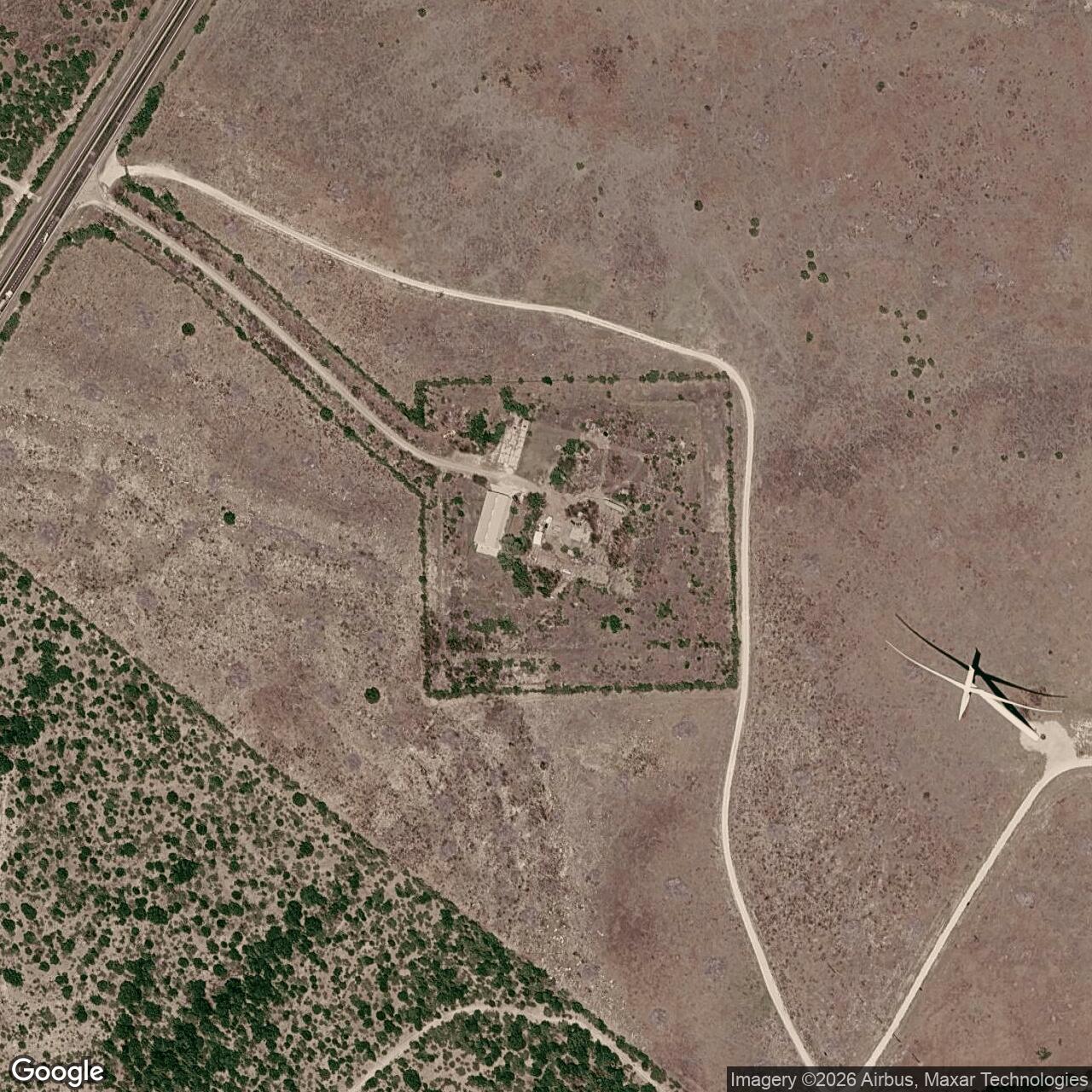
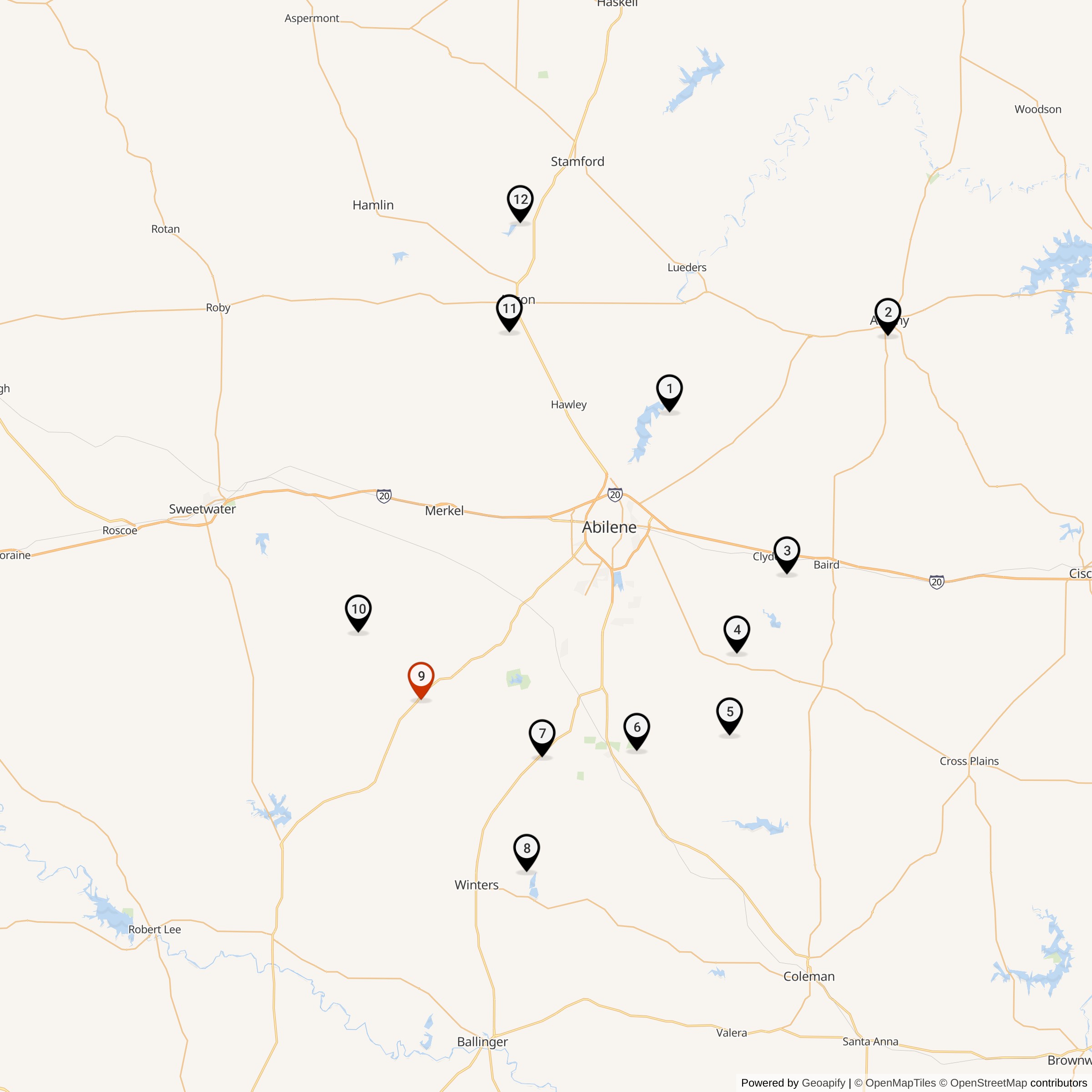
Site 578-9 lies in rural Taylor County near Shep, southwest of Abilene and south-to-southwest of Dyess Air Force Base. The setting is a rolling West Texas landscape of ranch land, open fields, scattered trees and brush, rural roads, and wind-exposed high ground. Texas Highways described the Valhalla silo as about twenty miles south of Abilene, while PADI describes it as about forty-five minutes south of Abilene.The site's rural placement reflected the Atlas F deployment pattern used around Dyess. The twelve launch complexes were dispersed in a ring around the parent base so that a single attack could not destroy the entire squadron, but they remained close enough for security police, missile maintenance, civil engineering, communications, propellant support, and command channels to operate from Dyess. The other Dyess sites were located near Abilene/Lake Fort Phantom Hill, Albany, Clyde, Denton Community, Oplin, Lawn, Bradshaw/Ovalo, Winters, Nolan, Anson, and Corinth.
As originally built, Site 578-9 would have followed the standard Atlas F vertical silo-lift arrangement. The launch facility included a deep reinforced-concrete silo, a heavy silo cap and paired doors, an elevator-type launch platform, a suspended internal steel crib, working platforms, propellant and pressurization equipment, tanks and piping for liquid oxygen and gaseous nitrogen systems, power and environmental systems, and the machinery needed to raise the missile and launcher to the surface before launch. The launch-control center was a separate underground structure offset from the silo and connected by a protected utility tunnel. Aboveground features originally included access roads, fencing, utility penetrations, hatches, antennas or communications-related features, equipment pads, and support buildings such as Quonset-type structures.
The Atlas Missile Museum of Texas gives important post-service physical detail: the Shep site had no structure remaining in the launch-control center or in the silo when it became a dive site, but it contained abundant water, making it suitable for commercial scuba-diving use. The same source states that the LCC was restored several years before the museum page was written and that two new floors were installed to complete living quarters. It also notes that no original outbuilding remains on the site. Texas Highways adds a vivid field description from the dive era: visitors descended through solid-steel blast doors, passed through a control-room area, moved through the tunnel to the missile tube, and encountered a silo about 52 feet wide and 174 feet underground, with concrete walls up to nine feet thick in places.
Strategic and Cold War Context
Site 578-9 existed because the United States needed a dispersed, hardened, land-based nuclear deterrent during the early 1960s. The Atlas program produced the United States Air Force's first operational intercontinental ballistic missile. The National Park Service describes Atlas as the Air Force's first operational ICBM and states that Atlas sites peaked at 132 operational locations from December 1962 through May 1964. Atlas F was the final and most protected deployed Atlas variant, but it was still a first-generation system: liquid-fueled, mechanically complex, and more maintenance-intensive than the solid-fueled Minuteman missiles that soon replaced it.The National Park Service describes Atlas F as the most capable deployed Atlas type, held in a blast-proof silo-lift configuration and capable of launch in approximately ten minutes. It also states that seventy-two Atlas F missiles were deployed at Schilling, Lincoln, Altus, Dyess, Walker, and Plattsburgh Air Force Bases. Dyess received twelve of those Atlas F launch complexes through the 578th Strategic Missile Squadron.
The Atlas F basing concept was an important transitional technology. Earlier Atlas D sites used gantry or aboveground coffin arrangements; Atlas E sites used semi-hardened coffin shelters. Atlas F moved the missile into a deep vertical underground silo for protection. It still could not be fired directly from within the silo. The missile had to be elevated to the surface on its launcher before launch. In that sense, Site 578-9 represents a brief but important step between the exposed first ICBM deployments of the late 1950s and the later solid-fueled Minuteman system that could remain on alert for long periods and launch from inside hardened silos.
The strategic setting of Site 578-9 became urgent almost immediately. Official unit-history material states that, as construction continued, the Air Force activated the 578th Strategic Missile Squadron on 1961-07-01; that the squadron became operational in 1962; and that the 578th and its twelve missiles were placed on alert status during the Cuban Missile Crisis.
Construction and Activation
The construction history of Site 578-9 should be read at two levels: the overall Dyess Atlas F construction program, which is documented in official unit-history material, and the site-specific Shep construction photographs preserved by the Atlas Missile Museum of Texas.Official 578th SMS unit-history material states that initial responsibility for constructing the twelve Dyess Atlas F silos fell to the U.S. Army Corps of Engineers Fort Worth District. The Fort Worth District also received responsibility for the nationwide procurement of the Atlas F propellant-loading system. After the Corps of Engineers Ballistic Missile Construction Office, or CEBMCO, was formed in 1960, the Fort Worth District was relieved of direct silo-construction oversight, but the Dyess work remained part of the Corps-managed national ICBM construction program.
The Dyess contract was awarded under the pressure of a rapid national ICBM buildup. The same official unit-history material states that six bids were opened at Abilene on 1960-05-26 and that the low bid, about $20 million, came from a joint venture of H.B. Zachry Company and Brown & Root, Inc. Construction commenced on 1960-06-07. The official history identifies the twelve lift-launcher locations as Abilene, Albany, Clyde, Denton County, Oplin, Lawn, Bradshaw, Winters, Shep, Nolan, Anson, and Corinth. It also states that the Dyess project was completed on time, with no work stoppages due to labor unrest, but that three fatalities and thirty-three disabling injuries occurred during the project.
Representative engineering documentation from HAER for Dyess Atlas F Site S-8 at Winters helps explain the type of work that would also have shaped Site 578-9, although it is not site-specific proof for Shep. HAER S-8 records describe a massive open-cut construction sequence followed by shaft excavation through local rock, use of drilling and blasting where required, placement of heavy reinforcing steel, slip-form or formed concrete work, installation of a steel crib and launch-support equipment, and construction of a shock-isolated launch-control center connected to the launch facility by a protected tunnel. Site 578-9's construction photographs are consistent with that same general Atlas F engineering pattern.
The completed launch complex was a hardened underground machine. In peacetime, much of its cost and complexity was invisible from the road. During construction, however, the scale was unmistakable: deep excavation, circular reinforced-concrete walls, crane work, large-diameter tanks and piping, electrical and mechanical equipment, access penetrations, cable runs, and heavy launch-support structures. By the time the site was ready for Air Force and SAC use, the open construction scar had been converted into a fenced, dispersed, operational Atlas F launch complex.
Missile System and Technical Role
Site 578-9 was built for the SM-65F Atlas ICBM. Atlas F was a liquid-fueled, one-and-one-half-stage missile with booster engines, a sustainer engine, vernier engines for fine control, inertial guidance, and a pressure-stabilized stainless-steel structure. The Atlas missile's thin structure depended on internal pressure for rigidity, a design that made it light enough for long-range flight but operationally demanding on the ground.The National Park Service describes Atlas F as 82 feet tall and held in a blast-proof silo-lift configuration. F.E. Warren Air Force Base's Atlas fact sheet summarizes the broader Atlas silo concept: because the missile was vulnerable above ground, an underground silo was developed and an elevator raised the missile to ground level for launch. The Atlas F silo at Site 578-9 protected the missile underground, but the missile still had to be raised before launch; the silo was a shelter and launch-support structure, not a launch-from-within-tube system like later Minuteman facilities.
The missile associated with Site 578-9 was General Dynamics Manufacturing Number 53F, General Dynamics Missile Serial Number 61-2539, and Air Force Missile Tail Number 539. The missile acceptance date as 1962-02-22, the delivery date as 1962-03-02, and the launch date as "Not Launched."
The Smithsonian National Air and Space Museum identifies the Mark 4 reentry vehicle as used on U.S. Air Force Titan I and Atlas E/F ICBMs deployed in the early 1960s and states that it carried a W-38 nuclear warhead with a yield of about 3.75 megatons. The National Park Service, in a broader Atlas summary, describes Atlas F as associated with a 4.5-megaton warhead.
The Atlas F launch complex required a five-person crew environment, maintenance teams, security personnel, communications support, and specialized propellant and electrical systems. The crewed underground launch-control center monitored status, communications, and countdown functions. Security and maintenance teams visited the site as needed, while the broader squadron, wing, and base infrastructure at Dyess supplied spare parts, training, command oversight, and readiness inspections.
Operational History
The 578th Strategic Missile Squadron was organized at Dyess Air Force Base on 1961-07-01 and assigned to the 96th Bombardment Wing, later the 96th Strategic Aerospace Wing. Official unit-history material lists Dyess AFB as the squadron station from 1961-07-01 to 1965-03-25 and lists the SM-65F Atlas as its weapon system in 1962. The squadron's missile mission was brief but intense: it existed during the period when Strategic Air Command was fielding first-generation ICBMs as quickly as possible while the later Minuteman force was coming online.Site 578-9's day-to-day operational life would have been shaped by alert duty, maintenance, inspections, security checks, communications tests, mechanical readiness, and propellant-system requirements. Atlas F sites were manned continuously during the squadron's active years. Unlike a Minuteman Launch Facility, an Atlas F complex included an on-site crewed launch-control center rather than relying on a remote Minuteman-style Launch Control Center miles away. The local crew and support systems were part of the same launch complex.
During the Cuban Missile Crisis in October 1962, the Dyess Atlas F force moved into high strategic relevance. Official unit-history material states that the 578th and its twelve missiles were placed on alert status during the crisis.
The active life of Site 578-9 was short because the Atlas F system was overtaken quickly by later missile technology. Solid-fueled Minuteman missiles required far less launch preparation and were easier to keep on long-term alert. By 1964, the Department of Defense had decided to accelerate the retirement of the first-generation Atlas and Titan I forces. Site 578-9, like the other Dyess Atlas F sites, therefore served only a few years before the missile was taken off alert and the squadron was inactivated.
Deactivation and Disposal
The deactivation of Site 578-9 was part of the accelerated national phaseout of first-generation ICBMs. Official 578th SMS unit-history material states that Secretary of Defense Robert S. McNamara directed the accelerated phaseout of Atlas and Titan I ICBMs on 1964-05-16. The same unit-history material states that on 1964-12-01, the first Atlas F missile at Dyess was removed from alert ahead of schedule to avoid costly maintenance expenditures; that the last 578th SMS ICBM was removed from alert on 1965-02-03; that the last 578th SMS ICBM was shipped on 1965-02-10; and that the squadron was deactivated on 1965-03-25.The SAC Missile Chronology also records key phaseout milestones for the Atlas force. It states that on 1964-11-19 Secretary McNamara announced that all remaining first-generation ICBMs, including Atlas F, would be phased out by the end of June 1965. It records that the first Atlas F at Dyess was removed from alert on 1964-12-01, and it records the 1965 inactivation of Atlas squadrons, including the 578th Strategic Missile Squadron at Dyess, as part of the completion of the operational phaseout of the SM-65 Atlas F.
For Site 578-9, the individual missile associated with the site did not fly after retirement. The removal of the missile, salvage of equipment, and later property disposal transformed the launch complex from an active SAC weapon site into an empty underground structure.
The available public records do not provide a full parcel-level disposal history for Site 578-9. The post-service record shows private reuse rather than public preservation. Texas Highways reports that after years of neglect the silo filled with groundwater and that Mark Hannifin bought the silo around 1982, tested the water, and later opened it to organized diving groups. Scuba.com reported that the Hannifins bought the silo on an 11-acre tract, but this history does not treat that as a verified original Air Force acquisition acreage because it was not confirmed against official land or disposal records.
The U.S. Army Corps of Engineers 2015 Texas Formerly Used Defense Sites inventory lists SHEP ATLAS AF FACILITY S-9 in Taylor County, property number K06TX0114, site number 02, with CON/HTRW category. The inventory legend defines CON/HTRW as containerized hazardous, toxic and/or radioactive waste.
Current Status and Site Use
Atlas F Site 578-9 is decommissioned and privately reused. It is not an active military installation. It is not a generally open public historic site. The site is best known today as Valhalla or Dive Valhalla, a flooded former Atlas F missile silo used for scuba diving and specialized training.The Atlas Missile Museum of Texas states that the Shep site was used as a commercial scuba-diving facility for many years, known as Dive Valhala; that it had no structure in the LCC or silo but had abundant water; that the LCC was later restored and two new floors installed to complete living quarters; and that no original outbuilding remains on the site. Texas Highways provides additional context from a 2015 travel story: the site was owned by Mark and Linda Hannifin, the silo had filled with groundwater after years of neglect, Mark bought it around 1982, tested the water, and later opened it to organized diving groups. PADI's current-style dive-site listing identifies Valhalla Nuclear Missile Silo as a flooded, decommissioned nuclear missile silo about forty-five minutes south of Abilene and presents it as a dive location connected with specialty training.
Chronology
- 1954 The U.S. Air Force selected Convair's Atlas missile program as part of the development of intercontinental ballistic missiles with nuclear warheads.
- 1960-05-26 Six bids were opened at Abilene for the Dyess Atlas F silo construction project; the low bid of about $20 million came from the H.B. Zachry Company and Brown & Root, Inc. joint venture.
- 1960-06-07 Official 578th SMS unit-history material states that construction commenced on the Dyess Atlas F missile-field project.
- 1961-07-01 The 578th Strategic Missile Squadron was organized at Dyess Air Force Base.
- 1962-02-22 Acceptance date for Site 578-9's assigned missile, Atlas 53F / serial 61-2539 / tail 539.
- 1962-03-02 Delivery date for Atlas 53F.
- 1962-10 During the Cuban Missile Crisis, official unit-history material states that the 578th SMS and its twelve missiles were placed on alert status.
- 1962-11-04 Official unit-history material lists turnover of the 578th Strategic Missile Squadron to Strategic Air Command.
- 1962-11-15 Official unit-history material lists the 578th Strategic Missile Squadron as operational.
- 1964-05-16 Secretary of Defense Robert S. McNamara directed accelerated phaseout of Atlas and Titan I ICBMs.
- 1964-11-19 Department of Defense phaseout actions included Atlas F with Atlas E and Titan I phaseout.
- 1964-12-01 The first Atlas F missile at Dyess was removed from alert ahead of schedule.
- 1965-02-03 The last 578th SMS ICBM was removed from alert.
- 1965-02-10 The last 578th SMS ICBM was shipped.
- 1965-03-25 The 578th Strategic Missile Squadron was inactivated, and Atlas F Site 578-9 left active missile service.
- 1982 Texas Highways later reported that Mark Hannifin bought the former Valhalla silo around 1982.
- 1990s Texas Highways reported that about ten years after the purchase, the former silo was opened to organized diving groups.
- 2015 Texas Highways published a travel feature describing scuba diving at Valhalla Missile Silo.
- 2015 The USACE Texas FUDS inventory listed SHEP ATLAS AF FACILITY S-9, K06TX0114, in Taylor County with CON/HTRW category.
Read about the Atlas at Dyess AFB
All Atlas Missile Silo Locations