
Atlas E Site OSTF-1 Missile Silo, Lompoc / Vandenberg SFB California
Longitude: -120.589583
Site Type: Atlas E above-ground coffin launcher / operational suitability test facility
Missile Type: SM-65E Atlas
Missile Assigned to this Silo: Multiple Atlas E test missiles launched from Site F / 576 Foxtrot / OSTF-1: 27E (1961-06-07, failed; damaged facility), 66E (1962-02-28), 67E (1962-07-13), 64E (1962-12-18), 65E (1963-04-24), 62E (1963-06-04), 24E (1963-07-26), 72E (1963-08-24), 48E (1964-02-12), 57E (1964-08-27).
Number of Launchers/Missiles: 1
Parent Base: Vandenberg AFB (now Vandenberg SFB)
Missile Wing: 704th Strategic Missile Wing (1958-1959); 1st Missile Division / 1st Strategic Aerospace Division after 1959
Missile Squadron: 576th Strategic Missile Squadron
Current Site Use: Abandoned former ICBM test site within active Vandenberg SFB; the 2021 VSFB Commercial Space Master Plan lists Site F - 576 Foxtrot (also known as OSTF-1) as an abandoned ICBM test site with no current operator.
Site Ownership: Department of Defense / U.S. Space Force (Vandenberg SFB)
Accessible: No general public access; within active Vandenberg SFB. Visitor access requires base authorization and does not imply access to abandoned missile-test sites.
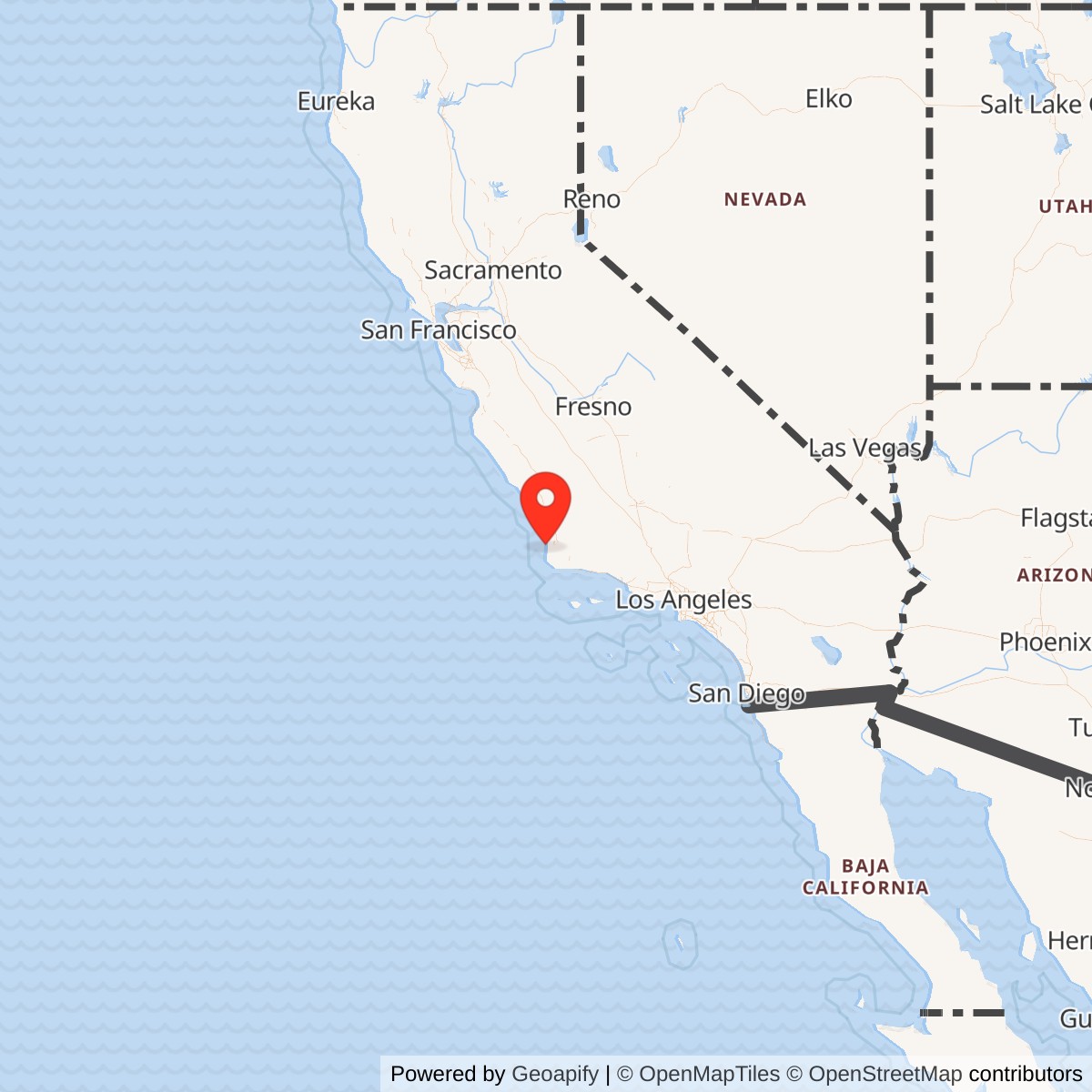
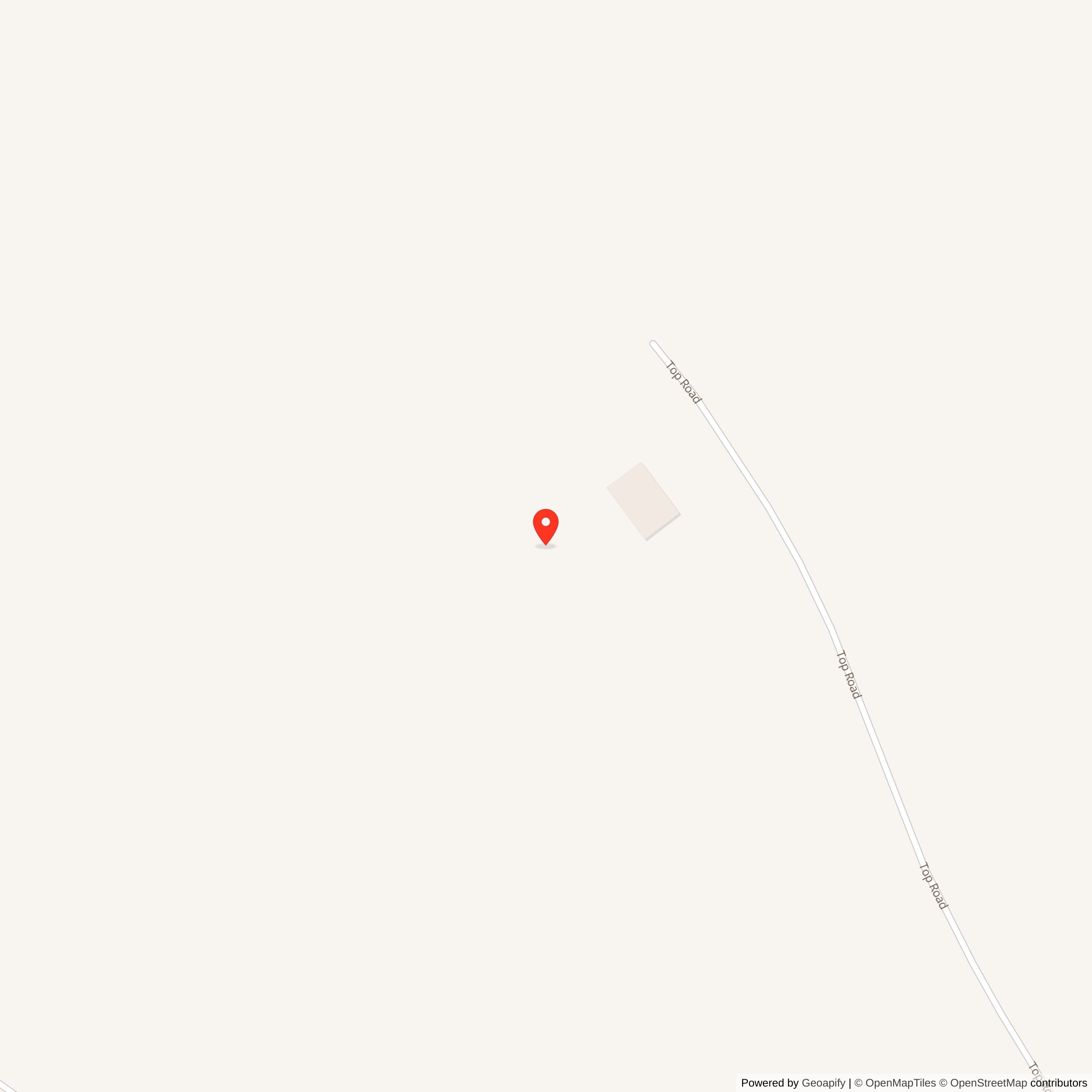
Atlas E Site OSTF-1, also known as Site F or 576 Foxtrot, was an SM-65E Atlas intercontinental ballistic missile test and operational-suitability launch facility at Vandenberg Air Force Base, now Vandenberg Space Force Base, in Santa Barbara County, California. It was part of the 576th Strategic Missile Squadron's Vandenberg Atlas complex and should be understood as a test and training site within the controlled Vandenberg missile range, not as a remote dispersed combat-alert site like the Atlas E fields built around Forbes, Fairchild, or F. E. Warren.
The site was associated with the 576th Strategic Missile Squadron, the Strategic Air Command Atlas organization at Vandenberg. Official Air Force Global Strike Command history states that the 576th was reactivated on 1958-03-06 as the 576th Strategic Missile Squadron and assigned to Cooke Air Force Base, later renamed Vandenberg. On 1958-04-01, the 576th was assigned to Strategic Air Command as an Atlas ICBM unit and became the nation's first ICBM unit. The squadron was deactivated on 1966-04-02, marking the end of its Atlas-era missile mission at Vandenberg.
OSTF-1 was a single-launcher Atlas E above-ground coffin facility. It was identified as Air Force Test Site F, or 576 Foxtrot, with one launcher, an above-ground coffin launcher type, construction beginning in July 1959, construction completed sometime in 1961, and decommissioning on 1966-04-02. The site's first documented Atlas E launch was Missile 27E on 1961-06-07, and its final documented Atlas E launch was Missile 57E on 1964-08-27. Today the former site remains inside active Vandenberg Space Force Base and is not open to general public access.
Location, Landscape, and Site Description
Site F / OSTF-1 stood in the open, hilly coastal terrain of Vandenberg's North Base missile-test area. The surrounding landscape is a mixture of grassland, scrub, service roads, test infrastructure, and restricted military range lands. The Pacific Ocean and Vandenberg's downrange safety corridor lie to the west, while Lompoc and Casmalia are the nearest civilian communities outside the base. This geography mattered because Vandenberg offered a West Coast range from which intercontinental ballistic missiles and later space launch vehicles could be flown over the Pacific without overflying populated land during the most hazardous portions of flight.The site was one of several Atlas facilities used by the 576th Strategic Missile Squadron. The 576th operated Atlas D gantry sites, Atlas D coffin sites, Atlas E coffin sites, and Atlas F silo-lift facilities at Vandenberg. Site F was the Atlas E operational-suitability-test facility; Site C, 576 Charlie, was the other Atlas E site in the 576th complex. Site F's "OSTF-1" designation reflected its role as a suitability and procedure-proving facility for the Atlas E system, rather than a normal deployed combat site. It should not be confused with the separate Titan I operational-silo-test facilities elsewhere at Vandenberg.
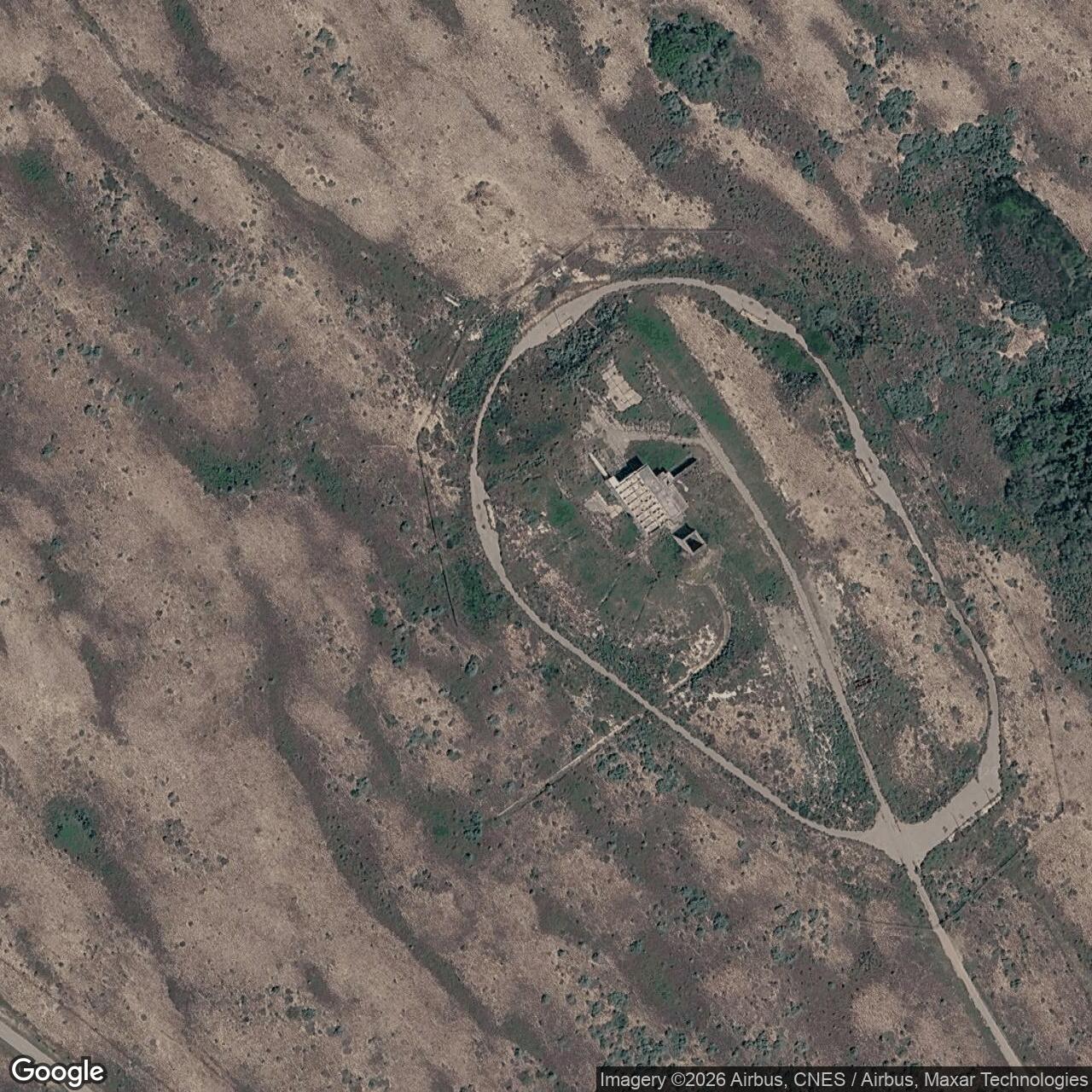
The phrase "above-ground coffin launcher" refers to the horizontal shelter used by Atlas D and Atlas E systems. In a fielded Atlas E configuration, the missile was stored horizontally in a protective coffin-like structure. Before launch, the roof or cover was opened, the missile was raised to vertical, liquid oxygen and RP-1 fuel were loaded, and the missile proceeded through checkout and firing. At Site F, that concept was used in a test environment integrated with Vandenberg's range instrumentation, launch-control systems, security, communications, and support roads. Public present-day photography shows an elongated launcher area, access road, and associated support remnants, all within the controlled installation.
Strategic and Cold War Context
OSTF-1 belonged to the first generation of American intercontinental ballistic missile operations. The Atlas program was developed during the early Cold War to give the United States a land-based weapon that could reach intercontinental targets and complicate Soviet attack planning. Unlike later solid-fueled Minuteman missiles, Atlas was a liquid-fueled weapon that required a more complex launch process. The missile's operational usefulness depended not only on its range and warhead but also on proving that crews, support equipment, countdown procedures, fueling systems, guidance systems, range safety procedures, and security arrangements could work reliably under realistic conditions.Vandenberg was essential to that transition from development missile to operational weapon. The installation had been transferred from the Army to the Air Force in 1957 and was transformed into the nation's West Coast missile and space facility. Its geography allowed land-based strategic missiles to be launched over the Pacific, and its range infrastructure made it possible to test flight performance, reentry systems, guidance, and crew procedures. The 576th Strategic Missile Squadron was created in that environment as both an early operational Atlas unit and an organization for test, training, and evaluation.
The Atlas E was a transitional weapon. It improved on earlier Atlas D systems by using all-inertial guidance and a more survivable coffin-launcher concept, but it still retained the operational burdens of a large cryogenic liquid-oxygen missile. The deployed Atlas E force at other bases used individual launch complexes rather than the grouped launchers of early Atlas D. At Vandenberg, OSTF-1 allowed the Air Force to prove the Atlas E coffin-launcher concept in a range environment, conduct operational-readiness launches, and support broader anti-missile and reentry-test missions that used Atlas E vehicles as targets or test articles.
Construction and Activation
Public construction details for OSTF-1 are limited, but the basic sequence is documented. Construction of Site F began in July 1959 and was completed sometime in 1961. The timing places Site F's construction in the same period when Vandenberg was rapidly building out a large family of Atlas facilities: the 576-A and 576-B Atlas D facilities, the Atlas E Site C and Site F coffin facilities, and the Atlas F Site D, Site E, and Site G silo-lift facilities. This was an unusually dense concentration of first-generation ICBM infrastructure because the base was not simply housing missiles; it was serving as the Air Force's main West Coast proving ground for how those missiles would be used.The 576th Strategic Missile Squadron had already begun its Atlas work by the time Site F was built. Vandenberg's official history states that the first Atlas missile launch from the base took place on 1959-09-09 from Launch Facility 576 A-2. Site F followed as an Atlas E facility, beginning with Missile 27E on 1961-06-07. That first launch did not mark a quiet activation; it was a major test event and a failure that damaged the facility. The damage and later return to service are historically important because they show that Site F was not merely a static training aid. It was a real launch facility subjected to the stresses and hazards of early liquid-fueled ICBM testing.
Missile System and Technical Role
The missile associated with OSTF-1 was the SM-65E Atlas, the Atlas E. Atlas was the Air Force's first operational ICBM. It used a thin stainless-steel, pressure-stabilized structure and a "stage-and-a-half" propulsion arrangement in which booster engines were dropped during flight while the sustainer engine continued. Atlas E used RP-1 kerosene fuel and liquid oxygen oxidizer. That fuel combination gave the missile high performance but imposed major operating requirements: liquid oxygen had to be loaded shortly before launch, and crews had to move the missile from sheltered storage to launch posture before firing.Atlas E differed from Atlas D in several important ways. Public Atlas summaries identify Atlas E as using an all-inertial guidance system and a hardened coffin-launcher approach. The missile remained a liquid-fueled system and still had to be raised and fueled before launch. Compared with later Minuteman launch facilities, an Atlas E coffin facility was slower, more exposed during final launch preparation, and more labor-intensive. Its importance lies in the fact that it was an intermediate step between early above-ground ICBM launch concepts and later hardened, dispersed, solid-fueled missile fields.
The Atlas E/F strategic payload is documented in public museum sources. The Smithsonian National Air and Space Museum identifies the Mark 4 reentry vehicle as used on Atlas E/F and Titan I ICBMs and states that it carried the W-38 nuclear warhead, with a yield of about 3.75 megatons.
OSTF-1's technical role was therefore practical and operational. It provided a place to test Atlas E launch procedures from a coffin-style facility, validate equipment compatibility, support operational-readiness firings, and supply Atlas E target vehicles for missile-defense experiments. The repeated launch record from 1961 through 1964 shows the site being used across a variety of mission types: operational-suitability launches, test flights, failure investigations, and target flights for Nike Zeus-related missions.
Operational History
Operationally, Site F / OSTF-1 was part of the 576th Strategic Missile Squadron's Atlas complex at Vandenberg. The 576th was different from the deployed Atlas squadrons at rural missile fields. Its launch sites were part of a test range, not off-base farms or ranch lands. Crews, range personnel, missile maintenance teams, contractors, instrumentation specialists, security personnel, and Strategic Air Command organizations all interacted at Vandenberg to turn engineering missiles into operationally useful weapons. Site F was one of the places where that work happened visibly through launch operations.The first launch from OSTF-1 was Atlas E Missile 27E on 1961-06-07. The mission was called "Sure Shot" and the result was a failure. The missile exploded shortly after liftoff because of combustion instability in the B-1 booster engine, causing considerable damage to the launch facility. This event is one of the most important site-specific episodes in OSTF-1's history. It shows both the hazards of early Atlas E operations and the site's resilience: the damaged facility was repaired and returned to service for later Atlas E launches.
The next launch, Missile 66E on 1962-02-28, was Operation Silver Spur 1. It also failed. The failure was attributed to a thrust-section fire, no booster jettison, and eventual range-safety destruction at T+295 seconds. Missile 67E followed on 1962-07-13 in Operation Extra Bonus and was a partial failure; a propellant-utilization malfunction caused by a liquid oxygen leak led the reentry vehicle to overshoot the target. Missile 64E launched on 1962-12-18 in the Oak Tree / NTMP K-4 mission. That flight was used as a target missile for a Nike Zeus intercept test, but it failed after a pressure-pulse-related booster turbopump lubrication problem and was destroyed at approximately T+40 seconds.
The 1963 launch year showed both improvement and continued risk. Missile 65E launched from OSTF-1 on 1963-04-24 in Operation Black Buck and was successful. Missile 62E followed on 1963-06-04 in Operation Dock Hand and was also successful. Missile 24E launched on 1963-07-26 in Operation Silver Doll but failed after a range-safety-system electrical short caused a spurious sustainer cutoff signal. Missile 72E launched on 1963-08-24 in Operation Pipe Dream and was successful, serving as a target missile for a Nike Zeus intercept test.
The final documented Atlas E launch from Site F was Missile 57E on 1964-08-27 in Operation Gallant Gal. It was a partial failure. The mission again involved a target-missile role for a Nike Zeus test, but a guidance malfunction caused early sustainer and vernier cutoff and the planned range was not achieved. The launch record as a whole is significant because it captures the mixed reality of early ICBM testing: successes, partial successes, dramatic failures, facility damage, repair, and repeated reuse of the same launch complex for increasingly specialized test work.
Deactivation and Disposal
OSTF-1's documented launch activity ended after the 1964-08-27 Missile 57E flight. The formal decommissioning of the site and the end of the squadron's Atlas-era infrastructure occurred with the 576th's inactivation in 1966.The site's deactivation was part of the broader retirement of first-generation Atlas ICBMs, not a later arms-control demolition action. Atlas was overtaken by more capable and more practical systems, especially Titan II and solid-fueled Minuteman. The Atlas E and Atlas F systems had provided essential early deterrent capability, but their liquid-oxygen fueling requirements, launch preparation burden, and limited survivability made them transitional weapons. By the mid-1960s, the Air Force no longer needed the early Atlas facilities in the same role.
The 2021 Vandenberg Space Force Base Commercial Space Master Plan lists "Site F - 576 Foxtrot (also known as OSTF-1)" among North Base ballistic-test infrastructure as an ICBM Test Site with current status "Abandoned" and user/operator "None."
Chronology
- 1957 The former Camp Cooke military reservation was transferred to the U.S. Air Force and began its transformation into the West Coast missile and space facility later known as Vandenberg Air Force Base.
- 1958-03-06 The 576th was reactivated as the 576th Strategic Missile Squadron and assigned to Cooke Air Force Base, later Vandenberg.
- 1958-04-01 The 576th Strategic Missile Squadron was assigned to Strategic Air Command as an Atlas ICBM unit and became the nation's first ICBM unit.
- 1959-07 Construction of Site F / 576 Foxtrot / OSTF-1 begans.
- 1959-09-09 Vandenberg conducted its first Atlas launch from Launch Facility 576 A-2.
- 1961 Construction of Site F / OSTF-1 was completed sometime during the year.
- 1961-06-07 Atlas E Missile 27E, Operation Sure Shot, launched from OSTF-1 and failed shortly after liftoff, causing considerable damage to the launch facility.
- 1962-02-28 Atlas E Missile 66E, Operation Silver Spur 1, launched from OSTF-1 and failed.
- 1962-07-13 Atlas E Missile 67E, Operation Extra Bonus, launched from OSTF-1 and was a partial failure.
- 1962-12-18 Atlas E Missile 64E, Operation Oak Tree / NTMP K-4, launched from OSTF-1 as a Nike Zeus target mission and failed.
- 1963-04-24 Atlas E Missile 65E, Operation Black Buck, launched successfully from OSTF-1.
- 1963-06-04 Atlas E Missile 62E, Operation Dock Hand, launched successfully from OSTF-1.
- 1963-07-26 Atlas E Missile 24E, Operation Silver Doll, launched from OSTF-1 and failed.
- 1963-08-24 Atlas E Missile 72E, Operation Pipe Dream, launched successfully from OSTF-1 as a Nike Zeus target mission.
- 1964-02-12 Atlas E Missile 48E, Cool Water, launched from OSTF-1 and failed.
- 1964-08-27 Atlas E Missile 57E, Operation Gallant Gal, launched from OSTF-1 as a Nike Zeus target mission and was a partial failure.
- 1966-04-02 Site F / OSTF-1 was decommissioned, and the 576th Strategic Missile Squadron was deactivated.
- 2021-05-14 Vandenberg Air Force Base was renamed Vandenberg Space Force Base.
- 2021-06-03 The Vandenberg Space Force Base Commercial Space Master Plan listed Site F - 576 Foxtrot, also known as OSTF-1, as an abandoned ICBM test site with no current operator.
All Atlas Missile Silo Locations