Nike Missile Site S-03 IFC, Kenmore Washington
Longitude: -122.27824360922700
This location was part of the Seattle Defense Area
Site ID: S-03
This site controlled the missiles at the Launch Area located here.
Site Role: IFC
A typical Nike air defense site consisted of two separate parcels of land. One area was known as the Integrated Fire Control (IFC) Area. This site contained the Nike system's ground-based radar and computer systems designed to detect and track hostile aircraft, and to guide the missiles to their targets.
The second parcel of land was known as the Launcher Area. At the launcher area, Nike missiles were stored horizontally within heavily constructed underground missile magazines. A large, missile elevator brought the Nikes to the surface of the site where they would be pushed across twin steel rails to one of four satellite launchers.
Elaboration on how Nike worked here.
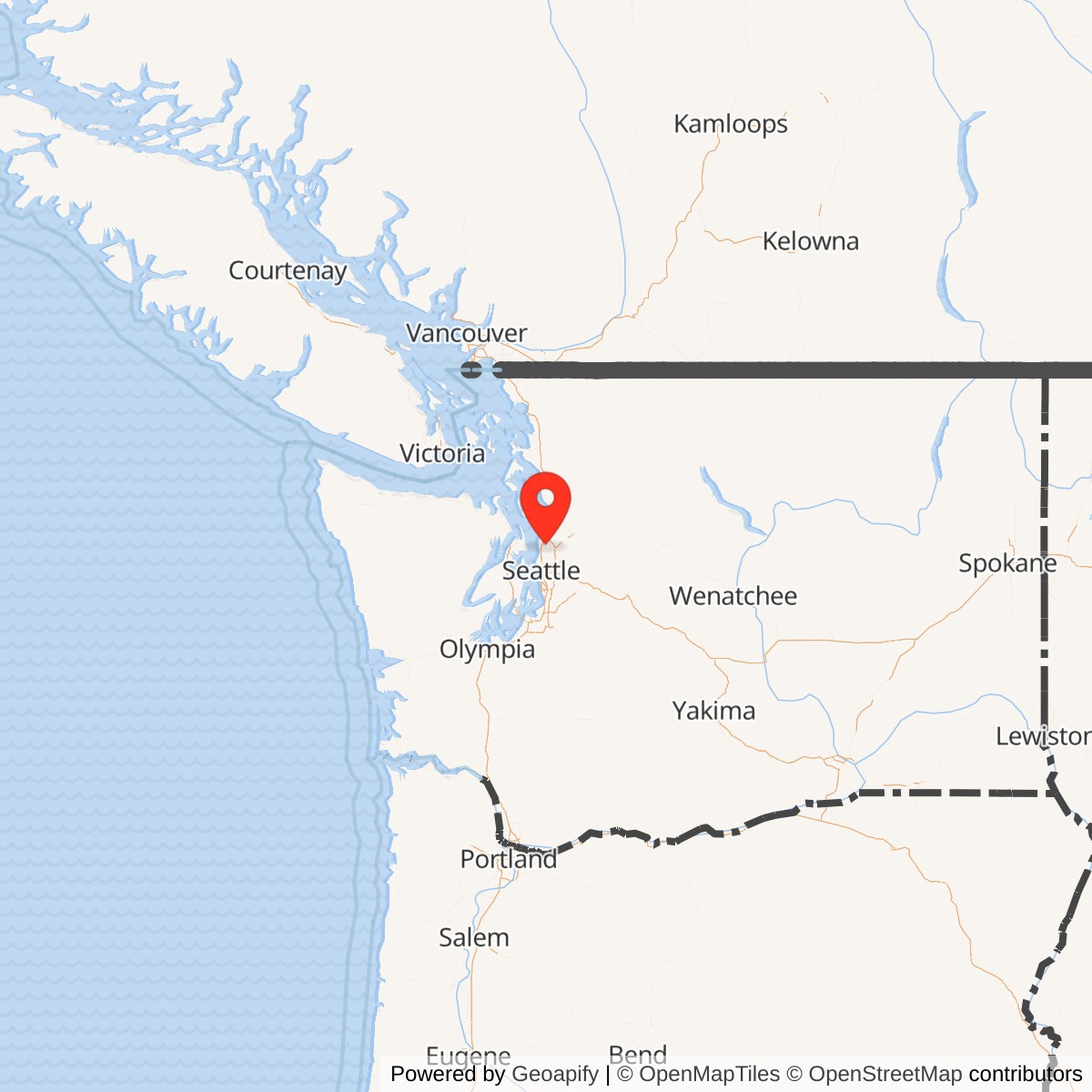

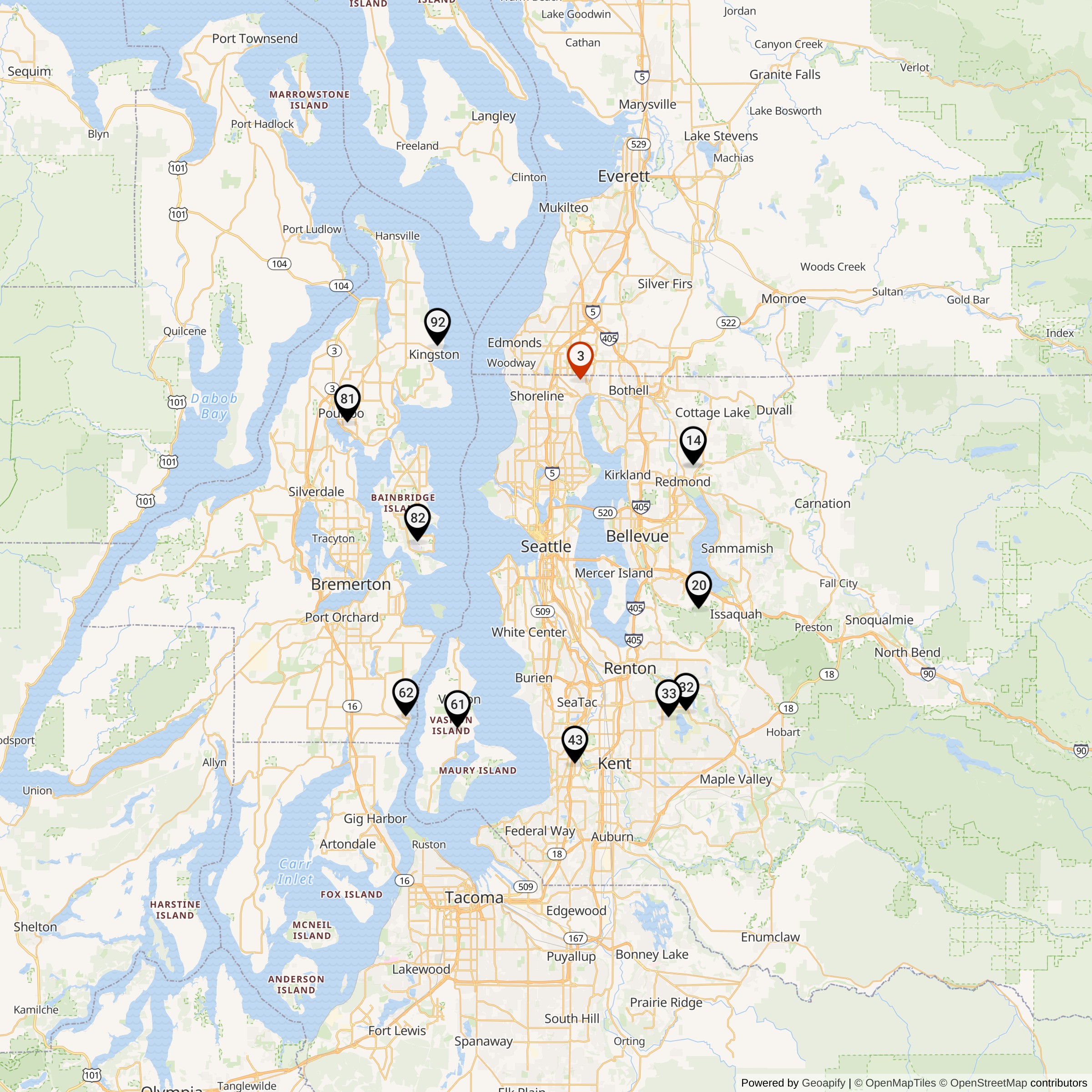
Nike Missile Site S-03 was a former U.S. Army Nike Ajax surface-to-air missile battery in the Seattle Defense Area. It was located between Kenmore, Bothell, Brier, and Lake Forest Park in the north side of the Seattle metropolitan defensive ring. The site is no longer an active military installation. The federal Nike inventory lists S-03 as active from 1957 to March 1964.
S-03 was an Ajax-only site. It was not one of the Seattle batteries converted to Nike Hercules. Its federal missile-type listing is Nike 2B/20A/8L-A, meaning that it had two B-type magazines, an Ajax missile allowance, and eight Ajax launchers.
The S-03 launcher area was near 130 228th Street SW, Bothell, Washington. The S-03 integrated fire-control and administrative area was west-southwest of the launch area, in the vicinity now associated with Horizon Heights Park. The two parts were separated because a Nike battery had to place its radars and missile-tracking equipment away from the launch magazines while preserving line-of-sight geometry between the control and launch elements.
S-03 existed because Seattle was a major Cold War target area. The city and surrounding Puget Sound region contained Boeing Aircraft Company, naval and air installations, port facilities, transportation corridors, industrial plants, and regional command and logistics functions. The federal missile-site history describes Seattle as the home of Boeing and military installations and says the city was ringed by defenses manned by Regular Army and Washington National Guard units. The Seattle District of the U.S. Army Corps of Engineers handled land acquisition, design, and construction supervision for the area's Nike sites.
The Seattle Defense Area grew out of the early Cold War fear that Soviet long-range bombers might attack the United States with nuclear weapons. Nike batteries were not strategic retaliatory weapons; they were defensive surface-to-air missile sites intended to intercept attacking aircraft before those aircraft reached their targets. In the Seattle region, the batteries formed a ring around Puget Sound rather than being concentrated in the downtown core. That ring reflected the geography of the target area. Seattle, Tacoma, Everett, Bremerton, Lake Washington, Puget Sound, Boeing facilities, military installations, shipyards, and transportation routes all mattered to Cold War planners.
The Seattle Defense Area was a network of eleven launch locations with radar sites and an area missile-control center at Fort Lawton. The first Nike Ajax missiles arrived in October 1954, temporary Nike batteries opened while permanent sites were being built, and the permanent batteries formed a defense ring around Puget Sound. S-03 belonged to this permanent ring.
Site Layout And Function
Like other Nike batteries, S-03 was divided into a control area and a launch area.The IFC, or Integrated Fire Control area, contained the radars, fire-control equipment, and command functions that detected, identified, tracked, and engaged incoming targets. Nike Ajax fire control used acquisition radar to find targets, target-tracking radar to follow the enemy aircraft, missile-tracking radar to follow the outgoing Nike missile, and analog computer equipment to calculate interception. The IFC was the brain of the battery. Without it, the launch area was only a storage and firing facility.
The launch area contained the missiles, magazines, launchers, missile assembly and handling functions, guard facilities, and support buildings. S-03's missile-type entry and later site notes identify it as a two-magazine, eight-launcher Nike Ajax battery. Nike Ajax launch areas normally stored missiles horizontally in underground magazines. When ordered to fire, elevators raised missiles and launchers to the surface, crews prepared the launchers, and the missile was fired under guidance from the IFC.
S-03's launcher site was near 130 228th Street SW, Bothell. Later sources identify this area with the FEMA Region X / Region 10 headquarters and an Army Reserve presence. EPA's site profile for North Seattle Nike S-03 gives the launch-site street as 130 - 228 Street SW, Bothell, WA 98021, and identifies the site as not on the National Priorities List.
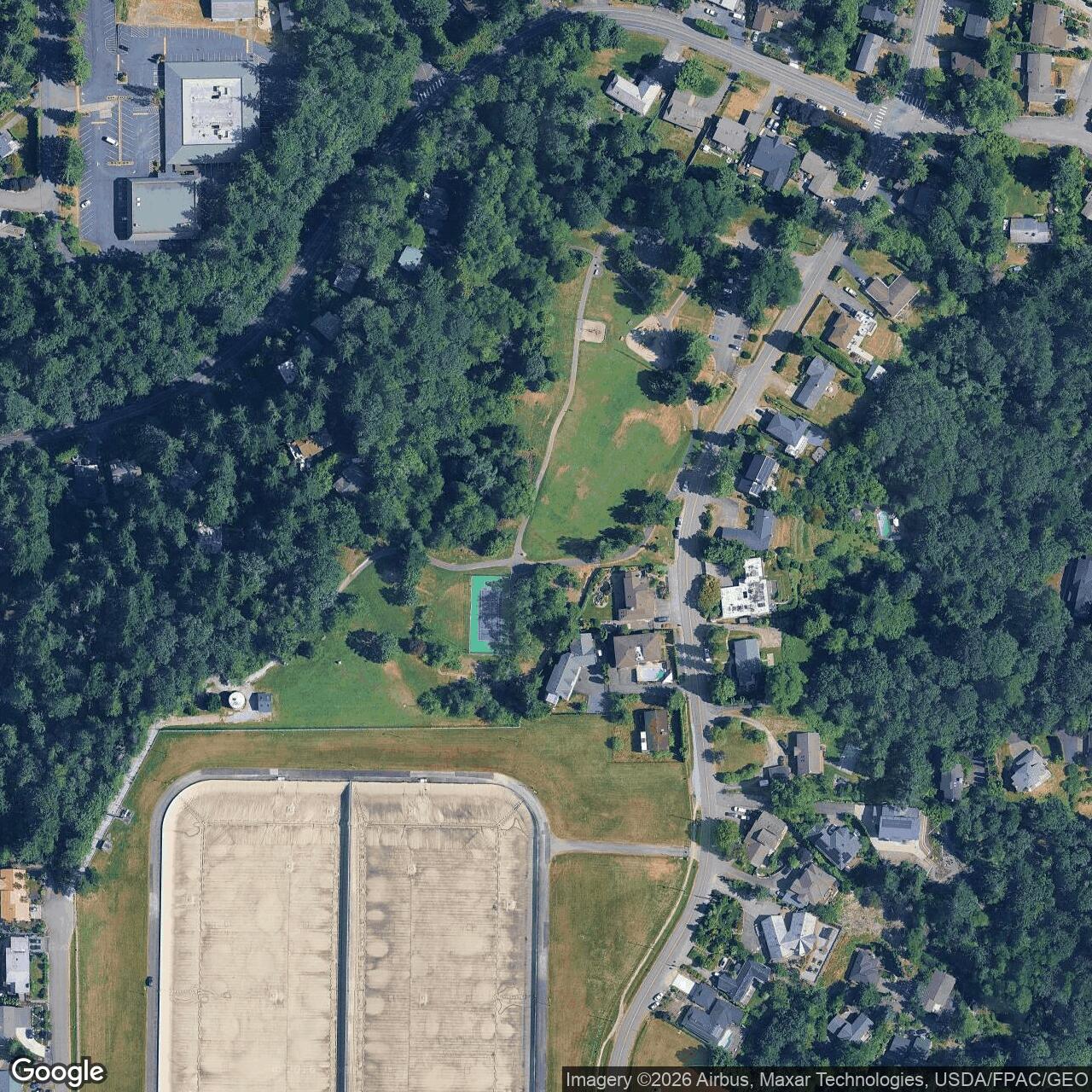
S-03's IFC was on 47th Avenue NE, the location is now Horizon Heights Park with its structures removed.
Operational History
S-03 entered the Seattle Nike network during the permanent buildout of the mid-1950s. The federal inventory lists S-03 as a Kenmore site in the Seattle Defense Area, active from 1957 to March 1964. HistoryLink gives a slightly earlier operational year, saying the Kenmore/Bothell site became operational in 1956 and remained in service until March 1964. This discrepancy is not unusual in Nike histories, because sources sometimes distinguish between construction completion, partial battery manning, operational readiness, and formal active-service listing.The battery was part of the northern and northeastern portion of the Seattle ring. Its position allowed it to help cover the northern approaches to the metropolitan area and the Lake Washington / Puget Sound industrial-defense zone. It complemented other Seattle batteries at Redmond, Cougar Mountain / Issaquah, Lake Youngs, Kent / Midway, Vashon Island, Olalla, Poulsbo, Winslow / Bainbridge Island, and Kingston.
The Army originally manned the Seattle batteries with Regular Army units. HistoryLink states that the Regular Army initially operated the sites, and that on July 1, 1959, Washington Army National Guard personnel took over four sites: Kent, Kenmore, Cougar Mountain, and Olalla. Ed Thelen's S-03 notes identify the operating units as C/28th, C/2/43d, and Washington Army National Guard A/2/205th, with the Guard unit closing out operations in March 1964.
The Seattle batteries developed a strong record in air-defense training. The federal history says Army units manning Seattle-area Nike Ajax batteries earned a reputation as among the best in the nation, winning the ARADCOM Commander's Trophy in 1956, 1957, and 1958 after high scores at Annual Service Practices at McGregor Range. HistoryLink similarly notes that Regular Army and National Guard missilemen received awards at Fort Bliss / McGregor Range firing practices and that Seattle-area National Guard batteries appeared on the 1963 honor roll.
S-03 remained an Ajax-only battery through its active life. This is the central technical point in the site's history. In Washington, only selected sites were upgraded to Hercules. The Nike Hercules was installed at six Washington locations overall and in the Seattle area, only three sites survived as Hercules batteries. The federal Seattle Defense Area narrative identifies the surviving Hercules locations as S-13 Redmond, S-61 Vashon Island, and S-92 Kingston. S-03 was not on that list.
Why S-03 Closed
S-03 closed in March 1964 as part of the rationalization of the Seattle Defense Area after Nike Hercules deployment. The shift from Nike Ajax to Nike Hercules did not simply replace one missile with another at every location. Hercules had longer range, higher altitude performance, and much greater destructive capacity. Because of that, fewer batteries could cover a larger air-defense area. Rather than spend the money to modify every Ajax battery, the Army converted selected sites and closed many others.S-03 was one of the sites closed rather than modernized. Its March 1964 deactivation fits the broader Seattle pattern: the Ajax-only batteries were phased out from 1960 through 1964, while the Hercules batteries at Redmond, Vashon, and Kingston remained into 1974. With fewer surviving Hercules sites, the complex Fort Lawton Missile Master system gave way to a simpler BIRDIE coordination system.
Closure and Post-Closure Reuse
S-03 is no longer active as a missile site. The IFC/control area has been obliterated as a Nike facility. The control and administrative center on 47th Avenue NE became Horizon Heights Park and structures were removed. Ed Thelen's field notes describe the former control site as completely obliterated, with only limited asphalt remnants observed.The launch area has had a more substantial reuse. The federal inventory describes the launch site as partially intact and associated with FEMA Agency Region X headquarters. Eastside Heritage Center says the S-03 launch site near 130 228th SW Street remains active in a new role as FEMA's Pacific Northwest headquarters, and that it is difficult to separate what was Nike-era construction from later additions. The Bothell-Kenmore Reporter described the Bothell bunker at 130 228th Street SW as a Cold War-era underground facility used as FEMA Region 10 headquarters, with a heavily reinforced underground space serving emergency-management functions.
Current Status
The former IFC/control area is now a park landscape associated with Horizon Heights Park. The Nike buildings and radar structures have been removed.The former launch area is heavily modified and reused by federal/emergency-management and reserve-related functions near 130 228th Street SW, Bothell. The aboveground Nike launch equipment is gone. Some underground or subsurface Cold War-era infrastructure may survive, but the publicly visible landscape is dominated by later FEMA and Army Reserve use rather than by intact Nike launch hardware. Because it is a secured government/emergency-management site, access is restricted.
Chronology
- 1954 Nike Ajax missiles began arriving in the Seattle Defense Area, and temporary batteries were opened while permanent launch and radar sites were under construction.
- 1956 HistoryLink states that S-03 Kenmore/Bothell became operational in 1956.
- 1957 The federal Nike inventory lists S-03 as beginning active service in 1957.
- 1957 S-03 functioned as a Nike Ajax battery in the Seattle Defense Area, with separate IFC and launch areas in the Kenmore/Bothell/Brier/Lake Forest Park vicinity.
- 1958 Nike Hercules began entering operational service elsewhere in the U.S. Army air-defense system, eventually causing many Ajax-only sites to be closed rather than converted.
- July 1, 1959 Washington Army National Guard personnel took over several Seattle-area Nike sites, including Kenmore/S-03.
- 1960 Gun batteries were no longer part of the Seattle-area defense net, while missile batteries remained the primary local ground-based air-defense layer.
- 1960-1963 Nike Ajax sites in the Seattle Defense Area were phased out as selected Hercules sites took over the reduced missile-defense mission.
- 1963 Seattle-area National Guard missile batteries received high marks in ARADCOM honor-roll recognition.
- March 1964 S-03 closed as an operational Nike Ajax battery.
- Post-1964 The former IFC/control area was cleared of Nike structures and became associated with Horizon Heights Park.
- Post-1964 The former launch area was reused for federal and reserve functions, later identified with FEMA Region X / Region 10 headquarters and an Army Reserve center.
- 2008 The Bothell-Kenmore Reporter described the 130 228th Street SW underground bunker as FEMA Region 10's permanent headquarters and regional response facility.
- 2020 Eastside Heritage Center published a local-history article describing S-03's launch area reuse by FEMA and the control-area reuse as Horizon View / Horizon Heights Park.
List of all Nike Installations in Washington