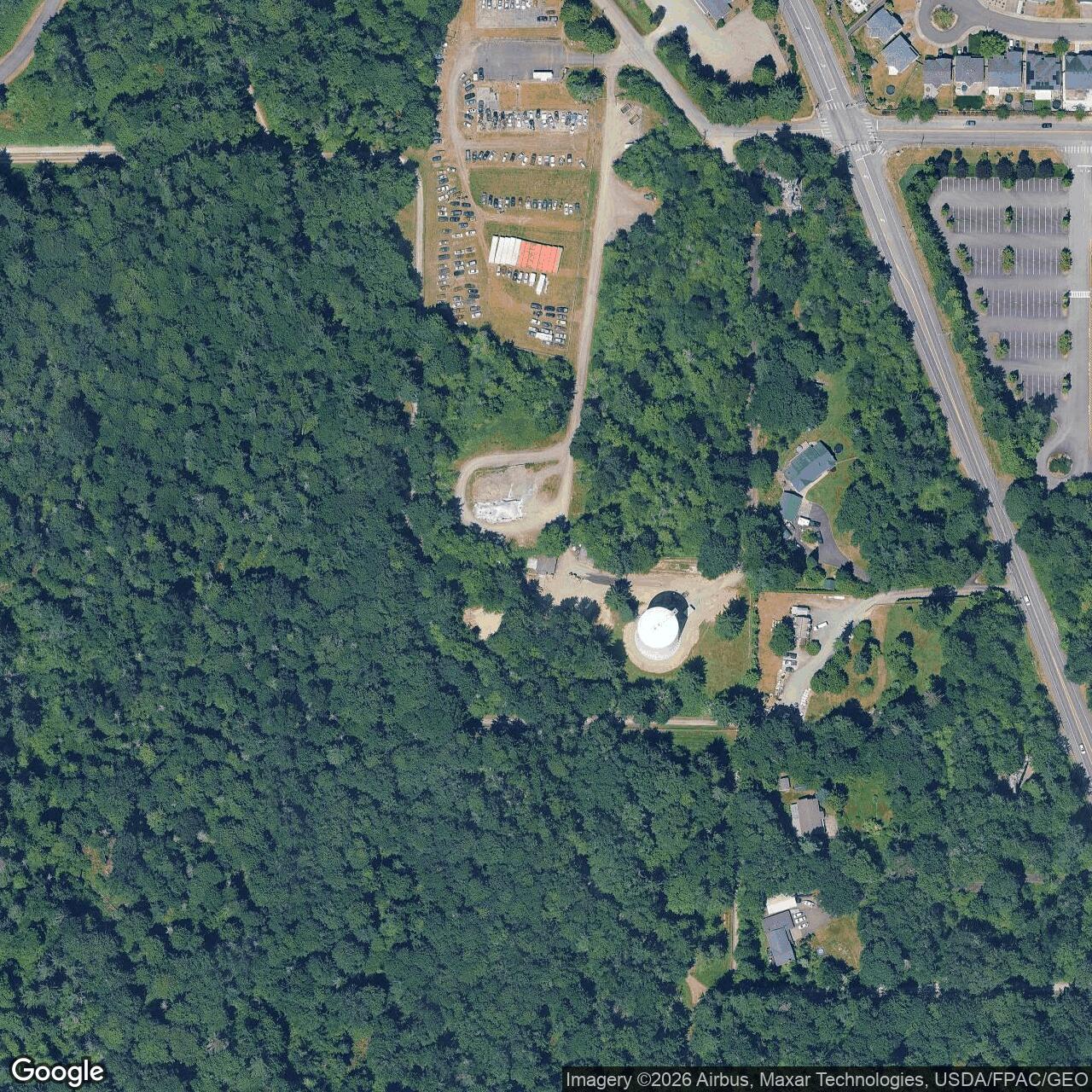
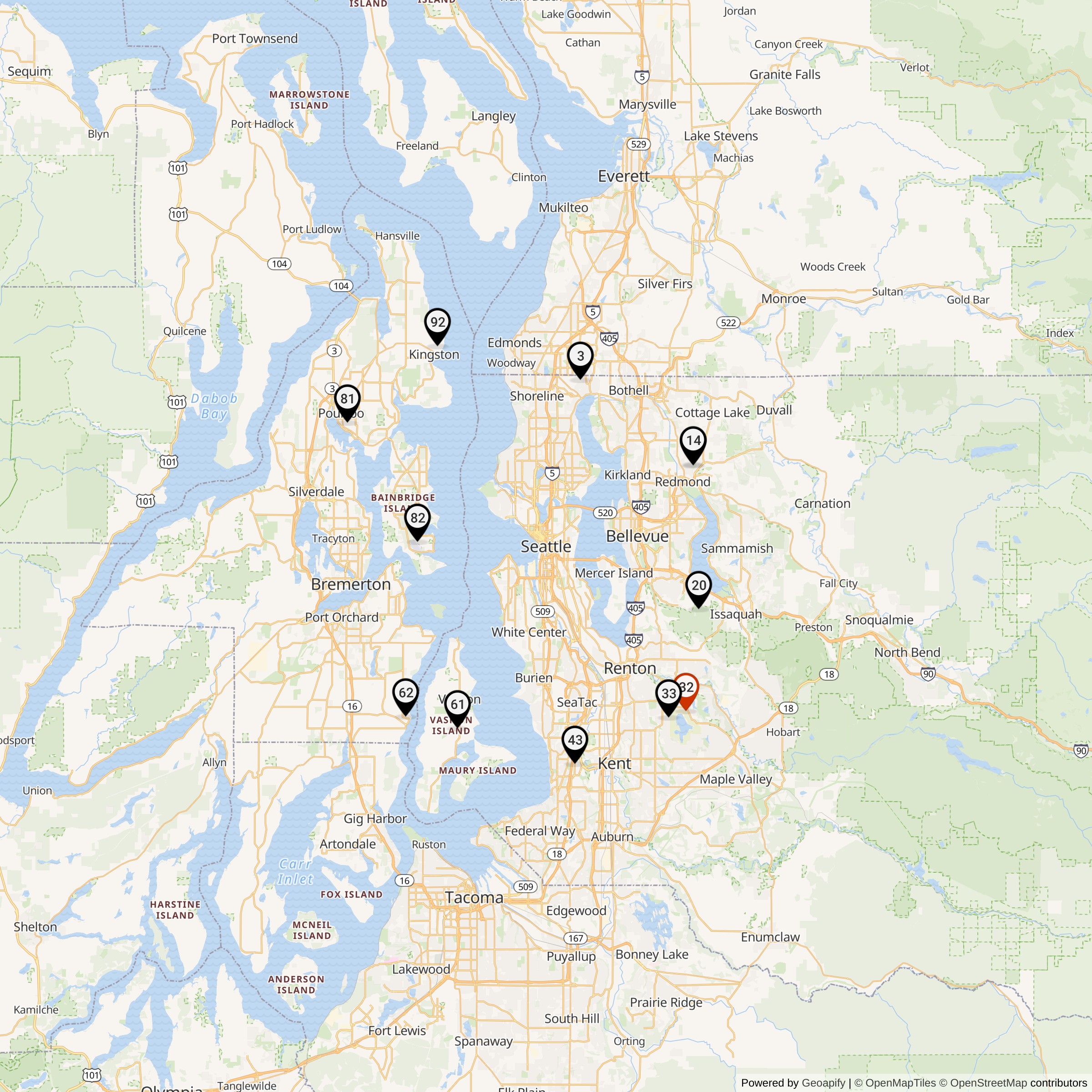
Nike Missile Site S-32 IFC, Lake Youngs Washington
Longitude: -122.11858040309900
This location was part of the Seattle Defense Area
Site ID: S-32
Missile-type listing: Nike 1B,2C/20A/12L-A
This site controlled the missiles at the Launch Area located here.
Site Role: IFC
A typical Nike air defense site consisted of two separate parcels of land. One area was known as the Integrated Fire Control (IFC) Area. This site contained the Nike system's ground-based radar and computer systems designed to detect and track hostile aircraft, and to guide the missiles to their targets.
The second parcel of land was known as the Launcher Area. At the launcher area, Nike missiles were stored horizontally within heavily constructed underground missile magazines. A large, missile elevator brought the Nikes to the surface of the site where they would be pushed across twin steel rails to one of four satellite launchers.
Elaboration on how Nike worked here.
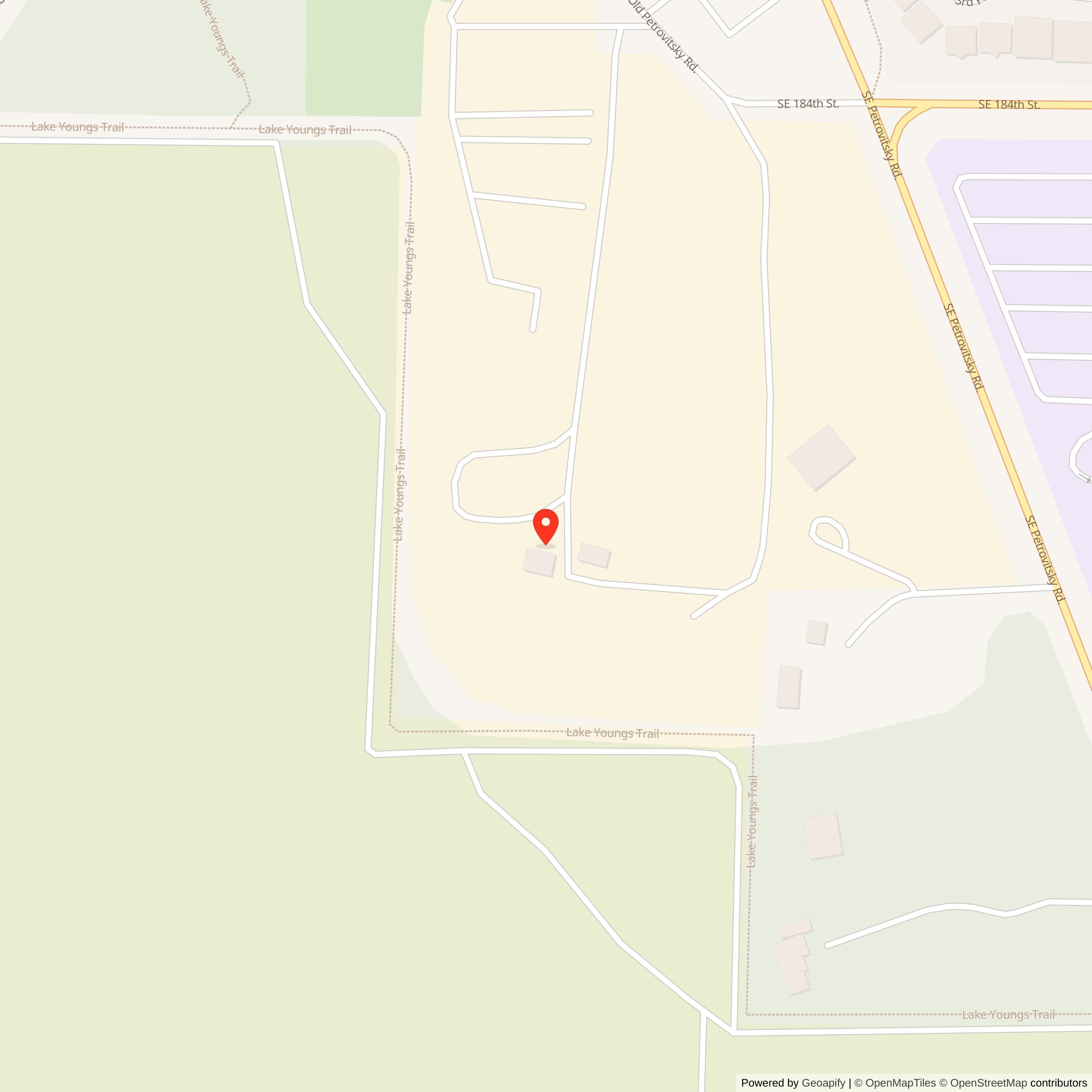
Nike Missile Site S-32 was a U.S. Army Nike Ajax air-defense battery in the Seattle Defense Area. It was located near Lake Youngs, southeast of Seattle and near Renton, Washington, and formed one half of the paired S-32/S-33 Lake Youngs Nike complex. S-32 was not a Nike Hercules site. It remained an Ajax-only installation, with the federal site inventory listing it as Nike 1B,2C/20A/12L-A and in active service from 1956 to December 1961.
The site is inactive and has not functioned as a military air-defense installation since December 1961. Its former Integrated Fire Control area was later reused for King County Sheriff's Department operations, while the shared S-32/S-33 launch area was reused by Maple Valley Christian School / South King County Activity Center functions.
Location and Site Layout
S-32 was part of the southeastern arc of the Seattle Defense Area. The Army sited the Lake Youngs batteries where they could help cover the southern and southeastern approaches to the Seattle-Puget Sound target area. That target area included Boeing facilities, the Puget Sound naval and shipyard complex, Fort Lewis, McChord Air Force Base, port facilities, and other military-industrial assets around the central Puget Sound region.Like other Nike batteries, S-32 was divided into two major functional areas. The Integrated Fire Control area contained the acquisition, target-tracking, and missile-tracking radars, the computer and control equipment, administrative buildings, and communications facilities. The launch area held the missiles in underground magazines and raised them to surface launchers when the battery was placed in firing condition. The IFC and launcher had to be separated by enough distance for radar line-of-sight and safety, but close enough to operate as one battery.
The Lake Youngs arrangement was unusual because S-32 and S-33 shared a single large dual launch facility. Instead of a standard single-battery launch area, the Lake Youngs launcher had 24 launchers serving the two battery designations. Each battery had a separate control site. S-32's control site was near the corner of SE 184th Street and Petrovitsky Road, while the shared launch facility lay near the end of 174th Avenue SE. S-33's control site was farther south, near 14631 SE 192nd Street.
Mission and Purpose
S-32 existed to intercept Soviet bomber aircraft before they could reach the Seattle-Puget Sound target complex. The original Nike Ajax system was designed in the late 1940s and early 1950s as a response to the perceived threat of massed, high-altitude bomber attack. The system relied on radar detection, radar tracking, analog computer fire control, and command guidance. The missile itself carried conventional high-explosive warheads and was launched from rails after being raised from its underground magazine.The Seattle Defense Area was one of Washington state's three major Nike deployment zones, along with the Fairchild AFB / Spokane area and the Hanford nuclear reservation. Seattle's defenses were arranged in a ring around the metropolitan and industrial target area. The Lake Youngs position helped thicken that ring on the southeast side, complementing other Seattle-area batteries at Redmond, Kenmore/Bothell, Cougar Mountain/Issaquah, Kent/Midway, Vashon Island, Olalla, Poulsbo, Winslow/Bainbridge Island, and Kingston.
Operational History
The Seattle Defense Area began receiving Nike missiles during the mid-1950s. The first facilities were temporary or transitional positions, followed by permanent launch and radar/control sites built around the Puget Sound perimeter. S-32 entered service in 1956 as part of this permanent network.S-32's operational life was short because it was an Ajax-only site. Nike Ajax represented the first deployed generation of the Army's Nike system. It was effective within its design limits, but it used a liquid-fuel sustainer motor and was shorter-ranged than the later solid-fuel Nike Hercules. When Hercules entered the national air-defense network, the Army did not convert every Ajax site. Instead, it selected fewer sites for conversion and closed many of the remaining Ajax batteries. In Washington, the Hercules conversions centered on selected sites such as Redmond S-13/S-14, Vashon S-61, and Kingston S-92 in the Seattle area, while S-32 and S-33 were among the Ajax sites closed rather than upgraded.
The Lake Youngs dual launch site allowed S-32 and S-33 to share a large missile-storage and launch installation while operating separate fire-control systems. This gave the southeastern Seattle sector a dense Ajax firing position during the short period when the site was active.
Post-Closure Reuse and Site Condition
After military closure, the S-32 control and launch properties moved into civilian or local-government reuse. The S-32 IFC/control site became associated with King County Sheriff's Department operations. Later environmental records also identify a related King County police/special operations cleanup listing in the vicinity of SE Old Petrovitsky Road.The shared S-32/S-33 launch area was reused by Maple Valley Christian School / South King County Activity Center uses. HistoryLink states that Maple Valley Christian School occupied the launch site on 174th Avenue SE, that the facility had been a dual launch site with 24 launchers, and that former barracks, headquarters, and mess hall buildings were well maintained and in school use, while the launch magazine was abandoned and overgrown. Ed Thelen / NikeSiteSearchers notes similarly described the launch property as divided between Maple Valley Christian School and the South King County Activity Center, with buildings intact and in good condition, but with the large launch area weathered, green, and moldy; one magazine access point was noted as flooded during a 1990 field visit.
List of all Nike Installations in the Seattle Defense AreaList of all Nike Installations in Washington