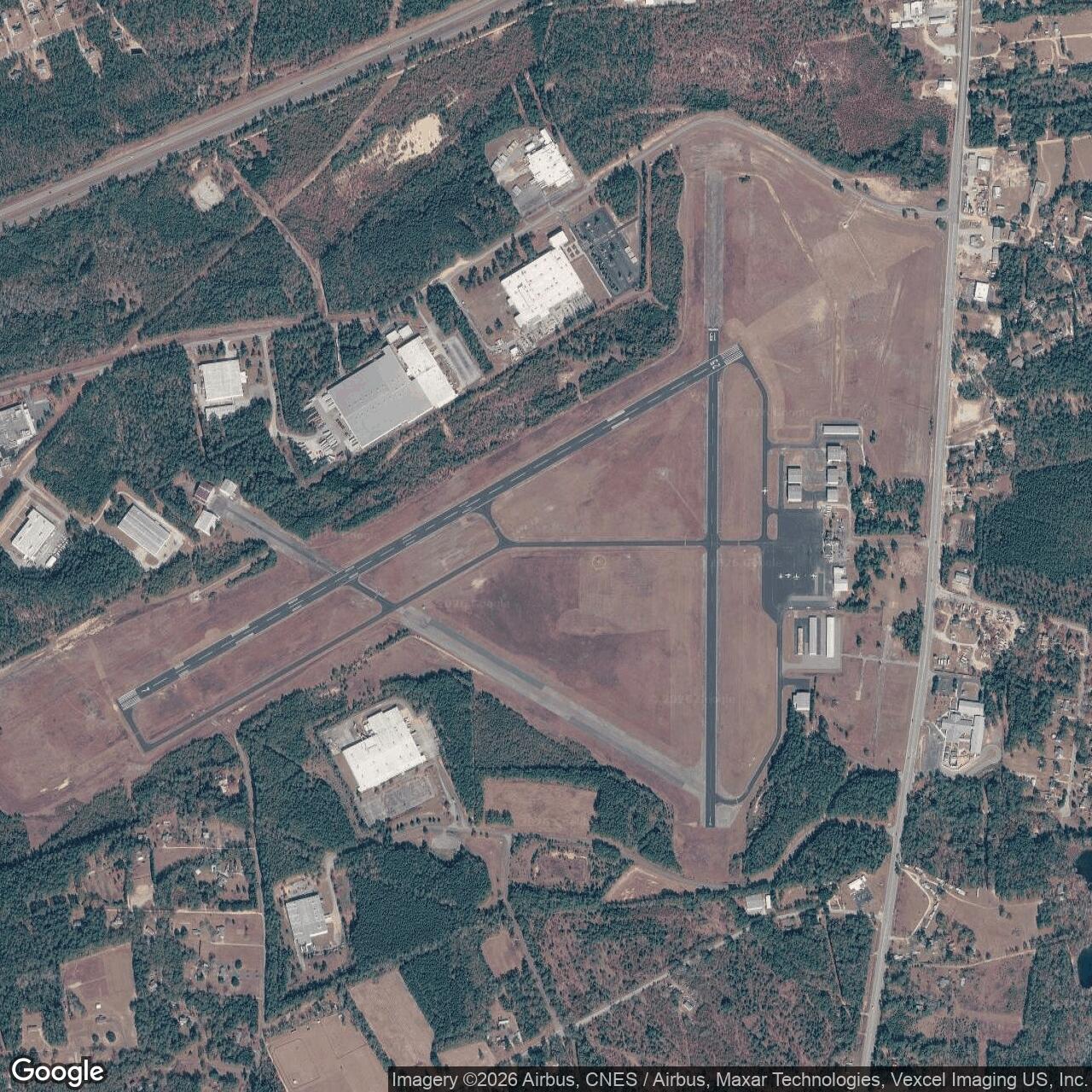
Aiken Air Force Station - Now Aiken Municipal Airport, South Carolina
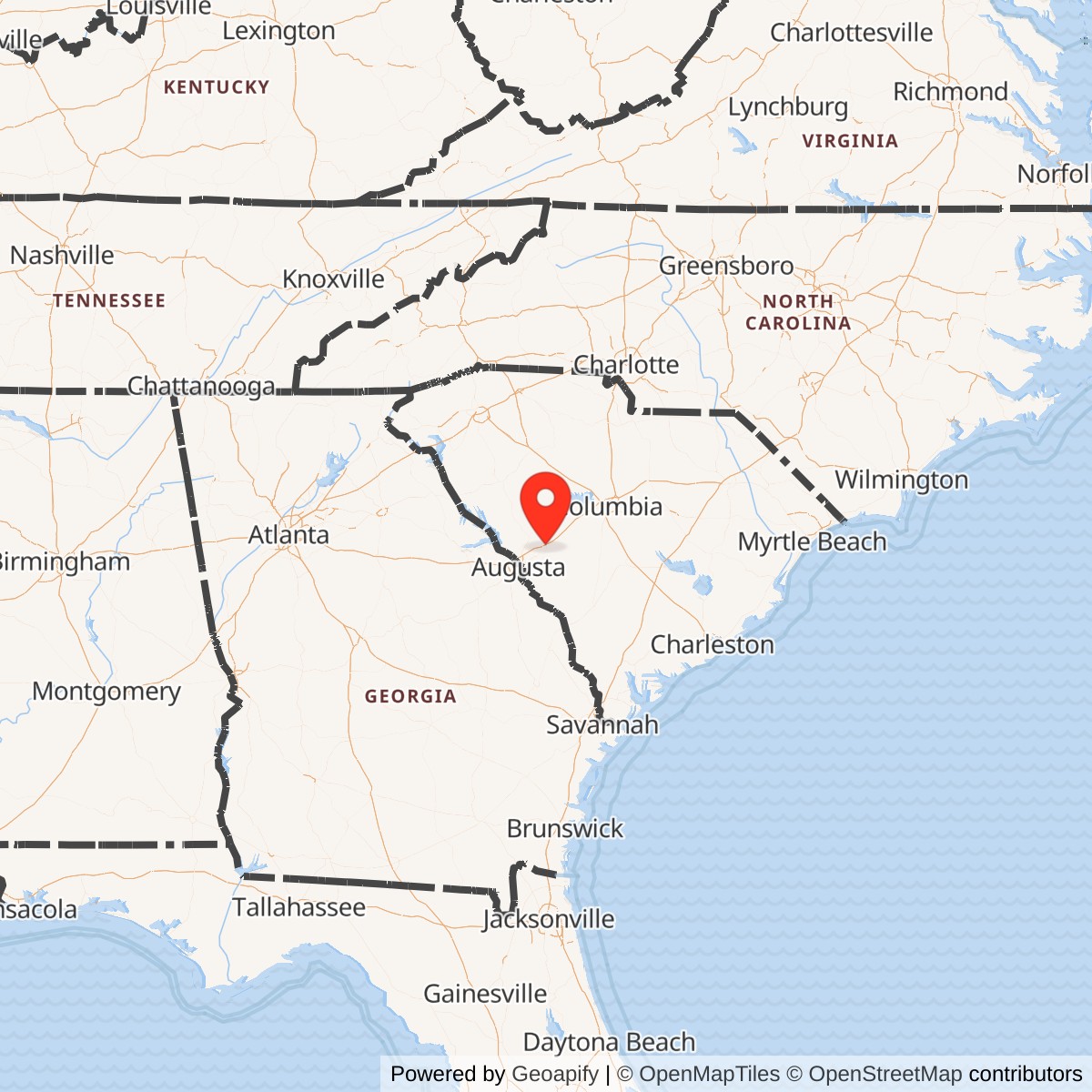
Longitude: -81.6850
Aiken Air Force Station was a United States Air Force radar facility located approximately 6.4 miles north-northeast of Aiken, South Carolina, that operated from 1955 to 1975 as part of the nation's Cold War air defense network. Originally constructed during World War II as Aiken Army Air Field, the site served as a training base for Army Air Forces reconnaissance and fighter pilot units before being repurposed for radar surveillance under the Air Defense Command. It featured advanced radar systems, including the AN/FPS-7C search radar and AN/FPS-26A height-finder, and integrated into the Semi-Automatic Ground Environment (SAGE) system to detect and track aircraft threats. The station, designated as SM-159 and later NORAD ID Z-159, was manned by the 861st Radar Squadron and played a key role in providing real-time data to direction centers for intercept operations.
The site's WWII origins trace back to its activation on December 24, 1942, as a satellite airfield of Morris Army Airfield, North Carolina, under the Third Air Force's III Tactical Air Command. It supported group training for tactical reconnaissance squadrons, such as the 66th Tactical Reconnaissance Group, equipped with aircraft like the P-40 Warhawk and P-51 Mustang, until active flying ceased in February 1945. Post-war, the facility was transferred to local authorities and converted into Aiken Municipal Airport, remaining in civilian use until the Air Force reacquired it in 1955 for Cold War defense needs.
As a Phase-II Mobile Radar station, Aiken AFS achieved operational status in December 1955 with initial radars including the AN/FPS-3 search, AN/MPS-14 height-finder, and AN/TPS-10D temporary model, functioning initially as a Ground-Control Intercept site. Upgrades in the late 1950s added the AN/FPS-20 search radar, and by 1961, it connected to SAGE DC-09 at Gunter Air Force Base, Alabama, enabling automated data processing on aircraft position, speed, and identification. The station also incorporated Backup Interceptor Control (BUIC I) capabilities in 1963 for manual redundancy. Following its inactivation on June 30, 1975, the site was transferred to the Federal Aviation Administration for continued radar use before being fully dismantled, with portions repurposed as a prison until the 1990s.