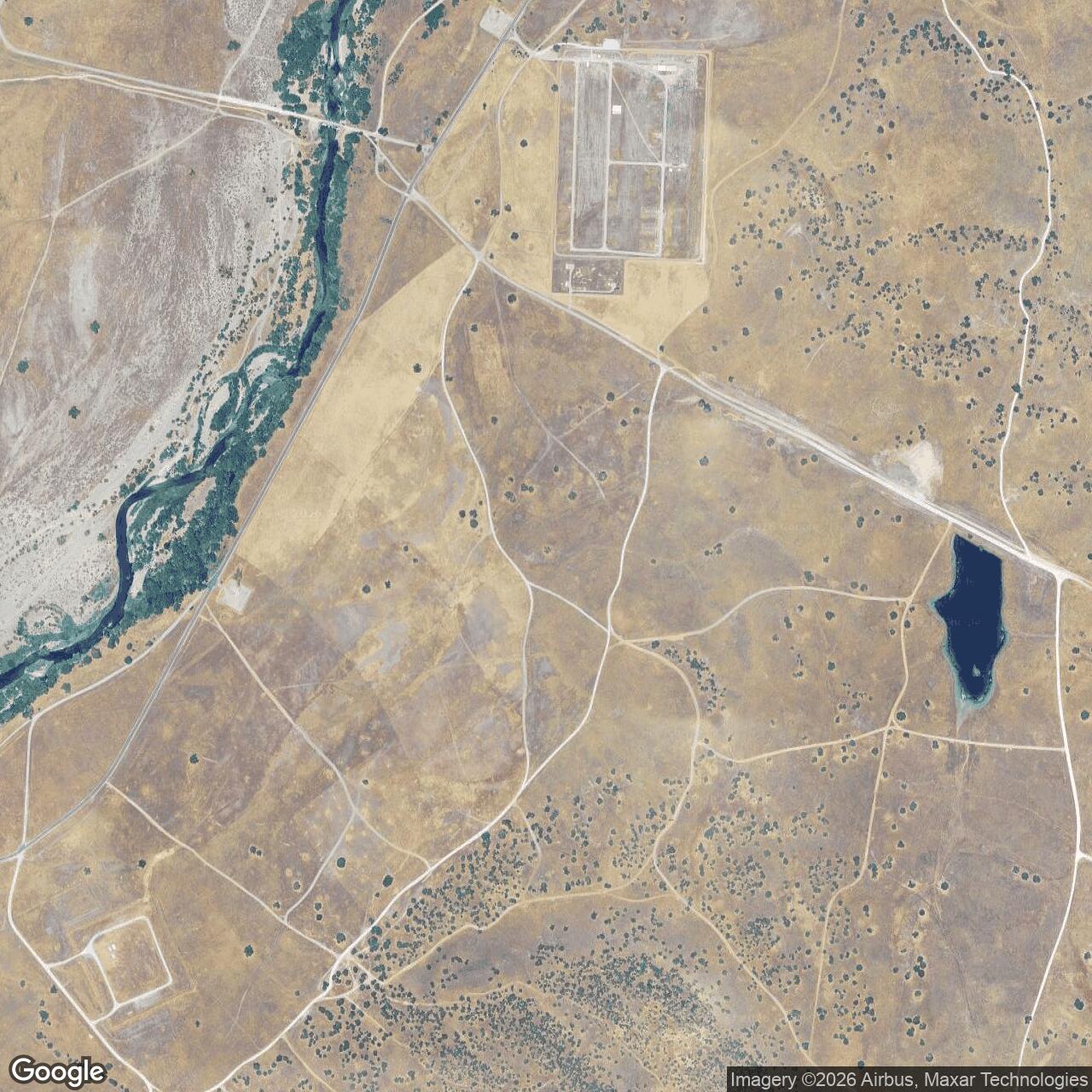
Camp Roberts Army Training Site, San Miguel California
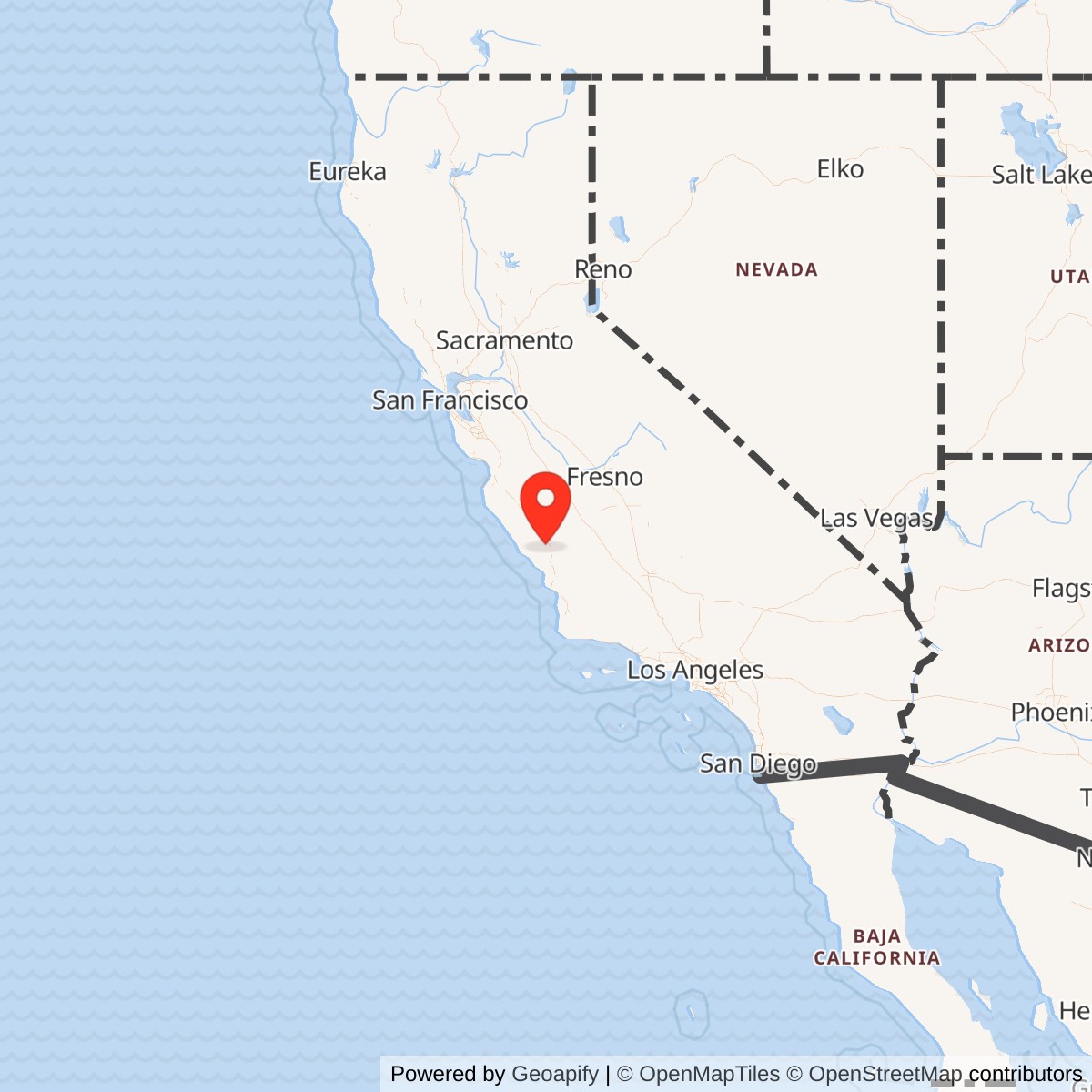
Longitude: -120.785331
Current Role: Active California Army National Guard maneuver training center and reserve-component/mobilization facility; supports CAARNG, Army Reserve, Marine Corps Reserve, active-component, joint, foreign, state/local, maintenance, SATCOM, airfield, unmanned-aircraft, live-fire, and emergency-response training missions.
Camp Roberts is an active California Army National Guard training installation and one of the most important Army training landscapes on the Central Coast of California. It began as a World War II Army replacement-training camp, was revived for the Korean War, remained useful during the Vietnam era as a heavily used "inactive" post, and passed to California Army National Guard control in 1971. The present installation occupies about 42,784 acres and remains the largest California Army National Guard training site. Its terrain, live-fire ranges, maneuver areas, airfield facilities, river crossings, drop zones, maintenance infrastructure, and long location along U.S. Highway 101 make it a rare example of a World War II mobilization camp that did not disappear after demobilization.
The site sits in the old Rancho Nacimiento landscape, north of Mission San Miguel and along the Mission Trail / El Camino Real corridor. That geography mattered before the Army arrived. The area offered a broad valley floor, surrounding hills, open ranch land, rail and highway access, and enough isolation to support mass training without placing a major camp inside a dense city. Those same qualities still matter. Camp Roberts lies roughly midway between Los Angeles and San Francisco and provides a training space large enough for armor, artillery, mechanized infantry, aviation, airborne, engineer, maintenance, and simulated urban-combat activity.
During World War II it became the largest U.S. Army basic-training installation in the country, with Infantry Replacement Training Center and Field Artillery Replacement Training Center missions. More than 436,000 soldiers passed through its 17-week World War II training cycle, and the camp's population reached about 45,000 troops in 1944. It had a 750-bed hospital, internment facilities for German and Italian prisoners of war, an immense parade field, tent cities, recreation facilities, a major post office and rail depot, and a support workforce that turned the camp into a temporary city. In the Korean War, the Army reactivated it for Regular Army training and added an Armored Replacement Training Center; by the end of that conflict, approximately 300,000 additional troops had completed training there.
Mission Evolution
The Army considered the future Camp Roberts landscape long before World War II. In 1902, Congress authorized a study to identify land suitable for new military posts, and the Army Corps of Engineers examined the area. The land was assessed favorably in some reports but was not acquired at that time. The emergency expansion of 1940 changed the calculation. Congress authorized the Army to lease Rancho Nacimiento and adjacent ranches, and the Army eventually purchased the leased parcels and additional land in 1943. Construction of the main garrison began on November 15, 1940.
The first working name was Camp Nacimiento Replacement Training Center. During construction, the Army changed the name to Camp Roberts in honor of Corporal Harold W. Roberts, a World War I tank driver from San Francisco who died in the Meuse-Argonne fighting after actions credited with saving fellow soldiers. The name is distinctive because Camp Roberts is one of the few major Army installations named for a noncommissioned officer. Its dedication to an enlisted Medal of Honor recipient gave the base an identity different from the many posts named for generals or senior officers.
The first mission was mass replacement training. Camp Roberts officially began that mission in March 1941. Its job was not to train one division in the manner of many mobilization camps; it existed to produce trained infantry and field artillery replacements for a rapidly expanding Army. This replacement-training role shaped everything about the post. It required repetitive, high-throughput instruction, a vast physical plant, standardized ranges, barracks and tentage, classrooms, drill fields, medical facilities, transportation support, record processing, and an administrative machine capable of receiving raw recruits and sending them onward as trained soldiers.
World War II transformed Camp Roberts into a national training factory. The camp's facilities were built to house 30,000 trainees at one time, but wartime population often exceeded that design basis. Thousands of workers helped construct the camp during wet and difficult conditions. The installation's huge parade ground, multiple training centers, hospital, prisoner-of-war facilities, and entertainment infrastructure made it more than a barracks district. It was a complete Army city.
After World War II, Camp Roberts was inactivated on July 1, 1946, after the out-processing of wartime soldiers. It went to caretaker status, but the Army did not discard it. Reserve and National Guard units used it for summer training, preserving enough function that it could be revived quickly when the Korean War began. In July 1950 the Army reactivated the camp for Regular Army troop training, and it soon added an Armored Replacement Training Center. The Korean War mission fit the terrain well. The hills, valleys, dust, and maneuver areas offered conditions considered useful for preparing troops for Korea.
After Korea, Camp Roberts returned again to caretaker status, but "inactive" did not mean idle. During the Vietnam era, the camp gained the reputation as the most active inactive post in the United States. Troops moved down from Fort Ord after in-processing for training and then returned for graduation and assignment. The installation also supported early Army satellite communications work, Army Combat Developments Experimental Command vehicle and weapons testing, and Navy river-patrol-boat training. Vietnam was the last era in which Army basic training was conducted at Camp Roberts.
The federal Army officially closed Camp Roberts in April 1970. On April 2, 1971, the California Army National Guard received control of the camp under license from the Army, establishing it as a reserve-component training and mobilization facility. That transition preserved the installation and gave it a continuing mission. Since then, Camp Roberts has supported California Army National Guard units, Army Reserve and Marine Corps Reserve users, active and reserve forces from other service branches, foreign military users, state and local agencies, law enforcement, emergency response, maintenance schools, mobilization processing, and modern unmanned-aircraft and experimentation missions.
World War II Training Mission
Camp Roberts' World War II mission was built around replacement training at scale. The Army needed a continuous flow of trained soldiers, not only organized divisions. Replacement Training Centers took individual recruits and prepared them for assignment to units already forming or fighting. At Camp Roberts, the two core wartime schools were the Infantry Replacement Training Center and the Field Artillery Replacement Training Center. The infantry mission required rifle marksmanship, bayonet and close-combat training, fieldcraft, physical conditioning, small-unit tactics, route marches, camouflage, map reading, night training, gas-defense instruction, and discipline. The field artillery mission required gun-drill, fire direction, communications, observation, ammunition handling, movement, range safety, and coordination between firing batteries and observers.
The intensity of the camp's training cycle was the key. More than 436,000 soldiers passed through a 17-week cycle during World War II. That volume placed Camp Roberts among the most important replacement-training posts in the country. The camp's population reached roughly 45,000 troops in 1944, far above the initial designed trainee population. Thousands lived in temporary structures and tent cities. The installation's daily rhythm was repetitive by design: receive men, classify them, equip them, train them, test them, medically support them, and send them onward.
The physical plant matched the mission. Camp Roberts had an enormous parade field, widely remembered as one of the largest in the Army system. It had a 750-bed hospital, large cantonment areas, rail and highway connections, administrative offices, messes, recreational spaces, chapels, theaters, service clubs, a post office, training ranges, motor areas, and field-training lands. Its post office and railroad activity became part of its fame because the camp's population and throughput demanded huge volumes of mail, freight, and movement.
The training function also had a social and cultural dimension. Camp Roberts was close enough to California's entertainment centers that major performers came to the Soldier Bowl, the camp's outdoor amphitheater. Red Skelton, Bob Hope, Jack Benny, Lucille Ball, Marlene Dietrich, Laurel and Hardy, and other entertainers became part of the camp's morale history, while some well-known Americans also trained or served there. These shows were not a side story. For a temporary city of tens of thousands of trainees, morale, recreation, and public entertainment were part of the machinery that kept the camp functioning.
Camp Roberts also held German and Italian prisoners of war. The POW function placed the installation within the larger wartime system of enemy-prisoner camps across the United States. Italian prisoners who swore allegiance to the United States after Italy's surrender served in support roles at Camp Roberts, including service-unit work. The camp's POW history is one of several features that made it more than a simple training field. It was a mobilization post, hospital post, confinement site, transportation node, and community in wartime.
Korean War, Vietnam Era, and Cold War Use
Camp Roberts' Korean War reactivation began in July 1950, shortly after North Korea's invasion of South Korea. The Army revived the post for Regular Army training and added an Armored Replacement Training Center. The 7th Armored Division was associated with the Korean War training mission, and approximately 300,000 troops completed training at Camp Roberts by the end of the fighting in 1953. The Korean War era confirmed the installation's value as a reserve of usable training infrastructure. A post that had been reduced to caretaker status could still be turned back into a major training center when strategic demand returned.
After returnee processing in early 1954, Camp Roberts again dropped back to caretaker status while continuing to support National Guard and Army Reserve training. The post's large acreage, existing ranges, and remaining support plant meant that it stayed useful even when the Regular Army's training emphasis shifted elsewhere. This pattern repeated across its history: national emergency brought activation and expansion; postwar reduction brought caretaker status; military need then revived the installation.
During the Vietnam era, Camp Roberts became unusually active despite not being formally open in the same way it had been during World War II or Korea. Troops processed through Fort Ord came to Camp Roberts for portions of basic training and returned to Fort Ord for graduation and assignment. The installation's "most active inactive post" reputation captured the reality that the Army could use the camp heavily without giving it the full status of a conventional open training center.
The 1960s added technology and experimentation missions. Camp Roberts hosted early Army satellite-network work and became associated with the Army Combat Developments Experimental Command. CDEC used the landscape for vehicle and weapons testing, while the Navy trained crews for river patrol boats. Those missions show that Camp Roberts' value had moved beyond replacement training. Its terrain, isolation, airspace, and infrastructure could support experimentation, communications, gunnery, and field testing.
National Guard Transfer and Current Mission
The 1971 transfer to California Army National Guard control preserved Camp Roberts as a military training installation. It did not become a private ranch, subdivision, or closed FUDS landscape in the way many World War II camps did. Instead, it became a reserve-component maneuver training center with enduring state and federal value.
Current official planning sources describe Camp Roberts as a major maneuver training center for the California National Guard, with a federal mission to command, operate, manage, and administer a Maneuver Training Center-Heavy capable of supporting assigned, attached, transient, and tenant units and joint forces up to brigade-sized elements. Its state mission is to support civil authority during disasters and emergencies. This dual federal/state role is central to National Guard installations, and Camp Roberts is one of California's most important examples.
Modern Camp Roberts supports California Army National Guard collective training and unit schools in both heavy and light maneuver. It supports live-fire training, aerial gunnery, drop zones, limited airfield operations, mechanized infantry, armor, artillery, combat-service-support maneuvering, bivouacking, land navigation, helicopter operations, river crossing, nuclear-biological-chemical training areas, engineer training, urban assault training, and maintenance instruction. REPI and Army planning sources describe the installation's maneuver areas and live-fire/simulated ranges as critical for infantry, armor, and artillery readiness.
The post also supports Army Reserve and Marine Corps Reserve units for mobilization, demobilization, and premobilization activities. It has hosted active Army, Navy, Air Force, Marine Corps, Army Reserve, Air National Guard school, law enforcement, and other federal/state users. Camp Roberts' broad user base is important because it explains why the installation remains relevant even though its original replacement-training mission ended decades ago. Its value now lies in multi-component readiness, training capacity, range infrastructure, mobilization support, maintenance, and experimentation.
The installation's contemporary activities include the Maneuver Area Training Equipment Site, Regional Training Site-Maintenance, Training Support Center, Central Issuing Facility support, Army satellite-communications infrastructure, and California National Guard tenant and training organizations. Planning records also identify the 40th Infantry Division as a major organization connected to the installation's pre-mobilization and training mission. Camp Roberts' current operations therefore combine classic range training with vehicle maintenance, equipment issue, communications, mobilization support, and modern technology work.
Facilities and Physical Layout
Camp Roberts' layout is defined by the Salinas River, U.S. Highway 101, the Main Garrison, the East Garrison, the western and central firing ranges, and large northern, southern, and central maneuver/training lands. The installation is divided by U.S. Highway 101 and occupies land in both San Luis Obispo and Monterey Counties. The Salinas River runs through the installation and separates the main cantonment from the East Garrison. The surrounding steep hills and open grasslands buffer training activity from nearby civilian communities.
The cantonment area covers roughly 2,514 acres and is split between the Main and East Garrisons. The Main Garrison includes housing, maintenance, and support facilities. The East Garrison contains training areas, remnants of the former East Garrison, the sewage treatment plant, the Camp Roberts Army Heliport, and the Maneuver Area Training Equipment Site. The separation between Main and East Garrison is one reason old labels such as "Camp Roberts North," "auxiliary," or other sub-area terms can appear in lists; however, those labels describe pieces of one large installation, not separate bases.
The training areas include weapons ranges, impact areas, open heavy and light maneuver lands, land-navigation areas, drop zones, airfield operation areas, and urban-combat facilities. JLUS documentation identifies 25 training areas, including Area M as the impact area where most weapons firing occurs and where the largest concentration of firing ranges is located. The range complex supports direct and indirect weapons, multipurpose range complexes, temporary troop maneuver zones, restricted troop maneuver zones, observation points, and radar support.
Camp Roberts includes two airfield-related operating areas: McMillan Field near the southern end of the installation and the East Garrison Airfield toward the northern end. McMillan Airfield has become especially important for unmanned-aircraft testing and Naval Postgraduate School field experimentation. That modern airfield use continues the broader pattern of Camp Roberts adapting old Army training infrastructure to new military and research missions.
The installation also carries historic cultural resources. The Soldier Bowl Amphitheater is one of the most visible World War II-era features, associated with USO-style shows and wartime entertainment. Camp Roberts Historical Museum occupies original World War II buildings, including the former Red Cross headquarters and post office, and preserves vehicles, artifacts, uniforms, photographs, records, and exhibits covering World War II, Korea, Vietnam, Iraq, Afghanistan, POW history, the Soldier Bowl, satellite communications, and unmanned-aircraft work. The Army has also identified significant prehistoric and historic resources on the installation and uses a cultural-resources program to balance training with preservation.
Operational Range and Environmental Context
Because Camp Roberts remains an active range and maneuver installation, its environmental and munitions history is not merely a legacy matter. The Department of Defense Operational Range Assessment Program treats Camp Roberts as an active operational range complex. A 2019 assessment described the installation's operational footprint as 116 operational ranges totaling about 42,062 acres, including small-arms ranges, large-arms ranges, firing points, maneuver/training areas, military ranges, and demolition ranges. It concluded that the 2018 periodic review found munitions constituents unlikely to migrate off-range at levels posing unacceptable risk to human health or the environment.
This range status is important for understanding current use. Camp Roberts is not simply preserved open space. It is a working military landscape where range safety, impact areas, environmental monitoring, protected species, cultural resources, wildfire management, and neighboring land-use compatibility all interact. The REPI program has invested in conservation and buffering around Camp Roberts to prevent incompatible development, preserve training flexibility, and sustain operations. That is the modern version of the same land-use problem that shaped the site in 1940: the Army and National Guard need enough open land to train safely and realistically.
Role in the Wider Military Network
During World War II, Camp Roberts belonged to the national replacement-training system that supported the Army's global expansion. It was not a division camp like many temporary posts; its throughput role made it a human pipeline into the combat Army. Infantry and field artillery replacements trained there before being sent onward to units and theaters. That system role explains the huge numbers associated with the installation and the repetitive 17-week training cycle.
During the Korean War, the post served the reactivated training system and added armor replacement work, tying it to the Army's response to a limited but intense land war in Asia. During the Vietnam era, it became part of the Fort Ord-centered training pipeline, experimental command structure, satellite communications system, and Navy riverine training environment. After 1971, it entered the California Army National Guard and reserve-component training system, where its mission shifted toward collective training, mobilization support, maintenance, and readiness for both federal and state missions.
Today Camp Roberts is a node in several overlapping systems: California Army National Guard readiness, Army Reserve and Marine Corps Reserve mobilization support, Army satellite communications, maintenance training, unmanned-aircraft field experimentation, operational range management, state emergency response, conservation buffering, and cultural resource preservation. Few World War II training camps retained that much system value after the war. Camp Roberts did because its land, access, and training infrastructure remained difficult to replace.
Current Status
Camp Roberts remains active. It is managed by the California Army National Guard under state and federal arrangements and continues to support year-round military training. Official current sources describe it as the largest California Army National Guard training site, with about 42,784 acres, extensive live-fire and simulated ranges, maneuver areas, drop zones, airfield capabilities, and support for infantry, armor, artillery, reserve, Marine, active-component, foreign, and state/local users.
The installation is not open public parkland, although the Camp Roberts Historical Museum is open to the public on specified days and by arrangement, subject to base access and security requirements. Public references to Camp Roberts should therefore distinguish between the active military reservation, the historical museum, and specific controlled training areas or airfields. The site's continued military use also means that UXO, range safety, access restrictions, and environmental-compliance rules remain part of the present landscape.
Chronology
- 1902 Congress authorized study of land suitable for new military posts; the future Camp Roberts area was examined by the Army Corps of Engineers but not acquired.
- 1940 Congress authorized the Army to lease Rancho Nacimiento and adjacent ranch lands for a replacement-training camp.
- 1940-11-15 Construction began on the main garrison area.
- 1941-03 Camp Roberts officially began its training mission as one of the largest Army training sites in the world.
- 1941 The installation operated as an Infantry Replacement Training Center and Field Artillery Replacement Training Center.
- 1943 The Army purchased the leased parcels and additional land, further securing the training reservation.
- 1944 Camp Roberts reached a peak wartime population of roughly 45,000 troops.
- 1941-1945 More than 436,000 soldiers passed through Camp Roberts' intensive 17-week World War II training cycle.
- World War II Camp Roberts operated a 750-bed hospital and internment facilities for German and Italian prisoners of war.
- 1946-07-01 Camp Roberts was inactivated as a training site and placed on caretaker status after World War II out-processing ended.
- 1950-06 North Korea invaded South Korea, setting conditions for Camp Roberts' Korean War reactivation.
- 1950-07 Camp Roberts was reactivated for Regular Army troop training and soon added an Armored Replacement Training Center.
- 1950-1953 Approximately 300,000 troops completed Korean War-era training at Camp Roberts.
- 1954 After returnee processing, Camp Roberts again reverted to caretaker status while continuing reserve and National Guard training.
- 1960s The Army's early satellite-network work and Combat Developments Experimental Command testing used Camp Roberts; the Navy also trained river-patrol-boat crews there.
- Vietnam War era Camp Roberts supported basic training tied to Fort Ord and earned the reputation as the most active inactive post in the United States.
- 1970-04 The U.S. Army officially closed Camp Roberts as a federal Army post.
- 1971-04-02 The California Army National Guard received control of Camp Roberts under license from the Army to establish a reserve-component training and mobilization facility.
- 2011-2013 Joint land-use and range-planning sources documented Camp Roberts as a major Maneuver Training Center-Heavy with Main Garrison, East Garrison, McMillan Airfield, East Garrison Airfield, ranges, drop zones, and 25 training areas.
- 2018 A DoD operational range periodic review found Camp Roberts munitions constituents unlikely to migrate off-range at levels posing unacceptable risk.
- 2019 DoD's Operational Range Assessment Program summarized Camp Roberts as an active range complex with 116 operational ranges totaling approximately 42,062 acres.
- 2020 Army reporting emphasized Camp Roberts' cultural-resources management program and its role as California's largest Army Guard training site.
- 2025 REPI documentation described Camp Roberts as a 42,784-acre training installation supporting Army Reserve and Marine Corps Reserve mobilization, demobilization, and premobilization activities, with extensive live-fire and simulated ranges.
- Present Camp Roberts remains an active California Army National Guard training site supporting Guard, Reserve, active-component, joint, foreign, state, local, maintenance, mobilization, range, communications, and experimentation missions.