
Ontario Army Airfield, California
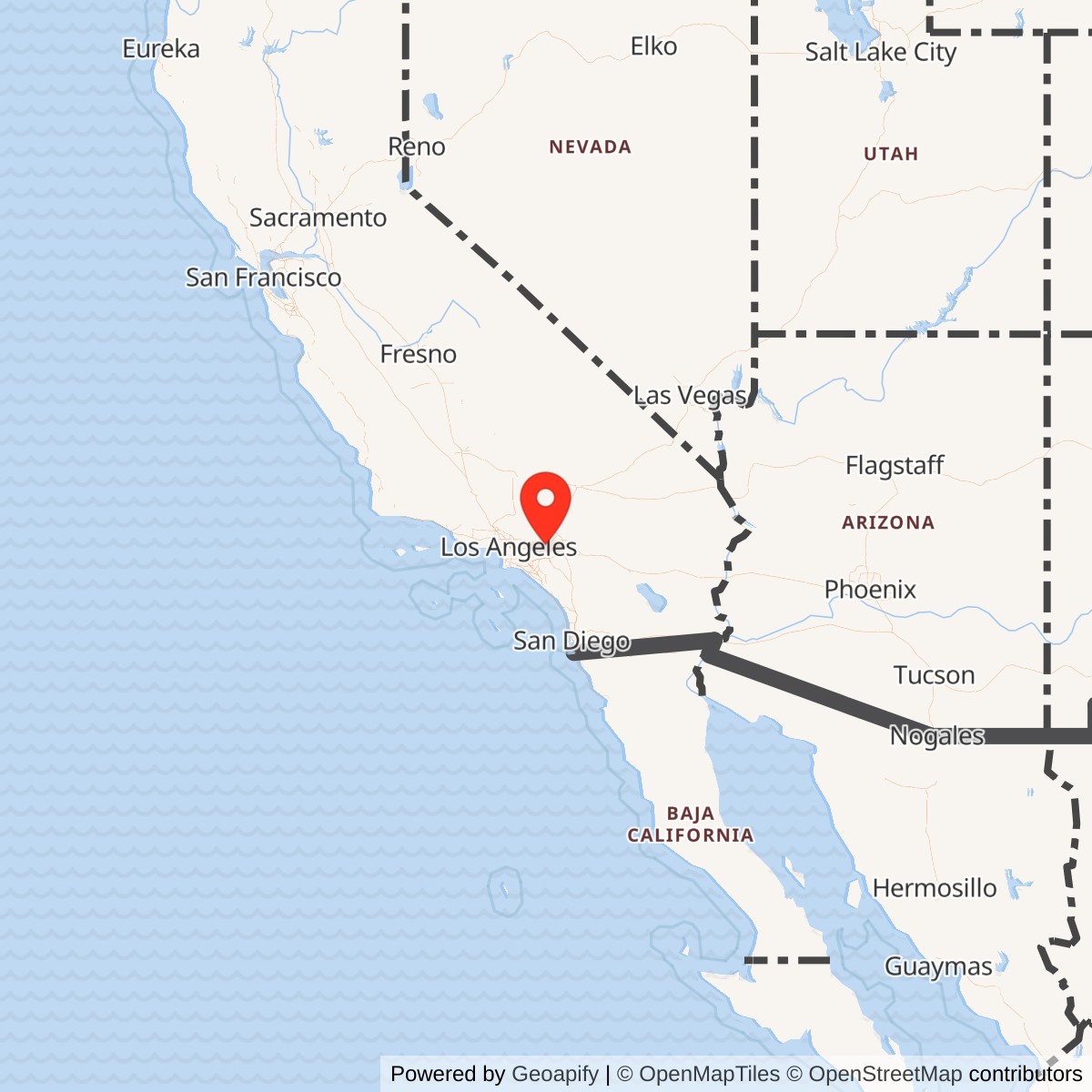
Longitude: -117.6011875
Airport ICAO ID: KONT
Official Base Website: Ontario International Airport
Current Role: Ontario International Airport, an active public cargo and passenger airport operated by the Ontario International Airport Authority; former Air National Guard successor facilities are a later military layer.
Ontario Army Airfield was a World War II Army Air Forces use of Ontario Municipal Airport, the Inland Empire airfield that later became Ontario International Airport. It was not a permanent Regular Army post in the older sense and did not become a long-lived Air Force base after 1947. Its importance came from wartime conversion: a civilian airport built by the City of Ontario became a fighter-training, coastal-patrol, and air-operations field during the emergency expansion of the Army Air Forces in Southern California.
The site's geography explains why it was useful. Ontario sat east of Los Angeles, close to the San Bernardino Valley's rail, highway, and industrial corridors, yet far enough inland to provide open flying space and room for expansion. Southern California's weather, aircraft industry, training environment, and proximity to coastal-defense requirements made it one of the Army Air Forces' most productive wartime basing regions. Ontario fit that pattern. It gave the Army an already developing municipal airport that could be improved quickly with paved runways, a control tower, instrument-landing equipment, flight-line facilities, and additional acreage.
The Army-period identity should be separated from two later identities. First, the airport returned to civil use after World War II and developed into Ontario International Airport, now a major public cargo and passenger airport. Second, part of the airport later housed the Ontario Air National Guard Station, beginning in 1949 and continuing into the late twentieth century.
The most accurate status is therefore: closed as an Army Air Forces airfield, with active civilian-airport successor use. The military period was intense and transformative, but temporary. Ontario's wartime improvements helped turn a local municipal airfield into a major regional aviation facility whose later commercial and cargo importance built on the infrastructure first expanded under wartime pressure.
Mission Evolution
Ontario's aviation story began before the Army. In 1923, Latimer Field was established west of the current airport on land leased from the Union Pacific Railroad. In 1929, the City of Ontario bought a 30-acre tract in the southwest corner of the present airport site and established Ontario Municipal Airport. This municipal origin matters because the Army did not create Ontario from nothing. It took over and enlarged a civic aviation project that local leaders had already begun.
In 1941, as the United States was accelerating defense preparations, the City of Ontario purchased 470 acres around the airport and approved construction of new runways. The runways were completed in 1942, and an Army Air Corps plane made the first landing on February 27, 1942. By the time the United States was fully engaged in World War II, Ontario had moved from small airport to military-ready field.
The wartime mission centered on fighter and aircrew training, local defense, and support aviation. Ontario International Airport's own historical material identifies the field during World War II as an Army Air Corps P-38 training base and P-59 operating base. A later airport history article adds that the Army Air Corps needed the airfield to train pilots and aircrews for fighter and bomber aircraft, and that aircraft operating from the airport patrolled the coastline for enemy submarines and photographed harbor defenses. That combination placed Ontario in the Army Air Forces' overlapping California missions: train flyers, defend the coast, support air surveillance, and keep the West Coast air network ready for war.
The mission evolved again as the war progressed. Fighter organizations and replacement-training units used Ontario as part of the Fourth Air Force training and air-defense system. Units connected to the field included elements of the 364th Fighter Group and 329th Fighter Group, along with numbered Army Air Forces base-unit functions. The base-unit system reflected a wider 1944 Army Air Forces reorganization that replaced many temporary wartime station organizations with numbered functional units responsible for base operations, maintenance, training support, supply, and administration.
By 1945 the wartime mission was winding down. Training ceased at the end of hostilities, and the Army declared the airfield surplus in November 1945 according to later military-facility summaries. Transfer and reuse took longer. The field passed through War Assets Administration channels, the military departed, and Ontario's own airport history places the rededication to civil aviation in 1947. Commercial service began in 1949, after the airport was deeded back to the City of Ontario.
Operational Role
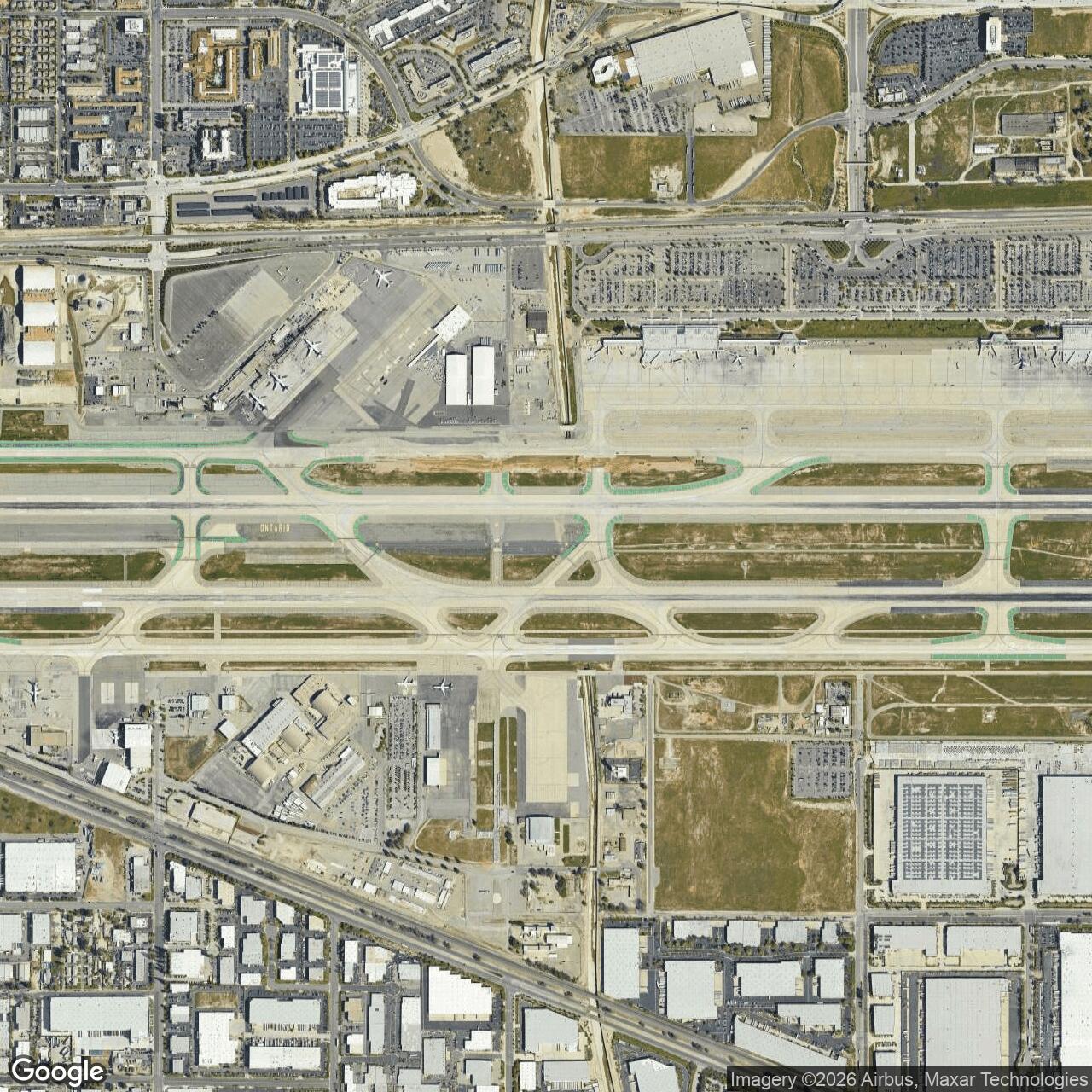
Ontario Army Airfield's operational role was practical rather than symbolic. The Army needed flyable fields immediately, and Ontario gave it a municipal airport that could be turned into a modern wartime airfield. Dirt landing strips and modest civil-airport facilities were replaced or supplemented by paved runways, an air traffic control tower, instrument landing equipment, and additional land. The airport history article states that the field had grown to about 500 acres by the time World War II broke out and that another 345 acres were added during the war. That expansion created the physical room for training, parking, support buildings, and military operations.
The field's fighter-training role was the most visible Army mission. P-38 Lightning training at Ontario connected the airport to one of the Army Air Forces' key twin-engine fighter programs. The P-38 required pilots to master speed, power, engine management, formation flying, gunnery, and long-range escort tactics. Ontario's use by P-38 organizations placed it inside the pipeline that trained fighter pilots before they moved to other stations or deployed overseas.
Ontario was also tied to early jet-era operations. The airport's official chronology describes the wartime field as a P-59 operating base. The Bell P-59 Airacomet was America's first jet fighter, and Southern California's desert and inland airfields formed part of the early jet-testing and operating environment. Ontario was not the central experimental test site in the way Muroc became, but the presence of P-59 operations shows how wartime California fields could support both conventional fighter training and new aircraft types.
The field's defensive role was also real. Airport history states that teams took off from Ontario to patrol the coastline for enemy submarines and to photograph harbor defenses. These missions reflected the early-war fear of Japanese attack on the West Coast and the need to monitor ports, coastal approaches, and naval-defense infrastructure. Ontario was inland, but it was close enough to Southern California's coastline and harbor-defense network to support patrol and photographic work.
The field had a support and station role as well. Like other Army Air Forces municipal-airport stations, Ontario required base operations, communications, weather, quartermaster support, maintenance, fire protection, medical support, security, motor transport, and administrative offices. Units flying through the field needed fuel, repair, transient services, and ground handling. Women's Army Corps personnel are identified in station lists for Ontario, reflecting the Army-wide shift of women into military administrative and support roles during World War II.
Units, Organizations, and Systems
The best-documented unit association is the 364th Fighter Group system. Official Department of the Air Force lineage for the 384th Fighter Squadron states that the squadron was assigned to the 364th Fighter Group, moved through Glendale and Van Nuys, was stationed at Ontario Army Air Field beginning October 11, 1943, moved to Santa Maria Army Air Field in December 1943, and then deployed to England in early 1944. The same lineage records that the squadron flew P-38 aircraft in 1943-1944 and later P-51s overseas. The Ontario period was short, but it was part of the final stateside training path for a fighter squadron that later fought in the European Theater.
Another documented fighter-training link is the 337th Fighter Squadron. Official Air Force lineage places the 337th at Ontario Army Airfield from December 29, 1943, to March 31, 1944, with P-38 aircraft. That squadron was assigned to the 329th Fighter Group during the wartime period and trained replacement pilots before being disbanded in 1944. Its Ontario service shows the airfield's use as a replacement and training station rather than simply a local patrol field.
Secondary station summaries also associate Ontario with the 329th Fighter Group and with later Army Air Forces base-unit designations such as the 443rd Army Air Forces Base Unit, combat-crew or fighter training functions, weather and airway-communications detachments, a third-echelon repair shop, and a Women's Army Corps squadron. Because some of those station-list details come from compiled secondary sources rather than a single readily available official station history, they should be treated as useful but not overexpanded beyond the evidence. The strongest conclusion is that Ontario belonged to the Fourth Air Force fighter-training and replacement-training network, with documented P-38 unit presence and station-support functions.
Ontario's larger command context was the Army Air Forces' California wartime system. The California State Military Museum summary of major World War II Army Air Forces installations explains that California was attractive for two reasons: West Coast defense during the period of Japanese-attack fears and reliable training weather. It also notes that the Army Air Forces extensively used municipal airfields after Pearl Harbor. Ontario is a textbook example of that pattern: a municipal field expanded with public investment and wartime need, then absorbed into the Army Air Forces network for the duration.
Site Design and Facilities
The prewar airport was modest, but the war made it larger and more capable. The City of Ontario's 1941 purchase of 470 surrounding acres and the completion of new runways in 1942 created the field that the Army Air Corps could use. The airport's own chronology places the first Army Air Corps landing on February 27, 1942. By 1943, the field had been dedicated to Army Air Corps fighter activity.
The wartime physical plant included paved runways, air traffic control facilities, instrument-landing equipment, flight-line areas, and the support infrastructure required to operate military aircraft. The airport history article specifically mentions the addition of an air traffic control tower and instrument landing system during the war. Those additions were important because they moved Ontario beyond a simple fair-weather landing field. They made it usable for a higher tempo of military flying and improved training and operational safety.
The acreage history should be read carefully. Official airport material states that the airport had grown to about 500 acres by the outbreak of World War II and that 345 acres were added during the war. Ontario was a military use of a municipal airport; control, ownership, and operational rights were not the same as a purpose-built federal Army airfield on entirely acquired land.
After the war, the physical layout continued to evolve. In 1946 the airport was renamed Ontario International Airport because of transpacific cargo flights originating from the field. In 1949 commercial service began. The Air National Guard later developed its own facilities along the airport, including armory, maintenance, hangar, dining, training, and support buildings. A 2017/2022 historic-property evaluation of the former Air National Guard area documents that Ontario Army Air Field had been taken over for military use during World War II, declared surplus in 1945, and then reused by the California Air National Guard beginning in 1949. Those later Air Guard facilities were a successor military layer, not the original Army airfield itself.
Closure and Postwar Reuse
The Army Air Forces mission declined rapidly after victory. Training ceased at the end of World War II. Later facility summaries state that the Army declared the airfield surplus on November 15, 1945, and that it transferred to the War Assets Administration on October 29, 1946. Ontario's official airport chronology records the key local transition as 1947, when the military departed and the airport was rededicated to civil aviation. The deed returned to the City of Ontario on March 25, 1949, and commercial service began later that year.
The reuse story is one of continuity. The wartime airport did not become an abandoned base. It became Ontario International Airport. The wartime improvements gave Ontario a stronger aviation platform than it had before the war: paved runways, more land, support facilities, and a reputation as a capable airfield. The airport's 1946 renaming reflected transpacific cargo flights, and its later growth into a major passenger and cargo facility built on the same military-expanded landscape.
Military use resumed in another form in 1949, when the California Air National Guard established a training station at the airport under a lease from the City of Ontario. That Air Guard station was not the same as the Army Air Forces wartime station, but it was a direct successor military layer on the same airport. The Air Guard facilities operated into the late twentieth century and were eventually affected by BRAC-era closure and cleanup.
Current Status The site is now Ontario International Airport, FAA identifier ONT and ICAO identifier KONT. It is a publicly owned airport operated by the Ontario International Airport Authority. AirNav's current FAA-derived listing gives the airport reference point as 34.0560142, -117.6011875 and describes it as open to the public, with two major concrete runways and continuous operations. The airport remains an important Southern California passenger and cargo gateway.
Chronology
- 1923 Latimer Field was established east of Central Avenue, west of the current airport site, on land leased from the Union Pacific Railroad.
- 1929 The City of Ontario purchased a 30-acre tract in the southwest corner of the present airport property and established Ontario Municipal Airport.
- 1941 The City of Ontario purchased 470 acres around the airport and approved construction of new runways.
- 1942-02-27 The new runways were complete enough for an Army Air Corps plane to make the first landing.
- 1943 Official airport history identifies the field as dedicated during World War II as an Army Air Corps P-38 training base and P-59 operating base.
- 1943-10-11 Official Air Force lineage places the 384th Fighter Squadron at Ontario Army Air Field as part of its pre-deployment movement through California training fields.
- 1943-12 The 384th Fighter Squadron moved from Ontario to Santa Maria Army Air Field before deploying to England in early 1944.
- 1943-12-29 Official Air Force lineage places the 337th Fighter Squadron at Ontario Army Airfield.
- 1944-03-31 The 337th Fighter Squadron's Ontario period ended when the squadron was disbanded.
- 1945-11-15 Later military-facility summaries state that the Army declared the airfield surplus and it went to inactive status.
- 1946 Ontario Municipal Airport was renamed Ontario International Airport because of transpacific cargo flights originating from the airport.
- 1946-10-29 Later military-facility summaries state that the airfield transferred to the War Assets Administration.
- 1947 Official airport history records that the military departed and the airport was rededicated to civil aviation.
- 1949-03-25 The airport was deeded to the City of Ontario.
- 1949 Commercial service began at Ontario International Airport.
- 1949 California Air National Guard use of the airport began under a lease from the City of Ontario, creating a later successor military layer.
- 1951 A new 10,880-square-foot terminal building was constructed.
- 1952 Runway 25/7 was extended 800 feet to a total length of 7,000 feet, partly reflecting postwar and Air National Guard-related growth.
- 1967 The Los Angeles City Department of Airports entered a joint-powers arrangement with the City of Ontario, bringing the airport into the Los Angeles regional airport system.
- 1970 Three hundred additional acres were acquired and the terminal was expanded.
- 1982 Official transfer of title from the City of Ontario to the City of Los Angeles occurred as the airport entered a new regional-management phase.
- 1987 A new FAA air traffic control tower was dedicated.
- 1995 BRAC actions affected the later Ontario Air National Guard Station layer, distinct from the World War II Army Airfield period.
- Present Ontario International Airport remains an active public airport and major Southern California passenger/cargo facility; the Army Air Forces installation is closed.
Information sources (9)
- WEBOntario International Airport
Our History
- WEBOntario International Airport
Iconic Moments in Ontario International Airport History
- PDFOntario International Airport / Los Angeles World Airports
History of LA/Ontario International Airport fact sheet PDF
- WEBAirNav
KONT - Ontario International Airport
- WEBCalifornia State Military Museum
Major Army Air Force Installations During World War II
- WEBDepartment of the Air Force Historical Research Agency
384 Fighter Squadron (ACC)
- WEBDepartment of the Air Force Historical Research Agency
337 Flight Test Squadron
- PDFOntario International Airport
Historic Property Evaluation Report Appendix, including Ontario Air National Guard Station DPR forms
- WEBGlobalSecurity.org
Ontario International Airport (ANG)