
San Bernardino Army Air Field / San Bernardino Air Depot, California
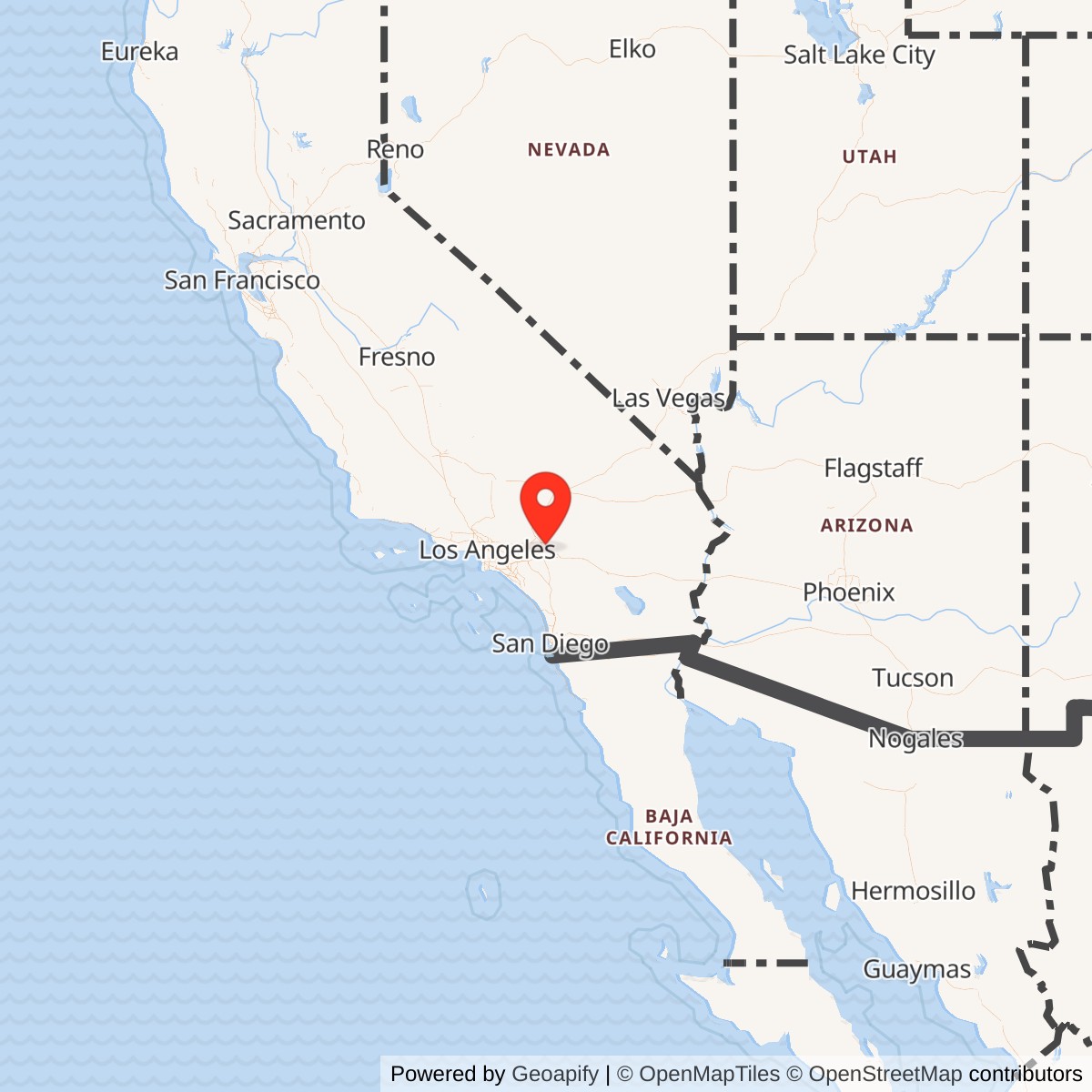
Longitude: -117.2348889
Airport ICAO ID: KSBD
Official Base Website: San Bernardino International Airport
Current Role: San Bernardino International Airport, Alliance California logistics/business redevelopment, Norton Air Force Base Museum, and ongoing federal environmental cleanup/monitoring.
San Bernardino Army Air Field and San Bernardino Air Depot occupied a piece of municipal-airport ground that the Army transformed almost overnight into one of Southern California's most important World War II aviation logistics plants. The site sat east of downtown San Bernardino, close to the Santa Ana River, the San Bernardino Mountains, the Los Angeles Basin's expanding air-defense network, and the road and rail corridors that tied the Inland Empire to Los Angeles, the desert training region, and the Pacific. That geography made the field useful for three overlapping wartime purposes: it could receive and dispatch aircraft, protect the greater Los Angeles area, and support a large depot workforce without being buried inside the most congested coastal urban core.
The installation began as Municipal Airport, San Bernardino, under Army Air Corps jurisdiction before the United States entered the war. During the summer of 1941 it was used as a training base in support of the Army's rapid pilot-expansion program. After the attack on Pearl Harbor, combat-ready fighters arrived to strengthen the defense of the Los Angeles area. In 1942 the Army began building the permanent military plant, renamed the field San Bernardino Army Air Field, and established the San Bernardino Air Depot. The result was not a simple flying school or fighter strip. It was a combined airfield, depot, repair, maintenance, modification, supply, and technical-support installation whose Army-era identity was tied most closely to aircraft repair and depot logistics.
The installation should also be understood through its successor life. After World War II the depot remained in military use, transferred into the independent U.S. Air Force system, became San Bernardino Air Force Base, and in 1950 was renamed Norton Air Force Base in honor of Captain Leland F. Norton, a San Bernardino native and World War II A-20 pilot killed in action in 1944. As Norton Air Force Base, the installation grew into a major Air Force logistics, jet-engine overhaul, missile-support, air-defense, audiovisual, and military-airlift base before being selected for closure under BRAC and closing in 1994. Today the aviation core is San Bernardino International Airport, while the surrounding former-base lands have been redeveloped into an airport, logistics, industrial, commercial, museum, and business landscape.
The Army Air Forces installation closed as an Army-controlled airfield and air depot with the postwar transfer to the U.S. Air Force system in 1947-1948. The military site did not physically close at that moment; it continued as Norton Air Force Base until 1994. The present site is no longer an active Army installation or active Air Force base, but it remains a highly visible reuse case in which a World War II Army depot became a Cold War Air Force base and then a civilian airport and logistics complex.
Mission Evolution
The first mission was aviation training and local air defense. In 1941 the municipal airport came under Army Air Corps jurisdiction and supported the emergency pilot-training buildup. Within days after Pearl Harbor, fighter aircraft arrived to help protect the Los Angeles area from feared enemy attack. This early phase reflected the uncertainty of the winter of 1941-1942: the Army needed pilots, fields, defensive dispersal, and usable municipal airports quickly, before purpose-built wartime bases could be completed.
The decisive mission change came in 1942. Army construction began in March, the first station-complement organization arrived in May, the first aircraft landed in June, and in July the field became San Bernardino Army Air Field with the San Bernardino Air Depot. From that point the base's central role was depot support, especially repair and maintenance of aircraft. The Air Transport Command used the field during the war, and in 1943 the installation added gas-turbine engine maintenance operations. That last development was especially important because it pointed toward the postwar jet-engine mission that later made Norton one of the Air Force's major jet overhaul centers.
The field also had a personnel-processing mission at the end of the war. In September through December 1945 it operated an Army Air Forces Separation Center. That role placed San Bernardino inside the huge demobilization machine that processed millions of service members out of uniform. The installation therefore moved through the full arc of wartime aviation support: rapid mobilization, air defense, depot maintenance, transport support, technical specialization, and finally separation and demobilization.
After World War II the mission did not disappear. Instead, it crossed the institutional line from Army Air Forces to U.S. Air Force. The base remained under Air Materiel and later Air Force Logistics Command systems, expanded jet-engine overhaul, and provided maintenance, storage, and logistics support for missile programs. In 1966 the mission shifted again when Norton became one of Military Airlift Command's strategic-airlift bases and home to the 63rd Military Airlift Wing. That change moved the site from a primarily depot-centered installation to one whose identity also rested on worldwide heavy airlift, including C-141 Starlifter operations, passenger movement, and logistics support to overseas commands.
The final mission evolution was closure and reuse. Norton was selected for closure in the 1988 BRAC round and closed on March 31, 1994. The aviation facilities became San Bernardino International Airport. The non-aviation lands entered Inland Valley Development Agency and private redevelopment efforts that eventually produced AllianceCalifornia, a large logistics and business complex surrounding the airport. The modern mission is civilian aviation, cargo, passenger service, business aviation, logistics, industrial employment, museum interpretation, and continuing environmental cleanup rather than military readiness.
World War II Army Air Forces Mission and Activity
San Bernardino Army Air Field's World War II value came from maintenance, repair, modification, and movement rather than combat-unit basing alone. It served the Army Air Forces by keeping aircraft usable, modifying equipment, supporting transport activity, and giving the southern California air system a major inland maintenance node. The field's work was labor-intensive and technically specialized. It required hangars, shops, ramps, warehouses, supply systems, utility plants, test facilities, rail and road access, and a large civilian and military workforce.
The depot mission made San Bernardino different from a standard training field. A training field primarily produces pilots or crews. An air depot sustains the flying force. During the war the Army needed depots that could repair damaged aircraft, overhaul components, manage spare parts, inspect and modify aircraft, and return equipment to service. San Bernardino Air Depot existed for that kind of work. Its primary function was repair and maintenance of aircraft, and the wartime addition of gas-turbine engine maintenance gave it a technical mission that outlasted the piston-engine war.
The field still had a flying role. The first aircraft landed on June 2, 1942, all four runways were open by December 19, 1942, and night flying began on March 13, 1943. Those details matter because a depot airfield had to be more than a factory. Aircraft needed to arrive, be moved, tested, serviced, and flown out. The completed runway system and night-flying capability helped turn the former municipal airport into a real Army Air Forces installation able to operate at a tempo consistent with wartime depot demands.
The Air Transport Command's use of the field placed San Bernardino within the Army's global movement system. Transport activity did not make the base a major embarkation port in the way Hamilton Field, Fairfield-Suisun, or other large transport hubs functioned, but it did connect the depot to the broader flow of aircraft, personnel, and cargo through the western United States. The field's Inland Empire position gave it access to Southern California's aircraft industry while keeping it tied to the larger wartime transportation grid.
The Army-era command lineage also shows the mission's changing administrative home. The installation was associated first with Fourth Air Force, then with Air Service Command, then with Army Air Forces Materiel and Services Command, Army Air Forces Technical Services Command, and Air Technical Services Command. Those shifts were more than bureaucratic labels. They reflected the base's movement away from an air-defense and flying-field identity toward a technical-services and materiel-support identity. San Bernardino became a place where the Army Air Forces' industrial and maintenance systems touched the flight line.
Units, Commands, and Systems
The earliest Army unit identified in the historical summaries was the 11th Station Complement, which occupied the field in May 1942. Station-complement units were the kind of support organizations that made an airfield function: administration, guard, base services, supply, personnel support, and the hundreds of routine tasks that allowed tactical or technical missions to occur. The 499th Base Headquarters and Air Base Squadron followed in 1943, and the 4126th Army Air Forces Base Unit became the principal late-war and immediate-postwar base-unit identity.
The major Army Air Forces commands associated with the installation explain its purpose. Fourth Air Force tied the early field to West Coast defense and air operations. Air Service Command and its successor technical-services commands tied the depot to the repair, supply, and maintenance system that sustained aircraft across the Army Air Forces. The base was not simply a local San Bernardino project; it was part of the national AAF logistics architecture.
The San Bernardino Air Depot itself was the central organization. Its work supported aircraft repair and maintenance, later gas-turbine maintenance, and the supply and technical functions needed by an expanding wartime air force. The depot system was one of the most important military systems of World War II because it linked industry, aircraft manufacturers, airfields, combat theaters, and training commands. San Bernardino's role in that system made it more than a local airport conversion.
The postwar successor organizations show the installation's continuity. Under the Air Force, the San Bernardino Air Materiel Area became one of the major jet overhaul centers. Later Norton housed or supported the 63rd Military Airlift Wing, Air Force Reserve airlift units including the 445th Military Airlift Wing, Air Defense Command organizations including the Los Angeles Air Defense Sector, Aerospace Audiovisual Services, the Air Force Inspection and Safety Center, the Air Force Audit Agency, the Military Airlift Command Non-Commissioned Officer Academy-West, and missile-related organizations. These were Air Force rather than Army organizations, but they grew out of the Army-built depot landscape and explain why the site remained militarily important for five decades.
Postwar USAF Successor: Norton Air Force Base
The independent Air Force inherited San Bernardino's depot plant at exactly the moment aviation technology was changing. The wartime addition of gas-turbine maintenance helped make the base useful in the jet age. Jet aircraft overhaul began in 1951, and by the early 1950s the San Bernardino Air Materiel Area had become one of the Air Force's three major jet-engine overhaul centers. The base's runway was lengthened to 10,000 feet in the 1950s, and high-thrust jet test cells were completed. These investments show that the former Army depot did not survive merely as leftover real estate; it became an active Cold War technical base.
On March 2, 1950, the base was renamed Norton Air Force Base for Captain Leland F. Norton. Norton had grown up in San Bernardino, served as an A-20 pilot, and was killed near Amiens, France, on May 27, 1944 after ordering his crew to bail out from his damaged aircraft. The renaming linked the local community to the base through a World War II casualty whose family and memory remained part of San Bernardino civic identity.
During the missile era, Norton supported Atlas and Titan intercontinental ballistic missile logistics and storage functions, and later missile-management organizations were associated with the base. That mission placed the installation inside the Cold War strategic-weapons support system. It also illustrates how an aircraft depot could adapt to missile logistics: large buildings, secure storage, technical shops, transport access, and a trained maintenance workforce could be redirected from aircraft to missile support.
The base also became a Southern California air-defense node. In the 1950s and 1960s it supported Air Defense Command functions, including the Los Angeles Air Defense Sector and the SAGE Direction Center DC-17. That mission belonged to the post-1947 Air Force. The same land that had hosted emergency fighters after Pearl Harbor later hosted computer-assisted Cold War air-defense command and control.
The 1966 shift to Military Airlift Command transformed Norton again. The 63rd Military Airlift Wing made the base part of the strategic airlift network, and C-141 Starlifters connected San Bernardino to global movement of personnel, supplies, and equipment. The MAC passenger terminal that replaced a 1944-era facility opened in the late 1960s, reflecting the Vietnam-era and Cold War need to move people as well as cargo. Norton's airlift role supported worldwide air and ground combat units and tied the Inland Empire to overseas military operations.
One aircraft associated with Norton's MAC era became nationally famous. C-141 serial 66-0177, later known as the "Hanoi Taxi," was associated with the 63rd Military Airlift Wing at Norton and later flew American prisoners of war home from North Vietnam during Operation Homecoming in 1973. That event did not make Norton a battlefield, but it tied the base's airlift mission directly to one of the most emotionally charged military movements of the Vietnam War's end.
Facilities and Physical Layout
The Army transformed a municipal airport into a large depot airfield. Construction began in March 1942, the flying facilities were prepared quickly, the first aircraft arrived in June, and all four wartime runways were open by December. The 1945 War Department inventory listed 1,747 owned acres and 81 leased acres, for a total of 1,828 acres. It also recorded troop capacity for 4,046 enlisted personnel, 198 officers, and a 150-bed station hospital, along with more than two million square feet of covered storage and 941,000 square feet of open storage. Those figures reveal the scale of the Army depot: this was a storage, repair, and technical-support plant as much as an airfield.
The layout had to serve both aviation and industrial maintenance. Runways, ramps, and hangars supported aircraft movement. Shops and depot buildings supported repair, overhaul, and modification. Storage areas held parts, tools, equipment, and supplies. Administrative buildings, barracks, medical facilities, and service spaces supported the military and civilian workforce. Because the installation's central mission was depot maintenance, its physical plant was more industrial than ceremonial. Function mattered more than parade-ground order.
The later Air Force base expanded and modernized the Army-built plant. The 10,000-foot runway, jet-engine overhaul facilities, high-thrust test cells, missile-storage and logistics spaces, SAGE building, airlift ramps, passenger terminal, hydrant fueling systems, and support buildings reflected successive Cold War missions layered over the wartime depot. Some of those later facilities had no Army-era equivalent, but they were made possible by the large federal reservation, runway, shops, and maintenance culture created during World War II.
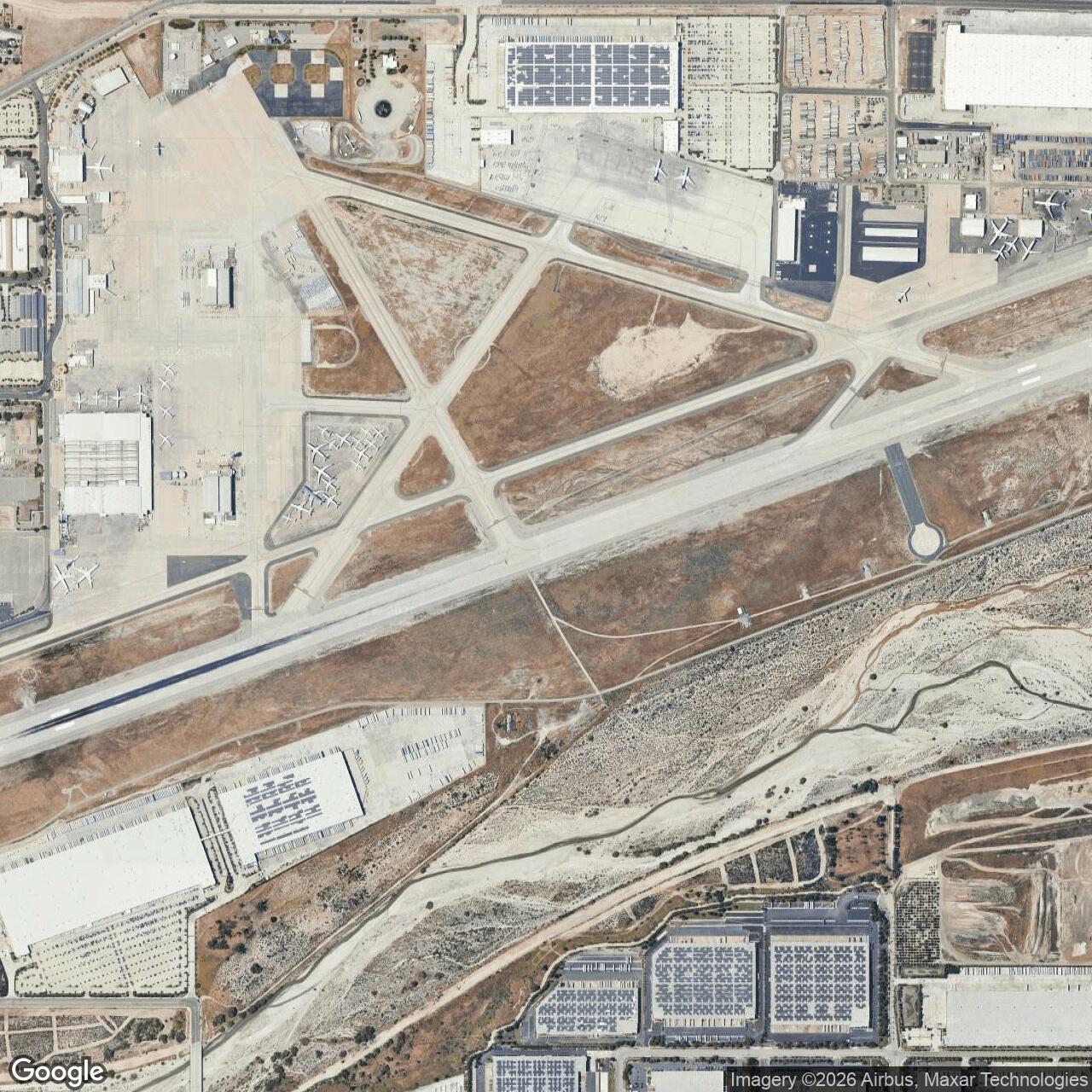
The current landscape is a reuse mosaic. San Bernardino International Airport occupies the aviation core. The Inland Valley Development Agency and its partners redeveloped the surrounding land into AllianceCalifornia, a trade and logistics center. The Norton Air Force Base Museum is housed in the former NCO Club / Norton Regional Event Center. Large distribution and logistics facilities, including the Stater Bros. Norton Distribution Center and other private operations, occupy former base land. The site's physical story is therefore visible in three layers: wartime depot, Cold War Air Force base, and civilian airport-logistics reuse.
Role in the Wider Military Network
San Bernardino Army Air Field belonged to the Army Air Forces' West Coast aviation and logistics network. It supported the wartime surge that converted municipal airports, civilian airfields, and undeveloped tracts into a continent-wide air base system. In Southern California that network included air-defense fields, training fields, modification centers, ferrying and transport nodes, aircraft-manufacturing plants, desert training areas, ports, and depots. San Bernardino's specific value lay in repair, maintenance, and technical support, not just in flying operations.
The depot's location gave it access to Southern California's aircraft industry and to inland transportation corridors. The Army Air Forces could draw on regional labor and industrial suppliers while keeping a large depot inland from the coast. That mattered in 1942, when the fear of West Coast attack was real and the Army wanted important aviation infrastructure spread across the region rather than concentrated only on coastal airfields.
In the postwar Air Force system, the site became part of several wider networks in sequence. As a jet-engine overhaul center, it supported the Air Force's transition from propeller aircraft to jets. As a missile logistics site, it supported the Cold War strategic-weapons system. As an air-defense headquarters and SAGE site, it connected Southern California to continental air defense. As a Military Airlift Command base, it connected San Bernardino to global airlift, including Southeast Asia, Pacific operations, and worldwide mobility missions.
The reuse system is also important. After closure, the former base became a model of BRAC redevelopment, environmental cleanup, airport conversion, and logistics-oriented economic development. EPA's 2024 Federal Facility Excellence in Site Reuse recognition for the former Norton Air Force Base reflected the transformation of a contaminated federal installation into San Bernardino International Airport and a logistics complex with large-scale employment and regional economic impact. That reuse does not erase the military past; it shows how the infrastructure of an Army depot and Air Force base could be redirected into a civilian transportation economy.
Closure, Cleanup, and Reuse
Norton Air Force Base was selected for closure by the 1988 Base Realignment and Closure process and closed on March 31, 1994. The closure ended the continuous military use of the former San Bernardino Army Air Field / San Bernardino Air Depot site. Some mission elements moved elsewhere; the airlift units and aircraft were reassigned, and remaining functions were eventually terminated or transferred.
Environmental cleanup became one of the major post-closure issues. ATSDR described the inactive base as encompassing over 2,000 acres and identified past waste disposal practices associated with aircraft repair, maintenance, solvents, fuels, oils, paints, plating solutions, fire training, underground storage tanks, and other base activities. EPA identifies the Norton Air Force Base site as a 2,165-acre Superfund site where past hazardous-material management contaminated groundwater and soil with contaminants including PCBs, dioxins, heavy metals, acids, and solvent-related compounds. Cleanup remedies, operation and maintenance, and monitoring have continued after construction of the remedies.
The reuse process was slow at first but eventually became large-scale. The Inland Valley Development Agency was formed in 1990 to redevelop the non-aviation portion of the former base and coordinate broader redevelopment in surrounding properties. The aviation side became San Bernardino International Airport. The non-aviation redevelopment became part of AllianceCalifornia, a logistics and trade-oriented complex near Interstates 10, 215, and 210 and regional freight corridors. Modern users and redevelopment descriptions emphasize cargo, general aviation, passenger service, business aviation, customs support, fixed-base operations, logistics, warehousing, and industrial employment.
Current Status
The former San Bernardino Army Air Field / San Bernardino Air Depot is no longer a military installation. The aviation facilities are now San Bernardino International Airport, a public-use commercial, cargo, business, and general-aviation airport owned and operated by the San Bernardino International Airport Authority. FAA and aviation data list the airport at 34.0953611, -117.2348889, two miles southeast of downtown San Bernardino, with a 10,000-foot concrete runway that can support very large aircraft. The airport's modern activity includes air cargo, general aviation, business aviation, fixed-base operator services, U.S. Customs-related functions, and scheduled passenger service.
The surrounding former-base land is part of a larger redevelopment landscape. The Inland Valley Development Agency describes AllianceCalifornia as a 2,000-acre trade and logistics center developed at the former Norton Air Force Base and anchored by San Bernardino International Airport. The area has attracted large logistics, distribution, and commercial users and is marketed around highway access, foreign-trade-zone opportunities, aviation access, and Inland Empire labor and freight advantages.
The site remains an environmental restoration property as well as an economic reuse success. EPA and Air Force cleanup records identify continuing monitoring and operation-and-maintenance work tied to past military contamination. The 2024 federal site-reuse award recognized the former Norton Air Force Base as a BRAC reuse success because the former base became a multi-use airport and logistics complex, but that success sits beside a long remediation history rooted in the industrial maintenance work that made the installation militarily important in the first place.
Chronology
- Summer 1941 Municipal Airport, San Bernardino came under Army Air Corps jurisdiction and was used as a training base for the Army's pilot-expansion program.
- December 1941 After Pearl Harbor, combat-ready fighter aircraft arrived to help protect the Los Angeles area from feared enemy attack.
- 1942-03-14 Construction of Army flight-training and depot facilities began at San Bernardino.
- 1942-05-11 The 11th Station Complement became the first identified unit to occupy the field.
- 1942-06-02 The first aircraft landed at the new base.
- 1942-07-14 The field became San Bernardino Army Air Field; the San Bernardino Air Depot was established during the same July 1942 period.
- 1942-12-19 All four runways were open for service.
- 1943-02-01 The 499th Base Headquarters and Air Base Squadron succeeded the early station-complement phase.
- 1943-03-13 Night flying began.
- 1943 Gas-turbine engine maintenance operations were added, foreshadowing the postwar jet-overhaul mission.
- 1944-04-01 The 4126th Army Air Forces Base Unit became the main base-unit identity.
- 1944-05-27 Captain Leland F. Norton, a San Bernardino native, was killed near Amiens, France, during his sixteenth combat mission.
- 1945-09 to 1945-12 The field operated as an Army Air Forces Separation Center.
- 1945 War Department inventory listed 1,747 owned acres and 81 leased acres, for a total of 1,828 acres.
- 1947-09-18 The U.S. Air Force became an independent service, ending the installation's Army Air Forces identity even though the base remained active.
- 1947-09-26 The late Army Air Forces base unit was redesignated as an Air Force base unit.
- 1947-12-24 The field name changed to San Bernardino Air Field.
- 1948-01-13 The name changed to San Bernardino Air Force Base.
- 1950-03-02 The base was renamed Norton Air Force Base in honor of Captain Leland F. Norton.
- 1951-07-01 Jet aircraft overhaul began.
- 1953 The San Bernardino Air Materiel Area had become one of the Air Force's major jet overhaul centers.
- 1954 The main runway was extended to 10,000 feet, and high-thrust jet test cells were completed.
- 1959-1966 Norton supported the Los Angeles Air Defense Sector and SAGE Direction Center DC-17 as part of Southern California air defense.
- 1962-01 to 1964-11 The base served as a logistics support and storage point for Atlas and Titan missile programs.
- 1966 Norton shifted to Military Airlift Command and became one of the strategic-airlift bases supporting worldwide airlift missions.
- 1967-04-01 The 63rd Military Airlift Wing began its long Norton assignment.
- 1968-1969 The MAC passenger terminal replaced the World War II-era passenger facility and supported the airlift era.
- 1973 C-141 aircraft associated with Norton's airlift community included the aircraft later known as the "Hanoi Taxi," which flew American POWs home from North Vietnam during Operation Homecoming.
- 1982 The Air Force initiated installation-restoration investigations into environmental contamination from past base activities.
- 1987-07-22 EPA placed Norton Air Force Base on the National Priorities List.
- 1988 Norton Air Force Base was selected for closure by the Base Realignment and Closure Commission.
- 1990 The Inland Valley Development Agency was formed to support redevelopment of the non-aviation former-base property and surrounding redevelopment area.
- 1994-03-31 Norton Air Force Base closed.
- 1995 Some final base functions and facilities continued into the post-closure period before the last military remnants ended.
- 2004 Stater Bros. acquired former-base land for what became the Norton Distribution Center, preserving the Norton name in a major civilian logistics facility.
- 2008 San Bernardino International Airport's modern tower operations and airport redevelopment period were well underway.
- 2022-08 Breeze Airways began scheduled passenger service from San Bernardino International Airport.
- 2024-06-05 EPA announced the former Norton Air Force Base as a Federal Facility Excellence in Site Reuse Award winner in the BRAC category.
- Present The former Army airfield and depot landscape is reused as San Bernardino International Airport, AllianceCalifornia logistics and business development, Norton Air Force Base Museum, and ongoing environmental restoration property.
Information sources (13)
- WEBSan Bernardino International Airport
History
- WEBNorton Air Force Base Museum
History of Norton Air Force Base
- WEBCalifornia State Military Museum
Historic California Airfield: Norton AFB (San Bernardino AAF, San Bernardino AFB)
- WEBATSDR / CDC archive
Norton Air Force Base, San Bernardino County, California
- WEBEPA Superfund Site Profile
Norton Air Force Base (LNDFLL #2)
- WEBEPA
EPA Announces the Seventh Annual Federal Facility Excellence in Site Reuse Awards Winners
- WEBAir Force Civil Engineer Center
Air Force begins fifth 5-Year Review of environmental cleanup activities at former Norton AFB
- WEBAir Force Installation and Mission Support Center
Former Norton AFB reuse award recognizes partnership behind base transformation
- WEBAir Force SAF/IE
Legacy of Norton lives on in San Bernardino
- WEBInland Valley Development Agency
Inland Valley Development Agency
- WEBSan Bernardino International Airport Authority
Aviation Development
- WEBAirNav
KSBD San Bernardino International Airport
- WEBSkyVector
SBD San Bernardino International Airport