
Van Nuys Army Air Field / Van Nuys Air National Guard Base, California
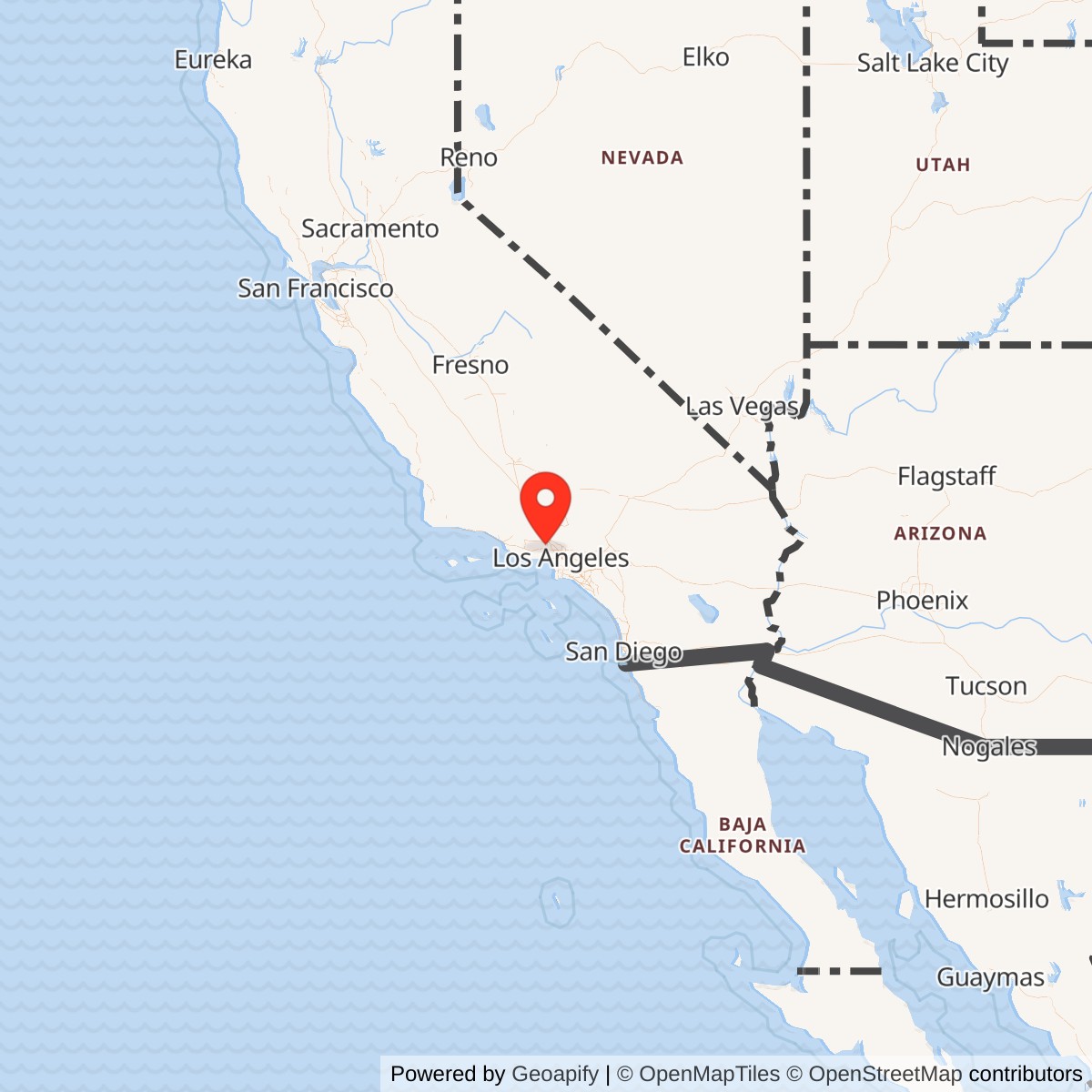
Longitude: -118.4899722
Airport ICAO ID: KVNY
Official Base Website: Van Nuys Airport (VNY/KVNY)
Current Role: Van Nuys Airport (VNY/KVNY), an active City of Los Angeles / Los Angeles World Airports public-use general-aviation airport; former Air National Guard base area reused for municipal aviation, emergency-services aviation, and airport support functions.
Van Nuys Army Air Field was a wartime military layer placed over one of Southern California's most visible civilian airports. Before the Army arrived, the field was Metropolitan Airport, an 80-acre private aviation field opened in 1928 in a San Fernando Valley still defined by open land, film studios, aviation enthusiasm, and the fast-growing city of Los Angeles. By 1942, that same airport had become a military base, a P-38 Lightning training field, and part of the West Coast's emergency air-defense and aircraft-production landscape. Its story is not the story of a remote desert auxiliary strip. It is the story of the Army Air Forces taking over a working urban airport and turning it into a fighter-training and defense-support node in the middle of a region where Hollywood, Lockheed, the Navy, civil aviation, and the California Air National Guard all overlapped.
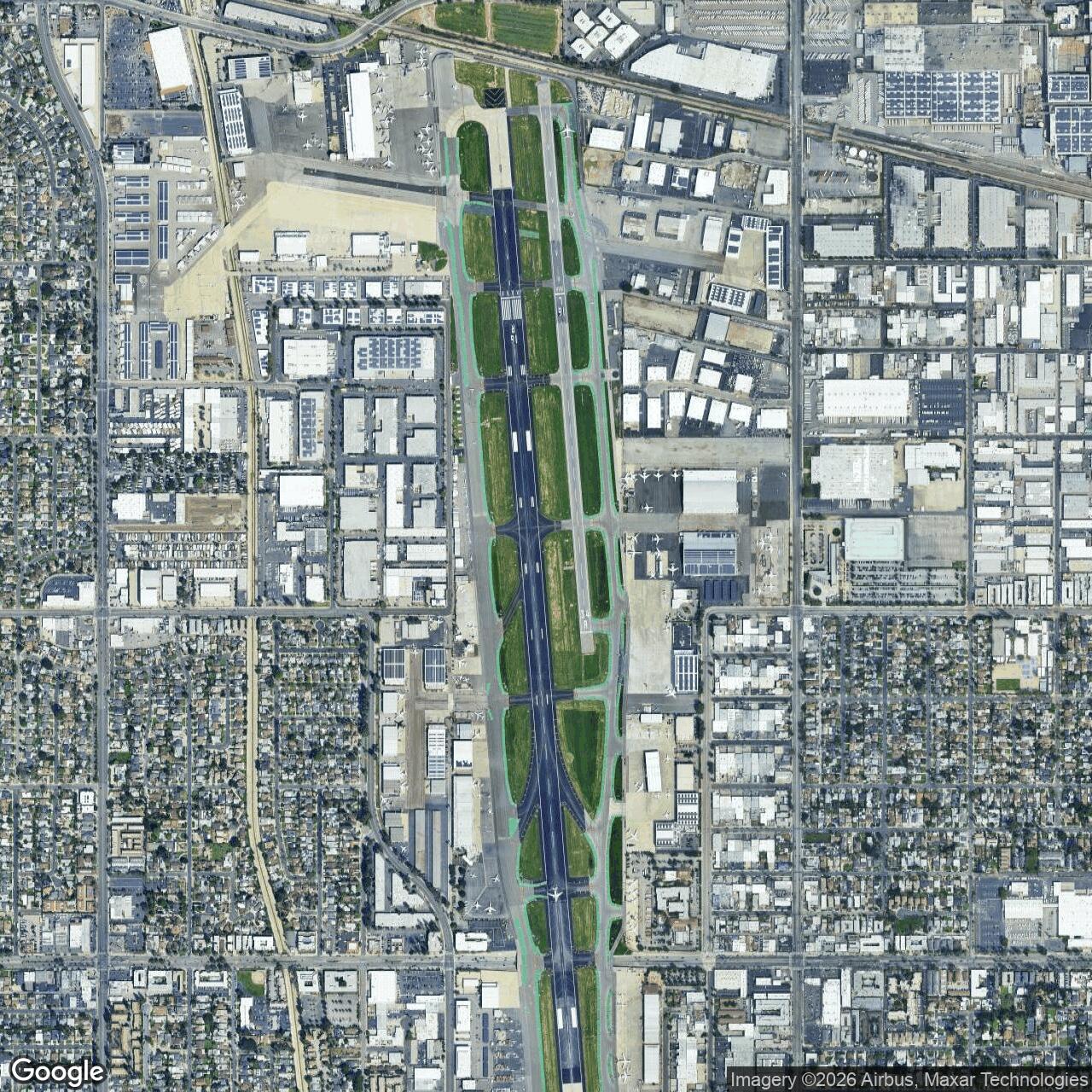
The installation occupied the site of today's Van Nuys Airport in the San Fernando Valley. AirNav's current FAA-derived airport record places KVNY three miles northwest of Van Nuys, with two parallel runways and public ownership through Los Angeles World Airports. The former Army Air Field footprint is not identical to the modern airport's full property. A California Regional Water Quality Control Board report identifies the former Van Nuys Army Air Field as a 455.6-acre Formerly Used Defense Site, while Van Nuys Airport today covers about 730 acres.
Van Nuys was not built from scratch by the Army. It was a civilian airfield converted for war. The U.S. government purchased Metropolitan Airport in 1942, and the military purchased an additional 163 acres for the construction and expansion of Van Nuys Army Air Field. New runway work supported the training of hundreds of Lockheed P-38 Lightning pilots. The base operated under Fourth Air Force, whose West Coast mission included air defense, fighter training, and readiness against the feared possibility of enemy attack on the Pacific Coast. Van Nuys therefore combined two functions that often appeared separately elsewhere: it was both an aviation-training station and part of a larger wartime industrial-defense region tied to Lockheed, Navy aircraft modification work, and the protection of Los Angeles.
After World War II, Van Nuys did not disappear from military use. The Army airfield was declared surplus in December 1946, and the City of Los Angeles purchased the airport from the War Assets Administration in 1949 for one dollar, with an agreement that a California Air National Guard base would continue to operate at the site. The postwar airport, renamed San Fernando Valley Airport and later Van Nuys Airport, became one of the most important general-aviation airports in the United States. The Air National Guard presence gave the former Army field a second military life that lasted until April 30, 1990, when the 146th Airlift Wing lowered the flag at Van Nuys Air National Guard Base and completed its move to Channel Islands Air National Guard Station. The Army Air Forces installation had closed, but the military aviation lineage continued on the same ground for more than four decades.
Mission Evolution
The first mission of the site was civilian aviation. Metropolitan Airport opened on December 17, 1928, the twenty-fifth anniversary of the Wright brothers' first flight. Early use was general aviation, air races, celebrity flying, movie production, and private aircraft operation. Its location in the San Fernando Valley made it useful to Hollywood and to Southern California's aviation community. By the late 1930s and early 1940s, however, the same advantages that made the airport attractive to civilian flyers also made it useful to the military: open runways, local aviation labor, proximity to aircraft factories, access to Los Angeles, and room to expand.
The Army mission began in 1942, after the United States entered World War II. The government purchased Metropolitan Airport and converted it into Van Nuys Army Air Field. Official airport history states that the military purchased an additional 163 acres, built new runways, and used the base to train hundreds of P-38 Lightning pilots. This was a major change in the field's purpose. The airport no longer existed primarily for private flight, racing, and film work. It became a military training and defense base at a moment when the Pacific Coast was under wartime alert.
The field's wartime mission centered on fighter operations and P-38 training. Fourth Air Force controlled the base, and the California Water Board's Formerly Used Defense Site summary states that from 1942 to 1945 pilots were trained for combat there. That same record notes additional wartime activities including firing-in-butt work, skeet range shooting, chemical-warfare exercises, and ammunition storage. In other words, Van Nuys was not only a runway. It was a fighter-training environment with weapons, gunnery, tactical, chemical-defense, and ammunition-support functions layered into the airfield property.
Publicly available unit sources identify the 441st Army Air Forces Base Unit at Van Nuys in 1944 as a Combat Crew Training Station-Fighter using P-38 aircraft. The same body of public unit material associates the 364th Fighter Group, the 474th Fighter Group, and the 481st Night Fighter Operational Training Group with the field at different points. The exact public-source trail for every wartime unit is not equally strong, so the safest interpretation is that Van Nuys should be described primarily by its verified mission: a Fourth Air Force fighter-training and support field for P-38 combat-crew training.
The mission also included defense manufacturing and aircraft modification. Official Van Nuys Airport and Los Angeles World Airports histories state that the airport became a vital defense-manufacturing center during the war, and that in 1944 a joint venture between the U.S. Navy and Lockheed Corporation created the Navy Lockheed Plant at the airport. This did not make the Army Air Field a Navy installation, but it does show why Van Nuys belonged to a larger aircraft-production and modification ecosystem. The San Fernando Valley and the nearby Burbank-Lockheed complex were part of Southern California's aircraft-war economy, and Van Nuys added runway capacity, training activity, and modification work to that system.
The postwar mission changed from Army Air Forces use to civil airport and Air National Guard use. The Army's flying mission ended by 1945, the airfield was declared surplus in December 1946, and the airport was sold to Los Angeles in 1949. The condition that the California Air National Guard base continue at the site preserved military aviation on the former Army field. In the 1950s, the Air National Guard entered the jet age at Van Nuys, operating F-86 Sabre jets and building more permanent facilities. The 146th Airlift Wing's official history traces the lineage of the wing to the 115th Observation Squadron, founded in 1924, and its fact sheet records the final closure of Van Nuys ANG Base on April 30, 1990. The mission therefore evolved from civilian airport to wartime fighter field, then to ANG fighter/interceptor and airlift base, and finally to a purely civilian general-aviation airport with emergency-services and municipal aviation functions.
Operational Role
Van Nuys Army Air Field's daily wartime role was to turn an existing metropolitan airport into a fighter-training station fast enough to meet wartime demand. The P-38 Lightning was one of the most distinctive American fighters of the war: twin-engine, twin-boom, fast, and complex compared with the primary and basic training aircraft used at earlier stages of pilot training. A pilot sent to Van Nuys was not just learning to fly. He was learning to handle a high-performance combat aircraft that required engine management, gunnery, tactics, communications, formation discipline, and emergency procedures. The field's mission therefore sat near the end of the training pipeline, where pilots were being prepared for combat assignment rather than introduced to basic flight.
The Army's conversion of the airfield also changed the physical and operational character of the site. The military purchased additional land, expanded runways, and created a fighter base within what had been a civilian and film-industry airport. The Water Board FUDS summary indicates that flight training operated alongside firing-in-butt use, skeet shooting, chemical-warfare exercises, and ammunition storage. Those activities required ranges, safety areas, storage points, training procedures, and military control beyond ordinary airport operation. The airfield became a disciplined training environment rather than only a place for takeoffs and landings.
The Fourth Air Force context is essential. Fourth Air Force was responsible for air defense and training in the western United States. In 1942 and 1943, concern over West Coast vulnerability was real, especially after Pearl Harbor and submarine activity off the Pacific Coast. Fighter fields in Southern California helped provide aircraft, pilots, and tactical readiness for that mission. Van Nuys was one of the fields feeding that system. It was geographically close to Los Angeles, aircraft plants, ports, rail, and other Army and Navy installations. That proximity made it operationally valuable, but it also meant the base had to function in a crowded civilian-industrial region rather than in a remote training landscape.
The Navy Lockheed Plant gave Van Nuys a second wartime role around aircraft modification. Official airport history identifies the 1944 Navy-Lockheed joint venture as an aircraft modification facility. That role connected the airfield to Lockheed's broader wartime production system and to Navy aircraft requirements. For the Army Air Forces, this created an unusual shared environment: an Army Air Field with fighter training and support activities operating at the same airport where Navy and Lockheed modification work also took place. Van Nuys therefore reflects the integrated reality of wartime Southern California aviation, where service boundaries, civilian industry, municipal airports, and film-industry landscapes often overlapped physically.
The field's Hollywood connection is not trivial, although it should not overwhelm the military history. Before the war, the airport was already familiar to filmmakers, and official airport history notes that Hollywood continued to use the airport during wartime, including scenes from Casablanca. The well-known story of Marilyn Monroe being discovered on an aircraft assembly line at Van Nuys also belongs to the site's wartime-industrial culture. These details matter because they show how the war transformed a civilian and entertainment-oriented airfield without erasing its civilian identity entirely. Van Nuys was never an isolated closed cantonment. It was a wartime military installation embedded inside the civic, industrial, and cultural life of Los Angeles.
Postwar operations under the Air National Guard extended the military aviation role far beyond the Army Air Forces period. The City of Los Angeles bought the airport from the War Assets Administration in 1949 on terms that preserved an Air National Guard base. During the 1950s, Air National Guard jet operations at Van Nuys reflected the Cold War shift from World War II fighter training to air-defense readiness. The 146th wing lineage later moved into air transport and airlift missions. Official 146th Airlift Wing material records the move from Van Nuys to Channel Islands Air National Guard Station, with the Van Nuys flag lowered on April 30, 1990. That event ended the long military base presence at the airport, but not the airport's aviation importance.
Units, Organizations, and Systems
The central wartime command relationship was with Fourth Air Force. The California Water Board FUDS summary states that the former Van Nuys Army Air Field operated under Fourth Air Force from 1942 to 1945. Fourth Air Force gave the site its strategic meaning: fighter training, West Coast air-defense support, and combat-crew preparation. Van Nuys was one airfield in a wider regional system that included other Army Air Forces fields, aircraft factories, depots, modification facilities, and air-defense commands.
The most clearly supported wartime base-unit identification located in public sources is the 441st Army Air Forces Base Unit. A compiled USAF unit-history sheet identifies the 441st AAF Base Unit as a Combat Crew Training Station-Fighter at Van Nuys, with P-38F, P-38G, P-38H, P-38J, and C-47 aircraft listed. That aligns with the official airport history's emphasis on P-38 training. Because Army Air Forces Base Units replaced many older station organizations during 1944, the 441st AAF Base Unit is best treated as the wartime station organization for the P-38 combat-crew training mission rather than as a deployable combat group.
Other unit associations appear in public compilations and should be handled carefully. Public unit lists associate the 364th Fighter Group with Van Nuys from August to October 1943, the 474th Fighter Group from October 1943 to January 1944, and the 481st Night Fighter Operational Training Group in 1945. These associations make sense in the broader pattern of Fourth Air Force fighter and night-fighter training. The installation history can responsibly note them as publicly reported unit associations while emphasizing that the best-supported mission-level record is Fourth Air Force fighter training and the 441st AAF Base Unit P-38 combat-crew training role.
The U.S. Navy and Lockheed Corporation formed another wartime system at the airport through the Navy Lockheed Plant. This was not the same organization as Van Nuys Army Air Field, but it shaped the military history of the same airport property. In 1944, the joint Navy-Lockheed modification facility made Van Nuys part of the Navy aircraft-modification and defense-manufacturing network while the Army Air Forces used the field for fighter training. For a website reader, that is one of the most important points: Van Nuys was not a single-mission Army field. It was a wartime aviation hub where service training, aircraft modification, defense manufacturing, and civil-airport heritage converged.
The California Air National Guard was the major postwar military organization on the site. The 146th Airlift Wing's official history traces the wing's origins to the 115th Observation Squadron, founded in 1924 at Clover Field. After World War II, the Air National Guard presence at Van Nuys kept the former Army field militarily active. The wing and its predecessors operated through fighter, interceptor, air-transport, military-airlift, tactical-airlift, and airlift identities before the final move to Channel Islands Air National Guard Station. The April 30, 1990 closure of Van Nuys ANG Base ended the second military era of the airport.
Facilities and Physical Layout
The site began as Metropolitan Airport, an 80-acre private airfield. Its prewar physical identity was modest: open airfield land, hangars, and facilities sufficient for general aviation, air races, and film work. By 1942, the Army needed more than that. The military purchased the airport, added land, built or expanded runways, and created a fighter-training installation. The Water Board's 455.6-acre FUDS figure is the best compact documented acreage for the former Army Air Field, while official airport history says that by the 1949 city purchase the airport covered about 400 acres. The difference likely reflects different property-accounting conventions, but both point to the same historical fact: wartime military use enlarged the field well beyond its original 80-acre civilian footprint.
The current airport layout preserves the airfield core even though most wartime-specific structures have changed, disappeared, or been absorbed into later development. AirNav's current record lists two runways: Runway 16R/34L at 8,001 by 150 feet and Runway 16L/34R at 4,013 by 75 feet. The present main runway length reflects later postwar airport development, including the Sherman Way underpass that allowed the runway to be extended. The modern airport is therefore not a frozen World War II artifact, but it still occupies the same aviation landscape that the Army expanded and used.
The wartime field included more than flight surfaces. FUDS documentation identifies firing-in-butt activity, skeet range shooting, chemical-warfare exercises, and ammunition storage. These functions imply a set of training and support spaces distributed around the airfield: firing and target facilities, ammunition handling areas, aircraft parking and maintenance areas, troop and administrative spaces, and chemical-defense training areas. The detailed arrangement would require archival maps for exact reconstruction, but the documented activities show that the field had a full military training-support footprint, not simply runways and hangars.
The Navy Lockheed Plant created an industrial zone within the airport's wartime landscape. Official airport and LAWA histories describe the 1944 Navy-Lockheed aircraft modification facility. This modification work connected the airport physically and functionally to Lockheed's regional aircraft-production network. Aerial and photographic records from the postwar period show fighter aircraft and Lockheed facility activity at Van Nuys, preserving visual evidence of the airport's manufacturing and military-aircraft environment.
The postwar Air National Guard base was a distinct facility within the airport. In the 1950s, the Guard built more permanent facilities as it entered the jet age with F-86 aircraft. Later, the 146th wing operated from Van Nuys until the move to Channel Islands. After the Guard departed, the former base area was turned over to the City of Los Angeles. The site later supported emergency and municipal aviation functions, including air operations and helicopter maintenance for Los Angeles public-safety agencies. That reuse fits the broader pattern of the airport: military facilities were not preserved as museum space, but their aviation utility continued.
Postwar Reuse and Air National Guard Era
The end of World War II brought surplus disposal rather than abandonment. The Army declared the field surplus in December 1946, and the War Assets Administration eventually sold the airport to the City of Los Angeles in 1949 for one dollar. The condition requiring continued Air National Guard use meant that Van Nuys did not revert to purely civilian status immediately. The airport became San Fernando Valley Airport, then Van Nuys Airport in 1957, while the military base area continued to support Guard operations.
The Air National Guard era gave Van Nuys a Cold War military identity. In the 1950s, the Guard moved into jet aircraft, including F-86 Sabres, and built more permanent facilities. The 146th wing lineage moved through several mission changes: fighter, fighter-interceptor, air transport, military airlift, tactical airlift, and airlift. That evolution mirrored the broader Air National Guard transition from postwar fighter reserve to Cold War air defense and then to airlift and domestic-response capability.
The final move began in the late 1980s. Official 146th Airlift Wing material states that the unit began moving to Channel Islands Air National Guard Station in December 1988, and that by March 1990 all but a small remnant of wing personnel had transferred operations. On April 30, 1990, the flag at Van Nuys ANG Base was lowered for the last time, and all units were in place at Channel Islands. That date marks the end of Van Nuys as a military base, even though the airport remained intensely active.
The former ANG area did not lose aviation value. After the 1994 Northridge earthquake, former National Guard buildings became an important American Red Cross operating site. Later, parts of the former base were converted for Los Angeles Fire Department air operations and helicopter maintenance. This reuse is historically appropriate: an airport built up by the Army for wartime readiness remained useful for emergency response in peacetime.
Current Status
Van Nuys Army Air Field is closed as an Army Air Forces installation. Van Nuys Air National Guard Base is also closed, with the 146th Airlift Wing having moved to Channel Islands Air National Guard Station by 1990. The site itself remains active as Van Nuys Airport, a public-use airport owned by the City of Los Angeles and operated by Los Angeles World Airports. AirNav lists the airport as open to the public, with FAA identifier VNY and ICAO identifier KVNY.
Current Van Nuys Airport covers about 730 acres and is one of the most important general-aviation airports in Southern California. The official airport site emphasizes its role in business, charter, private, emergency, air-ambulance, search-and-rescue, police, fire, and news-media aviation. The airport also continues to contribute to the regional economy and to relieve pressure on larger commercial airports, especially Los Angeles International.
The military footprint survives more as layered land-use history than as a preserved Army field. The runways and airport property still mark the aviation landscape that the Army expanded, but the World War II base has been absorbed into a modern metropolitan airport. The former Air National Guard base area has been reused for civic and emergency-service aviation functions. Environmental records identify the former Van Nuys Army Air Field as a FUDS property because wartime activities raised potential hazardous-material and munitions-related concerns, including questions about perchlorate assessment.
Chronology
- 1928-12-17 Metropolitan Airport opened in Van Nuys on about 80 acres, on the twenty-fifth anniversary of the Wright brothers' first flight.
- 1930s The airport became associated with general aviation, air racing, Hollywood film production, and celebrity flying.
- 1942 The U.S. government purchased Metropolitan Airport and converted it into Van Nuys Army Air Field.
- 1942 The military purchased an additional 163 acres for Army airfield construction and runway expansion.
- 1942-1945 Under Fourth Air Force, Van Nuys Army Air Field trained pilots for combat and supported activities including firing-in-butt training, skeet shooting, chemical-warfare exercises, and ammunition storage.
- 1943 Public unit compilations associate P-38 fighter training and fighter-group activity with the field during this period.
- 1944 The 441st Army Air Forces Base Unit was established at Metropolitan Airport / Van Nuys as a P-38 fighter combat-crew training station.
- 1944 A joint U.S. Navy and Lockheed Corporation aircraft modification facility, the Navy Lockheed Plant, was created at the airport.
- 1945 P-38 combat training wound down; public unit compilations associate the 481st Night Fighter Operational Training Group with later Van Nuys operations.
- 1946-12 Van Nuys Army Air Field was declared surplus.
- 1949 The City of Los Angeles purchased the airport from the War Assets Administration for one dollar, with a condition that the California Air National Guard base continue at the site.
- 1949 The airport, then about 400 acres by official airport-history account, was renamed San Fernando Valley Airport.
- 1950s The California Air National Guard entered the jet era at Van Nuys, operating F-86 Sabres and building more permanent facilities.
- 1957 The airport received its modern name, Van Nuys Airport.
- 1959 The Sherman Way underpass allowed the airport's main runway to be extended to its present long-runway configuration.
- 1960 The 146th wing shifted into an air-transport mission with C-97 Stratofreighter aircraft, according to official wing history.
- 1970s The 146th became a tactical airlift organization and operated C-130 aircraft from the Van Nuys military base area.
- 1988-12 The 146th Airlift Wing began moving from Van Nuys to Channel Islands Air National Guard Station.
- 1990-03 Most 146th wing personnel had transferred operations to Channel Islands.
- 1990-04-30 The flag at Van Nuys Air National Guard Base was lowered for the last time, ending the Guard base era at Van Nuys.
- 1994 Former National Guard buildings were used as an American Red Cross operating site after the Northridge earthquake.
- 2000s Former Guard facilities were converted for Los Angeles Fire Department air operations and helicopter maintenance functions.
- Present Van Nuys Airport remains an active Los Angeles World Airports public-use general-aviation airport, while the Army Air Forces and Air National Guard installations are closed.
Information sources (12)
- WEBVan Nuys Airport
History
- WEBLos Angeles World Airports
Van Nuys - History
- WEBVan Nuys Airport
About Van Nuys Airport
- WEBAirNav
KVNY - Van Nuys Airport
- PDFCalifornia Regional Water Quality Control Board, Los Angeles Region, Executive Officer's Report, July 10, 2008, section
Van Nuys Army Airfield, Formerly Used Defense Site, Van Nuys
- PDFUSAF Unit History
441st AAF Base Unit
- WEB146th Airlift Wing
146th Airlift Wing Fact Sheet
- WEB146th Airlift Wing
History of the 146th Airlift Wing
- WEBVan Nuys Airport Veterans Honor Wall
About
- WEBCSUN Digital Collections
Metropolitan Airport, Van Nuys, 1930
- WEBCalisphere
Fighter aircraft at Lockheed facility, Van Nuys Airport
- WEBCalisphere
Bill Lear Jr. grooms his P-38