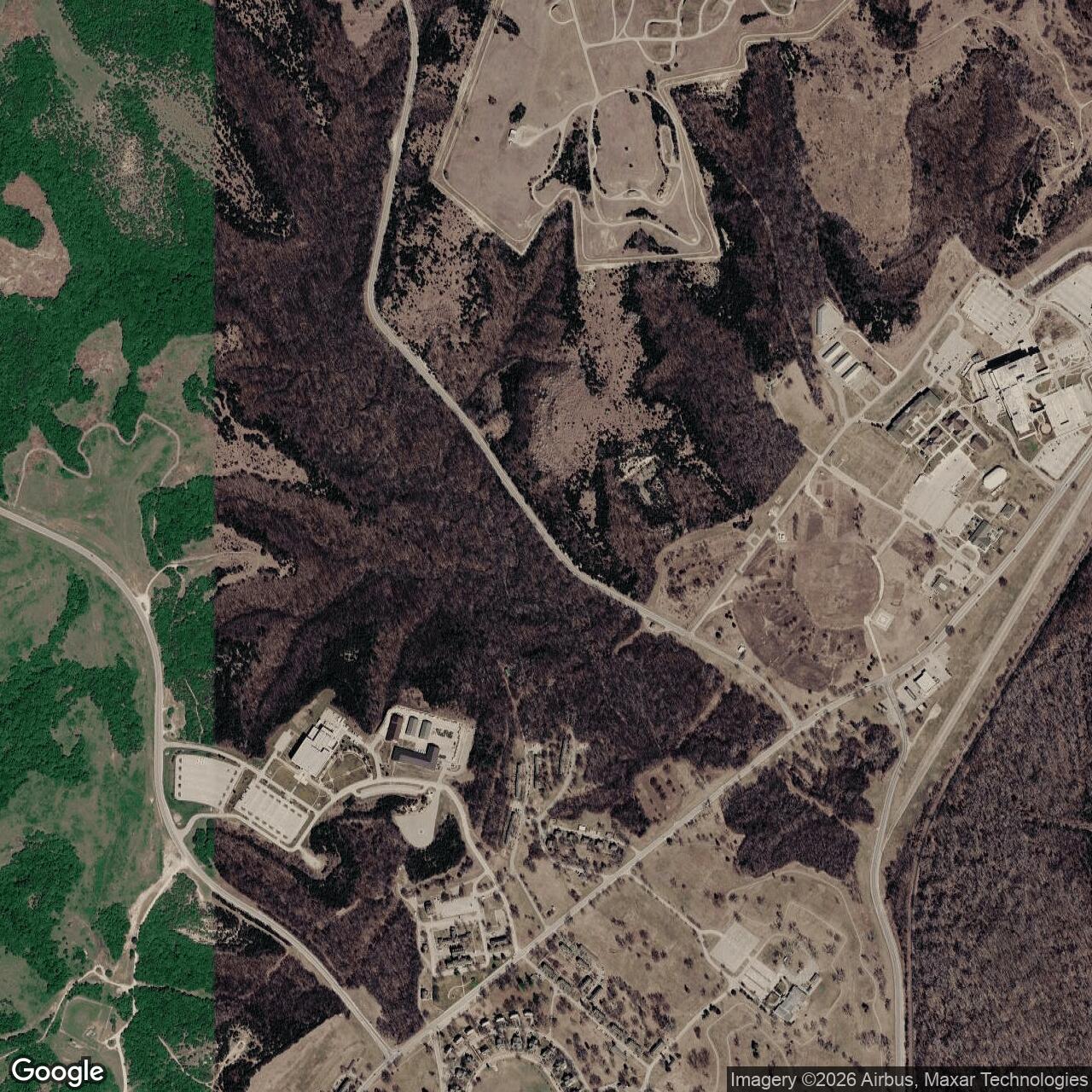
Camp Funston, Kansas
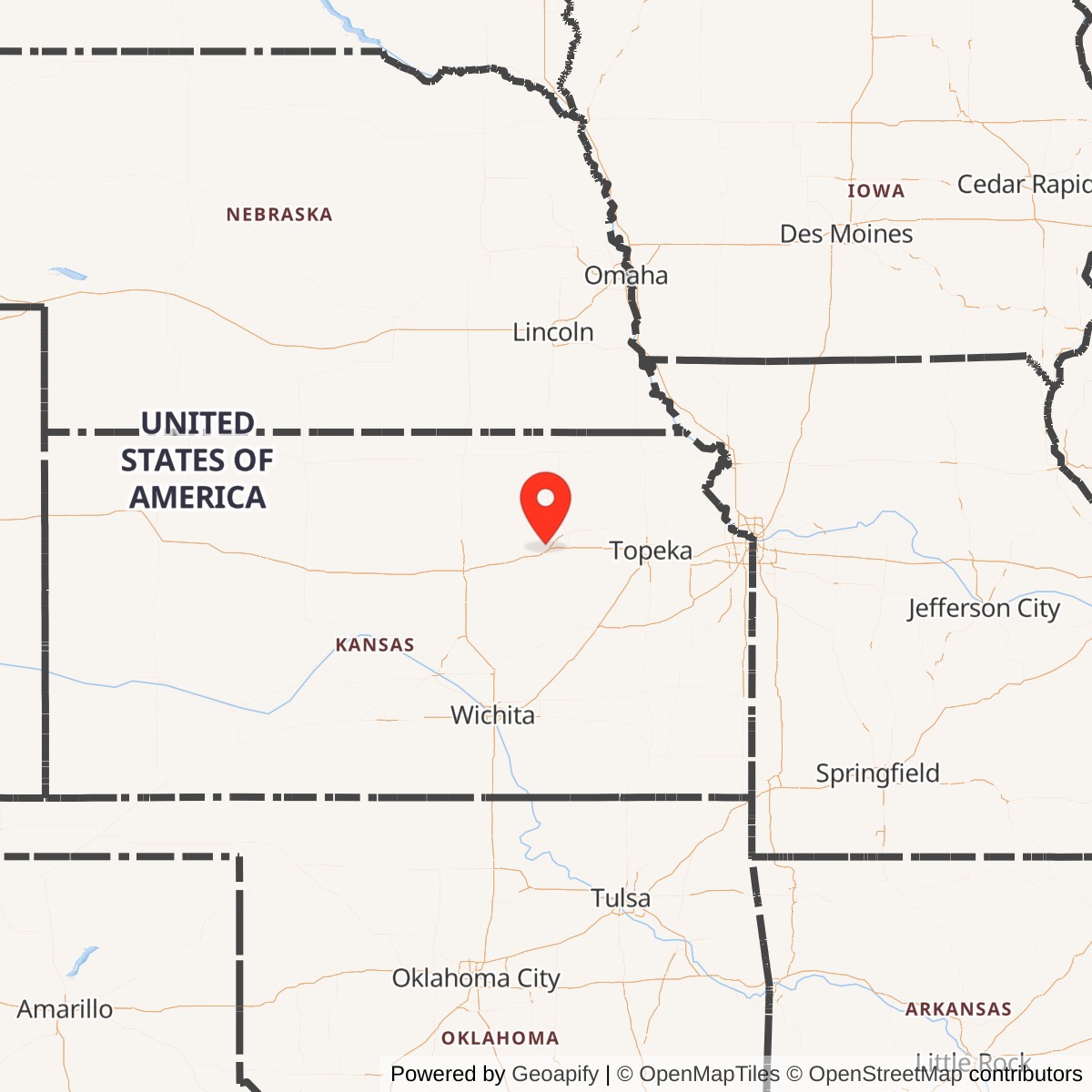
Longitude: -96.7800
Current Role: Camp Funston serves as an active sub-installation of Fort Riley
Camp Funston was the largest of 16 divisional cantonment training camps built during World War I to house and train soldiers for military duty. Construction began in July 1917, and an estimated 2,800 to 4,000 buildings were constructed at a cost of roughly $10 million to accommodate more than 40,000 soldiers. The camp resembled more a city than an army camp. Besides housing and training centers, it offered general stores, theaters, social centers, infirmaries, libraries, schools, workshops, and a coffee roasting house.
Within the camp were thousands of horses and mules that produced nine tons of manure each month. The accepted method of disposing of the manure was to burn it, an unpleasant task made more so by the driving Kansas wind.
Camp Funston is widely regarded as the likely origin point of the 1918 Spanish Flu pandemic, the deadliest disease outbreak in recorded human history.
This is what Camp Funston is most remembered for. Haskell County residents fought a virulent flu strain from January through March 1918. Servicemen on leave at home in Haskell County carried the virus with them back to Camp Funston. There, some 55,000 soldiers from the Great Plains were preparing for the war in Europe.
In March 1918, some of the first recorded American cases of what came to be the worldwide influenza pandemic were reported at Camp Funston. The first, on March 4, 1918, was Albert Gitchell, an Army cook at Camp Funston.
The short-lived but virulent epidemic resulted in 2,480 reported cases and hospitalized more than 1,000 men. By mid-April most signs of flu had decamped, save 400 convalescents still wracked by coughs and the bodies of 46 men the epidemic had struck dead.
The consequences proved catastrophic on a global scale. From Camp Funston, soldiers departed by the thousands for assignment to military camps across the United States and eventually on to Europe, carrying the flu virus with them. Military transport ships were the likely vector of influenza spreading around the world. In March 1918, 84,000 American soldiers set out for Europe, followed by another 118,000 the next month, unknowingly carrying a virus that would prove more deadly than the rifles they carried.
The Spanish Flu started in March 1918 and continued through June 1920. More than 25 percent of the U.S. population became sick, and some 675,000 Americans died. If every combat casualty since the American Revolution to the Gulf War were totaled, it would still not equal the number of Americans killed by the Spanish Influenza pandemic.
The name "Spanish Flu" is a misnomer. Neutral Spain, which wasn't censoring its press on behalf of war efforts, was the first to openly report on the noticeably virulent disease. Soon newspapers around the world began reporting on the "Spanish Flu," which perhaps should have been named the Kansan Flu.
After the war, Camp Funston was torn down, the lumber sold as scrap, and the area used as a maneuvering area. Prior to October 1992, Camp Funston was home to the United States Army Correctional Activity, whose mission was to prepare military prisoners for transition to civilian life.
Camp Funston was the location where training of all military transition teams for service in Iraq and Afghanistan took place. In early 2006, the U.S. Army consolidated all such training at Fort Riley to standardize and improve training for that critical mission.
Today Camp Funston remains an active sub-installation of Fort Riley