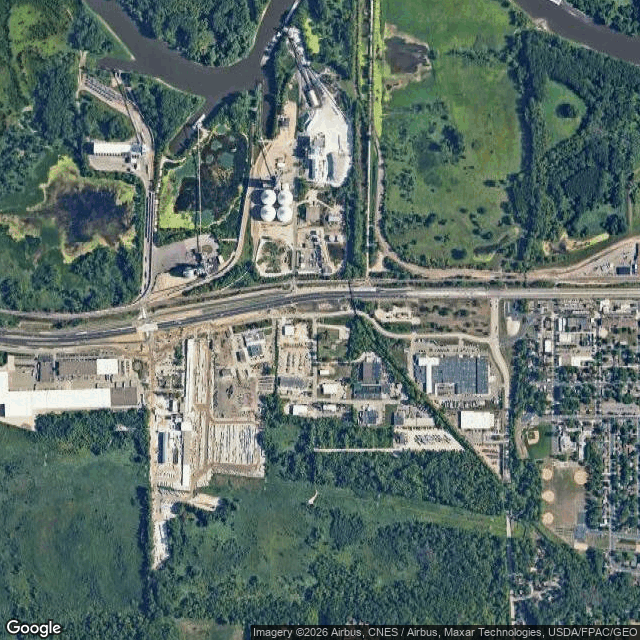
Camp Savage Army Base, Savage Minnesota
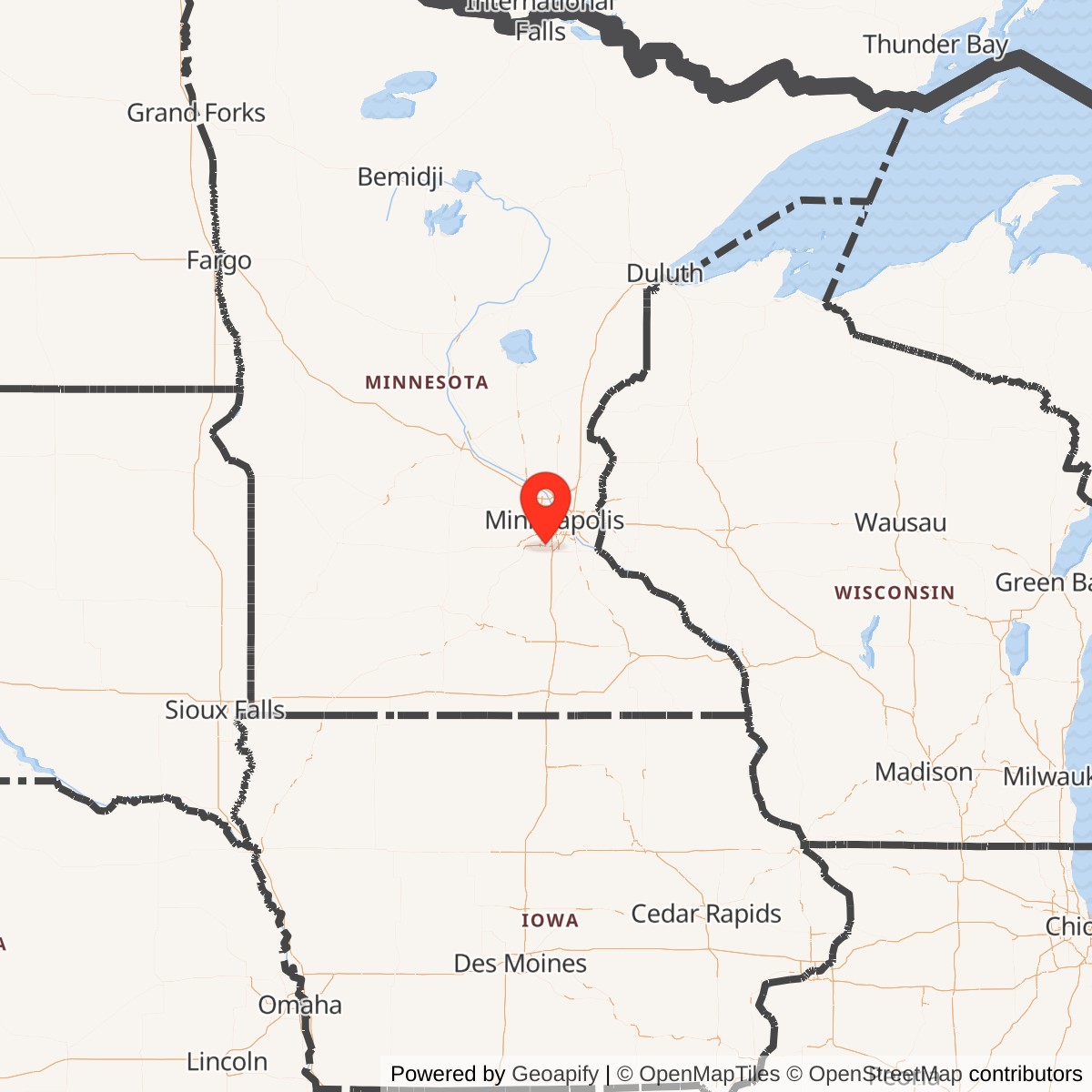
Longitude: -93.351950
Camp Savage was a short-lived but nationally important World War II U.S. Army intelligence training installation in Savage, Scott County, Minnesota. It occupied a 132-acre former Civilian Conservation Corps and public-relief camp south of today's Minnesota Highway 13 near Xenwood Avenue and the South Frontage Road corridor. The site was not a permanent fort, depot, or maneuver post. It was a wartime school installation adapted from existing camp buildings and rapidly expanded to house, feed, drill, and instruct soldiers who were being trained for Japanese-language military intelligence duties.
Camp Savage is closed and is no longer an active Army installation. Its Army role began in 1942 when the Military Intelligence Service Language School moved from the Presidio of San Francisco to Minnesota, and its separate Camp Savage phase ended in August 1944 when the school outgrew the camp and moved to Fort Snelling. The physical site was later redeveloped and reused; the City of Savage notes that little remains of the Army camp except a historical marker erected in 1993, one surviving building used by the Minnesota Department of Transportation, and adjacent land used as a public dog park. For more than two years it was the Army's principal Japanese-language military intelligence school, the place where the wartime program grew from a small improvised language detachment into a large War Department-controlled service school.
The military significance of Camp Savage came from the U.S. Army's urgent need for Japanese linguists after the United States entered World War II. The Army needed soldiers who could read captured documents, interrogate prisoners, translate maps and battle plans, monitor radio traffic, interpret for commanders and civilians, and explain Japanese military terminology, organization, geography, politics, and culture. Most of the soldiers capable of being trained quickly were Nisei, second-generation Japanese Americans, many joined by Kibei, American-born Japanese who had been educated in Japan. Their service occurred while the federal government was simultaneously removing Japanese Americans from the West Coast under Executive Order 9066. That contradiction is central to Camp Savage's identity: it was both a segregated, security-conscious wartime intelligence school and one of the places where Japanese American soldiers proved their loyalty and military value under conditions of national suspicion and discrimination.
Mission Evolution
The school that made Camp Savage important began before Camp Savage itself became an Army site. In the tense months before Pearl Harbor, officers including Lt. Col. John Weckerling and Capt. Kai E. Rasmussen recognized that the Army lacked enough Japanese-language capability for a possible Pacific war. The Fourth Army Intelligence School opened at the Presidio of San Francisco on 1 November 1941. It began in an old airplane hangar with a small budget, a small staff, and a first class of only sixty students. The early instructional core included John F. Aiso as director of training, along with instructors such as Shigeya Kihara, Akira Oshida, and Tetsuo Imagawa. The first curriculum already anticipated the later Camp Savage mission: reading, writing, interrogation, translation, interpretation, captured-document work, geography, map reading, military terminology, radio monitoring, and the political, social, economic, and cultural background of Japan.
Pearl Harbor made the school's mission urgent, but Executive Order 9066 made its California location untenable. Japanese American soldiers could not be comfortably or safely trained near the West Coast communities from which Japanese American families were being forcibly removed. The school needed a new inland location with enough space, enough distance from the coastal exclusion zone, access to a larger Army support post, and a local community that Army leaders believed would accept Japanese American soldiers in uniform. Minnesota Governor Harold Stassen agreed to receive the school after other states resisted. Rasmussen selected the Savage site because it was near Fort Snelling, Minneapolis, and St. Paul, while still offering a camp-like setting that could be adapted quickly.
The first Camp Savage class convened on 1 June 1942 with about 200 soldiers and 18 instructors. With the move, the school came under War Department control and was renamed the Military Intelligence Service Language School. This change was more than administrative. At the Presidio the program had been experimental and marginal. At Camp Savage it became a formal wartime intelligence training institution. The Army enlarged the curriculum, brought in more students and instructors, adapted the former CCC/public-relief camp into a military school, and tied the school more directly to operational requirements coming from the Pacific War.
The mission developed rapidly between 1942 and 1944. The initial Camp Savage curriculum still resembled the Presidio program, but by the second Camp Savage class the school placed heavier emphasis on military Japanese rather than general language ability alone. The training had to produce soldiers capable of immediate use in field intelligence sections, not academic specialists. Students studied Japanese military vocabulary, organization, order of battle, map symbols, place names, document formats, radio traffic, interrogation techniques, translation methods, and the cultural background necessary to interpret enemy behavior and captured materials. The school also had to turn capable graduates into instructors, because its growth depended on using successful students to teach later classes.
By 1943 the school had reorganized its instruction by ability groups, and by 1944 it had moved toward a larger collegiate-style system with many academic sections operating at once. Camp Savage's fourth and last class, which began in January 1944, pushed the installation to its limits. The academic term lengthened from six to nine months, the school reached 52 academic sections by July 1944, and the staff included 27 civilian and 65 enlisted instructors. City and DLI sources both describe the peak Savage period as about 1,100 students and around 100 instructors. The camp had become too large for its improvised site.
The mission therefore moved again. In August 1944 the Military Intelligence Service Language School transferred to Fort Snelling, where larger, more permanent Army facilities could support the expanded program. Camp Savage's Army school mission ended at that point, but the institution it built continued. At Fort Snelling the school added more courses, later created Chinese and Korean language sections, supported the occupation of Japan, and by 1946 had graduated more than 6,000 linguists over its wartime life. In June 1946 the school moved to Monterey, California, and was renamed the U.S. Army Language School, part of the lineage that later became the Defense Language Institute Foreign Language Center.
Operational Role
Camp Savage's operational role was to convert bilingual or potentially bilingual soldiers into military intelligence specialists for immediate use in the Pacific, China-Burma-India, and Alaska theaters. It was a school, but it functioned as an operational pipeline. Students were not simply learning Japanese for general cultural knowledge. They were preparing to join Army and joint units that needed interpreters, translators, interrogators, document analysts, and order-of-battle specialists.
The daily training schedule was intense. National Park Service describes classes running from 8:00 a.m. to 4:30 p.m. and again from 7:00 p.m. to 9:00 p.m., with free time often spent studying combat intelligence and preparing for examinations. Wednesday afternoons were reserved for military training and drill, and Saturdays for examinations. The City of Savage describes a typical day as nine intensive hours of Japanese-language study. That tempo reflected the urgency of the Pacific War. The Army could not wait years to produce linguists. It needed trained soldiers in months.
Instruction at Camp Savage combined language, intelligence tradecraft, and military discipline. Students practiced reading and writing Japanese, translating official and personal documents, interpreting spoken language, interrogating prisoners, and using Japanese military vocabulary. They studied captured documents, maps, radio monitoring, geography, military organization, order of battle, and Japanese social, political, economic, and cultural background. The course was designed to make language useful under combat conditions. A graduate might be expected to translate a diary found on a battlefield, interrogate a prisoner who had current tactical information, explain a captured map, interpret a radio intercept, or assist a commander trying to communicate with civilians in newly occupied territory.
Graduates quickly demonstrated value in the field. MNopedia notes that MISLS graduates deployed widely to the Pacific and China-Burma-India theaters, communicated with Japanese soldiers, gathered and translated documents, engaged in combat, served on staffs of U.S. generals, and worked as translators during high-level negotiations. The City of Savage states that graduates were stationed throughout the Pacific Theater and in Alaska, translating captured documents, maps, battle plans, diaries, letters, and printed materials; monitoring Japanese radio broadcasts; interrogating captured enemy soldiers; and acting as translators for civilians. National Park Service emphasizes that graduates were assigned to Army units in the Pacific Theater and provided code-breaking and negotiation advantages.
Camp Savage also had a replacement and expansion role inside the MISLS system itself. Early graduates became instructors, allowing the school to grow despite the shortage of qualified Japanese-language personnel. As the student body expanded, instructors and administrators had to sort students by ability, redesign the curriculum, create military Japanese teaching materials, and balance language instruction with intelligence application. The school's work was therefore self-reinforcing: it produced field linguists for the war and trained the next generation of instructors who made larger classes possible.
The operational role of Camp Savage was shaped by the racial and political conditions of 1942. Many students had families confined in American concentration camps. Some students came directly from those camps. Others were Hawaiian Nisei, mainland Nisei, Kibei, or a small number of non-Japanese American personnel. They served in an Army that needed them but did not fully trust Japanese ancestry as a category. Camp Savage therefore became a testing ground in two senses. It tested whether the Army could produce Japanese-language intelligence specialists quickly enough to affect the war, and it tested whether Japanese American soldiers would be accepted as essential military professionals despite national suspicion. The answer, operationally, was yes: by late 1944 the Camp Savage/Fort Snelling school had already produced 1,600 enlisted graduates, 142 officer candidates, and 53 officers.
Units, Organizations, and Personnel
The main organization at Camp Savage was the Military Intelligence Service Language School. The school's institutional lineage began as the Fourth Army Intelligence School at the Presidio of San Francisco, shifted to Camp Savage in 1942 under War Department control, moved to Fort Snelling in 1944, then continued to Monterey in 1946 as the Army Language School. Camp Savage was the crucial middle stage in which the school expanded from a small experiment into a large wartime service school.
The Army leaders most associated with the school's creation and move were Capt. Kai E. Rasmussen and Lt. Col. John Weckerling. Rasmussen had served in Japan and observed the Japanese Army during its war in China. Weckerling had studied Japanese in Japan and had served as assistant military attache. Together they recognized the need for Japanese-language military intelligence before the United States had built a structure to supply it. Rasmussen's search for a new inland school site led directly to the selection of Camp Savage.
John F. Aiso was the most important instructional leader. A Harvard-educated lawyer of Japanese ancestry who was serving in the Army as a mechanic when Rasmussen found him, Aiso became director of training. He helped build the school's academic system and became one of the central figures in the history of the Military Intelligence Service Language School. Instructors such as Shigeya Kihara, Akira Oshida, and Tetsuo Imagawa formed part of the original teaching base at the Presidio and helped give the school enough technical Japanese-language expertise to begin.
The student body was primarily Nisei, with some Kibei, some students from Hawaii, some mainland Japanese Americans, a few non-Japanese Americans, and later a widening instructional and administrative staff. The students were U.S. soldiers, not civilian translators. Their training prepared them for attachment to military units, intelligence sections, headquarters, interrogation teams, document centers, and occupation-related organizations. MNopedia states that MISLS graduates eventually served in every branch of the military and supported more than 130 wartime organizations. That breadth explains why Camp Savage should be understood as a force-multiplier installation rather than as a local school serving only one unit.
The school also interacted closely with Fort Snelling even before the move. Camp Savage was selected partly because Fort Snelling could provide established Army support nearby. As the Savage installation became overtaxed, administrative and supply functions increasingly depended on Fort Snelling. That relationship foreshadowed the August 1944 move and illustrates a common wartime pattern: a small adapted camp could launch a mission quickly, but sustained expansion required a larger permanent post.
Facilities and Physical Layout
Camp Savage's physical plant was modest but important. The site was about 132 acres south of present Highway 13 near Xenwood Avenue. It had been used by the Civilian Conservation Corps during the 1930s and then by a program that housed elderly, indigent men. The Army inherited a camp environment rather than a purpose-built intelligence school. That gave the school an immediate physical base but also imposed limits that became more severe as enrollment grew.
The camp eventually included barracks, classrooms, a mess hall, an officers' mess, and other support buildings. Photographs and historical descriptions show a simple wooden-camp landscape, with barracks and support structures rather than permanent brick academic buildings. This made sense for a wartime school opened in haste. The installation had to house students, provide classrooms, feed the camp population, support military discipline, and allow expansion as each class grew larger.
The limits of the site mattered. The DLI account notes that expansion required additional facilities and that the gradual construction of barracks and classrooms accelerated as the school grew. By 1944, despite enlargement and improvement, Camp Savage was inadequate and overtaxed. Much of the school's supply and administrative support was handled through Fort Snelling. The move to Fort Snelling was therefore not simply a matter of convenience. It was driven by the physical limitations of a former CCC and relief camp that had been asked to support a national wartime intelligence school.
Today's physical landscape has little of the wartime installation left above ground. The historical marker area preserves public memory of the camp, and the City of Savage identifies one remaining building in MnDOT use, with adjacent land used as a dog park. That sparse survival is part of the site's historical problem. Camp Savage's influence was enormous, but its physical remains are slight, making the documentary record, photographs, memorials, and oral histories especially important.
Camp Savage Chronology
- 1941-04-15 - The idea of a Japanese military language school was conceived by U.S. Army officers who recognized the shortage of Japanese linguists.
- 1941-11-01 - The Fourth Army Intelligence School opened at the Presidio of San Francisco.
- 1941-12-07 - Japan attacked Pearl Harbor, making the school's mission urgent.
- 1942-02-19 - Executive Order 9066 authorized the forced removal of Japanese Americans from the West Coast and intensified the need to relocate the school.
- 1942-05 - The first Presidio class graduated, and the language school moved to Minnesota.
- 1942-06-01 - The first class at Camp Savage convened with about 200 soldiers and 18 instructors.
- 1942-11-30 - The first Camp Savage class graduated.
- 1942-1943 - The Camp Savage curriculum increasingly emphasized military Japanese, including interrogation, translation, captured-document analysis, Japanese military terminology, geography, map reading, and order of battle.
- 1943 - The school reorganized instruction by student ability levels as enrollment and instructional complexity increased.
- 1944-01 - The last Camp Savage class began with approximately 1,100 students and about 100 instructors.
- 1944-07 - The school reached 52 academic sections at Camp Savage, with 27 civilian and 65 enlisted instructors.
- 1944-08 - The Military Intelligence Service Language School moved from Camp Savage to Fort Snelling because the Savage facilities were inadequate for the expanded mission.
- 1944-11 - The first Fort Snelling graduation was held after the move from Camp Savage.
- 1945 - The school's mission expanded for occupation needs, and Chinese and Korean language sections were added at Fort Snelling.
- 1946-06-08 - The final wartime Fort Snelling class graduated, and the school soon moved back to California.
- 1946-06 - The school moved to Monterey, California, and was renamed the U.S. Army Language School.
- 1963-07 - The War Department/Army language-school lineage was reorganized as the Defense Language Institute.
- 1993 - A historical marker was erected at the former Camp Savage site.
- Present - Camp Savage is no longer an active Army installation; the site is largely redeveloped, with a historical marker, one surviving building in MnDOT use, and adjacent public dog-park land preserving limited visible traces of the wartime camp.