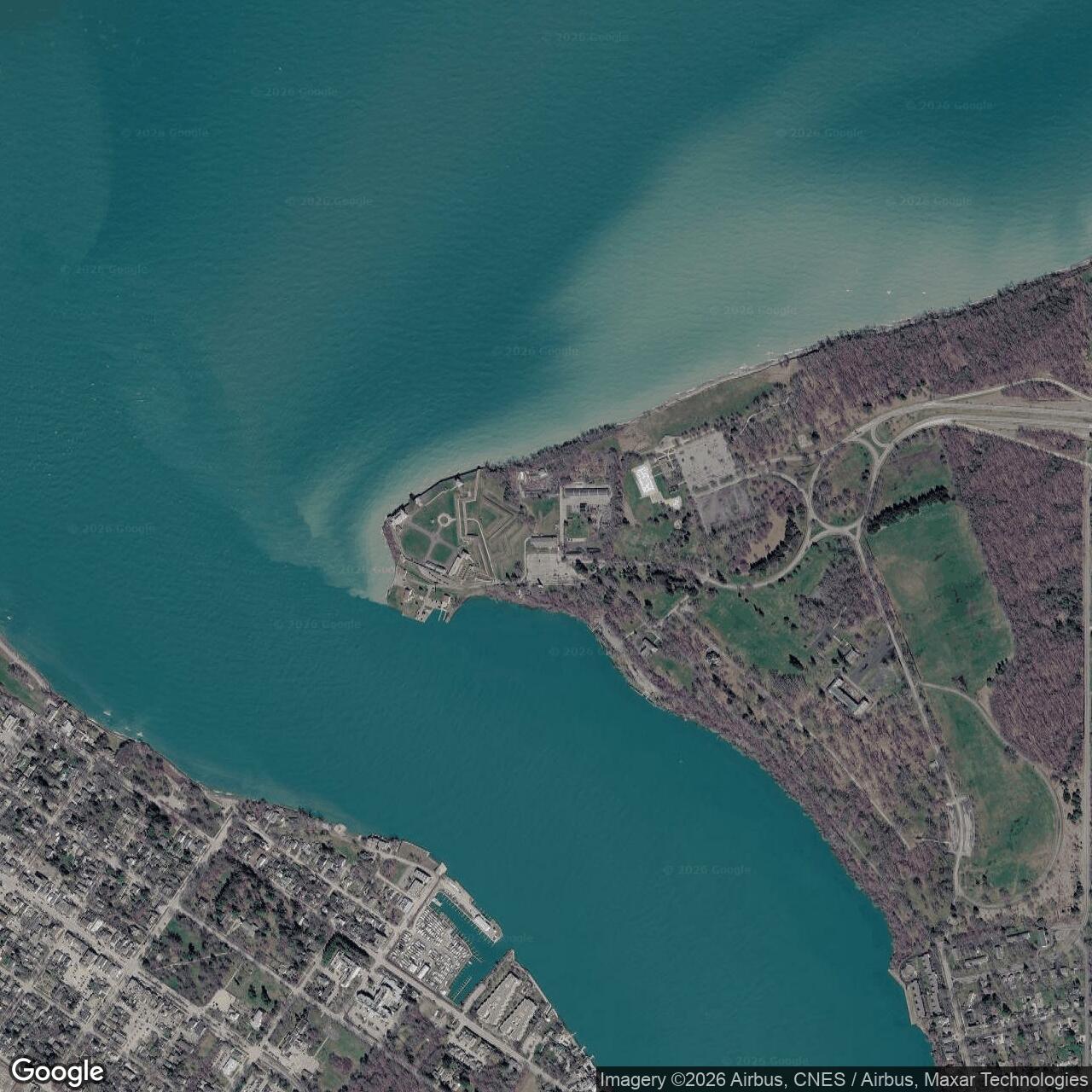
Fort Niagara Army Base, Youngstown New York
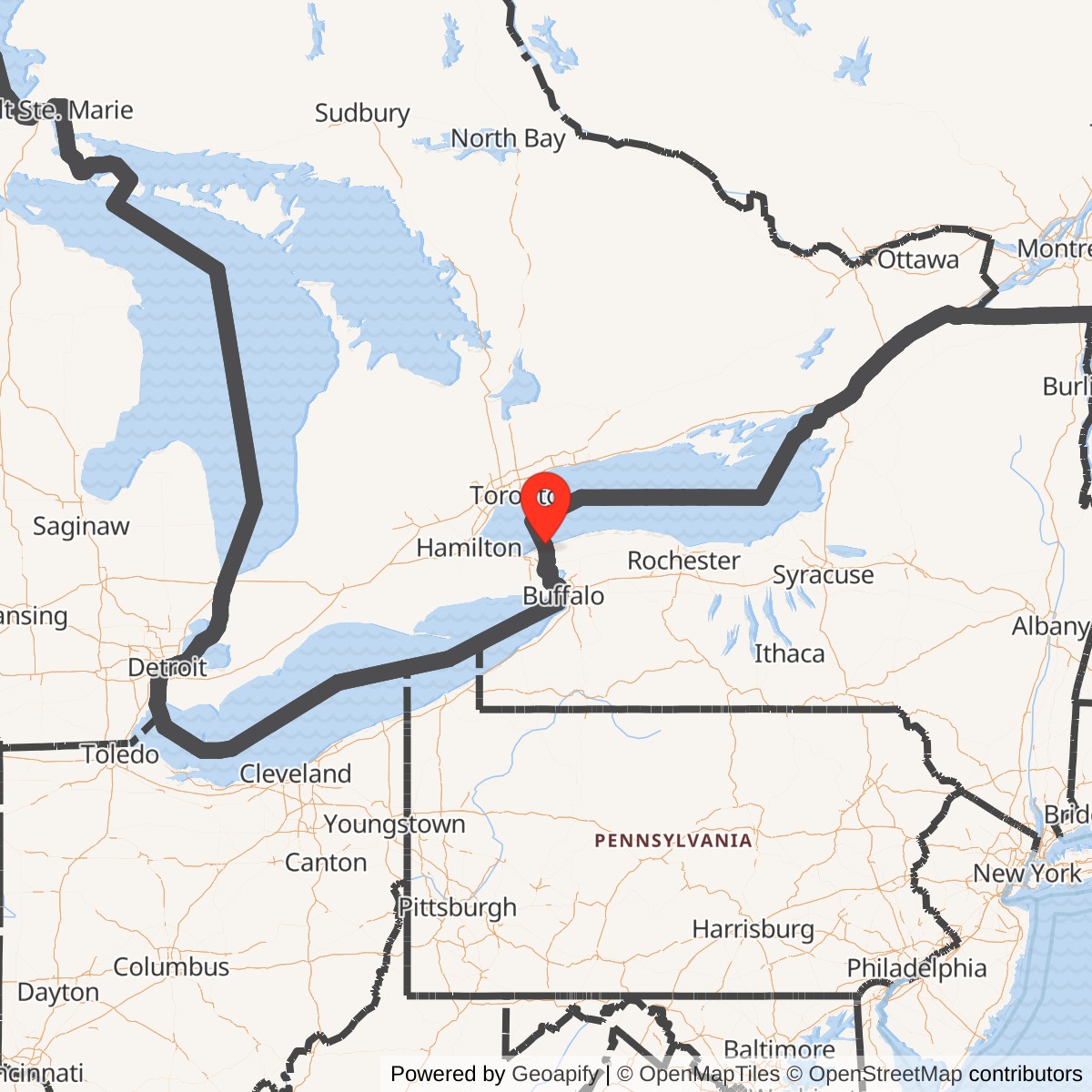
Longitude: -79.0605000
Official Base Website: Old Fort Niagara State Historic Site / Fort Niagara State Park
Current Role: Old Fort Niagara State Historic Site and Fort Niagara State Park; museum, living history, recreation, historic preservation, adjacent active Coast Guard station, continuing USACE FUDS and shoreline work
Fort Niagara occupied one of the great strategic doorways of North America. From the point where the Niagara River enters Lake Ontario, its garrisons could influence movement between the Atlantic world, the Great Lakes, the Ohio Valley, and the interior of the continent. France built there to control trade and alliance networks. Britain captured and expanded the fortress, using it as a Great Lakes headquarters and a base for frontier war. The United States finally occupied it in 1796, lost it in a surprise attack during the War of 1812, recovered it in 1815, and retained an Army post there until 1963.
The installation must be understood in two connected physical layers. "Old Fort Niagara" is the walled colonial fortress at the river mouth, including the French Castle, powder magazine, redoubts, walls, and related eighteenth- and nineteenth-century structures. "New Fort Niagara" was the later open Army post built outside the old walls beginning after the Civil War. Its barracks, headquarters, training grounds, ranges, hospital, officers' facilities, induction and reception functions, prisoner-of-war compound, and Cold War antiaircraft facilities occupied much of the land now used as Fort Niagara State Park.
These were not separate installations. New Fort Niagara was the modernized garrison and training portion of the same military post. The old fortress gradually became a historic and museum area within the active Army reservation, while daily military life shifted into newer buildings outside its walls.
Fort Niagara also should not be confused with Fort George, Fort Mississauga, or Butler's Barracks across the river in present-day Niagara-on-the-Lake, Ontario. Those were British and Canadian sites. Fort Niagara was the military reservation at the mouth of the Niagara River in the Town of Porter.
Names, Dates, and National Control
The site's chronology begins before its U.S. Army phase. French explorers erected short-lived posts at the river mouth in 1679 and 1687. The durable installation dates from 1726, when French soldiers and workmen constructed the stone Maison a Machicoulis, now known as the French Castle, and surrounded it with a stockade. The British captured the expanded fort in 1759. Although the 1783 Treaty of Paris assigned the region to the United States, British troops did not evacuate until 1796 following implementation of Jay's Treaty.
1796 is the correct opening year for the United States Army phase. The British captured the fort on the night of 1813-12-18 to 1813-12-19 and occupied it through the remainder of the War of 1812. It returned to American control in 1815 under the postwar settlement. The Army officially deactivated Fort Niagara in 1963, although USACE documentation sometimes carries the former military-use period through 1964, reflecting property disposition and administrative closeout. The preferred military closure year is 1963 because that is when the last Army units withdrew and the post was decommissioned.
The acreage also requires explanation. Old Fort Niagara State Historic Site currently comprises about 22 acres of original fortifications and buildings. Fort Niagara State Park is approximately 504 acres and covers much of the former New Fort landscape. The National Historic Landmark or Colonial Niagara district has been described with other acreages, including about 250 acres, because historic boundaries differ from park and former-reservation boundaries. No single acreage should be presented as if it applied unchanged across three centuries.
The Strategic Geography
The Great Lakes and the St. Lawrence system formed a water highway into the continental interior. Niagara Falls interrupted that route. Travelers moving between Lake Ontario and Lake Erie had to unload boats and carry goods over the Niagara portage around the falls. Control of the river mouth and portage meant influence over trade, military supply, diplomacy, and movement toward the upper Great Lakes and Ohio Country.
Indigenous nations understood and used this geography long before European fortification. Haudenosaunee peoples, especially the Seneca, occupied and governed the region. Other Indigenous nations traveled through the Niagara corridor for diplomacy, trade, hunting, war, and movement between the lakes. European control was never simply a matter of walls and flags. French, British, and American commanders depended upon negotiations, trade relationships, interpreters, gifts, military alliances, and sometimes coercion and violence involving Indigenous nations.
The fort's history therefore cannot be reduced to three European and American flags. The site was also a meeting place, supply point, refugee center, and arena of alliance and dispossession for Native peoples. Indigenous power shaped whether Fort Niagara could function and which imperial system could use it.
French Fortification, 1679-1759
The French made two brief attempts to fortify the river mouth in the seventeenth century. A post erected in 1679 did not last, and Fort Denonville, established in 1687, also failed after disease, hunger, isolation, and conflict devastated its garrison. These failures showed both the location's value and the difficulty of sustaining troops at the edge of New France's supply system.
In 1726 France returned with a more durable design. The large stone Maison a Machicoulis combined barracks, storehouse, defensive architecture, and political signaling. Later called the French Castle, it was deliberately presented as a trading house or "house of peace" while serving military and imperial purposes. The post protected French interests and provided a venue where French officials and Indigenous representatives could trade and negotiate.
As Anglo-French rivalry sharpened, the French enlarged the fort. The French and Indian War placed Niagara on the supply line connecting Canada to posts in the upper Great Lakes and Ohio Valley. Captain Pierre Pouchot oversaw major improvements, including stronger earthworks, covered ways, artillery positions, and a stone powder magazine completed in the 1750s. The magazine could hold a large reserve of gunpowder needed both for the fortress and for distribution farther west.
The French position depended on more than masonry. Fort Niagara supplied troops, traders, and Native allies. Warriors and delegations from Great Lakes and Ohio Valley nations passed through the post. Families sometimes remained near the fort while warriors campaigned. The garrison supported the movement of arms, powder, food, and trade goods through a continental alliance network.
Siege and British Capture, 1759
In 1759 British regulars, New York provincials, and nearly 1,000 Haudenosaunee allies advanced against Fort Niagara. The attackers laid siege to the position for nineteen days. British artillery breached the defenses, while a French relief column moving toward the fort was defeated nearby at the Battle of La Belle-Famille.
Brigadier General John Prideaux initially commanded the siege but died in a mortar accident. Sir William Johnson then assumed command. With no successful relief possible and the works damaged, Captain Pouchot surrendered Fort Niagara on 1759-07-25. The victory removed France from a critical Great Lakes gateway and helped collapse the western part of New France's military system.
The fort itself survived the siege better than many contemporary strongholds. The French Castle, powder magazine, and other structures passed into British service. Their survival is a major reason Old Fort Niagara now contains one of the most complete collections of eighteenth-century military architecture in the United States.
British Great Lakes Headquarters
The British made Fort Niagara a central post in their Great Lakes network. It guarded the portage, forwarded supplies, regulated traders, and supported garrisons at Detroit, Michilimackinac, and other western stations. During Pontiac's War in 1763, many British posts fell or came under siege. Niagara remained in British hands and became a vital link in maintaining and restoring the western system.
In 1764 the fort hosted a major council between British officials and representatives of several Native nations. The British also assembled forces and supplies there for operations that reopened routes and relieved threatened outposts. Two stone redoubts built in 1770 and 1771 strengthened the aging defenses against possible attack.
The American Revolution transformed the post again. Fort Niagara remained British and became Great Lakes headquarters, a supply depot, trade center, diplomatic center, and base for Loyalist and Indigenous operations against the New York and Pennsylvania frontiers. Butler's Rangers and allied warriors used the Niagara system during raids that drew American troops and supplies away from the main eastern theater.
The war devastated Haudenosaunee communities. In 1779 the Sullivan-Clinton expedition destroyed villages, crops, and stored food across Haudenosaunee territory. Thousands of Indigenous refugees fled toward Fort Niagara. Camps stretched along the river, but the British were unable to provide adequate shelter and food. Hundreds died from starvation, disease, and exposure during the severe winter of 1779-1780. This refugee catastrophe is inseparable from the fort's Revolutionary history.
The 1783 Treaty of Paris ended the Revolution and placed Fort Niagara within the United States, but Britain retained the post. British officials cited unresolved American treaty obligations and frontier disputes. For thirteen more years, the Union Jack flew over a fortress legally claimed by the United States.
First U.S. Army Occupation, 1796-1813
Jay's Treaty established a mechanism for British evacuation of the western posts. United States troops occupied Fort Niagara in 1796, while Britain built Fort George across the river in Upper Canada. The old defenses now faced an awkward strategic problem. Many of Fort Niagara's strongest works had been designed against an attack from the landward east, not against a British fort directly across the Niagara River.
The American garrison maintained the post with limited manpower and funds. Buildings deteriorated, artillery and stores fluctuated, and the frontier remained diplomatically sensitive. The fort served as a border station, customs and military presence, supply point, and symbol of United States sovereignty on the Great Lakes.
Officers who later became nationally prominent served there. George Armistead, later commander of Fort McHenry during the bombardment that inspired "The Star-Spangled Banner," served at Fort Niagara from 1801 to 1806. His presence illustrates how the small prewar Army circulated officers among distant frontier posts.
War of 1812
When war began in 1812, Fort Niagara and Fort George became opposing strongholds at close range. Their batteries exchanged fire during October and November 1812. The bombardments damaged buildings and caused casualties but did not produce a decisive result.
The post also supported American operations across the river. In May 1813, American forces captured Fort George after artillery preparation and an amphibious landing. Fort Niagara remained part of the supply, hospital, communications, and defensive system sustaining the American bridgehead in Upper Canada.
By late 1813 the campaign had turned against the United States. American troops withdrew from Fort George and burned the nearby town of Newark, now Niagara-on-the-Lake, leaving civilians exposed at the beginning of winter. British commanders prepared retaliation and recognized that Fort Niagara's garrison was vulnerable.
During the night of 1813-12-18 to 1813-12-19, a British force crossed the river in secrecy, approached the fort, and achieved surprise. The attackers penetrated the defenses and overwhelmed the garrison in close combat. Fort Niagara fell with little warning, giving Britain a secure base on the American shore. British and allied forces then operated along the Niagara frontier, destroying settlements and military positions in retaliation for Newark.
The British held Fort Niagara for the rest of the war. The Treaty of Ghent restored the prewar boundary, and the post returned to the United States in 1815. The capture remains one of the most dramatic failures in Fort Niagara's American Army history and explains why British and American artifacts, flags, and unit traditions remain central to interpretation at the site.
Declining Frontier Value and Border Crises
After 1815 Fort Niagara returned to border duty, but transportation changes reduced its strategic importance. Completion of the Erie Canal and Welland Canal in the 1820s bypassed the old Niagara portage and shifted commercial movement to new routes. The Army withdrew most of the garrison, leaving a caretaker for portions of the 1820s.
The fort was regarrisoned from 1828 to 1832, then again reduced. The Patriot War and Canadian rebellion crisis beginning in 1837 renewed concern about the border. Congress authorized repairs and improvements, though the immediate crisis passed before the work was fully useful. By 1843 the masonry works were improved but no longer represented modern fortification technology.
The site also became connected to the disappearance of William Morgan, whose threatened publication of Masonic secrets helped produce the Anti-Masonic movement. Morgan was held briefly in the powder magazine in 1826 before disappearing. This episode was not an Army mission, but it became part of the fort's public memory.
Civil War and Creation of New Fort Niagara
The Civil War restored Fort Niagara's military relevance. Union planners worried that Britain might recognize or assist the Confederacy and that the Canadian border could become a theater of conflict. Work beginning in 1863 added brick and concrete revetments and artillery casemates. The war ended before the new defenses were completed, and the casemates were obsolete before they received their intended armament.
Tension returned in 1866 when Irish American Fenian forces attempted to invade British Canada. The episode reinforced the need for an Army presence along the border even though the old fortress was no longer a practical modern combat work.
A garrison arriving in 1865 found the old fort's quarters unhealthy and unsuitable. The Army began constructing barracks, officers' quarters, administrative buildings, stables, storehouses, and support facilities outside the walls. This open cantonment became New Fort Niagara. Military life shifted south and east of the colonial enclosure, while the old walls and buildings gradually became secondary space.
New Fort Niagara allowed the installation to survive. A 1,000-yard rifle range built in 1885 strengthened its training mission. Rail access and proximity to Buffalo and Niagara Falls made it easier to move troops and supplies. The post became less important as a fixed fortress and more useful as a barracks, recruit, and training station.
Spanish-American War and Philippine Service
Fort Niagara prepared troops during the Spanish-American War of 1898 and the Philippine-American War that followed. The post supported recruiting, organization, equipping, drill, marksmanship, and movement of personnel. Its location near rail and industrial centers suited mobilization even though the old fortifications had little relevance to overseas expeditionary war.
The Army's experience during this period foreshadowed the twentieth-century installation. Fort Niagara's core value increasingly lay in people and training rather than cannon commanding the river. Barracks, classrooms, ranges, storehouses, and transportation connections mattered more than bastions.
World War I and Interwar Training
In 1917 Fort Niagara became an officers' training camp. Candidates underwent military instruction, physical conditioning, weapons training, tactics, field exercises, and leadership preparation for the rapidly expanding wartime Army. Reserve Officer Training Corps activity continued into the early 1920s.
The old French powder magazine still stored Army ammunition during World War I, a remarkable continuation of its original eighteenth-century function. At the same time, most modern activity occurred in New Fort Niagara's cantonment and ranges.
From 1922 to 1940, the 28th Infantry Regiment became the post's principal Regular Army organization. The regiment trained at Niagara and participated in Citizens' Military Training Camps and other interwar readiness programs. The post supported Regular Army, Reserve, National Guard, and civilian-military training communities.
The interwar years were also decisive for preservation. Old Fort Niagara's sea wall, French Castle, and surviving colonial buildings had deteriorated badly. Local preservation advocates organized the Old Fort Niagara Association in 1927. Cooperation among the association, the Army, and public agencies led to restoration from 1929 through 1934. A formal license allowed the association to operate and interpret the historic area while New Fort Niagara remained an active Army post.
This dual arrangement protected the colonial fortress without ending military use. The installation became both an operating Army post and an early historic-site partnership.
World War II Reception and Induction Mission
The World War II mobilization changed Fort Niagara from a regimental home into a personnel-processing center. The 28th Infantry departed for larger training areas, and Fort Niagara served as a reception and induction center from 1940 into the war years. Draftees arrived for examinations, classification, records processing, uniforms, initial military administration, and assignment to training camps.
The Army constructed additional temporary facilities to handle the flow. For many western New York soldiers, Fort Niagara was the doorway into wartime service. They might remain only briefly before boarding trains for infantry, artillery, technical, air, or service-force training elsewhere.
The post also performed separation and redistribution functions as the war progressed. Its rail access and established barracks made it useful for receiving and moving large groups even though its training land was smaller than the great divisional camps.
Prisoner-of-War Camp
Fort Niagara became a prisoner-of-war camp on 1944-06-12. It held German prisoners, many captured in North Africa or Europe. Accounts commonly place the population at approximately 1,200 prisoners, although strength varied over time.
The POW mission required guarded compounds, barracks, mess facilities, medical care, administration, censorship, recreation, and labor arrangements. Prisoners provided labor at the post and in the regional wartime economy under Army custody and Geneva Convention requirements. Their presence connected Fort Niagara to the nationwide system that brought hundreds of thousands of Axis prisoners to the United States.
USACE also identifies prisoner custody as part of the former property's historic use. The POW compound was a New Fort Niagara function, not an eighteenth-century use of the colonial fortress. Distinguishing those areas prevents the dramatic old walls from obscuring the modern cantonment where most twentieth-century missions occurred.
Surplus Declaration, Veteran Housing, and Korean War Return
The Army declared Fort Niagara surplus in 1945 as World War II ended. German POW activity continued into the postwar transition, and many New Fort buildings became temporary housing for returning veterans and their families. Plans developed to convert the property into a state park.
New York assumed park responsibilities for much of the former reservation in the late 1940s, but the military story was not finished. The Korean War led the Army to reoccupy Fort Niagara in 1950. From 1952, antiaircraft troops used the post as part of the air-defense system protecting the industrial Niagara frontier and western New York.
The antiaircraft mission reflected a final transformation. Fort Niagara had begun as a position controlling water and portage routes, then became a border post and training cantonment. In the Cold War it supported defenses against aircraft rather than ships or armies crossing the river. The post housed personnel and support functions connected with the regional antiaircraft network.
Army Closure, 1963
The Army officially deactivated Fort Niagara in 1963 and withdrew its last units. Some property and administrative actions continued into 1964, which explains the later endpoint in certain USACE records. The operational closure year remains 1963.
Most New Fort Niagara buildings were demolished in 1965 and 1966 to create recreational space. Of roughly one hundred garrison buildings, only a small number survived. The former fire hall became the Fort Niagara Nature Center. The officers' club and a few other structures preserve parts of the modern post, while road patterns, archaeological resources, and open spaces retain less obvious evidence.
Old Fort Niagara survived because restoration and museum use had begun while the Army was still present. The French Castle, powder magazine, redoubts, walls, and other colonial resources became the historic core of the public site. Fort Niagara's military closure therefore produced two related forms of reuse: historic preservation at Old Fort Niagara and recreation across the former New Fort landscape.
Environmental and Munitions Legacy
Centuries of military use left environmental responsibilities. USACE manages Fort Niagara work under the Defense Environmental Restoration Program for Formerly Used Defense Sites. The most visible munitions issue is the Fort Niagara Offshore Dump Site in Lake Ontario.
The Army historically disposed of munitions in the water offshore. Investigations recovered more than one hundred mostly inert items, including intact practice mortar projectiles, mortar fuzes, and grenade dischargers. USACE has identified the need for additional investigation subject to funding. Visitors should not disturb suspected military items on shore or in the water.
The former post also contained firing ranges, ammunition storage, vehicle and maintenance areas, fuel handling, waste disposal, barracks, hospital and utility systems. These activities require environmental and archaeological review when park work disturbs former military ground.
Shoreline erosion is a separate but urgent threat. Lake Ontario has long undermined the bluff and seawall around the colonial fortress. USACE and New York State are working on shoreline stabilization intended to protect the walls, French Castle, North Redoubt, and archaeological resources. Planning has included structural, geotechnical, environmental, and archaeological investigation.
Historic Significance and Preservation
Old Fort Niagara was designated a National Historic Landmark in 1960 and entered the National Register through the Colonial Niagara Historic District in 1966. New York State describes it as containing the most complete surviving collection of eighteenth-century military architecture in the United States.
The French Castle is one of the oldest surviving European-built structures in the Great Lakes region. The powder magazine, redoubts, gates, walls, barracks, and landscape preserve material from French, British, and American occupations. Their value is not limited to architectural age. They illustrate imperial rivalry, Indigenous diplomacy and displacement, Great Lakes logistics, the American Revolution, the War of 1812, and the evolution of the United States Army.
Interpretation continues to evolve. Old Fort Niagara uses living-history programs, exhibits, archaeology, collections, and special events. A Native American Education Center planned for 2026 is intended to present Indigenous perspectives on alliance, diplomacy, refuge, culture, and survival. That work addresses histories too often subordinated to accounts of European siege and conquest.
Current Status and Reuse
Fort Niagara is closed as a U.S. Army installation. Fort Niagara State Park occupies approximately 504 acres of the former military landscape and provides recreation, trails, sports fields, swimming, nature programs, boat launches, fishing access, and winter activities.
Old Fort Niagara State Historic Site occupies approximately 22 acres within or adjacent to the park system. The Old Fort Niagara Association operates the historic site in cooperation with the New York State Office of Parks, Recreation and Historic Preservation. It preserves the colonial fortress, maintains collections, and offers public interpretation.
An active U.S. Coast Guard station remains adjacent to the fort at the river's edge. That continuing federal presence is not a successor Army installation and does not mean Fort Niagara remains open as an Army post. The Army's current relationship is principally through USACE environmental remediation, shoreline protection, engineering assistance, and historic stewardship partnerships.
Role in the Wider Military Network
During the French and British periods, Fort Niagara connected Montreal and Lake Ontario to Detroit, Michilimackinac, the upper Great Lakes, and the Ohio Valley. It functioned as a supply depot, diplomatic center, trade post, refugee center, and operational headquarters.
During the War of 1812 it formed one side of a cross-border fortress system with Fort George, Fort Mississauga, Queenston, Lewiston, Buffalo, and other Niagara positions. Its artillery, boats, roads, hospital, stores, and river crossing points supported campaigns on both sides of the border.
In the later U.S. Army, Fort Niagara belonged to a network of northeastern barracks and training posts. Rail connections linked it to Buffalo, New York City embarkation facilities, Pine Camp and later Fort Drum, and national mobilization centers. During World War II, its reception mission fed personnel into training installations across the country. Its POW mission linked it to branch labor camps and the national enemy-prisoner system.
During the Cold War, Fort Niagara supported the antiaircraft defense of the Buffalo-Niagara industrial region. Its modern regional relationships included Niagara Falls military aviation facilities and other Army air-defense positions. Today its preservation and remediation connect New York State Parks, the Old Fort Niagara Association, USACE, the National Park Service, the Coast Guard, local governments, Indigenous partners, and the Niagara Falls National Heritage Area.
Chronology
- 1679 France erected the first short-lived post at the mouth of the Niagara River.
- 1687 Fort Denonville replaced the earlier post but failed after its garrison suffered disease, hunger, and isolation.
- 1726 French soldiers and workers constructed the Maison a Machicoulis, now called the French Castle, establishing the durable Fort Niagara site.
- 1755-1757 France enlarged and strengthened Fort Niagara during the French and Indian War; the stone powder magazine and expanded defenses were completed.
- 1759-07 British regulars, New York provincials, and Haudenosaunee allies besieged Fort Niagara.
- 1759-07-25 Captain Pierre Pouchot surrendered Fort Niagara after the French relief force was defeated at La Belle-Famille.
- 1763-1764 Fort Niagara supported British operations during Pontiac's War and hosted a major council with Native nations.
- 1770-1771 The British built the North and South Redoubts.
- 1775-1783 Fort Niagara served as Britain's Great Lakes headquarters, Loyalist base, supply depot, trade and diplomatic center, and base for frontier operations during the American Revolution.
- 1779-1780 Thousands of Haudenosaunee and other Indigenous refugees crowded the Niagara frontier after American expeditions destroyed villages and food supplies; hundreds died from hunger, disease, and exposure.
- 1783 The Treaty of Paris assigned the region to the United States, but Britain retained Fort Niagara.
- 1796 British troops evacuated under Jay's Treaty, and the United States Army occupied Fort Niagara.
- 1801-1806 Future Fort McHenry commander George Armistead served at Fort Niagara.
- 1812-10 to 1812-11 Fort Niagara exchanged heavy artillery fire with Fort George.
- 1813-05 Fort Niagara supported the American capture of Fort George.
- 1813-12-18 to 1813-12-19 British troops crossed the Niagara River and captured Fort Niagara in a surprise night assault.
- 1815 Britain returned Fort Niagara to the United States after the War of 1812.
- 1820s The Erie and Welland canals reduced the strategic value of the Niagara portage; the Army reduced the garrison.
- 1828-1832 Fort Niagara was temporarily regarrisoned.
- 1837-1843 Border crisis prompted renewed repairs and improvements.
- 1863 The Army began new Civil War-era masonry and concrete defensive work.
- 1865 onward The Army built modern quarters and support buildings outside the colonial walls, creating New Fort Niagara.
- 1866 Fenian activity renewed concern over the Canadian border.
- 1885 The Army constructed a 1,000-yard rifle range, strengthening the training mission.
- 1898-1901 Fort Niagara prepared troops during the Spanish-American War and Philippine-American War period.
- 1917 Fort Niagara became an officers' training camp for World War I.
- 1917-1922 Officer-candidate and ROTC-related training continued.
- 1922-1940 The 28th Infantry Regiment was the principal Regular Army organization at Fort Niagara.
- 1927 Local preservationists organized the Old Fort Niagara Association.
- 1929-1934 The Army and association restored the French Castle and other colonial structures.
- 1940-1943 Fort Niagara operated as a reception and induction center for Army draftees.
- 1944-06-12 Fort Niagara formally began its World War II prisoner-of-war camp mission.
- 1944-1946 Approximately 1,200 German prisoners were held at Fort Niagara at peak or over the operating period, depending on source counting.
- 1945 The Army declared Fort Niagara surplus.
- 1946 onward New Fort buildings were used as temporary veteran housing during the transition toward state-park reuse.
- 1948 Much of the former military property entered New York State park administration.
- 1950 The Korean War prompted Army reoccupation of Fort Niagara.
- 1952-1963 Antiaircraft troops used Fort Niagara as part of the regional Cold War air-defense system.
- 1960-10-09 Old Fort Niagara received National Historic Landmark designation.
- 1963 The Army deactivated Fort Niagara and withdrew its last units.
- 1964 Some federal property and administrative records use this year as the end of the former military-use period.
- 1965-1966 Most New Fort Niagara garrison buildings were demolished for park development.
- 1966-10-15 Old Fort Niagara entered the National Register as part of the Colonial Niagara Historic District.
- Present Old Fort Niagara State Historic Site and Fort Niagara State Park preserve and reuse the former installation; USACE continues munitions-response and shoreline-protection work.