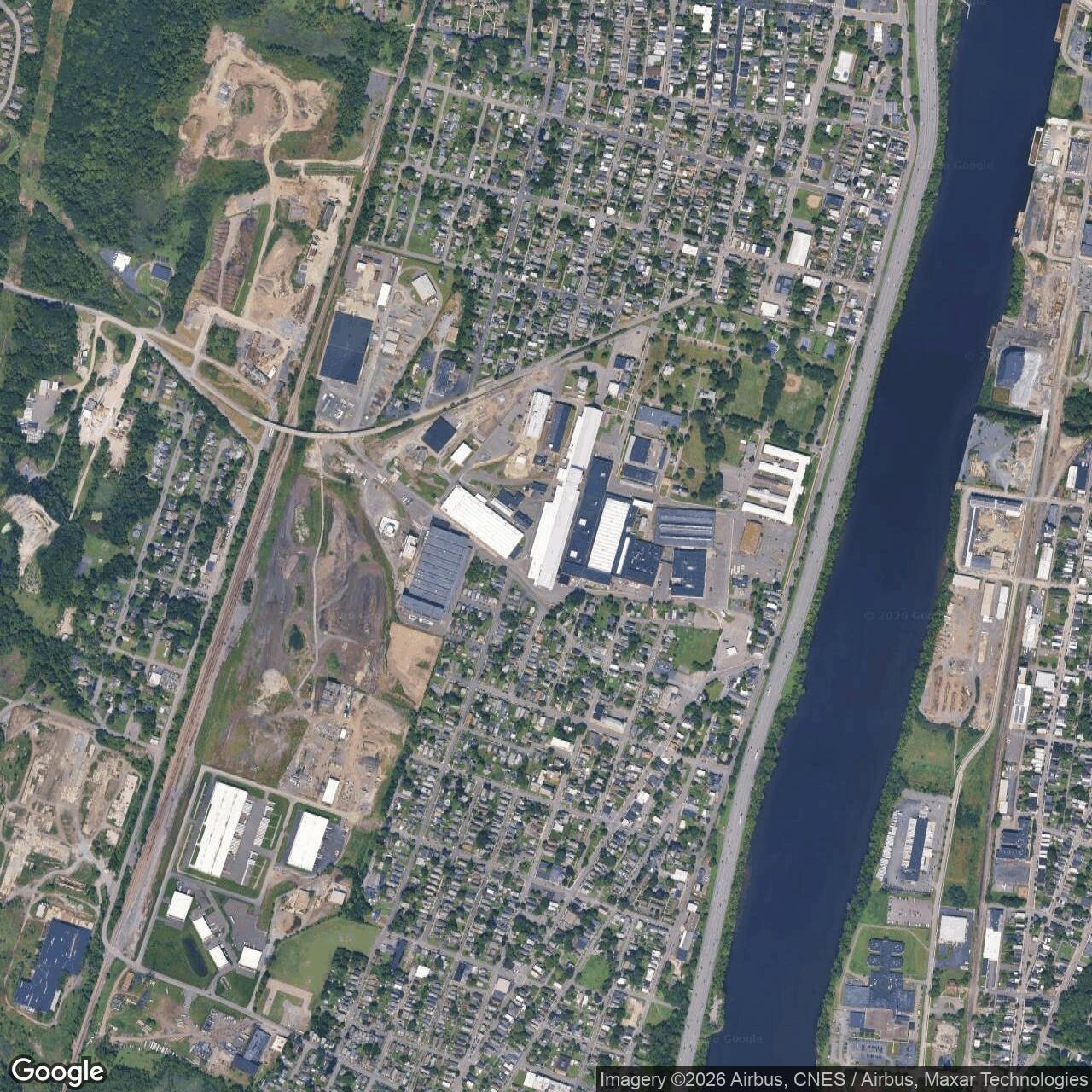
Watervliet Arsenal Army Base, New York
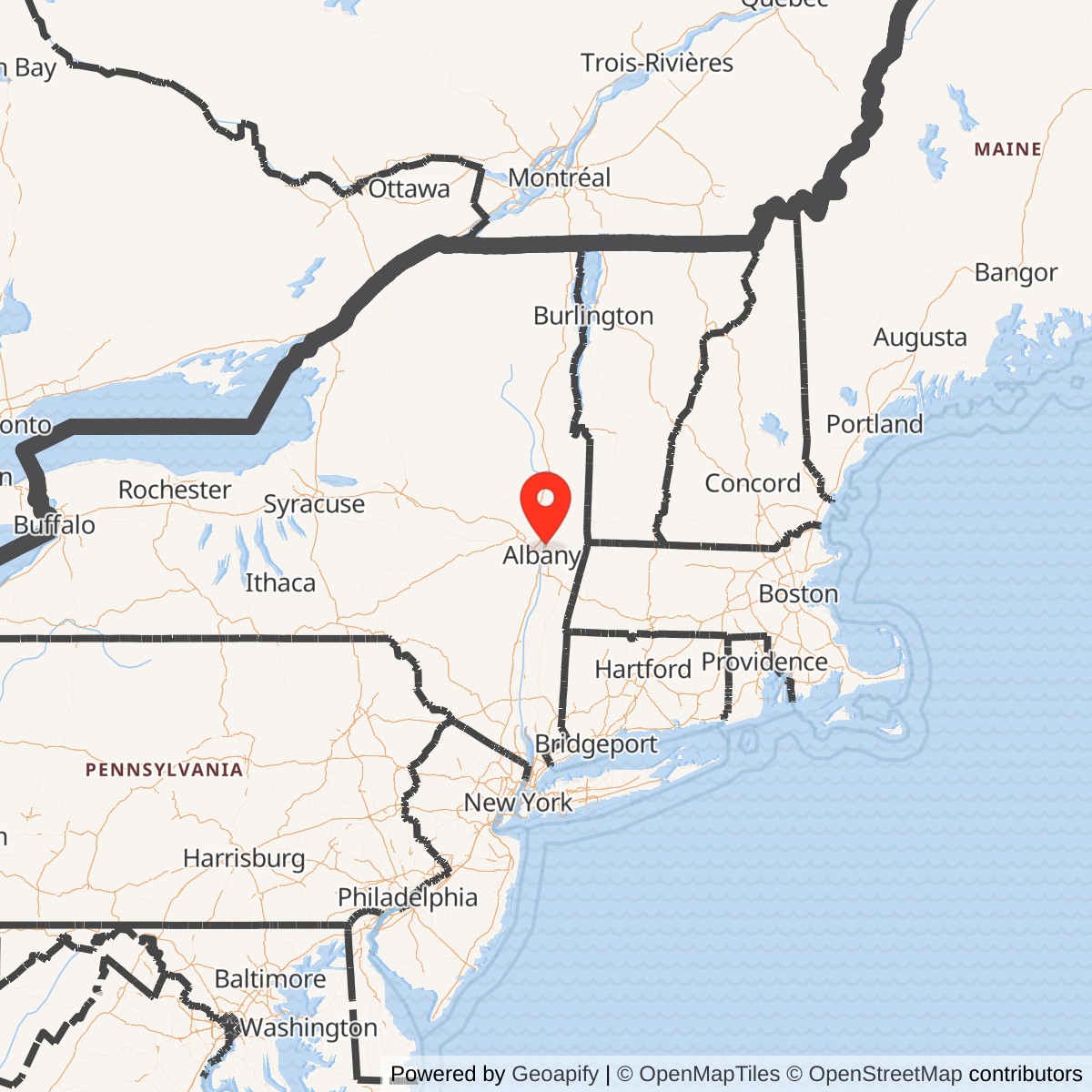
Longitude: -73.709156
Approximate Base Size: 143 Acres
Current Role: Active Army-owned-and-operated manufacturing arsenal; Army Organic Industrial Base cannon and mortar manufacturing center
Oldest continuously active U.S. Army arsenal. Founded during the War of 1812 on the Hudson River at Gibbonsville; designated Watervliet Arsenal in 1817; evolved from ammunition, accoutrements, and artillery-carriage production into the Army's primary large-caliber cannon manufacturer after 1887. National Historic Landmark; home to the Big Gun Shop and Benét Laboratories; current CITE for cannons and mortars; manufactures and supports cannon, howitzer, tank-gun, mortar, and associated materiel for U.S. and allied forces; modernization program includes new gate, consolidated mortar factory, new fire station, forge replacement, and automated paint/finishing improvements.
Watervliet Arsenal is an active United States Army manufacturing arsenal in Watervliet, New York. It has not been decommissioned, closed, or transferred out of Army control. The installation began during the War of 1812 on July 14, 1813, was formally designated Watervliet Arsenal in 1817, and remains an Army-owned-and-operated industrial installation under the U.S. Army Tank-automotive and Armaments Command and the Army Materiel Command. It is widely known as "America's Cannon Factory," a name that captures both its nineteenth-century shift into heavy-gun production and its modern role as the Army's premier manufacturer of cannon and mortar systems.
The arsenal occupies roughly 143 acres along the Hudson River about eight miles north of Albany. Its location was militarily important from the beginning. In 1813 the young Ordnance Department needed an interior arsenal close enough to move materiel by water and road toward the northern frontier, Lake Champlain, the Mohawk Valley, the Hudson corridor, and New York Harbor, but not so exposed as a coastal depot. The chosen site at Gibbonsville, later within Watervliet, sat on the west bank of the Hudson opposite Troy and near the transportation corridors that made the Capital District one of the key military-logistics crossroads of early nineteenth-century New York. The later Erie Canal intensified that advantage by running through the arsenal property, providing water power, transportation access, and an industrial setting that helped turn the site from a small ordnance depot into one of the Army's most important manufacturing establishments.
Watervliet is not a maneuver post, troop cantonment, or training base in the normal sense. Its military importance lies in industrial continuity. The arsenal began by making fixed ammunition, small ordnance stores, infantry and artillery accoutrements, gunpowder-related items, and artillery carriages. In the late nineteenth century it became the federal government's principal center for steel, breech-loading, large-caliber cannon. In the twentieth century it served as the Army's central large-gun knowledge base, production coordinator, and manufacturer during both world wars. In the twenty-first century it remains part of the Army Organic Industrial Base and continues to manufacture, engineer, procure, test, and assure quality for cannon, howitzer, mortar, tank-gun, and associated materiel.
Mission Evolution
Watervliet's first mission was War of 1812 ordnance support. The United States purchased the original twelve-acre parcel along the Hudson on July 14, 1813, in response to the British threat and the Ordnance Department's plan for a more capable national arsenal system. Construction began almost immediately on the first brick buildings of the "Arsenal at Gibbonsville." The installation's early work was practical and foundational: fixed ammunition, powder horns, pouches, flints, cartridge boxes, gun carriages, drag ropes, artillery implements, and other items required to equip infantry and artillery. This was not yet the big-gun factory of later memory. It was a small but strategically placed ordnance manufacturing and supply post serving a nation still building its military-industrial capacity.
In the 1820s through the 1840s, the arsenal's mission expanded with the Army's peacetime professionalization. Land additions in 1823, 1828, and 1833 enlarged the post. The Erie Canal crossed the property after its 1825 completion, and by 1830 the arsenal was seeking canal water for manufacturing power. Watervliet became a major producer of artillery carriages, an increasingly important part of artillery readiness because guns were useless without the carriages, limbers, wheels, iron fittings, and repair capacity that made them mobile and serviceable. Steam power arrived in 1839. A powder laboratory, magazines, workshops, officers' quarters, barracks, storehouses, and service structures reflected a growing permanent industrial post rather than a temporary wartime depot.
During the Mexican War and the Civil War, Watervliet's production role expanded further. Library of Congress HAER documentation notes that the arsenal's busiest years before the late nineteenth-century gun-factory era occurred during those wars. Its Civil War work continued the established pattern: gun-carriage production, ammunition-related work, leather items, storage, repair, and ordnance supply. The arsenal was also an important physical campus of military engineering. Alfred Mordecai, one of the Army's leading antebellum ordnance officers, commanded the post before the Civil War and pushed improvements that included the remarkable 1859 cast-iron storehouse, one of the nation's rare surviving mid-nineteenth-century prefabricated cast-iron military-industrial buildings. The Civil War did not make Watervliet a battlefield; it made it a sustained production and supply node for the Union war effort.
The defining mission change came in 1887, when the Army decided to establish large coastal-defense cannon manufacture at Watervliet. This decision was driven by changes in artillery technology. Cast-iron muzzle-loaders and older smoothbores were giving way to steel, rifled, breech-loading weapons, and the United States needed a government center capable of making them. The Sea Coast Gun Shop, later known as the Big Gun Shop, was built in 1888-1892 for large-caliber breech-loading cannon. From that moment, Watervliet became the Army's primary producer of large-caliber cannon. The mission shifted from broad ordnance manufacturing and carriage work to a narrower but far more technically demanding industrial identity: heavy steel gun tubes, breech mechanisms, liners, machining, heat treatment, rifling, shrinking, proof-related work, and the preservation of big-gun manufacturing knowledge inside the federal arsenal system.
World War I transformed the arsenal from what its commander described as a "jobbing shop" into a works designed for quantity production. New buildings doubled aggregate floor space in a single year. A new gun shop supported 155mm and 240mm howitzers. Other shops produced liners and breech mechanisms. During the war the gun shop could turn out four 240mm and two 155mm weapons per day, and total wartime production reached 1,066 new guns of all calibers, 187 guns and howitzers modified or relined, and 161,662 spare parts. The lesson of World War I was clear: Watervliet was not merely a factory, but the Army's industrial memory for cannon production. It held the techniques, drawings, skilled labor, inspection practices, and shop processes needed to expand private-industry production during national emergency.
The interwar decades brought retrenchment, but not obsolescence. Manufacturing fell sharply in the 1920s, and World War I-era buildings were used partly for storage. Yet the arsenal's peacetime role as the national repository of cannon-manufacturing knowledge became even more important as the Army prepared to rearm in the late 1930s. By 1939 the workforce increased threefold over the previous year, and by 1940 it rose again to 1,752. Engineers and master mechanics from private firms came to Watervliet's shops and drafting rooms to learn how to produce the weapons needed for mobilization. That coordinating role was as significant as direct production because it made Watervliet the bridge between a small peacetime arsenal system and a wartime armaments economy.
World War II was the arsenal's industrial peak. It became the national center for coordinating private-sector production of Army cannon and the nation's only manufacturing plant for Army guns of 155mm and larger. Employment peaked at more than 9,332 in 1942, over twenty times the 1938 level. New buildings and new land transformed the physical plant. Production early in the war concentrated on 37mm and 75mm weapons for tanks, anti-tank vehicles, and aircraft; by 1943 the emphasis shifted toward large mobile artillery for the invasion of Europe, especially the 155mm "Long Tom." Watervliet also manufactured 8-inch guns, 16-inch guns for the Navy, and other large-caliber weapons. The arsenal's role in World War II was both direct and systemic: it made guns, trained and guided private industry, and maintained the technical standards by which large-caliber cannon production could be expanded.
After World War II, activity declined again, and the arsenal increasingly combined production with research and development. Large guns remained central, but much weapon production was farmed out to private industry while Watervliet preserved specialized processes and produced smaller quantities of cannon and components. The postwar period also laid the foundation for the modern relationship between the manufacturing arsenal and Benét Laboratories. Benét officially opened as the Army's large-caliber research and design facility in 1962, but Army sources trace its Watervliet weapons-research origins back to the nineteenth-century arsenal. The significance of the co-location is difficult to overstate: engineers designing cannon and mortar improvements work only minutes from the machinists, forge operators, inspectors, and production specialists who turn designs into prototypes and full-rate products.
The late Cold War and post-Cold War eras continued Watervliet's pattern of survival through specialized capability. The REARM modernization program in the 1979-1984 period altered parts of the plant, while the 1970s rotary forge became one of the arsenal's defining machines. Watervliet produced and supported cannon tubes and components for tank, artillery, howitzer, mortar, and related systems. During the post-9/11 wars, orders for gun tubes and armor kits helped keep the forges and skilled workforce busy, but the eventual decline in wartime demand showed the vulnerability of a single-source arsenal to defense-spending cycles. Public-private partnerships, including work with Electralloy, helped preserve skills and workload when military demand alone could not sustain the plant at the needed level.
The current mission is a modernization-era version of the same old problem: preserve a national cannon-making capability that cannot be recreated quickly if lost. Watervliet is designated a Center of Industrial and Technical Excellence for cannons and mortars. It manufactures cannon, howitzer, mortar, and associated materiel for the U.S. Joint Force and allied or partner nations. It currently supports systems such as the M109 Paladin self-propelled howitzer, the M1 Abrams tank, the M777 lightweight howitzer, AC-130 gunship cannons, and mortar systems. The Army's current investment program is reshaping the plant with a new gate, a consolidated mortar factory, a planned new fire station, a new forge, automated paint capabilities, heat-treat improvements, and other infrastructure changes intended to keep the arsenal capable of building longer, heavier, more precise, and more demanding artillery systems.
Operational Role
What actually happened at Watervliet Arsenal was the continuous conversion of metal, drawings, doctrine, and labor into military firepower. In the early nineteenth century that meant ammunition, powder-related stores, cartridge boxes, implements, and carriage work. The labor was craft-based and the output supported an Army still dependent on water routes, horse transport, and small shops. The post's first value lay in placing a reliable federal ordnance capability in the Hudson-Mohawk military corridor.
By the 1830s and 1840s, the arsenal's operating rhythm was more industrial. Carriage manufacture required woodworking, ironwork, wheel making, fitting, inspection, storage, and repair. The arsenal was also developing the infrastructure of a permanent post: magazines, shops, quarters, barracks, storehouses, perimeter walls, bridges, canalside structures, power systems, and transportation connections. The mission was not glamorous, but it was essential. Artillery mobility and reliability depended on the exact items Watervliet produced.
The shift after 1887 changed daily operations more radically than any earlier phase. Steel gun manufacture required heavy industrial processes. Large forgings had to be handled by specialized cranes and deep pits. Tubes had to be bored, turned, rifled, heat treated, shrunk, lined, inspected, and finished to extreme tolerances. The Big Gun Shop was designed around these processes, with high bays, heavy cranes, vertical operating space, and machine foundations suited to enormous components. The arsenal became a place where nineteenth-century industrial architecture and high-precision weapons manufacturing merged.
During World War I, Watervliet's operating role became mass production and production engineering. The arsenal no longer simply filled orders; it reorganized itself for quantity. It doubled floor space, added specialized shops, expanded rail facilities, and produced 155mm and 240mm weapons, liners, breech mechanisms, gun modifications, and spare parts. This was one of the classic roles of a government arsenal: when emergency came, the Army did not rely only on private industry's existing knowledge. It used Watervliet's skilled workforce to define the product, establish production methods, support contractors, and preserve quality.
World War II repeated that role on a much larger scale. Watervliet's engineers and master mechanics functioned as teachers for private industry while the arsenal itself manufactured critical guns. Private firms sent personnel to Watervliet's shops and drafting rooms to learn the weapons they would be contracted to produce. At the same time the arsenal expanded internally, bought additional land, used the western "Siberia" tract for storage, built new shops, repaired and reconditioned tanks, made 4.5-inch guns, proof-tested weapons, and shifted into large mobile artillery for Europe. The 155mm Long Tom, 8-inch guns, Navy 16-inch guns, and other large-caliber systems show the range of output. The operational point was not just that Watervliet produced guns; it was that the national mobilization of gun production ran through Watervliet's knowledge base.
After 1945, the arsenal's operational role became preservation of scarce capability. Demand fell, but the processes could not be allowed to disappear. Heavy cannon production depends on machines, fixtures, gauges, heat-treatment knowledge, metallurgical judgment, and skilled operators who take years to train. The postwar arsenal therefore operated as a mix of production shop, R&D partner, prototype manufacturer, and readiness reserve. Benét Laboratories strengthened that role by providing research, design, product improvement, and lifecycle engineering for mortars, tank guns, artillery cannon, and howitzer systems. The manufacturing floor and laboratory were not separate worlds; designs could move quickly into prototype work, tooling, inspection, and production.
In the post-9/11 era, Watervliet's operational work supported U.S. forces during the Iraq and Afghanistan wars through gun-tube and related production, armor-kit work, and the industrial base's broader surge demands. The subsequent drop in workload after wartime demand receded was itself an important operational event. It revealed that a unique national capability can be endangered not by battlefield defeat but by ordinary budget cycles. Public-private partnerships helped fill workload, sustain forge operations, and keep skilled employees in place. The arsenal's experience showed why the Organic Industrial Base is not simply a collection of buildings. It is a system of people and processes that must remain active enough to be useful when crisis returns.
Today, Watervliet's daily operation is high-precision manufacturing for cannon and mortar systems. The arsenal forges, machines, heat treats, finishes, paints, inspects, and ships large steel components that must withstand intense pressure, heat, recoil forces, and repeated firing stress. Its work supports direct-fire tank guns, indirect-fire artillery, mortars, howitzers, and allied or partner requirements. Benét Laboratories remains part of the functional ecosystem by designing improvements such as mortar upgrades, extended-range and weight-reduction features, thermal warning systems, prototype components, and lifecycle improvements. The current modernization program is operationally significant because it targets the front and back ends of cannon production: the forge where raw material becomes a tube and the paint/finishing systems that protect the final component.
Units, Organizations, and Systems
Watervliet Arsenal itself is the principal organization. It is an active Army-owned-and-operated manufacturing facility under TACOM and AMC. Its workforce is composed primarily of civilian artisans, machinists, engineers, industrial specialists, quality-assurance personnel, logisticians, public works personnel, firefighters, security personnel, and administrators. The "unit" story here is therefore not an infantry regiment or artillery battalion stationed at the arsenal, but an organic industrial workforce that has repeatedly functioned as a standing military capability.
TACOM is the arsenal's higher command relationship. The Arsenal's mission fits TACOM's broader life-cycle support responsibilities for ground combat and tactical systems. That connection matters because Watervliet's products are not isolated pieces of metal; they are parts of larger weapon-system life cycles. Tank guns, cannon tubes, mortar components, howitzer barrels, breech elements, and associated parts must be engineered, sustained, improved, and replaced over decades of service.
Army Materiel Command provides the larger Organic Industrial Base context. Watervliet is one of the Army's government-owned industrial facilities that preserve controlled-source capability for manufacturing, repair, modernization, and surge support. AMC's OIB concept explains why Watervliet still exists in a defense economy dominated by private contractors. Some skills and processes are too critical, too low-density, too specialized, or too difficult to regenerate quickly to rely entirely on commercial availability.
Benét Laboratories is the most important tenant and partner organization. It is the Army's research, development, prototype, and lifecycle authority for large-caliber cannon and mortar systems and is responsible for mortars, tank guns, artillery cannons, and related systems. Although officially established under the Benét name in 1962, its weapon-research lineage at Watervliet reaches back to the nineteenth century. Benét's co-location with the manufacturing floor gives Watervliet one of its most distinctive strengths: a weapon can be researched, designed, prototyped, manufactured, tested, improved, and transitioned toward production within a tightly connected engineering-manufacturing environment.
The arsenal also supports and hosts other military and civilian tenant activities, including recruiting and support organizations, though these are secondary to the manufacturing and research mission. The installation's emergency services are regionally significant as well. Its Fire and Emergency Services maintain mutual-aid agreements with surrounding agencies and respond to many calls in the Capital District, making the arsenal a local emergency-response partner in addition to a secure military-industrial site.
The systems associated with Watervliet are the most important part of its identity. Historically those systems included field artillery carriages, seacoast defense cannon, 16-inch guns, 155mm and 240mm howitzers, Long Tom guns, tank and antitank guns, large-caliber naval and coast-defense components, breech mechanisms, liners, and spare parts. In modern service those systems include tank guns for Abrams, cannon and tube work for Paladin and M777 howitzers, mortars in 60mm, 81mm, and 120mm families, AC-130 gunship cannon support, and other cannon, mortar, and associated materiel for U.S. and allied forces.
Facilities and Physical Layout
Watervliet Arsenal's physical layout still reflects two centuries of military-industrial evolution. The installation has a main manufacturing and administrative area and a separate storage-oriented "Siberia" area, a nickname dating to the World War II expansion when a tract west of the main arsenal and separated by Route 155 lacked heat and was used primarily for storage. The overall pattern is not that of a parade-ground fort. It is a compact but complex industrial campus built around manufacturing flow, heavy materials handling, rail access, secure gates, utility systems, shops, labs, storage, and historic residential and administrative buildings.
The oldest layer is the original arsenal landscape. The first 1813 buildings are gone, but the surviving nineteenth-century buildings and archaeological resources preserve the early military-industrial plan. The 1828 powder magazine, 1830 nitre storehouse, early stone and brick buildings, officers' quarters, barracks, perimeter features, and Erie Canal remnants show the transition from small ordnance depot to permanent manufacturing post. The canal's former route matters because it was not scenery; it was part of the arsenal's manufacturing and logistics system, supplying transport, water power, goods movement, and fire-protection utility.
The mid-nineteenth-century layer includes some of the installation's most architecturally important buildings. The 1859 cast-iron storehouse, built under Alfred Mordecai's command and fabricated by Daniel Badger's Architectural Iron Works, is an outstanding example of prefabricated cast-iron construction and reflects the Army's willingness to adopt innovative industrial architecture. The Broadway shops and other Civil War-era and post-Civil War structures show how the arsenal's carriage, ammunition, and leather-item production occupied a growing industrial campus before the heavy-gun era.
The large-gun layer centers on the Big Gun Shop, Building 110. Built in 1888-1892 after the Army designated Watervliet for large coastal-defense cannon manufacture, the building was designed for heavy-gun work. Its high bay, deep shrink pit, bridge crane, and heavy industrial interior were shaped by the processes required to make steel breech-loading artillery. It is significant both as a manufacturing building and as a piece of nineteenth-century industrial design. It also anchors the arsenal's symbolic identity because it marks the moment when Watervliet became America's government cannon factory.
World War I and World War II added the next major physical layers. World War I doubled the plant's floor space and added gun, liner, breech-mechanism, and ancillary buildings. World War II added at least twelve new buildings, additional land, storage tracts, a new large-caliber weapons shop, tank repair and reconditioning facilities, warehousing, proof/testing facilities, and additional process space. The physical plant thus records mobilization cycles: old buildings were not merely preserved but repeatedly altered, expanded, and repurposed to meet new production requirements.
The modern manufacturing plant is defined by high-value equipment and specialized process spaces. The rotary forge, installed in 1976, became a central piece of the cannon-tube production line and produced thousands of barrels for direct and indirect-fire cannon systems. Heat-treatment systems, machining centers, boring and rifling equipment, inspection processes, finishing and coating systems, and material-handling infrastructure define the plant's current work. The new modernization program adds or replaces key infrastructure, including a consolidated mortar factory, a new gate for security and freight movement, a new fire station, a planned new forge, automated paint systems, utilities, communications, power, HVAC, fire protection, hazardous-material controls, and process-flow improvements. These facilities matter because cannon production is not one operation; it is a chain of specialized steps, any one of which can become a bottleneck if the plant is not modernized.
System-Level Context
Watervliet Arsenal has always been a system node. In the War of 1812 it was part of the new Ordnance Department's national arsenal system. Its Hudson River location linked it to New York Harbor, Lake Champlain, the Mohawk corridor, inland roads, and later the Erie Canal. It supplied the Army not because it was near a battlefield, but because it sat at a transportation and industrial point from which materiel could move to several strategic directions.
In the nineteenth century it became part of the Army's professional ordnance system. Its work in ammunition, accoutrements, gun carriages, magazines, shops, and storage supported a standing Army that relied on a small number of arsenals to maintain expertise. The site's commanders, including officers such as Alfred Mordecai, connected Watervliet to the larger intellectual and technical world of Army ordnance, engineering, testing, and industrial design.
After 1887, Watervliet became the anchor of the Army's large-caliber cannon system. The federal government needed a controlled source for heavy steel gun technology at a time when seacoast defense, breech-loading artillery, and modern metallurgy were transforming military requirements. Watervliet did not only make weapons; it preserved the process knowledge required to build them. That is why its role during both world wars was national rather than local. It coordinated and taught private industry, held drawings and manufacturing methods, and converted peacetime knowledge into wartime scale.
In the Cold War, the system context broadened. Watervliet was part of the Army's research, development, and manufacturing chain for artillery, tank guns, and mortars. Benét Laboratories tied the arsenal to Picatinny Arsenal's armaments-research world and to the larger combat-development system. The arsenal's production work tied it to combat vehicles, field artillery, mortar programs, and allied military assistance. The REARM program and later OIB efforts tied it to a government-wide recognition that depot and arsenal capabilities could not be allowed to decay.
In the twenty-first century, Watervliet sits at the intersection of three systems: the Organic Industrial Base, Army modernization, and allied military support. It is a controlled domestic source for cannon and mortar manufacturing. It supports weapon systems used across the Army, Marine Corps, Air Force special operations gunship community, and allied customers. Its modernization is part of a broader effort to rebuild and expand American defense-industrial capacity after decades of fluctuating demand. The installation's value is therefore not simply that it makes today's parts. Its value is that it preserves the ability to make future parts when requirements change, war plans shift, allies need support, or new artillery technology demands longer tubes, higher pressures, better coatings, different materials, and tighter tolerances.
Chronology
- 1813-07-14 The United States purchased the original twelve-acre Hudson River parcel at Gibbonsville to establish a new War of 1812 ordnance arsenal.
- 1813 Construction began on the first arsenal buildings, including early gun houses, arsenal structures, quarters, stables, guard facilities, and support buildings.
- 1817 The installation adopted the name Watervliet Arsenal.
- 1823 Two additional tracts were added to the arsenal's landholdings.
- 1825 The Erie Canal was completed through the arsenal property, strengthening the site's manufacturing, transportation, and water-power context.
- 1828 Additional land was acquired, and a powder magazine later identified as Building 119 was built.
- 1830 The arsenal sought use of canal water for manufacturing power; the nitre storehouse later identified as Building 17 was constructed.
- 1833 Another 45 acres were added to the installation.
- 1839 Steam power was introduced at Watervliet Arsenal.
- 1840 A powder laboratory was added as the installation's early industrial complex continued to grow.
- 1841-1842 Quarters One was designed and completed for the arsenal command structure.
- 1843 An enlisted barracks and additional carriage/storage structures were completed.
- 1848 Officers' quarters were completed during the continuing antebellum expansion of the post.
- 1859 The Arsenal added the prefabricated cast-iron storehouse, one of the site's most significant surviving industrial buildings.
- 1861-1865 During the Civil War, Watervliet continued major ordnance support work, including gun-carriage, ammunition-related, leather-item, and supply functions.
- 1865 The front wing of the Broadway shops was constructed, reinforcing the arsenal's carriage and industrial role.
- 1887 The Army decided to establish large coastal-defense cannon manufacture at Watervliet, turning the installation into the federal government's primary heavy-gun factory.
- 1888-1892 The Sea Coast Gun Shop, later known as the Big Gun Shop / Building 110, was built for large-caliber breech-loading cannon.
- 1889 New officer quarters were built as part of the gun-factory-era expansion.
- 1902 Watervliet manufactured the nation's first 16-inch breech-loading cannon.
- 1917-1918 World War I brought major plant expansion, including new gun, liner, and breech-mechanism shops and enlarged rail facilities.
- 1918 Colonel John E. Munroe described the arsenal's transformation from a jobbing shop into a quantity-production works.
- 1917-1918 World War I production totaled 1,066 new guns of all calibers, 187 guns and howitzers modified or relined, and 161,662 spare parts.
- 1920s Production contracted sharply during the interwar drawdown, and parts of the World War I plant shifted toward storage.
- 1939 Rearmament preparations began with a threefold increase in the workforce over the previous year.
- 1940 Arsenal employment rose again to 1,752 as mobilization accelerated.
- 1942 Employment peaked above 9,332, more than twenty times the 1938 level.
- 1942 Watervliet functioned as the national center for coordinating private-sector Army cannon production and remained the only manufacturing plant for Army guns of 155mm and larger.
- 1942-1943 World War II construction added new buildings, storage areas, tank repair and reconditioning spaces, warehousing, proof/testing facilities, and a new large-caliber weapons shop.
- 1943 Production emphasis shifted toward large mobile artillery for the invasion of Europe, especially the 155mm Long Tom.
- 1945 World War II ended with Watervliet still recognized as the Army's central large-caliber cannon manufacturing and production-knowledge center.
- Post-1945 Arsenal production declined from wartime levels, and Watervliet increasingly combined limited manufacturing with research-and-development and technical-knowledge preservation.
- 1962-05-09 Benét Laboratories was officially established at Watervliet as the Army's large-caliber research and design facility.
- 1966 Watervliet Arsenal was designated a National Historic Landmark.
- 1976 The rotary forge was installed, becoming one of the arsenal's most important modern cannon-tube production machines.
- 1979-1984 The REARM modernization program brought significant late Cold War investment and construction to the plant.
- 2002-2010 During the Iraq and Afghanistan war years, gun-tube and armor-kit demand helped keep the arsenal's forges and skilled workforce active.
- 2011 Declining postwar demand created a serious skills-retention and workload challenge for the arsenal.
- 2013-03 The Secretary of the Army designated Watervliet Arsenal as a Center of Industrial and Technical Excellence for cannons and mortars.
- 2013-07-14 Watervliet Arsenal marked 200 years of continuous service.
- 2016 Army public-private partnership efforts with Electralloy were highlighted as a way to preserve critical forge skills, workload, and industrial capability.
- 2023-06-23 The Army announced plans to replace Watervliet's rotary forge and paint booth as part of a major fifteen-year modernization effort.
- 2024 Construction was scheduled to begin on the new automated paint booth project.
- 2025-08-21 The TACOM commanding general visited Watervliet to review cannon and mortar production and modernization efforts.
- 2026-04-13 Army leaders marked completion of the new Gillespie Gate and mortar factory and broke ground for a new fire station.
- 2026-04-27 The Army publicly described the gate, mortar factory, and fire-station projects as part of a modernization initiative of more than $1.7 billion, the largest investment in the arsenal's history.
- Present Watervliet Arsenal remains active as the Army's oldest continuously active arsenal and a premier cannon and mortar manufacturing center supporting the U.S. Joint Force, allied and partner militaries, Benét Laboratories, TACOM, AMC, and the Army Organic Industrial Base.