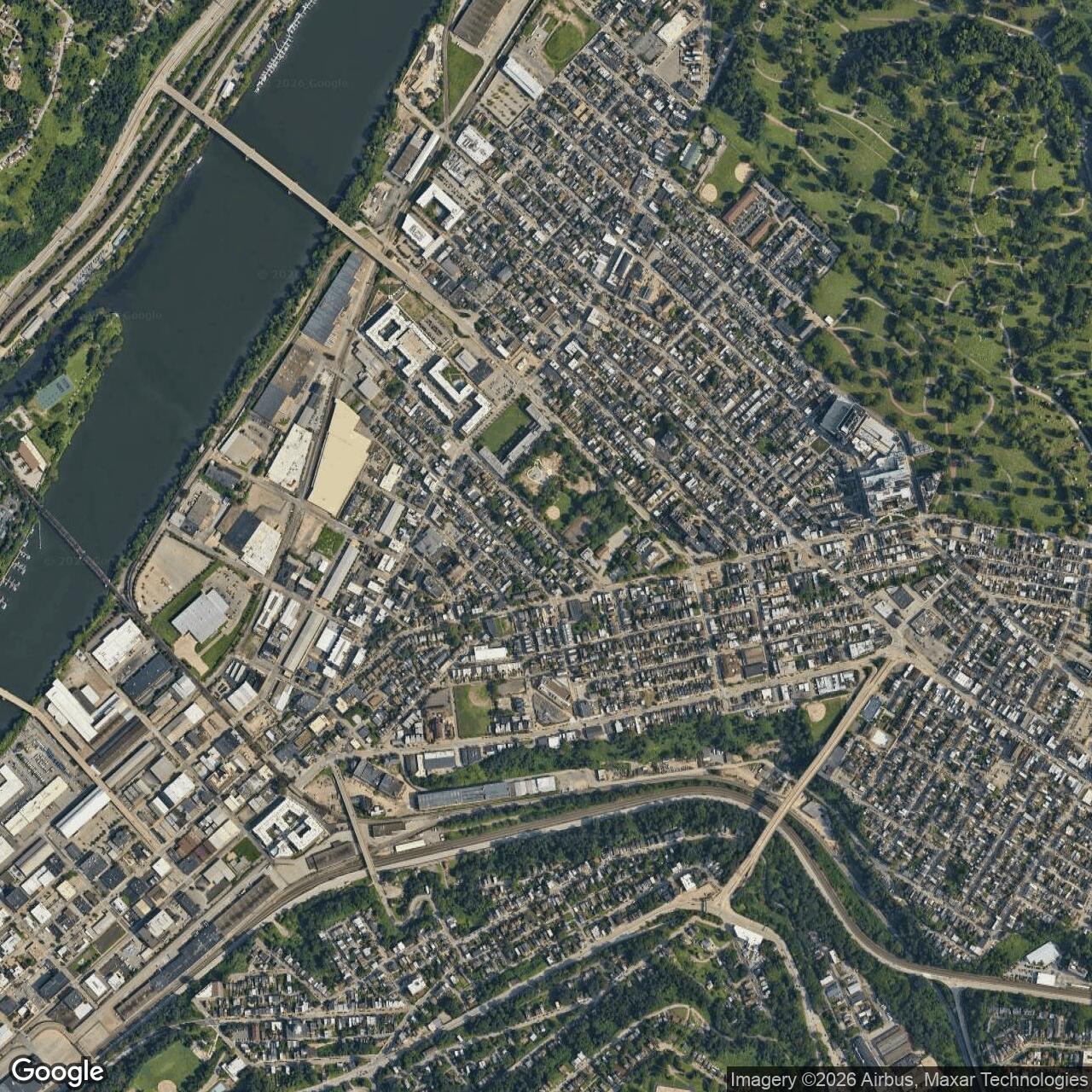
Allegheny Arsenal, Pennsylvania
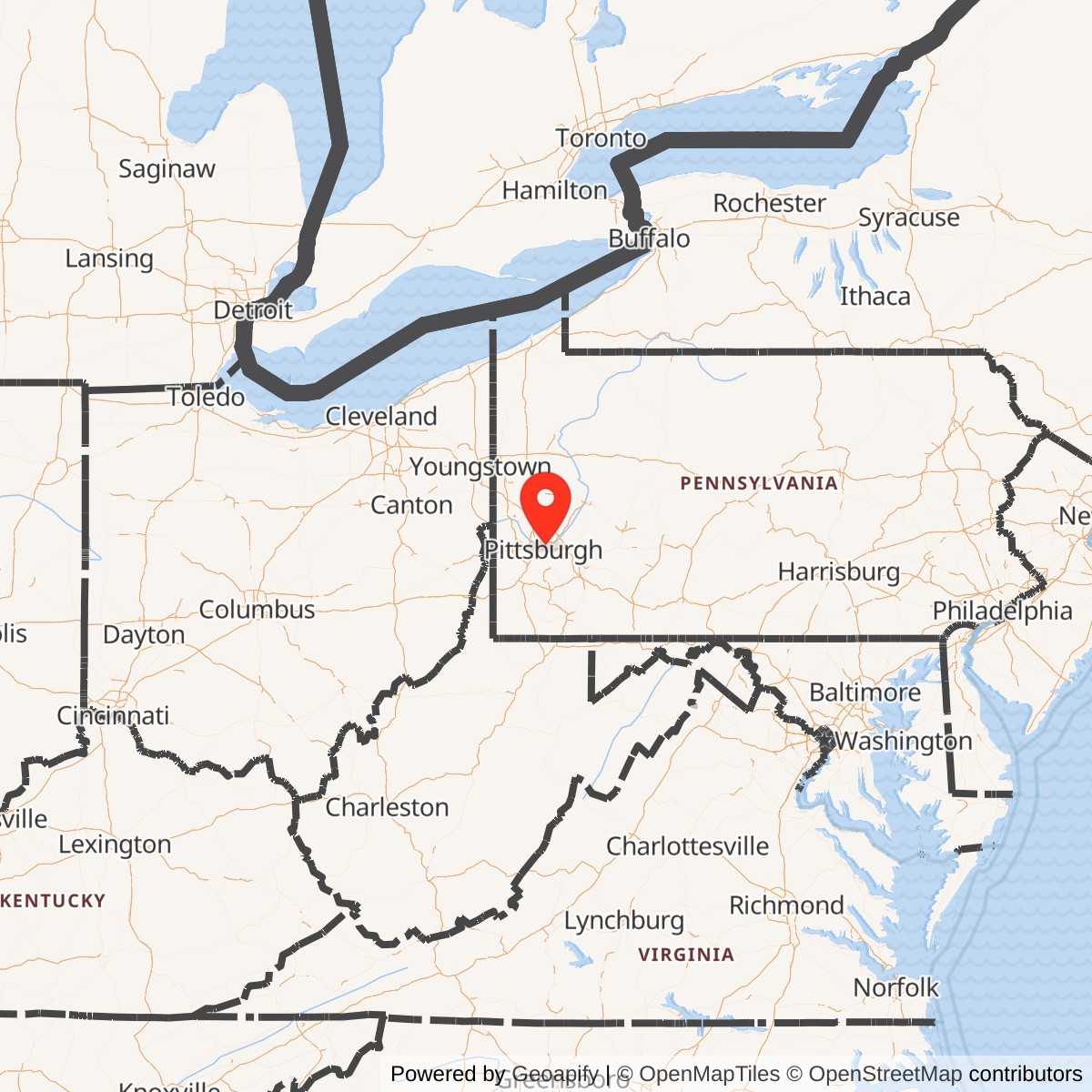
Longitude: -79.9616866
Current Role: Arsenal Park, Arsenal Middle School, Frank B. Clack Health Center, Arsenal 201 redevelopment, residential/commercial reuse, surviving powder magazine and wall fragments, and ongoing FUDS munitions-response investigation.
Allegheny Arsenal was the Army's ordnance foothold at Pittsburgh, a military-industrial installation placed where western Pennsylvania's rivers, iron economy, and overland connections could feed the nation's frontier and wartime supply lines. Established in 1814 during the War of 1812, the arsenal occupied roughly thirty-eight acres in what is now the Lawrenceville neighborhood of Pittsburgh. The location was not accidental. Pittsburgh stood at the head of the Ohio River system, tied the Allegheny and Monongahela to the Ohio, and connected eastern manufacturing, western posts, and riverine transportation in one strategic geography. An Army arsenal there could manufacture, store, repair, and issue ammunition, weapons, horse equipment, gun carriages, and related military supplies for troops far beyond the city itself.
The installation was never a fort in the usual sense and never a tactical garrison post like the frontier forts it supported. It was a production, storage, and supply facility under the Army ordnance system. That made it one of the Army's most important early industrial posts in the interior United States. The arsenal's work ranged from routine storage and repair to wartime manufacturing at urgent scale. During the Civil War, when Union demand for cartridges, harnesses, gun carriages, ammunition, and other military stores surged, Allegheny Arsenal became a critical supply and manufacturing center for the Army. Its output reached the field indirectly through depots, rail lines, river routes, and ordnance channels, but its labor was part of the same war system that moved men and materiel to the front.
Allegheny Arsenal is also inseparable from tragedy. On September 17, 1862, the same day as the Battle of Antietam, a series of explosions tore through the arsenal's laboratory area, killing seventy-eight workers, most of them young women assembling cartridges. The disaster became one of the worst civilian tragedies of the Civil War era and remains the event most closely associated with the site. Yet the arsenal's significance is broader than that single day. It represents more than a century of Army ordnance practice, federal industrial siting, civilian labor in military production, wartime risk at the home front, and the long environmental and urban afterlife of an early Army munitions installation.
Mission Evolution
Allegheny Arsenal began as a War of 1812-era ordnance installation. The federal government needed a secure manufacturing and distribution point west of the Allegheny Mountains, and Pittsburgh's river position and iron-related economy made it the obvious choice. Contemporary and later accounts identify the original land purchase from William Barclay Foster, father of composer Stephen Foster, and describe the initial tract as thirty acres. Later Army and FUDS sources describe the arsenal as approximately thirty-eight acres, reflecting the larger historic footprint as it evolved. Benjamin Henry Latrobe, already one of the young republic's most important architects and engineers, prepared plans for the arsenal complex. The surviving record makes clear that Latrobe's design ideas shaped the layout, though he did not remain in Pittsburgh to supervise the entire construction process.
In its early decades, Allegheny Arsenal served the Army's western supply system. It manufactured and stored ammunition, infantry equipment, horse equipment, caissons, gun carriages, and related ordnance stores. It did not manufacture cannon, but it supported the Army's artillery and infantry systems by producing or maintaining the equipment that allowed those weapons to be moved, supplied, and used. The arsenal's location along Pittsburgh's river and road network allowed Army materiel to move toward forts, posts, campaigns, and supply depots across the western country. In this role, the installation was not dramatic, but it was strategically practical. Armies depend on cartridges, harnesses, wagons, gun carriages, and spare equipment as much as on famous commanders.
The Civil War transformed the arsenal's scale and urgency. The Union Army's mobilization created an enormous demand for small-arms ammunition, artillery-related equipment, leather goods, and other supplies. Allegheny Arsenal's labor force expanded sharply, and its workshops turned to high-volume production. Women and girls, many from local working-class and immigrant families in Lawrenceville, became central to cartridge production. They rolled paper cartridges, handled powder, and worked inside buildings where the line between civilian factory labor and military danger was thin. The arsenal became one of the places where the Civil War home front physically touched the battlefield. Every cartridge produced in Lawrenceville was intended for soldiers somewhere else, but the risk remained with the workers who handled powder and munitions.
After the Civil War, the arsenal's role shifted toward storage, supply, and depot work. USACE notes that the Arsenal began accepting cannonballs for storage, with stacks remaining on the parade grounds for roughly sixty years. The installation continued to function as part of the Army's logistics system, but its most important production era had passed. In the early twentieth century the Army began reducing and reusing the property. By 1902 the arsenal had officially closed in one sense and began selling off property southeast of Butler Street for a Marine Hospital and a city park commemorating the 1862 disaster. The remaining military property was renamed the Pittsburgh Storage and Supply Depot and reduced to a 19.75-acre portion northwest of Butler Street. A major warehouse construction program began in 1917, during which historical accounts indicate that large numbers of stored cannonballs were buried in trenches. Military use finally ended in 1926, when the last remnants were sold and the old arsenal ceased to be an Army installation.
Operational Role
The daily operational work at Allegheny Arsenal was industrial military support. The installation received raw materials, stored powder and finished stores, manufactured ammunition and equipment, repaired and maintained ordnance-related items, and moved supplies into Army channels. Its importance came from reliable output, not parade-ground visibility. Workers in the arsenal's shops and laboratories converted paper, powder, metal, leather, wood, and iron into useful military materiel. The most recognizable Civil War product was the paper cartridge, but the arsenal's role also included gun carriages, caissons, infantry and horse equipment, and other ordnance supplies.
The term "arsenal" can make the work sound passive, as if the installation simply stored weapons behind walls. Allegheny Arsenal did much more. It was a manufacturing and storage complex. The Civil War Medicine Museum describes the thirty-eight-acre facility as manufacturing gunpowder, cartridges, harnesses, and other equipment critical to the war effort. SAH Archipedia adds that the arsenal manufactured ammunition, infantry and horse equipment, caissons, and gun carriages through the Civil War. This mix of products placed the installation squarely within the Army's ordnance and quartermaster-related production world. Soldiers far away needed cartridges to fire, harnesses to move teams, caissons to carry ammunition, and gun carriages to keep artillery mobile. Allegheny Arsenal helped supply that system.
The workforce was civilian, local, and heavily gendered in its Civil War cartridge work. National Archives material emphasizes that many women and children worked at the arsenal filling cartridges, making harnesses, and handling live gunpowder. Their employment reflected both wartime labor demand and the economic pressure facing families with men at war or away from home. The work offered income, but it also placed workers inside an environment where spilled powder, poorly controlled storage, flammable materials, and repetitive munitions handling could become fatal. Allegheny Arsenal therefore reveals a part of military history that is often hidden: civilian laborers, many of them young women, bore serious risk while supporting Army operations from the home front.
Command and supervision mattered as part of the operational story. At the time of the 1862 explosion, Colonel John Symington commanded the arsenal, while Alexander McBride supervised the munitions laboratory. Later investigations and historical accounts disagreed on exactly how the explosion began and who, if anyone, bore responsibility. National Archives material notes unsafe or unenforced practices and powder handling problems, while also stressing that the cause remained uncertain. This ambiguity is important. Allegheny Arsenal's disaster should not be reduced to one simple spark story. It grew from a high-risk production environment in which powder was handled at scale, safety controls were imperfect, and wartime demand pressed the installation to keep working.
The September 17, 1862 Explosion
September 17, 1862, became the defining day in Allegheny Arsenal's memory. In western Maryland, Union and Confederate armies fought the Battle of Antietam. In Pittsburgh's Lawrenceville neighborhood, workers at the arsenal were making cartridges and preparing to receive pay when explosions tore through the laboratory area. The first blast was followed by additional explosions and a fast-moving fire. The dead numbered seventy-eight. Most were young women and girls involved in cartridge work. The number, the age and gender of many victims, the timing on the same day as Antietam, and the federal government's later failure to compensate families gave the disaster a lasting place in Pittsburgh memory.
The immediate cause has been debated for generations. A common explanation held that a horse's shoe or wagon wheel struck a spark on a road where loose powder had accumulated, igniting powder that flashed toward stored barrels or the laboratory. National Archives material presents this as a belief reflected in firsthand and commemorative accounts, but it also makes clear that the exact cause remains uncertain. Other records pointed to leaking powder barrels, unsafe storage, spilled powder, and weak enforcement of safety standards. The best conclusion is cautious: the disaster occurred in a dangerous munitions-production environment where powder handling and storage practices failed badly enough for fire and explosions to propagate through the laboratory area.
The human consequences were severe. The Civil War Medicine Museum states that 186 workers were on site that day, including 156 young girls and women, and that the aftermath left seventy-eight dead and more than 150 injured. National Archives material highlights the community background of many workers, noting that census and payroll records show daughters, sisters, and wives of immigrant families performing dangerous munitions labor for desperately needed income. The disaster devastated Lawrenceville households, churches, and neighborhoods. It also exposed the uncomfortable fact that the Civil War's demand for ammunition relied on poorly protected civilian labor.
The explosion did not end the arsenal's work. National Archives material notes that government correspondence after the disaster emphasized that the arsenal's overall material loss was small compared with the loss of life, and that the Army could not easily transfer surplus ammunition elsewhere. Work continued because the war required it. A new laboratory was built, production resumed, and Allegheny Arsenal remained in Army use for decades. This continuation is central to the history. The 1862 disaster was not treated by the wartime Army as a reason to abandon the site. It was absorbed into the larger pressure of Union mobilization, where the need for ammunition overrode the shock of local catastrophe.
Facilities and Physical Layout
Allegheny Arsenal's physical layout reflected early nineteenth-century arsenal planning. SAH Archipedia describes a quadrangle of stone and brick buildings roughly six hundred feet on each side, located between Butler Street and the river, with the entrance facing Butler Street. The complex drew from Latrobe's severe neoclassical planning ideas and from fort-like quadrangle forms suited to controlled military-industrial work. The arsenal included manufacturing spaces, storage areas, powder magazines, officers' quarters, barracks, shops, yards, and perimeter walls. The larger site extended above and below Butler Street, creating a military complex embedded in what became a dense Pittsburgh neighborhood.
The powder magazine is the most important surviving physical feature. Arsenal Park preserves an L-shaped powder magazine partly embedded in the slope. SAH Archipedia describes it as the main vestige of the site, with a cyclopean vault and a half-buried relationship to the ground. The magazine's survival matters because most of the arsenal's larger working buildings were later demolished. Portions of the perimeter wall, stone piers, and nearby former military-related structures also preserve fragments of the historic installation, but the arsenal no longer reads as a complete Army complex. Its footprint has been fragmented by parkland, school grounds, health facilities, residential redevelopment, and commercial reuse.
The site was split over time. USACE notes that by the early twentieth century the Army began selling property southeast of Butler Street for the Marine Hospital and a city park, while the remaining military property was reduced to a 19.75-acre portion northwest of Butler Street and renamed the Pittsburgh Storage and Supply Depot. City of Pittsburgh material states that eleven acres of the former arsenal were dedicated as Arsenal Park on July 4, 1907. This park reuse helped preserve the memory of the 1862 disaster, even as parts of the old installation were demolished, sold, or repurposed.
The buried munitions history shows that the old arsenal's physical legacy did not end with demolition. USACE reports that cannonballs stored on the property for decades were buried in trenches during 1917 warehouse construction, and that burial pits were later encountered in 1972 and again during redevelopment activities in 2017 and 2020. As of the current FUDS work, USACE is investigating former burial pits to determine whether additional buried munitions remain. This means the arsenal's layout still matters underground. The site is now an urban neighborhood, but its military-industrial residue continues to shape public safety, redevelopment, and environmental review.
Role in the Wider Military Network
Allegheny Arsenal's significance lies in its network role. In the early republic, the Army needed inland arsenals that could support western posts and campaigns without relying entirely on eastern seaboard depots. Pittsburgh's river connections made the city a military logistics hinge. Supplies could move down the Ohio system toward frontier posts, western campaigns, and later Civil War distribution channels. The arsenal was therefore part of a national defense infrastructure that linked manufacturing, storage, river transportation, and field operations.
During the Civil War, Allegheny Arsenal became one node in the Union Army's massive ordnance system. It did not fight battles, but its products enabled battle. Cartridges, harnesses, ammunition, caissons, gun carriages, and other military stores moved from home-front workshops into the field army's supply chain. The arsenal's wartime output also shows how the Union war effort depended on industrial cities outside the main battle zones. Pittsburgh's labor, iron economy, transportation position, and federal arsenal all contributed to the Army's capacity to sustain long campaigns.
The site also belongs to the history of federal civilian labor in war production. The Army's ordnance system relied on civilian workers, including women and children, in dangerous workplaces. Allegheny Arsenal was not unique in employing civilian labor, but the 1862 disaster made that labor visible. It revealed how women and girls became part of the military production system and how families far from the battlefield could suffer wartime losses through industrial accident. The arsenal's wider military role therefore includes both logistics and labor history.
After the Civil War, the arsenal remained part of a storage and supply network rather than a high-volume production network. Its renaming as the Pittsburgh Storage and Supply Depot reflected that shift. The Army's decision to reduce, sell, and finally dispose of the property reflected changing military geography and the declining need for a large ordnance depot in that urban location. Yet the later buried munitions discoveries show that the old network left material traces. The FUDS program now connects Allegheny Arsenal to a modern system of Army Corps environmental and munitions response work.
Closure and Reuse
Allegheny Arsenal closed gradually rather than in one simple moment. USACE states that the arsenal officially closed in 1902 and began selling property southeast of Butler Street for the Marine Hospital and a city park. The city dedicated Arsenal Park on July 4, 1907, using part of the former military property as public space and memorial landscape. The remaining military portion continued as the Pittsburgh Storage and Supply Depot, reduced to 19.75 acres northwest of Butler Street. Warehouse construction began in 1917, and military use persisted until 1926, when the final remaining property was sold.
The postwar and post-Army reuse erased much of the physical arsenal. Some structures were demolished for park, hospital, school, industrial, and redevelopment projects. Arsenal Middle School, the Frank B. Clack Health Center area, Arsenal Park, residential redevelopment, and other urban uses now occupy parts of the former military reservation. The old main gate was eventually demolished, and many working buildings disappeared. The site's above-ground military identity survives mostly in fragments, especially the powder magazine, wall sections, stone piers, plaques, and the landscape memory of Arsenal Park.
The reuse also preserved memory in selective ways. Arsenal Park became a public commemoration space, but the 1862 victims' families struggled for federal compensation for decades. National Archives material notes that a memorial was erected in 1863 and that a later monument was dedicated on May 27, 1928. The public memory of the explosion had to be built locally because the disaster was overshadowed nationally by Antietam and by the larger scale of battlefield casualties. Lawrenceville remembered what national history often overlooked.
Current Status
Allegheny Arsenal is no longer an active Army installation. It is a former Army arsenal and FUDS site embedded in Pittsburgh's Lawrenceville neighborhood. The former military property is now divided among Arsenal Park, school and civic uses, health-related property, residential redevelopment, commercial uses, and fragments of surviving historic fabric. The most legible surviving feature is the powder magazine in Arsenal Park. Portions of walls, stone piers, and nearby former structures help mark the old installation, but the full arsenal landscape has been heavily altered.
The current federal role is environmental and munitions response rather than military operation. USACE Baltimore District identifies the Former Allegheny Arsenal as a Formerly Used Defense Site and is conducting remedial investigation work related to former burial pits where cannonballs and other military materials may remain. This work is a reminder that old arsenals do not disappear simply because their buildings are removed. Buried munitions, contaminated materials, and uncertain disposal practices can extend the Army's responsibility into the present.
Chronology
- 1814 - The United States established Allegheny Arsenal in Lawrenceville during the War of 1812. Benjamin Henry Latrobe prepared design materials for the arsenal complex.
- 1814 - The federal government purchased the initial Pittsburgh arsenal tract from William Barclay Foster. Later sources describe the historic arsenal footprint as approximately thirty-eight acres.
- 1823 - HABS documentation notes the installation of one of the first steam engines in the United States at the arsenal, reflecting its early industrial character.
- 1830s to 1850s - Allegheny Arsenal served as an Army manufacturing, storage, and supply center for western military needs.
- 1861 - The Civil War sharply increased demand for ordnance stores, cartridges, harnesses, and related military equipment.
- 1861 to 1862 - Civilian employment and production expanded, with women and girls playing a central role in cartridge production.
- 1862-09-17 - A series of explosions and fire destroyed the laboratory area and killed seventy-eight workers, primarily young women assembling cartridges.
- 1863 - A memorial to the explosion victims was erected at the arsenal.
- 1863 to 1865 - Arsenal work continued despite the disaster, supporting Union Army ordnance and logistics needs through the remainder of the Civil War.
- 1868 - Lawrenceville was annexed by Pittsburgh, bringing the arsenal site into the city's municipal geography.
- Post-1865 - The arsenal's role shifted increasingly toward storage and supply after the high-production Civil War period.
- 1902 - The arsenal officially closed in one sense and began selling property southeast of Butler Street for a Marine Hospital and public park. The remaining military site was renamed the Pittsburgh Storage and Supply Depot and reduced to 19.75 acres northwest of Butler Street.
- 1907-07-04 - Eleven acres of the former arsenal were dedicated as Arsenal Park.
- 1917 - A large warehouse construction program began at the remaining storage depot. Historical accounts indicate that stored cannonballs were buried in trenches during this period.
- 1926 - Final military use ended, and the last remaining federal depot property was sold.
- 1928-05-27 - A new monument to the victims of the 1862 explosion was dedicated.
- 1930s - Historic American Buildings Survey documentation recorded surviving arsenal buildings and structures.
- 1947 - The former main gate was demolished to make room for commercial traffic and later redevelopment.
- 1972 - A cannonball burial pit was encountered, revealing the persistence of buried munitions from the arsenal era.
- 2017 - Additional cannonball burial pits were reported during redevelopment activity.
- 2020 - Further buried cannonball discoveries were reported during redevelopment activity.
- 2025 - USACE Baltimore District public FUDS material described the Former Allegheny Arsenal Burial Pits munitions response work and the ongoing need to investigate possible remaining buried military materials.
- Present - The former arsenal is an urban historic and FUDS landscape in Lawrenceville, with Arsenal Park, school, health, residential, commercial, and memorial uses occupying the former military property.