
Atlas E Site 548-4 Missile Silo, Burlingame / Osage City area Kansas
Longitude: -95.8801104952228
Site Type: Atlas E coffin launcher site
Missile Type: SM-65E Atlas
Number of Launchers/Missiles: 1
Parent Base: Forbes AFB
Missile Wing: 40th Strategic Aerospace Wing
Missile Squadron: 548th Strategic Missile Squadron
Current Site Use: Former missile site / rural agricultural-recreational land; FUDS/CERCLA No Further Action context
Site Ownership: Non-federal / private ownership indicated; current owner not verified
Accessible: No public access / private property
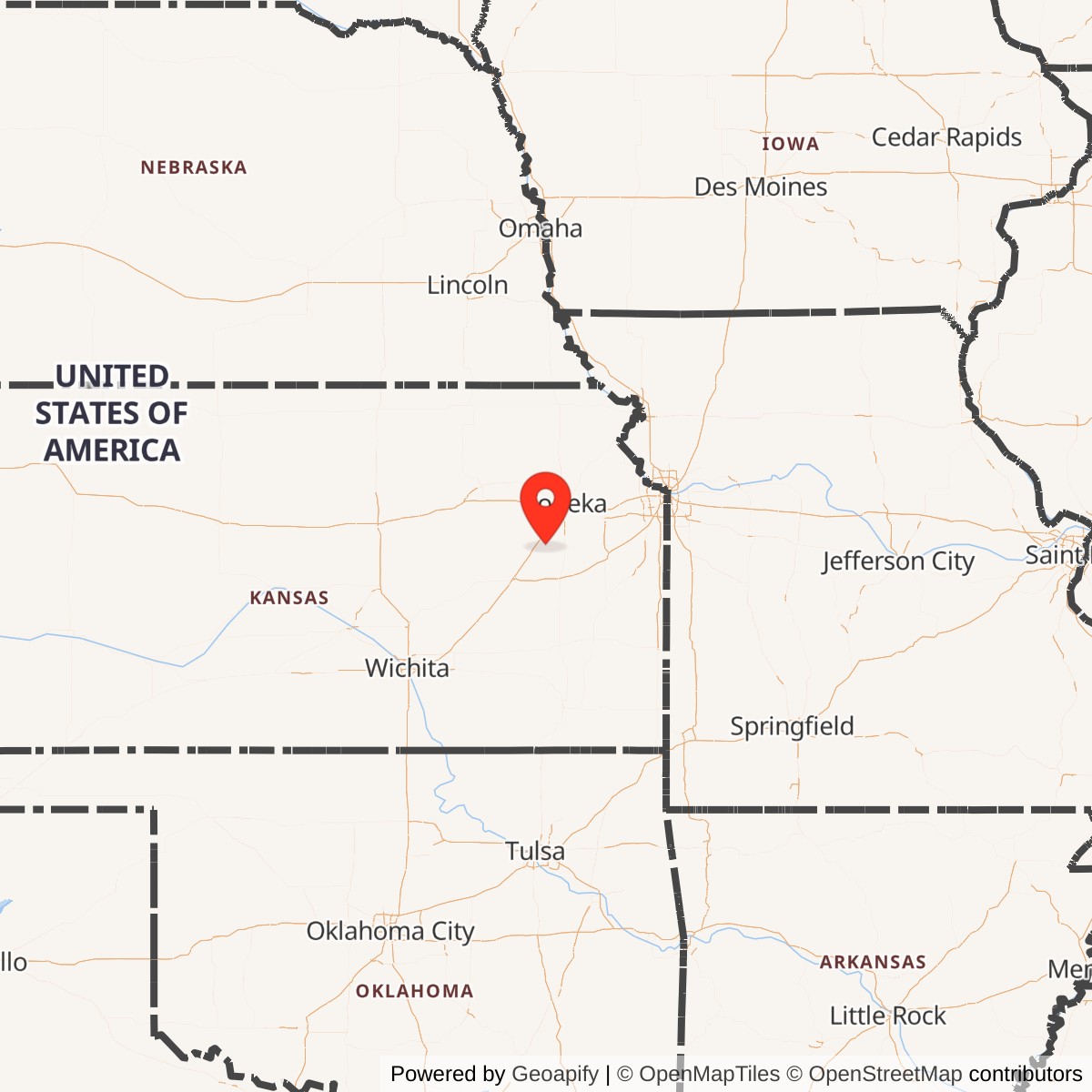
Atlas E Site 548-4 was a single-missile SM-65E Atlas intercontinental ballistic missile launch complex built for the 548th Strategic Missile Squadron in Osage County, Kansas, between Burlingame and Osage City. The site was one of nine Atlas E "coffin launcher" installations constructed around Forbes Air Force Base near Topeka, Kansas. It formed part of Strategic Air Command's early operational ICBM force during the short but important period when the United States was moving from bomber-based deterrence and exposed missile launchers toward dispersed, hardened, land-based nuclear missiles.
The parent base was Forbes Air Force Base. The operating unit was the 548th Strategic Missile Squadron. Public unit-history sources describe the squadron under Strategic Air Command and the 21st Air Division, later the 21st Strategic Aerospace Division, with Forbes associated during this era with the 40th Bombardment Wing / 40th Strategic Aerospace Wing. Atlas E sites had local launch-control rooms within the individual missile complex rather than a separate Minuteman-style Launch Control Center that controlled a flight of unmanned launch facilities.
The site is inactive and decommissioned. It is no longer an active missile facility. The 548th Strategic Missile Squadron was organized at Forbes on July 1, 1960, became operational as an Atlas E unit on October 16, 1961, began standing down from alert in early 1965, and was inactivated on March 25, 1965. The former missile property later left active Air Force use, entered the broader surplus-disposal and environmental-cleanup history of the Forbes missile field, and today should be treated as private or otherwise non-public rural property.
Location, Landscape, and Site Description
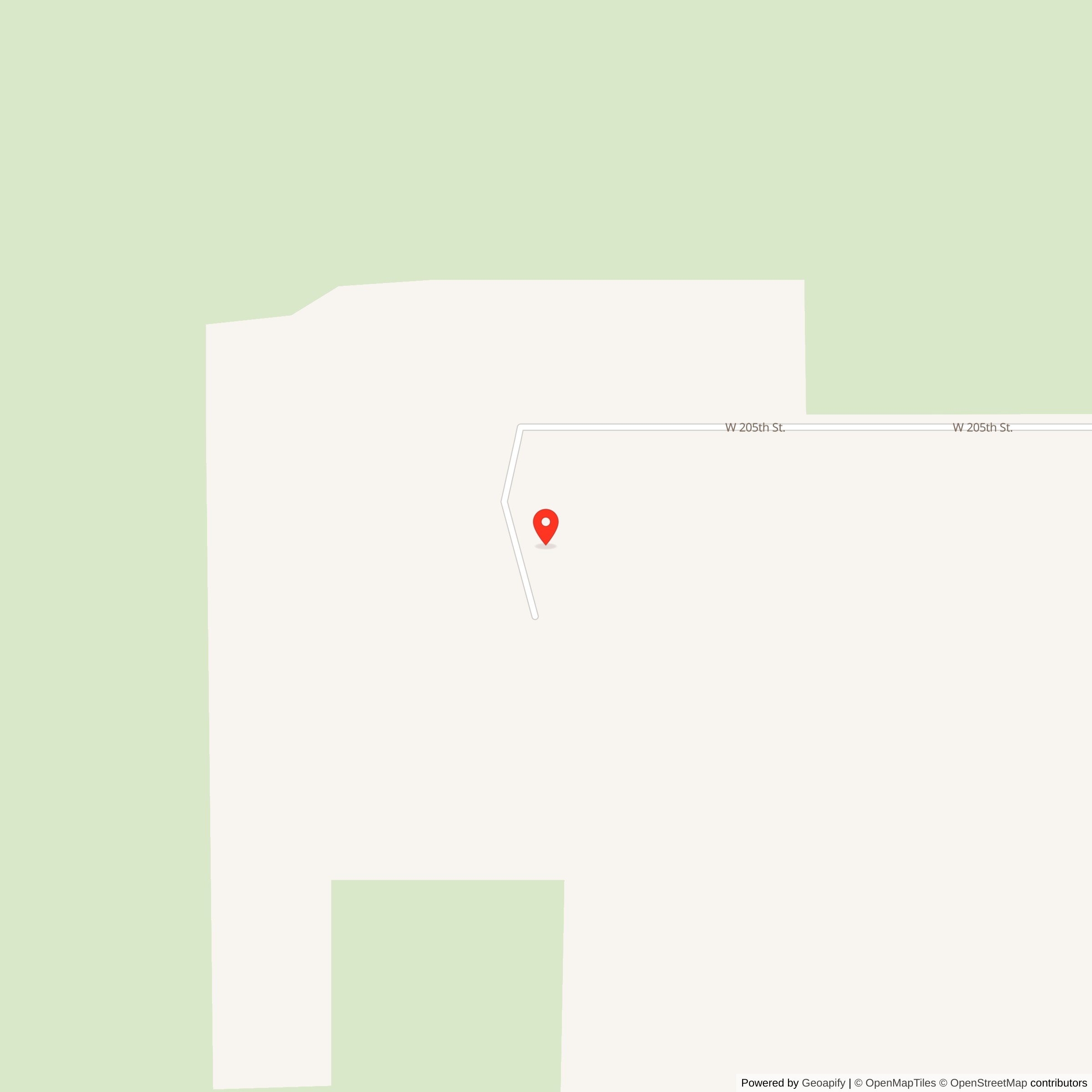
Site 548-4 lies in the rural Osage County countryside between Burlingame and Osage City, southwest of Topeka and generally south-southwest of Burlingame. EPA uses Osage City and W 205th Street for the environmental record.The surrounding landscape is agricultural and pastoral, with rolling Kansas terrain, rural section-line roads, cultivated or hay ground, pasture, timbered draws, and scattered farm properties. This was exactly the kind of setting Strategic Air Command wanted for an Atlas E missile field. The site had to be close enough to Forbes for crews, security police, maintenance personnel, propellant support, and convoy logistics, but distant enough from Forbes and from the other Atlas launchers that no single attack or accident would eliminate the whole squadron.
The installation was a hardened horizontal Atlas E launch complex, not a later vertical Atlas F silo and not a Minuteman-style unmanned launch facility. In Atlas E terminology, the missile was stored horizontally in a reinforced-concrete below-ground "coffin" shelter. To launch, the massive overhead door or roof structure would be opened, the missile would be raised to vertical, liquid oxygen would be loaded, and the final launch sequence would be completed by the on-site launch crew. The complex therefore combined the missile shelter, launcher/erector mechanism, propellant systems, power plant, communications systems, security facilities, crew space, and local launch-control room in a single fenced and guarded installation.
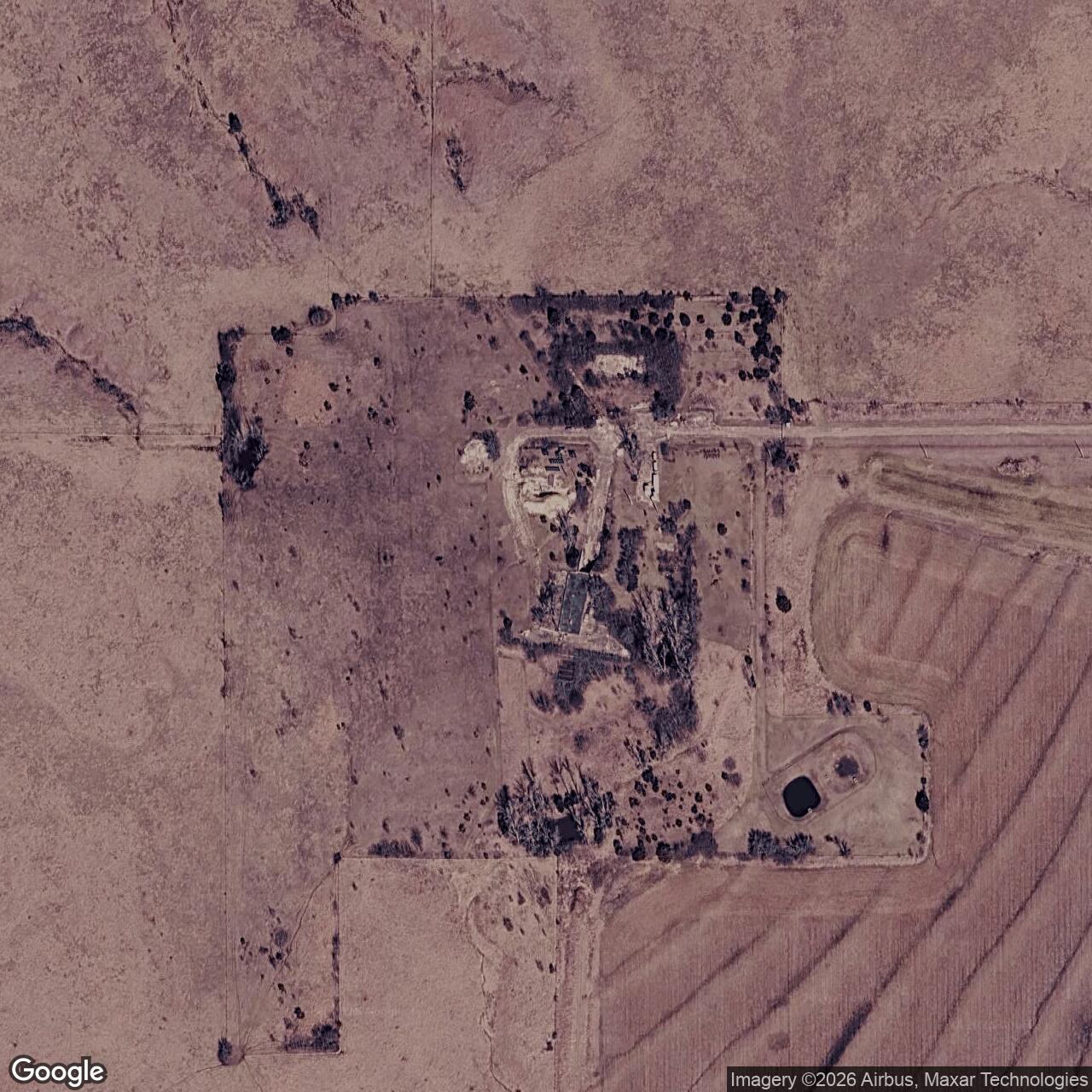
Available imagery shows that the former launcher footprint has remained visible after decommissioning.
Strategic and Cold War Context
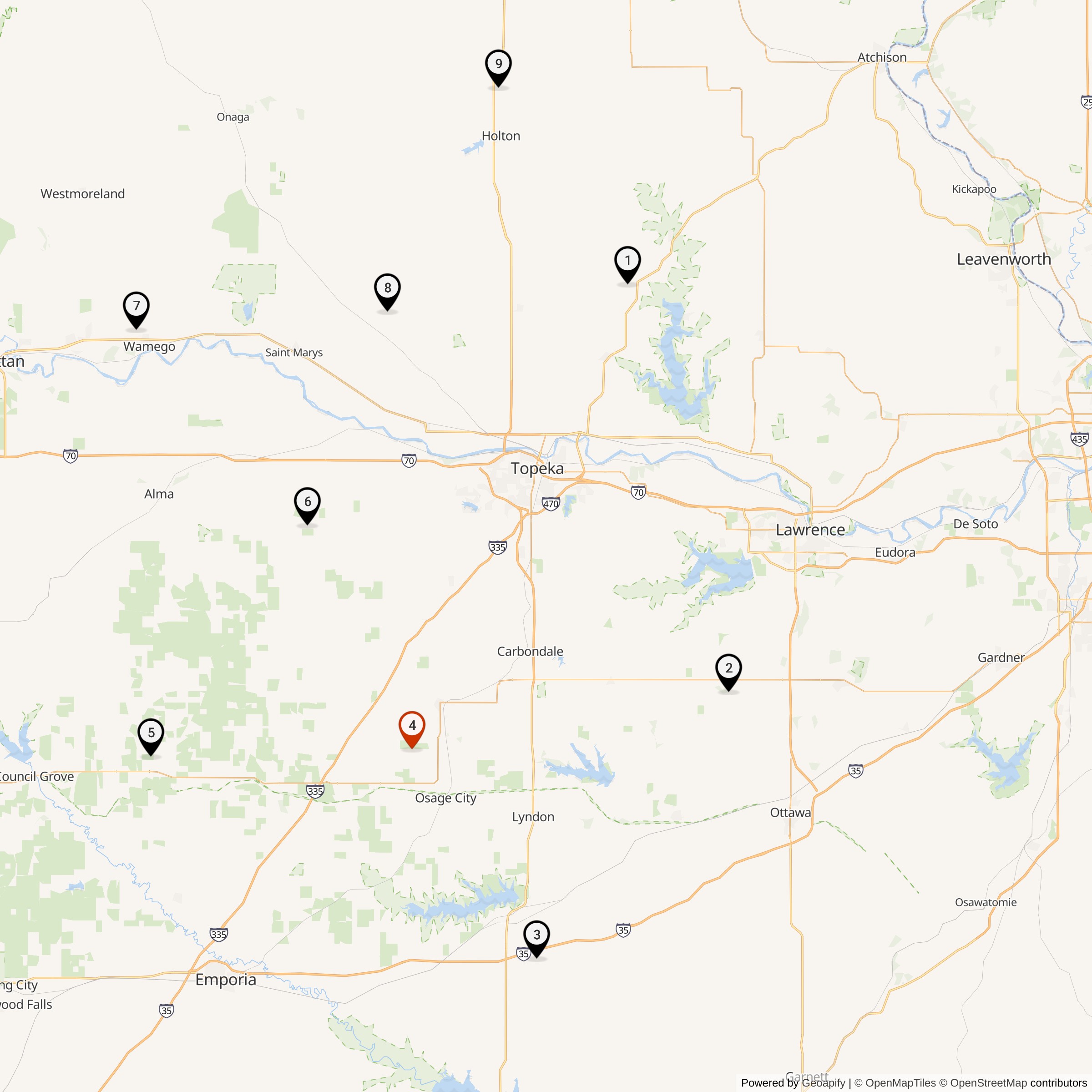
Atlas E Site 548-4 existed because the United States was trying to field a credible intercontinental ballistic missile deterrent during the first years of operational ICBM deployment. The Atlas family was the first operational U.S. Air Force ICBM family. It had been developed during the early Cold War, tested through multiple design versions, and deployed before the more survivable solid-fueled Minuteman force became the dominant land-based missile system.The Forbes missile field reflected a rapid change in Air Force deployment thinking. Forbes was originally slated for a three-by-three Atlas arrangement, with three remote launch sites and three missiles at each site. In February 1959, however, the Air Force directed that each missile be placed at an individual launch site. That decision produced nine separate Atlas E launch complexes around Forbes. Site 548-4 was the Osage County / Burlingame-area installation in that dispersed ring.
Atlas E was a transitional system. It improved on earlier Atlas D deployments by using individual launch complexes, inertial guidance, and below-ground coffin shelters that provided some protection. At the same time, it retained the burdens of the first-generation liquid-fueled Atlas design. The missile used RP-1 fuel and liquid oxygen oxidizer, required pressure maintenance because of its thin stainless-steel airframe, and had to be erected and prepared before launch. The National Park Service describes Atlas E as an individual-launch-complex system with inertial guidance, below-ground coffins, and an approximate fifteen-minute launch response time. That combination made Atlas E an important but short-lived bridge between early experimental ICBM deployment and the later Minuteman era.
Construction and Activation
The Forbes Atlas E missile-field project began as national missile construction accelerated in the late 1950s. In October 1958, Topeka received word that Forbes Air Force Base would support Atlas E missile sites in the surrounding area. The Corps of Engineers Kansas City District managed construction of the nine Forbes "coffin" launchers. Construction officially began on June 9, 1959, when Kansas Governor George Docking drove a silver nail into a construction form. The project was divided between two construction firms, one responsible for three sites and the other for six.Construction was difficult, rushed, and technically complex. Unit-history and Kansas Air National Guard historical summaries describe roughly 519 modifications during the Forbes Atlas E project. The propellant-loading system was one recurring source of problems. Components built by Blaw-Knox in Pittsburgh for Atlas E sites at Vandenberg, F.E. Warren, Fairchild, and Forbes were supposed to arrive on skids, but the skids often arrived late and testing revealed defects that had to be corrected.
Labor problems and safety incidents also affected the missile-field construction program. Public unit-history sources record 22 work stoppages, including a longer October-November 1960 work stoppage caused by a jurisdictional dispute between hoisting engineers and electrical workers. They also record 25 lost-time accidents, including two electricity-related fatalities. A minor disturbance occurred at one of the Forbes missile sites when student pickets from McPherson College protested ICBM deployment. The available source does not identify that protest site as Site 548-4, so it should be understood as a Forbes missile-field event, not a documented Burlingame-site event.
The 548th Strategic Missile Squadron was organized at Forbes on July 1, 1960. On January 24, 1961, the first Atlas missile arrived at Forbes from Vandenberg Air Force Base by C-133 transport aircraft. In spring 1961, Site 548-4 became especially prominent in the Forbes field when rocket number 486 was installed at the Burlingame site. A local-history account based on contemporary newspaper coverage identifies this as the first Atlas missile installed into a Kansas launch base and the first Forbes missile placed on alert. The account reports that spectators watched the convoy pass through Osage City on April 12, 1961, and that an Atlas ICBM was raised into firing position at the missile base near Burlingame as part of operational checkout testing.
By October 1961, all nine Forbes Atlas E sites had their missiles. Operational control of the Forbes Atlas E sites was turned over to Strategic Air Command on October 16, 1961, when Air Force Ballistic Missile Activation Chief Maj. Gen. Gerrity turned the sites over to Second Air Force Commander Lt. Gen. John D. Ryan. From that point, the Forbes Atlas E field was a functioning SAC missile force.
Missile System and Technical Role
Site 548-4 housed one SM-65E Atlas ICBM. The Atlas E was a liquid-fueled missile deployed in an individual coffin-launcher complex. The missile was normally stored horizontally in the buried shelter and raised to vertical for launch. That launch method required large mechanical, hydraulic, electrical, propellant, communications, guidance, and crew-control systems at each site.The Atlas E used RP-1 kerosene fuel and liquid oxygen oxidizer. Liquid oxygen had to be handled at cryogenic temperatures and could not simply remain stored in the missile in the way later solid-propellant Minuteman missiles could remain ready in the silo. The Atlas also had a very thin stainless-steel pressure-stabilized airframe, sometimes described in public sources as similar in concept to a balloon that had to remain pressurized to keep its shape. These features made the weapon powerful but maintenance-intensive and helped explain why Atlas was replaced so quickly once more modern solid-fueled ICBMs were available.
Public missileer and historical sources describe the Forbes Atlas E weapon system as using a Mark IV reentry vehicle developed by General Electric and carrying a W-38 nuclear warhead with an approximate yield of 3.8 megatons. The same public 548th SMS source gives the Atlas E range as approximately 6,000 miles.
Site 548-4 was locally crewed rather than being an unmanned launch facility controlled from a remote LCC. A typical Atlas E site had a five-person launch crew on duty for a 24-hour tour, supported by armed guards and maintenance/security personnel. The crew occupied the site's underground or hardened crew and control areas, monitored the missile and support equipment, decoded emergency action traffic, carried out checklists, coordinated with Forbes and SAC command channels, and maintained the missile in alert posture unless maintenance or testing removed it temporarily from alert.
Operational History
Atlas E Site 548-4 served during the most intense early period of U.S. ICBM deployment. Its active life was short in calendar terms, but the site was part of a full-time Strategic Air Command alert system. Launch crews served 24-hour tours. Guards controlled the surface area and gate. Maintenance teams, propellant specialists, missile technicians, communications personnel, and command inspectors interacted with the site as part of the Forbes missile field's daily routine.The 548th SMS field was built for continuous alert duty. The 548th SMS association states that the sites were manned 24 hours a day, 365 days a year while the squadron was active. A five-person launch crew manned the site, while armed guards secured the surface and access points. Crew transportation initially included helicopters and then short-field aircraft, but road transportation became the practical method for moving crews between Forbes and the launchers.
Site 548-4 was one of the best-documented Forbes Atlas E sites because the first Kansas Atlas missile installation occurred there and because several later incidents were tied specifically to the Burlingame site. In April 1961, rocket number 486 was installed at Site 4. Contemporary newspaper accounts cited by the local-history article described the Atlas convoy passing through Osage City and then the missile being raised at the Burlingame launch site for operational checkout. This event connected the abstract national ICBM program directly to the Osage County landscape: residents saw the physical missile moving through local streets on its way to a hidden launch complex.
On September 27, 1961, an incident occurred at Site 548-4 while the crew was performing flush-and-purge operations on booster engine number 2. A bulkhead cracked or inverted when pressure conditions were lost. The missile was taken off alert and removed to the Missile Assembly Building at Forbes. A spare missile was installed at the Burlingame site so that the site could return to alert status. The damaged missile was rocket number 486, the same missile that had been the first ICBM installed in a Kansas launcher. This incident illustrates the mechanical fragility and operational complexity of the early Atlas system. The site was part of a nuclear alert force, but it was also a sophisticated, pressure-sensitive, liquid-fueled machine that required constant technical care.
The Cuban Missile Crisis gave all of the Forbes Atlas E sites their most serious strategic test. The 548th SMS association states that all 548th sites were at a high level of alert and ready to launch if necessary. Broader Strategic Air Command accounts state that Atlas E missiles not already on alert because of modifications were to be placed on alert as covertly as possible. That crisis should be understood as a squadron- and command-level event rather than a uniquely documented Site 4 event, but Site 548-4 was one of the nine Forbes missiles in that alert system.
On November 26, 1962, Site 548-4 was the location of the only reported death at one of the nine Forbes Atlas sites. A local-history account citing a contemporary United Press International story reported that Airman 2C William P. Walsh, a Forbes-based Combat Defense Team guard from Doylestown, Pennsylvania, was accidentally shot and killed while on guard duty at an Atlas E missile site in Osage County. The same account, based on former crewman Jim Scott's recollection, places the incident at the Burlingame Site 4 and describes the response by the launch crew and flight surgeon. The event was a security-force tragedy, not a missile malfunction, but it is one of the most clearly site-specific incidents documented for 548-4.
Site 548-4 also appears in former crew recollections of November 22, 1963, the day President John F. Kennedy was assassinated. According to the same local-history account, Captain Jim Scott was on duty at Burlingame Site 4 when a message from the surface reported that the President had been shot, followed immediately by a coded SAC alert message. The account states that the crew manned its stations while national command authority and threat conditions were uncertain, and that the crew remained in a heightened posture until a later message lowered the condition.
Site-Specific and Squadron-Specific Events
April 1961 missile installation at Site 548-4: Site 548-4 received rocket number 486, described in local-history reporting as the first Atlas missile installed into a Kansas launch base and the first Forbes missile placed on alert. Contemporary newspaper accounts cited by that source describe the missile convoy moving through Osage City and the missile being raised at the Burlingame site for operational checkout.September 27, 1961 bulkhead incident: During flush-and-purge operations on booster engine number 2, a bulkhead problem occurred at Missile Complex 548-4. The missile was removed from alert and taken to the Missile Assembly Building at Forbes. A spare rocket restored the Burlingame site to alert status. The damaged missile was rocket number 486.
October 1962 Cuban Missile Crisis: This was a 548th SMS / Forbes missile-field alert event rather than a uniquely Site 4 event. The 548th SMS association states that all 548th sites were at a high level of alert and ready to launch if required.
November 26, 1962 guard death: Airman 2C William P. Walsh was accidentally shot and killed while on guard duty at the Osage County Atlas E site identified by local-history sources as Site 548-4. This was the only reported death at one of the nine Forbes Atlas sites in the source reviewed.
November 22, 1963 national-alert event: Former crew recollections place Captain Jim Scott at Burlingame Site 4 on the day of President Kennedy's assassination, when the site received a heightened SAC alert message and the crew remained at its stations while national command conditions were uncertain.
Deactivation and Disposal
Atlas E Site 548-4 left active missile service during the nationwide phaseout of Atlas E, Atlas F, and Titan I systems. By 1964 the Atlas E weapon system had become expensive, manpower-intensive, and comparatively vulnerable. Solid-fueled Minuteman missiles could remain ready with far less fueling and erection complexity, and newer Titan II missiles provided greater payload capability. In May 1964, Secretary of Defense Robert McNamara directed acceleration of Atlas and Titan I missile-base decommissioning, and on November 19, 1964 the phaseout of Atlas E, Atlas F, and Titan I missiles was announced.The Forbes Atlas E drawdown occurred quickly. Unit-history sources record the first 548th SMS ICBM off alert on January 4, 1965 and the last ICBM shipped out on February 8, 1965. A local-history account states that the first Forbes missile went off alert on January 4, 1965, the last missile in the arsenal went off alert on January 28, 1965, and the last Forbes missile shipped from Forbes to Norton Air Force Base on February 8, 1965. The available sources do not identify the exact date when the missile physically left Site 548-4, so those dates should be treated as Forbes missile-field dates rather than Site 4-specific removal dates. The 548th Strategic Missile Squadron was inactivated on March 25, 1965.
After missile removal, the Air Force removed useful equipment from Atlas and Titan sites. A public local-history article, citing Air Force deactivation records, states that radio and electronic equipment and especially the large site generators were valuable enough to salvage. The Atlas E generators had been installed through an access opening in the generator-room roof, which was then capped with thick concrete and covered with soil. To remove them, the cap had to be opened and cranes used to lift the disassembled units out. The same account states that many salvaged generators were later serviced and shipped to other Department of Defense installations, including in Southeast Asia.
The former Forbes missile sites then entered surplus disposal. Some Forbes sites were transferred for government or educational uses, but Site 548-4 was not one of those special transfers in the available account. A July 1965 newspaper account cited by the local-history article reported that no bids were received for Sites 4 and 8 when bids were opened for Atlas bases at Schilling, Altus, and Forbes. The same source states that the remaining sites generally became salvage operations and that all of the missile bases except Wamego were prone to groundwater flooding once the generators were removed. Because Site 4 had no public-utility power independent of those generators, the launch complex likely shared that post-closure vulnerability, although the exact water condition at the Burlingame site would require site-specific inspection or environmental documentation.
The environmental record for Site 548-4 continued long after the missile was gone. EPA identifies the property as FORBES (EX) ATLAS FAC S-4, EPA ID KS0002004885, on W 205th Street in Osage County. EPA lists it as Not on the NPL, NFRAP, and NFFA. The U.S. Army Corps of Engineers Kansas City District announced in July 2017 that it had completed the Decision Document for the Former Forbes Atlas Missile Site S-4 near Osage City and that the Corps had completed a No Further Action Decision Document after public comments taken in 2016; the Decision Document was signed in July 2017. The USACE FUDS inventory lists Forbes AFB Atlas S-04 as FUDS property number B07KS0202 in Osage County, with CON/HTRW and HTRW project categories.
Current Status and Site Use
Atlas E Site 548-4 is inactive, decommissioned, and not an active military installation. It is not identified in the reviewed public sources as a public museum, public park, or official tour site.Public property listings and parcel-indexing sites identify W 205th Street properties in the Osage City / Burlingame area as agricultural or recreational land, and a recent commercial listing for W 205th Street near Burlingame described a 120-acre Osage County recreational tract as no longer for sale. Because public listings and parcel aggregators may describe nearby or associated land rather than the exact launch structure parcel, the safest current-use characterization is a non-federal, privately held or otherwise non-public rural former missile site with agricultural/recreational land context.
Aerial photographs show the former launcher layout, road pattern, concrete/hardstand remains, and surface features still recognizable. These remains are significant because Atlas E sites were not simply holes in the ground; they were complete military-industrial installations with mechanical launch shelters, crew spaces, electrical and power systems, propellant facilities, communications, and security infrastructure. At Site 548-4, the missile and active military equipment are gone, but the rural footprint of the launch complex remains legible.
Chronology
- 1958-10 Topeka received news that Forbes Air Force Base would support Atlas E missile sites in the surrounding area.
- 1959-02 The Air Force directed that each Forbes Atlas E missile be placed at an individual launch site rather than in three-missile complexes.
- 1959-06-09 Construction officially began for the Forbes Atlas E missile-field project when Kansas Governor George Docking drove a silver nail into a construction form.
- 1960-07-01 The 548th Strategic Missile Squadron was organized at Forbes Air Force Base.
- 1961-01-24 The first Atlas missile arrived at Forbes Air Force Base from Vandenberg Air Force Base.
- 1961-04-12 A local-history account reports that spectators in Osage City saw the Atlas convoy carrying rocket number 486 toward the Burlingame launch site, and the associated photo is dated April 12, 1961.
- 1961-04-14 The Manhattan Mercury reported that an Atlas ICBM had been raised into firing position for the first time at the missile base near Burlingame as part of operational checkout testing.
- 1961-07-28 A local-history account states that the Air Force officially accepted all nine Forbes sites from Convair.
- 1961-09-27 A bulkhead incident occurred at Missile Complex 548-4 during flush-and-purge operations on booster engine number 2; the missile was removed from alert and replaced with a spare.
- 1961-10 By October 1961, all nine Forbes Atlas E sites had Atlas E missiles.
- 1961-10-16 Operational control of the Forbes Atlas E sites was turned over to Strategic Air Command, and the 548th SMS was listed as operational.
- 1962-10 During the Cuban Missile Crisis all 548th sites were at a high level of alert and ready to launch if required.
- 1962-11-26 Airman 2C William P. Walsh was accidentally shot and killed while on guard duty at the Osage County Atlas E site identified by local-history sources as Site 548-4.
- 1963-11-22 Former crew recollections place Captain Jim Scott on duty at Burlingame Site 4 when the site received heightened SAC alert traffic after President Kennedy was assassinated.
- 1964-05 Secretary of Defense Robert McNamara directed acceleration of Atlas and Titan I missile-base decommissioning.
- 1964-11-19 The phaseout of Atlas E, Atlas F, and Titan I missiles was announced.
- 1965-01-04 The 548th SMS recorded its first ICBM off alert.
- 1965-01-28 A local-history account states that the last Forbes missile in the arsenal went off alert.
- 1965-02-08 The 548th SMS recorded its last ICBM shipped out.
- 1965-03-25 The 548th Strategic Missile Squadron was inactivated.
- 1965-07-23 A newspaper account cited by local history reported that no bids were received for Forbes Sites 4 and 8 during surplus-property bidding.
- 2015-09-30 The USACE FUDS inventory listed Forbes AFB Atlas S-04, FUDS property number B07KS0202, in Osage County with CON/HTRW and HTRW project categories.
- 2017-07 The U.S. Army Corps of Engineers Kansas City District signed and announced a No Further Action Decision Document for Former Forbes Atlas Missile Site S-4 near Osage City.
Read about the Atlas at Forbes AFB
All Atlas Missile Silo Locations