Atlas E Site 548-6 Missile Silo, Keene / Dover / Eskridge area Kansas
Longitude: -96.0491581374626
Site Type: Atlas E single-missile coffin launcher complex
Missile Type: SM-65E Atlas
Number of Launchers/Missiles: 1
Parent Base: Forbes AFB
Missile Wing: 40th Bombardment Wing / 40th Strategic Aerospace Wing; 548th SMS later reassigned during Atlas E phaseout
Missile Squadron: 548th Strategic Missile Squadron
Current Site Use: Former Atlas E launch complex near Keene; local sources describe later private residential use after an unrealized school-site transfer; former launcher footprint remains identifiable but is not publicly accessible.
Site Ownership: Private/non-federal ownership after surplus-property disposal; local history says Site 6 was assigned for a school-site purpose that did not occur and later sold to a private buyer/residential owner.
Accessible: No public access / private property.
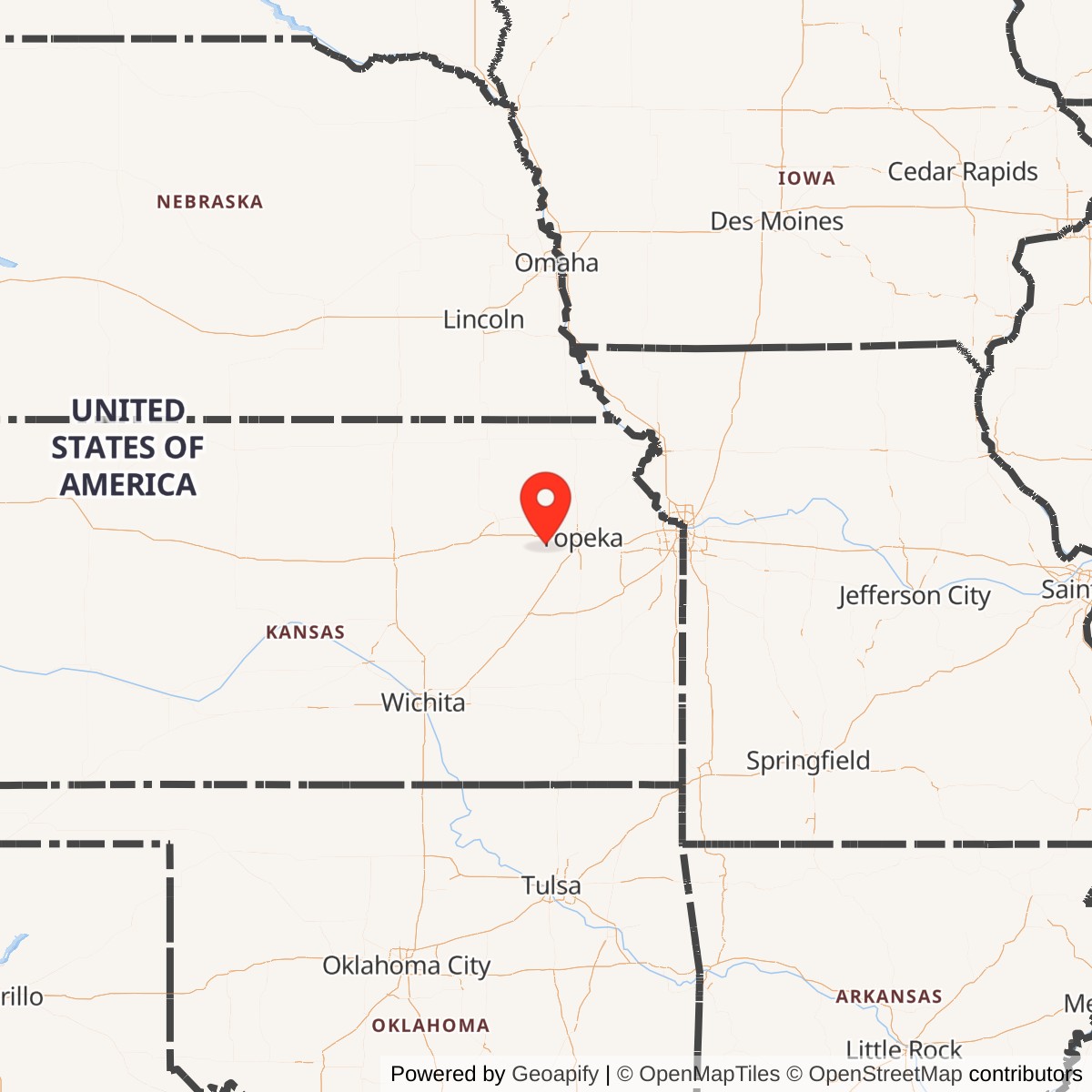
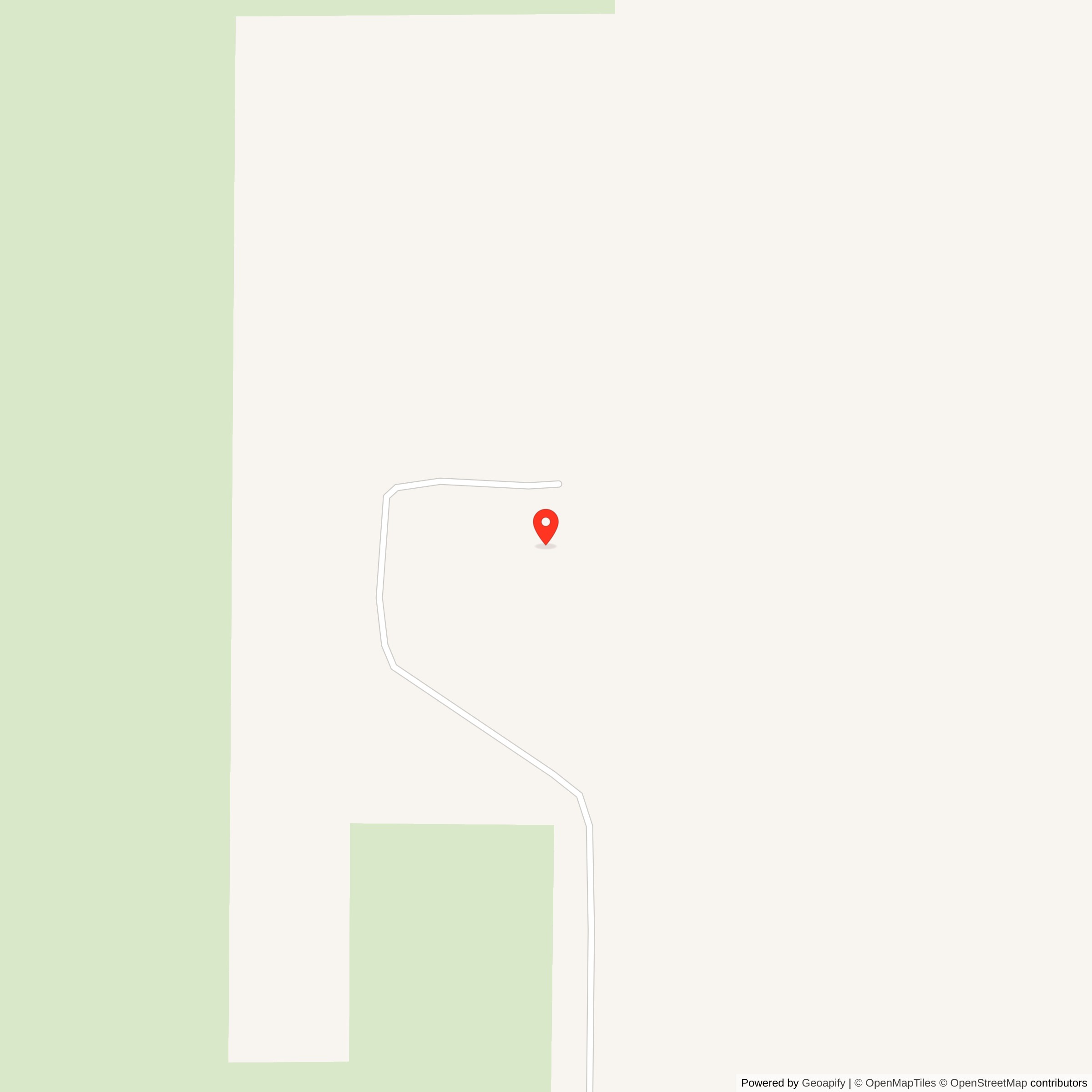
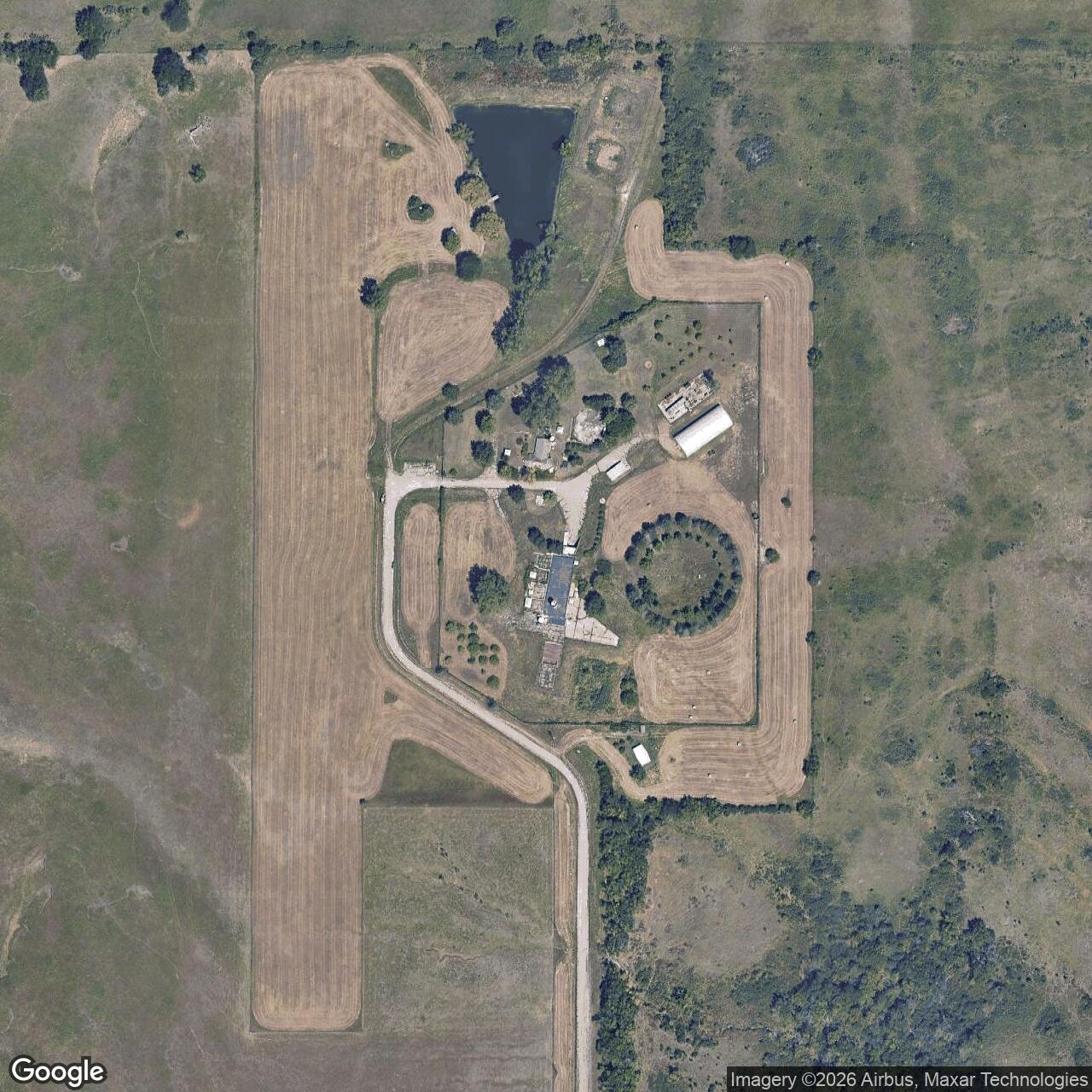
Atlas E Site 548-6 was a single-missile SM-65E Atlas intercontinental ballistic missile launch complex in Wabaunsee County, Kansas. It was one of nine Atlas E coffin-launcher facilities operated by the 548th Strategic Missile Squadron from the Forbes Air Force Base missile field near Topeka. The site is most often identified in local history as the Keene missile site, in squadron-site sources as the Dover site. EPA identifies the environmental record as FORBES (EX) ATLAS FAC S-6, EPA ID KSSFN0703132, on Missile Base Road, 1.4 miles north-northwest of Keene, with Eskridge, Kansas, as the city and ZIP location.
The parent base was Forbes Air Force Base. The operating unit was the 548th Strategic Missile Squadron. Public unit-history sources place the squadron under Strategic Air Command and the 21st Air Division / 21st Strategic Aerospace Division during its Forbes Atlas E service, with Forbes associated during this period with the 40th Bombardment Wing and later the 40th Strategic Aerospace Wing. The site's parent LCC is not applicable. Atlas E launch complexes were not Minuteman-style unmanned Launch Facilities controlled from a separate Launch Control Center. Each Atlas E site was a locally crewed launch complex with its own control spaces, crew facilities, communications, power-generation systems, security perimeter, propellant-support equipment, and single missile launcher.
The site is inactive and decommissioned. It is no longer an active missile installation. The 548th Strategic Missile Squadron was organized at Forbes Air Force Base on July 1, 1960; its first Atlas missile arrived at Forbes on January 24, 1961; the Forbes sites entered their operational period in 1961; the first squadron missiles began leaving alert in January 1965; and the squadron was inactivated on March 25, 1965. After active Air Force use ended, the former missile site was transferred into surplus-property disposal, was reportedly assigned for a school-site purpose that was not carried out, and then passed into private ownership. Modern local-history and abandoned-site sources describe the property as a private residence and former missile complex. It is not a public site.
Location, Landscape, and Site Description
Site 548-6 lies in the Flint Hills landscape of Wabaunsee County, southwest of Topeka and west of Dover, near the small community of Keene and within the broader Eskridge address area. EPA describes it as 1.4 miles north-northwest of Keene on Missile Base Road, with Eskridge as the city/ZIP entry.The surrounding setting is rural, open, and agricultural. The missile site was placed in sparsely developed country where the fenced launch complex could be isolated from dense settlement but still supplied by road from Forbes Air Force Base. That balance was central to the Forbes Atlas E field. The nine launchers were dispersed around the parent base, not to defend Forbes itself, but to make a single strike or local accident less likely to destroy the entire missile squadron while keeping the sites within practical reach of crews, security, maintenance teams, propellant support, and communications from the base.
The installation was an Atlas E coffin-launcher complex. The Atlas E missile was not stored vertically in a deep Atlas F silo. It lay horizontally in a semi-hardened underground concrete launcher, under a massive roof or door structure. At launch, the door would be raised and rolled aside, the missile would be erected to vertical, RP-1 kerosene and liquid oxygen systems would be brought to launch condition, and the crew would complete the launch sequence from the site's local control equipment. Wabaunsee County local-history sources describe the launcher door as a roughly 400-ton steel or hardened overhead door and note that the door and hydraulic systems were a major maintenance concern at Site 6.
Surface and underground features at an Atlas E site typically included the missile bay or launcher, launch-control and crew-support spaces, power-generation equipment, propellant and utility systems, ventilation and exhaust features, communications equipment, access roads, a fenced perimeter, lighting, and a controlled gate. Local accounts of Site 6 describe a high wire-mesh fence topped with barbed wire, a remote-controlled electric gate, underground concrete-and-steel work spaces, and continuous crew and guard presence during the active missile years. Post-closure imagery and local articles show that the former missile-base footprint remained visible after military disposal, although the property is private and has been adapted to residential use.
Strategic and Cold War Context
Atlas E Site 548-6 existed because the United States was rapidly building a survivable intercontinental nuclear deterrent in the late 1950s and early 1960s. The Atlas family was the U.S. Air Force's first operational intercontinental ballistic missile family. It was developed under Cold War pressure created by Soviet long-range missile and space-launch achievements, and it served as an early bridge between bomber-based nuclear deterrence and the later solid-fueled missile force.The National Park Service describes Atlas as the Air Force's first operational ICBM and notes that the upgraded Atlas E and Atlas F were deployed across the United States after the first Atlas D deployments. Atlas E differed from Atlas D by being based in individual launch complexes and by using inertial guidance. That was important because the missile no longer required a central radio-guidance site in the same way Atlas D did. It allowed the Air Force to disperse the launchers more widely in one-missile complexes.
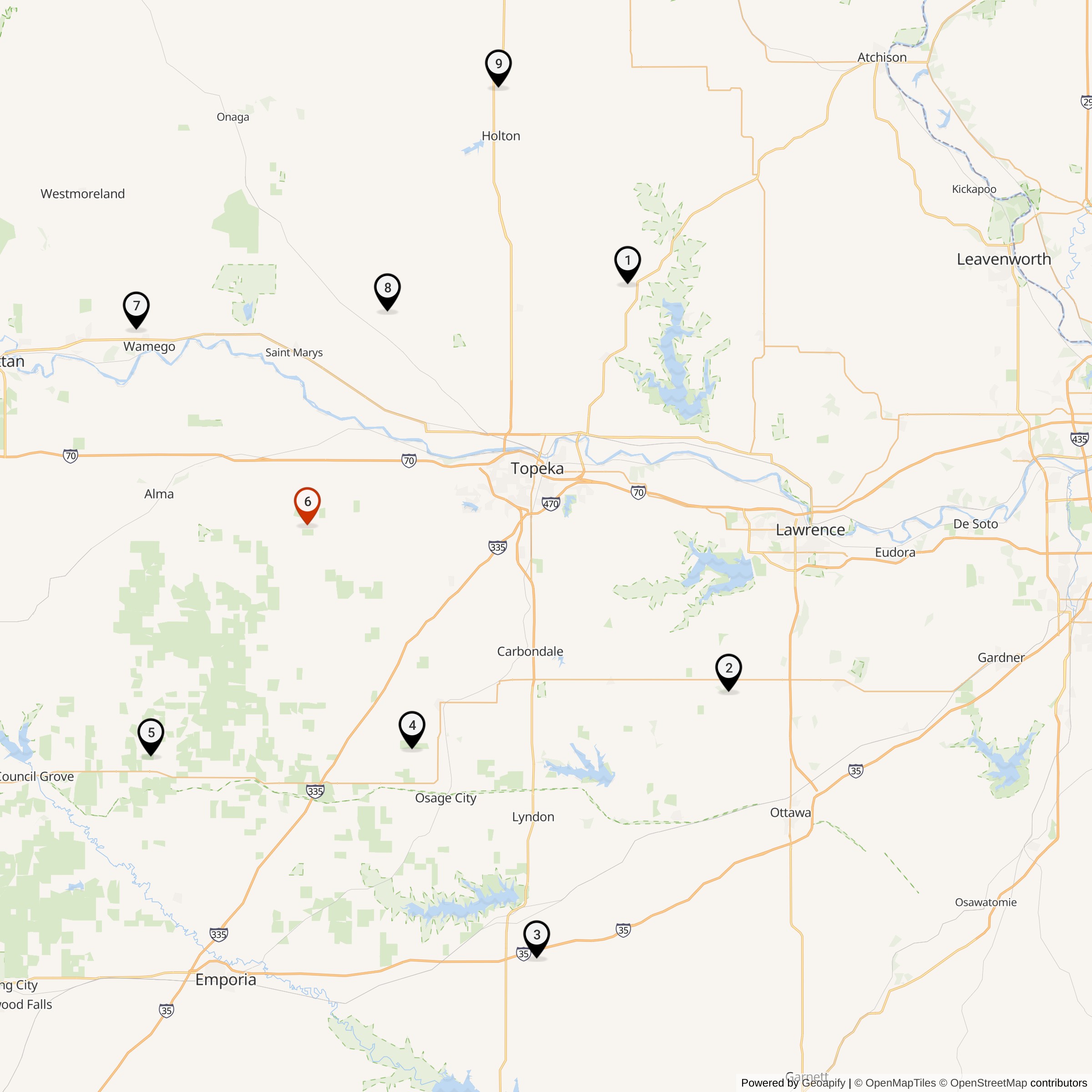
Forbes Air Force Base received nine Atlas E launch sites. The early basing concept for Forbes, as described in Kansas local-history accounts, contemplated a clustered three-site, three-launcher pattern similar to Atlas D deployment. The plan changed before land acquisition to a 9-by-1 arrangement, with nine separate one-missile sites. That decision increased dispersal and reduced vulnerability. Site 548-6 near Keene was one of those individual launchers, carrying one missile and depending on the wider Forbes system for command, maintenance, security reinforcement, propellant logistics, warhead handling, spare missiles, and administrative support.
Atlas was a powerful but demanding first-generation system. It used a thin stainless-steel pressure-stabilized airframe that had to remain pressurized to retain its shape on the ground. Its liquid oxygen oxidizer created handling and alert challenges, and its launch sequence required more preparation than later solid-fueled Minuteman missiles. The Atlas E had better blast protection than the earliest exposed Atlas systems, but its horizontal storage and liquid-fueled launch sequence still made it transitional. It represented an essential early step in U.S. ICBM deployment, but it was quickly overtaken by Minuteman, Titan II, and other systems that offered faster reaction, greater hardening, or simpler long-term alert.
Construction and Activation
The Forbes Atlas E missile-field project was part of the national rush to build operational ICBM sites at the turn of the 1960s. Construction of the Forbes sites began in the 1959-1960 period, with the nine launchers distributed in a broad ring around Forbes Air Force Base. Local sources emphasize how quickly the work proceeded and how the Air Force and contractors were still testing and completing equipment as the first missiles began arriving in Kansas.Site-specific construction data for Site 548-6 is limited in public sources. Local accounts state that Bob Hood, later a 548th SMS Mobile Automated Checkout and Maintenance team member, had been part of a lead team that observed civilian contractors while the nine sites were under construction.
The first Atlas E missile for the Forbes field arrived at Forbes Air Force Base from Vandenberg Air Force Base on January 24, 1961, carried in an Air Force C-133 transport aircraft. As each site neared completion, missiles were installed horizontally in their launch bays, electrical and plumbing systems were connected, launch consoles and logic units were checked, and ordnance crews installed the reentry vehicle or nosecone containing the warhead. Public unit-history summaries state that by October 1961 all nine sites had their Atlas E missiles, and that operational control was turned over to Strategic Air Command in October 1961.
The exact date when Site 548-6 individually went on operational alert is not firmly established in public sources.
Missile System and Technical Role
Site 548-6 housed one SM-65E Atlas missile, later known in the CGM-16E designation sequence. Atlas E was an intercontinental ballistic missile designed to carry a thermonuclear reentry vehicle to targets at intercontinental range.Public museum and historical sources identify the Atlas E/F reentry vehicle as the Mark 4. The Smithsonian National Air and Space Museum describes the Mark 4 reentry vehicle as used on U.S. Air Force Titan I and Atlas E/F ICBMs in the early 1960s and states that it carried a W-38 nuclear warhead with a yield of about 3.75 megatons.
Operationally, the missile at Site 548-6 was kept at a state of readiness rather than being continuously fueled with liquid oxygen. The missile, support systems, control equipment, pressure systems, propellant interfaces, communications gear, security systems, and emergency equipment all required regular checks. The launch crew at an Atlas E site served on site, unlike later Minuteman launch crews who normally sat in remote Launch Control Centers controlling unmanned launch facilities. Local-history accounts state that each Forbes Atlas E site had a five-member launch crew and an armed guard on 24-hour duty. Maintenance was handled by Mobile Automated Checkout and Maintenance teams, including teams assigned to groups of sites and a roving team that could respond to difficult technical problems.
The technical role of Site 548-6 was therefore specific and demanding: keep one nuclear-armed Atlas E missile secure, pressurized, maintained, connected to Strategic Air Command command-and-control channels, and capable of launch if ordered. The site was a small but complete missile installation rather than only an empty launch tube.
Operational History
The 548th Strategic Missile Squadron operated the Forbes Atlas E missile field from Forbes Air Force Base during the early 1960s. Public unit-history sources state that the squadron was organized in July 1960 as a Strategic Air Command SM-65E Atlas ICBM squadron, that the first Atlas missile arrived at Forbes on January 24, 1961, that all nine sites had missiles by October 1961, and that the squadron's operational control was turned over to Strategic Air Command in October 1961. The nine sites included 548-6, described in one unit-history list as 6.1 miles west of Dover, Kansas.During active service, Site 548-6 was part of a 24-hour alert force. Local Wabaunsee County accounts add valuable detail for Site 6 specifically. Bob Hood, a 548th SMS maintenance specialist assigned to Mobile Automated Checkout and Maintenance work, reportedly spent a great deal of time at the Keene site because it was plagued by technical problems. The largest recurring issue described in those accounts was the heavy launcher door and its hydraulic-lift system. The door was supposed to rise and move quickly enough to support a rapid launch sequence, but local accounts state that it sometimes took far longer because uneven hydraulic lifting could leave the massive slab tilted and unable to slide smoothly.
The site was tied to the wider Forbes missile-field routine. Launch crews performed scheduled checks. Security personnel controlled entry. Maintenance teams traveled between the dispersed sites. Communications connected the site to Forbes and to Strategic Air Command. Local accounts describe the environment as one of continual readiness rather than occasional drill. That language is consistent with the mission of a first-generation ICBM alert site: most days were spent testing, inspecting, guarding, repairing, checking, and documenting rather than launching, but the site existed so that the missile could be fired if a valid national command order came.
The Cuban Missile Crisis gave the Forbes Atlas E field its most significant squadron-level alert episode. Public unit-history summaries state that on October 20, 1962, Strategic Air Command directed that the squadron's Atlas E missiles that were not down for modification be placed on alert as covertly as possible, and that normal training was reduced or suspended while more missiles were brought to readiness. That was a squadron-level event. The sources do not prove a unique action at Site 548-6 beyond its participation as one of the Forbes alert sites.
The site also has unusually strong local testimony compared with many Atlas E launchers. Wabaunsee County historical writing preserves the recollections of Bob Hood and the story of the Keene site within the Flint Hills community. That makes Site 548-6 more documented than many similar former missile properties, where individual-site operational details are sparse.
Site-Specific and Squadron-Specific Events
Site 548-6 has a documented site-specific mishap in local historical accounts. On August 9, 1963, while maintenance personnel were working on checkout procedures in the missile bay, an electrical check reportedly sent a small charge into the pyrotechnic system associated with a booster rocket. Local accounts state that a dry rocket-engine explosion followed, damaging the missile and scattering debris in the missile bay. The same accounts state that there was no fuel aboard the missile at the time, that a damage-assessment and cleanup effort followed, that the damaged missile was removed to Forbes, and that a replacement missile was installed so the site could return to alert status.A squadron-specific technical episode followed in late August 1963, when a Forbes Atlas E missile was sent to Vandenberg Air Force Base for a test launch to help resolve disputes about Atlas reliability. Local accounts state that the missile was launched with a dummy warhead toward the Kwajalein area and that the flight failed after booster-separation-related damage affected sustainer guidance, leading to destruction downrange. The public local account treats that failed test as part of the broader evidence that helped seal the Atlas E's fate. The account does not establish that the tested missile came from Site 548-6.
Deactivation and Disposal
The Atlas E system left service quickly because it had been overtaken by newer ICBM systems. By late 1964, Minuteman, Titan II, and other systems had changed the strategic missile force. Public unit-history sources state that on November 19, 1964, the Department of Defense announced that Atlas E, Atlas F, and Titan I missiles would be removed from the inventory. The first 548th SMS missiles were taken off alert on January 4, 1965. Missile removal and shipment to Norton Air Force Base, California, proceeded in January and February 1965.Local Wabaunsee County accounts provide unusually specific detail for Site 6. They state that on January 13, 1965, orders came to remove the Atlas E missiles and ship them to Norton Air Force Base. They also state that within days one team removed the warheads while another loaded rockets on trailers, and that by February 1, 1965, the nuclear weapon associated with Wabaunsee County had left the Flint Hills. Public unit-history summaries give February 8, 1965, as the completion of shipment of the last 548th SMS ICBM. These dates are compatible if read as different levels of detail: Site 6/Wabaunsee County removal by early February, and squadron-wide shipment completion by February 8.
The 548th Strategic Missile Squadron was inactivated on March 25, 1965.
After missile removal, the site was stripped of military equipment and processed as surplus property. Local accounts state that with the generators removed, little of value remained for the Air Force, and that the sites were turned over to the General Services Administration for disposal. Site 6 at Keene was reportedly given to Unified School District 330 for a school site, but the school plan did not come to fruition. The property was then sold to a private buyer and became a private residential property. No public source reviewed here indicates that the launcher was preserved as a museum, opened for tours, or retained as an active government installation.
The site also entered environmental tracking as a Formerly Used Defense Sites / CERCLA-related property. EPA identifies the site as FORBES (EX) ATLAS FAC S-6, EPA ID KSSFN0703132, not on the National Priorities List, with a non-NPL status of NFRAP, meaning the site did not qualify for NPL listing based on existing information. USACE FUDS inventory data identifies the property as FORBES AFB ATLAS S-06, property number B07KS0203, in Wabaunsee County, Keene, with an HTRW category. A 2001 GAO FUDS listing identified FORBES AFB-AF FAC S-6 / B07KS0203 as a Wabaunsee County property with hazards and eligible project work, then under remedial-investigation/feasibility-study activity. Later public summaries such as ProPublica's FUDS data list the S-6 property as response complete.
Current Status and Site Use
Atlas E Site 548-6 is a decommissioned former missile launch complex on private property. It is not an active military installation and is not a public historic site. The best current public description is a private residential/adaptive-use former missile property near Keene in Wabaunsee County. Abandoned Kansas states that the school-site plan never happened and that a private buyer had maintained a residence on the property for more than thirty years.The former missile bay and site footprint appear to remain identifiable, but condition, access, and ownership details should be treated cautiously unless verified through current county parcel records or direct owner permission. EPA and FUDS records show the property in environmental databases, but the EPA profile lists it as not on the National Priorities List and NFRAP. The site should be treated as private property with no public access.
Chronology
- 1959 The Forbes Atlas E missile-field construction program began in the 1959-1960 period as part of the national ICBM construction effort.
- 1960-07-01 The 548th Strategic Missile Squadron was organized at Forbes Air Force Base.
- 1961-01-24 The first Atlas missile arrived at Forbes Air Force Base from Vandenberg Air Force Base.
- 1961-07-28 Wabaunsee County local-history sources state that the Air Force accepted the nine launch sites from civilian contractors on this date.
- 1961-10 Public unit-history summaries state that all nine Forbes Atlas E sites had missiles by October 1961.
- 1961-10-16 Public unit-history summaries list the turnover of operational control of the Forbes Atlas E sites to Strategic Air Command.
- 1962-10-20 During the Cuban Missile Crisis, Strategic Air Command directed the 548th SMS to place available Atlas E missiles on alert as covertly as possible.
- 1962-11-15 Normal training resumed as Cuban Missile Crisis tensions eased.
- 1962-11-29 The number of alert 548th SMS missiles returned to its pre-crisis level.
- 1963-08-09 Local historical sources describe a serious missile-bay explosion at Site 548-6 during maintenance checkout work.
- 1963-08 A Forbes Atlas E missile was launched from Vandenberg Air Force Base with a dummy warhead in a reliability-related test; the flight failed downrange. The public source reviewed does not identify it as the Site 548-6 missile.
- 1964-08 The 40th Strategic Aerospace Wing became nonoperational, and the 548th SMS was reassigned in the final period before Atlas E phaseout.
- 1964-11-19 The Department of Defense announced that Atlas E, Atlas F, and Titan I missiles would be removed from the inventory.
- 1965-01-04 The first 548th SMS missiles were taken off alert.
- 1965-01-13 Local Wabaunsee County history states that orders came to remove all Atlas E missiles and ship them to Norton Air Force Base, California.
- 1965-02-01 Local Wabaunsee County history states that the nuclear weapon associated with the Keene/Wabaunsee site had left the Flint Hills by this date.
- 1965-02-08 Public unit-history summaries state that shipment of the last 548th SMS ICBM to Norton Air Force Base was complete.
- 1965-03-25 The 548th Strategic Missile Squadron was inactivated.
- 1965 Local-history sources state that Site 548-6 was turned over for surplus-property disposal, was assigned for a school-site purpose, and later passed to private ownership after the school plan did not come to fruition.
- 1998 GAO FUDS data later listed FORBES AFB-AF FAC S-6 / B07KS0203 as under remedial-investigation/feasibility-study activity beginning in this period.
- 2001 GAO published Kansas FUDS data identifying FORBES AFB-AF FAC S-6 / B07KS0203 as a Wabaunsee County property with hazardous/toxic/radioactive waste concerns and eligible FUDS project work.
- 2015 USACE FUDS inventory data listed FORBES AFB ATLAS S-06, property number B07KS0203, in Wabaunsee County, Keene, Kansas, with an HTRW category.
- 2025-10-02 Abandoned Kansas published a detailed public article and photo set on Atlas Missile Launcher Site No. 6 at Keene, Kansas.
Read about the Atlas at Forbes AFB
All Atlas Missile Silo Locations