
Atlas E Site 548-9 Missile Silo, Holton Kansas
Longitude: -95.74033768837465
Site Type: Atlas E single-missile coffin launcher complex
Missile Type: SM-65E Atlas
Number of Launchers/Missiles: 1
Parent Base: Forbes AFB
Missile Wing: 40th Bombardment Wing / 40th Strategic Aerospace Wing; 548th SMS operated through Forbes AFB / Second Air Force SAC command relationships
Missile Squadron: 548th Strategic Missile Squadron
Approximate Base Size: 20-some acres (historical operations account; exact acquired acreage not verified)
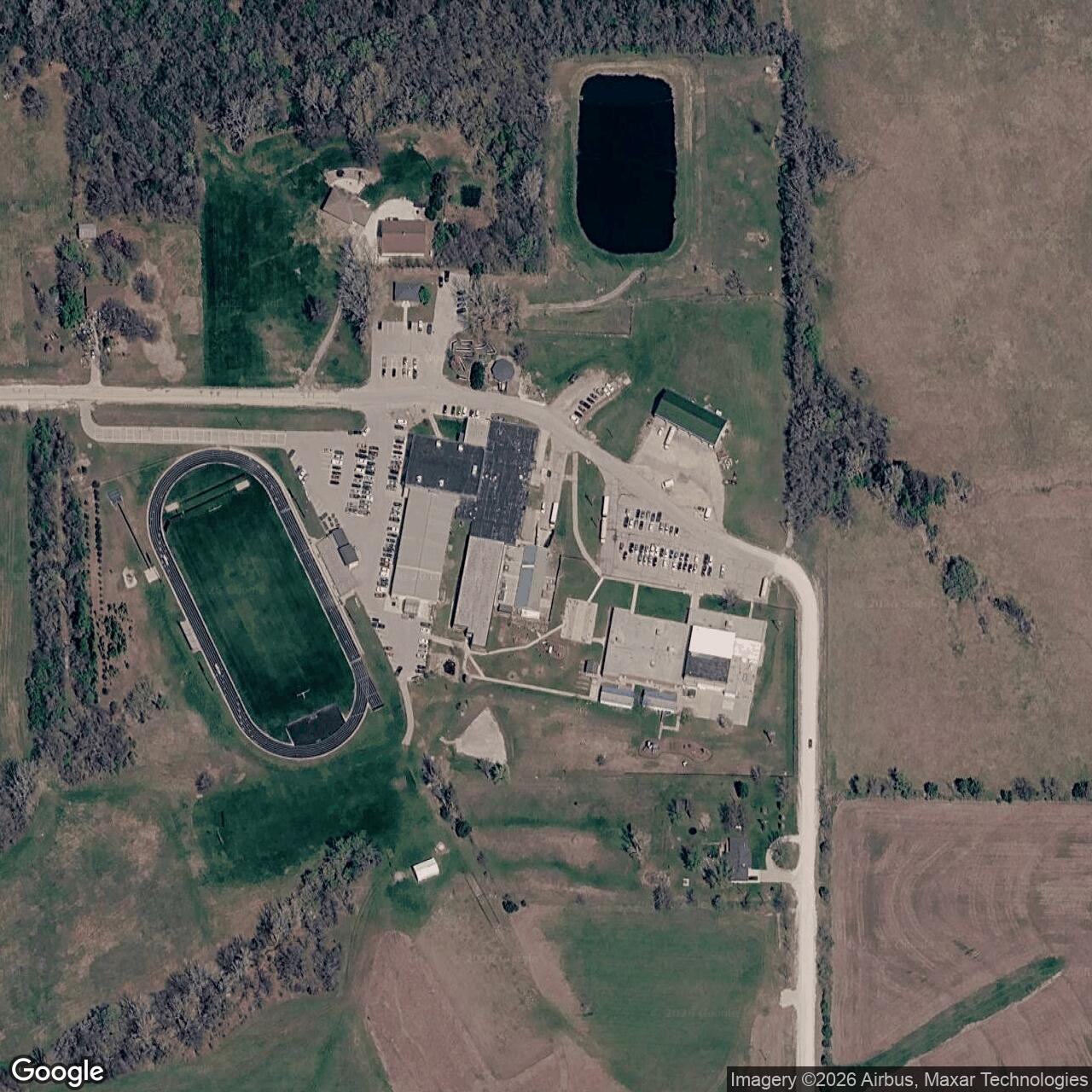
Current Site Use: Jackson Heights USD 335 school property on former Atlas E Site 9; former missile base adapted as Jackson Heights High School / school campus.
Site Ownership: Jackson Heights USD 335 / North Jackson public school district; former federal property disposed after missile deactivation.
Accessible: School property; access only for authorized school business, events, or permission.
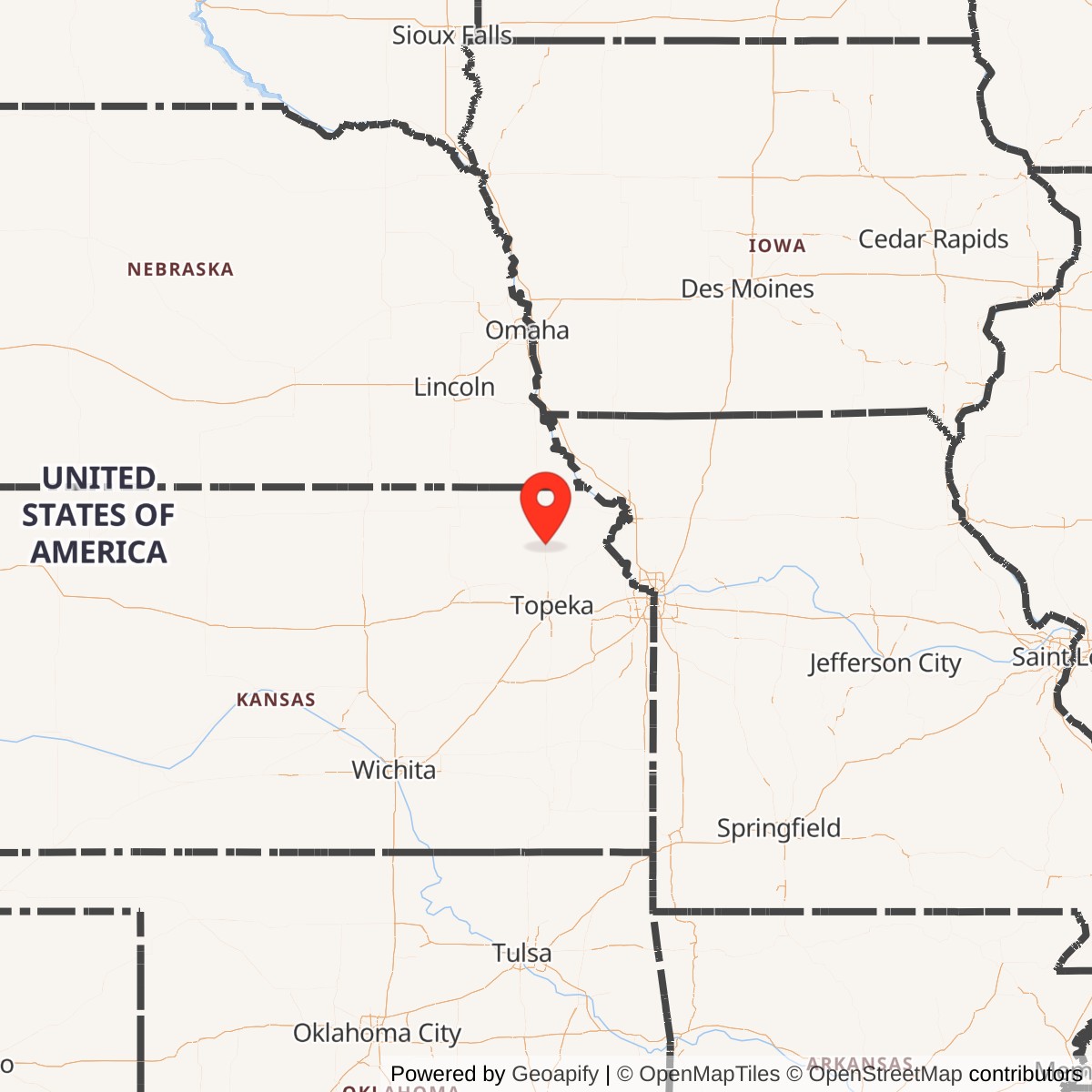
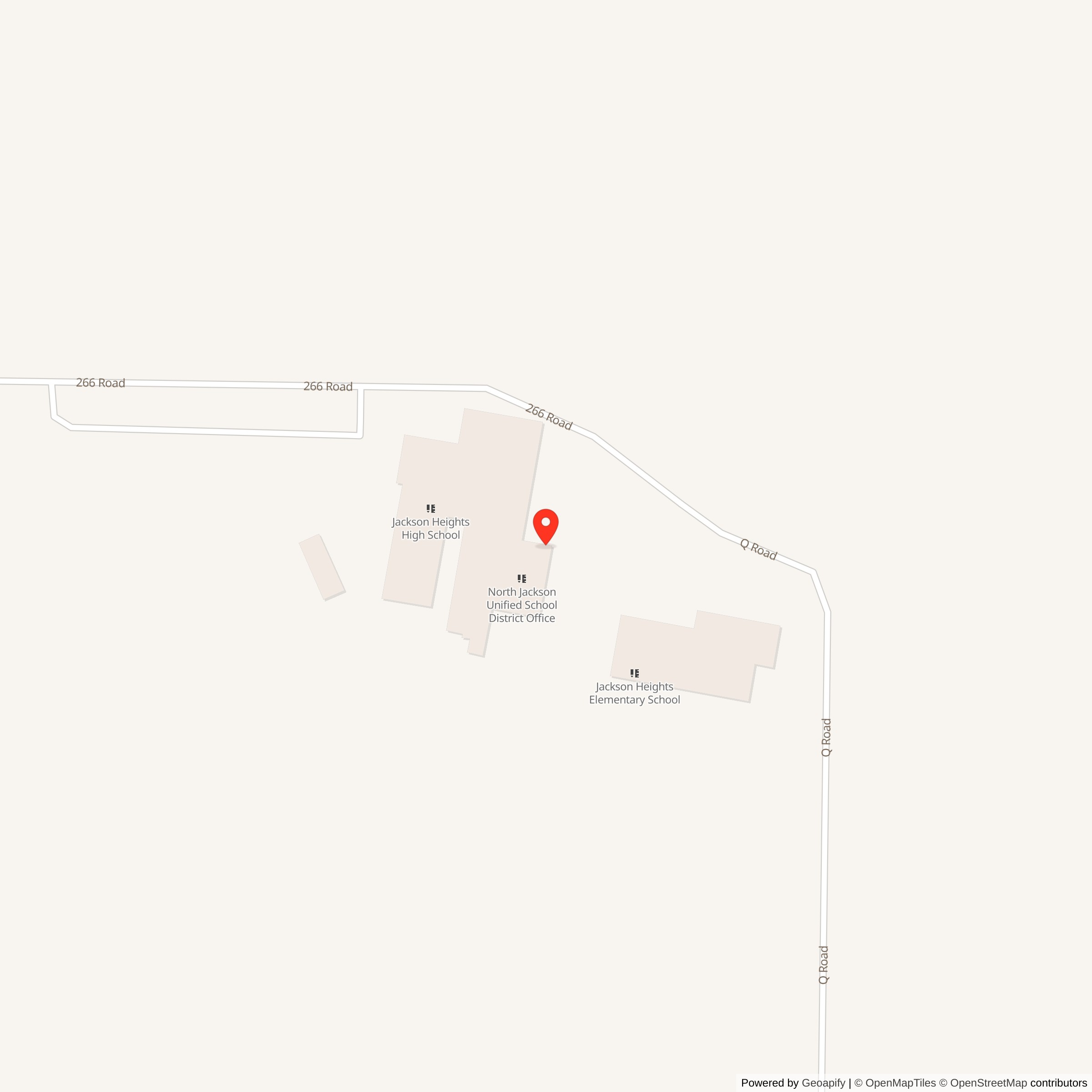
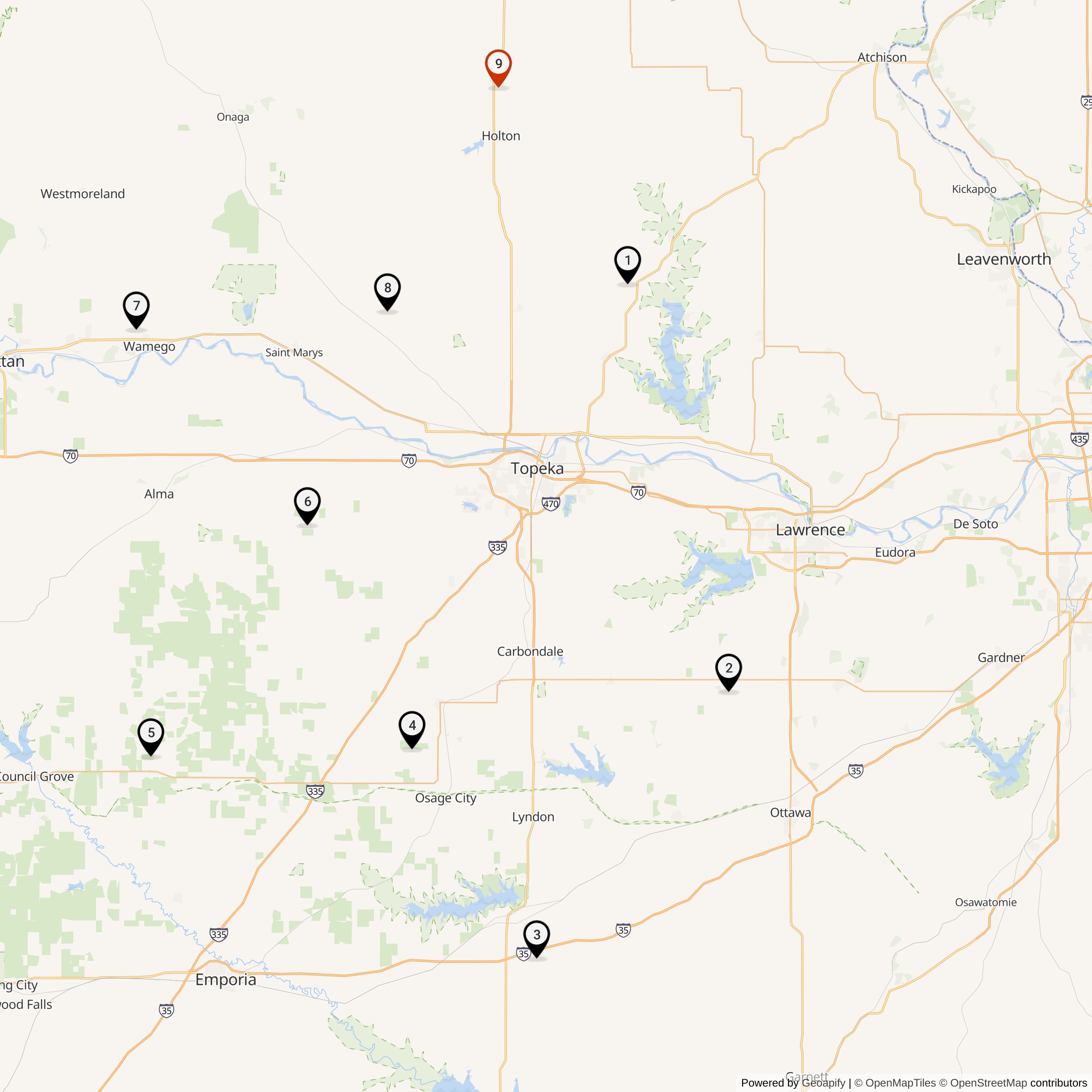
Atlas E Site 548-9 was one of the nine SM-65E Atlas intercontinental ballistic missile launch complexes operated from Forbes Air Force Base, Kansas, by the 548th Strategic Missile Squadron. The site was the northernmost Forbes Atlas E launch complex and was located north of Holton in Jackson County, Kansas.
The site was an Atlas E single-missile coffin-launcher complex, not a later vertical silo in the Atlas F sense. It held one missile horizontally in a hardened, semi-buried launcher structure and was crewed on site by a launch crew rather than remotely controlled from a separate Minuteman-style launch control center. During its missile service, the site belonged to the Forbes AFB Atlas E missile field, the 548th Strategic Missile Squadron, and the Strategic Air Command alert system associated with the 40th Bombardment Wing / 40th Strategic Aerospace Wing and Second Air Force command relationships.
The site is no longer an active missile installation. The 548th Strategic Missile Squadron was inactivated on 1965-03-25. After its short Air Force service, the former missile property was transferred into school use. It became the site of Jackson Heights High School, later part of Jackson Heights USD 335, and remains an active public school property rather than a public missile-site museum.
Location, Landscape, and Site Description
Atlas E Site 548-9 was placed in rural Jackson County, north of Holton, in the agricultural landscape of northeastern Kansas. The site was part of the ring of nine Atlas E complexes around Forbes AFB at Topeka. These sites were far enough from the base to disperse the missiles across the countryside, but close enough for crews, maintenance personnel, security forces, convoys, and base support units to reach them from Forbes.The launch complex followed the Atlas E coffin-launcher pattern. The missile lay horizontally in a reinforced concrete launcher bay under a massive sliding overhead door. To launch, the door would roll back, the missile would be raised to a vertical position, and fueling and final launch procedures would take place from the launch complex. The site included the launcher bay, access ramp, control and support spaces, power-generation equipment, fuel and gas systems, communications, security fencing, and surface patrol areas. A local operations account describes Atlas E sites as roughly "20-some acre" surface installations patrolled by armed guards, although the exact acquired acreage for the Holton property has not yet been verified in a formal disposal or parcel source.
The site's later reuse makes 548-9 physically unusual among former Atlas E sites. Rather than remaining abandoned, being stripped for salvage, or being adapted as a private residence or storage site, the Holton complex became a school campus. Local and school-district sources describe the former base as being modified into Jackson Heights High School. Later reports describe the former missile-bay and command-center areas as being adapted for school-related purposes, with later renovations changing the use of some underground spaces.
Strategic and Cold War Context
The Atlas missile program represented the first operational U.S. intercontinental ballistic missile force. Atlas was developed in response to the Cold War requirement for a land-based nuclear missile able to reach targets at intercontinental range. The system preceded the more survivable, faster-reacting Minuteman and Titan II forces, and its short service life reflects the rapid pace of missile development in the late 1950s and early 1960s.Atlas E was an intermediate step between early Atlas D deployment and the later Atlas F vertical silo system. The National Park Service describes Atlas E as similar to Atlas D but deployed in individual launch complexes, using inertial guidance, and placed in below-ground coffin launchers that gave somewhat improved blast protection. This was still a liquid-fueled, first-generation ICBM. The missile was kept under pressure because its very thin stainless-steel structure depended on internal pressurization for rigidity. The missile could not simply sit as an inert steel cylinder; maintaining alert status required constant technical attention to pressurization, power, fuel-support equipment, guidance, environmental systems, and communications.
The Forbes sites put nine Atlas E missiles into the Kansas countryside around Topeka. Their dispersal reduced the vulnerability that would have existed if all missiles were clustered at Forbes itself. Their hardened coffin-launcher design offered some protection, but Atlas E was still much more vulnerable and labor-intensive than the solid-fueled Minuteman missiles that soon replaced Atlas as the main U.S. land-based deterrent.
Construction and Activation
The Forbes Atlas E program began as part of the urgent national effort to deploy a credible ICBM force. A USAF unit-history summary states that Topeka received news in October 1958 that Forbes AFB would support Atlas E missile sites in the surrounding area. Construction officially began on 1959-06-09, when Kansas Governor George Docking drove a silver nail into a construction form. The Corps of Engineers Kansas City District managed construction of the nine coffin-style Atlas E missile complexes.The construction program was complex and at times difficult. Atlas E launcher components were prefabricated for the Forbes and other Atlas E fields, including by Blaw-Knox Manufacturing, and were to arrive as large skid-mounted assemblies. Testing revealed defects, components arrived late, and the sites required hundreds of construction modifications. Labor disputes also affected the work. USAF unit-history material records 22 work stoppages during the project, including a longer October-November 1960 stoppage tied to a work-assignment dispute between hoisting engineers and electrical workers. The same summary records 25 lost-time construction accidents, including two electrical fatalities, across the Forbes Atlas E construction program.
The 548th Strategic Missile Squadron was organized at Forbes on 1960-07-01. The first Atlas missile arrived at Forbes on 1961-01-24. Local accounts and USAF unit-history summaries state that by October 1961 all nine Forbes sites had their Atlas E missiles, and that the Forbes sites were completed ahead of schedule. Operational control of the Forbes Atlas E sites was turned over to Strategic Air Command on 1961-10-16. The Holton site, as Site 9, was part of that same nine-site operational field.
Missile System and Technical Role
Site 548-9 housed the SM-65E Atlas, an early liquid-fueled ICBM. The missile was stored horizontally in the Atlas E coffin launcher. For launch, the hardened overhead cover would be rolled back, the missile would be elevated, and the crew would proceed through fueling and firing procedures. Unlike Minuteman missiles, Atlas E used liquid oxygen and RP-1 kerosene, along with extensive pressurization and support systems. That made the weapon powerful but operationally demanding.Public sources describe the Atlas E as carrying a General Electric Mark IV reentry vehicle with a W-38 nuclear warhead, usually described as approximately 3.8 to 4 megatons. Public sources also commonly give the Atlas E range as approximately 6,000 miles. Those details explain why the missile mattered strategically but also why it was quickly superseded. The system could reach intercontinental targets, but it required a crewed site, liquid-oxygen operations, careful pressurization, frequent maintenance, and a comparatively slow reaction sequence when measured against later solid-fueled missiles.
Site 548-9's technical role was therefore direct launch alert. It was not merely a storage bunker. A missile crew served at the site, monitored the missile and its support systems, maintained alert readiness, and could execute launch procedures if ordered through Strategic Air Command channels. The crew's work was supported by security personnel, maintenance technicians, communications systems, power-production equipment, and base-level support from Forbes AFB.
Operational History
The operational life of Atlas E Site 548-9 was brief but intense. The 548th Strategic Missile Squadron manned its nine Forbes sites continuously during the active Atlas E period. Tthe Forbes Atlas E sites were manned around the clock, every day of the year. A detailed local account describes each launcher site as normally having a five-man launch crew and armed guards, with crews serving 24-hour tours before being relieved by another crew from Forbes.The standard launch crew positions included the Missile Combat Crew Commander, Deputy Missile Combat Crew Commander, Ballistic Missile Analyst Technician, Missile Maintenance Technician, and Electrical Power Production Operator. Their responsibilities covered command authority, communications, missile condition, power, pressurization, fueling systems, logic units, and launch-console procedures. The site's security personnel guarded the surface installation and controlled access to the fenced launch complex. Entry involved gate authentication, controlled access through the ramp and doors, and visual checks before the relieving crew was admitted to the interior.
Training and readiness were constant. Crews conducted repeated simulated launches, and maintenance procedures included tests that could bring the missile through portions of the erection and fueling sequence without an actual launch. The Atlas E was a system that demanded hands-on technical discipline. Its liquid-fueled configuration, delicate pressure-stabilized airframe, and heavy mechanical launcher made every alert tour a combination of routine watchstanding and potential emergency response.
The Cuban Missile Crisis in October 1962 was the most significant alert period for the Atlas force. All 548th sites were at a high level of alert during the crisis and were ready to launch if ordered.
After the Atlas E phaseout, Site 9 was among the Forbes sites set aside for educational or public-institutional reuse. Local historical accounts state that Site 9 was given to Unified School District 335 for school-facility use, and that USD 335 built Jackson Heights High School on the former Atlas E launcher site. The Holton Recorder's 2019 back-to-school issue described Jackson Heights High School as opening for classes on 1969-09-02 atop the former missile base. That conversion gives 548-9 one of the clearest community-reuse stories in the Forbes Atlas E field.
The school reuse also became part of local memory. Reports on the school's 50th anniversary noted that tours and historical displays were planned around the site's unusual origin. Secondary accounts describe the former entrance tunnel and underground areas as local points of interest, while later renovations changed the school's use of some former missile-base spaces. Because the site remains an active school, it should be treated as school property, not as an open historic attraction.
Deactivation and Disposal
Atlas E was phased out because it was expensive, manpower-intensive, and less survivable than newer missile systems. Secretary of Defense Robert McNamara's May 1964 directive accelerated the decommissioning of Atlas and Titan I missile bases. By that point Minuteman was entering the force in quantity, and Titan II offered a more capable liquid-fueled follow-on system.For the Forbes Atlas E field, the first missile reportedly came off alert on 1965-01-04, the last missile in the Forbes arsenal came off alert on 1965-01-28, and the last Forbes missile was shipped to Norton AFB on 1965-02-08. The 548th Strategic Missile Squadron stood down and was inactivated on 1965-03-25.
After deactivation, the Air Force removed useful equipment from the Atlas E complexes. Local historical accounts note that generators were removed from Atlas sites for reuse by the Department of Defense, and that many Atlas E sites flooded after power systems were removed. The Air Force determined that little remained of military value at most closed Atlas sites, and the properties were moved into General Services Administration disposal channels or assigned for public reuse.
Site 548-9 followed the public-reuse path. It was associated with Unified School District 335 and became Jackson Heights High School. That outcome distinguishes the Holton site from several Forbes Atlas E properties that were sold, salvaged, converted to private uses, or left as contaminated former defense properties. From an environmental-record standpoint, the EPA identifies the former site as FORBES (EX) ATLAS FAC S-9, EPA ID KSSFN0703130, in Jackson County, Kansas. The EPA profile lists the site as Not on the National Priorities List and as NFRAP, meaning the site did not qualify for the NPL based on existing information in EPA's record.
Current Status and Site Use
Atlas E Site 548-9 is decommissioned and reused. It is not an active Air Force or Space Force installation. The present public-facing property is Jackson Heights USD 335 at 12692 266th Road, Holton, Kansas. The district's own website lists that address for Jackson Heights USD 335. Local sources describe the high school as occupying the former Atlas E missile site, with the property having been adapted for educational use after the missile base sat dormant following deactivation.Because the property is an active school campus, public access is limited to normal school business, school events, and authorized visits. The site should not be treated as an abandoned silo open for exploration.
Chronology
- 1958-10 Topeka received notice that Forbes AFB would support Atlas E missile sites in the surrounding area.
- 1959-06-09 Construction officially began on the Forbes Atlas E sites.
- 1960-07-01 The 548th Strategic Missile Squadron was organized at Forbes AFB.
- 1961-01-24 The first Atlas missile arrived at Forbes AFB.
- 1961-07-28 Local historical accounts state that the Air Force accepted all nine Forbes Atlas E sites from Convair.
- 1961-10 By October, all nine Forbes Atlas E sites had Atlas E missiles.
- 1961-10-16 Operational control of the Forbes Atlas E sites was turned over to Strategic Air Command.
- 1962-10 During the Cuban Missile Crisis, the 548th SMS missile field was placed at a high alert posture.
- 1965-01-04 The first Forbes Atlas missile reportedly came off alert.
- 1965-01-28 The last missile in the Forbes arsenal reportedly came off alert.
- 1965-02-08 The last Forbes Atlas missile was shipped to Norton AFB.
- 1965-03-25 The 548th Strategic Missile Squadron was inactivated.
- 1965 Site 9 was placed on the path to public educational reuse rather than ordinary private sale.
- 1969-09-02 Jackson Heights High School opened for classes on the former missile-site property, according to local reporting.
- 2026 The site remains in use as Jackson Heights USD 335 school property.
Read about the Atlas at Forbes AFB
All Atlas Missile Silo Locations