
Atlas D Site 549-C Missile Silo, Missouri Valley Iowa
Longitude: -95.8192186851644
Site Type: Atlas D three-missile launch complex
Missile Type: SM-65D Atlas
Number of Launchers/Missiles: 3
Parent Base: Offutt AFB
Missile Wing: 4321st Strategic Wing; 385th Strategic Aerospace Wing after 1963-01-01
Missile Squadron: 549th Strategic Missile Squadron
Approximate Base Size: 288 fee acres + 178 easement acres (466 total)
Current Site Use: Former missile site / private residential and agricultural use; FUDS/CERCLA environmental investigation and cleanup
Site Ownership: Private ownership; earlier federal, Department of Army/Iowa National Guard, and Iowa Western Community College transfer history documented by USACE
Accessible: No public access / private property; residential and agricultural area
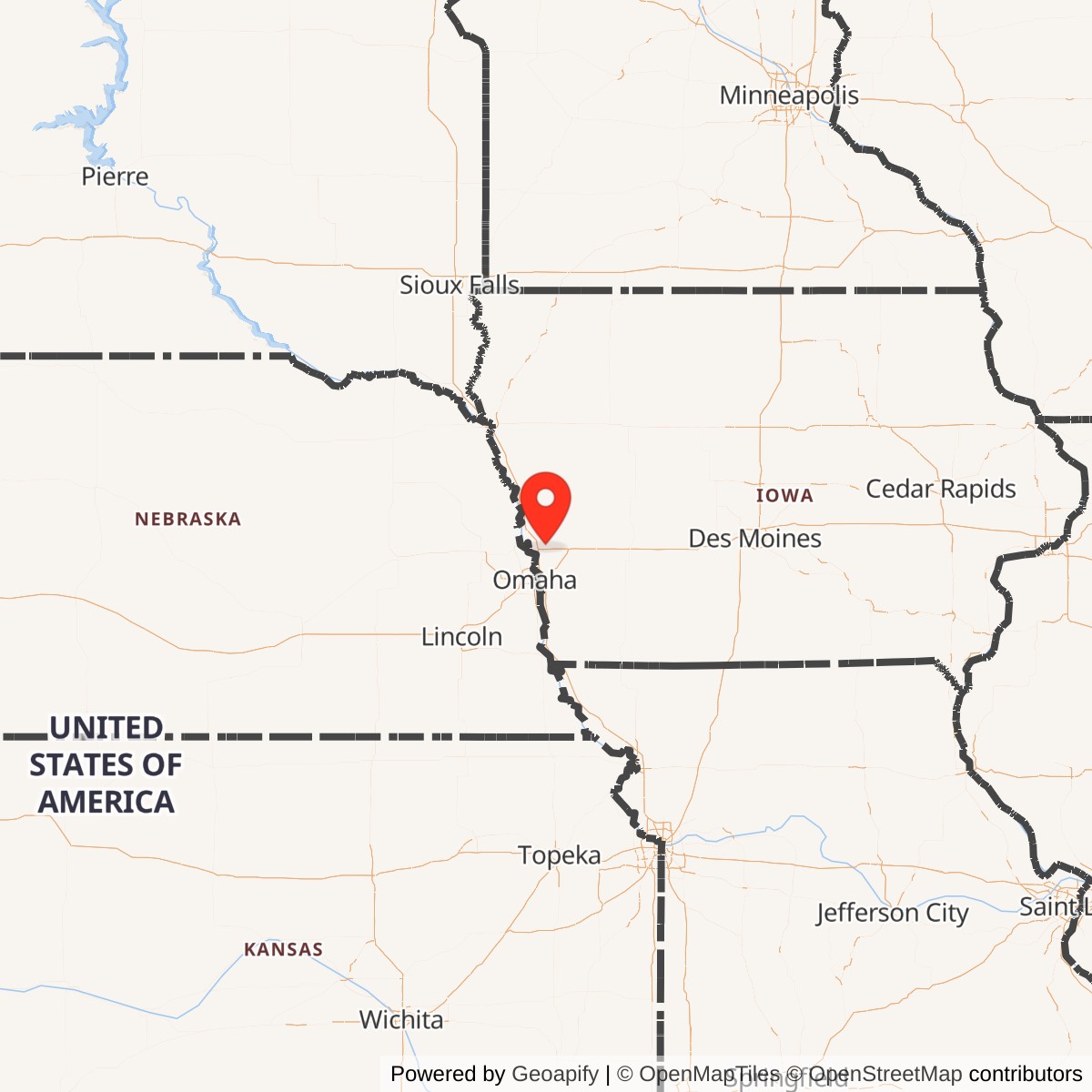
Atlas D Site 549-C was a former SM-65D Atlas intercontinental ballistic missile launch complex operated by the 549th Strategic Missile Squadron near Missouri Valley, Harrison County, Iowa. It was one of three Atlas D complexes associated with Offutt Air Force Base and Strategic Air Command headquarters near Omaha. The site is also identified in environmental records as the former Offutt Air Force Base Atlas "D" Missile Site 3 and in Iowa Department of Natural Resources records as Offutt AFB AF FAC S-3.
The site was not a single isolated Minuteman-style launch facility. It was an Atlas D three-launcher "coffin" complex with three launch and service buildings, a launch operations building, power and utility support, communications and guidance-related structures, storage magazines, access and patrol roads, and security fencing.
The site is inactive and decommissioned. Site-specific public sources list 549-C as activated in spring 1961, deactivated as an Atlas D missile site in December 1964, and decommissioned in March 1965. U.S. Army Corps of Engineers documentation states that the property was acquired by the U.S. Government in 1958-1959, reported to the General Services Administration as excess in May 1965, transferred temporarily to Department of the Army control for Iowa National Guard use in 1967, reported excess again in 1970, and conveyed to Iowa Western Community College in 1971. Later records identify the property as privately owned for residential and agricultural use. The site is a Formerly Used Defense Site with ongoing CERCLA remedial investigation and cleanup activity related primarily to trichloroethylene groundwater contamination.
Location, Landscape, and Site Description
Site 549-C lies in the Loess Hills country of western Iowa, south to southeast of Missouri Valley and east of the Missouri River valley. The location placed one of the Offutt Atlas D complexes on the Iowa side of the river while keeping it within the support radius of Offutt Air Force Base and the 549th Strategic Missile Squadron. The surrounding landscape is rural and rolling, with agricultural fields, drainageways, scattered residences, and local roads rather than an urban base setting. Iowa DNR records list the contaminated-site location at 3301 Nixon Ave, Missouri Valley, IA 51555.USACE describes former Missile Site 3 as located five miles southeast of Missouri Valley and as one of the three Offutt missile sites used for the maintenance, storage, and potential launch of Atlas D intercontinental ballistic missiles. The government originally acquired 288 acres in fee title and 178 additional acres through easements. The site structures included three launch and service buildings, a launch operations building, a power plant and pumphouse, two remote rate stations, a microwave building, two well pump houses, a vehicle storage building, two storage magazines, access and patrol roads, a sewage disposal lagoon, and a security fence.
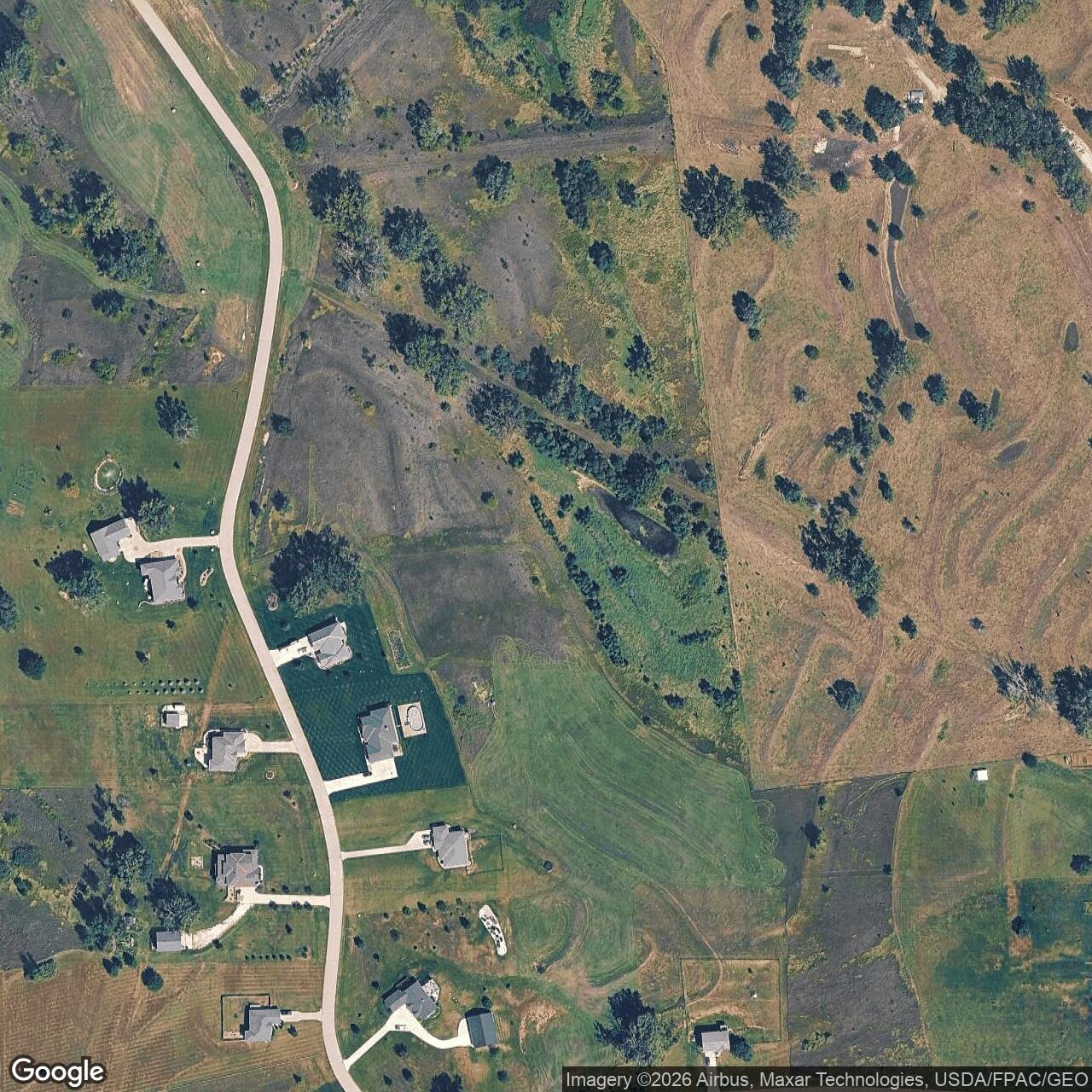
The Atlas D physical layout was very different from the later Minuteman launch-facility pattern. At 549-C, each missile was stored horizontally in a reinforced-concrete aboveground "coffin" shelter rather than vertically in an underground silo. The three launch and service buildings were parts of one integrated complex. Historic aerial photographs show the three launcher areas connected by a loop-road pattern, with support facilities grouped inside the secured site. In a wartime launch sequence, the roof of a launch building would be opened, the missile raised upright, fueled with liquid oxygen and RP-1 kerosene, connected to the guidance process, and launched from the aboveground pad.
Strategic and Cold War Context
Atlas D Site 549-C belonged to the first operational generation of American ICBM deployment. The Atlas was the United States Air Force's first operational intercontinental ballistic missile, and the Atlas D was the first fielded model. These missiles entered service at a moment when the United States was moving from a nuclear deterrent dominated by manned bombers toward a mixed strategic force that included bombers, land-based ballistic missiles, and submarine-launched ballistic missiles.The Offutt Atlas D field was especially significant because of its relationship to Strategic Air Command headquarters. Offutt was not merely another support base; it was the command center of the U.S. strategic bomber and missile force. The three Atlas D complexes at Mead, Arlington, and Missouri Valley gave SAC headquarters a nearby operational ICBM force during the short period before more survivable and faster-reacting missiles took over the primary land-based deterrent role.
Atlas D technology also explains the site's size and complexity. The missile was liquid-fueled, required substantial maintenance, and used a thin stainless-steel pressure-stabilized airframe. It could not be treated like a later solid-fueled Minuteman missile sealed inside a remote underground launcher for years at a time. Atlas D required crews, technicians, propellants, electrical power, compressed gases, guidance equipment, communications systems, security, and routine exercises. Site 549-C was therefore a large launch complex, not simply a buried missile tube.
Construction and Activation
Planning and acquisition for the Offutt Atlas D sites began in the late 1950s. USACE records for Site 3 state that the U.S. Government acquired the property by fee title and easements in 1958-1959. Construction was part of the three-site Offutt Atlas D deployment: Site A near Mead, Nebraska; Site B near Arlington, Nebraska; and Site C near Missouri Valley, Iowa. Each complex held three missiles, giving the Offutt Atlas D force nine deployed launchers.The construction program reflected the urgency and experimental character of first-generation ICBM deployment. Atlas D facilities were built quickly while missile technology, launch procedures, construction management, and Air Force operational concepts were still evolving. The three Offutt complexes were large reinforced-concrete launch installations with extensive supporting utilities. The Nebraska historical marker for the Offutt Atlas D sites describes 103-foot by 133-foot reinforced-concrete launch and service buildings containing the missile bays, along with a launch operations building, two warhead storage magazines, generating facilities, and communications facilities.
The 549th Strategic Missile Squadron had a complicated designation history. The Offutt Atlas D sites were initially associated with the 566th Strategic Missile Squadron before SAC redesignated the Offutt unit as the 549th Strategic Missile Squadron on 1 July 1961. The broader Offutt Atlas D squadron was operational by spring 1961, making the Offutt deployment the last Atlas D unit to enter alert service.
Missile System and Technical Role
Site 549-C was built for the SM-65D Atlas, also known as the Atlas D ICBM. The Atlas D was a liquid-fueled, one-and-a-half-stage intercontinental ballistic missile. The National Park Service describes Atlas D as the first ICBM ever deployed and states that it was 75 feet tall, had an approximate range of 5,500 miles, carried a 1.44-megaton warhead, and had an approximate launch response time of fifteen minutes. The NPS also notes that each Atlas D missile crew controlled three missiles, a control center, and a radio-guidance system. The 549th SMS Atlas D was carrying a General Electric Mark III reentry vehicle and a W-49 nuclear warhead of approximately 1.44 megatons.The Association of Air Force Missileers describes Atlas D coffin deployment as three missiles and one control center per complex, guided by a ground-based radio-inertial system. In the aboveground coffin configuration, each missile remained horizontal on alert, then was raised to vertical position by the erector, filled with liquid oxygen and RP-1 propellant, and launched. The first missile in the complex could be launched approximately fifteen minutes after execution, with the second and third missiles following later in the sequence.
The technical burden of keeping the Atlas D ready was substantial. Combat crews, missile maintenance personnel, guidance and power-production technicians, electronics specialists, propellant personnel, pneudraulic specialists, and other support personnel all contributed to the alert posture. Routine operational exercises included propellant loading, system checks, and inspections that duplicated much of the launch sequence short of actual launch. Site 549-C therefore embodied the labor-intensive nature of first-generation ICBM alert duty.
Operational History
Site 549-C's active missile service was short, lasting only through the early 1960s, but it operated during one of the most intense periods of the Cold War. The three 549th SMS sites at Mead, Arlington, and Missouri Valley were manned continuously while the squadron was active.The site's day-to-day mission was to preserve a usable nuclear deterrent under demanding technical conditions. Atlas D crews and maintainers had to protect and maintain the missile, its reentry vehicle, launch building, guidance equipment, electrical systems, propellant-handling systems, communications gear, power generation, and site security. Because the missile was stored horizontally and required fueling before launch, the operational challenge was not only to keep the weapon present, but to keep the entire complex ready to execute a rapid and highly sequenced launch process.
The Missouri Valley complex also formed part of the early ICBM experience from which later missile operations evolved. Atlas D was not the mature end-state of U.S. ICBM basing. It was a pioneering system that demonstrated how crews, command channels, maintenance organizations, construction offices, and security forces could sustain strategic missile alert. The lessons of Atlas D contributed to the transition toward more hardened, dispersed, and quicker-reacting Atlas E, Atlas F, Titan, and Minuteman systems.
The Offutt Atlas D construction program attracted national attention. To Defend and Deter records that peace activists picketed at Site A in June 1959 and that House Appropriations Committee investigators visited the Omaha District in November 1960 to examine project problems and accusations surrounding the Offutt Atlas construction effort. These events were not documented as occurring at 549-C specifically, but they help explain the public controversy and construction-management scrutiny surrounding the Offutt Atlas D program of which Site C was a part.
The most important post-military site-specific events are environmental. USACE held a public meeting at the Rand Community Center in Missouri Valley on 30 November 2023 to update residents on environmental investigation work at the former Atlas D Missile Site 3. More than 60 community members attended. USACE reported that drinking-water treatment systems had been installed as a precaution at the request of area residents in response to contaminants detected in residential wells. In May 2025, USACE held another public meeting and reported progress on three pilot studies, additional monitoring wells, and continuing work to define the scope of the TCE plume and select cleanup alternatives.
Deactivation and Disposal
The Atlas D force was phased out because it was a first-generation liquid-fueled system that was quickly overtaken by newer ICBMs. The NPS summarizes the larger Atlas program as peaking between December 1962 and May 1964, after which Atlas was phased out in favor of Minuteman and Titan ICBMs. Atlas D Site 549-C was deactivated on 15 December 1964, the same date associated with the discontinuance of the 549th SMS.USACE provides unusually detailed post-closure history for Site 3. The missile complex was determined to be excess to Air Force mission requirements as Atlas D was phased out and made obsolete, and the site was reported to the General Services Administration as excess real property in May 1965. In August 1967, the 288 acres of fee land were withdrawn from excess and transferred to Department of the Army jurisdiction. The Army redesignated the installation as the Missouri Valley National Guard Facility and issued a five-year license for Iowa National Guard use, ending in August 1972. Three leases were also granted to individuals for cattle grazing.
That National Guard reuse did not last. USACE states that the license was terminated in August 1969 because the state no longer needed the facility. In April 1970, the property was again reported as excess to GSA. In November 1971, the property was conveyed by quitclaim deed from the Department of Health, Education, and Welfare to Iowa Western Community College for educational use for 30 years. USACE notes that the only beneficial use was limited to providing grazing land to tenant farmers.
The physical site changed substantially after disposal. USACE states that structures remaining after excessing included steel and concrete remnants of the former launch service buildings, the launch operations building, the power plant and pumphouse, seven smaller masonry and concrete buildings, and one metal-sided building. Demolition and debris removal of all abandoned structures and buildings was completed in the late 1980s, and demolition material was disposed of through onsite burial. This means that the post-military history of 549-C differs from some other Atlas sites where structures remained more intact; by the late twentieth century, major abandoned structures had been demolished or buried on site.
The environmental afterlife of 549-C is ongoing. USACE and Iowa DNR identify the site as a CERCLA remedial location and a FUDS cleanup site. The principal concern described in recent public sources is trichloroethylene, or TCE, in soil and groundwater, with related groundwater-contaminant concerns. USACE states that solvents such as TCE were routinely used during readiness exercises and that, over time, those solvents leaked into the surrounding soil and groundwater. In 2025, USACE reported that monitoring wells had been installed to assess the TCE plume, that complex glacial geology and sand-and-gravel channels beneath clay layers affect contaminant movement, and that the plume has moved northwest toward residential areas. USACE also stated that current residential wells draw from deeper intermediate water-bearing zones, while future excavation or construction in affected shallow-groundwater source areas could pose exposure risks.
Current Status and Site Use
Atlas D Site 549-C is decommissioned and no longer functions as a missile installation. Iowa DNR lists Offutt AFB Atlas D Missile Site 3 as a CERCLA Remedial - Open site at 3301 Nixon Ave, Missouri Valley, Iowa, and identifies ownership as private. USACE describes the current property use as private residential and agricultural. The site is not open to the public.Visible evidence of the former military layout may still be read in aerial imagery and in the site's road and earthwork pattern, but USACE states that abandoned structures and buildings were demolished in the late 1980s and debris was buried on site. The site therefore has a different present-day appearance from abandoned Atlas complexes where launch buildings remain standing.
Chronology
- 1958-1959 The U.S. Government acquired the Site 3 property by fee title and easements for establishment of the Missouri Valley Atlas D missile complex.
- 1959 The Offutt Atlas D missile-site construction program was underway for the three complexes near Mead, Arlington, and Missouri Valley.
- 1960-07 The broader Offutt Atlas D launch-complex program was substantially completed by summer 1960, according to regional historical summaries.
- 1961-03-30 The Offutt Atlas D squadron was operational by spring 1961.
- 1961-04/1961-05 Atlas D Site 549-C was activated during April-May 1961.
- 1961-07-01 SAC redesignated the Offutt Atlas D unit as the 549th Strategic Missile Squadron.
- 1962-10 During the Cuban Missile Crisis, 549th SMS sources state that all 549th sites were placed at a high alert level.
- 1964-10 The Nebraska historical marker summary states that the Offutt Atlas D launch complex was deactivated in October 1964.
- 1964-12-15 Site 549-C was deactivated, and the 549th SMS was discontinued.
- 1965-05 USACE states that former Missile Site 3 was reported to GSA as excess real property.
- 1967-08 USACE states that the fee land was withdrawn from excess and transferred to Department of the Army jurisdiction for use as the Missouri Valley National Guard Facility.
- 1969-08 USACE states that the Iowa National Guard license was terminated because the state no longer needed the facility.
- 1970-04 USACE states that the property was again reported as excess to GSA.
- 1971-11 USACE states that the property was conveyed by quitclaim deed to Iowa Western Community College for educational use.
- Late 1980s USACE states that demolition and debris removal of abandoned structures and buildings was completed, with demolition material disposed of through onsite burial.
- 2012 USACE states that environmental investigations at former Offutt AFB Atlas D Missile Site 3 FUDS began.
- 2023-11-30 USACE held a public meeting at the Rand Community Center in Missouri Valley to update residents on the environmental investigation.
- 2025-05-21 USACE held another public meeting in Missouri Valley and reported progress on pilot studies, monitoring wells, and TCE-plume investigation.
- 2025-05-30 USACE published a public update on the ongoing Missouri Valley Atlas D Missile Site environmental cleanup.
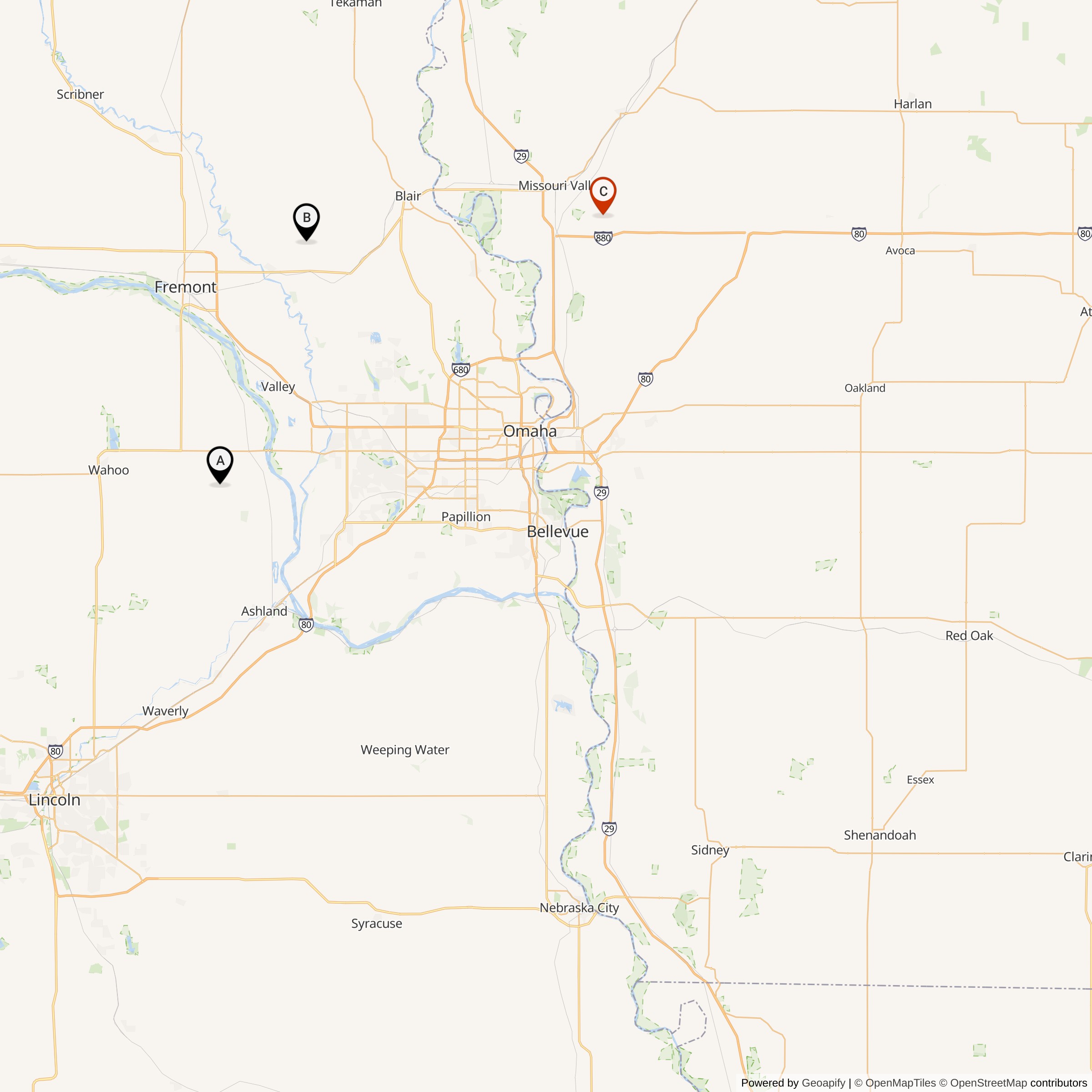
Read about the Atlas at Offutt AFB
All Atlas Missile Silo Locations