
Atlas F Site 556-1 Missile Silo, Champlain New York
Longitude: -73.4721919182675
Site Type: Atlas F vertical silo launch facility
Missile Type: SM-65F Atlas
Missile Assigned to this Silo: GD mfg 105F; GD serial 62-12141; AF tail 141; later launched successfully from Vandenberg on 1970-12-22 for ABRES RVTO-2A1
Number of Launchers/Missiles: 1
Parent Base: Plattsburgh AFB
Missile Wing: 380th Strategic Aerospace Wing
Missile Squadron: 556th Strategic Missile Squadron
Corps of Engineers Site ID: 1
Approximate Base Size: approx. 8.95 fee acres (FUDS Site S-1 summary; Seven Days described an 8-acre post-service site)
Current Site Use: Former Atlas F launch complex on private property near the Canadian border; surviving Quonset/launch-complex features documented by public sources; no public access.
Site Ownership: Former USAF; later Town of Champlain/private ownership; public sources document private purchase/restoration after a 2006 eBay sale, but current owner was not independently reverified.
Accessible: No public access; private property and potentially hazardous former missile/industrial site.
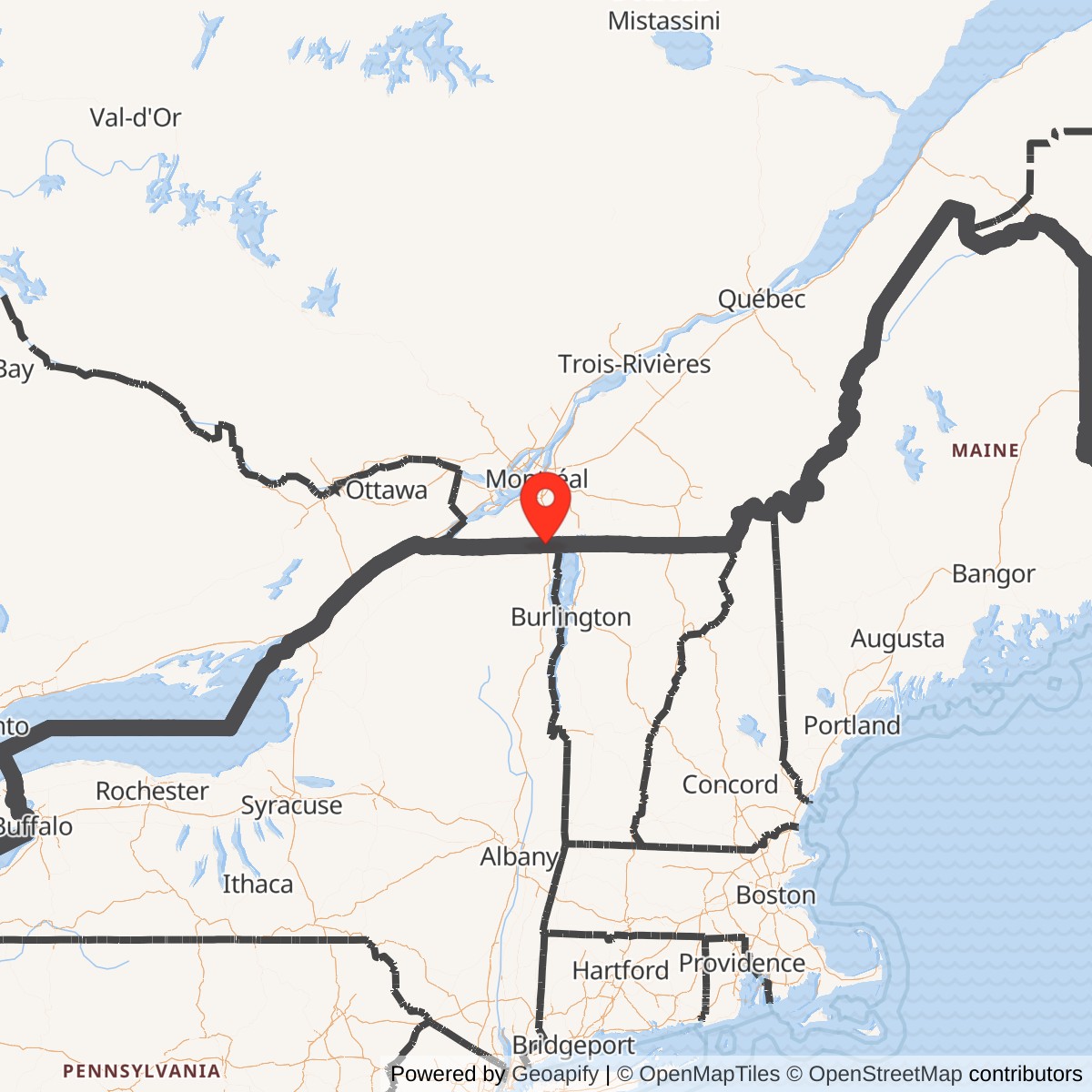
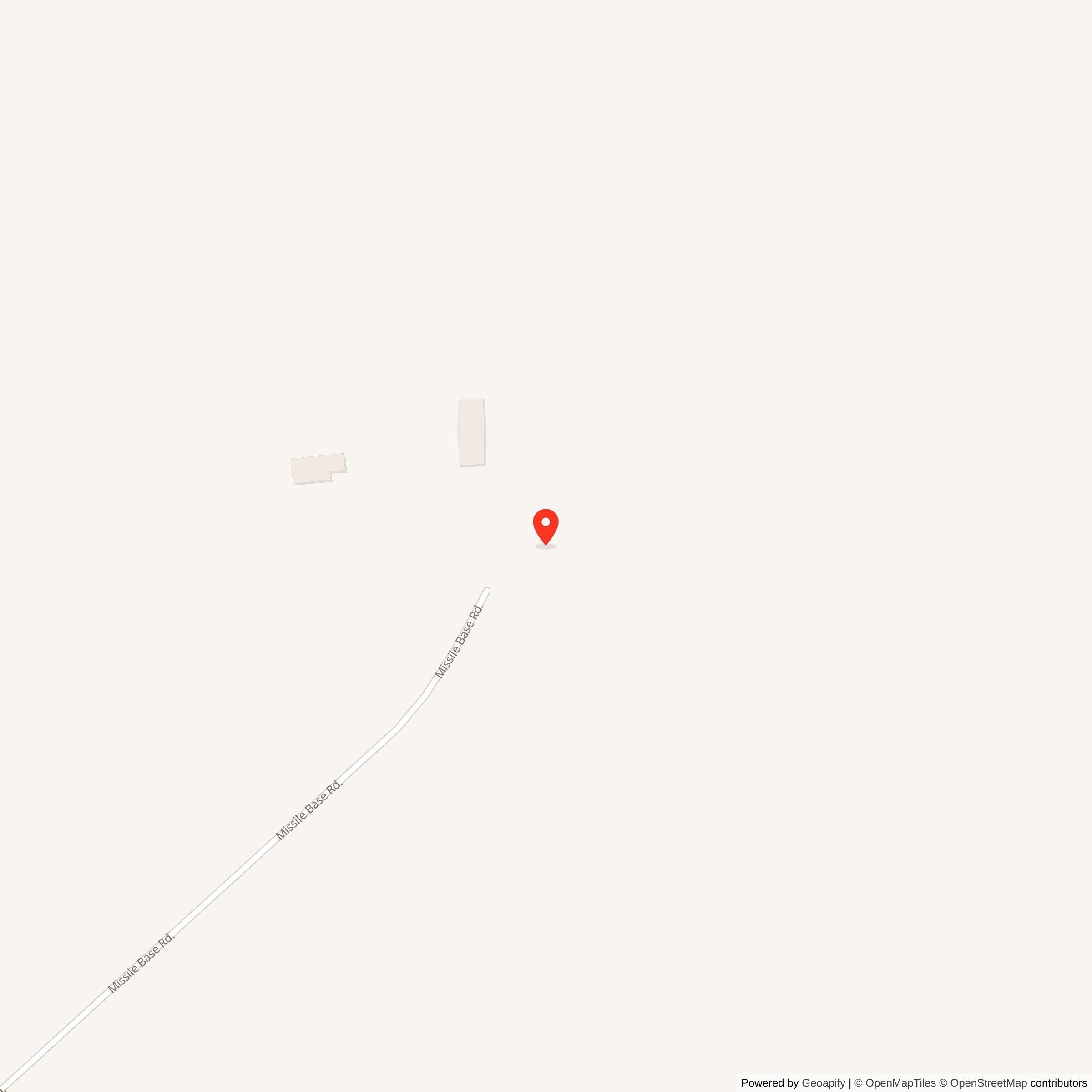
A quarter-mile south of the Canadian border, at the edge of Champlain, New York, an 81-foot Atlas F once waited underground in one of the Cold War's most unlikely front-line positions. Site 556-1 was not buried in the Great Plains or a western desert. It was part of a tight ring of Atlas F launch complexes around Plattsburgh Air Force Base, a North Country missile field that briefly made rural New York and northern Vermont the only American intercontinental ballistic missile deployment area east of the Mississippi River.
Atlas F Site 556-1, commonly identified as Site 1 or the Champlain site, was a single-missile SM-65F Atlas launch complex assigned to the 556th Strategic Missile Squadron at Plattsburgh Air Force Base, New York. The squadron belonged to Strategic Air Command and was assigned to the 820th Air Division, later the 820th Strategic Aerospace Division. The site was located in the Town of Champlain, Clinton County, New York, near the village of Champlain and very near the United States-Canada border.
The 556th Strategic Missile Squadron was activated for the Atlas mission on 26 April 1961 and organized at Plattsburgh AFB on 1 October 1961. USAF unit-history material lists the Plattsburgh Atlas F force as turned over to SAC on 7 December 1962 and operational on 20 December 1962. The assigned missile, Atlas 105F, was accepted and delivered on 9 October 1962. Unit and installation sources record the 556th Strategic Missile Squadron as discontinued/inactivated on 25 June 1965, after the Atlas phaseout process had removed the Plattsburgh Atlas F force from operational service.
Site 556-1 is inactive and decommissioned. It is no longer an active military installation. The former launch complex passed out of Air Force use after the Atlas phaseout and later became private property. Public accounts from the 2000s and 2010s describe the Champlain site as a privately owned former missile silo, with surviving aboveground structures and underground launch-control/silo features, but it should be treated as private property with no public access.
Location, Landscape, and Site Description
Site 556-1 stood in the flat agricultural and wooded borderland north of Plattsburgh, close to the Canadian line and west of Lake Champlain. Seven Days described Site 1 as being on Missile Base Road in Champlain, about a quarter-mile south of the Canadian border. The Center for Land Use Interpretation similarly describes the former Champlain Atlas silo as less than half a mile from the border. That setting was part of what makes the Plattsburgh missile field historically striking: the site was a first-generation ICBM launch complex placed not in a remote western test range but in the settled North Country landscape of Clinton County.Like the other Plattsburgh Atlas F complexes, Site 556-1 was built as a hardened, single-missile launch facility. Atlas F sites differed from the earlier Atlas D and Atlas E layouts. Instead of housing multiple missiles in aboveground or semi-hardened structures, each Atlas F site contained one missile stored vertically inside a deep underground silo. The missile sat on an elevator mechanism. In a launch sequence, the site's heavy overhead doors would open, the missile would be raised to the surface, and the missile would launch from the elevated position rather than from inside the closed silo.
The general Plattsburgh Atlas F layout included a launch silo, an underground launch control center, tunnels, aboveground support buildings, security fencing, utility systems, antennas, and access roads. Seven Days described the standard Plattsburgh-area Atlas F silo as about 52 feet wide and 174 feet deep, with an eight-level steel structure suspended inside a concrete shell by large springs to help absorb shock. The underground launch control center was connected to the silo by tunnel and was protected by blast doors. Aboveground, the sites typically included Quonset huts and support features that made them recognizable even after deactivation.
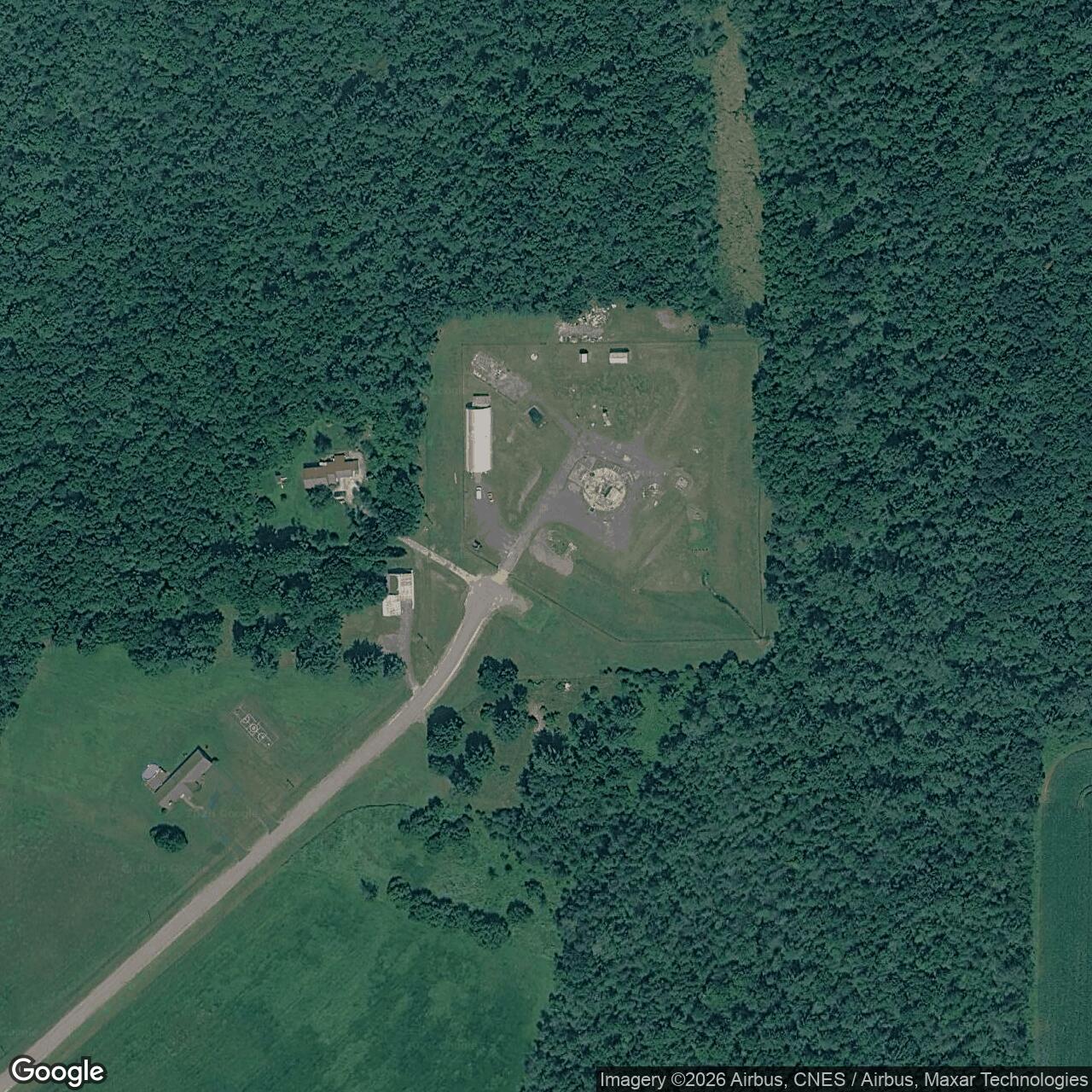
Site 1's post-service appearance confirms much of that layout. Seven Days reported that in 2006 the Champlain site retained a remaining Quonset hut, the launch control center access, blast doors, stairs, tunnel access, and a flooded silo. The Center for Land Use Interpretation later photographed and described the site as a former Atlas F ICBM silo under private restoration, with visible fencing, a Quonset hut, vents, small utility buildings, paved surfaces, and the former silo/LCC landscape still apparent. These surviving features make Site 556-1 one of the Plattsburgh Atlas locations where the Cold War engineering footprint remained legible after military use ended.
Strategic and Cold War Context
Site 556-1 existed because the United States urgently sought survivable intercontinental ballistic missiles during the early 1960s. Atlas was the first generation of deployed American ICBMs, and the Atlas F was the final and most advanced operational Atlas variant. By placing each missile in an underground hardened silo, the Air Force hoped to make the force less vulnerable than earlier aboveground or semi-hardened systems.The Plattsburgh missile field had special strategic geography. The 556th Strategic Missile Squadron's Atlas F sites were the only ICBM launch facilities built east of the Mississippi River. Adirondack Life described the Plattsburgh installations as a dozen rural sites forming a tight ring around the base, with eight missiles in Clinton County, two in Essex County, and two in northern Vermont. Their existence was part military capability and part public signal. At the height of the missile-gap era, visible ICBM construction and Atlas deployment communicated that the United States had a growing nuclear deterrent even in the northeastern United States.
Atlas F also represented the limits of first-generation technology. It used liquid propellants rather than the solid fuel that would define the Minuteman era. The missile carried RP-1 kerosene fuel aboard during alert, but liquid oxygen was not stored continuously in the missile. Instead, LOX had to be loaded during the launch sequence before the missile was raised and fired. This meant that an Atlas F in an operational launch-ready alert posture was not sitting continuously aboveground and was not continuously filled with liquid oxygen. It meant the site was crewed, secured, monitored, communicationally tied to SAC command channels, and prepared to begin the fueling, raising, and launch sequence if valid orders came.
The short life of Site 556-1 reflects the rapid pace of missile technology. By the time the Plattsburgh Atlas F force became operational, solid-fueled Minuteman missiles were already changing expectations for ICBM readiness, safety, and survivability. Minuteman could remain in its silo, fueled by solid propellant, and launch more quickly than Atlas. Atlas F therefore served as an essential bridge: it gave SAC a hardened ICBM force during a critical period, but it was soon overtaken by newer systems.
Construction and Activation
Construction of the Plattsburgh Atlas F sites began during the early 1960s. The Plattsburgh Air Force Base HAER documentation states that by 1960 construction of 12 Atlas silos surrounding the Plattsburgh area had begun, ultimately to be controlled by the 556th Strategic Missile Squadron based at Plattsburgh. The same HAER chronology states that the first Atlas missiles arrived at Plattsburgh AFB in 1962.The 556th Strategic Missile Squadron had a complex lineage before its Atlas assignment. It had served as a World War II B-26 bombardment squadron, then became associated with SAC missile operations through the SM-62 Snark program. USAF unit-history material identifies the 556th as SAC's first missile squadron during its Snark period. For Atlas, the unit was activated on 26 April 1961, organized at Plattsburgh on 1 October 1961, and equipped with the SM-65F Atlas from 1962 to 1965.
The unit-history chronology gives several important dates for the Plattsburgh Atlas F force as a whole: turnover to SAC on 7 December 1962, operational status on 20 December 1962, first ICBM off alert on 12 March 1965, last ICBM off alert on 10 April 1965, and last ICBM shipped on 13 April 1965. These dates describe the squadron-level operational arc rather than every discrete step at Site 1.
The Site 1 missile was General Dynamics manufacturing number 105F, General Dynamics missile serial number 62-12141, Air Force tail number 141. Its acceptance date and delivery date was 9 October 1962.
Missile System and Technical Role
Site 556-1 housed an SM-65F Atlas intercontinental ballistic missile. Atlas F was a liquid-fueled, one-and-one-half-stage ICBM developed by General Dynamics. At the Plattsburgh sites, the missile was stored vertically in a hardened silo and raised to the surface for launch. Unlike Minuteman, the missile was not a solid-fueled weapon kept ready to fire from within a closed silo. It required a launch preparation sequence that included opening the heavy overhead doors, loading liquid oxygen, raising the missile, and completing final launch steps.The missile was kept vertical, two overhead doors opened, the missile was lifted out of the silo, RP-1 fuel was kept aboard during alert, and liquid oxygen was loaded before the missile was lifted to the launch position. Nitrogen pressure was maintained and that a crew could top off liquid oxygen during a short launch hold after the missile was up and locked. For Site 556-1, this is essential to understanding what alert meant. The site was ready to execute the launch sequence, but it did not hold the missile continuously raised or continuously loaded with LOX.
The public-source nuclear payload description for the Atlas F is that it carried an AVCO/General Electric Mark IV reentry vehicle with a W-38 thermonuclear warhead. The Smithsonian National Air and Space Museum describes the Mark 4 reentry vehicle as used on Atlas E/F and Titan I ICBMs and states that it carried a W-38 warhead with a yield of about 3.75 megatons.
Operational History
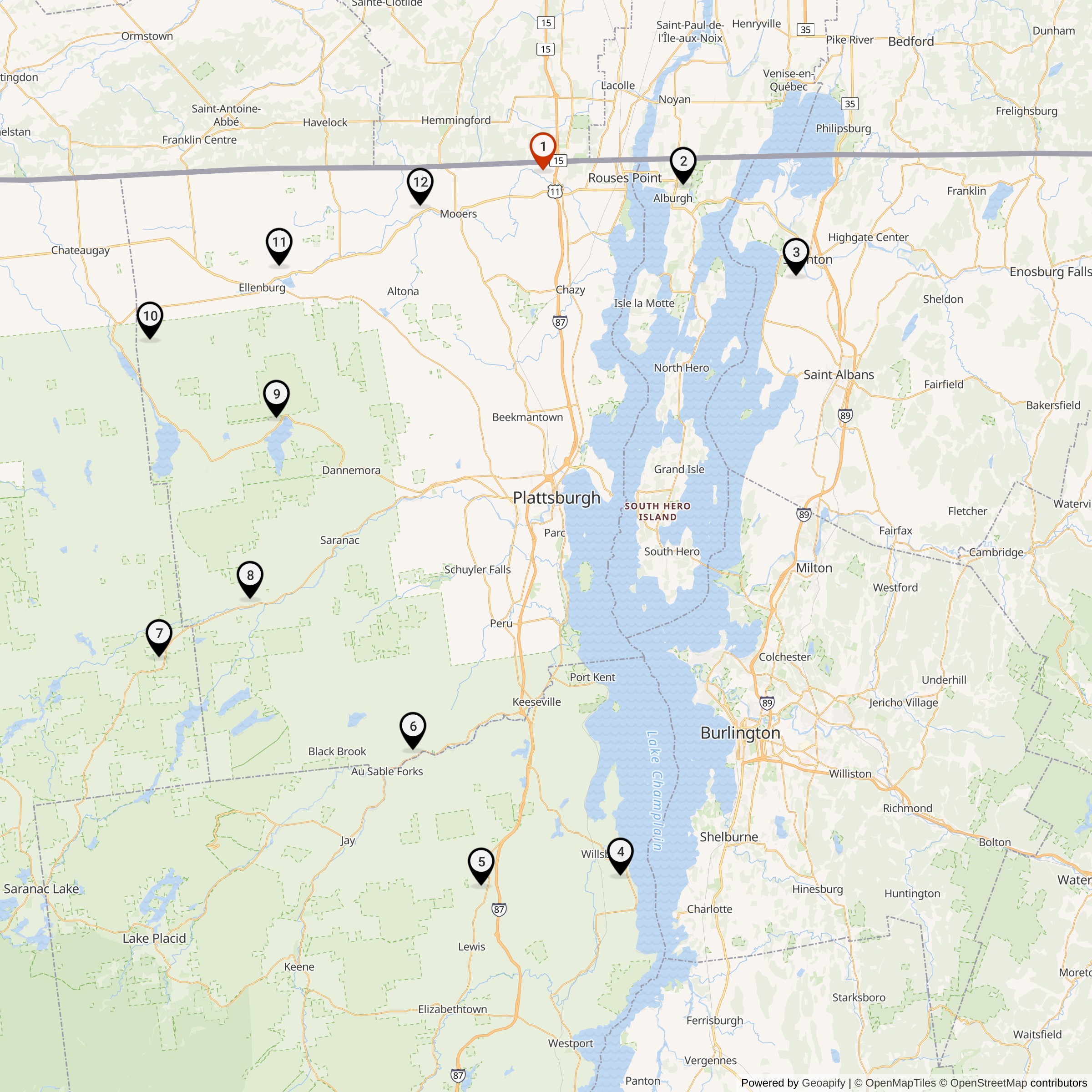
The operational story of Site 556-1 is tied to the 556th Strategic Missile Squadron and the unusual Plattsburgh Atlas field. The squadron operated 12 Atlas F launch sites in a ring around Plattsburgh AFB. Ten were in New York and two were in Vermont. New York State Military Museum's Atlas Sites summary identifies the New York locations as Champlain, Willsboro, Lewis, Au Sable Forks, Riverview, Redford, Dannemora, Brainardsville, Ellenburg Depot, and Mooers; the two Vermont sites were Alburg and Swanton.The 12 Plattsburgh sites were manned 24 hours a day, seven days a week, 365 days a year. At an Atlas F site, that meant personnel were physically present at or associated with the launch complex rather than monitoring an unmanned Minuteman-style launch facility from a distant missile alert facility. Seven Days describes a five-person launch crew in the underground launch control center, connected by tunnel to the silo, with security checkpoints controlling access.
The most dramatic squadron-level episode during Site 1's service was the Cuban Missile Crisis. Seven Days, drawing on recollections and 556th records, gives a more granular picture: on the first night of the crisis, three North Country silos reportedly had combat-ready missiles, and by the end of the 14-day crisis the remaining silos had been armed. Site 1's assigned missile had been accepted and delivered on 9 October 1962, shortly before the crisis began. The available sources do not show a site-specific Cuban Missile Crisis incident unique to Champlain, but Site 1 belonged to the Plattsburgh force that was hurried into readiness during that confrontation.
Day-to-day service at Site 556-1 was defined by alert duty, security, communications reliability, maintenance, and constant procedural discipline. Launch crews trained to respond to authenticated orders while maintenance and support personnel kept the missile, silo systems, power systems, propellant systems, and communications equipment ready. Security forces protected the site perimeter and access points. The site's close proximity to farms, roads, small towns, and the international border made it part of the local landscape in a way that more remote missile sites were not.
Deactivation and Disposal
Site 556-1 left active missile service during the Air Force's rapid phaseout of first-generation liquid-fueled ICBMs. By late 1964, Secretary of Defense Robert McNamara had announced that remaining first-generation Atlas and Titan ICBMs would be phased out. HAER documentation for Plattsburgh Air Force Base states that the Atlas F missiles assigned to Plattsburgh AFB were removed from their silos, equipment was salvaged for use by the U.S. Air Force space program, the sites were divested from Air Force ownership, and the 556th SMS was officially inactivated on 25 June 1965.The phaseout occurred in several steps, and sources use different dates depending on which step they are describing. USAF unit-history material for the 556th records the first ICBM off alert on 12 March 1965, the last ICBM off alert on 10 April 1965, and the last ICBM shipped on 13 April 1965. The same USAF unit-history source gives 25 June 1965 as the date the squadron was discontinued. The Military Standard and New York State Military Museum likewise use 25 June 1965 as the deactivation or alert-removal date for the Plattsburgh Atlas force. The best reading is that Site 1 was decommissioned as an individual site in March 1965, while squadron-level off-alert, missile-shipment, and unit-inactivation milestones continued into April and June.
Unlike later Minuteman and Peacekeeper sites, Site 556-1 was not demolished under the Strategic Arms Reduction Treaty process. The Plattsburgh Atlas sites were retired decades before those arms-control demolition requirements applied. Some equipment was salvaged, and the missile itself, Atlas 105F, was later used in a successful ABRES reentry-vehicle test launch from Vandenberg in 1970.
Federal environmental records also preserve the site's post-military identity. The 2015 USACE Formerly Used Defense Sites inventory lists CHAMPLAIN / PLATTSBURGH ATLAS S-1 as FUDS property C02NY0206, Site 01, category CON/HTRW, under the North Atlantic Division / New England District. A FUDS summary for Plattsburgh Atlas Missile Complex Site S-1 identifies the site as located in the Town of Champlain, Clinton County, and describes it as containing approximately 8.95 fee acres. NYSDEC-indexed FUDS work-plan material identifies Atlas S-1, Champlain, New York, as part of a multi-site tank investigation/removal/closure effort. These records show that the site's military afterlife included environmental tracking, especially for hazards typical of former missile and industrial facilities.
Current Status and Site Use
Site 556-1 is a decommissioned former Atlas F missile launch complex on private property. It is not open to the public. The coordinates identify the former launch-complex area near Missile Base Road in Champlain; they should not be treated as an invitation to visit or enter the property.Publicly available descriptions indicate that several physical features survived into the post-service period. Seven Days described a remaining Quonset hut, launch-control-center access, blast doors, stairs, tunnel access, and flooded underground spaces in 2006. CLUI later photographed the site and described it as a former Atlas F silo purchased on eBay in 2006 and being restored without the missile. Satellite images show the broad surface footprint, access road, cleared launch area, Quonset-style building, fenced or bounded property, and the former silo/LCC area.
Because current ownership and condition can change, the safest current-status description is cautious: Site 556-1 remains an inactive, privately owned, former Atlas F launch complex with surviving Cold War structures and environmental/FUDS history. It should be treated as private property with potential physical and environmental hazards.
Chronology
- 1961-04-26 The 556th Strategic Missile Squadron was activated for the Atlas mission.
- 1961-10-01 The 556th Strategic Missile Squadron was organized at Plattsburgh AFB; USAF unit-history material identifies it as the last Series F Atlas squadron and the last squadron in the Atlas program.
- 1962 The first Atlas missiles arrived at Plattsburgh AFB.
- 1962-10-09 Atlas missile 105F / GD serial 62-12141 / AF tail 141 was accepted and delivered for assignment to the 556th SMS, Site 1.
- 1962-10 During the Cuban Missile Crisis, the Plattsburgh Atlas F force moved into high-alert conditions; sources indicate that the force was hurried into combat-ready posture during the crisis.
- 1962-12-07 USAF unit-history material lists the Plattsburgh Atlas F force as turned over to SAC.
- 1962-12-20 USAF unit-history material lists the 556th Strategic Missile Squadron's Atlas F force as operational.
- 1965-03-12 USAF unit-history material lists the first 556th SMS ICBM as removed from alert.
- 1965-04-10 USAF unit-history material lists the last 556th SMS ICBM as removed from alert.
- 1965-04-13 USAF unit-history material lists the last 556th SMS ICBM as shipped.
- 1965-06-25 The 556th Strategic Missile Squadron was discontinued/inactivated after the Atlas phaseout.
- 1970-12-22 The former Site 1 missile, Atlas 105F, launched successfully from Vandenberg AFB Gantry A-3 in an ABRES RVTO-2A1 reentry-vehicle test.
- 2006 Seven Days reported that the Champlain Site 1 property had been purchased on eBay by a private owner and was being cleaned up/restored.
- 2015 The USACE FUDS inventory listed CHAMPLAIN / PLATTSBURGH ATLAS S-1 as property C02NY0206, Site 01, CON/HTRW.
Plattsburgh history-office packet on Atlas Missile Deployment
Read about the Atlas at Plattsburgh AFB
All Atlas Missile Silo Locations